Kiev and Chernobyl… Ukraine’s best and worst kept secrets

Kiev

Ukraine has always been a fascination of mine. Perhaps it’s the lure of the unknown or perhaps it’s proximity to the world’s worst nuclear disaster that sparked my imagination. All I know, however, is that for as long as I can remember I wanted to go there and see it in all its raw, ex-Soviet, flesh.

Kiev itself remains one of Europe’s best kept secrets. Rich in history, it remains relatively untouched by tourism. Yet on the back of Europe’s best kept secret, just 100km down the road lies it’s worst; Chernobyl.

Far from being a nuclear wasteland, the first thing I noticed when I got to Kiev was just how green and spacious it is. I was expecting a rather demur, rather drab city with a really repressed feel about it and I couldn’t have been further from the truth.

It seems wherever you look there is an abundance of trees and plants almost masking the gigantic concrete buildings that are lining the wide open streets.

The next thing you notice is the sheer size of Kiev. It’s fair to say this is a massive city with a lot of history behind it. Dating back to around 500AD, Kiev has seen many kingdoms come and go. Today, there are approximately three million people living in, and around, Kiev making it the busiest city in Ukraine.

Another thing I noticed was the number of churches and cathedrals the city possess. It seems that on every turn you come across a new one. It’s hardly surprising however, given the fact that in a recent survey over 67% of the Ukrainian population identified as from one strand of Christianity or another.

These are far from your normal churches either and are stunning in both their architectural style and the wonderful array of colours they are painted in.


St. Michael’s Golden Dome Monastery is a fine example of the beautiful architecture Kiev has to offer

Behind the green curtain of nature that is beautifying the city, Kiev is a real throwback to the USSR days. Huge looming buildings of varying importance are on show all over the capital and tower above the cities streets in sometimes an oppressive fashion.

The city has witnessed some extremely hard times as have many with that Soviet-side to it with recent examples of the 2014 Ukrainian revolution still prominent especially around the Maidan Nezalezhnosti – or Independence Square. Here some of the bloodiest battles between civilians and police occurred resulting in over 100 deaths!


Kiev
Google Maps view of Kiev

Yet despite this, recent, chaotic history, Kiev is now a very peaceful city. Still not quite being on the European travellers must-see list is also a major plus, as it is keeping costs relatively low, whilst also not having a huge influx of fellow travellers to deal with.

This is changing, however, and year-on-year there is an increased number of visitors to the city; partly helped by relaxed visa regulations for foreign visitors.

This increase could also be linked to hit TV shows, such as the mini-series Chernobyl, that painted a fascinating tale for international audiences and has driven the number of thrill-seekers visiting Ukraine up.

A final point to note. If you are travelling to the Ukraine from the UK you cant get the local currency (Ukrainian Hryvnia) before you leave. UK banks don’t like it, so you have to get all your currency when you arrive in Kiev.


Getting there

Getting to Ukraine has never been easier. No longer do UK tourists require Russian-style visas to enter the country; something the Ukrainian authorities saw sense in getting rid of post their success attracting visitors during Euro 2012 where the Ukraine shared hosting duties with Poland.

As you’d expect, the easiest way to get to Kiev is flying and in recent years, more and more routes have opened up. A number of flight providers now travel between London (Heathrow, Gatwick, Stanstead, Luton and London City) and Kiev Boryspil International Airport; some 35km to the east of Kiev city centre. Flight times are around three and a quarter hours.

As I’ll always do with this blog, I will give flight details for the same month I travelled to a location. In this case, that was during May.

There are a number of airlines that travel to the Ukrainian capital. Ryanair, Wizzair and UIA are three of the main ones that cater for a variety of budgets. It’s possible to fly from London to Kiev for as little as £97 return per person with Ryanair.

When I travelled to Ukraine, however, I went with UIA (you can’t miss them as they are painted bright yellow and blue). While they are a little bit more expensive, they also, for me, had better departure times meaning I could maximise my time in Kiev. At today’s rates for UIA you’d be looking at approximately £215 per person for a return journey between London Gatwick and Kiev.

The flights themselves are relatively unremarkable. I experienced no major issues at all and could take hand luggage with me into the cabin.


Where to stay

There are many options for hotels and AirBnB throughout the centre of Kiev catering for all different price structures. I can only speak about one accommodation in Kiev as during my time in the city I stayed in the Hotel Alfavito which is based slightly to the south of the main city. Getting into the main heart of the city is easy, however, with the metro station Palats a short 200m walk from the entrance.

The hotel itself is reasonable. It claims to be a four star establishment but feels more like a three star. The rooms are quiet basic and the views from the windows are less than inspiring. From my window all I could see was the opposing building and some rather large chimney stacks for local factories. Not a view to take your breath away.


The view from Hotel Alfavito isn’t the best you’ll ever experience

Another area that I was slightly disappointed about was the lack of breakfast included in the room price. Breakfast is available at Alfavito but you have to pay extra (and quite a bit extra) for it. In my experience it’s far easier to go out and buy breakfast on the go rather than pay through the nose for the standard hotel fare.

Cost-wise, I’d say the hotel was mid-range. For a standard double room for three nights in May you can expect to pay around £93 a night; totalling around £280 for the stay.

The staff at the hotel were professionally friendly, but there was no real warmth behind the words. They were polite and helpful but there is no real desire to go the extra mile to enhance your stay. You are just a room number to them.

This may all sound incredibly negative and compared to a number of hotels I’ve stayed in worldwide it is far from the best. However, as a base for activities in the city it is fine. Just perhaps not somewhere I’d return to should I find myself in Kiev again.


Getting around

The easiest way to get around Kiev is through the use of its simple metro system. Don’t expect any bells and whistle on this Soviet-era transportation system but it does have a number of interesting points.

First operated in the 1960, the Kiev Metro is restricted to 52 stops spread across just three lines. With such a sparse metro system in operation, there are in fact only three stations across the network that you can change lines so bear that in mind when making a journey. Fortunately, each of these crossover stations are quite centrally located so won’t cause you too much of an issue.

You buy your journeys from a small kiosk located near the entrance of each metro station. Journey tokens, it should be noted, are very very cheap. Amusingly, I found that each of these kiosks appeared to be operated by the same surly middle-aged woman who wouldn’t sell me multiple journey tickets and instead insisted I buy each time I travelled.

The next thing of note is that the Kiev Metro itself is something of a tourist attraction. One of its stations (Arsenalna) is the second deepest metro station in the world sitting 346 feet below the surface! This impressive feat is only beaten by the ever-competitive North Korean’s whose metro is a whopping 360 feet below the surface. This depth also allowed for the stations to act as bomb shelters had the Cold War taken a nasty turn.

The stations themselves are quiet clean and pretty quiet. I never experienced any issues travelling on the metro at any time of day or night, but it’s always worth remaining guarded of your belongings as is the case in any city.

A number of the stations also have Soviet-inspired murals located on them which add a different element to metro travel and are well-worth a look should you stop at one such station.


Top sites

Kiev itself has a number of wonderful sites and attractions for visitors to get their teeth into. Some of them are more obvious than others – such as the aforementioned churches and cathedrals – while others take a bit longer to root out.

So for this blog I’m not going to focus on those sights above ground as the best things to see. I’m going to go for a much deeper and darker side of Kiev that, if you didn’t know it was there, you’d never be able to experience.

That brings me to Another Kiev. For those not familiar with urbexing, it’s a shorthand way of saying urban exploring. This can take many forms, but often sees participants gaining entry to unused or deserted locations. Often not for the faint-hearted or those with a nervous disposition.

For me, it’s an exciting way to see parts of places that have either been forgotten or lost to time. A version of time travelling back to a different world. That’s what Another Kiev provides and that’s why I booked onto their combo tour; exploring a drain tunnel system and underground river as well as a nuclear bunker under the city.

It’s important to note that when you make your first contact with Another Kiev they are very keen to ensure you have a good level of fitness and are not subject to claustrophobia. Once you’ve ticked those boxes, you’re good to go.

All important equipment is provided for the €40 fee per-person, however, it’s important that you wear clothes that you are happy to, how shall we say, get a little on the dirty side.

My tour started outside Dnypro metro station right by the side of the river. Once there you meet your guide – my guide was called Max – who provides expert information and safety advice for the whole trip. As soon as everyone in the day’s tour group had arrived we’d hopped up on the side, removed a drain cover and were descending into the labyrinth of tunnels under the city’s streets.

It may not seem like the ideal tour for everyone but it really is fascinating. Walking through these small, dark tunnels you feel a million miles away from life above ground. It’s also a great place to get some really cool photography so don’t forget to take your phone with you when you go below.
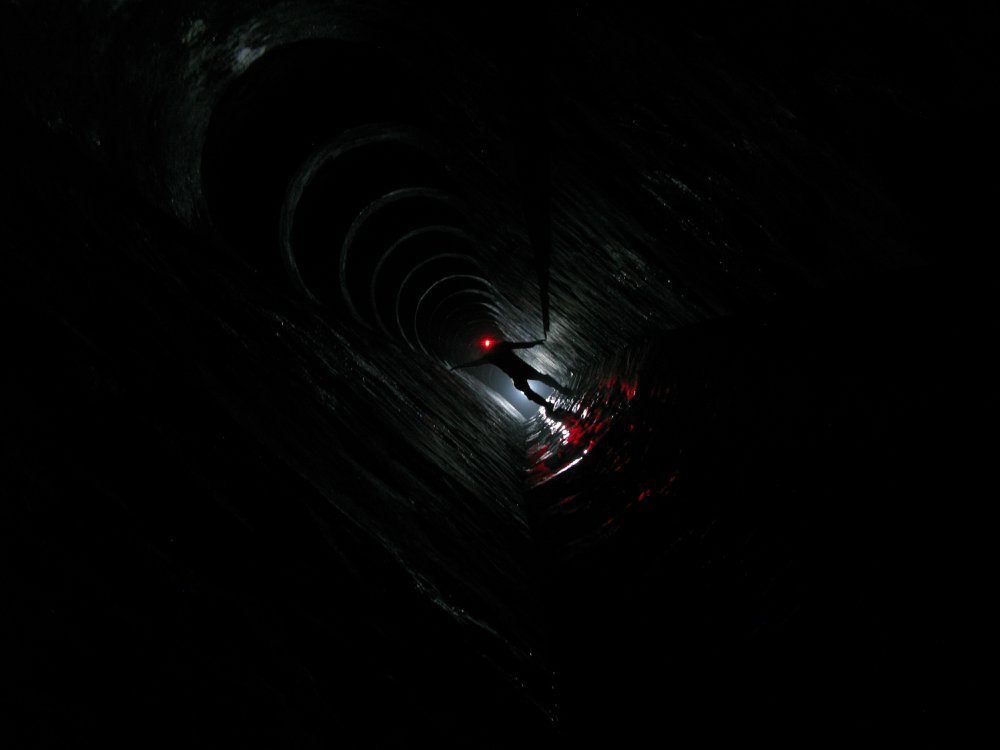

You get the chance to try out your creative photography skills below the surface

After we exited the drainage tunnels we got in a taxi and went to our next location which was somewhere within the centre of Kiev itself. Here we were asked to wait while Max gained access for us to the nuclear bunker. Then we were in and going down the concrete stairs into this Cold War-era hideout. It was like stepping back in time. After a small jump through a hole in the wall, we were in underground offices still filled with desks, gas masks and documents from the time. Pictures of Lenin still hung on the wall, and you could almost hear the conversations that could have taken place had a war started. The bunker I was in was an extremely eerie place, but it’s important to note that at no point did I ever feel in danger.


Images of Lenin are still hanging on the underground office walls in the bunker

For those with an adventurous streak, Another Kiev is worth the time and effort.

Chernobyl

Now perhaps the main draw for people to Kiev. Chernobyl. The zone itself is a 30km restricted entry. You cannot visit it unless you are on a pre-approved tour. And even then there are strict regulations.

For this trip I went with the well-reviewed Chernobyl Tour. Some basics before you go. Firstly, you’ll need to carry your passport with you on the day you travel as the company have had to register each person entering the Zone that day. No passport, no tour, no exceptions.

Secondly, clothing. You need to wear long sleeved shirts and long legged trousers. No t-shirts or shorts are allowed. Also shoes must not be open toed. Afterall you don’t want any of that pesky radiation in the dust to get onto your skin now do you?

Finally, money. You pay a deposit upfront but the final balance is payable on the day you travel to the Zone in Ukrainain Hryvnia or Euros. For a single person it’s about €90 for the whole trip.

The meeting place for this trip was the same for everyone. Visitors are asked to meet at Ivana Ohienko street, build. 6 (old names of the street is Lukashevicha, Kirpy, Polzunova), which is located 300 meters to the right of the exit of the Yuzhniy (Pivdenniy, South) terminal of the Central Railway station. The bus leaves at 8am sharp, so don’t be late!

Once you’ve arrived, paid the remaining money owed and shown your passport, you are good to travel to the Zone.

The drive itself to Chernobyl is reasonably uninspiring. As you leave Kiev, you’ll be shown footage from the disaster on the on-board TV and given a brief bit of history to the disaster from your guide. The drive takes around an hour and half to complete, depending on traffic.

As you approach the Zone, one thing you do realise quite quickly is that it doesn’t have the feel of an abandoned nuclear disaster area. There are loads of tour buses these days and even small pop-up shops just outside the check point which are great to pick up those gimmicky souvenirs like a glow-in-the-dark fridge magnet!

The next step of your visit will see you go through the checkpoint. For this you have to exit the bus, walk through a radiation detector and then on-board your bus. And that’s it; you’re in the 30km Exclusion Zone! A surprising fact about the 30km Zone is that its estimated to be home to 197 Samosely living in 11 villages as well as the City of Chernobyl. So much for it being an exclusion zone.

Once inside your first stop will be to one of the abandoned villages that make up the exclusion zone. Here you’ll see a variety of old houses in various states of decay – most now engulfed by the vegetation which is reclaiming the land. Be careful where you walk here though as there are many places that have broken glass and nails lying around. The last thing you want is a radioactive nail going through your foot. Also keep an eye open for radiations signs (like that pictured below) and DON’T venture beyond those points. The radiation is most prevalent in the mossy, wet undergrowth so really do not tempt fate and wander too deep into the wooded area.

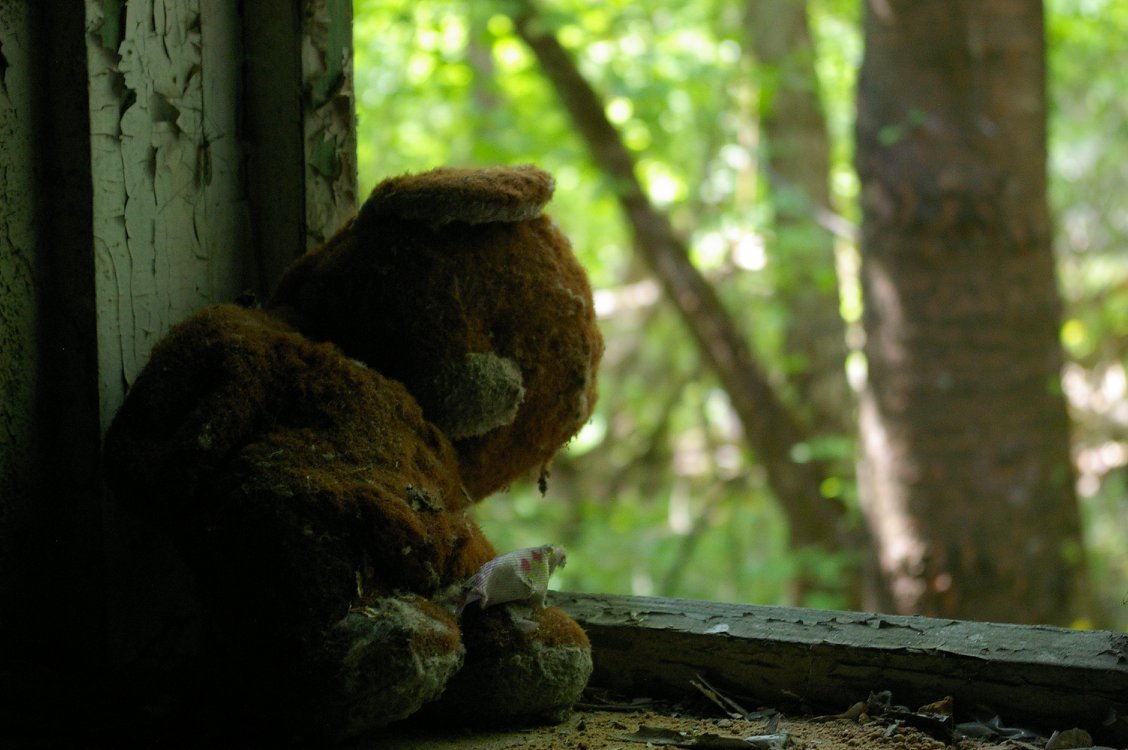
At this stage it is OK (at the time I went at least anyway) to explore some of the houses and inside you’ll be able to see reminders of those that used to call this area home. One such building where this is especially true is when you arrive at the abandoned kindergarden of Kopachi which is littered with old dolls and teddy bears waiting for their owners to return.

The next stop along the trip will be to the city of Chernobyl itself. This is not where the reactor is and in fact, looks almost modern. Here there are guards posted and military personnel going about their business. It’s clear that even in the Zone itself there are those maintaining certain areas for work purposes.

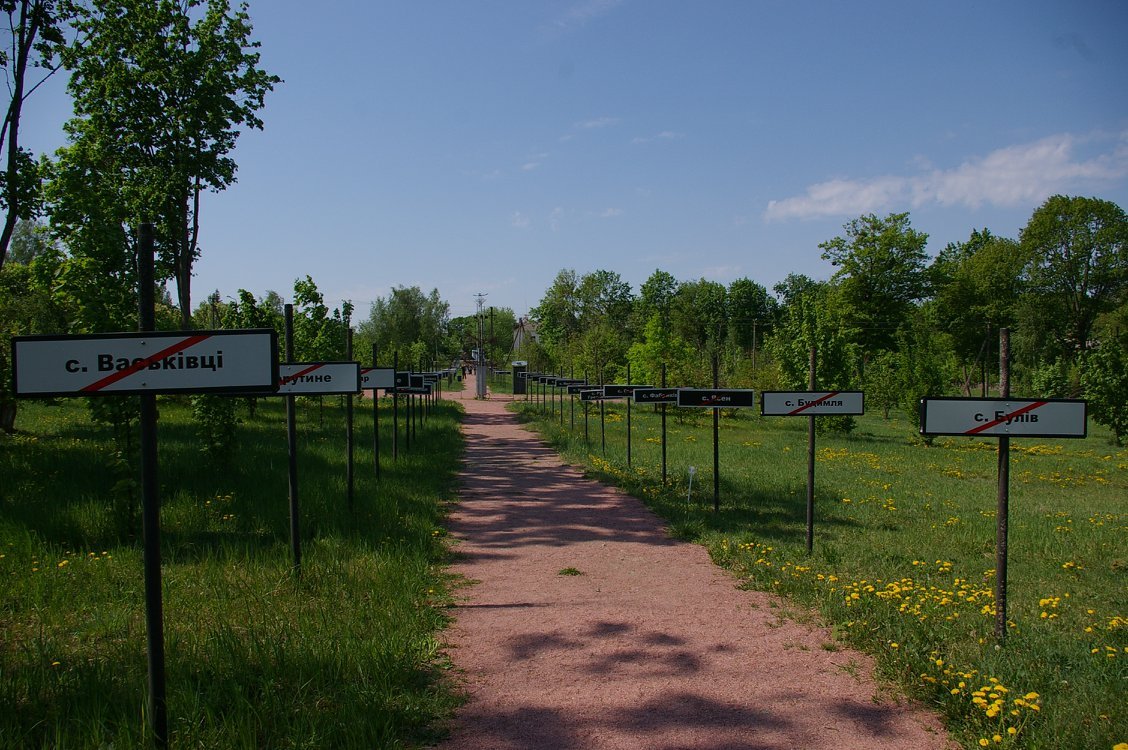
There are a couple of bits worth seeing here. Firstly, check out the impressive mural on the side of the exterior of a museum commemorating the Chernobyl nuclear disaster depicting an exploding reactor core. Secondly take a walk down the corridor of signs that show just how many villages had to be abandoned due to the 1986 disaster. It makes for quite a sobering experience.

Radiation is still highly prevalent in the exclusion zone, so it’s vital you follow the rules closely
An example of the abandoned toys you’ll see when visiting Chernobyl. This bear loyally awaits the return of its owner at the local kindergarden
In the city of Chernobyl these signs show all the lost towns and villages from the disaster

Once through the villages, you’ll move on to the secret soviet object radar DUGA-1 and the secret town of Chernobyl-2 which provided the efficiency of antennas and horizon tracking of the launching of ballistic missiles.

Shortly after this stop you’ll re-board the bus and head towards one of the two main sites in the zone; the sarcophagus and the New Safe Confinement (“Arch”) around the exploded Reactor 4.

This is in the heart of the 10km exclusion zone and you can surprisingly get to within 300m of the sarcophagus itself. Stays here are limited in time as the radiation is still extremely strong, however, you’ll notice that there are a number of people who appear to be working around this area.

Soon after this stop you’ll make your way to get lunch. This stop takes you to a canteen near the reactor and it’s the same canteen that the liquidators for the disaster used. Don’t expect great food here. Let’s just say it’s edible at best.

After lunch you’ll move onto the second of the two big hitters in Chernobyl; the city of Pripyat.

The sarcophagus that houses the remains of Nuclear Reactor 4
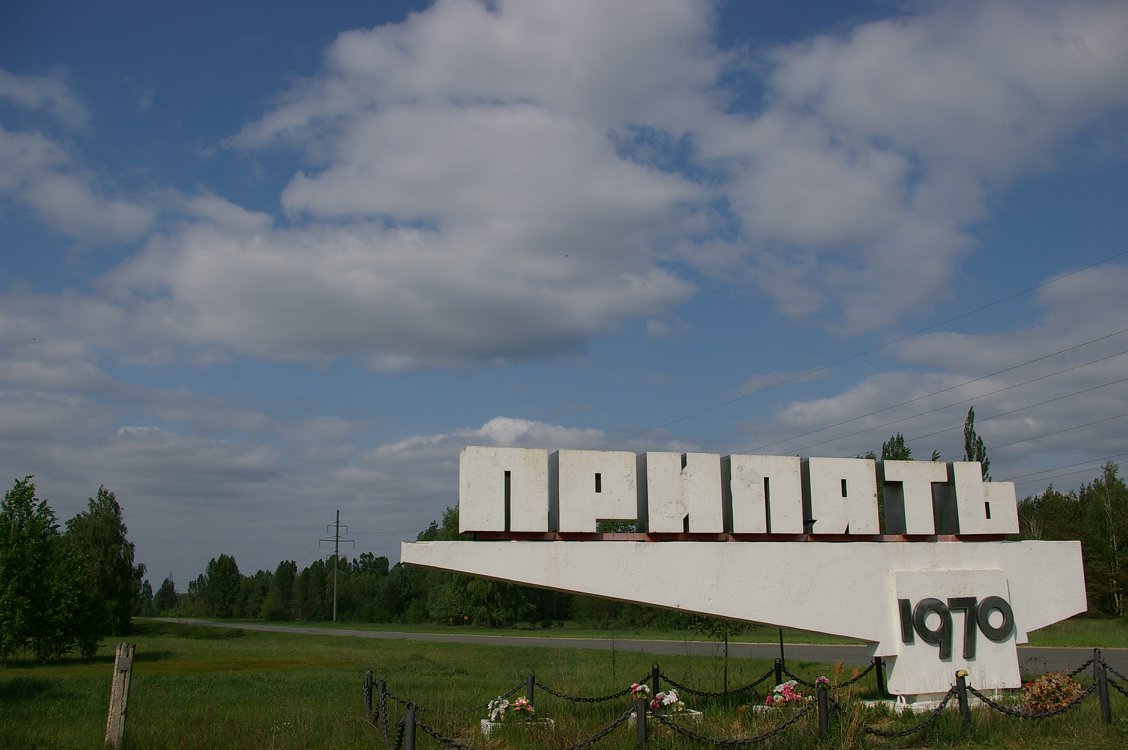
The sign letting you know you’re on the road to Pripyat
Buildings in Pripyat are in various states of disrepair with many falling down

For those of you that don’t know, the city was named after the nearby Pripyat River. Founded on February 4 1970, as the ninth nuclear city (a type of closed city) in the Soviet Union, it served the Chernobyl Nuclear Power Plant. By the time it was abandoned it had a population of almost 50,000 residents.

The city here was perhaps the biggest draw for me. One thing that is slightly disappointing (albeit totally understandable) is that you are no longer allowed to enter any of the buildings as they have become far too unstable. That’s not to say, however, that there isn’t plenty to see and do.

Things to not miss here include, the old hotel Polissia, the Palace of Culture Energetik, the former swimming pool, the town square with it’s spooky artwork (that has been added by certain visitors), the Pripyat football stadium, the old theatre and supermarket and of course the unused funfair.

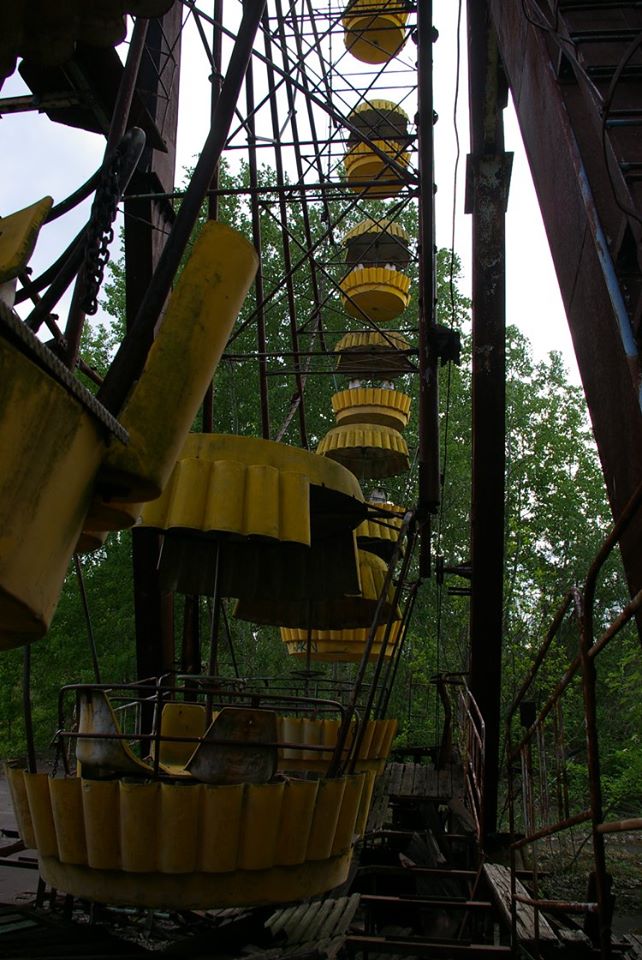
When people think of Chernobyl the image of the huge yellow ferris wheel is probably one of the first things that spring to mind. During a visit you can get up close and personal with this relic from history. One thing you’ll notice – should you have access to a dosimeter – is that the ferris wheel itself is still incredibly radioactive! On no circumstances touch it! Stand near it and take photos but don’t lay your hands on it. That you’ll regret.

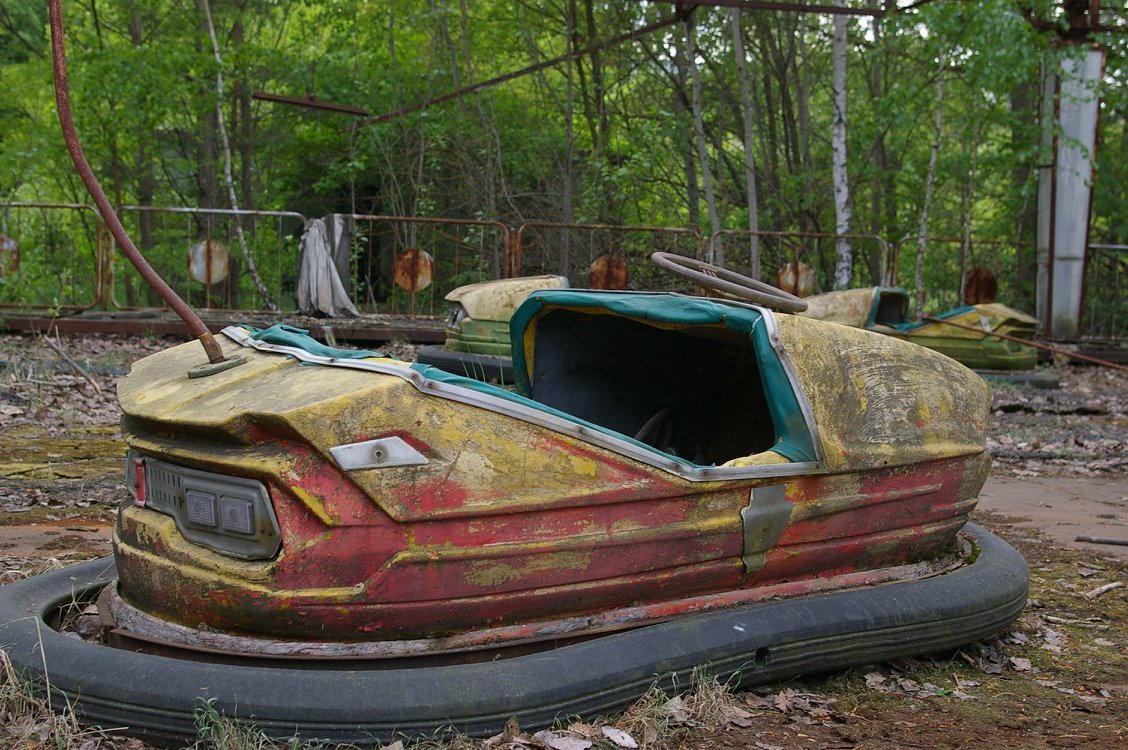
Just to the side of the ferris wheel is the bumper car (or dodgems) that remain where they sat from the 1980s.

After leaving the city you’ll head towards the exit of the exclusion zone – where you’ll be individually tested for excess radiation. On route you’ll make a couple of extra stops to look at a statue made by the firefighters who helped manage the disaster as well as seeing some of the actual robots used to help clean up the area. Again you cannot touch these as they remain highly radioactive.

For me a visit to this city was a fascinating experience. It’s like an entire outdoor museum. A visit to Chernobyl is something you’ll never forget.

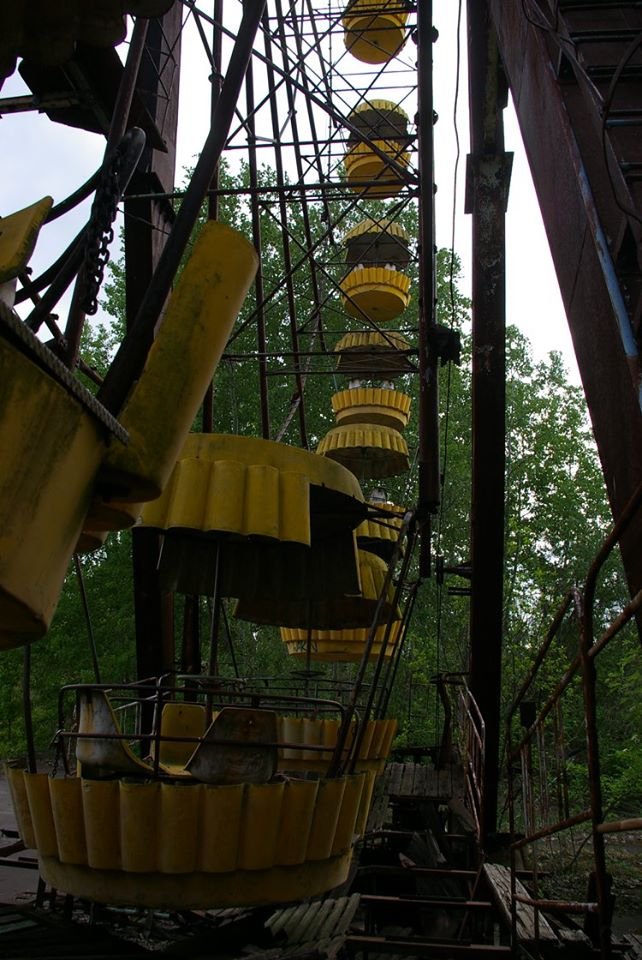
The famous image of Chernobyl; the ferris wheel in the unused Pripyat amusement park
Bumper cars sit in disrepair having not moved since the 1986 nuclear disaster
A trip to Chernobyl allows you to get up close and personal with this famous Soviet relics

Where to avoid

As with any major city there are always parts that you avoid and Kiev is no different. Most of the city, during the day time in my experience is relatively safe although it’s always best to be conscious of where your belongings are at all times. At night, when the streets are dark, it best to take extra precautions on this front. Stay in well lit areas and along the busier parts of the city. While I experienced no problems here myself, I didn’t venture too far off the beaten track at night.

If you have limited time in Kiev then you are going to want to get in as much as possible during your stay. The obvious thing to do (albeit not in the city) is go to see Chernobyl; so some of the city’s other sights may have to take a backseat.

One such sight that is good to see, but not a must in my opinion, is the Friendship of Nations Arch located near Tsentral’nyy Park. This arch was built in 1982 to commemorate the 60th anniversary of the USSR and the 1,500th anniversary of Kiev city.

It’s an impressive structure of its sheer size, however, if you are time-poor in Kiev then perhaps it’s best to view this arch from one of the many vantage points down the Dnieper River.
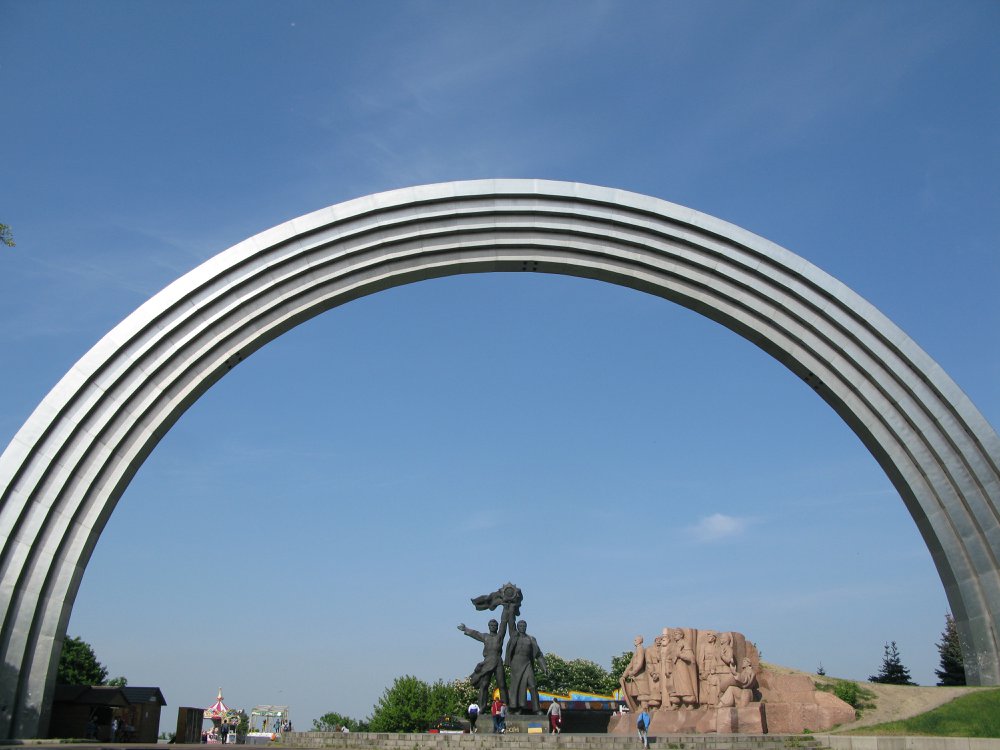

The Friendship of Nations Arch towering above the ground

Another sight to give a miss to is that of the Monument to the Money Frog.

Situated near the Friendship of Nations Arch in Kreschaty Park, this odd statue of a frog sits with its mouth open. As with many statues in cities around the world, this is another opportunity for people to rub a certain part of it for good luck. In this case, visitors can rub the inside of the statues mouth. It’s really not worth trekking all the way to this park for this statue.


The Monument to the Money Frog in all its glory

Great places to eat

From my experience, eating in Kiev is an unusual affair. Let’s be honest, on the whole very few people are travelling here for its culinary treats! On the plus side, however, a substantial meal for two is unlikely to break the bank, so eating and drinking here is extremely affordable.

One thing of note is that in some restaurants, you end up with food you did not necessarily order. When you question this, in my experience, you simply get a shrug of the shoulders and then told to eat it. If you’re not fussy with your food then this ends up being more amusing than a problem, but for those with certain intolerances, it could be an issue.

During my stay in the Ukrainian capital, I sampled a number of small eateries, but two really stuck out to me and for a long-weekend style trip, these are well-worth trying to get in to.

The first is the Georgian-cuisine restaurant Mama Mahaha. This popular restaurant on the main road, Velyka Vasylkivska near the national football stadium, is a real gem that provides a wide range of tasty, filling food.

A real plus point is that they cater well for English-speaking tourists and English menus are available upon request.

The best things to try here are one of the various meats on stick dishes (and there are plenty to choose from) and the Khinkali which is a form of large Georgian dumpling. These taste-filled parcels are not to be missed! Make sure you also order a bottle of wine to accompany your meal which is serviced in traditional Georgian-style; which roughly equates to wine being drunk from a bowl!


The Khinkali at Mama Mahaha are not to be missed

Finally make sure you save enough room for one of the Mama Mahaha’s famous Khachapuri. These are large, cheese-filled breads that have to be tried to be believed. Usually in the centre of these Georgian treats sits a cooked egg which, for me, just tops off how delicious this food is.

The second place I really enjoyed was the rather hipster-like cafe named Literaturne Kafe Imbyr. Located, again near the national football stadium on Zhylianska Street, this is the perfect spot to escape the hustle and bustle of the busy street-life of Kiev.

As a vegetarian / vegan restaurant, meat is totally off the menu. This really shouldn’t detract passioante carnivores from its doors however, as this wonderful restaurant has many treats worth savouring.

Within its walls, this quaint restaurant is nestled amongst the rows of books that line its walls and provides a very easy escape from reality. Here you can get your head down in a good book while also enjoying a light salad or pasta dish alongside a hot drink or cocktail.


Useful links

Ryanair

Wizzair

UIA

Hotel Alfavito

Another Kiev Urbex Tour

Chernobyl Tour

Kiev Metro

Mama Mahaha

Literaturne Kafe Imbyr

Remember you can follow World Complete on Twitter, Instagram, Pintrest, Tumblr and Facebook send your comments and pictures from your travels using #WorldComplete and #Travel.
Easter Island… enjoy the middle of nowhere

Easter Island

I thought I would start this blog as far away from home as I possibly could. And it doesn’t get much further away than Easter Island; deep in the middle of the Pacific Ocean. I travelled to Easter Island from Chile back in October 2017 as I thought it would be absolutely incredible to see the magnificent Moai statues in their natural environment rather than just as part of an exhibition in the British Museum in London. It’s fair to say that it’s not the easiest place in the world to get to however, as this blog will go on to show, it’s well worth the time, effort and expense. Before we get into the ins and outs of travelling to Easter Island, let’s take a look at some of this wonderful spec-of-lands intricate, and sometimes confused, history.

As I mentioned, Easter Island is in the Southeastern Pacific Ocean at the south eastern most point of the Polynesian triangle located in Oceania. It’s said to be the world’s most isolated inhabited island and, in fact, it’s closest neighbour is its Chilean brother – the Juan Fernandez Islands – which lies some 1,850 km or, if you’re from the UK, 1,150 miles to the east. Yet while it may sit on it’s own in the middle of nowhere, it is far from forgotten, having been first discovered by the Dutch explorer Jacob Roggeveen on Easter Sunday in 1722.


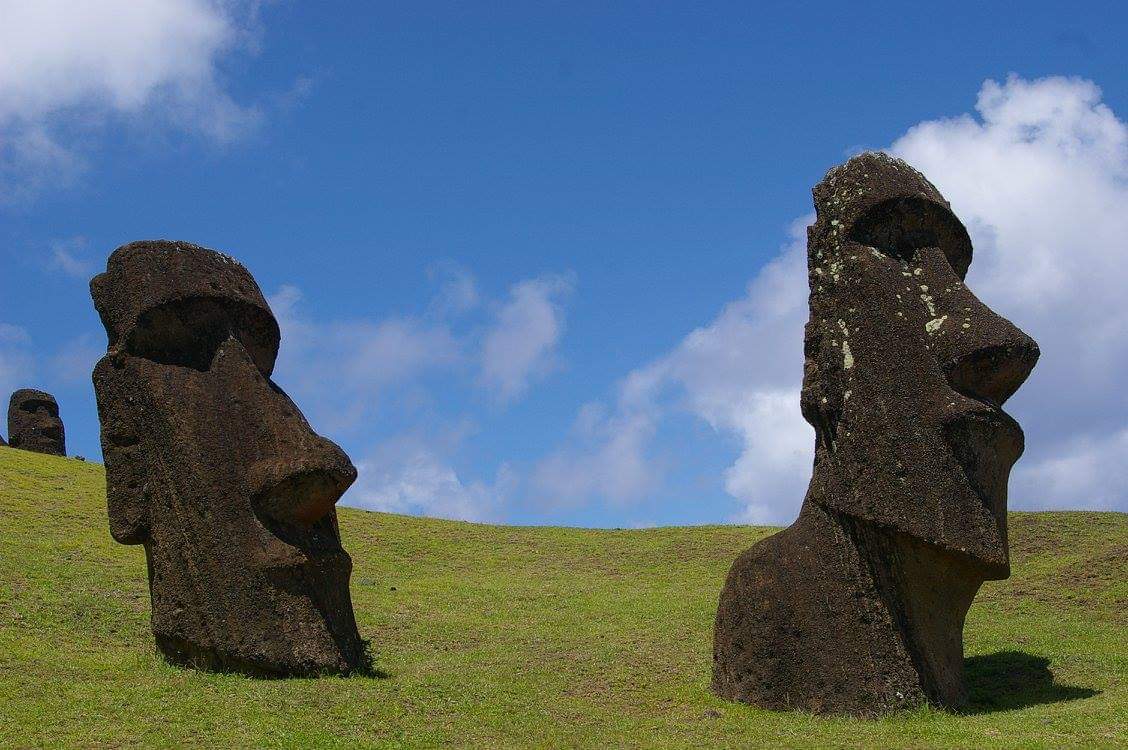
Moai statues at the impressive Rano Raraku

Easter Island – or to give it it’s local name Rapu Nui – is home to nearly 8,000 residents, and despite its remote location, is part of Chile. Formed in the shape of a triangle (as the map below will give testiment) the island is a mere 14 miles long and seven miles wide, and its highest point, Mount Terevaka – one of five volcanoes on the island – stands just 600m above sea level.


Google Maps image showing the whole of almost-triangular Easter Island

Yet it’s not its barren environment that draws people to this far-flung corner of the globe; more the 887 Moai statues that litter its hilly landscape. Much has already been written about how these awesome, awe-inspiring Moai statues were created – and indeed transported – so I will not speak too much about that in this blog. Instead, I will focus on the practicalities of travelling to Easter Island and the main sites to see, places to eat and those that you can perhaps pass on. Enjoy.


Getting there

Getting to Easter Island is far from easy. The only airline I know that flies there is South American operator, LATAM. The easiest route – and I use that term lightly – is from Santiago (the capital of Chile) and takes around five hours to get to the Pacific island. In fact, other than by cruise ship, the only other way to get to Easter Island is to fly there from Tahiti!

It’s perhaps one of the weirdest feelings to be landing on the island at Mataveri International Airport. Unlike the behemoth that is Santiago International Airport; Easter Island airport, as I will call it for ease, is no more than a mere wooden shack. Stepping off the 747 onto the tarmac for the first time is a memorable moment. Once down off the aircraft, visitors make their way over to the small terminal building.

Made up of an open plan single room, arrivals step through the opening of the airport, past a wooden model of a whale, and on to collect their luggage from the small conveyor belt. Given that Easter Island is part of Chile there is no need to go through passport control. This means that arrivals to the island go very quickly through the airport and out on to the island itself. This process is helped by the fact that there is usually only one flight arriving each day and then one departing; making this one of the emptiest airports you’ll ever experience.


LATAM flight departing the remote Mataveri International Airport

Other than the fact that flights only depart from two locations, the other issue with getting to Easter Island is the cost. Let’s be fair, it’s not cheap if you are factoring in travel to the mainland of Chilie as well. However, once you’ve arrived in Chile the cost to travel to Easter Island is actually manageable. On average a return trip to Easter Island from Santiago (based on October 2020 prices) could cost as little as £241 per-person for an economy class ticket.

The flight itself with LATAM airlines is a pretty smooth, easy and enjoyable one and given your destination, it’s money well spent. The usual layout of the plane is 3-3-3 seats across the aisle broken up by two gangways. The range of both food and in-flight entertainment is good, but not spectacular, although certainly more than enough to take you through the five hours that you travel across the Pacific Ocean. The films and TV programmes available are ones that you’ve probably already seen, but with one or two new releases to enjoy. Let’s be honest, the TV choices onboard are not really why you’d be going anyway.


Where to stay

Once you’re safely down on Easter Island there is actually a surprising choice of accommodation available ranging in price from campsites all the way up to luxury hotels catering for all price ranges. There are over 200 places to stay on Easter Island – with the vast majority in the island’s only main town (Hanga Roa).

To give you an idea, camping with Camping Tipanie Moana in October for seven nights could cost you as little as £128, while a luxury stay at Hotel Hangaroa Eco Village & Spa can set you back £4,732 for the week. The islands most expensive accommodation however is explora Rapu Nui which can cost an eye-watering £8,652 for a week in October.

With the latter two of these hotels well outside my budget, I plumped for the modest mid-range accommodation of Hotel Iorana; just two minutes from the airport by car and a brisk 20 minute stroll to the docks in Hanga Roa. Costing around £1,167 for a Superior Double Room for the week, Hotel Iorana isn’t one for those looking to travel on a shoestring budget, but it does provide an afforable base just outside of the town.


The entrance to Hotel Iorana is a two minute drive from the airport

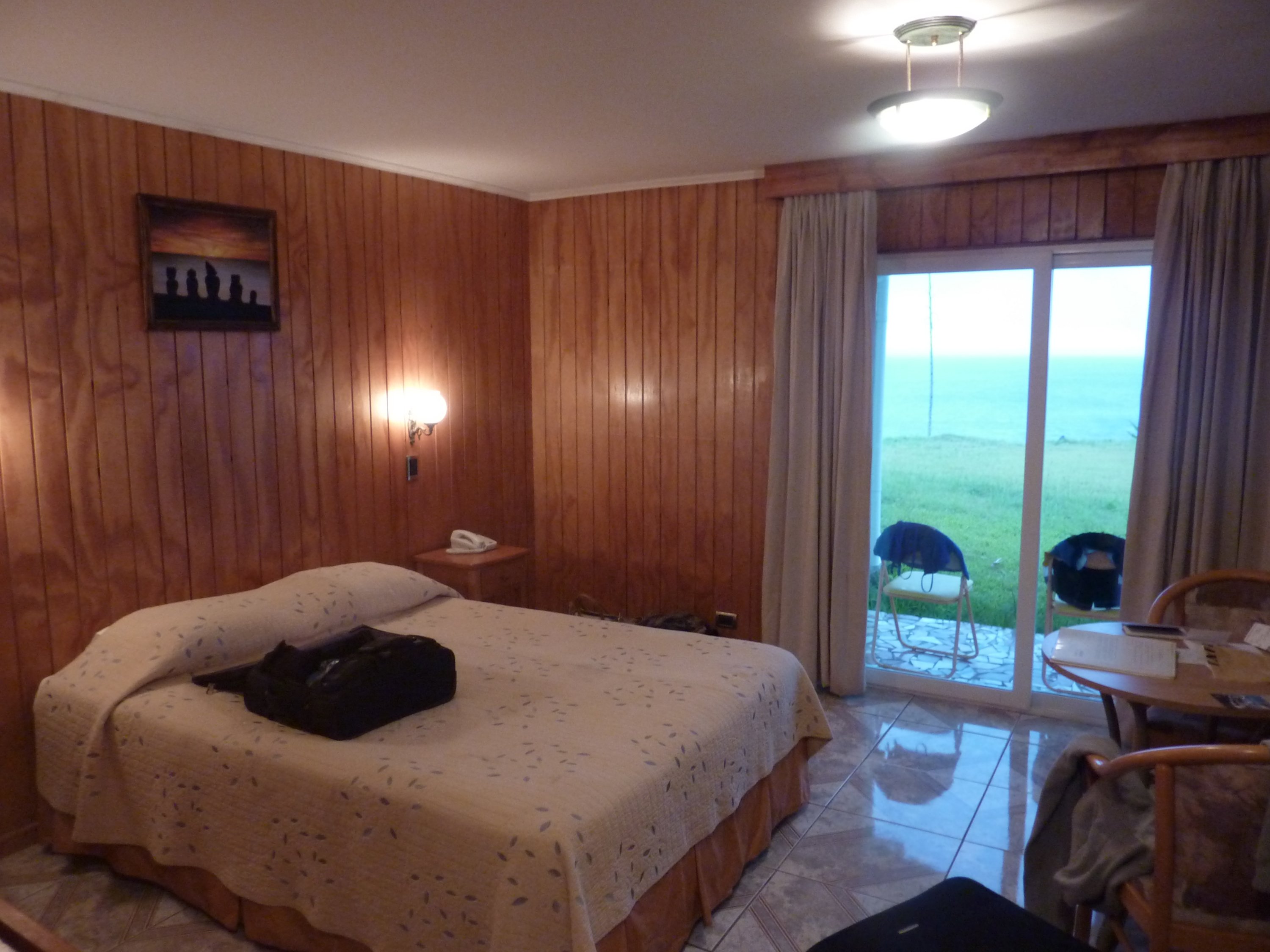
The downside of Hotel Iorana is that it may appear slightly simple. The rooms are plain wooden affairs with basic bathroom facilities and dated televisions. There is a rule at the hotel (that I believe stretches across the whole of Easter Island) that all toilet paper goes into the bin after use rather than down the toilet. While this may seem unhygienic there is a good reason for this due to the islands rather rudimentary plumbing systems.

There is also no available wifi in the rooms. To get online you have to sit in the reception area and try and connect to the patchy, intemitent signal there alongside the hotel’s other guests. Not a major issue but don’t expect to be streaming any films during your stay!


A standard looking room at Hotel Iorana

On the plus side, the hotel is well situated for the town and reception staff, in my experience, were thoughtful and helpful to my needs. The breakfast buffet options were also plentiful and catered for a wide range of tastes and preferences.

The hotel also boasts two outdoor swimming pools. One a ceramic pool by the hotel restaurant which affords a great view of the surrounding ocean, and the other a sea pool slightly sheltered by the rocks.

However, the best thing about this hotel is waking-up in the morning, opening the double-curtains onto the outside patio (all rooms are on a single floor) and stepping in to the fresh clean-air taking in the spectactular coastal views.


Getting around

In such a small place you can imagine that getting around is pretty simple. Hanga Roa and a number of the Moai sites are walkable from all of the hotels but many visitors also decide to rent bicycles, off-road ATVs or even horses (you’ll notice many wild horses also roaming around the island although I’d advise against trying to mount any of those ones).

There are also regular taxis between Hanga Roa and hotels that can be booked for only a few Chiliean Pesos for the five minute journey.

During my stay I opted to rent a car, which I did from Insular Car Rental which is based on Atumu Tekena (a long road that leads from the airport to the centre of Hanga Roa).

There are a few things you’ll need to know before you rent a car here. The first of which is that there is no car insurance on Easter Island! That means that if you have an accident you will have to pay for it. That may sound a scary prospect to those travelling from big cities like I did, but, to put it in perspective, if you find yourself behind two cars while driving, that counts as a traffic jam! You’ll have a greater chance being kicked by a wild horse than you will of crashing the car into another vehicle.


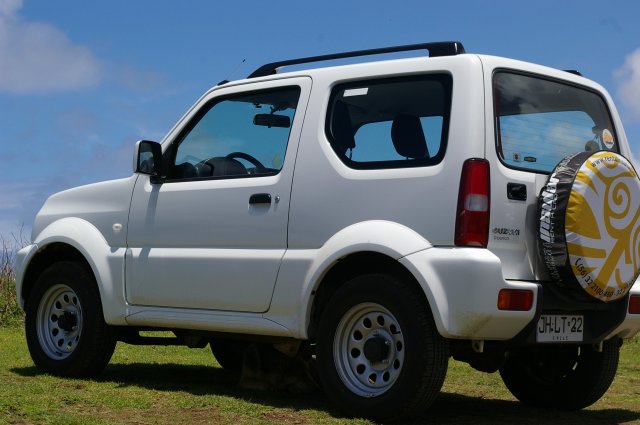
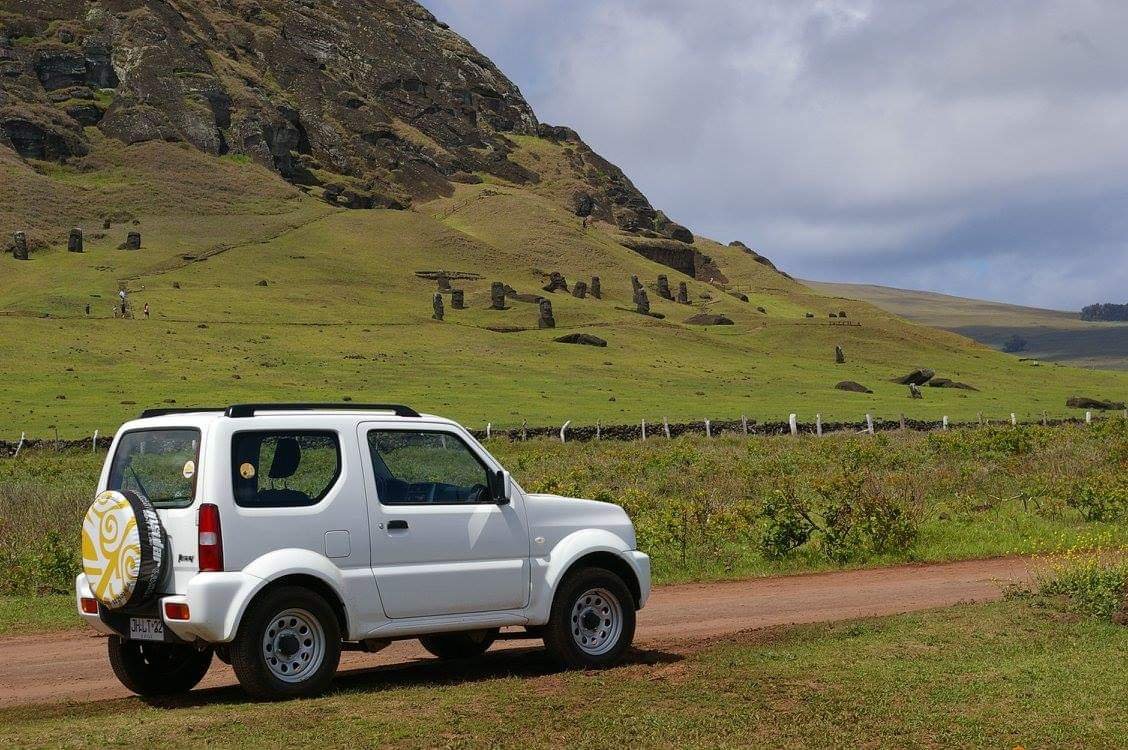
A typical Suzuki Jimny on Easter Island

The next thing to note is that outside of Hanga Roa the roads are awful. This is probably the biggest concern to drivers here as a sudden pothole could cause you problems. My advice, just drive sensibly and you’ll be fine.

Parking, as you’d expect, isn’t an issue here. With no parking restrictions drivers can enjoy the entire island at their leisure and pull over to check the sights at their ease without having to buy parking tickets.


You can park pretty much wherever you want to

Finally, the cost. Most people renting a car here will settle for the compact Suzaki Jimny for a cost of 55,000 Pesos a day (approximately £60 per day).


Top sites

It’s hard to narrow down the best sites on Easter Island and say some are better than others. This is especially true given that due to the islands size and it being basically one large outdoor museum (Easter Island as a whole is listed as a UNESCO World Heritage site), it’s pretty easy to see the whole island in one trip. For the basis of this blog I will pick out some of my favourite must-sees from this incredible place.

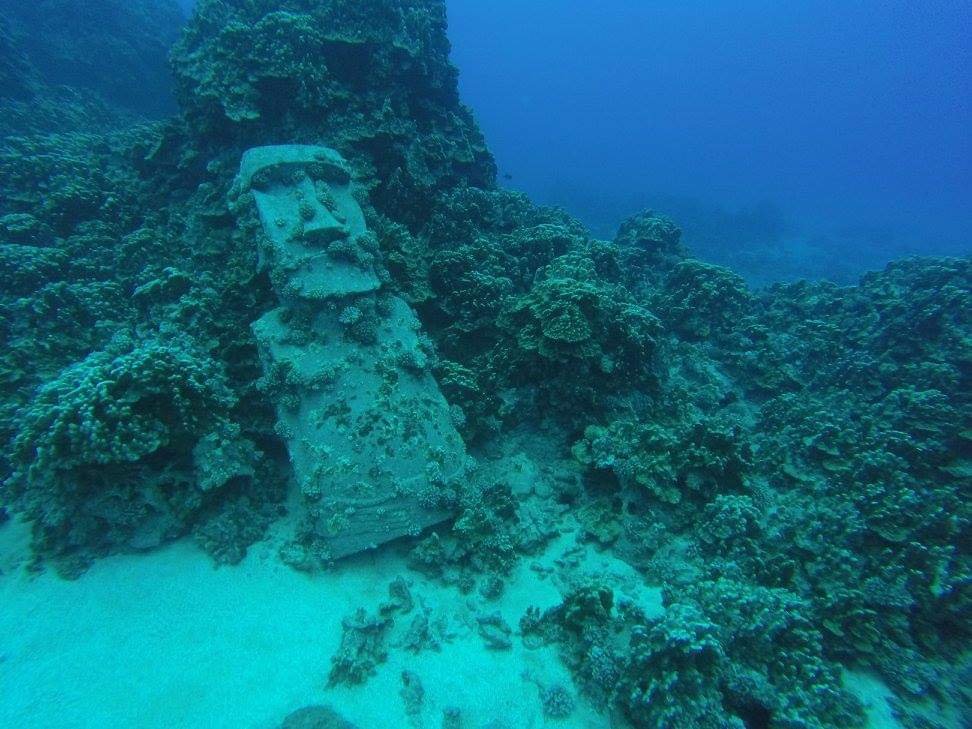
The first, surprisingly, is actually the one that numerous visitors either, may not know exists or, may not be able to see. That’s because this Moai statue lies 22m below the surface of the ocean! However, as I’ll explain, those without PADI scuba diving qualifications don’t need to feel too let down about this given that it’s a fake.

Back in 1995, Kevin Costner made the film Water World. Around the same time he also co-produced a movie called Rapa Nui – which was, if you haven’t guessed it, about Easter Island. When this film went much the same way as his other more expensive big budget flop, there remained a lone fiberglass and metal Moai statue. The question was, what would the film crew do with this 700-tonne beast? The answer; dump it on the ocean floor. This original underwater Moai eventually broke apart but the tourists liked it so much that one of the scuba companies decided to construct another – this one out of rock – and placed it closer to the harbor.

So while the origins of this statue are far less mysterious than those above the surface, it still makes for an amazing dive experience. There are a couple of dive school options along the harbor at Hanga Roa but the centre I chose to use was Mike Rapu Diving Centre. This relaxed dive school allowed me to rent all the equipment I required and took me to see the underwater Moai, as well as a submerged anchor.


The underwater fake Moai statue is just a five minute boat ride off the shore of Hanga Roa and lies 22m below the surface

Stepping back onto dry land, another must-see is the beautiful open sandy beach at Anakena. Located about 20 minutes drive away from Hanga Roa on the far east side of the island, Anakena offers visitors Easter Islands only sandy beach and what’s believed to be the landing spot for the original settlers to the island.

This pristine landscape is spectacular and, if this beach was anywhere else in the world, would be packed with deck chairs and holidaymakers from sunrise to sunset. Yet even in the peak hours of the day there is still plenty of space on this sandy retreat. However, to get the best views of the beach and the open waters, I’d advise to get there first thing in the morning so you literally have this slice of paradise to yourself.

The waters are very clear and even wading out into the shallows, you’ll often be able to see a variety of fish (including small pufferfish) amongst the rocks.

Arriving at Anakena you’ll notice a small free car park just to the side of the beach which is adjacent to a number of outdoor restaurants and some basic toilet facilities (which I’ll add are not free of charge to use).

Once you’ve walked through the short walkway between the bars, below the trees, you’ll be out onto the beach itself. And in true Easter Island style, you’ll not have to look far for a series of statues of various sizes and states of disrepair.

Behind the sandy shore, sits the statues and often – on the grassy banks nearby – locals will rehearse, or perform, traditional dances for visitors to enjoy.

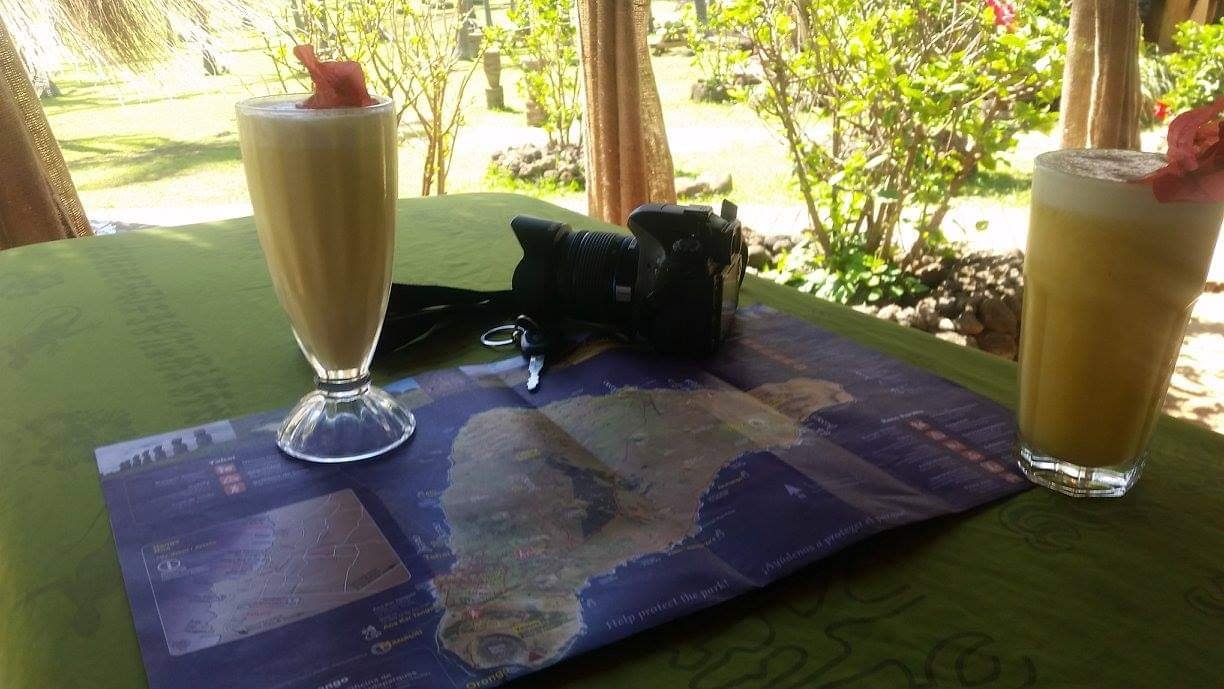
Finally after sampling all this beach has to offer, you should take time to grab some lunch and sample a fruit juice or two at one of the restaurants. Sitting back, sipping on a delicious drink, taking in the scenery and planning my next move for the day still remains one of my favourite memories from this place.

The stunning Anakena beach is the only sandy beach you’ll find on Easter Island
Local people performing a traditional dance at Anakena
The bars and restaurants at Anakena are the perfect place to plan your day’s activities on Easter Island

The next stop for all Easter Island travellers is the incredible Ahu Tongariki. This is the first place I’ve mentioned that you’ll need to have an entry ticket for.

Easter Island gained protected area status as a National Park back in January 1935 and since December 8, 1995, the Rapa Nui National Park was declared a UNESCO Global Heritage site. As such, tickets are required to gain entry to the main sites. Tickets can be purchased at the ticket office located at the airport entrance gallery, during flight arrival times, at the central office located at Atamu Tekena Street (next to the Cruz Verde pharmacy) or at the Provincial Office of the CONAF located in Mataveri.

The entry has a duration of 10 days (from first use) at a cost of $80USD for foreign adults and $40USD for foreign children. Tickets can be inspected anywhere in the Rapa Nui National Park, so I’d recommend carrying the ticket with you at all times.

That’s the admin sorted. Now you can enjoy Ahu Tongariki!

Once in front of the 15 giant statues the first thing that grabs you is their sheer size. Facing inwards to the island, away from the ocean (as indeed all of the statues do), these silent giants strike an imposing scene on the bare landscape.

Given their position you can walk a full 360° around the statues and examine them from behind to get a full appreciation of the magnitude of these sculptures.

On your approach to Ahu Tongariki you’ll have seen them clearly from the road. Yet nothing quite compares to standing in front of them looking up at their large sky-gazing faces.

Nothing that is except perhaps watching them at sunrise.

To get this once-in-a-lifetime photo opportunity you’ll have to wake up early and traverse the potholes-filled roads to make the short 15 minute drive from Hanga Roa along the coastline.

Take up a central position onsite nice and early as other visitors will be trying to do the same. Then simply sit back and enjoy the show.


The enormous Moai statues lined up at Ahu Tongariki
The beauty of Easter Island is that these awesome sites are so visable from the road as you approach
Very little can compare to seeing the sunrise over Ahu Tongariki

Perhaps the best known site on Easter Island is that of Rano Raraku; the birthplace of the great Moai.

Situated on the side of a volcano, it was a quarry for about 500 years until the early eighteenth century, and supplied the stone from which about 95% of the island’s known monolithic sculptures were carved.

Making your way along the path the number of Moai you see, either fallen over or buried, makes you almost feel blasé about these wonderful creations. Then you remind yourself the weight of the task the island’s predecessors undertook to create them and then Rano Raraku becomes anything but ordinary. Standing back and looking out over the remains is a special experience.

Make sure you don’t miss the largest of the incomplete Moai carved into the side of the mountain that, had it been stood up, would be 21.6m tall and weighing over 270 tonnes! Who knows what they were thinking when they created this or how they ever planned to move it. Also follow the path around the hill to visit the unusual Tukuturi Moai in its kneeling position complete with beard. You’ll also get a breathtaking view of Ahu Tongariki in the distance from here.

Finally, as you depart this site, make sure you pull over along the road to get a view back across the whole of Rano Raraku. It’s not to be missed.


With very few cars on the road, you have the freedom to pull over anywhere to grab those memorable snaps
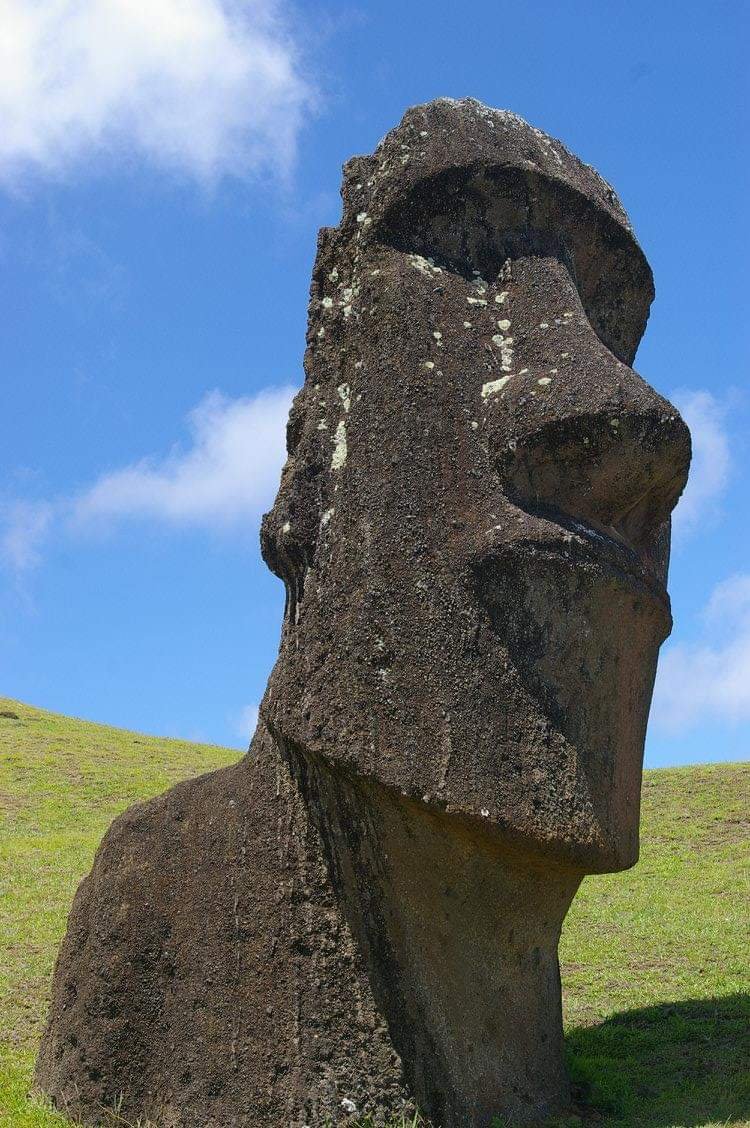
One of the many Moai you’ll see at, what is arguably, the main attraction on Easter Island; Rano Raraku

The final must-see site is the 324m high extinct volcano, Rano Kau on the south-west side of the island.

This enormous crater (which is almost a mile wide) has become a lake and is one of only three sources of fresh water on the island. It sits just south of the airport and can be accessed by a steep, winding road.

Once at the top you will, of course, need your ticket to gain access to the information centre and to look out over the ocean from the stone village of Orongo where the fabelled Birdman cult practiced their activities.

You’ll also get an incredible 360° view of the island from here and be able to see the Pacific Ocean in all directions; further demonstrating just how small Easter Island actually is.

Also of note in this crater is the vegetation growing along the sides of the walls; providing local people with fresh fruit and vegetables.


The crater of the extinct Rano Kau volcano; one of five volcanoes on Easter Island

Where to avoid

Easter Island is such a small fascinating place that it’s hard to name anywhere that you should not try and see. However, if you find yourself short of time then perhaps skip over the Ana Kai Tangata cave paintings. This site is small and free to see but can be done in only a few minutes. If the weather or light is poor, then you may not get the best experience here.

Te Pito Kura is another location that may be visited quickly. The main site here is a face-down Moai statue and a large magnetic stone called Te Pito O Te Henua which means the ‘navel of the world’.

Despite saying this if you can get around all these sites, then do so.


Great places to eat

As you’d probably expect with island culture, its cuisine is based largely around sealife. So for fans of seafood, Easter Island can be a real treat. You won’t find any McDonald’s or Subways here.

One thing you always have to bear in mind with restaurants on the island is that menus can change by the day depending on what food a restaurant has in stock. Don’t be surprised to be told something is unavailable as its run out. However, the food served is both good quality and fresh.

Another thing to remember is that for good quality food in remote locations, you’re going to have to spend a bit of money.

Similaly to its hotels, the vast majority of eateries here are based in and around Hanga Roa and towards its main dock. However, in my personal experience, some of it’s best restaurants are a short walk away from the centre of town.

Just past the harbour, continue down the road that hugs the coastline (Policarpo Toro) and you’ll stumble across Te Moana; a charming little coastline bar and restaurant. Here you’ll get a selection of amazing seafood options as well as steaks, salads and tropical cocktails. Aside from the food tasting incredible, the drinks and the ocean view make this eating experience worth the money.

Moving back towards the centre, and at the end of the Hanga Roa Harbour you’ll find the lively La Kaleta. Seafood is again the flavour of the day here and being just a stone’s throw from the water you can see why. However, the best thing about this little stop is that drinks menu. A wide variety of cocktails are on offer here and the Tequila Sunrise is a personal favourite and one not to be missed. It’s basically a holiday in a glass! Add to that, that you can while away the hours sipping cocktails whilst watching the skillful surfing enthusiasts perfecting their art, it makes for a very pleasant setting. The staff here are also super-friendly and, upon request, will call you a taxi if you’ve had one too many drinks.


The bay in Hanga Roa is home to some wonderful restaurants and bars as well as the dive schools

If, like me, you want to watch the pennies occasionally while you travel then you need to find some affordable options too. One such place is Pea Restaurant. Situated just beyond the only football pitch on the island (a 3G pitch that once hosted Chilean giants Colo Colo when they played a team of Rapu Nui locals for an exhibition match) this handsome restaurant gives a great selection of burgers and salads at prices that don’t break the bank. If you’re lucky enough you can get a table by the edge that overhangs the ocean giving you a chance to spot a sea turtle swimming by.

My final pick for this blog is also my favourite restaurant on Easter Island. Further away from the centre, Mahia Hotel y Restobar can be found down Hanga Piko – a short 15 minute walk from the harbour.

This wonderful restaurant is small in size and is connected to the adjacent hotel and provides interesting flavours for traditional Chilean dishes and seafood. The time I ate here the chef himself made sure every aspect of my dinner was perfectly prepared to my liking and ensured I enjoyed a calm, hassle free dining experience.

The restaurant is also away from any neighbouring establishments meaning that even the minimal Easter Island foot traffic is almost non-existent allowing you to soak in the combined majesty of the food you’re eating with the scenery you’re absorbing. Time your visit with sunset and this Easter Island meal – alongside this almost fairytale island – will live long in the memory.


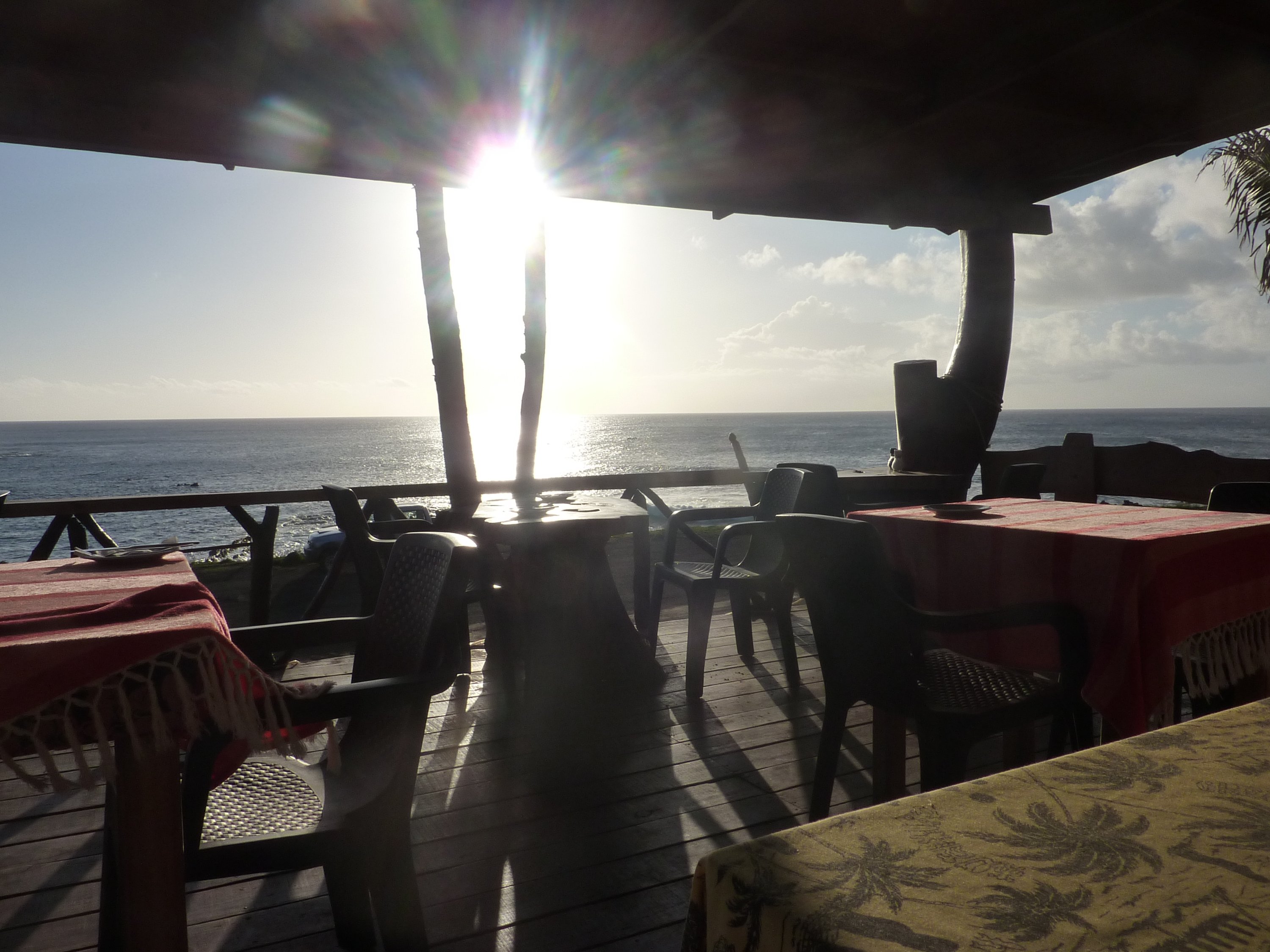
Shoreside seating at Mahia Hotel y Restobar where the freshest fish is served
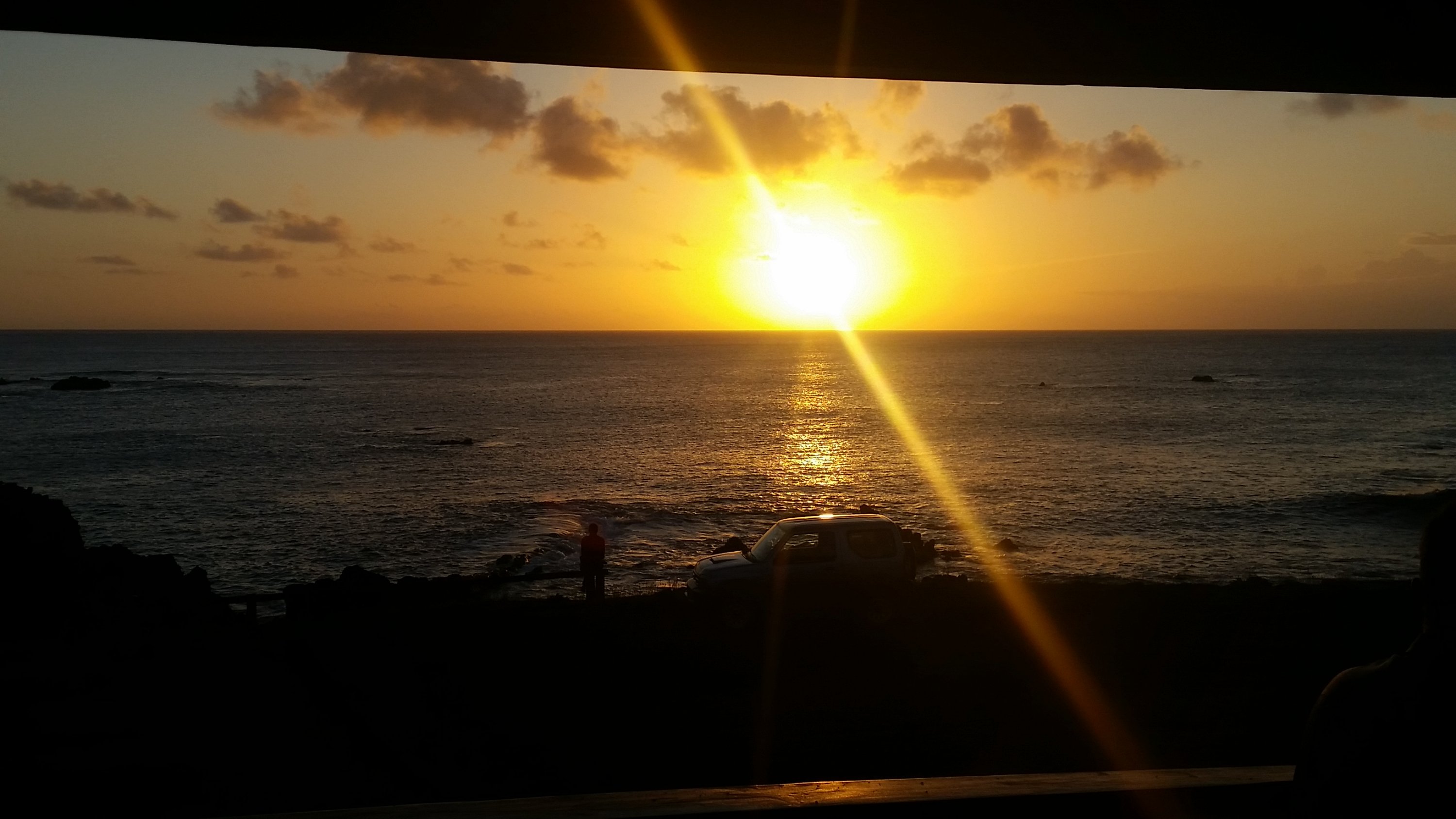
Spectacular sunsets can be viewed from Mahia Hotel y Restobar

Useful links

LATAM Airlines

Hotel Iorana

Insular Car Rental

Imagina (site entry ticket information)

Mike Rapu Diving Centre

Te Moana

La Kaleta

Pea Restaurant

Mahia Hotel y Restobar

Remember you can follow World Complete on Twitter, Instagram, Pintrest, Tumblr and Facebook send your comments and pictures from your travels using #WorldComplete and #Travel.

Introducing… me!

Hello!

Firstly thanks for stopping by. Hopefully this blog will give you a few useful bits of info and, if I do my work correctly, make you smile once or twice. As a keen traveller (well when money allows) I love to see the world. My aim is to get to as many countries out there as possible and to experience as many different cultures as I can. So not setting my sites too high then!

It’s where the idea of World Complete has come from.

So while it may be incredibly unlikely that I’ll step foot in all of the countries on this planet of ours, I’m going to give it the ol’ college try.

So who am I? Well I’m Steve. I’m 37 (at the time of writing) and I live in Kent, UK with my wonderful wife (Holly), my beautiful sons (Jacob and Noah) and my (sometimes) friendly cat (Mani). The first of these three is more likely to get more airtime on this blog than the latter two, but sometimes I may give a bit of a son and cat update. I work in PR so writing a blog for one of my actual passions seems like a good idea.

What can you expect to see on World Complete I hear you ask? Well I’ll try and cover all aspects of my travels to various locations (flights, arrivals, departures, accomodation, eating out, top sites, things to do, things to skip, fun and games and other little oddities I come across etc.) as well as a bit of history for those interested and some links to websites of the places being spoken about (if they ask where you heard about them then please let them know it was via this blog).

I plan for this blog to be totally unbiased and fully my honestly-held opinion. That’s important to remember. This will be just my impression of places I visit. I will cover the good, the bad and everything inbetween. What I won’t do is blow smoke up the proverbial arse of places just to get likes.

A bit about my travelling habits. It’s fair to say that I’m not a beach person. Give me five minutes on a normal beach and I’m itching to do something. That could be because I get bored quickly or it could also have something to do with the fact that five minutes of strong sun will have me looking… well let’s just say, a tad red.

Finally, any pictures I feature on this blog will be taken by yours truly. So apologies straight away if they are sometimes slightly rough around the edges. I’m no professional photographer, but I’ll give it a go.

All that’s left to be said is please enjoy and join me as we try and become World Complete!