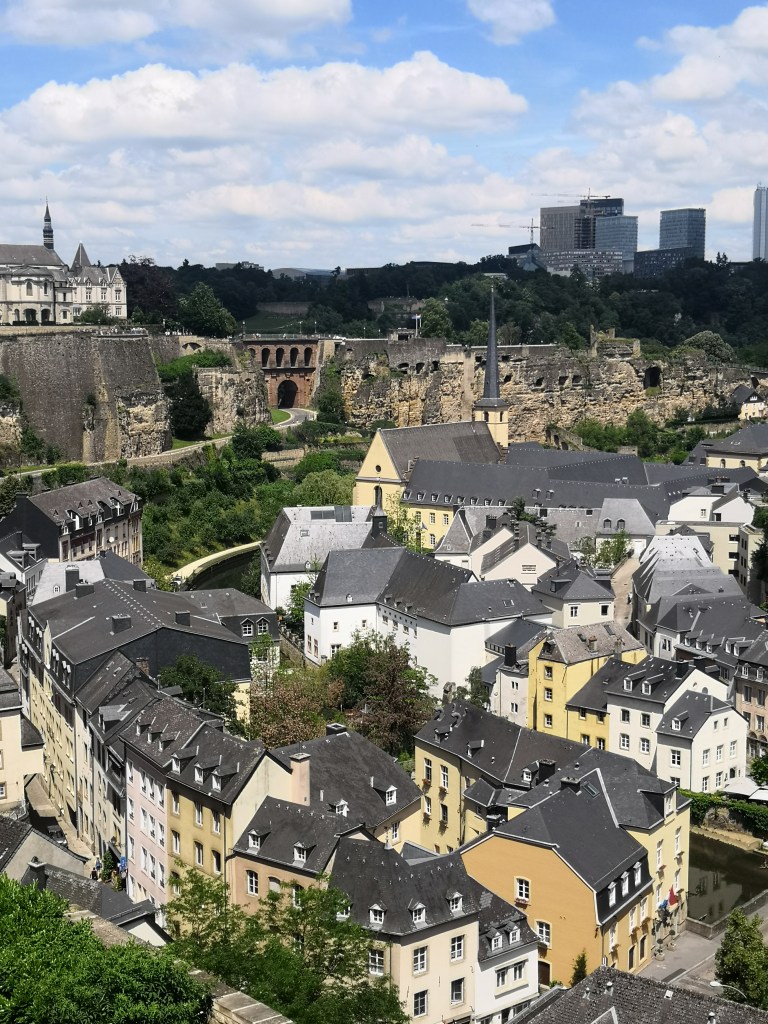
The Grand Dutchy of Luxembourg – to give it, its full title – is a small landlocked country in central Europe. And if I’m fully honest, I’m not 100% sure why I had it in my mind that I really wanted to travel there. Yet I did, so my girlfriend (Holly) and I went for a short weekend in the easily memorable named capital; Luxembourg.
There is a great amount of charm to this well-off (it has the second-highest GDP per-capita worldwide behind Qatar) European enclave. Picturesque, clean streets and a great pace of life in this city make it a pleasant place for visitors to stay.
The city of Luxembourg is small by many city standards with just over 116,000 residents. It is a city though with a great deal of histroy that can be linked all the way back to the Roman era. When you look at a map of Luxembourg you can see why Roman towers and vast walls were built here to fortify Luxembourg as a stronghold against invasion.
The city has the joy of natural geography when it comes to fortifications. Steep surrounding cliffs that fall away into valleys make it a great place for ancient army generals to use as a base. So while parts of those old fortifications, and structures, still exist in the present day, the city has moved away from being a military stronghold to a financial one; becoming the tax-haven of choice for many mega-rich corporations such as Amazon.
The small, but stunning, city of Luxembourg makes for a great short weekend away
One thing is clear. Holly and I do not fall into that mega-rich category. But that didn’t stop us enjoying a short one-night break one June in this quaint city. That brings me to my first point about Luxembourg. It’s not a super-cheap city. When visiting from the UK, you can expect prices to be similar to back home. There is a very good reason why a lot of people in Luxembourg are so well off (4.9% of the country’s population are millionaires according to a Credit Suisse report in 2019)!
The next point to consider is the weather. For us, picking a trip in June proved to be an extremley good call. Luxembourg is known for being an very wet country all year round. So we gave ourselves a fighting chance of getting decent weather by coming in the summer months. Average highs in June reach around 21°c which, in the sun, provide a nice temperature to walk around in. When we were there though, these temperatures were closer to 25°c.
The next thing to note is that Luxembourg has three official languages; French, German and Luxembourgish. Students in Luxembourg learn all three at school with English coming in a distant fourth. Most of the time you’ll see German and French language used for signposts and administration while Luxembourgish is used for conversation. However, if you are like us, and you struggle with another language, most of the time you can be understood with some basic – if disjointed – French or German and a whole heap of English.
Google Maps shows just how compact the capital city of Luxembourg is
A final thing to note is the currency. As you’d expect, Luxembourg is on the Euro, so stock up before you head out. At the time of writing £1 would get you about 1.12 Euros.
As I’ve already said, I was not sure what it was about the country that drew me to it, but I’m extremley glad I went. The multi-cultural feel of the city (almost half – 43% – of Luxembourg’s population are foreign residents) with influences from all of its surrounding nations make for an eclectic mix.
Its small size also adds to its charm. Being somewhere where everything is so ‘local’ makes for a very different travelling experience.
And even though Luxembourg can be costly to visit, I’m going to do my best, in this blog, to guide you in a way where you’ll see the city without spending a fortune.
So with our bags packed and ready to go, we set out to see what Luxembourg did have to offer us – on a tight budget – and to find out what it is that makes this place tick.
Getting there
One of the joys of travelling to Luxembourg is that it is so close to the UK. So while you can drive there (via the ferry) through France – or even take the train – for me, the best way to get to Luxembourg is by air.
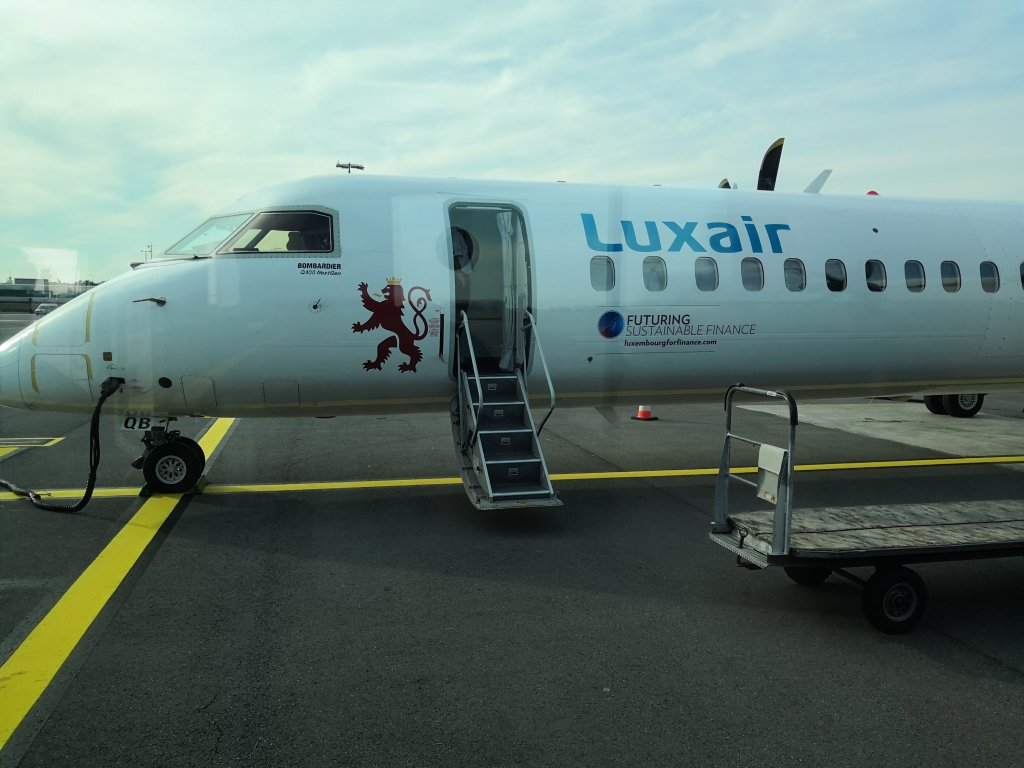
There are a couple of options to get to the Grand Duchy from the UK. The first is EasyJet who fly from London Gatwick and the second is Ryanair from London Stansted. However, Holly and I chose to fly with their national flag carrier, Luxair.
Luxair carry out their operations from London City Airport. For me, being based in Kent, this meant getting to the airport was a simple train journey to Woolwich Arsenal then a short hop on the Docklands Light Railway (DLR) to London City.
The flights were not especially cheap I have to say. Not to say that they were too expensive either, but probably a bit more than you’d expect. For a return flight in June we paid £146.80 each.
The small entrance way to the Luxair flight from London City
The small plane is comfortable and you even get fed during the hour-long flight
The journey itself is very short coming in at just over an hour. Boarding the small aircraft (only a couple of seats per aisle), travellers with cabin backage bigger than a backpack had to hand over their bags at the foot of the plane to be stored below during the flight. Fortunatley, given that we were only going to be in Luxembourg for a single night, we were able to live out of our backpacks, and therefore kept them with us.
Once onboard, the flight was extremley smooth. Comfortable seating fills the cabin space and, despite it being such a short trip, we were even served a light breakfast of a croissant and orange juice. A nice touch that we were not expecting.
Arriving in Luxembourg, you’ll notice that the airport is pretty small. That really shouldn’t come as any great surprise given the size of the nation you are stepping foot in. It is, however, conviently located just over five miles away from the city centre. This means that any journey between the city and the airport can be done very quickly (I’ll cover more on this aspect of the trip later on).
Where to stay
When choosing somewhere to stay in Luxembourg there are a few things to consider. Firstly, I found that AirBnB listings for the centre of Luxembourg proved to be very expensive. And for those that were more affordable, for a short trip, were actually located accross the border in France!
The second thing to note is that there are quite a few options for hotels in the city. Many do cost quite a bit of money (remember Luxembourg is not a cheap or poor country by any means) so may not be ideal for a cost-effective getaway.
With that in mind, we were looking for a bargain and somewhere that would suit our sleeping needs without breaking the bank. We ended up selecting the Hotel Parc Plaza.
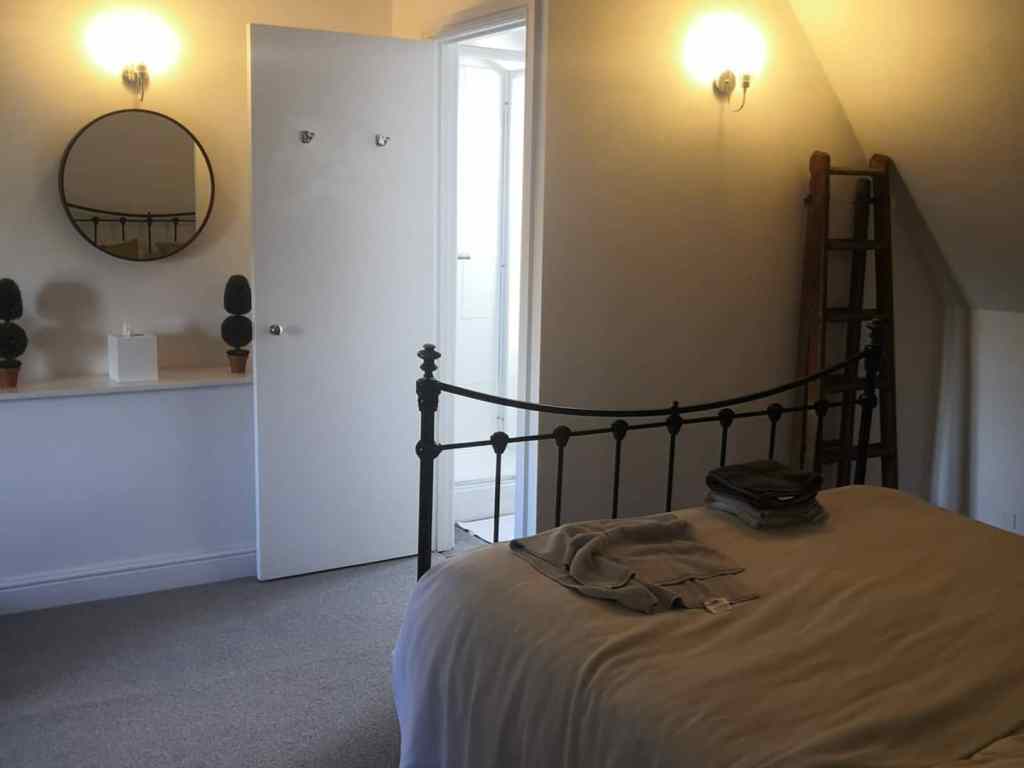
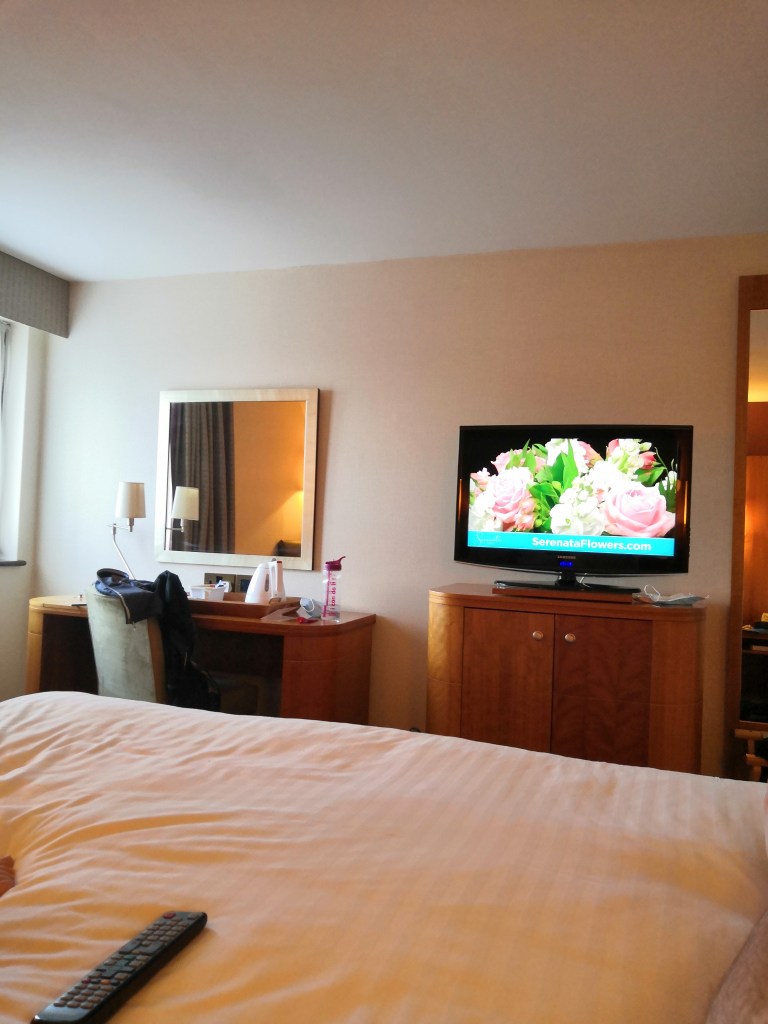
The perfectly comfortable standard double room at Hotel Parc Plaza
Let’s be honest straightaway, this is primarily a business hotel. It doesn’t come with any fancy bells and whistles. You won’t be finding a swimming pool here, nor a world-class restaurant.
But you will find great service, comfortable surroundings and clean rooms.
The hotel is almost in the heart of Luxembourg. Situated just to south-west of the city, the hotel is a few minutes walk from a couple of Luxembourg’s main attractions, including the Adolphe Bridge (which can be seen clearly from the hotel grounds).
The price of the hotel is reasonable. For a one-night stay here in June, Holly and I paid just 116 Euros (around £102) – booked via Expedia – for a standard double room which included wireless internet and a double bed. This price did not include breakfast, although it was available at the restaurant.
Despite no breakfast, I felt that Hotel Parc Plaza did provide value for money. You can pay a lot more elsewhere in the city for not much more. For me, it was more important to save our money on our accomodation, so we could enjoy it further enjoying everything Luxembourg had to offer.
Gettingaround
Getting to city centre from the airport in Luxembourg is very simple.
The Eurobus takes visitors just 30 minutes to travel the short distance from Luxembourg Airport to the city centre or central railway station. It’s probably the best bet in terms of travel to and from the airport, as it is now free of charge (public transport within Luxembourg has been free since 1 March 2020), and extremely regular (busses arrive at the airport every 10 to 15 minutes).
The bus stop is located nearby the airport arrivals exit. The buses are also easily identifiable. Just look for the Eurobus logos on the side of the vehicles. Once you’ve located them you can catch any of the buses numbered 9, 16 or 114. These all take you to the city centre and take about the same length of time.
Once you are in Luxembourg, you’ll notice that the city is very small. You certainly won’t need to hire a car here, unless you plan to go elsewhere in Luxembourg or to a neighbouring country.
Its small size means that you can walk anywhere within the city within a very short space of time. If you are staying on the outskirts as we did, then you’ll be able to walk across the city comfortably in 30 to 40 minutes at a slow pace.
Not only is it easy to walk, but some of the best activities in Luxembourg are the walks along the walls and around the streets within the confines of the city’s borders. From experience, these are some of the safest, cleanest streets I have ever stepped foot in, in central Europe.
The city’s streets are pleasant to walk around, as well as being very quiet and safe
Top sites
Having arrived in the city on the bus our first stop, even before we had dropped our bags at the hotel, was to go to the Ascenseur du Pfaffenthal.
This 75m public elevator provides riders with a stunning panoramic view of the Alzette River Valley. Opened in 2016, riders can start at the top, or the bottom, to get the views. From the top you can take the sights in further from the viewing platform just at the end of the long walkway leading to the lift.
The top level of this elevator is located just through the Parc Fondation Pescatore at the north-end of the city. Once you descend down the lift, a journey that takes only around 15 to 20 seconds, you’ll come out on the Rue du Pont; cobblestoned streets that are a reminder of a Luxembourg of yesteryear compared to the more modern buildings viewed at the higher parts of the city.
This is a great way to start a trip to Luxembourg. First off, the views you get here are some of the best the city has to offer. Secondly, in most other cities you would pay a heafty price for such views. However, here the trip is free! During our stop at the lift, we managed to get our photos from the viewing platform and ride the elevator – all in the space of about 20 minutes! There was no queue to speak of, so this afforded us plenty of time, and space, to take it all in.
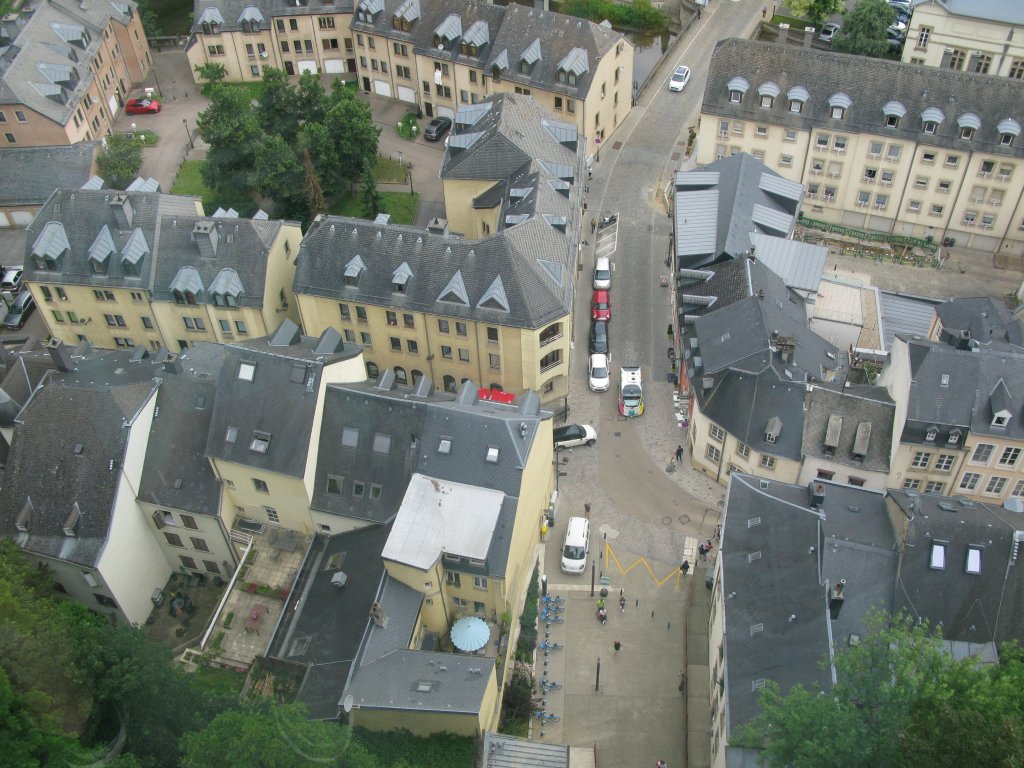
The view down from the Ascenseur du Pfaffenthal elevator from the top gives you a great view of the city’s streets
Looking up at the elevator from street level gives you some idea of its size
Looking out over the Alzette River Valley, where the Pont Grande-Duchesse Charlotte Bridge provides a crossing for cars
The next stop in Luxembourg should be to the Casemates du Bock; a vast series of fortifications, underground tunnels and galleries that can trace its origins back to the 1600s.
The rocky cliffs provided natural fortification for the city and over the centuries the Bock was attacked – and rebuilt – time and time again, following invasion attempts from the likes of the Burgunsians, Habsburgs and Spanish.
Warring continuted here until 1867 when the Treaty of London was signed. This lead to the demolition of the majority of the fortifications.
Now the ruins of the old castle and underground network systems are a tourist attraction.
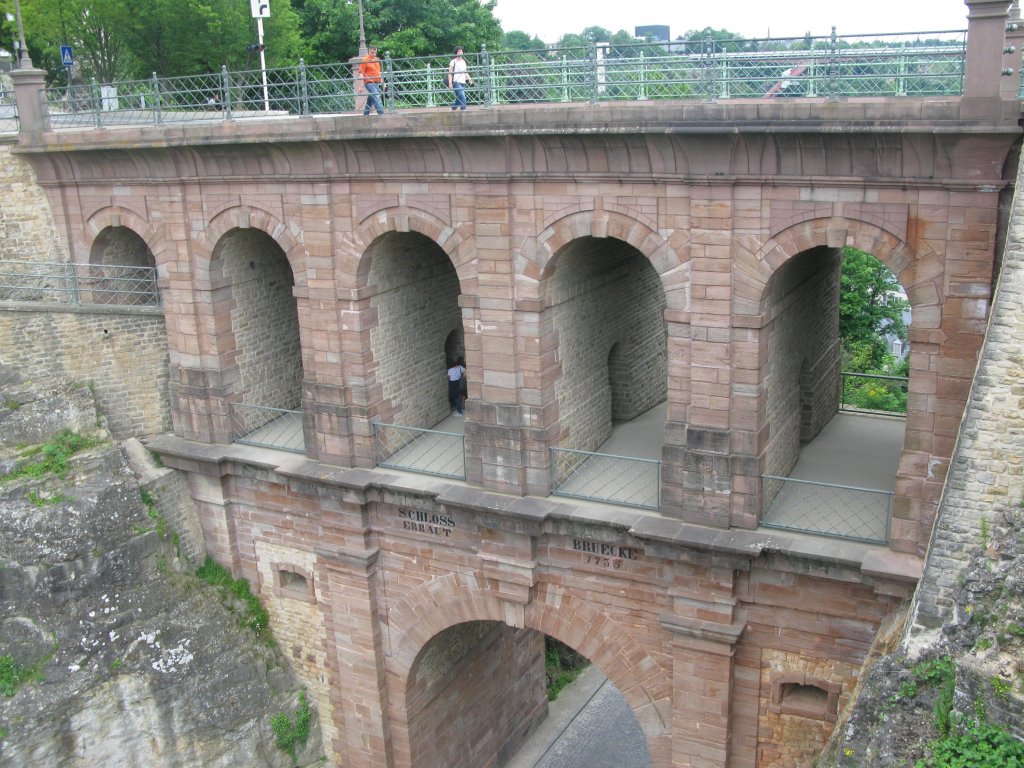
There are a few interesting points at the Casements du Bock. Some of which can be seen from the city’s streets like the Pont du Chateau – a multi-layered footbridge, built in 1735 that replaced an old drawbridge between the cliffs of the Bock – as well as the inside of the Casements themselves.
To gain access to the Casements – a UNESCO World Heritage Site since 1994 – you need to be on street level. That’s the very top. Here you’ll find a small entrance way that leads inside. There is a small fee to pay – just 7 Euros per adult (around £6.20) – and it’s worth it.
Inside, you’ll have access to a portion of the remaining 17km of galleries and tunnels dug into the cliffs. Many of the tunnels lead to viewing gallery areas where you can look out over different parts of the Grund below.
While we found a lot of the interior of the Casements to be very similar to one another, the views out certainly make the trip worthwhile. You can easily spend between one and two hours walking the tunnels and taking in the sights without noticing the time going by.
The Pont du Chateau allows people to walk across the top, middle and bottom layers while cars can pass on the top and bottom
Parts of the tunnels can be very dark, so mind your step
Views out along the cliff face of the Casements du Bock
The Casements du Bock have been carved out of the hard rock making up the cliff faces that surround three sides of the city of Luxembourg
Having viewed the Grund from the Casements du Bock, we decided to go and explore it properly by foot.
This area is one of the most picturesque parts of Luxembourg, and provides great walks that run alongside the city’s walls and into its old quarter near the river.
Holly and I found this area stunning. It was extremley peaceful and the walks in the sun were extremely enjoyable. Again this whole activity can be done without spending a single Euro!
A tip here is to make sure you stop to look at Niemenster Abbey. This yellow-coloured house of worship is easy to spot as its spire sticks out high into the sky above the other low-lying buildings that make up the area.
You’ll also want to venture down to the river banks of the Alzette. During our time here we spent a short while taking in the sun on the riverbank and saw a couple having their wedding photos taken. I’m sure they will make for a wonderful series of pictures that won’t be forgotten easily in this beautiful location.
The Neimenster Abbey that forms part of the Grund is worth stopping to appreciate
Taking a break alongside part of the old walls near the Grund was a welcome release from all the walking
Spending time down by the water of the River Alzette is highly recommended
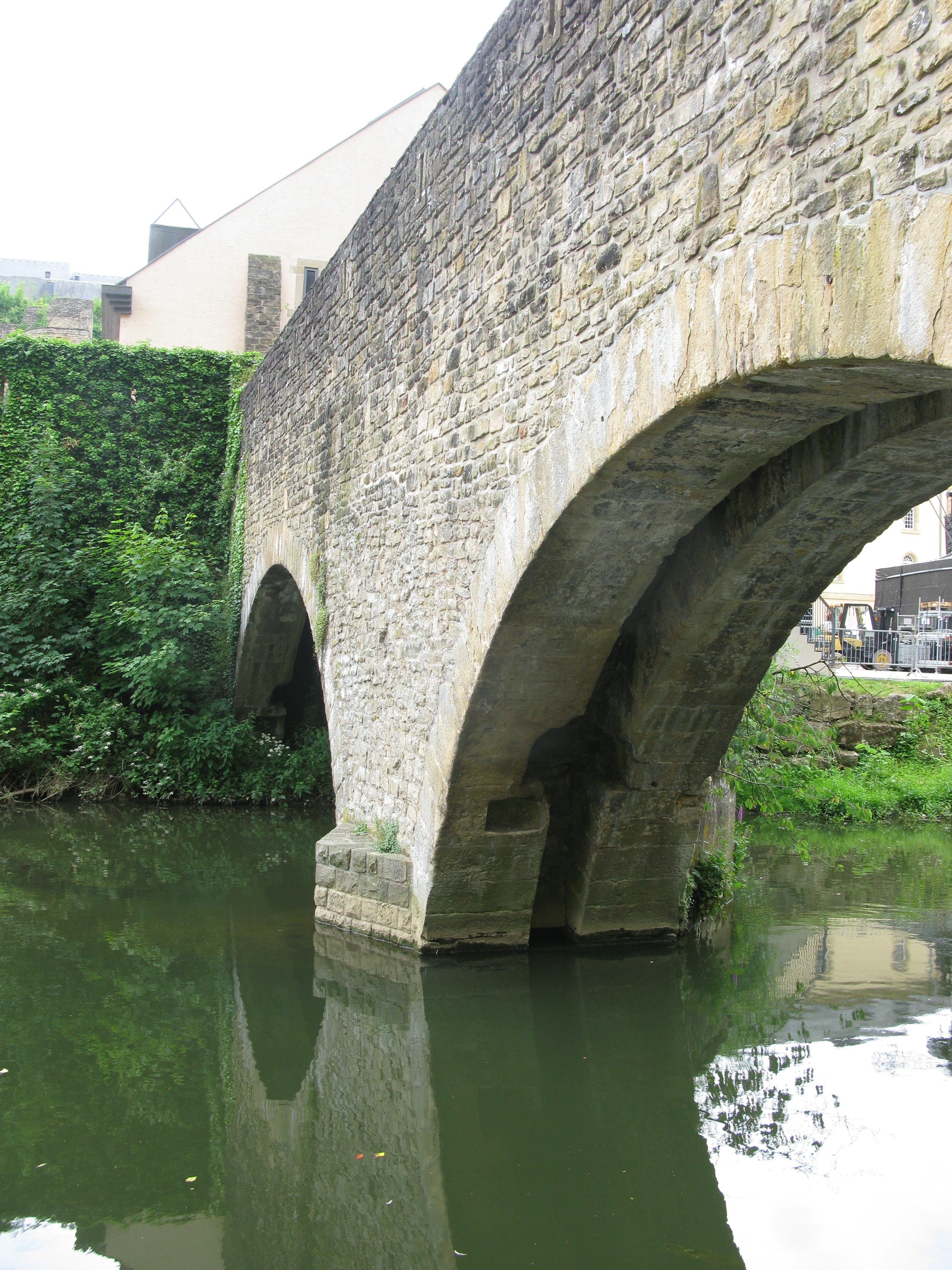
If you find yourself in Luxembourg you can’t help but notice there are a number of bridges that pass over the cliff tops and across the valley. One such bridge that stuck out to us was that of the Pont Adolphe.
It may, from the outside, look like any other bridge and you’d be right in thinking that. The Pont Adolphe does indeed provide cars and pedestrians with a way across the valley at its highest level. However, it was the walkway underneath the street that made us want to go and see it.
The 154m suspended deck – opened in 2018 – is a walkway for pedestrians and cyclists alike. While this area is designed for its functionality, it does also allow you to gain further views out across – and along – the valley for free.
Another tip here, and something we enjoyed greatly, is to take a walk in the park that runs along the valley below the bridge. This park is a steep climb down some stairs located towards the centre of Luxembourg, so being actively fit is a must! However, once you are down there you do get some great views up at the city from below.
Views from the park in the valley, up at the Pont Adolphe, make for some great photos
Framing the city with the arches of the Pont Adolphe
While Notre Dame in Paris may have suffered a catastrophic fire and face many years of rebuilding, there is another impressive catherdral, of the same name, open in the centre of Luxembourg; the Cathedrale Notre-Dame de Luxembourg
The Cathedral – whose name roughly translates as Cathedral of Our Lady – dates back to the early 1600s and remains a working place of worship to this day.
Located along the main Place de la Constitution roadway, this Cathedral caught our attention as we walked past. Built in the familiar yellow coloured stone, that appears to be present throughtout Luxembourg, this multi-towered cathedral draws you into its doors along the pedestrain walkway.
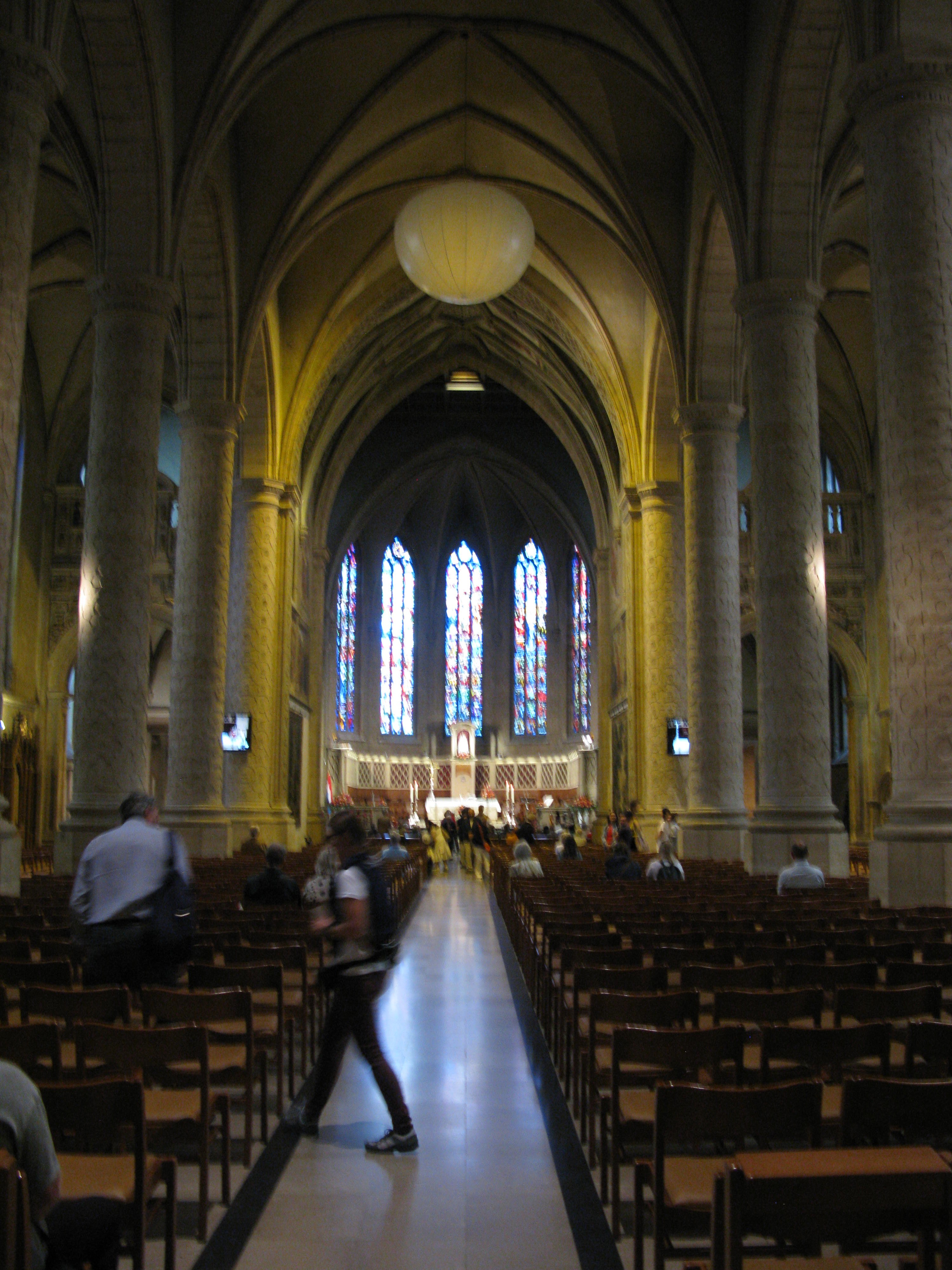
Inside, there are many stained-glass windows depicting scenes from the Bible, as well as a series of impressive stone pillars helping to keep the high ceilings raised.
As mentioned, this is a working cathedral. This does mean that, during a visit, services could be taking place. This is not to say that you cannot enter the building (which is free, although donations are welcomed) so long as you are quiet and respectful. A quick look around was sufficient for us and then out we went.
Holly posing in front of the Cathedrale Notre-Dame de Luxembourg
Inside the cathedral, you may find services taking place; so be quiet and respectful
So while all of the above activities can be enjoyed all year round, this next one is very specific to a couple of days of the year. And as luck would have it we managed, by total chance, to coincide our trip to Luxembourg with the country’s national celebrations.
Arriving on June 22 meant that we were in time for the start of the National Day in Luxembourg activities. Lasting until the end of June 23, these annual celebrations were origianlly meant to celebrate the birthday of the Grand Dutchess Charlotte. However, as her birthday was in the winter (January 23) it was decided that it would be postponed each year for five months to the summer and has remained that way long after her reign ended in 1964.
The festivities start on the evening of the National Day (June 22) and it seems like all of the city’s residents come out to enjoy the fun as the streets were packed. Food and drink stands are scattered around the main centre of the Place d’Armes, and live music is performed from the early evening all the way into the night.
It was a fantastic night. The whole event is really good natured and we didn’t witness any trouble at all. There was a great variety of music too that will suit all tastes from some really talented singers. The pick of the bunch for me was a young lady called Lumi R. She has a tremendous voice and belted out some classics from the likes of Stevie Wonder.
The fabulous Lumi.R singing live during the National Day celebrations
As the night continued and the music came to an end, the crowds started flocking to the valley edge. Naturally, without knowing what we were heading towards, Holly and I followed. Asking someone what everyone was going to see, we were told it was the start of a firework display from the Adolphe Bridge.
Space was going to be at a premium, so we headed back to our hotel’s grounds – Hotel Parc Plaza – that overlooked the valley out towards the bridge.
Part of the firework display that ended the National Day celebrations evening
Grabbing a drink from a tent set up in the grounds, we took our place down by the edge of the valley and found a space amongst the bushes. Words can’t fully express how impressive this show was. Stunning choreography of the fireworks made for a beautiful show of colour and light.
A quick warning. Don’t watch the fireworks from the floor of the valley below the bridge as their remains can be found in abundance the next morning. This means you’ll be in for quite a shower should you be present during the display!
With the festivities underway, this wasn’t the best photo of me you’ll ever see – although at least Holly looks nice to make up for it
As the night goes on, the streets fill up to dance and sing along with the live acts on stage
The impressive fireworks display from the Adolphe Bridge closes proceedings on the first night
People flock to try and get the best vantage points to see the firework display. We managed find a space in our hotel grounds – Hotel Parc Plaza – where we could see the phenomenal show
Where to avoid
Let’s put it this way. Luxembourg is an extremely safe city. From my experience there I would not really have an issues being out on its streets late at night. You are really not going to feel in danger.
And while you can pretty much fit everything the city has to offer over a busy weekend, you may need to know what things could be missed, if push came to shove. So with that in mind, one you can miss without losing out on too much sleep over is the Gëlle Fra.
Gëlle Fra is an impressive war memorial but not something you need to spend any great length of time at during a stay in Luxembourg
The Monument of Remembrance – to give it its proper name – is a war memorial dedicated to those who volunteered for service in both World Wars as well as the Korean War.
Looking up at the 21m high obelisk, you’ll notice a bronze figure at the top. This figure is a representation of the goddess of victory, Nike. At the foot of the monument there are also two bronze figures representing the soliders who died during the various wars.
Situated in Constitution Square in the Ville Haute quarter of the city, the monument is a stylish war memorial, but also something you can walk past without feeling you are missing out on too much by not stopping to read its plaques.
Great places to eat
When it comes to places to eat in Luxembourg I’m going to have to cheat a little. You see, during our stay here, we didn’t really sample many of the local restaurants due to the National Day celebrations.
Saying that, we did stop for a lunch at one point on the Place d’Armes, which is home to a number of bistros and eateries. Sadly I cannot remember the exact name of the restaurant we ate at.
Restaurants down the Place d’Armes can vary in price. There are high end restaurants (price-wise anyway) such as Brasserie La Lorraine that specilises in French and Mediterannean cuisine. This resturant did look like a nice spot to grab some delicious food, but can set you back in excess of 100 Euros for two people (with three courses and drinks).
A few doors down from here you’ll also find the chique-looking Le Grand Cafe; a bullish french restaurant specilising in red meat. The burgers and steaks here looked fantastic, and could make for a perfect spot to eat for those with a bit of time to spare.
If, however, you travel as we did – on the National Day celebrations – I’d urge you to try the various street food vendors for a bite to eat and something to drink.
When we went out into the street parties there were numerous vans and stalls set up selling hot dogs, burgers other local foods, while many also sold soft drinks and alcohol.
Most of these stands were located in and around Place d’Armes and the Square Jan Palach in the heart of the city, to go alongside the entertainment on show.
We grabbed a burger and fries – very decent portion sizes – from one such stand, purchased a drink or two and joined the festivities and celebrations as we wound down our time in the rich surroundings of Luxembourg.
Remember you can follow World Complete on Twitter and Instagram and send your comments and pictures from your travels using #WorldComplete and #Travel.
In recent times, the city of Reykjavik has become one of the world’s most popular holiday destinations. Tourists are being drawn to the Icelandic capital because of the stunning natural beauty available, and the vast number of different activities that can be enjoyed. This was exactly the reason I made my first trip to Iceland.
Reykjavik is known as the world’s northern-most capital city. Located just outside the arctic circle, annual visitors now regularly outnumber the total number of permanent residents; not only of the city itself, but of the whole country! Each year around 2.22 million tourists flock to the Scandinavian country, dwarfing the countries rather humble inhabitants six-fold (Iceland’s population stands at around 364,000).
The city itself is steeped in history. Dating back to the Viking era, Reykjavik is thought to be the location of the first permanent settlement in Iceland in AD 874. For many years it remained relatively low key and it wasn’t until the 19th Century when it saw its first urban development taking place.
Step forward to the modern era and Reykjavik is a small, but thriving, city. That’s not to say it’s not had it’s own well documented problems over the years.
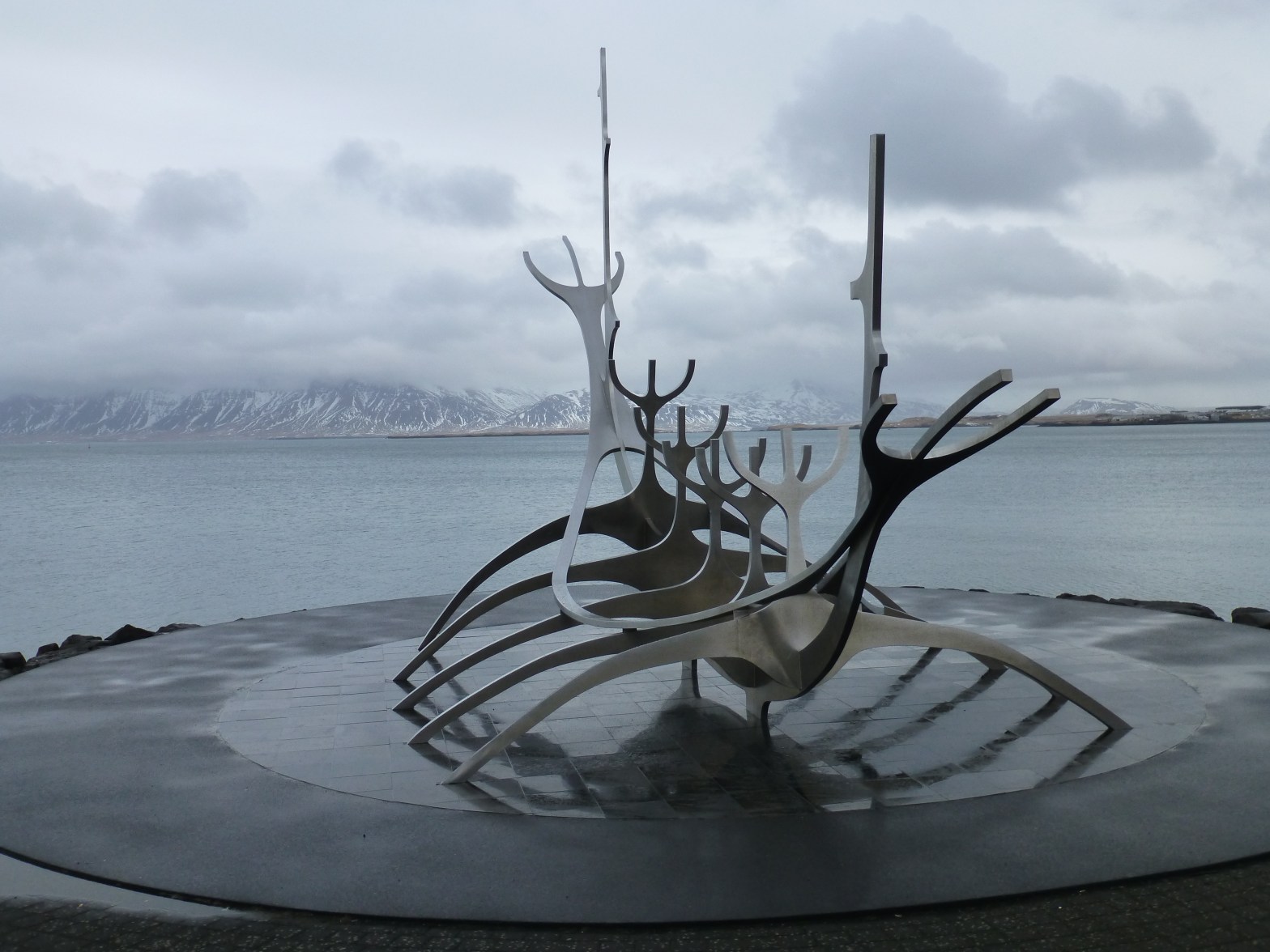
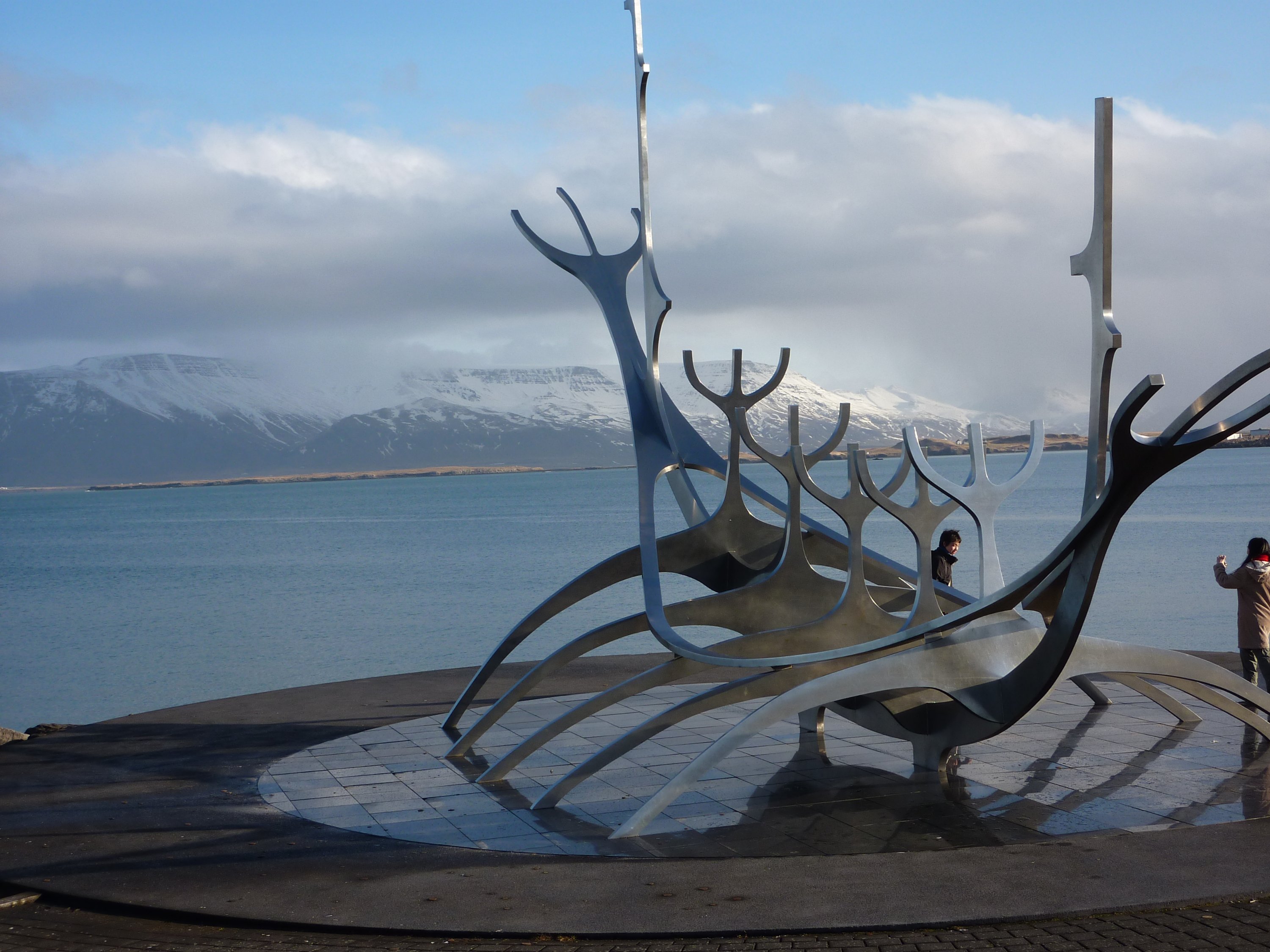
The Sun Voyager boat statue is synonymous with the city of Reykjavik
In 2008 we had the infamous Icelandic financial crisis that saw the default of all three of the nation’s privately owned commercial banks. Then, travellers will remember, the ash cloud that grounded many flights across large swathes of Europe back in 2010 when – the easily pronounceable – Eyjafjallajökull erupted. Fortunately for Iceland, and indeed the rest of the world, things on these levels have calmed down. For now anyway.
The city itself holds a special place in my heart. I have a real love for Scandinavia and the people, ever since I first stepped foot in Oslo (Norway) back in the early 2000s. There is something about these Scandinavian cities that I find so appealing. Perhaps its the fresh, clean air? Or maybe it’s the stunning scenery? Maybe it’s the amazing number of activities you can do there? I’d say it’s a combination of all that and more!
For a first time visitor to the city there are a few things you should know. Firstly, Iceland is a very expensive country – like a lot of Scandinavia. There are high levels of tax on things such as imported alcohol. So a pint of beer, for example, can end up costing about £10. At the time of writing, £1 could get you around 170 Icelandic Krona meaning a £10 pint could set you back around 1,700 Krona.
The next thing to think about is the weather. Both times I’ve been to Iceland it was cold. That’s because I have only travelled there in the spring time (and will be basing this blog on travel at that time of year). Average highs for March and April range from around 4°c to 6°c with lows in the minus figures. Even if you travel in July / August you can expect temperatures to be fairly mild by European standards at around 14°c or 15°c.
During the spring season, you can get a wide variety of extreme weather conditions in short spaces of time. Expect heavy rain, biting winds and snow flurries to be followed by beautiful sunshine; all in the space of a couple of hours. When the weather is with you though, you’ll get crisp, bright blue skies with superb visibility. Honestly, there is nothing quite like it.
Top tip here is to pack for the worst case scenario if you can and then remove layers if the conditions allow it. Better to have too many layers than not enough, right? Make sure you have suitable gloves, scarf and hats and wear numerous layers for warmth rather than just a thick jumper and coat. Also, bring waterproofs. They do make the difference and make the experience more pleasurable.
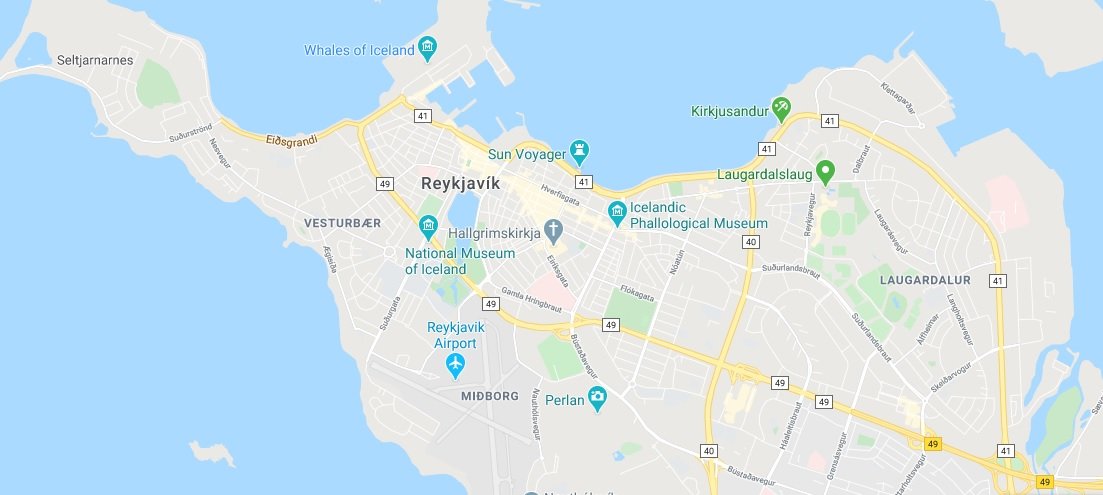
Google Maps view of the centre of Reykjavik
While in Iceland, you’ll also find that (if you are like me) the language is almost impenetrable to the outside tongue. I just couldn’t get my head around it at all. Fortunately, and this doesn’t make me feel good as a traveller to say so, 99.9% of the people I met spoke perfect English.
However, it’s always good to try and make a bit of an effort while you are abroad so if you fancy giving Icelandic a go, some very basic words to try are halló (hello), bless (goodbye), skál (cheers), vinsamlegast (please) and takk (thanks). Let me know in the comments below how you have got on with Icelandic and if there are any other basic key words travellers should know.
Getting there
Getting to Iceland, these days its pretty easy. Most London airports have routes to the Icelandic capital with some flights acting as stopovers for trips to Canada and the USA.
One of the most common ways to get to Iceland is through their national flight operator, Icelandair. This great quality budget airline gets you easily from many of the main London airports – including Heathrow, Gatwick and Luton – to Keflavik Airport some 50km outside of the capital. Flights are also available through EasyJet, WizzAir and British Airways. Now the flight itself. My last trip to Iceland was in an April time so the price I paid was for a return trip during that period of the year. I paid £265.13 per person from London Heathrow. The flight takes around two and a half to three hours depending on wind direction and is usually a very pleasant experience. Take note of the Northern Light style lights on show around the plane when the rest of the lights are dimmed.
Keflavik is the main airport for the country and the one all international flights arrive into. It’s a small airport despite the ever-increasing quantity of international flights arriving and departing from its runways (around 8m passengers use the airport each year) with a few shopping facilities for those departing Iceland. While you’re there make sure you check out the Blue Lagoon store (more about the actual Blue later on) for some last minute skin care products.
It’s also worth noting that on your arrival in Iceland you’ll come through a duty-free area as you do in many airports. However, if you are staying in an AirBnB or other private accommodation then it may be worth buying any alcohol you plan to consume from here as it is much cheaper to do so than when you are in Reykjavik itself.
As mentioned, when you arrive at Keflavik, you’ll find yourself some 50km outside of the city centre, meaning you’ll need transport (unless you are hiring a car). For this I used Reykjavik Excursions who – for a round-trip from the airport to my hotel – charged 9,000 Krona per person (around £45). The transfer is by coach – along with other passengers so there will be stops at other hotels, unless you’re lucky enough to be the first drop off. The bus is easy to spot when you leave the airport as it has the company’s logo on the side as well as ‘Flybus’ in big bold letters. The journey is easy and takes around an hour so sit back and enjoy the views of the barren volcanic landscape for the first time.
Where to stay
I’m not 100% sure how it happens – perhaps it’s all the various deals that appear online – but it seems that a lot of first time / budget travellers who head to Iceland end up staying, as I did, in Hotel Cabin. And quite frankly, this two-star hotel is perfectly good.
A stay at Hotel Cabin can be enjoyed at a very reasonable price. A three night stay, in April, for two people in a standard twin room will cost travellers about £200. This price also includes breakfast which is a buffet style affair. Let’s be totally honest, this is a budget hotel. Rooms are very clean, with comfy beds and well structured. However, they are pretty small. Yet, if you are like me, you don’t want to spend all your time in Iceland in a hotel room so I just used this as a base to sleep and then spend my days doing fun activities.
If you get a room with a window (not all of them have this) you have a chance of getting some stunning views out across the water at the mountains in the distance. Another thing to note here is that the hotel is a bit of a walk from the city centre. It’s not too far – around 3km away – but if the weather is poor then it can make this walk less enjoyable.
A standard room at Hotel Cabin is comfy but small
The view from a room with a window can be good if you get the right conditions
The hotel is located on a street called Borgartun (opposite a petrol station and a Subway). From here I enjoyed the walk down the main Saebraut road which runs parallel with the water. Make sure you stop by the famous ship sculpture for a photo opportunity!
From my experience of Hotel Cabin it’s a great option for those on a limited budget who want to explore Iceland. However, if you are able to spend a little bit more on your accommodation then I’d say look no further than the superb Icelandair Hotel Reykjavik Marina. Located right next to the old harbour in Reykjavik on Myrargata, this stylish hotel really is a hidden gem.
During my stay, for four nights, I paid £754.62 – around £189 a night. However, checking prices at the time of writing for a three night stay, travellers can expect to pay around 61,500 Krona total or around £340 (£113 per night) for a King Guest Room. These prices included a vast buffet breakfast that really puts you in a great place at the start of the day.
Now what’s special about this hotel? Well I’d describe it as quirky. I’m still yet to stay in another hotel anywhere in the world that has a wooden statue in the men’s toilets posing as if it is using the urinals. It does make you take a second look when you step inside it for the first time!
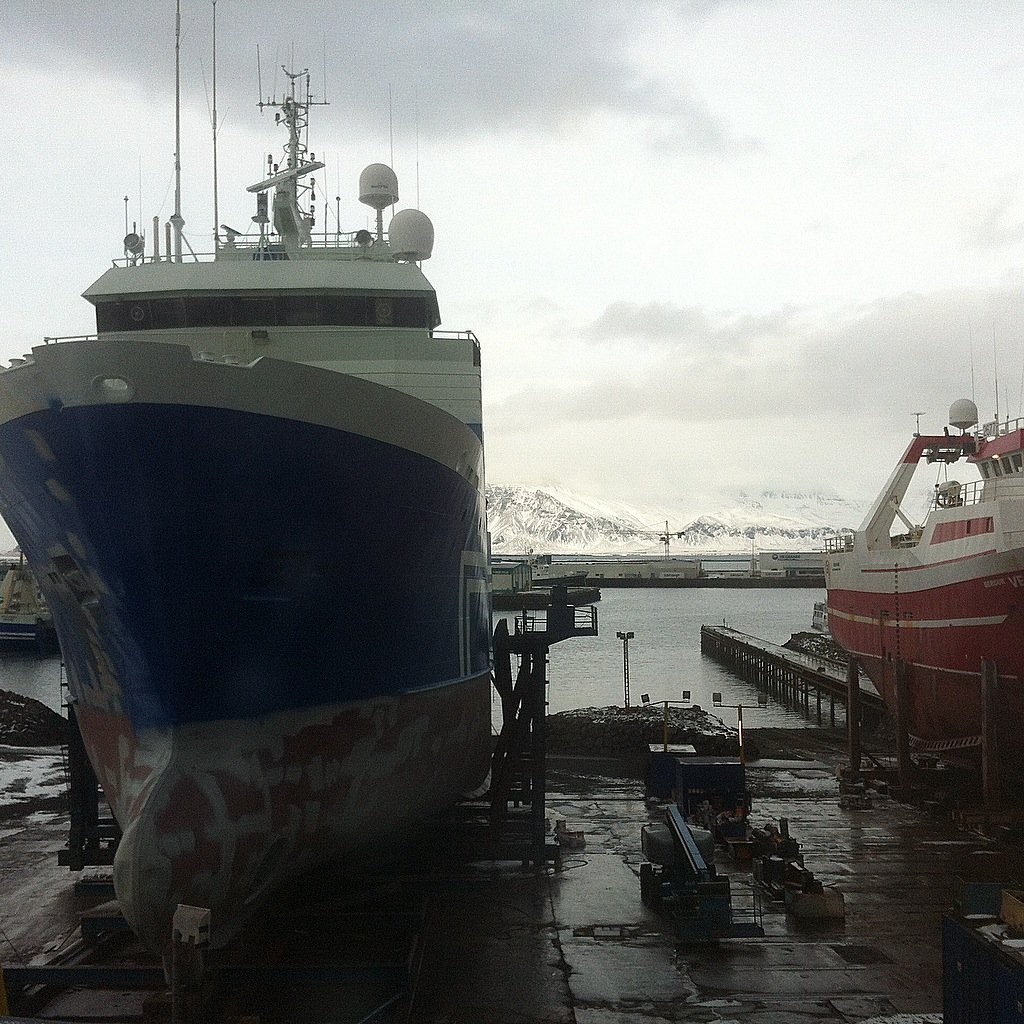
Ships are in dry-dock just outside your hotel room windows
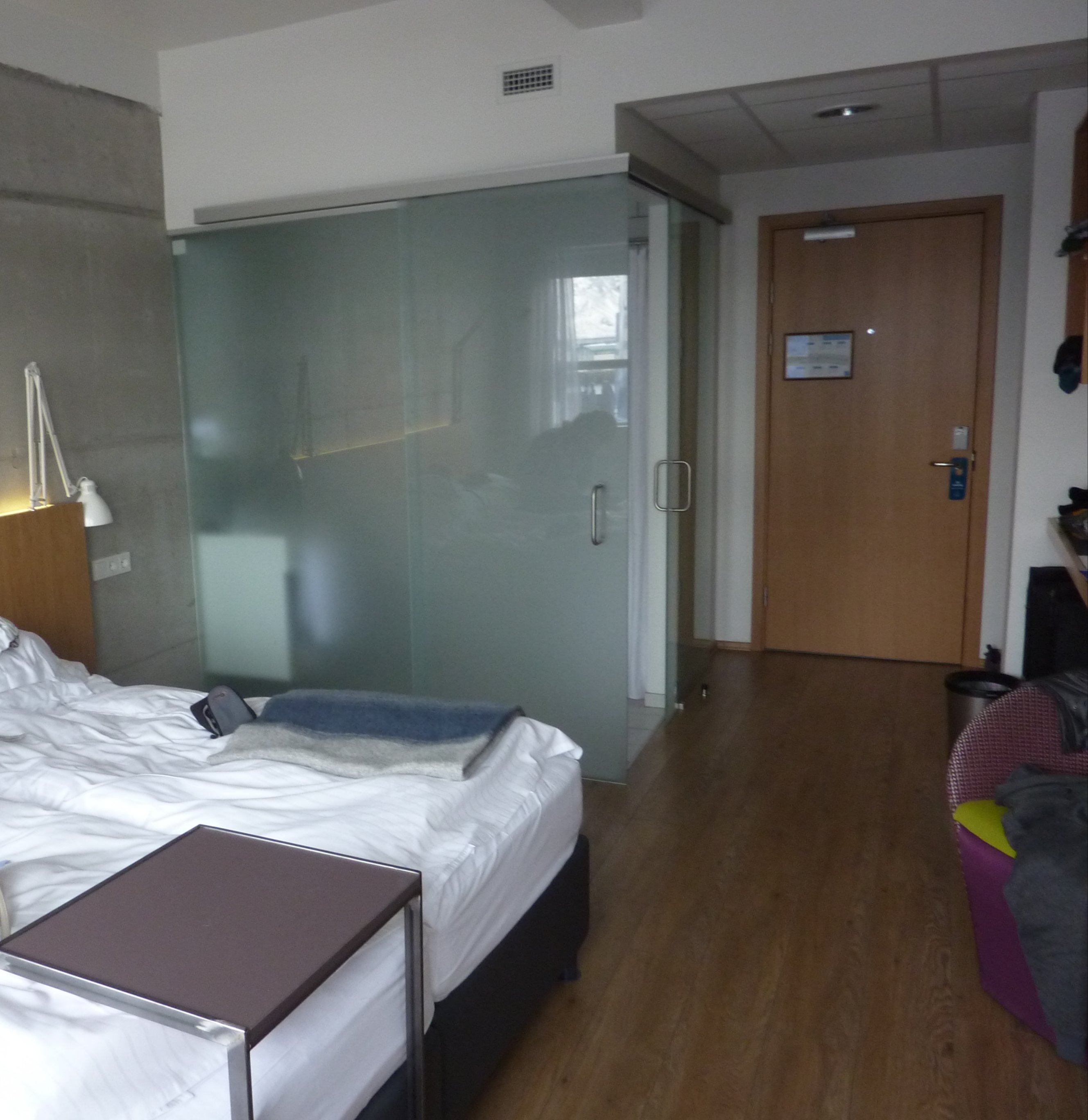
Rooms at Icelandair Hotel Reykjavik Marina like this provide a great place to stay in Iceland
Try not to be too alarmed when you come across this guy in the men’s toilets at the hotel
The staff are extremely helpful. It’s true that nothing is too much trouble for them and they do go out of their way to help out.
Once you’ve checked into the hotel you’ll also see that the rooms are superb. They are spacious and a bit different from the norm. The bathroom I had was behind frosted glass walls which makes for an interesting experience – especially if you are sharing with a friend! Also try and get a harbour view room as then you’ll get a view out at the ships in the dry-docks and across the water.
Two things not to miss here are the restaurant (more about that later on in the blog) and the bar; called Slippbarinn. The bar here makes some of the best cocktails I’ve ever consumed! This place made me fall in love with Old Fashioned cocktails and I’m not a whiskey drinker at all! Make sure you stop by at least once (even if you are not staying in the hotel) to try the drinks. Added bonus here is that they often run a happy hour so you get two drinks for the price of one – which is great considering how expensive alcohol is in Iceland.
Getting around
As I’ve mentioned, the city itself is pretty small. That is a good thing as once you are there, you are able to walk to many of the centrally-located attractions. As a reminder, though, if you are staying in a hotel on the outskirts – such as Hotel Cabin – then the walk can be a little less appealing if the weather is poor.
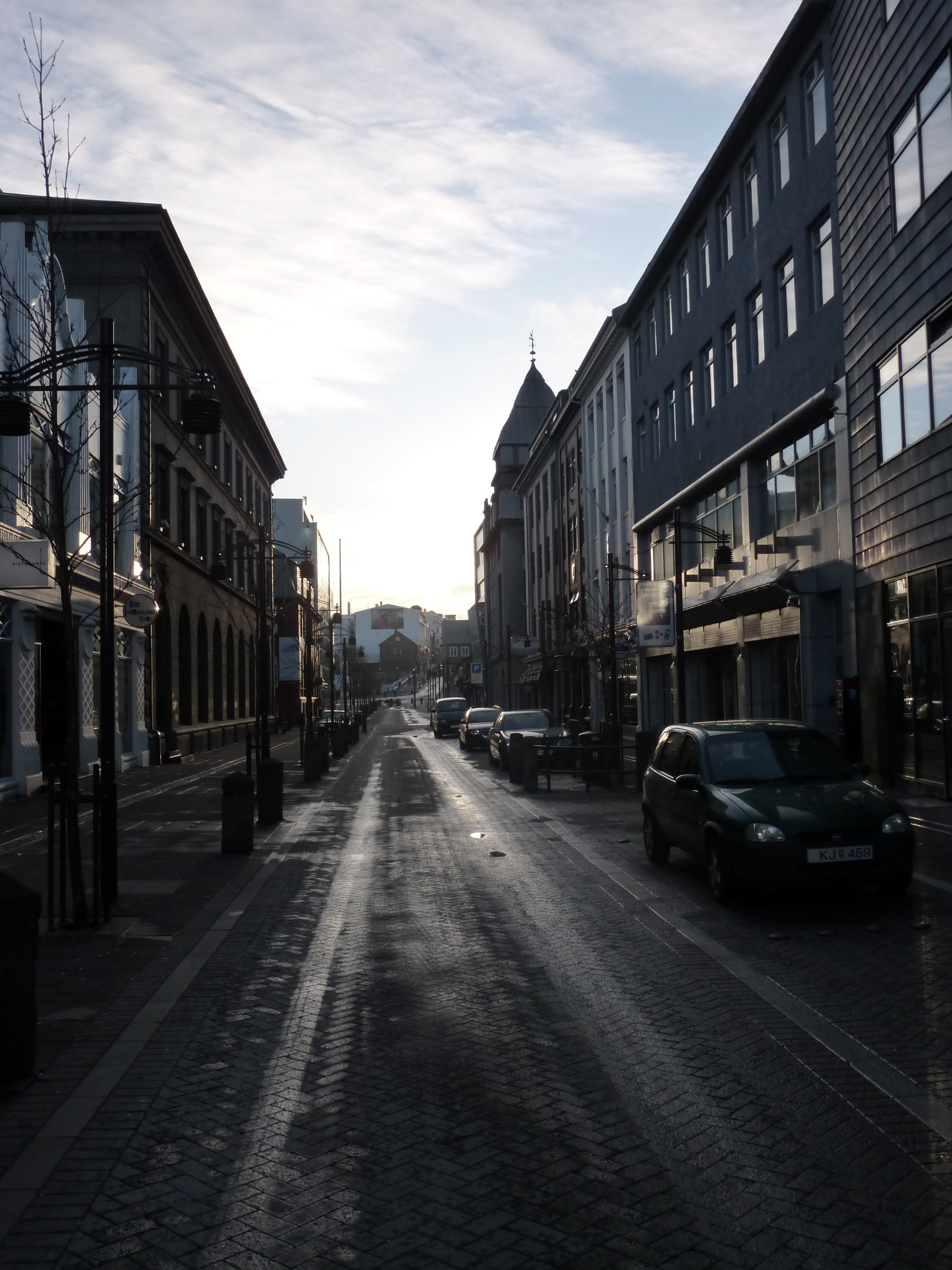
During my stays in Reykjavik I’ve always enjoyed taking a roam through the city’s streets. They are quiet, clean and safe and the roads are some of the emptiest you’ll experience in a capital city.
The city’s streets are very quiet and easy to navigate by foot
If you plan to go further afield from Reykjavik during your stay in Iceland, and don’t necessarily want to be part of a larger tour, then hiring a car is an advisable way to travel around. A few things to remember. Icelanders drive on the right side of the road, but this wasn’t always the case. Up until 1968, they drove on the left – like the UK and Ireland – but a law change saw them switch sides.
Driving in Iceland is a joy. Not only are the roads easy to navigate and parking plentiful, but the scenery you’ll see is stunning. There is very little I think back to more fondly from my travels there than taking the car out for a drive and stopping by the side of the road to take in the views. All that and, usually, nobody else there. Just you and nature.
The roads are, on the whole, very quiet even in the city centre. I found when I drove in Reykjavik I had plenty of time at junctions to make sure I was doing the correct things and to make sure I was heading in the right direction. The roads empty out further still when you get out of the city and head out into the countryside – probably along the main ring road Route 1.
There are plenty of car hire options in Iceland and you can pick up a car from the airport upon arrival. I didn’t do this as I only needed a car for a day so picked it up (and dropped it off) at a city location. I hired my car through Hertz from their Flugvallarvegur 5 car hire shop in downtown Reykjavik.
It also felt like a pretty good deal. For £38.08 for the day (paid by credit card before I left the UK), I hired a small economy car. This, for example, is a car like a Toyota Yaris or Kia. For that price I got all the usual insurance and road tax with the exception of fuel and excess costs should I get into an accident. Fortunately I never had to find out more about that particular aspect of my booking.
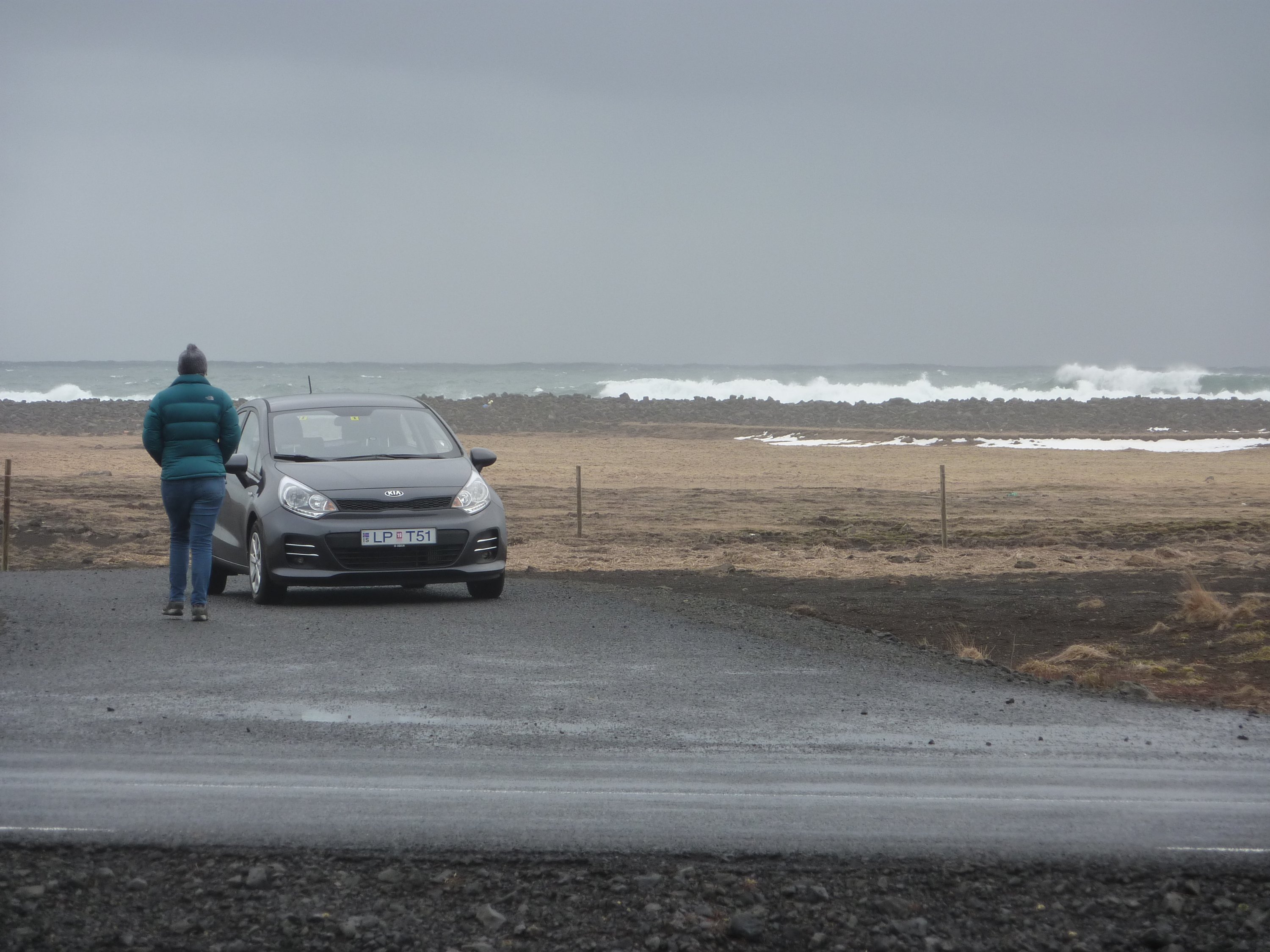
You can pull over and explore lots of places in Iceland if you take a hire car outside of the city centre
The roads are very quiet; especially when you have left the city centre
When picking up your car, you’ll need to remember a few things. Firstly, your driving licence. You are going nowhere without it. Secondly, another form of ID. The obvious one here is your passport. Next, the credit card you paid with and finally, the voucher from the car hire company for your booking. Do not forget any of these items!
Once you have your car remember that it is the law to drive at all times of the day and night with your headlines on! Daytime running lights do not cover this so always remember to switch them on when you head out.
Next thing to note is that while the roads may be empty, depending on what time of year it is, they could be snowy and icy. Drive carefully and do not exceed the speed limits clearly signposted. Also, as I found out, the weather is extremely changeable. One minute you are driving in beautiful sunshine, the next it’s a blizzard. Make sure you do provide clear space between yourself and the car in front just in case you have to stop suddenly. When I drove in Iceland I was leaving the capital and driving through the winding mountain roads on the south coast and was met by such a blizzard. The only way I knew where the road was in front of me was to follow the large lorries’ tail lights that lit up the path ahead.
Finally, as you’ll be told when you take the car, do not try and go off road. If you, like me, have a budget small car then they are not built to try and drive on anything other than the asphalt. Just off most roads there is usually dark grit and sand that can be easy to get stuck in. I parked to the side of one road at one point to take a picture and my wheels ended up spinning in the dirt for a while before I came loose. And that was only one side of my car!
Keep these tips in mind when in Iceland and I’m sure you’ll love driving around this country as much as I have done.
Top sites
While you stay in Reykjavik, a great deal of the actual things to do in Iceland are outside of the main city centre. However, it only seems right to start with something inside the city. The Settlement Museum – located on Adalstraeti – costs 1,740 Krona for adults to enter (about £10) and looks at the settlement of people in Iceland and at what findings can tell scholars about what work and life were like for the original settlers to the country.
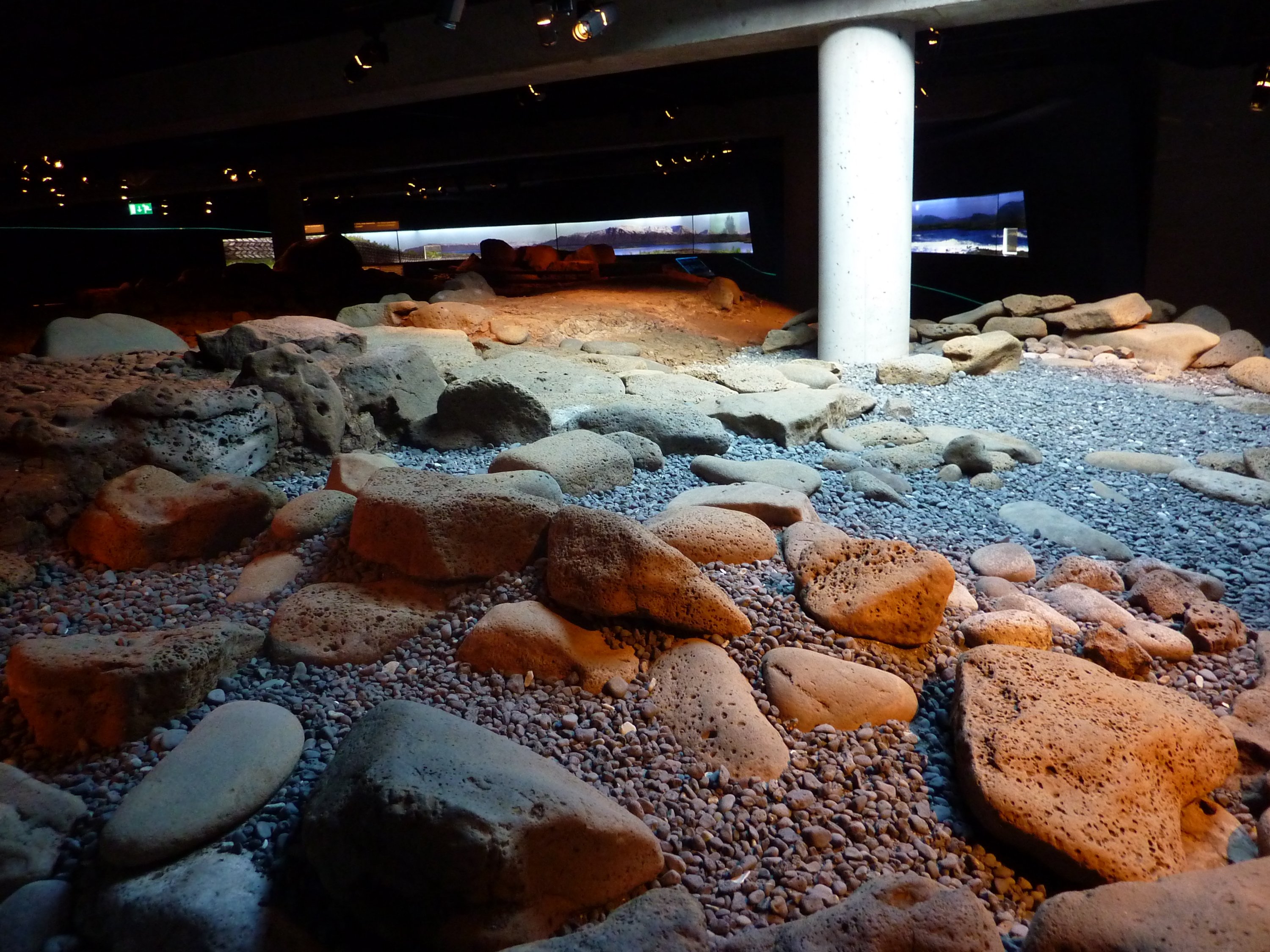
This small, and fascinating, museum is centred around the remains of a Viking hall dating back to 871AD having been excavated in 2001. A visit to the exhibition – named Reykjavik 871+2 – is a must for both history buffs and other visitors alike, and will take between one and two hours depending on your level of interest.
Inside the Settlement Museum you’ll be able to learn about the first inhabitants of Iceland
When I visited the museum, I went in with relatively low expectations. That’s nothing against the museum itself. I was just cautious on how much useful and interesting information they could have on show in such a small place. I’m pleased to say I was very wrong.
Around the remains of the Great Hall – one of the oldest man-made structures found, to date, in Iceland – there is a wealth of other smaller finds on show and a great deal of information to absorb. This museum can really whet the appetite for an Icelandic adventure.
The next suggestion is one to book if you have not got a car to do it yourself. During my first stay in Iceland I wanted to cram in as many of the countries main southern attractions as I could. So booked myself onto the Grayline Golden Circle Tour for just 54 Euros each; or around £48 (booked online in advance of my trip).
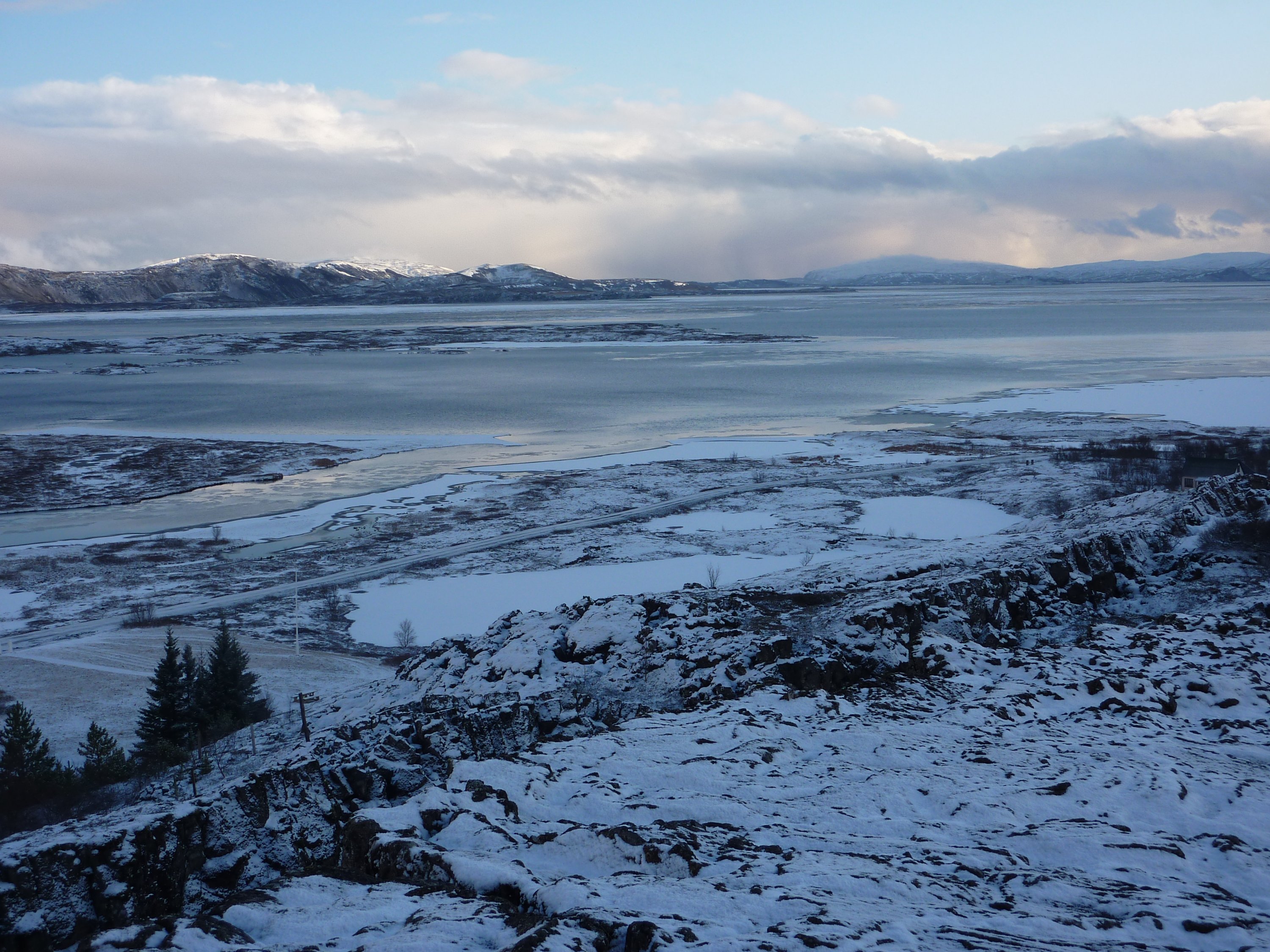
This excellent tour takes in a number of the key sites over the course of about seven hours. Meeting at the Reykjavik bus station, you take a round-trip that stops off at Pingvellir (or Thingvellir) National Park where you’ll see the North American tectonic plate meeting the European tectonic plate, the impressive Gullfoss waterfall and the famous Geysir Hot Springs. At this last stop you’ll see bubbling cauldrons of super-heated mud, steaming pools and Strokkur; a geysir that erupts every six to 10 minutes. Be aware though, there is a strong smell of sulphur in the air so you’ll have to get used to the smell of rotten eggs quite quickly!
Geysir’s bubble all around you at the hot springs
Watching Strokkur erupt every six to 10 minutes is must while you are at Geysir
The waters are extremley hot as they run along the ground so be careful where you put your fingers
Gullfoss in all its glory
The land between two continents in pingvallir National Park
The vastness and beauty of pingvillir was stunning to experience
For me this was a superb tour. At each stop there was plenty of time to explore and have a look at everything on offer. Geysir can be quite busy so there are often a lot of people crowded around Stokkur to get a photo, or video, of it going off, but just be patient and you’ll get a chance also.
Another thing that I wanted to see when travelling to Iceland was the Northern Lights. Most people will want to do the same also. Again if you have a car of your own then you can go out of the city (best to move away from as much artificial light as you can), but for those without, then the Grayline Northern Light Tour is a great option to have.
The Northern Lights are a special sight. Shimmering majestically in the sky, they really are a bucket list item to tick off.
A few warnings, however. We’ve all seen the magnificent pictures of the Lights in the sky; lighting it up with all different colours. Chances are though that unless you are either very lucky, or have a very expensive camera, then that’s not what you’ll see. During my trip out our coach stopped at the side of the road; having been in radio convoy with other coaches for where the Lights were visible. Once out in the cold (it was approaching 10pm on a spring night) the sky had a dull white light just about visible in it.
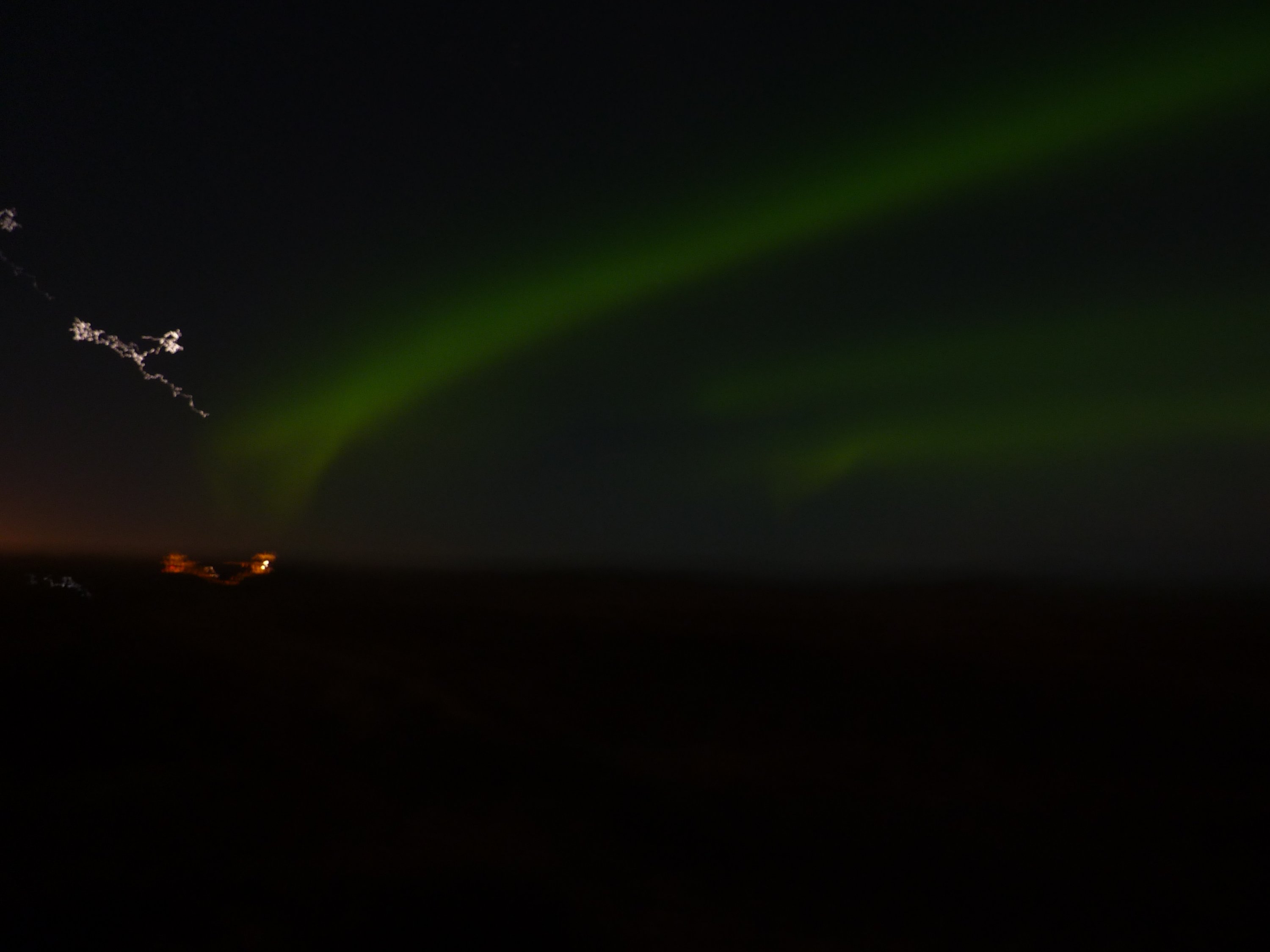
Whilst I was delighted to see this, it wasn’t quite what I was expecting. There is a way to make the most of this though and you can do this even with your phone camera. Set the camera up and hold as still as possible. If you have a tripod then all the better. Then set it for a setting that has a very slow shutter speed allowing as much light in as possible. From this I found that my pictures – while not perfect – did show off the Northern Lights in a much more impressive and visible green colour.
Small movements with your camera at a low shutter speed will distort the light as can be seen here on the left side of the picture
The Northern Lights often look better through a camera lense than they do with the naked eye
Second thing to remember is that unlike a tour to a waterfall – that a tour company can guarantee will be there – the Northern Lights don’t work to a set schedule. Weather will play a big part in if you see them or not. The good thing about this tour is that if you do go out with them (or even if they cancel beforehand) you can just book onto the following nights tour for free. That way you stand the best chance of seeing something.
In terms of money, this tour again was booked in advance and cost 38 Euros per person (around £34.50) and will pick you up from most hotels in Reykjavik.
While walking around and seeing all these incredible things is a great way to spend your time in Reykjavik, it’s also nice to get some down time and relax. And to do that there is no better place to go than to the Blue Lagoon.
Situated near Keflavik Airport, you’ll need either a car to drive here or to go as part of a bus tour. I recommend a car, as that allows you to spend as long as you want there without having to worry about bus timetables. It’s about a 50 minute drive from the centre of the city to the Blue Lagoon – but it’s a pretty simple route and well signposted the closer you get.
There are two packages you can purchase. These are Comfort package (around 10,690 krona / about £60) or the Premium package (around 13,690 / about £76). The Comfort package gets you entry to the Blue Lagoon, a silica mud mask, the use of a towel and the first drink of your choice. The Premium Package gets you all of this plus a second mask of your choice, slippers, a bathrobe a table reservation at the Lava Restaurant and a glass of sparkling wine at the restaurant.
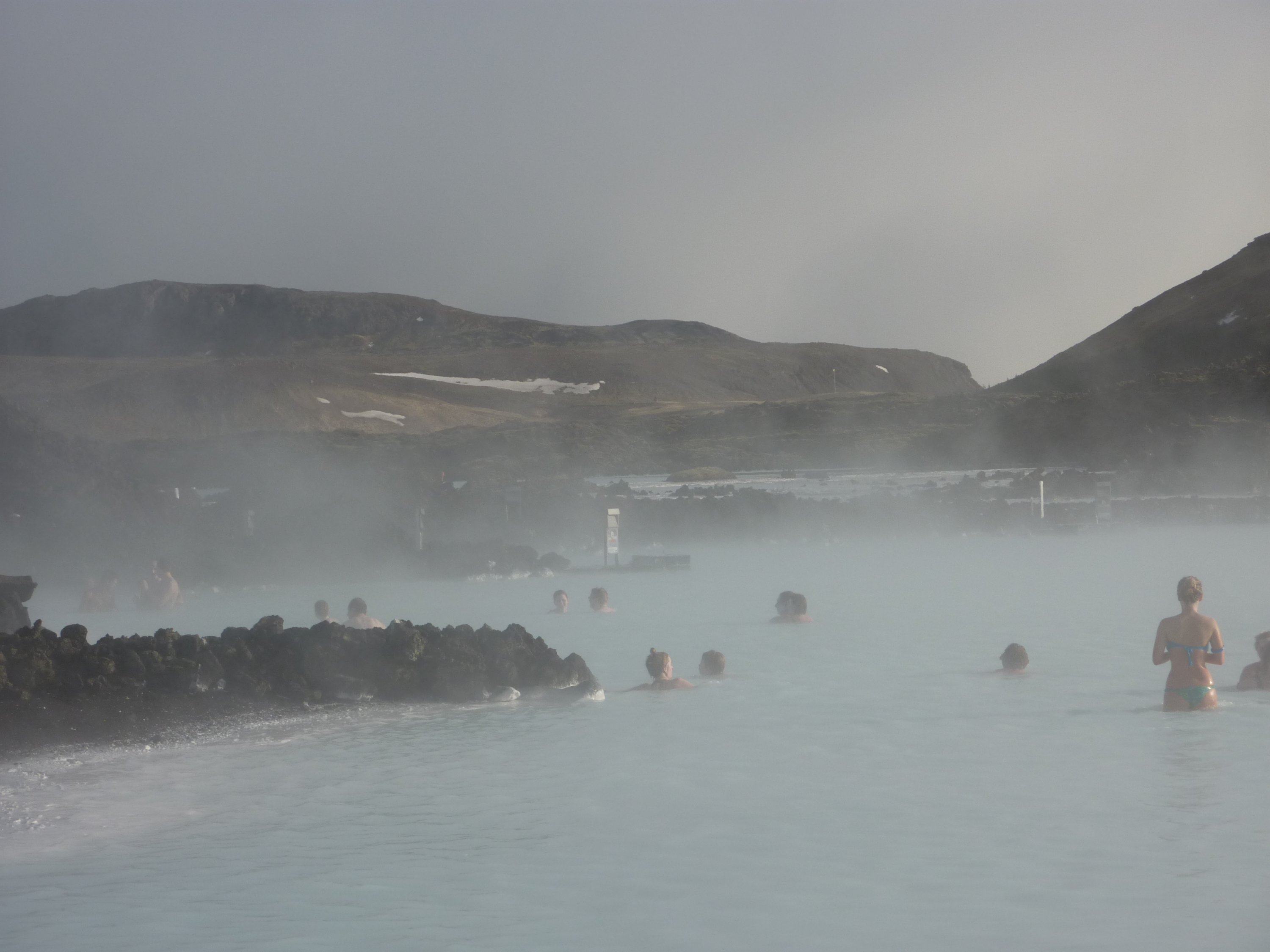
You’ll be surrounded by steam coming from the waters during a stay in the Blue Lagoon
The Blue Lagoon does get busy with fellow bathers so arrive nice and early to make the most of it
The entrance way leading up to the Blue Lagoon
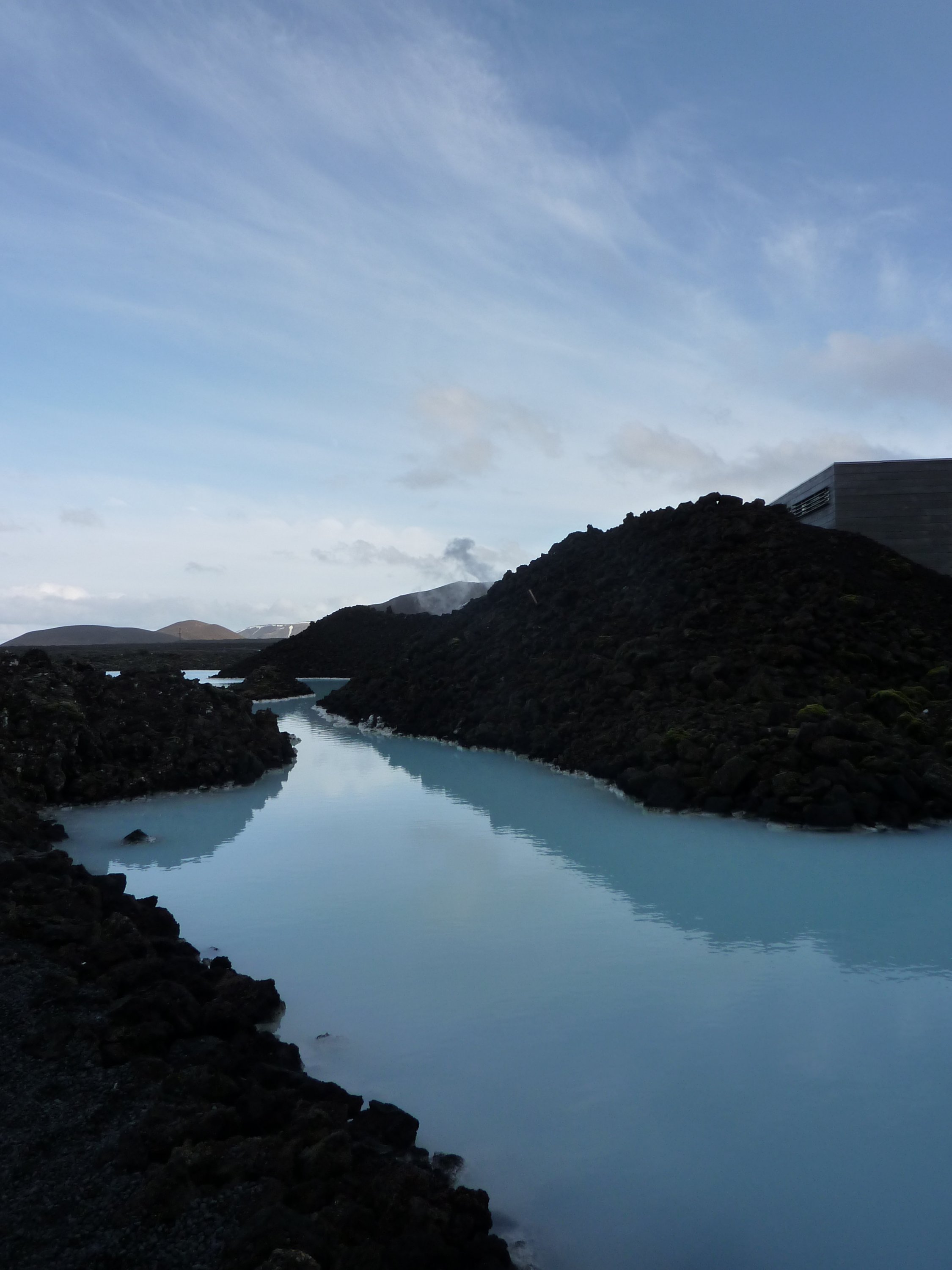
The waters here a crystal blue and feel great on your skin
Inside the Blue Lagoon it has a luxurious spa day feel to it. Many people are walking around in bathrobes and towels and there is a sense of peace and tranquility about it.
Changing areas are divided into male and female, and you’re asked to wash thoroughly before entering the waters. Once changed into your swimwear, you can exit the changing area and meet your group before catching your first glimpses of the Blue Lagoon itself.
This geothermal hot spring is large which is convenient given that it attracts a lot of people to it every day. Even if the weather is poor and it is cold, a few minutes in the water when you lower yourself up to your neck will have you warmed up nicely.
There are a few things you should definitely make the time for here. First is a stop in the saunas and steam rooms for a quick session. They are some of the best I’ve every been in. Next wade over in the water to one of the mud mask areas and grab a load of mud and put it on your face. It may feel rather disgusting at first but your skin will feel the benefits of it later I assure you.
Finally, go to the swim-up bar. When you arrive you’ll be given a wristband each and this is how you record how many drinks you order. There is a financial limit on the bands to stop people going over the top, but do make sure you get at least one set of drinks here. I’d advise you to try the Blue Lagoon cocktails as these are delicious.
With your drinks in hand, find somewhere to submerge yourself and sit back and enjoy the surroundings.
When you’ve dried off from the Blue Lagoon, hop in the car and head down the south coast of Iceland for about two hours to one of the world’s most photographed waterfalls; Seljalandsfoss. This stunning waterfall may not be the tallest in the world – just 60m high – but it makes up for that with its beauty.
The waterfall is part of the Seljalands River that has its origins in the volcano glacier Eyjafjallajokull. The water that pours over its edges are that of melted glacier water and will be some of the purest water around. What makes this waterfall special is that not only can you see it from the front, but you can also walk right up behind the waterfall into a cave area. Be prepared to get very wet doing this however, if the wind is blowing the spray from the fall at you.
A trip along the south coast to Seljalandsfoss is highly recommended
Visitors to Seljalandsfoss can pull up in the small car park for free and view this site. There is no entrance fee. There is a small tuck-shop style truck just to the side though and you can buy a warming hot drink here and a slice of cake to enjoy while walking around the area.
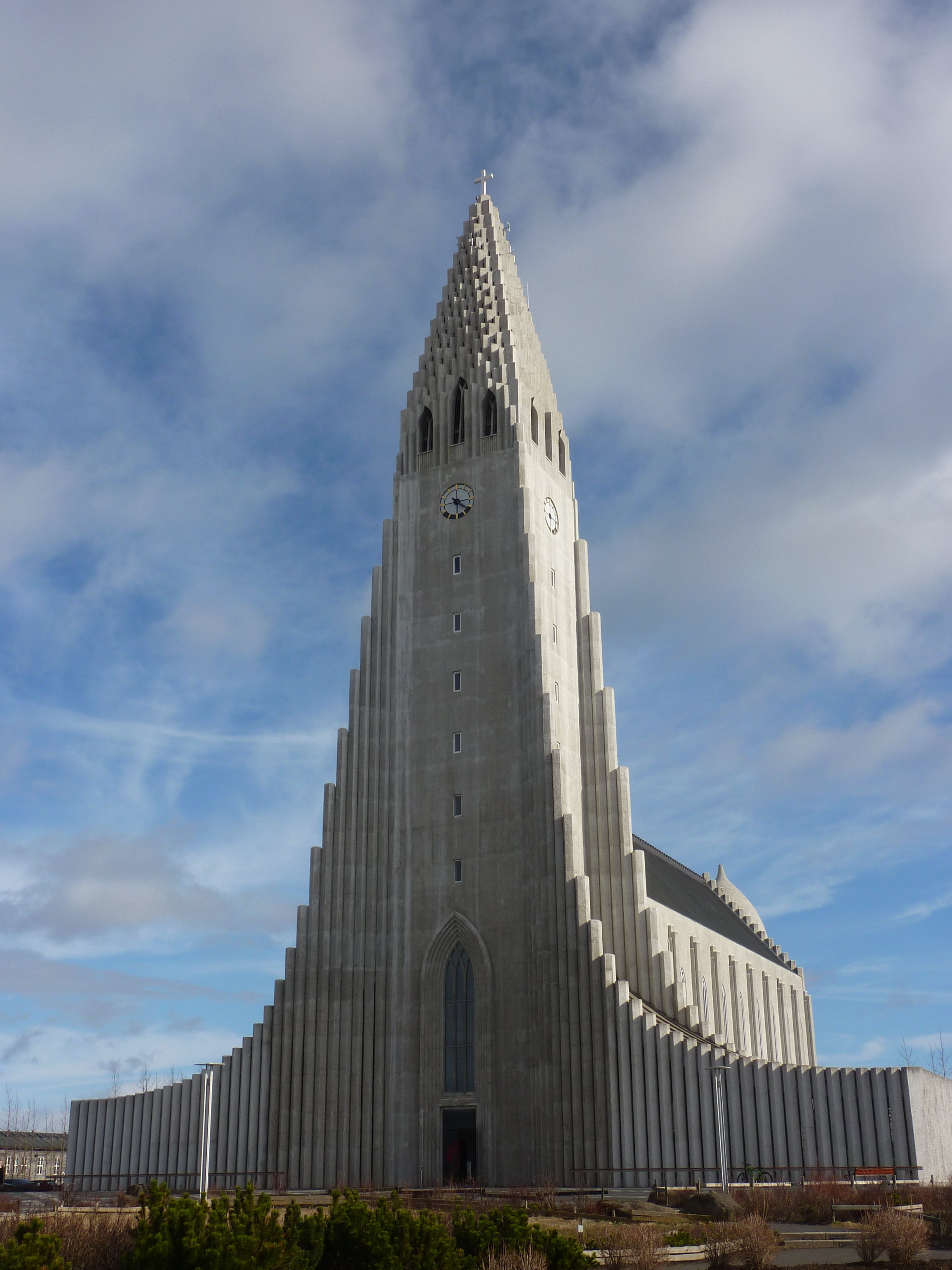
Back in the centre of Reykjavik now you’ll probably have seen the imposing figure of Hallgrimskirkja at one of the city’s highest points. This Christian church is one of the largest structures in Iceland at a height of 74.5m.
Founded in 1945, the church is a stylish affair with clear Scandinavian influences in its design. But it’s the prospect of ascending its bell tower that was the draw for me.
For 1,000 Krona (about £6) you can go to the top of the tower by elevator. You don’t need to book in advance as you can simply turn up to the church and pay to go up the tower on arrival which allows you to pick a time when the weather is good. Be aware though, that this is still a functioning church and the tower can be shut if they do have other activities going on.
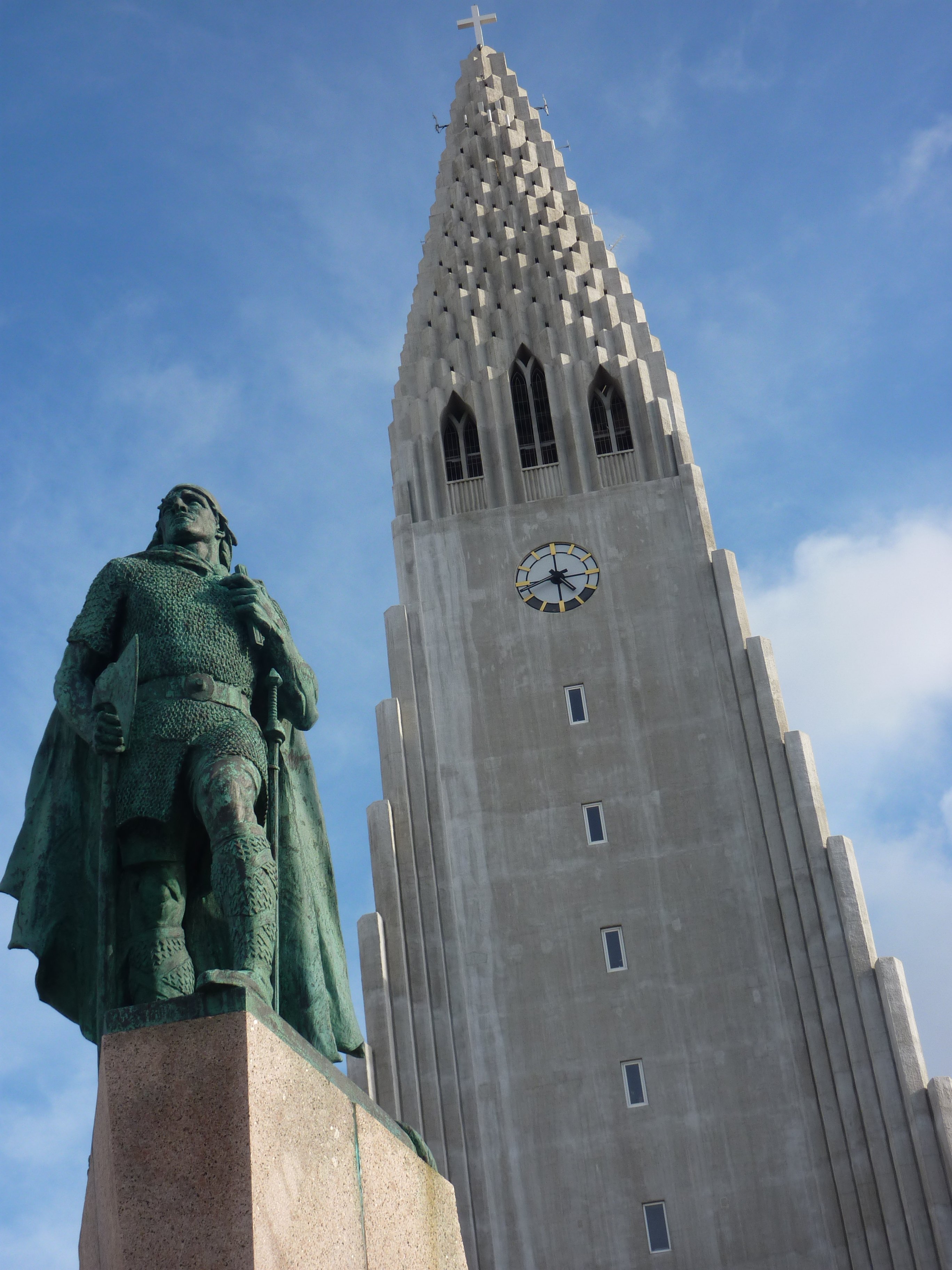
The statue of Leifur Eiriksson – a norse explorer – outside Hallgrimskirkja
Hallgrimskirkja is the tallest building in Reykjavik and the second tallest in Iceland
The views from Hallgrimskirkja showcase just how beautiful the city is
Once you reach the top of the bell tower, you are given some of the best views of Reykjavik available. This low-lying city does not have many places to get aerial views from but this is a must for those wanting to see the Icelandic capital from a different perspective.
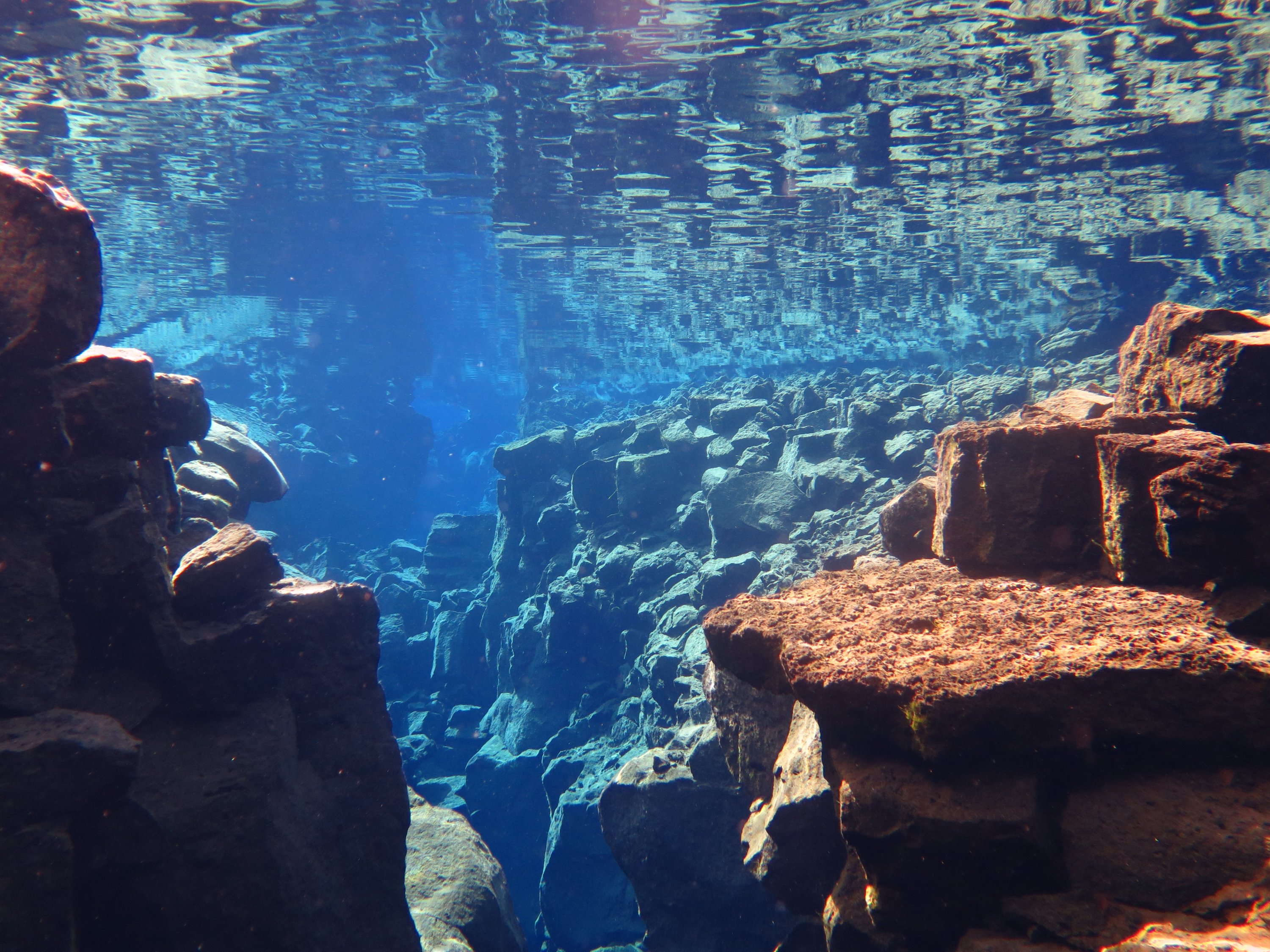
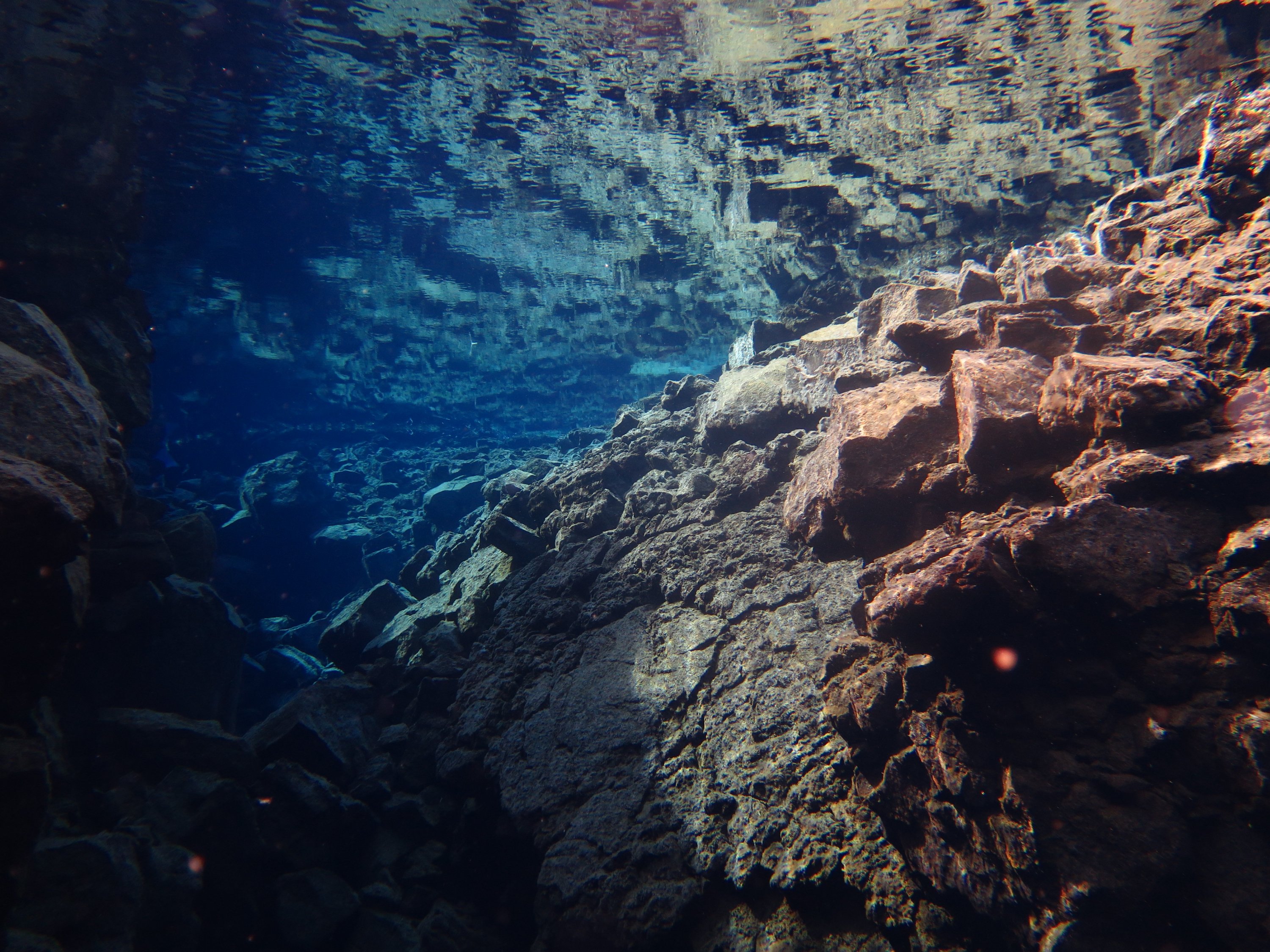
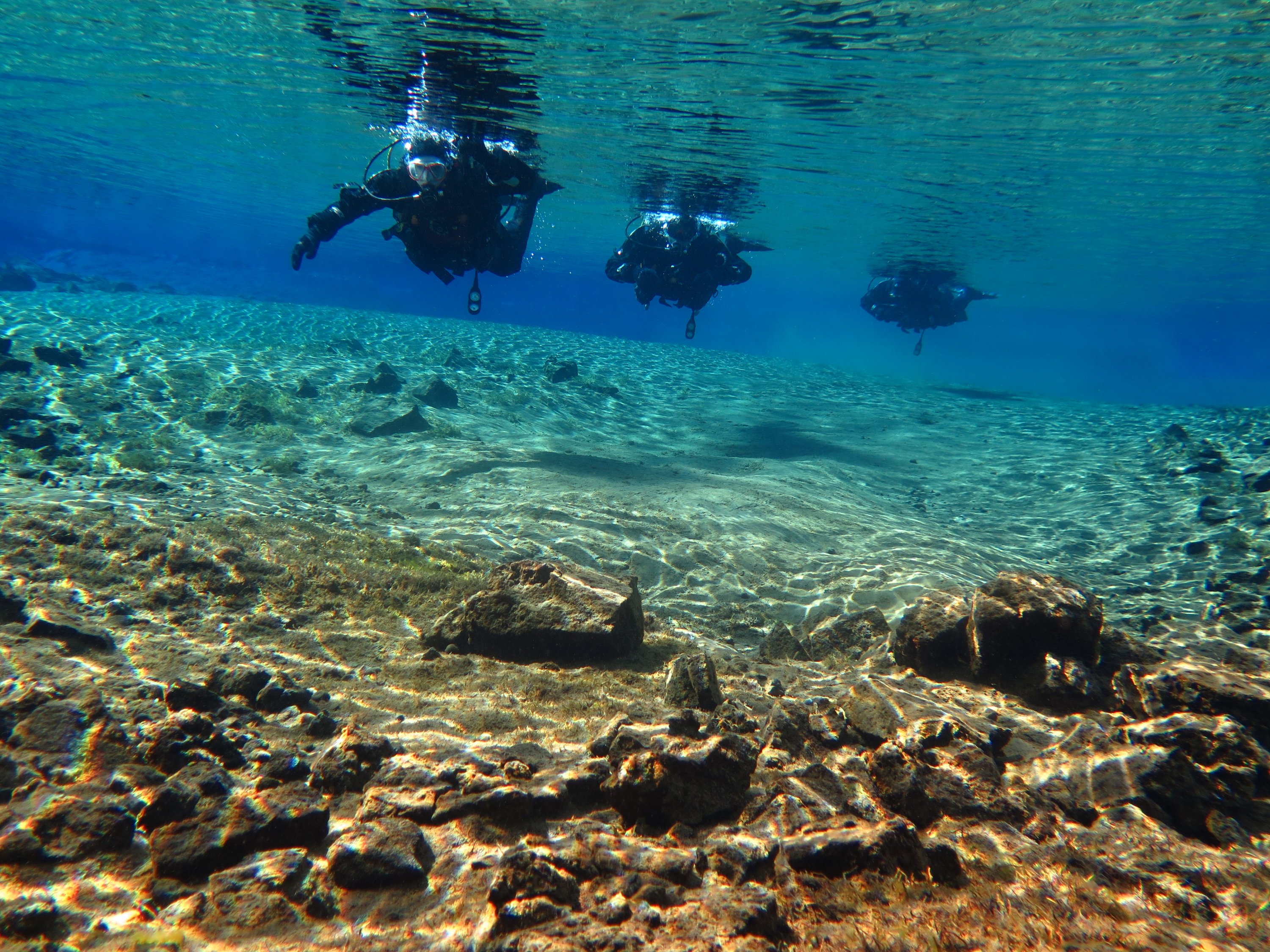
That’s viewing Iceland from above, but it’s also possible to see it from below. Well below water level that is. Iceland is home to a number of great scuba diving sites and as a keen diver I was eager to don my dry suit and go under in these rather cold waters. The dive that excited me the most was one between the North American and Eurasian tectonic plates at Silfra in pingvellir. For this I dived with the superb Dive.IS.
Picked up early from my hotel in Reykjavik, Dive.IS drove our group of divers to the site and gave us the detailed briefing. We were to get ready and take our equipment to the stairway entrance to the water where we would go under once everyone was in.
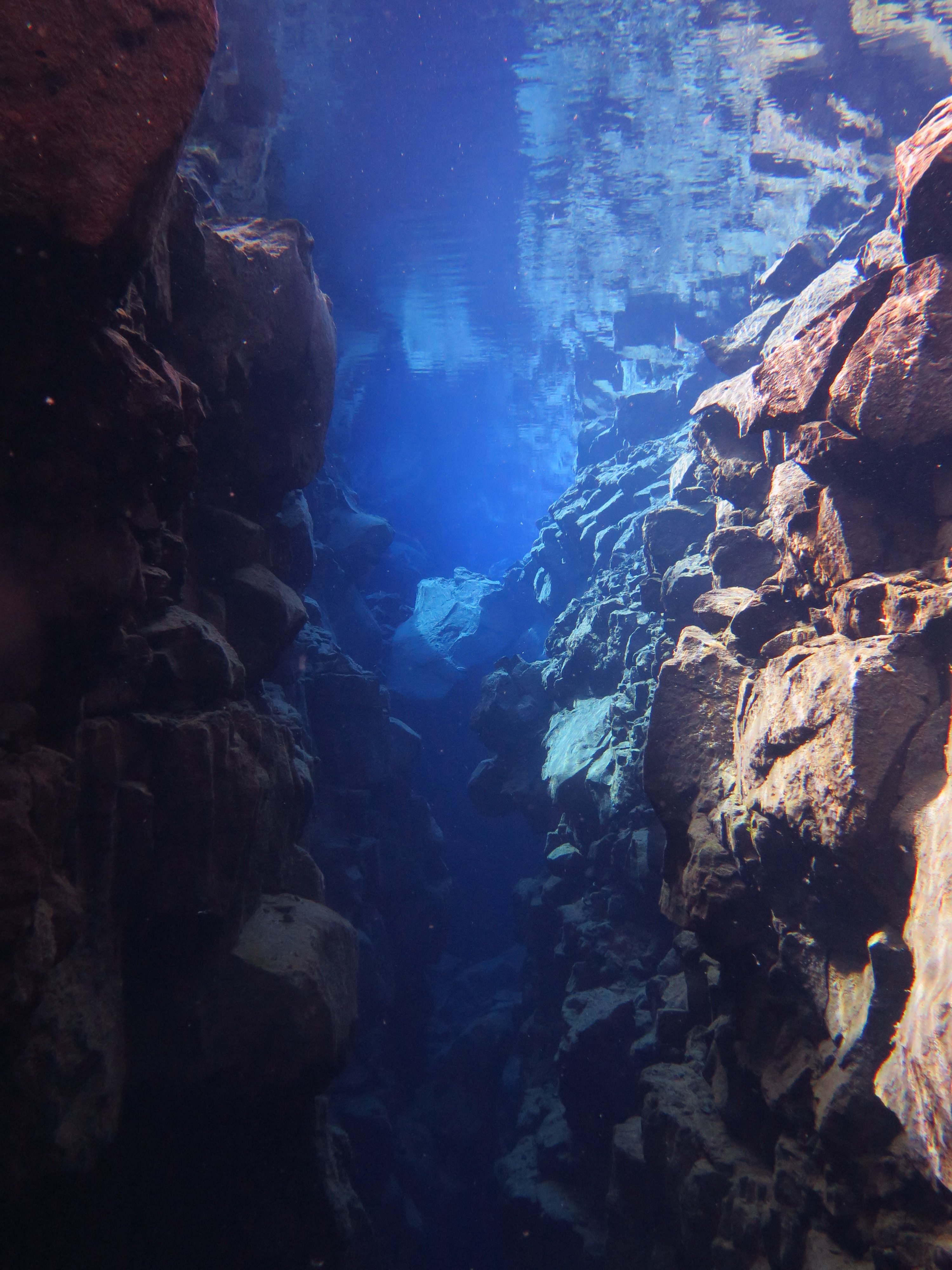
Once submerged, I found myself in the clearest, most pure water, I’ve ever been in. The water here comes directly through the rocks and has therefore been exposed to all sorts of natural minerals. We were even advised to remove our regulators at one time in the dive and take a gulp of the water to taste just how pure it was.
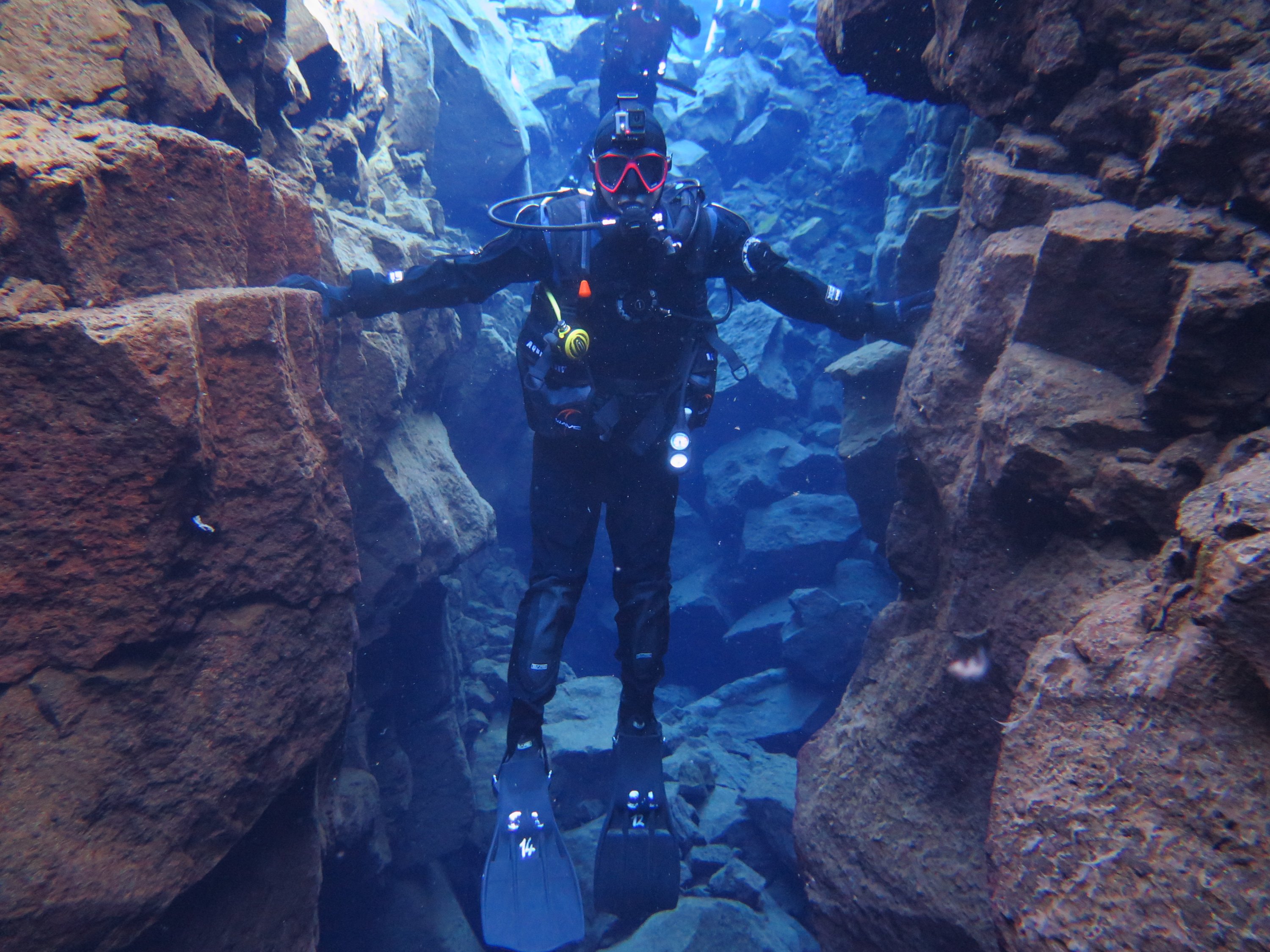
The tour at Silfra takes you through four main parts. Diving between the continents (where you can be photographed holding a different continent in each hand), before moving onto the Silfra Hall where you may spot a duck or two overhead as the visibility is usually perfect.
Moving on, near the opening of Thingvakkavatn Lake you’ll enter an area known as the Silfra Cathedral. This is the deepest point of the dive at around 18m. If there are divers ahead of you here you’ll be able to see the ‘chandelier effects’ of their rising bubbles. Lastly you finish in the shallow area of Silfra Lagoon. Once you leave the water, you will have to walk back about 250m along the pathway to the meeting point where a much needed hot chocolate and cookies await you.
Entering the water at Silfra you’ll dive between two tectonic plates
Holding both the continents in my hands while diving in Silfra was an amazing experience
The water is so clear and pure that the reflections on the surface are almost mirror-like
The pathway you’ll follow winds around the fissure made by the two tectonic plates
Towards the end of the dive the water gets very shallow
The visability under the water at Silfra is the best I’ve ever experienced
The bubbles you make from your regulator will catch the light creating beautiful patterns in the water
Couple of things to note for this dive. You’ll need to have done a dry suit speciality course before you’ll be able to dive here. Or at least show you have done 10 dry suit dives in the past two years. Second thing is that the water is extremely cold. That’s fine for the most part of you as you’ll be enclosed in the dry suit which will, if anything, make you really hot and sweaty. However, for the few exposed bits of skin (such as your face) you’ll going to feel the chill. It’s worth it though.
Final thing to note is the price. As with most dives worldwide, it can be a bit costly. For two dives and full equipment at Silfra I paid 34,990 Krona which is about £192.
My personal experience of this was that it is one of my favourite dives I’ve ever done. Despite the lack of wildlife under the water (it’s not the sea so not much really lives in it), the clarity of the water and just diving down between the tectonic plates was as memorable an experience as I ever participated in.
My final recommendation is to go off-roading. Not in your hire car though. For this I booked a tour out of Reykjavik with Arctic Adventures.
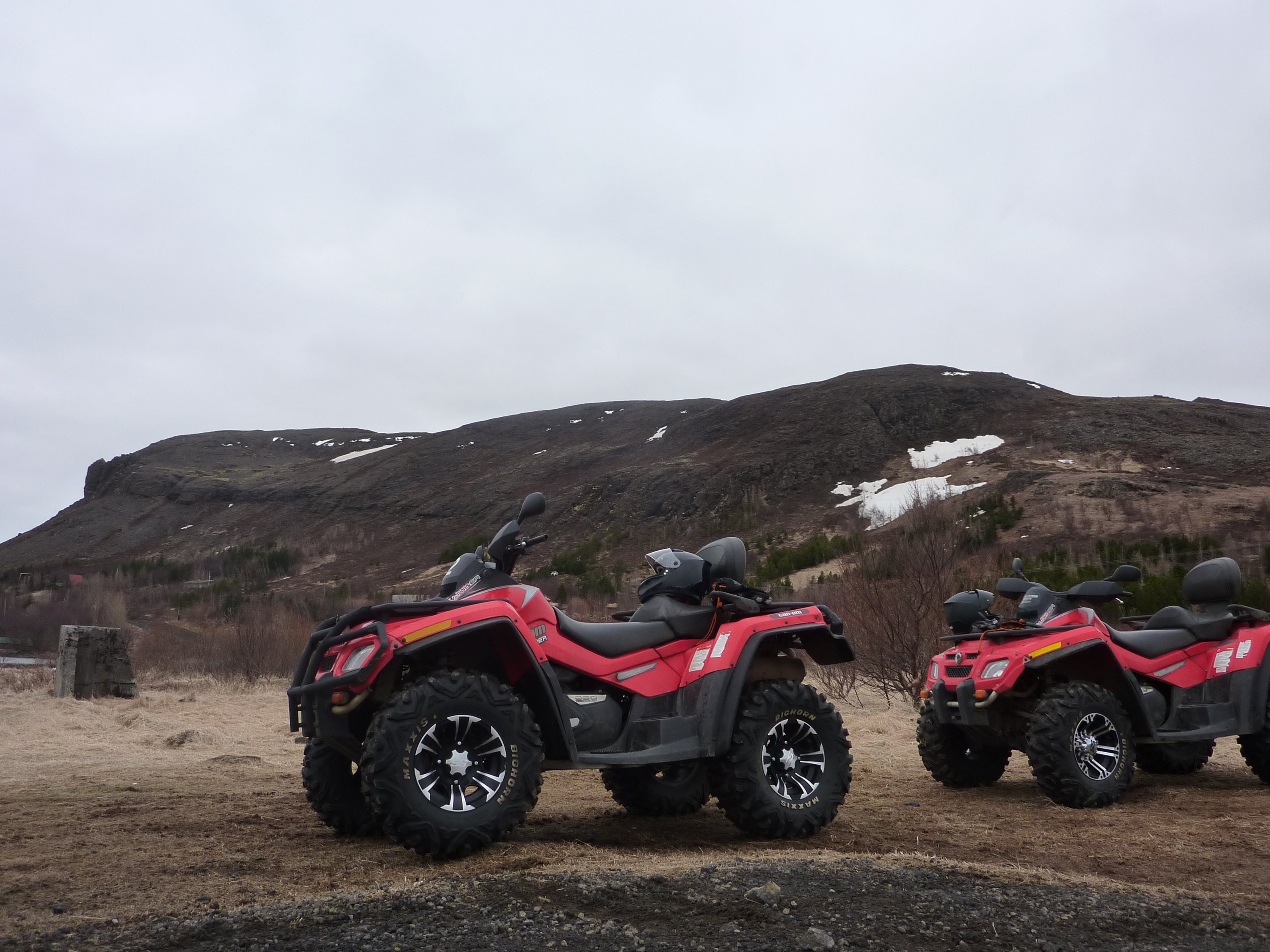
There are a number of options Arctic Adventures provides – including caving and ice cave tours, whale watching and snowmobile tours – but I’ll talk you through the trip I took that I thoroughly recommend; the Caving and ATVs in Iceland tour.
I’d never driven an ATV before so was excited to give it a go. Getting picked up from the hotel, I was driven to the ATV centre in the city where our tour group were fitted with overalls and helmets and given a safety briefing. Soon enough though, we were out on the roads on an ATV.
You’ll probably get a little wet and muddy going off road on the ATV
ATVs parked up at one of the stops along the tour
Beautiful rock formations are everywhere during the lava cave trip
This hour long drive takes you from the streets, onto the hills and through rivers. It’s an exhilarating drive that allows you to pick up speed and navigate the rocky terrain while taking in the impressive sights.
Once the ATV drive has been done you’ll be dropped back into Reykjavik to meet the second part of the tour that will take in Hafrafjall mountain and allow you underground in the Raufarholshellir lava tube. This second part does require you to be a bit flexible as you’ll have to crawl into the narrow entrance of the tube. Inside you’ll see all manner of stalagmites and stalactites that have formed over the centuries. Be careful on the floor as their is likely to be ice that could cause you to fall over (as I did to my shame).
Where to avoid
With so much to see and do in Iceland it’s important to make the most of your time there. Use it to explore some of the countries real wonders and leave a few of the not so great things to the side. To that end I’ve identified two such locations that I’ve visited during my travels to Reykjavik that I won’t be in any rush to return to.
The first of these is the Whales of Iceland Museum. On paper this seemed like a good option. The museum is located in the north of Reykjavik, quite near the centre of the city. For those who tried (and maybe failed) to spot a whale or two in the wild on a boat trip, this museum would give you the chance to see some in their, less than, natural environment.
Now I have nothing personally against the museum, however, I will explain the reasons I think you can skip this attraction.
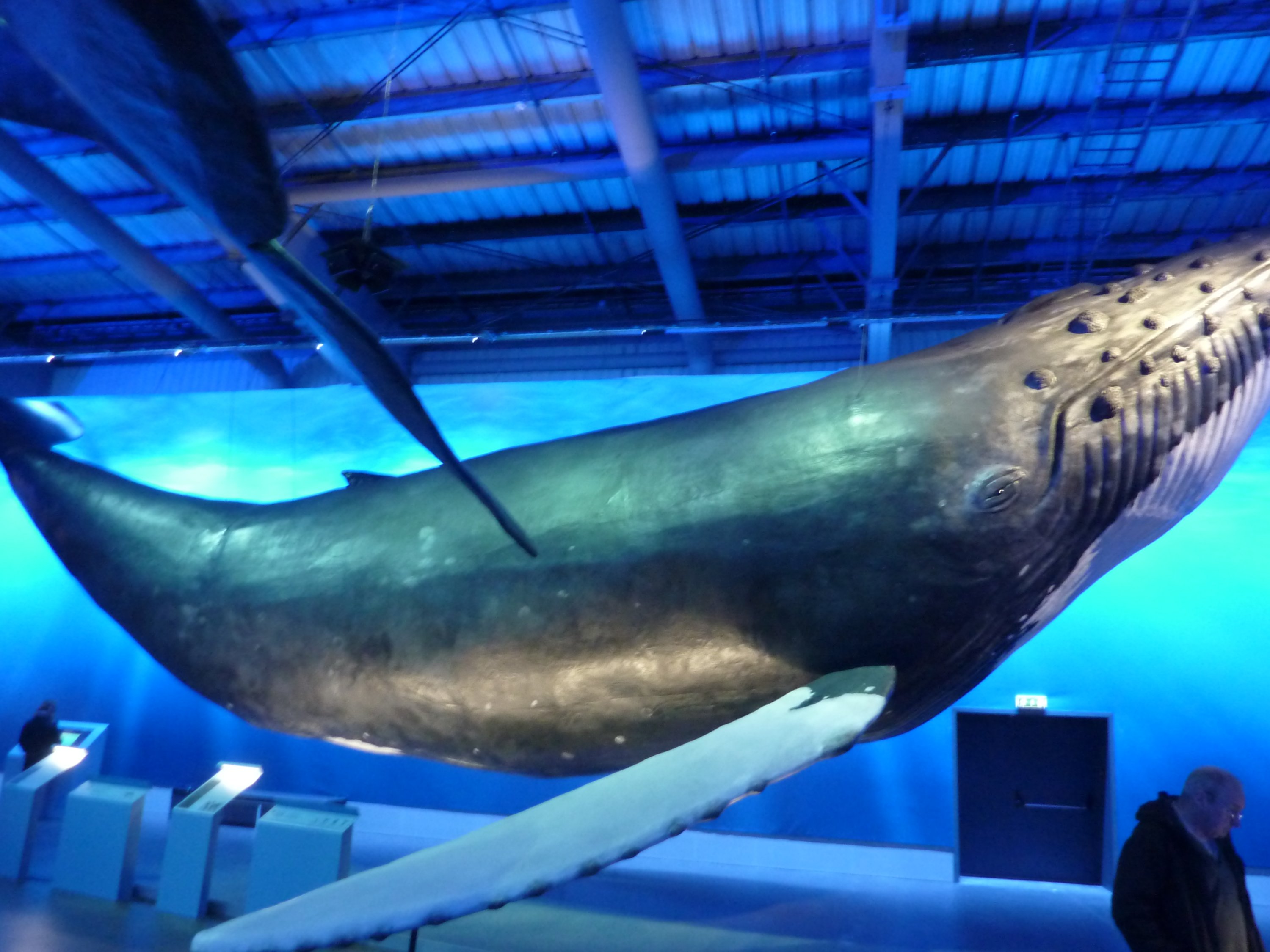
The whale models are impressive in size but offer little else
A model of a humpback whale does little to excite
Firstly the cost. At 2,900 Krona per adult (around £16 each) the museum felt rather expensive. Take into consideration all the natural history museums you can enter worldwide either free of charge or for a fraction of the price, it just doesn’t add up.
Second point is that after you’ve paid entry you notice that the museum is literally all located within one large room. You could probably work this out anyway as from the outside you can see that you are in an industrial area of the city and this place seems to be a rented warehouse.
Finally, the exhibits themselves. The museum is home to a number of life-sized models of whales. But that’s all they are; models. Their are a few real whale items inside, but on the whole you are paying to look at a selection of large plastic models.
On the plus side, the museum is child friendly and a youngster may enjoy it more than a group of adults. Also during our visit to the museum, the gentleman on the front desk was extremely friendly and paid a real interest in us and in English football. This may have been down to the fact that we were the only people in the museum for the entire time I visited (which was about an hour at most).
Basically, there are a million and one better things to do with your time in Iceland; so give this one a miss.
Something that’s not in those million and one things better to do is The Icelandic Phallological Museum or the penis museum. This museum is just odd; although it should be fair to say you know what you are going into when you arrive.
Ahead of our visit we’d heard people joke about this museum and had looked it up. Sure enough there is a penis museum located in central Reykjavik on a street called Laugavegur.
The museum describes itself as probably the only museum in the world to contain a collection of phallic specimens belonging to all the various types of mammals found in a single country. A claim that I’m sure few are going to dispute. Various types of whales, dolphins, foxes, rats, rabbits and even a couple of human penises are on show here for anyone curious enough to enter.
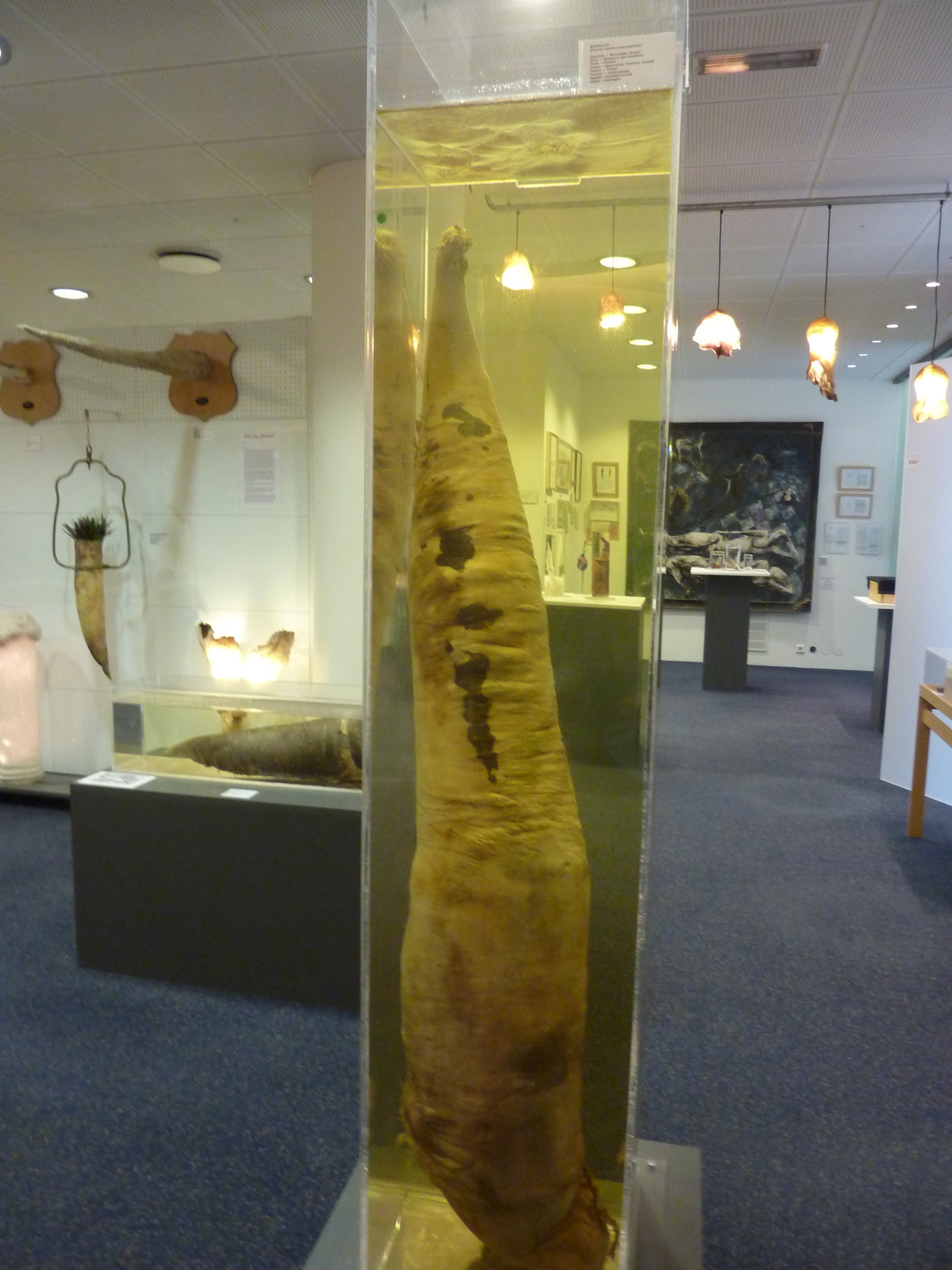
The main ‘attraction’ at the museum is the whale penis
During our visit we actually met the museum founder and owner – a gentleman named Sigurdur Hjartason. Having worked as a teacher for almost 40 years, he initially gained an interest in the subject matter when he received a pizzle or bull’s penis back in 1974. Mr Hjartason then opened his museum in the capital in August 1997 with some 62 specimens.
A short spell, away from Reykjavik followed for the museum between 2004 and 2011 when he moved to Husavik; the whale watching capital of Europe before moving back to the city under the stewardship of his son Hjortur Gisli Sigurdsson.
To be honest, this is a museum for those with a more curious nature. Costing 1,700 per adult (about £10) to enter, this is somewhere to go if you have a spare hour and a strong stomach.
The exhibits are eye opening due to their sheer volume. The whale penis alone is something else!
Put simply, his gimmicky museum relies on the curious to enter. Most won’t ever return. Maybe one to avoid if you’re holidaying with the kids.
Great places to eat
For any visitor to Iceland, a good meal straight from the sea should be high on the to-do list. And for a traveller on a tight budget looking for some great seafood then a trip to Icelandic Fish & Chips is an absolute must.
Located on the corner of Tryggvagata near the sea front. This trendy restaurant does a great take on traditional fish and chips using some of the more prominent catches from the Greenland Sea. The fish you’ll eat are very fresh and while they do come in batter it’s not the type of batter that takes over the taste. The fish on the plate is the real winner here.
Also make sure you order a portion of the rosemary potatoes. They are perhaps even better than the fish. I’d have been happy enough just ordering lots of portions of those as they smell and taste superb.
The menu is also – by Icelandic standards – fairly affordable and a good meal for two should cost you around 6,000 Krona (or about £35). Be aware, however, that if you do add alcohol to this then the final bill could go up considerably.
The second pick takes you back to the Icelandair Hotel Reykjavik Marina and dinner in Slippbarinn. The bar here, as mentioned, does amazing drinks but the small restaurant to the side of it is absolutley superb.
During our stay here we had dinner at Slippbarinn on one of the days and it was fantastic. A wide variety of Icelandic cuisine was one offer and I think they change the menu quite regularly to ensure it is always fresh and interesting.
A fish soup was the starter I had and this was possibly the best seafood soup I have ever had anywhere in the world. Each mouthful was flavourful and there were plenty of real seafood in the bowl to be enjoyed.
Following this, I opted for a beef tenderloin to follow which was cooked to perfection. This was accompanied by a selection of roasted vegetables and a sprinkling of thyme.
Leave room for a dessert also. While the dessert menu isn’t extensive, there should be an option on it to suit most tastes.
Be aware, that a full three course meal here – including drinks – for two people can set you back around 20,000 Krona (or £110) so make sure you take that into consideration before sitting down to enjoy the food.
Remember you can follow World Complete on Twitter, Instagram, Pintrest, Tumblr and Facebook send your comments and pictures from your travels using #WorldComplete and #Travel.
One thing comes to mind instantly when you think about Nagasaki. Destruction. A city left in ruins after the devastating atomic bomb was dropped on it on August 9, 1945. It was the final straw for the ailing Japan who were already on their knees following a similar attack on Hiroshima three days earlier. So while the effects of that dark day do play a key role in the city’s history, there is much more to modern day Nagasaki than just a former nuclear waste-ground.
I’d been to Japan before, but never made it as far as the south island of Kyushu. During a previous trip I’d spent time further north in Hiroshima, Kyoto, Nagano, Fuji, Koyasan and, of course, Tokyo, but not to this wonderful region.
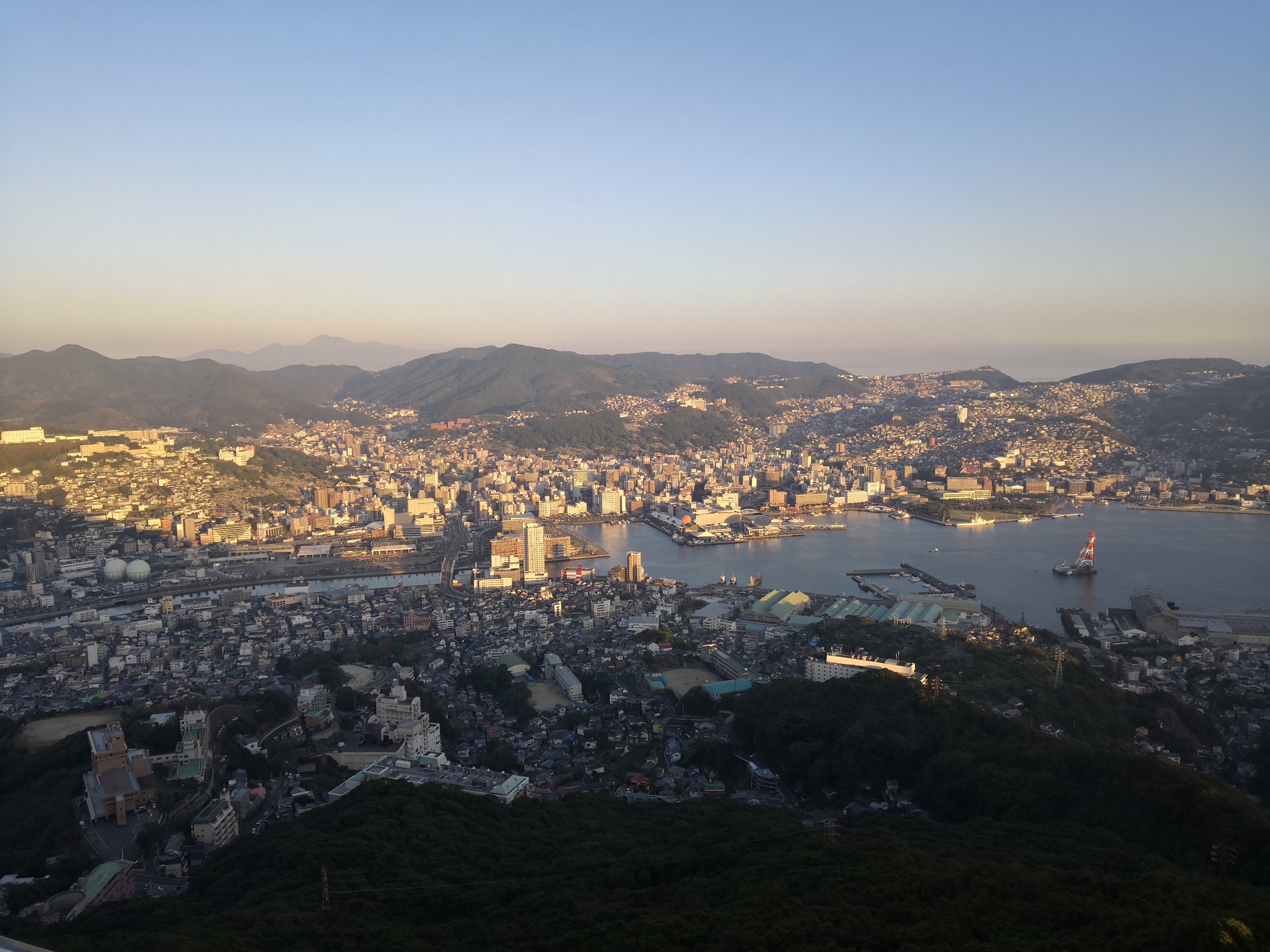
Nagasaki is the largest city of its prefecture and one of the country’s main ports. During the 16th Century it was the sole port used for trade with both the Portuguese and Dutch. Like a lot of Japan, it has a way of combining the old with the new. Temples and shrines appear throughout the landscape just feet away from new restaurants and shopping areas. It’s an eclectic mix of traditional and 21st Century.
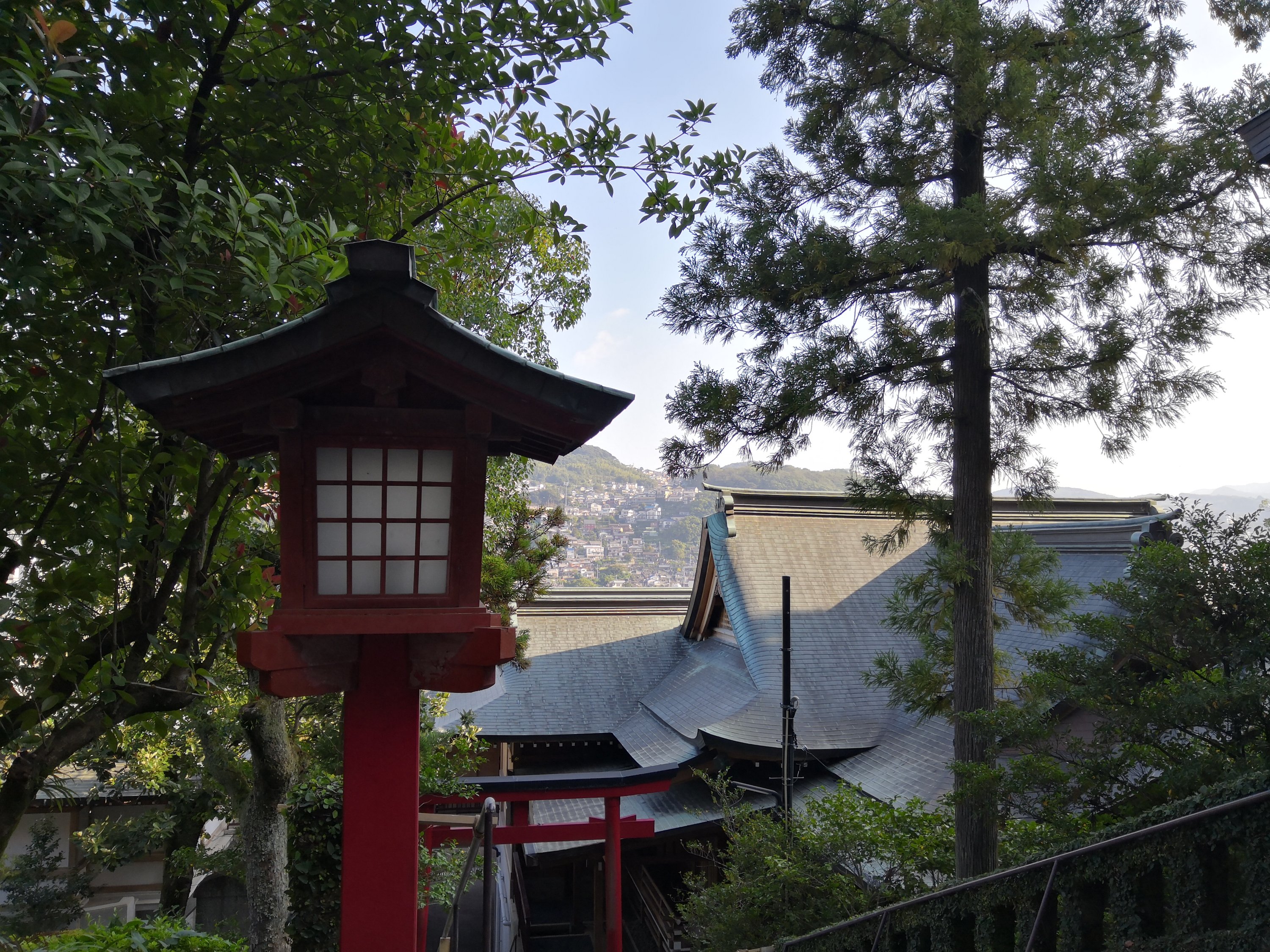
Views in Nagasaki will combine the old temples and shrines with the built up parts of the city
Now I love Japan for a number of reasons. First of all the people are some of the friendliest and warmest you’ll meet anywhere in the world. Nothing is too much trouble for them. I’ve had total strangers stop what they were doing to walk me in the opposite direction and help me find where I’m trying to get to. An extension of that is just how punctual everything and everyone is. If a train, for example, is due to leave a station at 13.07 then, by god, it leaves at 13.07. No exceptions!
Also the food is amazing. There are so many variations of Japanese cuisine that it’s almost impossible to sample it all within a two week trip.
Finally, the country has so many fantastic fun, cultural and awe-inspiring sites to visit that you can travel there on numerous occasions and see something different on each visit. Put simply, Japan is amazing!
During my most recent trip – this time with a close friend of mine – we were due to stay in Nagasaki for three nights (having spent the previous week in South Korea) during an October. The summers in Nagasaki can be extremely warm with highs in August reaching the mid 30s. In October it is slightly cooler but still temperatures reach the high 20s. During our stay it was sunny for the entire trip and we did not see a single sign of a rain cloud. So make sure you pack appropriately.
Google Maps shows the layout of the city
Next thing to note is that if you are coming from the UK, then you can expect prices to be similar to what you’d expect to pay for things back home. At the time of writing £1 would get you around 130 Japanese Yen. Another thing to note when it comes to money is around the act of tipping. For those coming from western countries (especially the US), the prospect of not giving a tip for a meal, or for someone carrying your bags into a hotel room, is something quite extraordinary. Not so in Japan. Tipping is not customary and, in fact in some circumstances, can be considered quite rude and insulting. Also many restaurants require the customer to pay at the front counter rather than by leaving money on the table. In these cases it is usual for the money to be placed on a small tray and not directly into the hands of the cashier. Where money, or credit cards, are passed from person to person, it is often done two-handed and with a slight bow of the head as a sign of respect.
Finally, if you are travelling within Japan and not just staying in Nagasaki, then you are likely to be using the super efficient railway system. Most railway networks within Japan are run by The Japan Railways Group – known as JR Group. This group run the famous Shinkansen (or bullet trains) that are known worldwide. For foreign travellers, I’d strongly advise purchasing a JR Pass which, once purchased, can provide the user with unlimited use of the national network for a set period of time. To give you an idea of its value, two ordinary 14 day passes (that don’t include the super fast Shinkansen) that I purchased for my original trip to Japan cost £634. If you are using the trains regularly in that period you’ll get your money’s worth easily. Shorter options are also available from the JR Pass website. Once purchased online, you then pick your pass in Japan by showing your Exchange Order and Japanese entry visa that will be in your passport.
Getting there
It probably goes without saying – although I’m going to anyway – that the best way to get from the UK (or most places in the world) to Japan is by air. And like any major nation, Japan has huge numbers of airports spread across the four islands.
Most travellers will probably expect to fly into one of Tokyo’s two main airports; Narita or Haneda. Then once in Tokyo, catch the train down to the south island and into Nagasaki. To get to Tokyo I’d suggest you fly with British Airways. It’s a long flight – between 10 and 11 hours usually – so prepare to bed in. While you will be fed at least twice on this flight (as I was when I did this journey for my first trip to Japan) make sure you have a selection of other snacks and drinks with you as well as some good entertainment. There will be a selection of films and games available on board, but better to have more than you need to occupy yourself right? To give you an idea on price, a solo traveller with British Airways can expect to pay around £650 for a return flight to Tokyo from London Heathrow in October.
Now getting to Nagasaki. It’s true that Nagasaki has an airport but, currently, there are no direct flights from anywhere in Europe to it. However, you can get to Nagasaki Airport by taking a flight to Tokyo and then changing for the short hop down the country.
However, there are other options to get to Nagasaki. I’ll talk you through my route which – albeit – is not the easier nor conventional way, suited my plans well.
When I travelled with my friend, we started in Busan on the south coast of South Korea. We had spent a week or so travelling around South Korea and were making the short one hour flight over to Japan for another week. We boarded an early Asiana Airlines flight from Gimhae International Airport and flew directly to Fukuoka Airport for £150 (which included a return from Fukuoka to Seoul Incheon). If you were to just fly from Gumhae to Fukuoka you could get a ticket for as little as £50!
Once at Fukuoka (well after a couple of days exploring the area) we caught a train from the centrally located Hakata Station – a huge and confusing metropolis of identical walkways containing all manner of shops – to take the two hour train journey south to Nagasaki. Despite the language barrier, buying tickets it pretty easy, although I’d advise you to search on Google before you go for the train times you want to get as it makes it easier to explain your plans if you have exact trains to point at. From memory, I think the train from Fukuoka to Nagasaki is direct so there is no need to change during your journey.
Where to stay
Across Japan there are plenty of hotels and hostels to stay in and Nagasaki is no different. One thing to note about Japan in general is that there has been a bit of a backlash against AirBnB by the hotel operators which has led to restrictions on the number of places available via this ever-increasing accommodation provider.
During my three-night stay in October, I plumped for the centrally located Richmond Hotel in the heart of Shiambashi (about two minutes walk from the Shiambashi tram stop).
This three-star accommodation is set back just off the main road (Harusame Street) in the pretty quiet Motoshikkuimachi. This cost me £232.95 for a deluxe double room, non-smoking, for two adults for the three nights. However, breakfast is not included in this price.
The positives about this hotel were plenty. Upon arrival, after walking down the rather secluded and not so obvious entrance walkway to the hotel lobby, we were met by a very friendly and helpful receptionist who checked us in promptly. The lobby area is modern and stylish and there is a small restaurant that serves breakfast and dinner just beside the entrance.
The view across Nagasaki looking at the mountains, as enjoyed from my room at the Richmond Hotel
The room in the Richmond Hotel was quiet spacious – especially by Japanese standards
The room was well equipt too. A comfortable double bed welcomed you and the bathroom was perfectly suitable with a modern, clean shower.
While the hotel is in a quiet the area during the day time, it can be a bit rowdy at night. Basically, it appears to be in the heart of the red light district of Nagasaki. Saying that the street still, somehow, didn’t actually feel that seedy. While there were obvious ‘establishments’ lining the road with women standing nearby, there was not the Amsterdam feel about the area.
Anyway, back to the hotel itself. One thing I cannot comment on here is the restaurant, other than to give you the reasons we didn’t eat here. Basically, it appears to be a little costly for what is on offer. Given there are so many good places to eat and drink nearby, it felt a waste to stay in our hotel and have dinner. Also we didn’t bother with breakfast here either as we chose to eat on the go. There is always a vending machine to grab a hot coffee or a Lawsons to grab a melonpan – a type of sweet bun – from. That’s something I really love about Japan. The variety and options available are just incredible.
Getting around
While Nagasaki is a relatively small city – well in comparison to say Tokyo anyway – there are a variety of ways you can successfully travel around its many streets. Perhaps the best method is to walk them. Some of the best walks that take in some of the city’s many temples and shrines are along the river and across its many bridges (more on one of those later on). Also you can take a stroll all the way down to the dockside where a series of boat tours take place from. This walk will take around 15 minutes from Shiambashi.
You can also take a longer walk north to explore the site of the atomic bomb hypocentre as well as the fascinating Atomic Bomb Museum. Be warned, however, that it’s a long walk from the hotel area to the museum and Peace Park and, depending on fitness, will take up to an hour to cover the approximate 4km. However, there are plenty of places to stop along the way to grab a tasty snack and bottle of water.
There are quite a few hills and mountains in Nagasaki (fortunately a cable car known as the Nagasaki Ropeway takes you to the main viewing spot high up on Mount Inasa) so be prepared for your legs to feel the burn after a long day out exploring.
If the idea of walking doesn’t excite you a lot then there is a superb tram service running through the city.
Nagasaki is serviced by four tram lines. Operated by the Nagasaki Electric Tramway, the tram lines provide easy access to most of the city’s main attractions. You can usually get on board a tram pretty quickly as they run every five to eight minutes. You enter through the rear door of the tram and pay the 130 yen (about £1) for a single journey, no matter how far you are travelling. Then when you reach your stop you exit the tram via the front door near the driver.
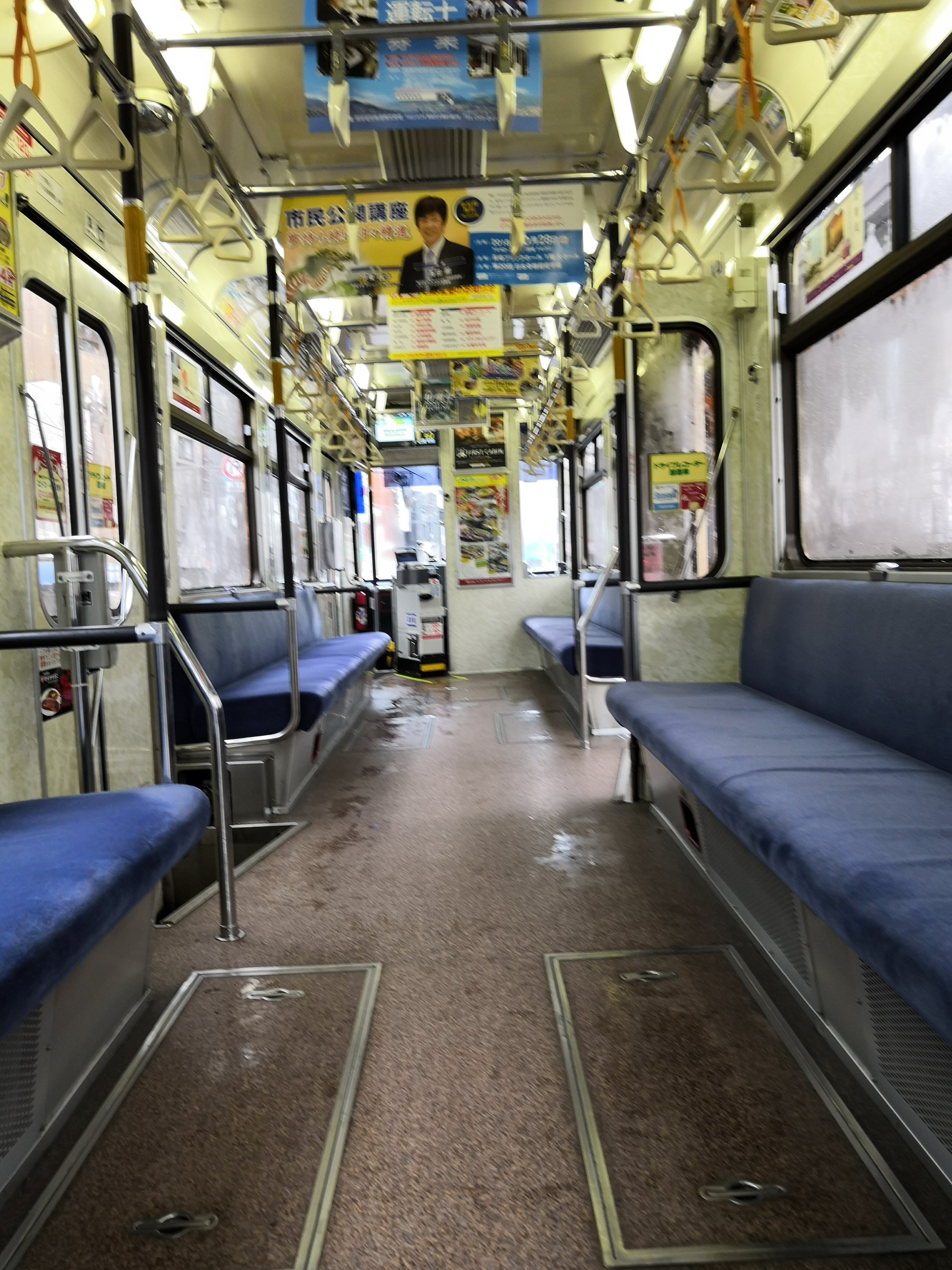
A view of a very empty tram with plenty of places to sit down
The tram driver will take you along the route and stop when you press the button to request it
If you are entering the tram, as I did, at Shiambashi tram station then you can either pick up Tram Line 1 (blue line) taking you up to the Peace Park, Atomic Bomb Museum, Nagasaki Train Station and near the Nagasaki Ropeway for Mount Inasa, or Tram Line 4 (yellow line) taking in the bridges along the river.
For those arriving into Nagasaki, or leaving it, then Nagasaki Train Station on the Nagasaki Main Line – operated by Kyushu Railway Company (JR Kyushu) – is probably your best bet. Located centrally to the city’s attractions, the train station is only a few simple stops, via the tram, to pretty much any location.
The station is quite compact and houses just a few platforms with trains taking you back north to stops that can get you to other locations on Kyushu such as Fukuoka and Beppu. Make sure you buy your tickets for the exact train you want from the ticket office as you’ll be allocated a seat. Top tip here is to book your train tickets for the day you are leaving when you arrive at the station, helping avoid any issues of the train already being full when it’s time to leave.
Top sites
You can’t think of Nagasaki without thinking about the end of the Secord World War. So it’s impossible to go to the city without paying a much needed visit to the Nagasaki Atomic Bomb Museum and Peace Park. Entrance to the museum is extremely reasonable at just 200 Yen (about £1.50) per adult and you can also get an audio guide for an extra 157 Yen (about £1.20).
The museum is as harrowing as it is interesting. The sheer scale of the destruction of the Atomic Bomb ‘Fatman’ bought about to the region is astounding. In total around 150,000 people either died, or were injured, on the morning of August 9, 1945 when the bomb exploded 500m above the city.
As you are guided from exhibit to exhibit by the tape, you’ll get to grips with just how badly Nagasaki suffered. There are countless items salvaged from the wreckage on show, including bottles that melted together under the extreme heat, clothes that were peeled-off the victims backs, a lunchbox still containing the remains of a rice lunch a young child was taking with them the day the bomb hit and a life-sized replica of the bomb itself. It’s a truly fascinating and sombre place.
I remember walking silently around the exhibition with my friend, exchanging glances with one another as we went, trying to get our heads around the actions of that day. A feat I don’t think I will ever achieve.
The entrance to the Nagasaki Atomic Bomb Museum
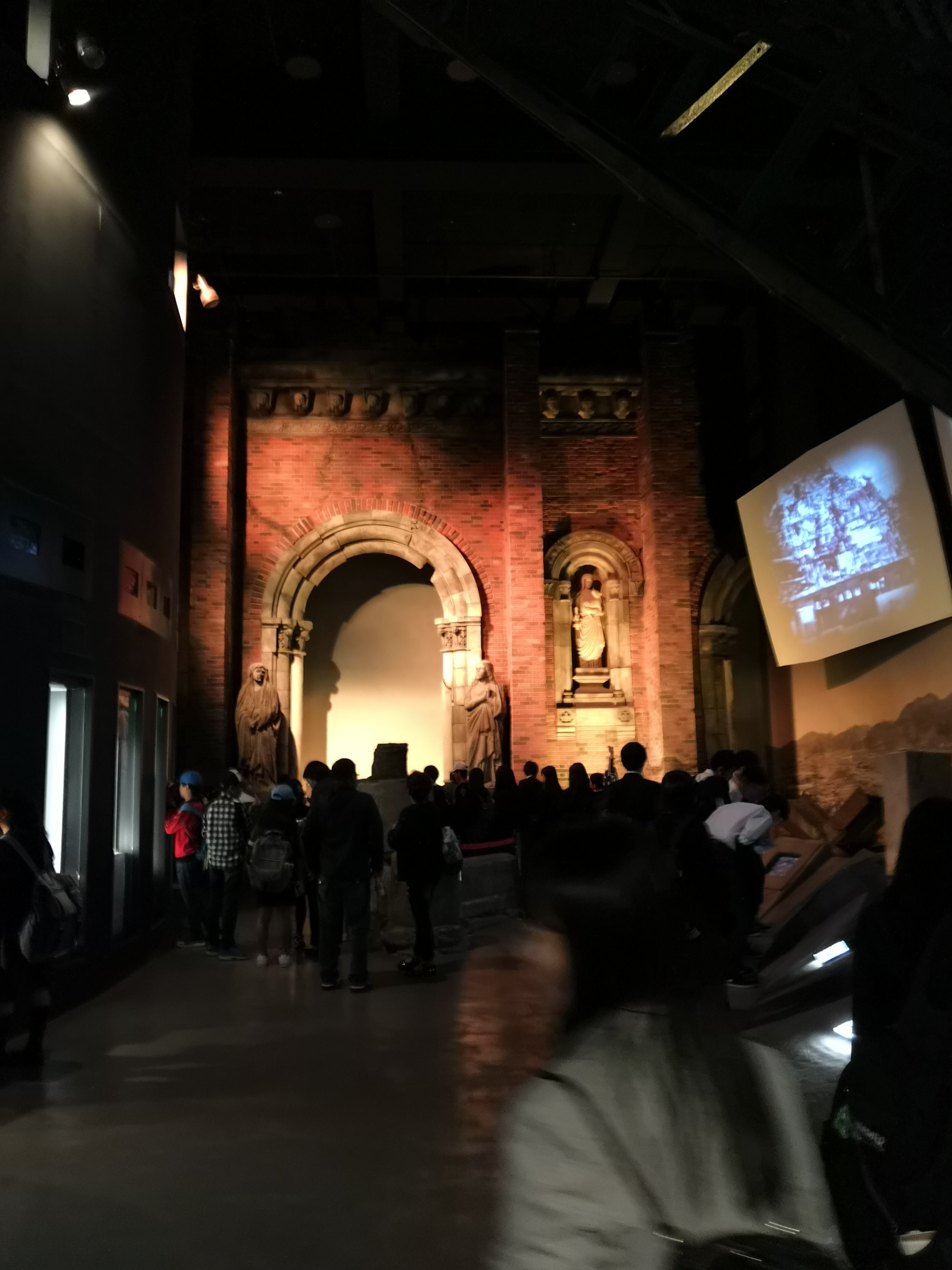
Inside the museum, this shows the archway remains taken from the wreckage of the old cathedral in the city
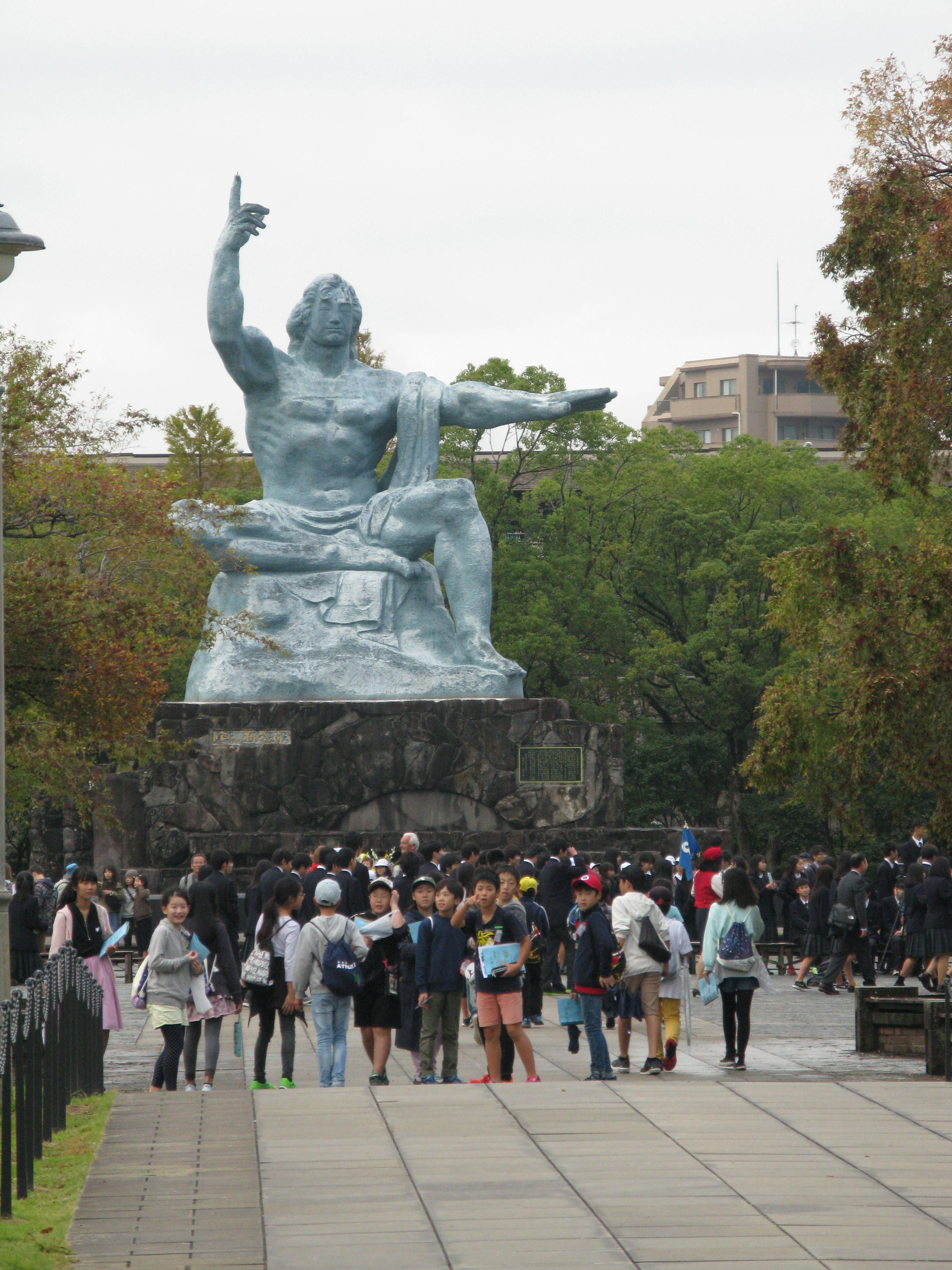
Outside the museum you’re just a short walk to the Nagasaki Peace Park and Peace Statue. This statue, is a large 10m tall man with his right hand extended skywards to the threat of nuclear weapons and his left extended symbolising peace. The walkway is also surrounded by fountains which add to the overall atmosphere of the area. Nearby, in the Hypocentre Park, you’ll come face-to-face with a monument symbolising the exact spot the bomb exploded 500m up. Incredibly, just metres away from this is the one-pillar Torii – the remaining part of the traditional gates that are synonymous with Japan – that has stood firm since the bomb went off until this very day.
On your way out also make sure you pay a visit to the National Peace Memorial Hall – also situated next to the museum and Peace Park – to fully get the whole experience and to understand what this area means to Japanese people.
The monument symbolising the hypocentre of the Nagasaki Atomic Bomb explosion
The Peace Statue attracts lots of visitors including many school visits
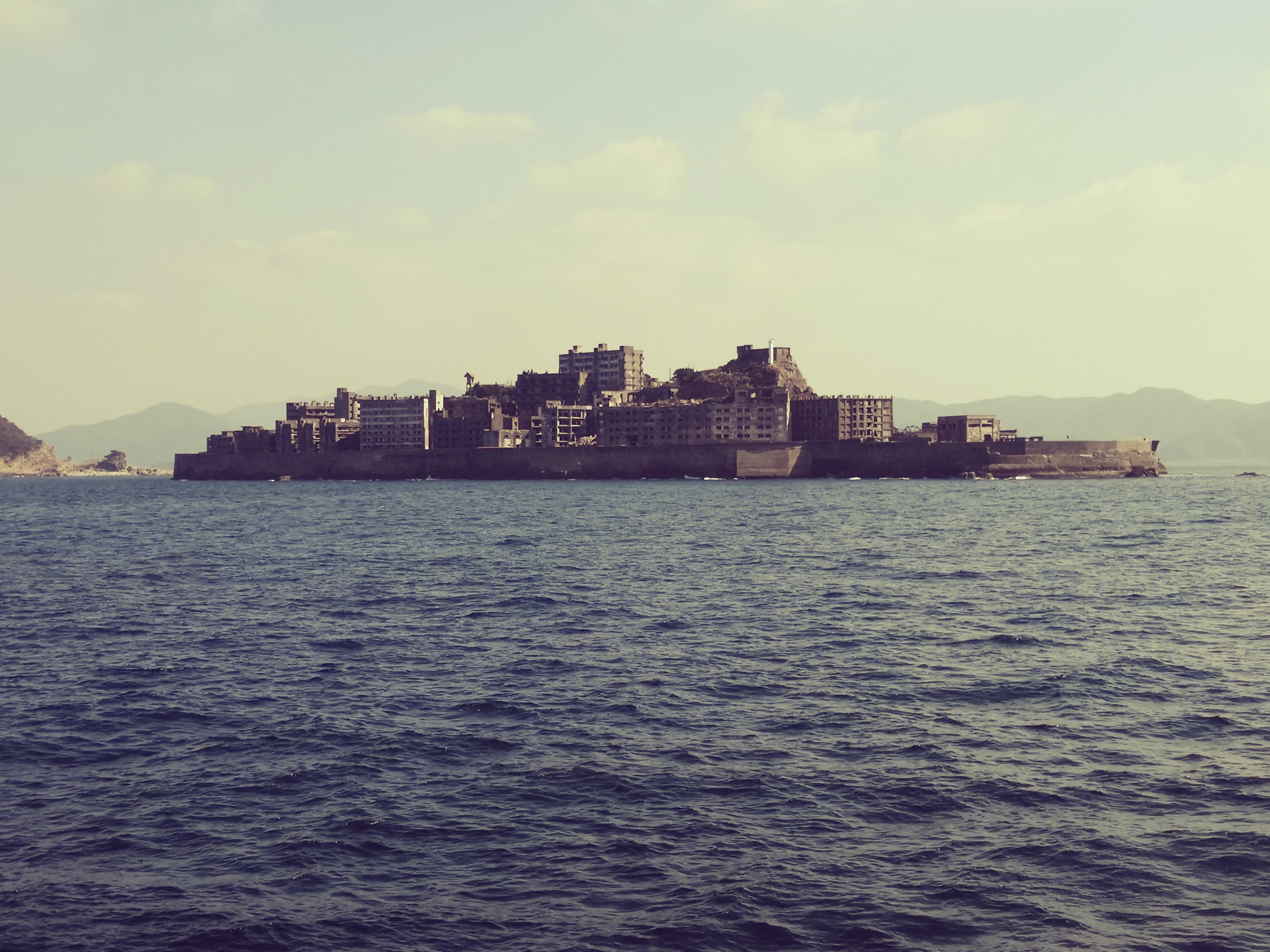
This next location may look familiar to film fans. Hashima or Gunkanjima Island also known as Battleship Island was used in the James Bond movie Skyfall as a backdrop to one of its scenes. It’s a deserted mining island about 19km off the coast of Nagasaki and you can only get there through a tour company. Fortunately there are quite a few of these.
Hashima Island appealed to me due to my interest in urbexing. Imagine a whole island with deserted buildings that you can look around! Sounded like an opportunity too good to miss. Sadly when I went in October the sea conditions meant it was too dangerous to dock, so we could only view the island from the water. Bear this in mind when you visit, as docking on the island can change day-by-day and in certain seasons (e.g. the autumn and winter months), docking is less likely.
Meeting at Nagasaki Docks the tour sets off around 9am. There are lots of tour companies to choose from including Gunkanjima Cruise and Yamasa Line. From our trip, we opted for Gukanjima Concierge at a cost of 4,000 Yen per person or around £30.
The trip takes about two hours in total if you are not stopping on the island. However, even from the water it’s still well worth the time and money. Make sure you queue nice and early also as premium seats with the best views onboard go very quickly!
On your way out to Hashima Island you’ll get the chance to sit back and enjoy the boat ride taking in views such as the Megami Bridge
The island itself has an interesting history. Nicknamed Battleship Island due to its shape, the island was not really the focus of anything until a coal mine was established in 1810. Years later, a large settlement was established on the island and saw many families move there despite its small size. To accommodate the workers and their families, around 30 apartment blocks were built as were a primary and junior high school, pachinko or gambling shop, hair dressers, a movie theatre and even a pub. At its peak over 5,000 people lived here.
However, in the 1970s, energy shifted from coal to gasoline and the mine closed. With no mine came no work and the families quickly left the island for dead.
If you are lucky enough to get onto the island during a visit then you’ll enjoy seeing the sites mentioned above. However, safety rules do dictate that you won’t be able to enter large parts of the island so don’t be disappointed that you can’t climb the deserted apartment blocks.
Hashima Island – known for looking like a docked battleship
A close up shot of some of the buildings on Hashima Island taken from the boat
The next must stop during a stay in Nagasaki is that of Mount Inasa Observation Platform and Ropeway. You can reach the foot of the ropeway by tram and once at the top you get the best views of Nagasaki from anywhere in the city.
You can get stunning views of Nagasaki from the viewing platform at the top of Mount Inasa
Much loved by locals, Mount Inasa sits in Mount Inasa Park and rises 333m above sea level. A round trip ticket costs 1,200 Yen per person (around £9). The short ropeway journey, up the mountain, allows you to enjoy the scenery on the move before arriving at your destination. At the top, from the all round viewing platform, the natural beauty of the coastline and mountains are to be enjoyed.
My top tip here is to head up the mountain around an hour before sunset. This way you’ll get the views of the city in the daylight while also experiencing the setting sun disappearing in the distance.
Stand back and enjoy the sun setting from this idyllic viewpoint
Back towards the centre of Nagasaki you’ll find one of its most photographed landmarks.
Meganebashi Bridge /Spectacle Bridge may look like any number of bridges that cross the winding streams and rivers in Nagasaki, but this one provides a fun optical illusion. From a distance and with the sun shining, the two arches of the bridge reflect in the water to look like a pair of glasses.
School children queue up to get their perfect social media shots
The reflection in the water helps give this bridge its nickname
The Spectacle Bridge from the side of the water
Take a few moments here to join the queue of, what seems like endless Japanese schoolgirls (surely they must have taken that photo hundreds of times already?) and wait for your turn to step onto the stepping stones across the water to get a central location for your photos. If you ask nicely enough, you can get one of the other visitors to take your picture for you. The bonus here is that as it’s a functioning bridge, so there is no need to pay any money to see it.
Interestingly, when my friend and I arrived at the site a lot of the other local visitors were more interested in taking our picture with the bridge in it than their own!
Once you have all the photos you want of this site (and everyone else has all the pictures of you they want as well), just a short walk down the stream you’ll come across huge numbers of koi carp in the water. They are literally everywhere and they are huge.
We were so taken by this that we went to a local Lawsons and bought a loaf of bread each and went back to feed them. The fish were so keen on the food as well that they would literally come up and take the bread from your hand. Incredible opportunity here to get up close and personal with the local wildlife.
Here we are about to cross the stepping stones together
How do these schoolgirls not have this photo thousands of times already
Feeding a koi carp by hand. They really do love Japanese bread
Finally make your way to the Suwa Shrine. Nagasaki and indeed Japan in general are home to hundreds and thousands of shrines. They are everywhere you go. So it is unlikely you’ll need to visit them all in Nagasaki especially if you have been elsewhere in the country already.
However, I would advise making the walk to Suwa Shrine as it is not only a beautiful example of Japanese architecture and an extremely peaceful place, but also affords stunning views out across Nagasaki.
A large ceremonial bell housed in the shrine’s forecourt
Walking up the steps to the Suwa Shrine is a test of endurance
The steps leading to the entrance of the Suwa Shrine
Don’t think my friend knew he was in this photo of us and the stunning Nagasaki backdrop
The shrine itself is a Shinto shrine dating back to the 1600s, and it is also the home of the Nagasaki Kunchi or festival. Like most shrines it is free to enter the grounds but guests can make donations. One way to do this is to buy a fortune (Omikuji). This type of fortune comes in a slip of paper and is divided into multiple sections from ‘good luck’ to ‘worst luck’. I remember getting one of these when I was at the Shrine and to be honest was less than impressed with its predictions for my future! However, I’m sure you’ll get a better one than I did. Also, fun fact, Suwa Shrine was the first Shinto shrine in Japan to do these fortunes in English.
Where to avoid
First thing to say is that, from my experience, Japan is an extremely safe country. Safe to the point, in fact, that you can feel pretty comfortable using your bag as a means to reserve a table in a fast food diner. Honestly, I’ve never been anywhere in the world that the people are as helpful, friendly and nice as the Japanese.
So if I’m really pushed for something to avoid I’d have to say the general area of Shiambashi at night. As previously mentioned, this area is basically part of a red light district and while it appears to be a mild mannered one it may make some visitors feel uncomfortable. I’ll be honest, it did come as a bit of a surprise to my friend and I when we saw it the first night we were there as it didn’t really fit with our preconceptions of Japanese culture. Guess the world’s oldest profession is alive and well even in countries that don’t like to flaunt sexuality overtly.
Shiambashi very late at night once the ‘establishments’ had all closed their doors
Main problem I can see with my own advice here though is, if you’re staying in the same hotel as we were, then it will be impossible to avoid the area completely. However, those soliciting certain services have obviously got an eye for who is in the market and who is just passing through and more often than not, if you are clearly foreign, then they will simply turn their back on you. Problem solved.
Great places to eat
There are hundreds of great places to eat and drink in Nagasaki. Seriously, you’ll be falling over places and have more difficulty narrowing the choice down to just one restaurant. As you’d expect being Japan, there are lots of restaurants serving sushi, sashimi, tempura, udon, okonomiyaki and ramen. So you can feel pretty safe that, wherever you pick, you’re going to get an authentic taste of the region.
Three suggestions I will put forward, however, are worth rooting out. The first, while I have not got the exact name, is a great area to grab a drink on an evening out. Located near Shiambashi tram stop, along Harusame Street, are a number of small bars. Each one will only seat a few people (no more than 10 maximum) so space is a premium. Some don’t have seats either and you simply stand at one end of the bar and work your way down it as more people enter. Basically, you only stay in these places if you are drinking. No drink, then the bartender will politely ask you to leave to make space for paying customers. Make sure you order at least one round of Sake; Japanese rice wine.
So one night, I think it was our last in town, my friend and I stopped off in a bar in this area run by a friendly Australian. We spent a good few hours in his bar having drinks and chatting away with him about our travels. Sadly, I can’t remember the bar’s name, but if he is still the owner of it, and you are looking in the right area (see the map I’ve put below) then you’ll hopefully find where I’m talking about. Failing that, the other bars along this street are all excellent too.
A number of great bars are located long this strip
My next suggestion is one you’ll be able to find all over Nagasaki. That’s the fast-food store Mr Donut. During a stay in Nagasaki make sure you buy at least one of these treats as they will give you that sugar-rush energy boost you’ll need during a long day walking. Also the donuts are extremely tasty and very cheap.
Finally my favourite place to relax in Nagasaki is Café Beans Coffee Shop. This wonderful family owned coffee house is situated down a set of outside stairs of Rua Luis Frois in the Nigiwaimachi area of Nagasaki.
The coffee house is quite hard to spot. Like many Japanese restaurants and shops, the outside is just a door leading to a set of stairs. Go up the stairs and you’ll enter the shop. It really feels like you’re entering someone’s house and you basically are.
This doorway is the entrance to Cafe Beans Coffee Shop
Café Beans Coffee Shop is located near the Creperie signposted on this Google Maps in Nigiwaimachi
The man who owns and runs the shop is a real coffee enthusiast. He loves the stuff and takes great pride in what he does. Don’t go here if you are looking for a quick cup of coffee on the go – Starbucks style – as you’ll have to wait a while for it to be brewed properly. But trust me, it’s worth it. You’ll also want to order some food from here too as the owner makes a small selection of lunch time snacks for his guests.
When my friend and I stopped here we were the only guests at the time and the owner was almost apologetic for the length of time he took to serve us (which was a lot quicker than you’d get in most restaurants anyway).
Old vinyl and other music memorabilia line Cafe Beans Coffee Shop’s walls
The owner works his magic on your coffee from behind this counter
Collections of old cameras and CDs are on show. It’s clear the owner of the café is an avid collector
Also you’ll notice here the rather interesting décor. Lining the walls, and the shelves, are hundreds of old records, CDs and cameras. He’s clearly an avid collector of these items and enjoys showing them to all his customers. This is the type of establishment that allows you to relax and remove yourself from your busy life. It’s a place to enjoy a coffee with friends or on your own.
Remember you can follow World Complete on Twitter, Instagram, Pintrest, Tumblr and Facebook send your comments and pictures from your travels using #WorldComplete and #Travel.
When you think of Dubrovnik, many may not think beyond it being set dressing for the hit HBO series Game of Thrones. The image of Dubrovnik is synonymous now with that of the hit TV show. One look at the city transports you to the fictional world of King’s Landing. But there is so much more to this ancient Croatian city than mere fiction.
Located in southern Croatia, Dubrovnik enjoys the beauty of the Adriatic Sea. The Old Town – surrounded by its 16th Century walls – provides the perfect compliment on-land to the sea-view with its distinctive orange-roofed buildings and hillside backdrop.
So while Dubrovnik may not be the capital of the country, it certainly is one of it’s most visited cities.
The city has seen a great deal of turmoil over the centruies and it is only recent years that has seen this Adriatic paradise become a welcome tourist retreat. Once a key part of the former Yugoslavia, Dubrovnik became the scene of some of the bloodiest battles of the Yugoslavian War.
In October 1991, after the Croatians had declared its independence from Yugoslavia, the Yugoslav People’s Army (JNA) attacked the city. What resulted was a seven month siege of Dubrovnik where 114 civilians were killed and many buildings within the Old Town were either damaged or destroyed before the siege was lifted by the Croatian army in May 1992.
That’s the gory bit out of the way, I promise.
The ancient city of Dubrovnik has many hidden charms in its winding streets
Move forward to 2019 and my girlfriend and I were excited to head off on our summer holidays to the Croatian city. We had seven nights here and planned to see as much of Dubrovnik as we could during our stay. It was a place that we both had set our sights on visiting, and one that we were both really keen to explore in full.
Due to my girlfriend’s professions – she is a primary school teacher – we had to travel during the school summer holidays in August. Whilst not ideal, it did guarantee that we would be in for great weather for the entire trip. Average temperatures range from around 23° at the coolest times to the mid to high 30°s. Top tip number one; if you are very pale (as I am) pack lots of high factor sun lotion. You will need it!
A few other things to know before you travel to Croatia. The currency in Croatia is the Croatian Kuna. At the time of writing, you would get around 8.5 Kuna to the pound. It’s not the cheapest city you’ll ever visit in Europe due to them cashing in on the vast number of tourists that visit each year, but it is also not the most expensive. Average prices are probably just below what you’d expect to pay for similar in the UK.
Google Maps view of Dubrovnik
I can’t state it enough. If you, like us, are planning a trip to Dubrovnik in August then expect crowds and lots of them. People flock here for the sun and sights every year and it’s only increasing. Given that the population of the city, sits between 40,000 and 50,000 residents there are, on average around 1.2 million tourists arriving in Dubrovnik each year; most of them in the summer!
And when those tourists arrive they are welcomed by a friendly nation of people with a wealth of attractions to offer. So whilst my girlfriend and I did not experience absolutely everything there was to sample here we did see a lot and I’ll go through a few of my favourite experiences that I’d recommend to any first time traveller to this fabulous city.
One quick piece of advice. Before you travel buy a Dubrovnik Card. You can get different length cards but we found a one-day card costing 225 Kuna each (£26) to be value for money. This card is a pass allowing entry into nine cultural and historical monuments including the Old Town city walls. Even if you just do the city walls alone you’ll have saved money.
You can buy the card before you travel and pick it up in the tourist office located just outside the Pile Gate.
Getting there
A good point about travelling to a popular tourist destination like Dubrovnik is that flight’s are both frequent and readily available from most major UK airports. For our trip we bagged return seats on the Easyjet flight from London Stansted to Dubrovnik for £428.88 total (£214.44 each) that also included one suitcase for the hold area of the plane. Now I don’t usually buy hold space on a plane as, more often than not, I can get away with one carry on bag for all my needs for a short weekend away break. However, as we were going for a week, it felt like we may need more than the usual amount of clothes and items to see us through.
The flight from London to Dubrovnik takes around two and a half hours so make sure you charge up your kindle and table before heading on board. Top tip, as you approach Dubrovnik – and so long as you’ve got the correct side of the plane for your seats (think it works best if you are seats A and B in an aisle) – take a look out of the window and you’ll get some stunning views of the Old Town of Dubrovnik.
The view of the Old Town from the air will make you want to arrive even faster
Once you’ve arrived, and safely on terra firma, you’ll feel that first wave of Croatian heat as you take your first steps off the plane. You’ll then need to settle in for a bit of a queue as you (and everyone else who arrives at the same time) go through the slow passport control lines. Don’t worry, it’s a bit tedious but the lines are far better than ones I’ve experienced elsewhere (looking at you Naples) that never seem to move forward!
Dubrovnik Airport is a small stylish airport located just over 20km, south-east, outside of the city itself. It means you’ll need to either catch a taxi (make sure you go to the official taxi rank at the airport) or, like we did, book an airport transfer to take you to your destination. This, for me, is the best option as it guarantees that you’ll get picked up and dropped off at the airport and the accommodation; which is especially helpful if you are staying in an AirBnB rather than a hotel.
I’d suggest you use a company called ConnectoTransfers.com. Before we left the UK we had pre-paid for a return journey – meaning we didn’t have to hand over any extra cash when we were first arriving. The return booking cost us 31.35 Euros or about £28 and was a short 30 minute drive alongside the beautiful Croatian coastline. This was probably one of the best visual journeys I’ve experienced from an airport to the place I am staying in. The modern car also had free Wi-Fi for us to log onto which allowed me to contact our AirBnB host to let them know we were on the way.
Where to stay
While many people travelling to Dubrovnik may opt for a hotel either next to or inside the Old Town, I’d say broaden your horizons a little and check out the vast number of AirBnB rentals available in the area.
For us, one of the most important aspects of our stay was going to be to get an amazing view out across Dubrovnik. It’s a beautiful city so we wanted to make the most of it. For that, we booked an AirBnB located higher up the hillside, just off the main Jadranska cesta road. This spot afforded a stunning vista of the surrounding area, was quiet during the nights and gave us a lot of room to move and live in.
We had high hopes for our booking, and paid £824.12 for seven nights. It’s fair to say that we felt that we got our money’s worth.
The spacious bedroom of this lovely AirBnB. Note: girlfriend pictured not included
This view is what you pay your money for. One down side is that the walk back up the many stairs on the hillside from the Old Town in the heat is exhausting
Coming into the air conditioned living room was always a welcome experience
The apartment was perfect. From the moment we arrived, our host – a lovely young lady called Barbara – met us and informed us that they were just finishing cleaning the property. Given that we were early we didn’t mind the chance to just sit outside and start to soak in the heat and the breathtaking views.
Soon the apartment was ready for us. Barbara showed us around and we were surprised by just how much space there was given that it is just for two people. A shared entrance area with the apartment next door provided a small functional washing machine and then we were into the air-conditioned embrace of the apartment. Immediately to our left was a well designed bathroom (although remember when showering other people staying in the apartment complex can walk past the frosted windows so don’t go opening the windows wide) before entering the kitchen and living space.
This area was large and roomy and provided us with a substantial fridge to keep drinks inside and a fully equipped kitchen should we wish to eat in. There was also a sofa, TV, table and chairs available to relax on and around. Wi-Fi is also included in the apartment.
Next up was the bedroom with a double bed. The bed was extremely comfortable and made for a great night’s sleep after a day out exploring. Think I got some of the best night’s sleep I’d had in a long time here. Finally, the bedroom opens up onto a balcony that overlooks the Old Town of Dubrovnik. This was what we spent our money on! The views were stunning and we enjoyed waking up each morning to have our breakfast on the balcony while the sun came up and also a nice glass of wine in the evening as the city went to sleep.
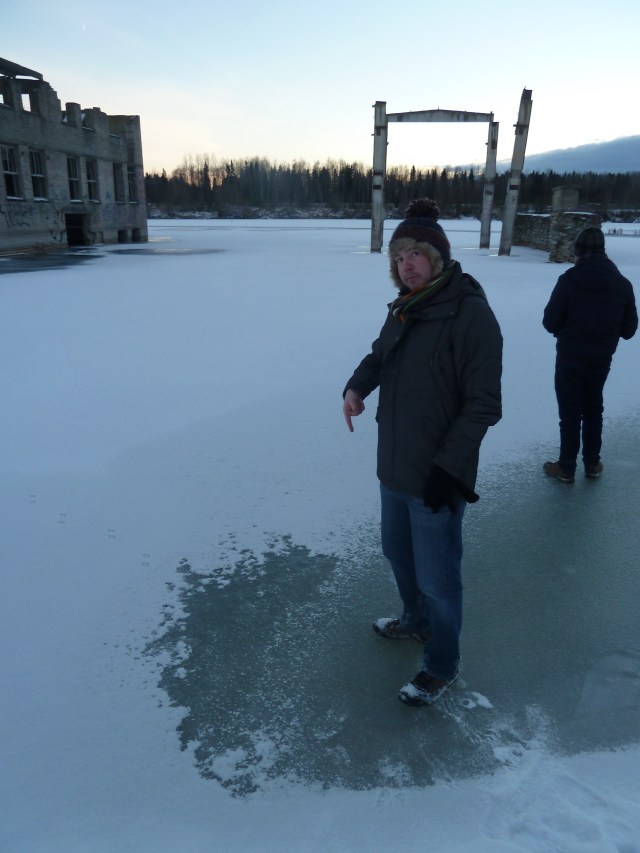
A final word about our host also. Barbara was a delight to deal with. She was extremely welcoming and – as she lived next door – made herself available during our stay if we had any issues (we didn’t but it was nice to have the option) or if we had any questions. She also gave us a map and pointed out some of the key things to see and do and explained what busses we could use to get us around during our stay. More on that later. Should I find myself in Dubrovnik again in the future I’d jump at the chance to stay at her apartment again and advise anyone reading this to do the same if you’re planning a trip.
Getting around
The joy of Dubrovnik is that if you are staying near the Old Town then nowhere is too far to walk. The downside to this is that whilst this is true, most of the walking will either be up or down hill!
Also Dubrovnik is a very busy city when it comes to cars. It’s not that there are lots of cars, it’s just there are not many roads. Then trying to find a parking space looks almost impossible. My advice, don’t bother renting a car.
Depending on where you stay will certainly shape how much hill walking you are doing. If you stay down at the bottom of the hill near the Old Town itself, then you are likely to have an easier time of it by foot. If, like we did, you are staying at the top of the hill, then you are going to find walking down to the Old Town very pleasant and walking back up less so.
I cannot stress enough, buy comfortable shoes before you go! Trainers and walking shoes are best. Don’t try and do the walk in loose flip-flops or high heels. Honestly you won’t make it very far at all. We found in general it took us around 20 minutes to walk back to our AirBnB from the Old Town but the pace you walk will dictate things.
If you plan to walk but as you leave Old Town don’t fancy the prospect any more, then there are options available. A cheap one is to catch a Bus. Just outside the Pile Gate, there is a small kiosk that sells bus tickets by the side of the road. Go to the cashier and say where you want to go and they will tell you what bus to catch, where to get off and how much it costs. From my experience you can buy tickets very cheaply and the busses are pretty frequent as well with good information provided at the stops.
Tickets for the bus journey within the city costs 12 Kuna each (around £1.50) if you buy from the kiosk. If you buy directly from the driver that price increases to 15 Kuna each (closer to £2). You can also buy a daily bus ticket for 30 Kuna (around £4) which is great if you plan to catch more than one bus that day.
Failing a bus there is also Uber. During our stay we caught one Uber. That was because the route the bus was taking was hugely congested so we thought we’d get an Uber driver to take us to our door. This had mixed success as our driver didn’t know where our AirBnB was and so we had to direct him even though we barely knew ourselves. The price of the journey from near the Old Town to the top of the hill was 25.62 Kuna or about £3.30.
Top sites
Let’s start with the obvious first must-see; Dubrovnik Old Town. The Old Town is the heart of Dubrovnik and is the location where all tourists – both those staying in Dubrovnik and from the many cruise ships that dock here – descend to on on a daily basis.
The first thing you should do in the Old Town is enter through the Pile Gate. This is the main entrance to the Old Town and can get really busy so expect a slow stagger through the narrow entrance. Arrive early! I can’t stress this enough.
Once in, I’d then suggest you take an explore of the streets. There are many tight roads and pathways around the Old Town and they are worth an explore. There are so many beautiful things to look at here and it’s well worth a good couple of hours explore.
My girlfriend and I did so and found many great little restaurants, souvenir shops and ice cream parlours to sample. You’ll also find your way to the docks which is where you can get access to water-based activities and ferries to some of the many islands in the nearby area – including Lokrum.
Another activity you have to do during a stay in Dubrovnik is a walk around the perimeter of the Old Town walls. This costs 200 Kuna per adult (around £24) but is worth it. If you have the Dubrovnik Card then this is already covered as part of that deal so you should have made a good saving here.
The walls give you stunning views of the sea, islands, and the Old Town and its surrounds in general. There are a few stops along the way – including a rather uninspiring maritime museum – where you can shelter from the heat as well as a number of shops selling water and other drinks. Probably best to take a bottle from your accommodation and refill it in the fountain just inside the entrance of the Old Town next to the Pile Gate to avoid unnecessary expenditure.
As I mentioned before. Arrive for opening time for the walls which is 8am. The queues get long and the walls busy. In the heat, this trek turns more into a battle of endurance than a pleasurable walk.
In the height of summer, entry into the Old Town via the main Pile Gate is extremley congested
The Old Town city walls are worth the admission price for the views. Go early to avoid the busiest and hottest periods of the day
View up at the Old Town from the docks in Dubrovnik
The Old Town of Dubrovnik as viewed from Fort Lovrijenac
The streets of the Old Town get extremely busy so get there early to keep numbers to a minimum
The next suggestions is for those who love Game of Thrones. As many will know, Dubrovnik did provide the backdrop to many of the scenes from the hit TV show and through one of the many guided tours you can take you can see some of them.
You can book all day tours which take you outside of Dubrovnik to see some of the other locations but despite being big fans of the show we felt our time in Dubrovnik would be better spent on a shorter tour. For this we opted for the Game of Thrones walking tour.
This two-hour tour is hosted by one of the firms enthusiastic guides. Costing around £18.36 per person these tours meet each morning outside the Pile Gate (this really is a focal spot for tour operators so most tours will meet here) and then set off to a number of locations used in the show for scenes in King’s Landing.
During our tour we headed up to the Fort of St. Lawrence (known locally as Lovrijenac) and heard about scenes filmed there as well as ones shot from the walls of the Old Town. It’s worth noting, however, that the 50 Kuna entrance fee to the fort is not included so you will have to pay that on arrival at the door.
The tour will continue into the Old Town and take in the beautiful West Harbour; a location used to film the spot where the Gold Cloaks arrived into King’s Landing to kill Robert Baratheon’s bastard children, before finishing up at the stairs where Cersei Lannister started her Walk of Shame.
At all these spots you’ll have ample time to take photos and pose and there is also the chance, at the end of the tour, to have your picture taken on a replica Iron Throne in one of the nearby shops. This is something you’d normally have to pay for, but on this tour it comes included.
One of the stops on the Game of Thrones tour is the stunning Dubrovnik West Harbour; the spot where the gold cloaks go into King’s Landing to murder all of Robert Baratheon’s bastard children
Shame! The site where the infamous Walk of Shame for Queen Cersi was filmed
As evening draws in a great way to get those panoramic views of the city is to take the Dubrovnik Cable Car to the top of Srd Hill. The cable car can be picked-up just off Ul. Kralja Petra Kresimira IV road which is about a 10 minute walk, uphill, from the Pile Gate. Tickets for the cable car can be purchased at the cable car station and cost 170 Kuna, per-person, for a round-trip (around £20).
While it seems costly, it is worth doing for the views. When we visited, we planned to go for sunset. To ensure you get a great spot and a great view, make sure you go up at least an hour before the sun does down. That way you can get some shots of the Old Town while it is still light and experience the whole sunset. Also, once you have a spot next to the railing, don’t leave it. If you do, others will take it and you’ll lose your opportunity to see the sunset unencumbered.
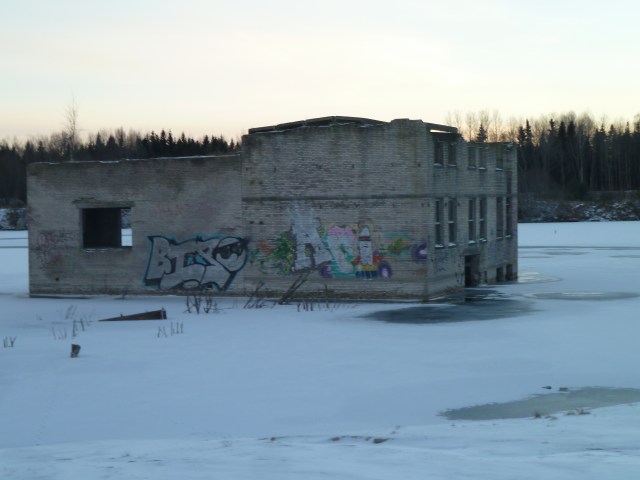
The cable car station where you pick up your ride. Prime spots in the cable car go fast
The view back across Dubrovnik is stunning to see as you ascend the hillside
As the sun sets the moon comes out in all its glory
The sun setting across the sea is a beautiful sight to behold
These sights are some of my fondest memories of my time in Dubrovnik, and really showed what a beautiful city it is. Watching the sun go down over the water is a joyous experience.
Outside of the the Old Town you’ll see a host of islands. The coastline here is littered with them but the one everyone wants to get to is Lokrum.
You can catch a boat to Lokrum from the Old Town Harbour. Trips run every 30 minutes in the summer months and cost 40 Kuna each (about £5) and take about 15 minutes to get you from A to B.
Once on the Island there are plenty of things to see and do. You can hike to the highest point of the island (do this early before the sun gets too strong as it’s exhausting) and get the views from the Royal Fort or take a trek around the botanical gardens.
From the coast of Lokrum you can sunbathe and swim in the clear sea waters
One of Lokrum’s many peacocks
The view from Fort Royal is worth the climb
The wildlife on Lokrum is not afraid to get up close and personal with you
If walking isn’t your thing then there are plenty of sunbathing and swimming opportunities around the island’s coastline and inland. Remember to pack your swimwear; although there is a naturist beach which I’ll speak about later on.
When we arrived we headed straight for one of these swimming spots. The Dead Sea, as it’s known, is a salt-water filled solace located inland towards the south of the island. This haven is a great spot to unwind with the family and get the unique floating sensation only attributed to water with such a high salt content. Kids will love to snorkel here and if you have an underwater camera, then make sure bring it as there are lots of small fish just below the surface to see.
Near the entrance to the island (that being where the boats drop you off and pick you up) is the Benedictine Monastery of St. Mary. This area of the island boasts an impressive ancient monastery situated alongside a nature reserve and some of the island’s most beautiful gardens.
The Monastery is also the home of another Game of Thrones exhibition – provided by HBO. This exhibition has a number of behind-the-scenes images and interviews to see and hear and also another replica of the Iron Throne to sit on and have pictures taken. This one, however, is free of charge so a must-see for die-hard fans of the show.
During your visit to Lokrum, you’ll also witness two of the islands’ most abundant residents; the rabbit and the peacock. When we visited the latter outnumbered the former by quite a long shot.
What’s great about these animals, is that they are not bothered at all by human presence. In fact they pretty much just ignore you. When we were sunbathing and swimming by the water’s edge a number of young peacocks came and walked straight through the middle of everyone and started investigating people’s belongings. So long as they don’t try to steal anything, this is a great chance to get up close and personal (although don’t try and get too close) to these interesting birds.
Now that you’ve seen the island from the land the next way to see it is from the sea. For this I’d highly recommend signing up to one of the sea kayak tours that take place from the cove under the Pile Gate.
These three-hour tours (that include a light snack) are best to take ahead of sunset. It makes the heat of being exposed on the open water less overbearing and you also get the joy of seeing the sun set from the sea.
You don’t need to worry about kayak experience either. While both my girlfriend and I have used a kayak before, we are by no means experts. However, the range of abilities means that the pace of the tour is suited for everyone with frequent stops at sea to talk and hear about the city’s history. Booked in advance online the tour costs £25.25 per person. You can also book the tour in person on site.
The tour is basically a big loop around the island of Lokrum. While alongside Lokrum you’ll go into a small inlet where the brave amongst the group can try some cliff diving, while those more suited to the water can take a swim.
The tour will take you on a full circle of the island and on the way back stop into a cove where you get to step out of the two-person kayak for a while, snorkel in the sea using their equipment and enjoy an well-earned sandwich. Again bring an underwater camera with you.
The inlet stop on Lokrum where you can cliff dive and swim during your kayak tour
The sun setting as we rowed back to the main land
Getting out in a kayak in the sea is a great way to see the area
As you return to the mainland you’ll see the abandoned Hotel Belvedere on the cliff edge – some two miles outside of the centre of Dubrovnik (more on that later) and also get the chance to experience the sun setting as you make those final inroads back to your starting position.
This one may seem like an odd choice, but for those with a sense of adventure and willing to take a bit of a risk it really is fascinating. Hotel Belvedere is a former five-star hotel from the Yugoslav era that closed its doors permanently back in 1991 after suffering damage during the Siege of Dubrovnik.
Yet while it closed its doors to paying guests almost 30 years ago, those keen on a spot of urbexing can still gain entry. Located outside of the main part of Dubrovnik, the best way to get there is to walk along the coast and aim for the bottom of the hotel (don’t go to the original entrance at the top as that is totally closed off).
I’ll point out now, that entering the hotel is both risky and, as far as I can tell, seen as trespassing. There are numerous signs up around the base that inform you not to enter. However, there are no guards and no security and many places where you can get inside.
Once inside, you’ll notice that the area is a mess. It’s pretty disgusting too as the opening areas have clearly been used for parties over the years by locals. However, as you press on through the cold, dark corridors you’ll find your way into the main heart of the hotel.
Hotel Belvedere would have been a phenomenal place to stay before it shut in 1991
You can get a unique view of Dubrovnik from Hotel Belvedere but be very careful where you step
Now painted in Hajduk Split colours, this was the location where the Mountain and Prince Oberyn fought in Game of Thrones
The dark, silent corridors can be creepy to explore
A view up from the outside of Hotel Belvedere
The former nightclub in Hotel Belvedere; Club Trubaur
The inside of the hotel is in ruin as are its main stairwells and lift shafts
Floor upon floor of guest rooms are accessible, while you can also take a wander around the former kitchens, nightclubs and restaurants as you make your way up the deserted building.
The higher you get, the more you need to ensure that the floor underfoot is still solid. Remember this hotel is in ruin and based down the side of a cliff. It’s unclear how stable it remains. During our hunt around we managed to get up to the second-to-top floor only to find the stairway blocked by a piece of fallen concrete flooring and a newly built brick wall. I guess someone at some point was trying to stop people getting in.
Remember this hotel is massive and it can be easy to get lost. Most floors and corridors look alike so try and remember your route in and out. Finally, there are a number of places towards the top of the hotel where there are balconies. You can go out onto these but watch your footing. Some of these sections are somewhat spongy.
The sea plays such a large part in life in Dubrovnik that if you are able to and get the opportunity you really should go scuba diving. During my stay I did two dives with the wonderful Blue Planet Diving Centre.
Located a short drive out of the centre of Dubrovnik at the Hotel Dubrovnik Palace this dive centre is one of the best I’ve ever dived with. They really take a keen interest in your past diving experience and ensure that all safety checks, paperwork and dive briefings are done properly before you step foot in the water.
Ahead of going to Dubrovnik I had found the company via TripAdvisor and seen a lot of good reviews. I had also seen the vast number of dive sites available for all abilities in the area and was keen to see some of what they had to offer myself.
The company also picked us up from a pre-appointed spot in Dubrovnik near a small multi-story car park. This allowed us to get to and from Dubrovnik easily and without hassle.
Two dives – with full equipment – cost 800 Kuna (£95). My girlfriend who doesn’t dive also wanted to come out on the boat with us and was able to do so for 270 Kuna (£30) giving her the chance to snorkel in the area our group was diving in. With equipment checked, dive suits on, and loaded into the speedboat we shot off from the hotel for our first dive.
Scuba diving from Dubrovnik gives you a great view of life under the sea
Looking closely at the life growing on the side of the vast underwater rocks
Swimming up between two rocks with the surface of the sea shimmering overhead
A small fish takes shelter in the undergrowth on the side of a rock
The first dive took us over an old ship wreck. We got down next to the ship and could see the damage it had sustained causing it to sink. I believe it had been bombed as part of the Second World War and has now in pieces on the bottom of the sea. From there we went around a large underwater rock and up through an archway taking in the many fish that call this place home, before surfacing and doing my least favourite part of a dive; climbing very unceremoniously back onto the boat.
We then returned to land and had a break for lunch. The second dive was one from the shore and we swam through the underwater grasses searching for sea life. We were far from disappointed. One of the most exciting finds was an octopus that had buried itself into the sand and as we drew near sprung out and swam off at speed. A truly beautiful sight.
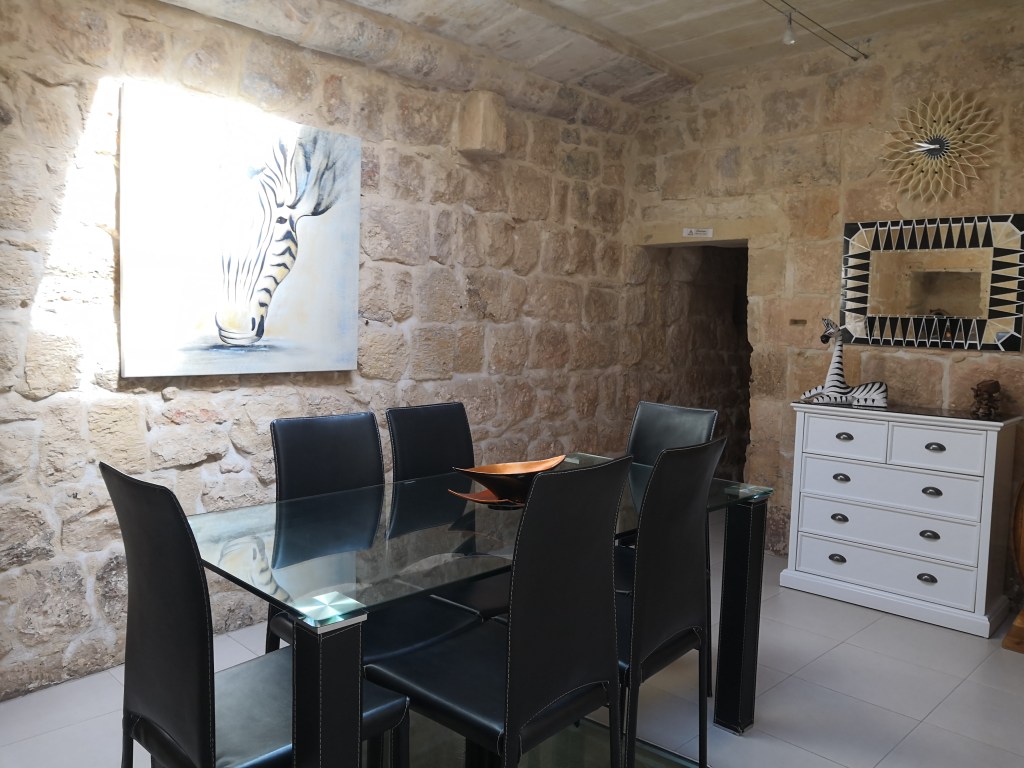
As mentioned, there are loads of dive sights in the area and depending on your qualifications you can access a lot of them easily. Make sure you speak to the dive master before you head out if you are hoping to see something in particular as they can try and gear the dive around your needs. Also, again, don’t forget your underwater cameras!
Now for some general fun and games. As I’ve mentioned in other blogs, my girlfriend and I love an escape room. They are so much fun. So we decided that it was a must to find one during our stay in Croatia. That’s how we ended up going to Dubrovnik Escape Room.
Being as it’s Dubrovnik it felt only right to choose a Game of Thrones themed room; so we chose to Save King’s Landing.
This escape room is about a 45 minute walk from the centre of Dubrovnik although you can catch a bus or use Uber. We chose to walk.
Once we arrived we were made to feel extremely welcome by the game’s host; a lovely young lady called Pamina.
Pamina talked to us before we went in about our past escape room experiences and then gave us the latest challenge that we faced. I won’t give anything away about the game’s plot, or secrets, but it’s fair to say this is a well thought out room with some very neat little tricks that I’d not seen elsewhere.
While the game was challenging, it was logical meaning that we were able to escape (with the help of a few clues – thanks Pamina) in 45 minutes and 23 seconds.
But even once we were out – and had done the team photo – we did not get the feeling we were being forced out. In fact the opposite. We spent a while speaking with Pamina and her co-hosts about the room and Dubrovnik in general and she happily supplied us with helpful information that we could use during our stay.
In fact, despite not having to, she also obliged us by sorting us out with an Uber driver to take us back to our AirBnB as we couldn’t face the long walk back up the hill at that time. Pamina – like pretty much everyone else we met in Dubrovnik – was the perfect host and helped make our stay in this unique and beautiful city an unforgettable experience.
Dubrovnik Escape Room was great fun and the staff were super friendly and helpful
Bosnia & Herzegovina
One of the most popular excursions from Dubrovnik is a day trip across the border into Bosnia & Herzegovina, and after spending time exploring Croatia’s stunning Adriatic coastline, it is easy to see why. In just a single day, visitors can experience a completely different country, culture and landscape, from spectacular waterfalls to one of the Balkans’ most famous historic cities.
For our trip, we booked the Mostar and Kravica Waterfalls Day Trip with Super Tours. The excursion costs €47 per person (approximately £41), making it an affordable way to see another country while based in Dubrovnik.
One important thing to remember before travelling is that Bosnia & Herzegovina is a separate country from Croatia, meaning you will need to bring your passport with you for the border crossing.
The day begins early, with pick-up taking place at 6.40am outside the Dubravka Gift Shop next to Pile Gate, the historic western entrance to Dubrovnik’s Old Town. While the alarm clock may feel a little cruel at that hour, it quickly becomes worthwhile once the coach leaves the city behind and begins following the dramatic coastline north before turning inland towards Bosnia & Herzegovina.
The journey itself is part of the experience. As the Adriatic Sea gives way to rugged mountains, traditional villages and winding river valleys, the scenery changes noticeably, offering a glimpse into a very different side of the Balkans.
Our first stop was Kravica Waterfalls, one of the natural highlights of Bosnia & Herzegovina. Situated on the Trebižat River, these stunning falls stretch for more than 100m in a semi-circular formation, with water cascading into a large emerald-green pool below.
Entry to the waterfalls costs an additional €10 (approximately £9) and is not included in the tour price.
Kravica is often described as Bosnia’s answer to Croatia’s Plitvice Lakes, and while it may not be quite as extensive, it is undeniably beautiful. Surrounded by lush vegetation and limestone cliffs, it feels like a hidden oasis tucked away from the modern world. During the summer months many visitors take the opportunity to swim in the pool beneath the falls – something we did – while others simply enjoy the views from the walking paths and viewing platforms that overlook the water.
After leaving Kravica behind, the tour continues east towards Mostar, undoubtedly the most famous destination in Bosnia & Herzegovina and the highlight of the day for many visitors.
Founded during the Ottoman period and divided by the Neretva River, Mostar is a city where East meets West. Minarets rise above medieval stone buildings, Turkish-style bazaars line narrow cobbled streets, and the call to prayer echoes across a skyline that feels very different from neighbouring Croatia.
At the heart of the city stands the iconic Stari Most, or Old Bridge, from which Mostar takes its name. Originally built in the 16th century during Ottoman rule, the bridge was tragically destroyed during the Bosnian War in 1993 before being painstakingly reconstructed and reopened in 2004. Today it stands as both a symbol of the city and a reminder of the resilience of its people.
Walking through Mostar’s Old Town is an experience in itself. Traditional market stalls sell everything from handmade crafts and jewellery to copperware and souvenirs, while cafés and restaurants spill out onto streets polished smooth by centuries of foot traffic.
One thing I will always remember about our visit was the heat. At 42°C, it was the hottest temperature I have ever experienced. The stone streets seemed to radiate warmth from every direction, and finding shade became a priority whenever possible.
During our free time in the city, we also climbed the minaret of one of Mostar’s historic mosques. The narrow spiral staircase was certainly a workout in the summer heat, but the reward was spectacular. From the top, the views stretched across the city, offering a stunning perspective of the Old Bridge, the turquoise Neretva River and the surrounding mountains beyond.
Lunch was another highlight. We chose a traditional Bosnian restaurant close to the Old Town and were treated to an enormous feast of grilled meats, local specialities and freshly baked bread.
The portions were generous, the prices remarkably affordable, and it provided the perfect opportunity to sample some authentic Bosnian cuisine while taking a break from the heat.
Before long, it was time to rejoin the coach for the journey back to Croatia. Although the excursion lasts around 12 hours from start to finish, the day never felt rushed. The combination of natural beauty at Kravica, the fascinating history of Mostar and the chance to experience a completely different culture made it one of the most rewarding day trips of our time in Dubrovnik.
Kravica Waterfalls makes for a stunning first stop in Bosnia & Herzegovina
The beautiful setting of Mostar in Bosnia & Herzegovina is a real highlight of the trip
Climbing to the top of this minaret provides wonderful views of Mostar
The view of Mostar from the top of the minaret
Montenegro
One of the easiest and most rewarding international day trips from Dubrovnik is a visit to neighbouring Montenegro.
Despite being one of Europe’s smallest countries, Montenegro packs an incredible amount into a relatively small area, combining dramatic mountain scenery, beautiful coastal towns and a rich maritime history.
For our trip, we again booked with Super Tours for their Montenegro Day Trip from Dubrovnik. The excursion costs €60 per person (approximately £52), making it a convenient way to experience another country while based in Croatia. As Montenegro is not part of Croatia, it is important to remember to bring your passport, as you will need it for the border crossing.
Just like our trip to Bosnia & Herzegovina, the day began with an early start. Pick-up was at 6.40am outside the Dubravka Gift Shop next to Pile Gate, the main entrance to Dubrovnik’s Old Town. While it might seem painfully early at the time, it allows plenty of opportunity to explore some of Montenegro’s most beautiful coastal destinations before returning to Dubrovnik later that evening.
The drive itself is spectacular. Following the Adriatic coastline south, the route passes through a succession of bays, mountains and seaside villages before eventually crossing into Montenegro. Even from the coach window, the scenery alone makes the journey worthwhile.
Our first stop was the picturesque town of Perast, one of the hidden gems of the Bay of Kotor. Unlike some of the larger resort towns along the Adriatic coast, Perast feels wonderfully peaceful, with elegant stone buildings lining the waterfront beneath a backdrop of steep mountains.
The town’s most famous attraction lies just offshore. From Perast, visitors have the opportunity to take a short boat trip across to the island of Our Lady of the Rocks, one of Montenegro’s most recognisable landmarks.
According to local legend, the island was created over centuries by sailors who laid rocks into the bay after discovering an icon of the Virgin Mary on a reef. Today, the small artificial island is home to a striking Roman Catholic church and museum, both of which can be visited. Even if you choose not to go inside, the views back towards Perast and the surrounding mountains are spectacular and provide some of the best photo opportunities of the day.
After spending time in Perast, the tour continues deeper into the Bay of Kotor towards what many consider to be Montenegro’s crown jewel.
Kotor is one of the most beautiful towns anywhere on the Adriatic coast. Protected by UNESCO and surrounded by towering mountains, its medieval Old Town is a maze of narrow cobbled streets, hidden courtyards, ancient churches and bustling squares.
The town’s history stretches back more than 2,000 years, with influences from the Romans, Venetians and Austro-Hungarians all leaving their mark. Walking through Kotor feels like stepping into an open-air museum, where almost every corner reveals another historic building or picturesque alleyway.
Dominating the town are the enormous defensive walls that climb steeply up the mountainside above the Old Town. These fortifications, built primarily during Venetian rule, helped protect Kotor from attack for centuries and remain one of the city’s defining features today.
During our free time, we climbed a small portion of the walls to get a stunning view over the bay before wandered through the Old Town’s atmospheric streets to explore its squares and soak-up the relaxed Mediterranean atmosphere.
There is no shortage of cafés, restaurants and small shops, making it an enjoyable place simply to stroll and absorb the surroundings.
The final stop on our particular excursion was the coastal town of Budva. It is worth noting that this stop does not appear on the current version of the tour itinerary, so I cannot guarantee that it still forms part of the excursion today.
If it does, however, visitors are in for a treat.
Often referred to as Montenegro’s tourism capital, Budva combines a historic Old Town with a long stretch of coastline, sandy beaches and a lively waterfront. The medieval centre, enclosed by stone walls, sits on a small peninsula that extends into the Adriatic Sea, creating one of the most attractive settings anywhere along the Montenegrin coast.
For us, Budva provided the perfect way to round off the day. We enjoyed a wonderful seafood dinner overlooking the Adriatic before taking a leisurely walk along the beach as the evening light began to soften. After a day spent exploring historic towns and mountain-fringed bays, it was a relaxing and memorable conclusion to the trip.
Before long, it was time to board the coach and begin the journey back to Dubrovnik.
Although the excursion lasts around 11 hours in total, it never felt overly long. The combination of Perast’s charm, Kotor’s remarkable history and the beautiful scenery throughout the Bay of Kotor makes this one of the standout day trips available from Dubrovnik.
One of the most visited sites in Montenegro is a trip out to Our Lady of the Rocks in the Bay of Kotor
Views across the Bay of Kotor are stunning
The wonderful seafood available in Budva is not to be missed if your trip takes you to the coastal town
Where to avoid
So while Dubrovnik has many stunning places to experience there are a few of things I’d give a wide berth to. The first of those is Lokrum nudist beach. Located on a corner of Lokrum Island, this ‘clothing optional’ beach is not a place I personally wanted to explore. In fact, I got to see more of it than I’d have liked simply by taking the kayak tour around the island.
Located on the south-east corner of the island the beach (known as HKK beach) is frequented by naturists looking to top up their all-over tans. Many men – unfortunately – also like to stand, looking out at the sea, as people pass by on boats and kayaks. On the plus point, the beach is free of charge and secluded from passing people on the island. Itwell signposted so those looking for it can go and those trying to avoid it can also. If naturism is your thing, then knock yourself out, but not one for me I’m afraid. You’ll be pleased to know I have no photographs to put up here!
The second one to avoid is the Dubrovnik’s Naturhistoriska Museum. On the face of it this museum should have been really interesting as there is plenty of wildlife and history in the area. However, what is presented to you in the Old Town-based establishment across numerous floors is a very shoddy exhibition.
Cheap looking exibits that have not been refreshed in, what looks like, years are sparse at best and a real lack of information really doesn’t help the museum’s cause much either. Sad to say the best thing we found about the museum was a free-standing air-conditioning unit that we ended up standing by for quite a while trying to cool off from the fierce heat outside. For the steep price of 120 kuna each (around £13.50) this museum is one you can easily avoid without missing out on much.
The cheap looking shark at the museum gives you an idea of the quality of the exhibitions
My final suggestion to miss is the many glass bottom boat tours available from Dubrovnik Old Town harbour. You really can’t miss them as you enter the harbour area as numerous sales teams hand you leaflets for their glass bottom boat tours. There are probably over 10 tours available but honestly they all look the same. The prices are around 75 – 100 Kuna each (or about £8 – £12).
My girlfriend and I thought it would be a great way to see some of the underwater life. Even though I scuba dive, my girlfriend doesn’t so this was a way for her to see some of the sea-life too. Problem was you don’t actually see anything. The boat tour lasts about an hour and takes you from the harbour out and around Lokrum (check out this great chance to get a view of the nudist beach again).
The boat barely slows down and ours didn’t stop at any point either. It means that all you can see through the glass is a load of water and many bubbles made by the boat itself. If you spot something below, chances are it’s just a mark on the glass. The only positive to this was that it was a relaxed way to get some views across the bay and over at the coastline. My problem was that the whole point of the tour was to look through the glass bottom, but you soon realise that this is futile and you may as well just look at the scenery above water.
Great places to eat
There are plenty of great restaurants to experience and enjoy during a stay in Dubrovnik; including a couple of Michelin Star establishments too. However, for me the best place to eat in the entire city is Nautika.
Now when you look at the Nautika website there are a couple of options. One is up at the top where the cable car goes to and is called the Panorama Restaurant & Bar and affords beautiful views of the city. However, as my girlfriend and I had already experienced these views during our cable car trip we opted for the restaurant located just outside the Pile Gate next to the water.
This stunning setting saw us seated beside the sea and looks out at the city walls to our left and the fortress to our right. When I made my booking (always book here as you’ll struggle to get a seat as a walk-in customer), I mentioned that my girlfriend and I were celebrating a special anniversary for ourselves and the restaurant made sure that we were seated next to the water. Perfect.
Upon arrival we also enjoyed an aperitif from their substantial cocktail menu. These are more than drinks. They are the start of what is a showcase of a culinary experience. There is real theatre in their presentation and my only regret is that I didn’t choose something more adventurous.
When it came to the food we decided to push the boat out and order the seven course taster menu at 920 Kuna each (around £110 per person). This was totally the right choice. From start to finish the courses were a delight. Filled with exciting and interesting flavour, the chefs at this restaurant know exactly how to prepare the best quality food. Given the location the courses are primarily seafood so bear that in mind when booking.
After a palette cleansing amuse bouche, we were presented with the first course of Beef Charolais Carpaccio. This was followed by a Shrimp Bisque and then Cuttlefish.
As the food came out the evening rolled on. Day turned to night and the lit-up city walls and fortress provided the perfect backdrop to this special meal.
We then went on to the first of the main courses which was a delicious Tuna Fillet with capers and fennel triptih closely followed by a Veal Fillet and Dubrovnik Malvasija Sauce. While it is a lot of food we still found space to enjoy the local delicacy of Carob Cake and then the locally-sourced Pag Island Cheese to finish.
We were also treated to a mouth-watering special anniversary drink during our meal which was most welcome. Another quirk of this charming restaurant was that with each course we were presented we were given a different olive oil to accompany it. A nice touch from a superb restaurant.
The facts of the matter with Nautika are this. It is expensive. The meal for two including cocktails and wine cost around £350 total so make sure you have worked out your budget before you go. With that in mind make sure you ask for outside seating as well so you don’t miss those wonderful views. Finally, once you are there just sit back and enjoy.
The entrance to Nautika
Just one example of the superb food available at Nautika. The Tuna Fillet with dehydrated capers and fennel triptih
The vast selection of olive oils is quite special; although not as special as the view
While Nautika is perhaps somewhere you’d only eat once at on holiday there are plenty of much more affordable restaurants all over the Old Town. One of my favourites was the harbour-based Poklisar.
This pleasant restaurant provides a wide variety of Mediterranean cuisine at good prices. When we went for a spot of lunch we enjoyed thirst-quenching mojito each and knocked it back alongside a pizza.
However, for those looking to expand their culinary experiences further there are also octopus salads, pan fired Adriatic prawns and homemade tuna confite salads, as well as burgers, meat dishes and vegetarian options to tuck into while watching the world go by.
Remember you can follow World Complete on Twitter, Instagram, Pintrest, Tumblr and Facebook send your comments and pictures from your travels using #WorldComplete and #Travel.
North Macedonia (formally known as Macedonia (FYROM) until February 2019) is probably – alongside its smaller neighbour Kosovo – the least visited of the seven nations that made up Yugoslavia.
Yet while its more prestigious ex-partners take up much of the spotlight, there is a great deal of enjoyment a visitor can have from taking in the sights of this landlocked new Balkan country; having only gained its independence in 1991.
The first thing to note about this relatively untouched European destination is that, as tourists have yet to discover its charms, it remains pretty cheap to travel here. It was for that very reason that I wanted to go and see what the city of Skopje had to offer.
The Warrior on a Horse statue in Macedonia Square near the Stone Bridge is synonymous with the city
So what should a first time traveller to North Macedonia know before heading there? Well one thing to know for sure is the currency. In North Macedonia the local currency is the Macedonian Denar. This is what is known as a closed currency and, therefore, you are unable to purchase it in the UK before you head to the region. However, once you are there you’ll be able to get some easily from ATMs or a Bureau de Change. Failing that, credit cards are widely accepted. For reference £1 gets you around 60 – 70 Macedonian Denar.
The next thing to recognise is the climate. The weather – like the UK – can change and vary month-on-month. I travelled to Skopje at the end of June / start of July so the average temperatures ranged from 29°c to around 31°c. So be prepared for it to feel quite warm. If you travel in the winter then the temperatures can drop to averages of around 5°c to as low as -4°c.
The city itself is full of interesting history and a lot of it is pretty recent. The fall of Yugoslavia in the early 1990s has left its mark on the city and its people. Many of whom have since seen some of their former countrymen in the other states prosper more (Croatia and Slovenia for example) due to greater tourist numbers and good trade deals. North Macedonia, it is safe to say, remains somewhat behind on both these fronts. But it is improving.
Google Maps image showing the centre of Skopje
Yet despite modest tourist numbers, the city itself is pretty busy. Skopje is the largest city in North Macedonia and is its capital. However, by European standards, it’s classed as a medium-sized city. Saying that, it is home to some half a million people; many of whom are of Albanian and Kosovan heritage – both of which share borders with the country alongside Greece and Bulgaria.
There is plenty to see and do in Skopje and most of it can be done over a long weekend. Many of the city’s landmarks – such as the Warrior on a Horse statue – have received welcome investment in recent years. Back in 2014, the Skopje 2014 project, financed by the Macedonian government of the then-ruling party, restored and renewed much of the city’s architecture in the hope of making the city the next must-see place for tourists. Time will tell if it is working.
Getting there
Flights to Skopje are yet to become common place but you can fly directly from London to the North Macedonian capital. For my trip I flew with the Hungarian flight operator Wizz Air from London Luton.
Due to there being a real lack of options to fly to Skopje from the UK (when I check while writing this piece there was currently only the London Luton to Skopje direct route with Wizz Air available) you are rather at the mercy of the flight company in terms of the prices they want to charge. To give you an idea, however, for two people flying out of the UK at the end of June and returning a few days into July, a roundtrip cost me £249.96.
I will say however, that if I got the choice I would not fly with Wizz Air. Our flight was delayed leaving London Luton due to a fault on the plane with all passengers and their luggage already on board. Now I have no problem with the flight not leaving on time if there is a safety issue. That’s totally understandable. However, the staff failed to provide any information to the passengers and used a loophole in aviation law to ensure they did not have to meet their statutory requirements of food and drink for flights delayed over a certain length of time. That’s my moan over.
Once we were in the air the flight – although basic – was straightforward and took about three hours. Skopje International Airport is not much better than the flight itself either, although there has been some redevelopment of the passenger area since the mid 2000s. Each year on average (according to 2019 figures anway) around 2.4m passengers travel to Skopje International Airport.
The flag of North Macedonia will be visable all over Skopje
Once you’ve arrived in Skopje you’ll discover you are around 25km outside the centre of the city. There are a couple of options here. The first of these being to jump in a taxi parked in the official taxi rank (there are lots of unofficial taxis hanging around but will charge you a small fortune once they have you inside). The other option, and the one we did, was to book an airport transfer. For this we used P-Airbus.com.
This service proved to be very easy to book and picked us up directly at the airport and also dropped us back when we left. They were on time and very efficient. There are a couple of options you can book. The first is a low cost bus that costs just seven Euros per passenger for a return trip. This option means you’ll be dropped and picked up at Skopje Central Station.
The second option is slightly more expensive – but the one we opted for given that we had no previous knowledge of the layout of the city itself. This was a private car pick up. This option costs a total of 40 Euros for two people to make a return journey and takes you straight to your accommodation’s front door – which is really handy if you’re not staying in a hotel.
Where to stay
There are plenty of places to stay in Skopje. The city centre itself is home to numerous hotels and apartments. Through various investigations I did before heading to North Macedonia, I saw that there were lots of good quality hotels for very reasonable prices. Yet I didn’t feel that these hotels would give me that special local feel of what I wanted when visiting this ex-Yugoslav city.
During my stay in Skopje, therefore, I opted for the use of a wonderful AirBnB located near the centre of the city. This delightful little dwelling was located on one of the upper floors of an apartment block just off one of the main streets of the city. When we were dropped by our airport transfer at the apartment block, the host of AirBnB met us outside and gave us a a short tour of the place we would call home for four nights, as well as giving us some tips of good places to eat and drink nearby.
The one thing that made us choose an AirBnB over a hotel was that you got a whole host of interesting amenities within the apartment, as well as fantastic views from the balcony of the mountains and the Millennium Cross on the hill which is one of the famous attractions of this city.
The main living space is well designed and has a good layout
The bedroom was very comfortable and well stocked for plug points to charge your devices
The fetching tree design is situated in the main living area
Inside the apartment we found a spacious living area, a clean and functional kitchen area, a pleasant bathroom and a good sized bedroom for us to stay in. I personally have fond memories of laying back on the sofa during our stay, watching England knock Columbia out of the 2018 World Cup in Russia on penalties, trying not to make too much noise each time the ball hit the back of the net as my ex-wife slept in the bedroom next door.
Away from the football, and as previously mentioned, just outside the living area there was also a sizeable balcony where you could relax in the summer heat and enjoy the free-swinging chair while sampling a local drink and looking at the view.
The rooftop views of the low-lying Skopje gives great views of the Vodno Mountains that house the Millennium Cross
The city itself houses around 545,000 people; many of whom live in appartments like these
The apartment itself was located just off one of the main boulevards that’s known as Blvd. Partizanski Odredi. It was based on a quiet backstreet called Vladimir Polezhanovsi Road. From this central location you are no more than a 15 minute walk to some of the main sites within Skopje – including the Stone Bridge.
Getting around
There are three main methods of transport most travellers to Skopje will need to use to get around this city and the surrounding areas. The first is walking.
Skopje is quite compact so it is very easy to take a relaxed walk around the city to see some of its main sites such as the Stone Bridge, Skopje Fortress and the Warrior on the Horse statue in Macedonia Square. You can also take a nice walk along the Vardar River which takes you past a number of these sites.
The second main way to travel within Skopje is using the bus. I’ll be honest this bus system was perhaps one of the most confusing I’ve come across while travelling. The main bus station here is Transporten Centar (Транспортен центар) and it’s locoated adjacent to Boulevard Kuzman Josifovski Pitu near a large shopping mall.
First thing to note at this station is that if you are travelling within the country /Skopje you’ll need to use the outside portion of the bus station. I believe, the part of the bus station that is inside takes you further afield and into the neighbouring countries. The second thing to note here is that, from my experience, ignore all information that says to buy a bus ticket at the station itself. This is total rubbish. We spent a great deal of time aimlessly walking from building to building, just to be eventually told to buy our fare once we were onboard the bus. Sometimes they don’t even charge you for a journey but it’s always best to be ready to pay.
The bus itself cost me 150 Macedonian Denar, per person, each way. This works out at about £2.50. Really not bad at all. However, prices may vary for this but either way you won’t be spending a fortune.
The station itself is large but basic. A concrete creation with lines of bus stops spread across multiple roads. It’s not the type of place you would ideally hang out in for a long period of time, so hopefully you can coincide your stop there with a bus that’s about to depart. There are timetables for busses available at the station also but they really don’t stick to these times religiously. Be prepared for your bus to depart whenever the driver feels ready to go!
There are many routes you can take from this bus station, but there are two that take you directly to a couple of the main attractions; the Vodno Mountains with the Millennium Cross and Matka Canyon. For the first you’ll need the 25 bus and for the second you’ll want bus number 60. There are signs hanging above the various stops that show you where each numbered bus will stop. So simply wait at the appropriate one and get on when it arrives.
The final method of transport you’ll probably use is the cable car. This is a great way to get from the middle point of Vodno, where the bus drops you off, to the top of the mountain near the Millennium Cross.
You get stunning views on the way up to the Millennium Cross via the cable car
The modern cable cars afford a comfortable ride up Vodno Mountain
Part of the way up Vodno Mountain from a cable car
Looking back at Skopje from the cable car as it ascends Vodno Mountain
Cable car tickets can only be purchased from the cable car station at a cost of 100 Macedonian Denar (£1.50) per person. Tickets are purchased from the ticket booth just before entering the cable car. The short journey up the mountain gives you stunning views of the surrounding area made up of woods and forests up the side of the mountain, the city of Skopje and the Millennium Cross.
Top sites
The first stop on mine, and indeed any tourist visiting Skopje, was to Macedonia Square, the Warrior on a Horse statue and the Stone Bridge (all of which are free to view).
Macedonia Square is the main square in Skopje. This square remains significant to North Macedonia because it is where the country’s independence from Yugoslavia was announced.
In the centre of this square is the rather impressive Warrior on a Horse statue that towers over the surrounding area which is now made up of restaurants and hotels.
This statue was erected in 2011 and – much to the annoyance of the Greeks – had an uncanny likeness to Alexander the Great. To avoid any policital issues, rather than call it Alexander the Great statue, they settled for the much more descriptive – if less punchy – name of the Warrior on a Horse statue. Sitting around eight stories high – at about 22m – it dwarfs its surroundings.
The Stone Bridge may not be tall – nor long – but is still an impressive structure
The Warrior on a Horse statue is the focal point of Macedonia Square
You can get down right next to the river and look up at the Stone Bridge
People walking across the Stone Bridge
Once you have seen the square and the statue you’ll then be able to turn around and walk across Skopje’s most famous bridge; the Stone Bridge.
Built on old Roman foundations back in the 1400s, this bridge transports visitors across the Vardar River. Made entirely from Stone – as its name would suggest – this bridge could’ve been destroyed in the Second World War, when Nazis placed explosives on it 1944, only for the Germans to give up at the last minute.
While it may not appear to be a very big bridge, its architecture is impressive and its place in Macedonian history is unquestionable.
Another unquestionable relic from North Macedonian history is Skopje Fortress. A short 15 minute walk north-west from the Stone Bridge will lead you up a hill and to the entrance of this fortress ruin.
Dating back to the 6th Century, Skopje Fortress was used primarily to defend the region from attack. While it is no longer in its former glory there is still plenty of the original walls and interiors of the fortress to make a visit more than worthwhile. And if you need any further encouragement to go; its totally free to enter!
You can walk parts of the walls of this fortress ruin
Views up of Skopje Fortress from the side of the road during your approach will look like this
There are still some impressive statues on display within the interior of the Fortress walls
Once inside this fortress you’ll notice that there are ample paths and trails to walk around within its walls. Much of the interior has been destroyed over the centuries, but there is still plenty of examples of ancient brickwork to witness.
The best piece of advice I can offer for a visit to Skopje Fortress is to take a walk – for as far as you can anyway – along its walls and get the wonderful views it offers of Skopje, Mount Vodno and the surrounding area.
It’s impossible to go to Skopje and miss The Millennium Cross and Mount Vodno. Even if, for some reason, you chose not to go up the mountain itself, it is almost always present given its height – day and night.
The Millennium Cross, it has to be said, is extremely ugly up close. It is a huge metal cross – one of the largest in the world – that stands at 66m tall and is around 15km outside of Skopje. At night it is lit up so it remains visible.
The distance is not too far to travel and, given that you can catch a bus to the base of the cable car, there isn’t even much walking involved. It means that this site is accessible to almost everyone.
The Millennium Cross itself was built in 2000 to serve as a memorial of 2,000 years of Christianity in Macedonia. I think it would be fair to say that they have made their point!
Not the most attractice structure in itself, but the views from the top of Mount Vodno make it worthwhile
At night the Millennium Cross is lit up and visable from the city
The views from Mount Vodno are stunning and worth the journey alone
When you arrive at the top of Mount Vodno you find yourself in a beautiful park, surrounded by greenery. I’d suggest you take a few minutes to look around the Millennium Cross (you can’t climb it so it is just to be observed) and then head away from it to try and grab a seat near one of the stunning vistas overlooking the mountains. This is also a great place to grab a spot of lunch (either at the cafe near the cable car station or by bringing your own).
The one downside of the area is that, sadly, humans cannot be trusted to keep it looking green and there are many piles of rubbish laying around that spoil what is otherwise an idyllic setting. Please people throw your rubbish away in one of the bins – there are plenty provided!
Like the Millennium Cross, Lake Matka (within Matka Canyon) is a bus ride outside of Skopje. This may be a little further afield than the mountains – but trust me when I say it’s worth it. Also – as per everything else I’ve mentioned – there is no entrance fee to the canyon.
This man-made canyon spans around 5,000 hectares of land and is a perfect place for hiking and water sports. Many locals go swimming in the waters here but I’d advocate the hire of kayaks.
When I was there, we hired a single, two-person kayak from Almata Prima Kayak Rental and Boat Tours. You rent the kayak by the hour and prices vary depending on how long you want it for. I believe the cost of the double kayak was 500 Macedonia Denar for 60 minutes – or around £7.50.
Renting the kayak allows you to get out on the water and see the scenery at your own pace. A couple of hours should allow you to row your way up a good chunk of the canyon and back again. Do remember though that this is a kayak and you are on the water. You will get wet from the oar going in and out of the water and you do stand a chance (albeit a small one) of falling into the lake – which is quite deep!
Once back on dry land another option is to use the same company to take a boat tour down to Vrelo cave – where you’ll see a number of species of bats and numerous stalactites. This relaxed boat tour is a perfect way of laying back and taking in the views. It is also the only way you can access the cave as you’re not allowed to dock a kayak here and there is no way to walk to it. The boat ride costs around 400 Macedonia Denar each – or about £6.
Make sure you take the boat ride down the lake to visit the cave at the end
On a hot sunny day Lake Matka is a beautiful place to be
For those willing to take a hike, you can walk the length of the lake on the mountain footpaths that also go into the woods
One of the best ways to see Lake Matka is to hire a kayak
This is the entrance to the cave at the end of the boat ride. This cave is home to a number of bats
The wooded area of the mountainside walk is teaming with hanging caterpillars in the summer
Aside from viewing the sights from the water, you can also take a hike along the sides of the valley. Be warned, this is not a short walk and you will need to be physically quite fit to make it all the way to the end. Also, be aware that the end is rather underwhelming and is just a path that comes to an abrupt halt where there is no longer room for people to get by. If it’s a hot day make sure you take bottles of water with you as you’ll need it, and there is nowhere to refill – or buy new ones – once you’ve started the trek.
As mentioned, the hike is extremely long. I’m not sure of the exact length but know that it took the two of us a good three to four hours to get all the way to the end and back again.
Once you’re on the walk – and if it is the summer – you’ll notice in the wooded area that many of the trees have small caterpillars hanging down from them. And when I say many, I really mean it. There were thousands of them and we spent most of the time picking them off our clothing and from our hair. However, don’t let that put you off as a hike along this path is both physically rewarding and visually stunning.
Kosovo
If you’re spending a few days in Skopje, Kosovo is close enough to make an excellent day trip. The border is only around an hour and a half away by road, making it possible to visit two very different Kosovo cities in a single day.
I booked the Private Full Day Trip to Pristina and Prizren from Skopje with Skopje Daily Tours. The tour lasts approximately ten hours, with collection and drop-off from your hotel in Skopje, and includes an English-speaking driver/guide and private transport. The advertised price starts at €55 per person, although the price for two people was €262 in total, or €131 each. Meals, drinks and entrance fees are not included.
Kosovo is an extremely proud, if fairly new, country
The journey crosses the border into Kosovo before continuing towards Pristina, with the itinerary then moving on to Prizren. The tour also includes the option of stopping at Gračanica Monastery, a UNESCO World Heritage Site, before exploring the two cities.
For me, the appeal was simple – Kosovo was another country I could visit without having to change hotels or spend several days travelling around. And while ten hours sounds like a long day, the variety between Pristina and Prizren makes it worthwhile.
Pristina is not a conventionally beautiful European capital, but that’s part of what makes it interesting. It feels young, energetic and still very much shaped by the events of the last few decades. The city mixes Ottoman heritage with modern buildings, monuments and a very visible sense of Kosovo’s national identity.
The tour takes you around some of the city’s main sights, including the Old Bazaar, mosques, museums, sculptures and monuments. One of the most recognisable is the NEWBORN monument, which has become one of the defining symbols of independent Kosovo. The city’s pedestrian areas also give you the opportunity to stop for a coffee or something to eat and watch everyday life unfold around you.
One sight I particularly wanted to see was the Bill Clinton statue.
Standing on Bill Clinton Boulevard, the bronze statue of the former US president is difficult to miss. It shows Clinton with one hand raised in a wave and has become one of the most recognisable monuments in Pristina. For a visitor from the UK, it might initially seem like an unusual thing to find in the centre of a European capital, but once you understand Kosovo’s recent history, its presence makes considerably more sense.
Clinton is an extremely important figure to many people in Kosovo because of his role in the Kosovo War of 1998–99. As US president, he was a major supporter of NATO’s intervention against the forces of Slobodan Milošević, following the escalating conflict and humanitarian crisis in Kosovo. The NATO campaign began in March 1999 and eventually led to the withdrawal of Yugoslav forces from Kosovo and the deployment of an international security presence.
That makes the statue much more than a random tribute to a former American president. It represents gratitude for the role Clinton and the United States played during a hugely significant period in Kosovo’s modern history. Seeing it in person therefore gives you a little more insight into how recent the country’s history really is. Kosovo declared independence in 2008, meaning that when you’re walking around Pristina, you’re exploring the capital of one of Europe’s youngest countries.
One thing I would definitely mention if you’re considering making the trip yourself is the driving. From my experience in the back seat, driving in Kosovo was chaotic at best.
While we were in Pristina, our driver actually hit the back of another car while we were in a car park. He got out, spoke to the other driver and, after the two had discussed what had happened, they simply agreed to leave it as it was. No insurance claim, no money exchanged and no lengthy exchange of details.
That was probably the most memorable example, but driving around the streets of Kosovo was generally confusing from the passenger seat. Traffic could appear to flow in ways that weren’t immediately obvious, road layouts weren’t always easy to understand and there seemed to be a different set of unwritten rules compared with driving in the UK.
I’m certainly not saying that every driver in Kosovo drives badly, but if you’re unfamiliar with the country, I would think carefully before hiring a car. Unless you are a confident driver who is comfortable dealing with unfamiliar roads, traffic and driving habits, it could make the experience considerably more stressful.
For me, having someone else drive was absolutely the right decision. I could sit back, look out of the window and concentrate on seeing Kosovo rather than trying to work out which lane I was supposed to be in.
The Gračanica Monastery makes for an interesting first stop in Kosovo
The distinctive look of the The National Library of Kosovo is a central sight in Pristina
The Bill Clinton Statue standing proudly in the heart of Kosovo’s capital
After Pristina, the character of the trip changes completely as you continue south towards Prizren.
While Pristina feels modern and fast-moving, Prizren is the city that most closely matches the image I had in my head of a traditional Balkan town. The city dates back to at least the 11th century and is known for its combination of mosques, churches, Ottoman architecture, narrow streets, cafés and restaurants. Skopje Daily Tours describes it as Kosovo’s “cultural” capital and essentially an open-air museum, which is a pretty good description.
The historic centre is built around the Bistrica River, with the famous Stone Bridge providing one of the city’s most recognisable views. From here, you can wander through the streets around Shadervan Square, where much of the action takes place.
This is where I would recommend slowing down a little. After spending time exploring Pristina, Prizren is a place where you can simply wander, look at the architecture and take in the atmosphere. The streets around the centre are lined with cafés and restaurants, making it a good place to stop for lunch and try some local food. The tour specifically allows time around Shadervan, so you’re not simply being driven from one sight to another.
There is plenty to see as you walk around. The Sinan Pasha Mosque is one of the city’s most prominent landmarks, while St George Church provides a reminder of the area’s Christian heritage. You’ll also come across other mosques, churches, old Ottoman buildings and traditional houses packed surprisingly close together.
One of the things I liked most about Prizren was this mixture of cultures. You can walk from a mosque to a church, cross an old stone bridge and then find yourself sitting outside a café in a square surrounded by Ottoman-era buildings. It gives the city a completely different feel from Pristina.
The city is also known for its traditional craftsmanship, particularly filigree work in silver and gold, so the small shops around the old town are worth a look if you’re interested in buying something that feels genuinely connected to the region rather than a generic souvenir.
The final impression of Prizren is therefore very different from Pristina. Pristina gives you the politics, modern history and contemporary identity of Kosovo, while Prizren gives you its older architectural and cultural character.
Putting the two together makes this a particularly good day trip from Skopje. You get to see Kosovo’s modern capital, learn more about the country’s recent and often complicated history, see the famous Bill Clinton statue and then finish the day wandering through one of the most atmospheric historic towns in the Balkans. It’s a long day, but if you’re interested in visiting lesser-explored countries, it’s an easy way to add Kosovo to your travels.
The city of Prizren is a lot quieter than the capital, Pristina
A traditional bridge over the river in Prizren
Where to avoid
Like any city you always need to be aware of your surroundings. Yet at no point during my time in Skopje did I feel in danger. The people may not have been throwing themselves at you to be friendly, however they were always very polite and helpful when I needed them. It is still probably best to not carry too many expensive items on you – especially at night – as its not the richest of cities in Europe so you may be more unlucky than me and come across an oppitunistic thief.
The Divers sculpure near the Stone Bridge is nothing to write home about
In terms of sites that you can give a miss to, I’d only say that there are a great number of churches in the city and unless you have a real love for them they can become somewhat monotonous.
Also there is the sculpture of the Divers which is located just at the foot of the stone bridge. You may, therefore, not miss this one as it’s right there but it is really nothing special and something that you can probably do without.
Great places to eat
If honest, Skopje is not famous for its food. Saying that however, it does not mean you will go hungry or unfulfilled.
There are two places during my stay in North Macedonia that really stuck out to me. The first is a restaurant called Pelister which is situated right in the centre of Macedonia Square and is part of a larger hotel. The restaurant decribes itself as a place where people of different ages and professions come not only to have a lunch, but also to meet, have meetings or just a conversation.
Some travellers may be put off by its central location. I myself had this fear, thinking that it could just be a tourist trap like you sometimes get in other cities around the world, however, my fears were unfounded. This delightful restaurant does a good range of food that is well-presented with a local theme. Starters range from chicken liver salad to trout meatballs while main meals can be pizzas and pastas or meat themed dishes. There is also a wide variety of salads on offer as well for those with less of an appetite. Best of all the prices are extremely reasonable and a good meal for two is unlikely to cost you more than £20 to £30.
Make sure you opt for the outside seating on a nice day as you’ll get some amazing people watching opportunities in this busy sub-section of Skopje life.
The second place worth going to is actually outside of Skopje but accessible during a trip to Matka Canyon. This restaurant is simply called Restaurant Canyon Matka.
The restaurant is also part of the Canyon Matka hotel which was founded back in 1939. This restaurant affords beautiful views of the stunning scenery at the start of Lake Matka and allows you to soak these in while sipping a nice glass of wine – or as I did a pint or two of the local beer; Skopsko. When in North Macedonia you must try this beer. I loved it!
The view from Restaurant Canyon Matka
The food here is also very well thought out and a menu of light snacks and more filling mains is on offer to guests. As it was so hot when I was there, I chose one of their lighter salads and tucked into it while starting out across the water and soaking in my North Macedonian experience.
Remember you can follow World Complete on Twitter, Instagram, Pintrest, Tumblr and Facebook send your comments and pictures from your travels using #WorldComplete and #Travel.
First thing to say is that I really love to travel to Scandinavia. Previously I’ve visited all of the other main Scandinavian capital cities (Oslo, Reykjavik, Copenhagen and Helsinki) so I really wanted to see what Stockholm had to offer. The answer is plenty!
The city of Stockholm itself has a long and complicated history. The first evidence of the term Stockholm dates all the way back to 1252 but, as you’d expect, the area has seen a great deal of upheaval, turmoil and investment since those 13th Century days.
Today’s Stockholm is a world away from those early days. It is a clean, multi-cultural city with an abundance of things to see and do. Situated across 14 separate islands, the city has an affinity with the water. It feels like almost everywhere you go you are not too far from the next waterway or river. At the heart of Stockholm is the popular tourist destination of Gamla Stan which, as you can see below, is made famous by its multi-coloured buildings and attractive streets.
The colourful buildings in Gamla Stan are an iconic image of the city
There are a few things any first time traveller should know about Stockholm – and perhaps Sweden in general – before going.
Firstly, the locals almost always speak perfect English. That’s not to say you shouldn’t try to have a stab at a bit of the local language, but don’t fear; you will be understood everywhere you go.
The second thing which took my girlfriend and I by surprise slightly was that Sweden has mostly moved to being a cashless society. What does this mean in practice? Well it means that in a number of shops and restaurants, they won’t take cash for payments even if you have the exact money on you. Only credit card payments will be accepted. It’s not 100% widespread yet, but it is getting that way the more time goes on. When we travelled here, knowing the country would be expensive anyway – as many Scandinavian countries are – we took £600 worth of Swedish Krona with us; around 7,200 SEK. By the end of our three nights in Sweden we still had a rather large chunk of this money left so ended up changing it for Euros in a Bureau de Change in Gamla Stan (there are plenty to choose from).
The third thing to note is that if, like us, you travel in February to Sweden expect it to be very cold! Even if (as we had it) there is no snow or ice on the ground, the wind coming in from the water makes it a rather bitter experience whilst walking around the city’s many streets. Wrap up warm and bring gloves, scarf and hats with you. February temperatures on average range from 0.5°C to -3.9°C!
Google Maps shows just how fragmented Stockholm is across its many islands
Stockholm itself, while busy, is nothing like other European cities – such as London, Paris or Rome – in terms of sheer volume of people. Home to around 975,000 residents at last count, the roads never seem too busy. In fact, as is the case in a lot of places outside of the UK, there is a greater emphasis on travelling by bicycle or tram. You stand more chance of being run down by a cyclist than you do a car!
So who would love coming to Stockholm? Well in my experience the city has a lot to offer people from all walks of life and with a wide variety of interests. Historians will get a lot from the city’s many museums. Those who enjoy the outdoors will have plenty of walking options available. People who love the water can explore this, while families will have many child-friendly activities to choose from also.
Getting there
As is more often the case than not, flying is the number one way to get to Stockholm. However, the main issue with travelling to Stockholm by air is that none of the four airports that service the city are anywhere near the capital itself!
The closest is Bromma Airport, which is actually just 10km outside of the city. Yet it doesn’t have direct flights to it from the UK. The other three do. Stockholm Arlanda sits 42km outside the city, Stockholm Vasteras is 103km away while Stockholm Skavsta is 106km away. My luck saw me come into the latter of these.
Given its relative closeness to the UK, there are an abundance of flight providers leaving all the major London airports for the variety of the Stockholm airports. For my trip, my girlfriend and I flew with Ryanair from London Stansted (even taking off despite Storm Dennis’ best efforts) landing at Stockholm Skavska.
As always with Ryanair, and indeed all budget airlines, it was a no-thrills flight. Flight time was recorded at just under two hours on the way there and around two and a quarter hours on the return journey.
Aside from how close Sweden is to the UK, the other positive for this trip is that, flight-wise, it’s not going to break the bank. For our trip, including priority tickets on Ryanair, for two people, we paid just £149.96 which proved great value.
Once you arrive in Sweden the next major issue is how do you get from the airport to the city centre. As mentioned, the airport is a long way from the city. So unless you have money to burn, a taxi or an Uber are not going to be cost effective. I’d suggest, therefore, that the best form of transport is the shuttlebus service run by Flygbussarna.
This service you can book before you leave the UK. Booking a return journey, your ticket is valid for three months from the date of sale. This means that if you buy your ticket on 1 January then it is valid until 31 March. Obviously this is for just one use each way. It’s really affordable too. For two return trips, we paid just 636 SEK – about £50.
It’s easy to locate also. The bus is parked just outside the airport arrivals door at Skavska (assume this is the case at other Stockholm airports too) and is clearly branded. The journey time from the airport is around one and a half hours so make sure you bring a good book to read with you or download some TV shows for the journey. Once in Stockholm the bus will drop all its passengers at Stockholm Centralstation.
Where to stay
During our stay in Stockholm, my girlfriend and I decided to opt for the four-star Mornington Hotel in the quiet Ostermalm district of the city centre. The hotel offers a variety of affordable rooms, ranging from normal and superior all the way up to executive-style rooms and suites. For this, and to keep it affordable (as I’ve mentioned Sweden is not a cheap country) we stuck with the normal room.
This quaint hotel has one thing in abundance. Books! From the moment you step through the revolving door you are welcomed by rows and rows of books – floor to ceiling. And this is just the reception area!
The standard room at the Mornington Hotel is extremely comfortable
Check-in is extremely easy. In fact a few days before I travelled to the city, I was able to check in online meaning that when I turned up we simply gave our name and two room keys were quickly provided.
Rooms are spread across a number of floors and while we were only on the second, I don’t believe you are really staying in the hotel for the views it affords as you are primarily surrounded by average buildings and apartment blocks.
The room we stayed in was perfectly good. A very comfortable double bed welcomed you into the living space and a powerful warming shower was just what the doctor ordered after a day of travelling around. It was also nice to see that the Mornington Hotel provides tea and coffee for guests in the room as this isn’t always the case when you travel outside of the UK.
Guests at the Mornington Hotel have a wide selection of books to choose from during their stay
As part of our deal with the hotel, breakfast was provided. Each morning there was a plentiful selection of food available ranging from cereals, cheeses and meats to boiled eggs and pancakes. Teas, coffees and a selection of fruit juices are also available to quench your morning thirst.
Check-out is also as easy as check-in. During our final night at the hotel I was emailed my final invoice and when it came time to leave we simply gave our room number, handed over the keys and asked the hotel staff to hold onto our bags until we collected them later in the day. Perfect.
Getting around
Getting around in Stockholm is relatively easy. While the city is quite large in size – and split across numerous islands – walking around it is simple and enjoyable.
The advantages of walking to your next location are that you get both the fresh air and also see the many beautiful buildings along the way that you’d otherwise miss by going underground. On the whole, the furthest my girlfriend and I had to walk between attractions was around 3km and this took about 30 to 45 minutes to do. Remember, that Stockholm, on the whole, is a pretty flat city.
However for those who may not want to walk, or for those with mobility issues, then the Stockholm Metro is a good – if expensive – option to take.
The Stockholm Metro is made up of seven lines and serviced by a modern fleet of trains. Some of the stations also – such as Radhuset Station – are spectacular in their design given the exposed bedrock making up the open caverns. If you get the chance to stop by one of these stations, then miss a train or two just to have a look around.
There are two types of tickets you can buy for the metro. The first is the adult single journey ticket, which costs 37 SEK (or about £3), and gives the user 75 minutes unlimited access to the whole of the metro network. However, once your 75 minutes is up, you’d need to buy a new ticket to travel again.
The other option is to buy a Travelcard. A 24-hour adult Travelcard costs 155 SEK (around £13) and gets you unlimited travel on the metro and throughout the country for the duration of the ticket. You can also buy 72-hour tickets and seven day tickets for 310 SEK (£25) and 405 (£32) SEK respectively. This is the best option for those who plan to travel around a lot on public transport during their stays.
A final option – albeit one we didn’t use given the time of year we were in Stockholm – is via water-ferry. When the sun is out in the summer, going out onto the water may be a lot more appealing than when it is cold and wet in winter. However, for those who would be interested to look into this further more details can be found at Visit Stockholm.
Top sites
The beauty of Stockholm is that there is plenty to see and do and a lot of it can be done within a very short space of time. One of the first stops to make in Stockholm is to the central Gamla Stan region. This area is effectively the Old Town and is where you’ll see the famous multi-coloured buildings views that are synonymous with the city.
Made up of a variety of winding alleyways and quaint squares, Gamla Stan sits primarily on the island of Stadsholmen and dates back the the 13th century. While it may have lost something of the fairy-tale postcard scene thanks to the various tourist shops and Burger King-style eateries that have popped up, the essence of the city remains largely here. Make sure you visit Stortorget (or the Grand Square) for those fabulous picture opportunities in front of the colourful houses. This is also the scene of one of the bloodiest parts of Swedish history which, in part, inspired George R. R. Martin to write the Red Wedding scene in the A Song of Ice and Fire books; adapted to TV’s Game of Thrones. Read more about the Stockholm Bloodbath. Also make sure you pay the area a visit at night to check out the buildings all lit up.
Gamla Stan in all its glory at night is something quite special
The next stop in Stockholm should also be a historical one. The Vasa Museum. This museum located on the island of Djurgarden and displays the only fully intact 17th Century ship that has been salvaged; the Vasa. The history of the Vasa is equally comedic as it is tragic. Having set sail in 1628, she sunk some 1,500m after leaving port when a gust of wind filled her sails and toppled, what would have been, the pride of the Swedish fleet.
Despite being relatively close to land, some 30 people are thought to have died during the sinking; many of which were trapped within the confines of the ship itself. In fact some 15 remains have been recovered and are on show at the museum.
What’s impressive here is that the Vasa spent the best part of over 300 years underwater after she sank and fortunately, due to the conditions in the waters around Stockholm, she did not rot and was salvaged almost intact in the 1950s. Since then much restoration work has taken place and since 1990 members of the public have been able to view the Vasa in full inside this impressive museum.
The ship itself is the main draw of the museum and sits proudly in centre spot. Visitors can go from floor to floor (albeit not on-board the ship) to see the Vasa from all angles and get an impressive view on the sheer size and beauty of the design. There is plenty of information available around the museum and a trip here is well worth a few hours of anyone’s time.
Tickets for the museum are easy to buy. You can either buy them in person at the entrance of the museum or purchase them online in advance. Again similar to the bus tickets, you don’t buy the ticket for a specific day. Instead you have three months from the date of purchase to use the ticket. Tickets cost 150 SEK per person – approximately £12.
The front view of the impressive Vasa warship
Sadly this magnificent vessel only sailed 1,500m before she sank
A great way I find to see a good part of a new city is to sign up for a free walking tour. These days most cities have at least one option for such a tour and Stockholm is no except to this. Having read through a few suggestions online I came across one that looked really good; Free Walking Tour Stockholm.
This very helpful independent company operates the same way that all free walking tours operate. You meet the tour at a set location – for this one it’s outside Gamla Stan metro station – and look for the guides holding the company’s logo. They are very easy to spot. They also operate in all weather conditions so don’t worry if it’s raining, they will still be walking the tour.
When my girlfriend and I took part we were met by three guides. The first was taking a Spanish language tour around the Old Town. While I have very basic Spanish I didn’t feel I was ready for this one just yet! The other two guides were taking English language tours. The first around the new town and the second around the old town. We opted for the latter.
It’s worth noting that they host tours twice a day; at 10am and and 1pm. Both meeting at the same spot outside of Gamla Stan metro station. However, if you want to do the new town city tour, then that one ONLY leaves at 10am.
The tour itself is really informative and you get to see a large number of local sites within an hour and a half. Our guide – Alex – born and bred in Oxford, England, was a wealth of knowledge and made the time fly by despite the cold winds. He was entertaining and clearly loves the city itself. The old town tour focuses entirely within Gamla Stan but while you may have already walked the streets yourself, this tour puts context to what you were seeing.
During your walking tour you’ll hear about some of the old magnificent buildings like the Riddarholmen Church
A typical Gamla Stan street view
You’ll also visit the narrowest street in Stockholm during your walking tour; Marten Trotzigs Grand
Once the tour is complete (it finishes in the famous Stortorget) visitors pay what they feel the tour is worth or what they can afford. 50% of this money goes to the guides, the remaining, we were told, goes towards promoting the company. There really is no pressure to put huge amounts of money in.
If like us, you want to relax a bit during your trip then finding a spa within Stockholm is a great way to do this. We followed our walking tour of the city with a 30 minute trek north to Centralbadet in the Norrmalm region of Stockholm.
First thing to note here is that the spa itself is a bit tricky to spot. There are few signs showing there is something there and you only really notice it when you observe the building design.
Once inside you have a variety of options at your disposal. Entrance to the Spa as part of the ‘Relax’ package (which includes use of the swimming pool, gym, saunas, steam room, thermal baths and cold pool – alongside a robe, slippers and towel) costs 410 SEK per person (around £33).
The entrance to Centralbadet is quite well hidden
The next step up from this is the ‘Revive’ package which also includes a meal in the Ecobaren restaurant. This costs 530 SEK per person (or around £43). This was the package we went with.
It’s worth noting that this is a mixed spa. That means men and women share the facility. Changing areas are kept separate however, and there is also a women’s only sauna to use. It’s also worth noting that in the sauna and steam room areas bathing costumes are not permitted, so men and women must only wear the towels provided. For those with a more prudish persona this may feel slightly odd, but believe me, you get used to it pretty quickly and no one gives this a second thought once they are in.
Make sure you experience all the difference saunas and steam rooms. These range in heat and intensity and you feel extremely relaxed inside the quiet rooms. Afterwards, take a plunge in the cold pool if you can bear it. I managed to totally submerge myself under the near freezing water for a brief second although my girlfriend didn’t quite brave it that far.
After the cold make sure you get in the Jacuzzi and warm up. This is possibly the nicest feeling within the whole spa.
Lunch at the restaurant is pleasant. You get the choice of three options – one of which is almost vegan. I went with a fish option while my girlfriend chose the vegan one. I think she made the right choice, as hers was a buffet style plate meaning she could get as much as she wanted from the off and have a dessert as well! Can’t say I was jealous at all.
Also make sure you give yourself time to spend in the complexes impressive swimming pool. This beautiful room centred around the pool has a number of beach-hut style seating areas and a couple of hammocks upstairs also. I’d imagine in prime periods this area can get extremely busy. When I was there in February however, there was plenty of room. Worth emailing the spa in advance of your planned trip to see when the best time of day would be to visit.
Poolside in Centralbadet
A second floor by the pool houses a number of comfortable hammocks to enjoy
Back in the city itself, and if like me you are after an amazing view then perhaps the best option currently is to take a bit of a walk – through Gamla Stan and out the other side – to the Katarina Elevator (or Katarina Hissen).
This elevator connects the lower Slussen area with the upper heights of Södermalm. While the elevator itself has not been operating since 2010 due to a ‘lack of security’, you can still get to the top by taking the stairs behind the construction and walking along the walkway. Don’t worry, it’s all perfectly safe and legal. The Swedish authorities appear to be doing a great deal of construction work in the area (as of early 2020) so perhaps this may bring the elevator back into action in the future.
The Katarina Elevator in all its glory
You can enjoy some of the best views of Stockholm from the top of the Katarina Elevator
The city is surrounded by numerous waterways as seen here
The final must see is a personal love of mine. The escape room. For those not familiar with this craze, your team (usually between two and six people) have one hour to solve all the puzzles in the room and escape; completing whatever story you have taken part in. Trust me, it’s great fun.
After much research I booked us into Escape Stories. This escape room has four themed rooms at the time of writing. The Last Manuscript, The Break In, The Cover Up and The Da Vinci Quest. We went for The Last Manuscript at a cost of 750 SEK for two people (around £60).
The game hosts are enthusiastic and run you through the rules of the room as well as give you the backstory to your particular quest. Unlike some rooms I’ve previously done, Escape Stories doesn’t limit the number of clues you can ask for, nor does it penalise you for asking for them. They are concentrating on ensuring that players have the best time possible and give them the greatest opportunity to escape. How much help and assistance you want it totally down to you as a team.
I won’t give too much away – as I’m sure Escape Stories won’t thank me for giving all its secrets away here – but it’s safe to say all is not as it seems in the room so really explore hard as some clues are rather tricky to find. Just for the record, we escaped the room in 46 minutes.
Where to avoid
The beauty of Stockholm is that it’s both a very safe city and very clean. There are really no obvious areas to avoid in terms of safety; although, as in all cities, its best to keep a clear view on your belongings as pickpockets do exists. Annoying, but just be sensible.
If, like me, you travel here in the winter months, then it may be your preference to avoid water-based activities as it is likely to be rather cold. However, for those brave enough to go out onto one of the many Stockholm waterways then options and ferryboat services are available. For me though, there was little fun to be had on a boat with the freezing wind blowing.
Not so much to be avoided as the water is beautiful. It’s just really cold in winter
And while not one to avoid as such, if you do travel to Stockholm in the winter then the city’s exciting looking amusement park Grona Lund is always closed. It’s just too cold for them to open and expect people to visit. This is very much a summer excursion and should I ever be in Stockholm in the summer then I’m sure I’d pay it a visit.
Grona Lund can only be enjoyed during the city’s warmer months
The only other attraction that my girlfriend and I avoided at all costs – which may actually attract others to its doors – is the ABBA Museum. This shrine to the music of Sweden’s (arguably) biggest export allows visitors to get up close and personal with their heroes and even become part of the band in a holographic experience. For me however, this sounded like my idea of hell. Needless to say we avoided it.
Great places to eat
First thing to note about Stockholm – as is the case in most of Scandinavia – is that both food, and especially alcohol (a pint of beer can cost around £10), are pretty expensive. That being said it is possible to get great quality food at reasonable prices.
Sweden has some wonderful food on its books. During a stay here it’s always advisable to source out some of the local meats – including reindeer, wild boar and moose – while those looking for something a bit more varied can enjoy a smorgasbord; a type of meal served buffet-style containing a variety of hot and cold plates.
For the benefit of this blog, I’m looking at two great mid-range (price-wise) restaurants that I believe should be on all travellers must-visit stops during a stay in Sweden. By mid-range I’m talking about a full three course meal for two including a round of drinks to come to between £80 and £100 (between 1,100 and 1,500 SEK)
The first of these is the Knut Bar – a wonderful little bar and restaurant in the heart of Stockholm city. This neatly designed small restaurant produces a beautiful array of local food and catches some of the prime tastes of Swedish cuisine.
The service here is also superb. The waiters are very attentive but also give you space to enjoy your meal and the company you are in. Most seats at Knut Bar also have cushions and blankets provided for extra comfort and for those cold winter nights.
The Plate from the North is a joy to behold at Knut Restaurant
Food-wise my personal favourites here were the aptly-named Plate from the North – a smorgasbord style dish including moose sausage, rainbow trout tartare and smoked wild boar amongst other dishes followed by the beautifully cooked grilled reindeer roasted beef. For desert make sure you don’t miss the light and airy orange saffron cake with vanilla cream.
The next stop for any seasoned food-loving traveller in Stockholm should be Brinken. Top tip here is book a table in advance. It’s a small restaurant with limited seating allowing for an intimate setting. When my girlfriend and I arrived at the restaurant (having booked a table) the lady in front of us was turned away saying they had no availability until the Wednesday night – and it was Sunday when we went in!
Carnivores will enjoy this smoked deer starter at Brinken Restaurant
Once you are seated however, you can expect a delightful culinary experience. With tables located in the L-shaped room around the small, but active, kitchen, you get right into the heart of the food-making process.
Similar to Knut Bar, Brinken has a small, but well thought-out, menu covering a variety of Swedish tastes.
A good starter option here is the smoked deer in horseradish cream; although the more adventurous amongst you could opt for the pickled herring with egg and anchovy salad. The main courses continue the Swedish theme and the age-old Swedish meatballs make a welcome appearance on the menu, although, if I were you, I’d plump for the wild meat sausage served with caramelised onions or even the Brinken slow-cooked wild boar.
Delving into the deserts, it’s easy to get seduced by the chocolate lava cake but I’d suggest you also pay attention to the seasonal pie served with vanilla cream. This, from my experience, was well worth missing my chocolate fix for.
Remember you can follow World Complete on Twitter, Instagram, Pintrest, Tumblr and Facebook send your comments and pictures from your travels using #WorldComplete and #Travel.
Ukraine has always been a fascination of mine. Perhaps it’s the lure of the unknown or perhaps it’s proximity to the world’s worst nuclear disaster that sparked my imagination. All I know, however, is that for as long as I can remember I wanted to go there and see it in all its raw, ex-Soviet, flesh.
Kiev itself remains one of Europe’s best kept secrets. Rich in history, it remains relatively untouched by tourism. Yet on the back of Europe’s best kept secret, just 100km down the road lies it’s worst; Chernobyl.
Far from being a nuclear wasteland, the first thing I noticed when I got to Kiev was just how green and spacious it is. I was expecting a rather demur, rather drab city with a really repressed feel about it and I couldn’t have been further from the truth.
It seems wherever you look there is an abundance of trees and plants almost masking the gigantic concrete buildings that are lining the wide open streets.
The next thing you notice is the sheer size of Kiev. It’s fair to say this is a massive city with a lot of history behind it. Dating back to around 500AD, Kiev has seen many kingdoms come and go. Today, there are approximately three million people living in, and around, Kiev making it the busiest city in Ukraine.
Another thing I noticed was the number of churches and cathedrals the city possess. It seems that on every turn you come across a new one. It’s hardly surprising however, given the fact that in a recent survey over 67% of the Ukrainian population identified as from one strand of Christianity or another.
These are far from your normal churches either and are stunning in both their architectural style and the wonderful array of colours they are painted in.
St. Michael’s Golden Dome Monastery is a fine example of the beautiful architecture Kiev has to offer
Behind the green curtain of nature that is beautifying the city, Kiev is a real throwback to the USSR days. Huge looming buildings of varying importance are on show all over the capital and tower above the cities streets in sometimes an oppressive fashion.
The city has witnessed some extremely hard times as have many with that Soviet-side to it with recent examples of the 2014 Ukrainian revolution still prominent especially around the Maidan Nezalezhnosti – or Independence Square. Here some of the bloodiest battles between civilians and police occurred resulting in over 100 deaths!
Google Maps view of Kiev
Yet despite this, recent, chaotic history, Kiev is now a very peaceful city. Still not quite being on the European travellers must-see list is also a major plus, as it is keeping costs relatively low, whilst also not having a huge influx of fellow travellers to deal with.
This is changing, however, and year-on-year there is an increased number of visitors to the city; partly helped by relaxed visa regulations for foreign visitors.
This increase could also be linked to hit TV shows, such as the mini-series Chernobyl, that painted a fascinating tale for international audiences and has driven the number of thrill-seekers visiting Ukraine up.
A final point to note. If you are travelling to the Ukraine from the UK you cant get the local currency (Ukrainian Hryvnia) before you leave. UK banks don’t like it, so you have to get all your currency when you arrive in Kiev.
Getting there
Getting to Ukraine has never been easier. No longer do UK tourists require Russian-style visas to enter the country; something the Ukrainian authorities saw sense in getting rid of post their success attracting visitors during Euro 2012 where the Ukraine shared hosting duties with Poland.
As you’d expect, the easiest way to get to Kiev is flying and in recent years, more and more routes have opened up. A number of flight providers now travel between London (Heathrow, Gatwick, Stanstead, Luton and London City) and Kiev Boryspil International Airport; some 35km to the east of Kiev city centre. Flight times are around three and a quarter hours.
As I’ll always do with this blog, I will give flight details for the same month I travelled to a location. In this case, that was during May.
There are a number of airlines that travel to the Ukrainian capital. Ryanair, Wizzair and UIA are three of the main ones that cater for a variety of budgets. It’s possible to fly from London to Kiev for as little as £97 return per person with Ryanair.
When I travelled to Ukraine, however, I went with UIA (you can’t miss them as they are painted bright yellow and blue). While they are a little bit more expensive, they also, for me, had better departure times meaning I could maximise my time in Kiev. At today’s rates for UIA you’d be looking at approximately £215 per person for a return journey between London Gatwick and Kiev.
The flights themselves are relatively unremarkable. I experienced no major issues at all and could take hand luggage with me into the cabin.
Where to stay
There are many options for hotels and AirBnB throughout the centre of Kiev catering for all different price structures. I can only speak about one accommodation in Kiev as during my time in the city I stayed in the Hotel Alfavito which is based slightly to the south of the main city. Getting into the main heart of the city is easy, however, with the metro station Palats a short 200m walk from the entrance.
The hotel itself is reasonable. It claims to be a four star establishment but feels more like a three star. The rooms are quiet basic and the views from the windows are less than inspiring. From my window all I could see was the opposing building and some rather large chimney stacks for local factories. Not a view to take your breath away.
The view from Hotel Alfavito isn’t the best you’ll ever experience
Another area that I was slightly disappointed about was the lack of breakfast included in the room price. Breakfast is available at Alfavito but you have to pay extra (and quite a bit extra) for it. In my experience it’s far easier to go out and buy breakfast on the go rather than pay through the nose for the standard hotel fare.
Cost-wise, I’d say the hotel was mid-range. For a standard double room for three nights in May you can expect to pay around £93 a night; totalling around £280 for the stay.
The staff at the hotel were professionally friendly, but there was no real warmth behind the words. They were polite and helpful but there is no real desire to go the extra mile to enhance your stay. You are just a room number to them.
This may all sound incredibly negative and compared to a number of hotels I’ve stayed in worldwide it is far from the best. However, as a base for activities in the city it is fine. Just perhaps not somewhere I’d return to should I find myself in Kiev again.
Getting around
The easiest way to get around Kiev is through the use of its simple metro system. Don’t expect any bells and whistle on this Soviet-era transportation system but it does have a number of interesting points.
First operated in the 1960, the Kiev Metro is restricted to 52 stops spread across just three lines. With such a sparse metro system in operation, there are in fact only three stations across the network that you can change lines so bear that in mind when making a journey. Fortunately, each of these crossover stations are quite centrally located so won’t cause you too much of an issue.
You buy your journeys from a small kiosk located near the entrance of each metro station. Journey tokens, it should be noted, are very very cheap. Amusingly, I found that each of these kiosks appeared to be operated by the same surly middle-aged woman who wouldn’t sell me multiple journey tickets and instead insisted I buy each time I travelled.
The next thing of note is that the Kiev Metro itself is something of a tourist attraction. One of its stations (Arsenalna) is the second deepest metro station in the world sitting 346 feet below the surface! This impressive feat is only beaten by the ever-competitive North Korean’s whose metro is a whopping 360 feet below the surface. This depth also allowed for the stations to act as bomb shelters had the Cold War taken a nasty turn.
The stations themselves are quiet clean and pretty quiet. I never experienced any issues travelling on the metro at any time of day or night, but it’s always worth remaining guarded of your belongings as is the case in any city.
A number of the stations also have Soviet-inspired murals located on them which add a different element to metro travel and are well-worth a look should you stop at one such station.
Top sites
Kiev itself has a number of wonderful sites and attractions for visitors to get their teeth into. Some of them are more obvious than others – such as the aforementioned churches and cathedrals – while others take a bit longer to root out.
So for this blog I’m not going to focus on those sights above ground as the best things to see. I’m going to go for a much deeper and darker side of Kiev that, if you didn’t know it was there, you’d never be able to experience.
That brings me to Another Kiev. For those not familiar with urbexing, it’s a shorthand way of saying urban exploring. This can take many forms, but often sees participants gaining entry to unused or deserted locations. Often not for the faint-hearted or those with a nervous disposition.
For me, it’s an exciting way to see parts of places that have either been forgotten or lost to time. A version of time travelling back to a different world. That’s what Another Kiev provides and that’s why I booked onto their combo tour; exploring a drain tunnel system and underground river as well as a nuclear bunker under the city.
It’s important to note that when you make your first contact with Another Kiev they are very keen to ensure you have a good level of fitness and are not subject to claustrophobia. Once you’ve ticked those boxes, you’re good to go.
All important equipment is provided for the €40 fee per-person, however, it’s important that you wear clothes that you are happy to, how shall we say, get a little on the dirty side.
My tour started outside Dnypro metro station right by the side of the river. Once there you meet your guide – my guide was called Max – who provides expert information and safety advice for the whole trip. As soon as everyone in the day’s tour group had arrived we’d hopped up on the side, removed a drain cover and were descending into the labyrinth of tunnels under the city’s streets.
It may not seem like the ideal tour for everyone but it really is fascinating. Walking through these small, dark tunnels you feel a million miles away from life above ground. It’s also a great place to get some really cool photography so don’t forget to take your phone with you when you go below.
You get the chance to try out your creative photography skills below the surface
After we exited the drainage tunnels we got in a taxi and went to our next location which was somewhere within the centre of Kiev itself. Here we were asked to wait while Max gained access for us to the nuclear bunker. Then we were in and going down the concrete stairs into this Cold War-era hideout. It was like stepping back in time. After a small jump through a hole in the wall, we were in underground offices still filled with desks, gas masks and documents from the time. Pictures of Lenin still hung on the wall, and you could almost hear the conversations that could have taken place had a war started. The bunker I was in was an extremely eerie place, but it’s important to note that at no point did I ever feel in danger.
Images of Lenin are still hanging on the underground office walls in the bunker
For those with an adventurous streak, Another Kiev is worth the time and effort.
Chernobyl
Now perhaps the main draw for people to Kiev. Chernobyl. The zone itself is a 30km restricted entry. You cannot visit it unless you are on a pre-approved tour. And even then there are strict regulations.
For this trip I went with the well-reviewed Chernobyl Tour. Some basics before you go. Firstly, you’ll need to carry your passport with you on the day you travel as the company have had to register each person entering the Zone that day. No passport, no tour, no exceptions.
Secondly, clothing. You need to wear long sleeved shirts and long legged trousers. No t-shirts or shorts are allowed. Also shoes must not be open toed. Afterall you don’t want any of that pesky radiation in the dust to get onto your skin now do you?
Finally, money. You pay a deposit upfront but the final balance is payable on the day you travel to the Zone in Ukrainain Hryvnia or Euros. For a single person it’s about €90 for the whole trip.
The meeting place for this trip was the same for everyone. Visitors are asked to meet at Ivana Ohienko street, build. 6 (old names of the street is Lukashevicha, Kirpy, Polzunova), which is located 300 meters to the right of the exit of the Yuzhniy (Pivdenniy, South) terminal of the Central Railway station. The bus leaves at 8am sharp, so don’t be late!
Once you’ve arrived, paid the remaining money owed and shown your passport, you are good to travel to the Zone.
The drive itself to Chernobyl is reasonably uninspiring. As you leave Kiev, you’ll be shown footage from the disaster on the on-board TV and given a brief bit of history to the disaster from your guide. The drive takes around an hour and half to complete, depending on traffic.
As you approach the Zone, one thing you do realise quite quickly is that it doesn’t have the feel of an abandoned nuclear disaster area. There are loads of tour buses these days and even small pop-up shops just outside the check point which are great to pick up those gimmicky souvenirs like a glow-in-the-dark fridge magnet!
The next step of your visit will see you go through the checkpoint. For this you have to exit the bus, walk through a radiation detector and then on-board your bus. And that’s it; you’re in the 30km Exclusion Zone! A surprising fact about the 30km Zone is that its estimated to be home to 197 Samosely living in 11 villages as well as the City of Chernobyl. So much for it being an exclusion zone.
Once inside your first stop will be to one of the abandoned villages that make up the exclusion zone. Here you’ll see a variety of old houses in various states of decay – most now engulfed by the vegetation which is reclaiming the land. Be careful where you walk here though as there are many places that have broken glass and nails lying around. The last thing you want is a radioactive nail going through your foot. Also keep an eye open for radiations signs (like that pictured below) and DON’T venture beyond those points. The radiation is most prevalent in the mossy, wet undergrowth so really do not tempt fate and wander too deep into the wooded area.
At this stage it is OK (at the time I went at least anyway) to explore some of the houses and inside you’ll be able to see reminders of those that used to call this area home. One such building where this is especially true is when you arrive at the abandoned kindergarden of Kopachi which is littered with old dolls and teddy bears waiting for their owners to return.
The next stop along the trip will be to the city of Chernobyl itself. This is not where the reactor is and in fact, looks almost modern. Here there are guards posted and military personnel going about their business. It’s clear that even in the Zone itself there are those maintaining certain areas for work purposes.
There are a couple of bits worth seeing here. Firstly, check out the impressive mural on the side of the exterior of a museum commemorating the Chernobyl nuclear disaster depicting an exploding reactor core. Secondly take a walk down the corridor of signs that show just how many villages had to be abandoned due to the 1986 disaster. It makes for quite a sobering experience.
Radiation is still highly prevalent in the exclusion zone, so it’s vital you follow the rules closely
An example of the abandoned toys you’ll see when visiting Chernobyl. This bear loyally awaits the return of its owner at the local kindergarden
In the city of Chernobyl these signs show all the lost towns and villages from the disaster
Once through the villages, you’ll move on to the secret soviet object radar DUGA-1 and the secret town of Chernobyl-2 which provided the efficiency of antennas and horizon tracking of the launching of ballistic missiles.
Shortly after this stop you’ll re-board the bus and head towards one of the two main sites in the zone; the sarcophagus and the New Safe Confinement (“Arch”) around the exploded Reactor 4.
This is in the heart of the 10km exclusion zone and you can surprisingly get to within 300m of the sarcophagus itself. Stays here are limited in time as the radiation is still extremely strong, however, you’ll notice that there are a number of people who appear to be working around this area.
Soon after this stop you’ll make your way to get lunch. This stop takes you to a canteen near the reactor and it’s the same canteen that the liquidators for the disaster used. Don’t expect great food here. Let’s just say it’s edible at best.
After lunch you’ll move onto the second of the two big hitters in Chernobyl; the city of Pripyat.
The sarcophagus that houses the remains of Nuclear Reactor 4
The sign letting you know you’re on the road to Pripyat
Buildings in Pripyat are in various states of disrepair with many falling down
For those of you that don’t know, the city was named after the nearby Pripyat River. Founded on February 4 1970, as the ninth nuclear city (a type of closed city) in the Soviet Union, it served the Chernobyl Nuclear Power Plant. By the time it was abandoned it had a population of almost 50,000 residents.
The city here was perhaps the biggest draw for me. One thing that is slightly disappointing (albeit totally understandable) is that you are no longer allowed to enter any of the buildings as they have become far too unstable. That’s not to say, however, that there isn’t plenty to see and do.
Things to not miss here include, the old hotel Polissia, the Palace of Culture Energetik, the former swimming pool, the town square with it’s spooky artwork (that has been added by certain visitors), the Pripyat football stadium, the old theatre and supermarket and of course the unused funfair.
When people think of Chernobyl the image of the huge yellow ferris wheel is probably one of the first things that spring to mind. During a visit you can get up close and personal with this relic from history. One thing you’ll notice – should you have access to a dosimeter – is that the ferris wheel itself is still incredibly radioactive! On no circumstances touch it! Stand near it and take photos but don’t lay your hands on it. That you’ll regret.
Just to the side of the ferris wheel is the bumper car (or dodgems) that remain where they sat from the 1980s.
After leaving the city you’ll head towards the exit of the exclusion zone – where you’ll be individually tested for excess radiation. On route you’ll make a couple of extra stops to look at a statue made by the firefighters who helped manage the disaster as well as seeing some of the actual robots used to help clean up the area. Again you cannot touch these as they remain highly radioactive.
For me a visit to this city was a fascinating experience. It’s like an entire outdoor museum. A visit to Chernobyl is something you’ll never forget.
The famous image of Chernobyl; the ferris wheel in the unused Pripyat amusement park
Bumper cars sit in disrepair having not moved since the 1986 nuclear disaster
A trip to Chernobyl allows you to get up close and personal with this famous Soviet relics
Where to avoid
As with any major city there are always parts that you avoid and Kiev is no different. Most of the city, during the day time in my experience is relatively safe although it’s always best to be conscious of where your belongings are at all times. At night, when the streets are dark, it best to take extra precautions on this front. Stay in well lit areas and along the busier parts of the city. While I experienced no problems here myself, I didn’t venture too far off the beaten track at night.
If you have limited time in Kiev then you are going to want to get in as much as possible during your stay. The obvious thing to do (albeit not in the city) is go to see Chernobyl; so some of the city’s other sights may have to take a backseat.
One such sight that is good to see, but not a must in my opinion, is the Friendship of Nations Arch located near Tsentral’nyy Park. This arch was built in 1982 to commemorate the 60th anniversary of the USSR and the 1,500th anniversary of Kiev city.
It’s an impressive structure of its sheer size, however, if you are time-poor in Kiev then perhaps it’s best to view this arch from one of the many vantage points down the Dnieper River.
The Friendship of Nations Arch towering above the ground
Another sight to give a miss to is that of the Monument to the Money Frog.
Situated near the Friendship of Nations Arch in Kreschaty Park, this odd statue of a frog sits with its mouth open. As with many statues in cities around the world, this is another opportunity for people to rub a certain part of it for good luck. In this case, visitors can rub the inside of the statues mouth. It’s really not worth trekking all the way to this park for this statue.
The Monument to the Money Frog in all its glory
Great places to eat
From my experience, eating in Kiev is an unusual affair. Let’s be honest, on the whole very few people are travelling here for its culinary treats! On the plus side, however, a substantial meal for two is unlikely to break the bank, so eating and drinking here is extremely affordable.
One thing of note is that in some restaurants, you end up with food you did not necessarily order. When you question this, in my experience, you simply get a shrug of the shoulders and then told to eat it. If you’re not fussy with your food then this ends up being more amusing than a problem, but for those with certain intolerances, it could be an issue.
During my stay in the Ukrainian capital, I sampled a number of small eateries, but two really stuck out to me and for a long-weekend style trip, these are well-worth trying to get in to.
The first is the Georgian-cuisine restaurant Mama Mahaha. This popular restaurant on the main road, Velyka Vasylkivska near the national football stadium, is a real gem that provides a wide range of tasty, filling food.
A real plus point is that they cater well for English-speaking tourists and English menus are available upon request.
The best things to try here are one of the various meats on stick dishes (and there are plenty to choose from) and the Khinkali which is a form of large Georgian dumpling. These taste-filled parcels are not to be missed! Make sure you also order a bottle of wine to accompany your meal which is serviced in traditional Georgian-style; which roughly equates to wine being drunk from a bowl!
The Khinkali at Mama Mahaha are not to be missed
Finally make sure you save enough room for one of the Mama Mahaha’s famous Khachapuri. These are large, cheese-filled breads that have to be tried to be believed. Usually in the centre of these Georgian treats sits a cooked egg which, for me, just tops off how delicious this food is.
The second place I really enjoyed was the rather hipster-like cafe named Literaturne Kafe Imbyr. Located, again near the national football stadium on Zhylianska Street, this is the perfect spot to escape the hustle and bustle of the busy street-life of Kiev.
As a vegetarian / vegan restaurant, meat is totally off the menu. This really shouldn’t detract passioante carnivores from its doors however, as this wonderful restaurant has many treats worth savouring.
Within its walls, this quaint restaurant is nestled amongst the rows of books that line its walls and provides a very easy escape from reality. Here you can get your head down in a good book while also enjoying a light salad or pasta dish alongside a hot drink or cocktail.
Remember you can follow World Complete on Twitter, Instagram, Pintrest, Tumblr and Facebook send your comments and pictures from your travels using #WorldComplete and #Travel.
I thought I would start this blog as far away from home as I possibly could. And it doesn’t get much further away than Easter Island; deep in the middle of the Pacific Ocean. I travelled to Easter Island from Chile back in October 2017 as I thought it would be absolutely incredible to see the magnificent Moai statues in their natural environment rather than just as part of an exhibition in the British Museum in London. It’s fair to say that it’s not the easiest place in the world to get to however, as this blog will go on to show, it’s well worth the time, effort and expense. Before we get into the ins and outs of travelling to Easter Island, let’s take a look at some of this wonderful spec-of-lands intricate, and sometimes confused, history.
As I mentioned, Easter Island is in the Southeastern Pacific Ocean at the south eastern most point of the Polynesian triangle located in Oceania. It’s said to be the world’s most isolated inhabited island and, in fact, it’s closest neighbour is its Chilean brother – the Juan Fernandez Islands – which lies some 1,850 km or, if you’re from the UK, 1,150 miles to the east. Yet while it may sit on it’s own in the middle of nowhere, it is far from forgotten, having been first discovered by the Dutch explorer Jacob Roggeveen on Easter Sunday in 1722.
Moai statues at the impressive Rano Raraku
Easter Island – or to give it it’s local name Rapu Nui – is home to nearly 8,000 residents, and despite its remote location, is part of Chile. Formed in the shape of a triangle (as the map below will give testiment) the island is a mere 14 miles long and seven miles wide, and its highest point, Mount Terevaka – one of five volcanoes on the island – stands just 600m above sea level.
Google Maps image showing the whole of almost-triangular Easter Island
Yet it’s not its barren environment that draws people to this far-flung corner of the globe; more the 887 Moai statues that litter its hilly landscape. Much has already been written about how these awesome, awe-inspiring Moai statues were created – and indeed transported – so I will not speak too much about that in this blog. Instead, I will focus on the practicalities of travelling to Easter Island and the main sites to see, places to eat and those that you can perhaps pass on. Enjoy.
Getting there
Getting to Easter Island is far from easy. The only airline I know that flies there is South American operator, LATAM. The easiest route – and I use that term lightly – is from Santiago (the capital of Chile) and takes around five hours to get to the Pacific island. In fact, other than by cruise ship, the only other way to get to Easter Island is to fly there from Tahiti!
It’s perhaps one of the weirdest feelings to be landing on the island at Mataveri International Airport. Unlike the behemoth that is Santiago International Airport; Easter Island airport, as I will call it for ease, is no more than a mere wooden shack. Stepping off the 747 onto the tarmac for the first time is a memorable moment. Once down off the aircraft, visitors make their way over to the small terminal building.
Made up of an open plan single room, arrivals step through the opening of the airport, past a wooden model of a whale, and on to collect their luggage from the small conveyor belt. Given that Easter Island is part of Chile there is no need to go through passport control. This means that arrivals to the island go very quickly through the airport and out on to the island itself. This process is helped by the fact that there is usually only one flight arriving each day and then one departing; making this one of the emptiest airports you’ll ever experience.
LATAM flight departing the remote Mataveri International Airport
Other than the fact that flights only depart from two locations, the other issue with getting to Easter Island is the cost. Let’s be fair, it’s not cheap if you are factoring in travel to the mainland of Chilie as well. However, once you’ve arrived in Chile the cost to travel to Easter Island is actually manageable. On average a return trip to Easter Island from Santiago (based on October 2020 prices) could cost as little as £241 per-person for an economy class ticket.
The flight itself with LATAM airlines is a pretty smooth, easy and enjoyable one and given your destination, it’s money well spent. The usual layout of the plane is 3-3-3 seats across the aisle broken up by two gangways. The range of both food and in-flight entertainment is good, but not spectacular, although certainly more than enough to take you through the five hours that you travel across the Pacific Ocean. The films and TV programmes available are ones that you’ve probably already seen, but with one or two new releases to enjoy. Let’s be honest, the TV choices onboard are not really why you’d be going anyway.
Where to stay
Once you’re safely down on Easter Island there is actually a surprising choice of accommodation available ranging in price from campsites all the way up to luxury hotels catering for all price ranges. There are over 200 places to stay on Easter Island – with the vast majority in the island’s only main town (Hanga Roa).
To give you an idea, camping with Camping Tipanie Moana in October for seven nights could cost you as little as £128, while a luxury stay at Hotel Hangaroa Eco Village & Spa can set you back £4,732 for the week. The islands most expensive accommodation however is explora Rapu Nui which can cost an eye-watering £8,652 for a week in October.
With the latter two of these hotels well outside my budget, I plumped for the modest mid-range accommodation of Hotel Iorana; just two minutes from the airport by car and a brisk 20 minute stroll to the docks in Hanga Roa. Costing around £1,167 for a Superior Double Room for the week, Hotel Iorana isn’t one for those looking to travel on a shoestring budget, but it does provide an afforable base just outside of the town.
The entrance to Hotel Iorana is a two minute drive from the airport
The downside of Hotel Iorana is that it may appear slightly simple. The rooms are plain wooden affairs with basic bathroom facilities and dated televisions. There is a rule at the hotel (that I believe stretches across the whole of Easter Island) that all toilet paper goes into the bin after use rather than down the toilet. While this may seem unhygienic there is a good reason for this due to the islands rather rudimentary plumbing systems.
There is also no available wifi in the rooms. To get online you have to sit in the reception area and try and connect to the patchy, intemitent signal there alongside the hotel’s other guests. Not a major issue but don’t expect to be streaming any films during your stay!
A standard looking room at Hotel Iorana
On the plus side, the hotel is well situated for the town and reception staff, in my experience, were thoughtful and helpful to my needs. The breakfast buffet options were also plentiful and catered for a wide range of tastes and preferences.
The hotel also boasts two outdoor swimming pools. One a ceramic pool by the hotel restaurant which affords a great view of the surrounding ocean, and the other a sea pool slightly sheltered by the rocks.
However, the best thing about this hotel is waking-up in the morning, opening the double-curtains onto the outside patio (all rooms are on a single floor) and stepping in to the fresh clean-air taking in the spectactular coastal views.
Getting around
In such a small place you can imagine that getting around is pretty simple. Hanga Roa and a number of the Moai sites are walkable from all of the hotels but many visitors also decide to rent bicycles, off-road ATVs or even horses (you’ll notice many wild horses also roaming around the island although I’d advise against trying to mount any of those ones).
There are also regular taxis between Hanga Roa and hotels that can be booked for only a few Chiliean Pesos for the five minute journey.
During my stay I opted to rent a car, which I did from Insular Car Rental which is based on Atumu Tekena (a long road that leads from the airport to the centre of Hanga Roa).
There are a few things you’ll need to know before you rent a car here. The first of which is that there is no car insurance on Easter Island! That means that if you have an accident you will have to pay for it. That may sound a scary prospect to those travelling from big cities like I did, but, to put it in perspective, if you find yourself behind two cars while driving, that counts as a traffic jam! You’ll have a greater chance being kicked by a wild horse than you will of crashing the car into another vehicle.
A typical Suzuki Jimny on Easter Island
The next thing to note is that outside of Hanga Roa the roads are awful. This is probably the biggest concern to drivers here as a sudden pothole could cause you problems. My advice, just drive sensibly and you’ll be fine.
Parking, as you’d expect, isn’t an issue here. With no parking restrictions drivers can enjoy the entire island at their leisure and pull over to check the sights at their ease without having to buy parking tickets.
You can park pretty much wherever you want to
Finally, the cost. Most people renting a car here will settle for the compact Suzaki Jimny for a cost of 55,000 Pesos a day (approximately £60 per day).
Top sites
It’s hard to narrow down the best sites on Easter Island and say some are better than others. This is especially true given that due to the islands size and it being basically one large outdoor museum (Easter Island as a whole is listed as a UNESCO World Heritage site), it’s pretty easy to see the whole island in one trip. For the basis of this blog I will pick out some of my favourite must-sees from this incredible place.
The first, surprisingly, is actually the one that numerous visitors either, may not know exists or, may not be able to see. That’s because this Moai statue lies 22m below the surface of the ocean! However, as I’ll explain, those without PADI scuba diving qualifications don’t need to feel too let down about this given that it’s a fake.
Back in 1995, Kevin Costner made the film Water World. Around the same time he also co-produced a movie called Rapa Nui – which was, if you haven’t guessed it, about Easter Island. When this film went much the same way as his other more expensive big budget flop, there remained a lone fiberglass and metal Moai statue. The question was, what would the film crew do with this 700-tonne beast? The answer; dump it on the ocean floor.This original underwater Moai eventually broke apart but the tourists liked it so much that one of the scuba companies decided to construct another – this one out of rock – and placed it closer to the harbor.
So while the origins of this statue are far less mysterious than those above the surface, it still makes for an amazing dive experience. There are a couple of dive school options along the harbor at Hanga Roa but the centre I chose to use was Mike Rapu Diving Centre. This relaxed dive school allowed me to rent all the equipment I required and took me to see the underwater Moai, as well as a submerged anchor.
The underwater fake Moai statue is just a five minute boat ride off the shore of Hanga Roa and lies 22m below the surface
Stepping back onto dry land, another must-see is the beautiful open sandy beach at Anakena. Located about 20 minutes drive away from Hanga Roa on the far east side of the island, Anakena offers visitors Easter Islands only sandy beach and what’s believed to be the landing spot for the original settlers to the island.
This pristine landscape is spectacular and, if this beach was anywhere else in the world, would be packed with deck chairs and holidaymakers from sunrise to sunset. Yet even in the peak hours of the day there is still plenty of space on this sandy retreat. However, to get the best views of the beach and the open waters, I’d advise to get there first thing in the morning so you literally have this slice of paradise to yourself.
The waters are very clear and even wading out into the shallows, you’ll often be able to see a variety of fish (including small pufferfish) amongst the rocks.
Arriving at Anakena you’ll notice a small free car park just to the side of the beach which is adjacent to a number of outdoor restaurants and some basic toilet facilities (which I’ll add are not free of charge to use).
Once you’ve walked through the short walkway between the bars, below the trees, you’ll be out onto the beach itself. And in true Easter Island style, you’ll not have to look far for a series of statues of various sizes and states of disrepair.
Behind the sandy shore, sits the statues and often – on the grassy banks nearby – locals will rehearse, or perform, traditional dances for visitors to enjoy.
Finally after sampling all this beach has to offer, you should take time to grab some lunch and sample a fruit juice or two at one of the restaurants. Sitting back, sipping on a delicious drink, taking in the scenery and planning my next move for the day still remains one of my favourite memories from this place.
The stunning Anakena beach is the only sandy beach you’ll find on Easter Island
Local people performing a traditional dance at Anakena
The bars and restaurants at Anakena are the perfect place to plan your day’s activities on Easter Island
The next stop for all Easter Island travellers is the incredible Ahu Tongariki. This is the first place I’ve mentioned that you’ll need to have an entry ticket for.
Easter Island gained protected area status as a National Park back in January 1935 and since December 8, 1995, the Rapa Nui National Park was declared aUNESCOGlobal Heritage site. As such, tickets are required to gain entry to the main sites. Tickets can be purchased at the ticket office located at the airport entrance gallery, during flight arrival times, at the central office located at Atamu Tekena Street (next to the Cruz Verde pharmacy) or at the Provincial Office of the CONAF located in Mataveri.
The entry has a duration of 10 days (from first use) at a cost of $80USD for foreign adults and $40USD for foreign children. Tickets can be inspected anywhere in the Rapa Nui National Park, so I’d recommend carrying the ticket with you at all times.
That’s the admin sorted. Now you can enjoy Ahu Tongariki!
Once in front of the 15 giant statues the first thing that grabs you is their sheer size. Facing inwards to the island, away from the ocean (as indeed all of the statues do), these silent giants strike an imposing scene on the bare landscape.
Given their position you can walk a full 360° around the statues and examine them from behind to get a full appreciation of the magnitude of these sculptures.
On your approach to Ahu Tongariki you’ll have seen them clearly from the road. Yet nothing quite compares to standing in front of them looking up at their large sky-gazing faces.
Nothing that is except perhaps watching them at sunrise.
To get this once-in-a-lifetime photo opportunity you’ll have to wake up early and traverse the potholes-filled roads to make the short 15 minute drive from Hanga Roa along the coastline.
Take up a central position onsite nice and early as other visitors will be trying to do the same. Then simply sit back and enjoy the show.
The enormous Moai statues lined up at Ahu Tongariki
The beauty of Easter Island is that these awesome sites are so visable from the road as you approach
Very little can compare to seeing the sunrise over Ahu Tongariki
Perhaps the best known site on Easter Island is that of Rano Raraku; the birthplace of the great Moai.
Situated on the side of a volcano, it was aquarryfor about 500 years until the early eighteenth century, and supplied the stone from which about 95% of the island’s known monolithic sculptureswere carved.
Making your way along the path the number of Moai you see, either fallen over or buried, makes you almost feel blasé about these wonderful creations. Then you remind yourself the weight of the task the island’s predecessors undertook to create them and then Rano Raraku becomes anything but ordinary. Standing back and looking out over the remains is a special experience.
Make sure you don’t miss the largest of the incomplete Moai carved into the side of the mountain that, had it been stood up, would be 21.6m tall and weighing over 270 tonnes! Who knows what they were thinking when they created this or how they ever planned to move it. Also follow the path around the hill to visit the unusual Tukuturi Moai in its kneeling position complete with beard. You’ll also get a breathtaking view of Ahu Tongariki in the distance from here.
Finally, as you depart this site, make sure you pull over along the road to get a view back across the whole of Rano Raraku. It’s not to be missed.
With very few cars on the road, you have the freedom to pull over anywhere to grab those memorable snaps
One of the many Moai you’ll see at, what is arguably, the main attraction on Easter Island; Rano Raraku
The final must-see site is the 324m high extinct volcano, Rano Kau on the south-west side of the island.
This enormous crater (which is almost a mile wide) has become a lake and is one of only three sources of fresh water on the island. It sits just south of the airport and can be accessed by a steep, winding road.
Once at the top you will, of course, need your ticket to gain access to the information centre and to look out over the ocean from the stone village of Orongo where the fabelled Birdman cult practiced their activities.
You’ll also get an incredible 360° view of the island from here and be able to see the Pacific Ocean in all directions; further demonstrating just how small Easter Island actually is.
Also of note in this crater is the vegetation growing along the sides of the walls; providing local people with fresh fruit and vegetables.
The crater of the extinct Rano Kau volcano; one of five volcanoes on Easter Island
Where to avoid
Easter Island is such a small fascinating place that it’s hard to name anywhere that you should not try and see. However, if you find yourself short of time then perhaps skip over the Ana Kai Tangata cave paintings. This site is small and free to see but can be done in only a few minutes. If the weather or light is poor, then you may not get the best experience here.
Te Pito Kura is another location that may be visited quickly. The main site here is a face-down Moai statue and a large magnetic stone called Te Pito O Te Henuawhich means the ‘navel of the world’.
Despite saying this if you can get around all these sites, then do so.
Great places to eat
As you’d probably expect with island culture, its cuisine is based largely around sealife. So for fans of seafood, Easter Island can be a real treat. You won’t find any McDonald’s or Subways here.
One thing you always have to bear in mind with restaurants on the island is that menus can change by the day depending on what food a restaurant has in stock. Don’t be surprised to be told something is unavailable as its run out. However, the food served is both good quality and fresh.
Another thing to remember is that for good quality food in remote locations, you’re going to have to spend a bit of money.
Similaly to its hotels, the vast majority of eateries here are based in and around Hanga Roa and towards its main dock. However, in my personal experience, some of it’s best restaurants are a short walk away from the centre of town.
Just past the harbour, continue down the road that hugs the coastline (Policarpo Toro) and you’ll stumble across Te Moana; a charming little coastline bar and restaurant. Here you’ll get a selection of amazing seafood options as well as steaks, salads and tropical cocktails. Aside from the food tasting incredible, the drinks and the ocean view make this eating experience worth the money.
Moving back towards the centre, and at the end of the Hanga Roa Harbour you’ll find the lively La Kaleta. Seafood is again the flavour of the day here and being just a stone’s throw from the water you can see why. However, the best thing about this little stop is that drinks menu. A wide variety of cocktails are on offer here and the Tequila Sunrise is a personal favourite and one not to be missed. It’s basically a holiday in a glass! Add to that, that you can while away the hours sipping cocktails whilst watching the skillful surfing enthusiasts perfecting their art, it makes for a very pleasant setting. The staff here are also super-friendly and, upon request, will call you a taxi if you’ve had one too many drinks.
The bay in Hanga Roa is home to some wonderful restaurants and bars as well as the dive schools
If, like me, you want to watch the pennies occasionally while you travel then you need to find some affordable options too. One such place is Pea Restaurant. Situated just beyond the only football pitch on the island (a 3G pitch that once hosted Chilean giants Colo Colo when they played a team of Rapu Nui locals for an exhibition match) this handsome restaurant gives a great selection of burgers and salads at prices that don’t break the bank. If you’re lucky enough you can get a table by the edge that overhangs the ocean giving you a chance to spot a sea turtle swimming by.
My final pick for this blog is also my favourite restaurant on Easter Island. Further away from the centre, Mahia Hotel y Restobar can be found down Hanga Piko – a short 15 minute walk from the harbour.
This wonderful restaurant is small in size and is connected to the adjacent hotel and provides interesting flavours for traditional Chilean dishes and seafood. The time I ate here the chef himself made sure every aspect of my dinner was perfectly prepared to my liking and ensured I enjoyed a calm, hassle free dining experience.
The restaurant is also away from any neighbouring establishments meaning that even the minimal Easter Island foot traffic is almost non-existent allowing you to soak in the combined majesty of the food you’re eating with the scenery you’re absorbing. Time your visit with sunset and this Easter Island meal – alongside this almost fairytale island – will live long in the memory.
Shoreside seating at Mahia Hotel y Restobar where the freshest fish is served
Spectacular sunsets can be viewed from Mahia Hotel y Restobar
Remember you can follow World Complete on Twitter, Instagram, Pintrest, Tumblr and Facebook send your comments and pictures from your travels using #WorldComplete and #Travel.
Firstly thanks for stopping by. Hopefully this blog will give you a few useful bits of info and, if I do my work correctly, make you smile once or twice. As a keen traveller (well when money allows) I love to see the world. My aim is to get to as many countries out there as possible and to experience as many different cultures as I can. So not setting my sites too high then!
It’s where the idea of World Complete has come from.
So while it may be incredibly unlikely that I’ll step foot in all of the countries on this planet of ours, I’m going to give it the ol’ college try.
So who am I? Well I’m Steve. I’m 37 (at the time of writing) and I live in Kent, UK with my wonderful wife (Holly), my beautiful sons (Jacob and Noah) and my (sometimes) friendly cat (Mani). The first of these three is more likely to get more airtime on this blog than the latter two, but sometimes I may give a bit of a son and cat update. I work in PR so writing a blog for one of my actual passions seems like a good idea.
What can you expect to see on World Complete I hear you ask? Well I’ll try and cover all aspects of my travels to various locations (flights, arrivals, departures, accomodation, eating out, top sites, things to do, things to skip, fun and games and other little oddities I come across etc.) as well as a bit of history for those interested and some links to websites of the places being spoken about (if they ask where you heard about them then please let them know it was via this blog).
I plan for this blog to be totally unbiased and fully my honestly-held opinion. That’s important to remember. This will be just my impression of places I visit. I will cover the good, the bad and everything inbetween. What I won’t do is blow smoke up the proverbial arse of places just to get likes.
A bit about my travelling habits. It’s fair to say that I’m not a beach person. Give me five minutes on a normal beach and I’m itching to do something. That could be because I get bored quickly or it could also have something to do with the fact that five minutes of strong sun will have me looking… well let’s just say, a tad red.
Finally, any pictures I feature on this blog will be taken by yours truly. So apologies straight away if they are sometimes slightly rough around the edges. I’m no professional photographer, but I’ll give it a go.
All that’s left to be said is please enjoy and join me as we try and become World Complete!