

Tallinn
Estonia is a country that often feels overlooked on the European map – a small Baltic nation quietly sitting between the influence of Scandinavia and Eastern Europe, yet offering a character entirely of its own.
Beyond its compact size lies a fascinating blend of medieval history, natural beauty, technological innovation, and a culture shaped by centuries of change.
Often overlooked in favour of its larger European neighbours, Estonia quietly delivers an experience that feels both familiar and completely different. Its landscapes stretch from dense forests and peaceful islands to a dramatic Baltic coastline, while its capital, Tallinn, offers one of the most beautifully preserved medieval old towns in the world.
Tallinn feels like a city caught between centuries. Ancient stone walls, winding cobbled streets, and Gothic towers create a fairy-tale atmosphere, while modern cafés, creative neighbourhoods, and a thriving technology scene showcase a country that has embraced the future without forgetting its past.
The city’s Old Town, a UNESCO World Heritage Site, is undoubtedly the centrepiece, but Tallinn’s charm extends far beyond its historic heart. From panoramic views across the red rooftops of Toompea Hill to the colourful streets of Kalamaja and the peaceful shores of the Baltic Sea, Estonia’s capital rewards those willing to explore beyond the obvious.
This trip represented another chance to experience a destination that sits slightly outside the usual European city break circuit. While Tallinn has become increasingly popular in recent years, it still retains a sense of discovery – a place where traditions remain strong, and every corner seems to reveal another layer of its story.

So what should first-time visitors to Tallinn consider before setting off to discover one of Europe’s most captivating Baltic capitals?
The first thing to understand about Tallinn is that its greatest attraction is not a single landmark, but the atmosphere created by the city as a whole.
Few European capitals offer such a seamless connection between the past and present. One moment you can be walking beneath centuries-old city walls, and the next you can find yourself inside a modern café surrounded by Estonia’s forward-thinking creative culture.
The next thing to prepare for is the weather. Tallinn experiences a true northern European climate, meaning conditions can vary dramatically throughout the year.
In summer, temperatures are generally comfortable rather than extreme, with average highs around 20°C to 23°C (68°F to 73°F). The long daylight hours make this an ideal time for exploring the city on foot, with evenings remaining bright well into the night.
However, my visit took place in December, when Tallinn transforms into something altogether different. Winter temperatures typically range between -1°C and -5°C (30°F to 23°F), although colder spells can see temperatures fall below -10°C (14°F). Snow is common, and the combination of medieval architecture, Christmas markets, and dark winter evenings gives the city an unmistakable festive charm.
The days are also much shorter during December, with only around six hours of daylight. Warm layers, a good winter coat, gloves, and waterproof footwear are essential companions when exploring Tallinn’s cobbled streets, especially as icy conditions can make some areas slippery.

The next thing to consider is the currency. Estonia uses the Euro (€), making it particularly straightforward for travellers from many European countries. At the time of writing, £1 is worth approximately €1.17.
Unlike some destinations where cash remains essential, Estonia is one of the most digitally advanced societies in the world, and card payments are accepted almost everywhere. Contactless payments are widespread, even for smaller purchases, meaning most visitors can comfortably travel without carrying significant amounts of cash.
That said, having a small amount of cash can still be useful for traditional markets, smaller cafés, or unexpected situations. ATMs are widely available throughout Tallinn, although it is always worth checking with your bank regarding overseas transaction fees.
Tipping in Estonia is not compulsory, but it is appreciated for good service. In restaurants, leaving around 5-10% is a common gesture if you have received particularly good service, although staff do not expect the same tipping culture found in countries such as the United States.
For UK travellers, adjusting to life in Estonia is pleasantly straightforward. The country is two hours ahead of the UK, so there is little disruption to your body clock. Direct flights from London to Tallinn take approximately three hours, making it an accessible destination for a short European escape.
However, if you’re bringing electronic devices, you’ll need to pack a power plug adapter.
Estonia uses Type C and Type F plug sockets, operating at a standard voltage of 230V and a frequency of 50Hz.
While Estonia is a small country, it has an impressive linguistic identity. The official language is Estonian, a unique Finno-Ugric language that is closely related to Finnish but quite different from the Romance and Germanic languages spoken across much of Europe.
English is widely spoken in Tallinn, particularly among younger generations and those working in hotels, restaurants, and tourist attractions. Many Estonians also speak Russian, a reflection of the country’s complex history and its sizeable Russian-speaking population.
Although visitors can easily get by with English, locals always appreciate travellers making an effort to learn a few words. “Hello” is Tere, “goodbye” is Nägemist, “please” is Palun, and “thank you” is Aitäh. If you’re enjoying an Estonian beer or warming up with a traditional drink during the winter months, you might also want to raise a glass and say Terviseks – cheers.
One final thing to consider is how you’ll stay connected during your time in Tallinn. Estonia has excellent digital infrastructure, and free Wi-Fi is widely available across hotels, cafés, restaurants, and public spaces.
However, having reliable mobile data remains extremely useful when navigating the city’s streets, checking public transport routes, translating signs, and finding hidden corners away from the main tourist areas.
That’s why I recommend purchasing an eSIM before travelling.
Services such as Airalo make the process quick and straightforward. Simply choose an Estonia data package, activate the eSIM before departure, and your phone will automatically connect to a local network when you arrive.
It removes the hassle of searching for a local SIM card and ensures you have reliable internet access throughout your journey.
With these essentials taken care of, I was ready to begin my Estonian adventure – a journey that would take me through the medieval streets, historic landmarks, and winter landscapes of Tallinn, discovering why this remarkable Baltic capital deserves its reputation as one of Europe’s true hidden gems.
Getting there
Reaching Tallinn from the UK is surprisingly easy, especially considering Estonia’s position on the northern edge of Europe. With direct flights available from London throughout the year, the Estonian capital is well within reach for anyone looking for a Baltic-style European escape.
For travellers – like us – departing from the UK, there are several airlines offering direct routes to Tallinn. Ryanair operates flights from London Stansted, while Wizz Air flies from London Luton and airBaltic fly from London Gatwick. There are also options from Jet2.com that fly from Edinburgh, Birmingham, Leeds/Bradford, Manchester and London Gatwick.
For this trip, we flew direct from London Stansted with Ryanair. The total return cost for two people was £201.96, which we felt was a reasonable price for travelling to Estonia in December.
As with any flights, prices can vary considerably depending on the time of year, how early you book, and the departure times you choose, so it is always worth checking different options before making a decision.
The flight from London to Tallinn takes around two hours and fifty minutes, making it a straightforward journey into the Baltic region. It is a route that takes you from the busy surroundings of London to a destination that feels noticeably calmer and more removed from the pace of Western Europe.
Flying with Ryanair was exactly as expected for a short European flight. The process was simple, the journey was comfortable enough, and before long we were descending towards Estonia’s capital, watching the landscape below change as we approached the shores of the Baltic Sea.
Our arrival point was Lennart Meri Tallinn Airport, Estonia’s main international airport and the primary gateway for visitors arriving by air. Named after Estonia’s second president, the airport sits just 4km south-east of Tallinn’s historic centre, making it one of the most conveniently located capital city airports in Europe. The journey into the heart of the city is usually completed within 10-15 minutes, depending on traffic.
Although it serves as Estonia’s largest airport, Tallinn Airport feels refreshingly manageable compared with many of Europe’s larger hubs. Around 3.5 million passengers pass through its terminal each year, yet its compact design means arriving feels calm and straightforward rather than overwhelming.
The airport operates from a single passenger terminal (as well as four cargo terminals) and one main runway measuring 3,480 metres in length. Despite its modest size, it offers everything travellers need, including cafés, restaurants, shops, car hire facilities, and comfortable waiting areas.
One of the advantages of arriving in Tallinn is that the city is never far away. Travellers have several options for making the short journey from the airport into the centre.
Public transport is the most affordable option, with trams and buses providing regular connections between the airport and central Tallinn. The journey takes approximately 15-20 minutes and is an excellent choice for those travelling light.
Taxis are available directly outside the terminal, while ride-hailing apps such as Bolt are widely used across Estonia and provide a convenient alternative. The short distance into the city means fares are generally reasonable, although prices can vary depending on demand and time of day.
For visitors who prefer everything arranged before arrival, private airport transfers can also be booked in advance. This can be particularly appealing during the winter months, when arriving with luggage in freezing temperatures or icy conditions is not always the most enjoyable way to begin a trip.
For our visit there was no overwhelming rush, no lengthy journey into the city, and within minutes of collecting our bags we were already heading towards the city’s medieval streets.
There is a unique excitement that comes with arriving somewhere unfamiliar. As the lights of Tallinn appeared through the winter darkness and the first signs of the city’s historic skyline came into view, the anticipation of exploring Estonia’s remarkable capital truly began.
Where to stay
Finding the right hotel can often make or break a city break, particularly when visiting somewhere in the depths of winter.
For our December trip to Tallinn, we had originally booked what we hoped would be one of the highlights of our stay: a three-night stay in a Superior Double Room at Hotel Schlossle, one of the city’s best-known luxury boutique hotels.
Located in Tallinn’s Old Town, Hotel Schlössle occupies a collection of beautifully restored medieval buildings and enjoys a reputation as one of the most prestigious places to stay in the Estonian capital. We had booked our room several months in advance at a cost of £328.39 for three nights and were looking forward to experiencing one of Tallinn’s most celebrated hotels.
Unfortunately, things did not quite go according to plan.
After arriving at the hotel we tried to check-in at reception, only to be informed that our room was no longer available to us!
Despite having a confirmed reservation that had been booked months earlier, we were told that a large wedding party had effectively taken priority and that there was no room available for us at the property.
To say this came as a shock would be an understatement. There are few things more frustrating when travelling than arriving at your destination after a long journey only to discover that the accommodation you booked no longer exists.
While the staff ultimately arranged alternative accommodation for us, the experience left a very sour taste. In all my years of travelling, it remains one of the most disappointing hotel experiences I have encountered.
I subsequently shared my thoughts in a Tripadvisor review, which can be read here: Tripadvisor review of Hotel Schlössle.
Based solely on my personal experience, I would strongly recommend avoiding Hotel Schlössle. Regardless of how attractive a property may look online, having a confirmed reservation cancelled upon arrival because another group has been prioritised is simply not acceptable.
Thankfully, the story does have a happier ending.
As compensation, we were transferred to the nearby Hotel St. Petersbourg, a sister property located just a few minutes’ walk away in the heart of Tallinn’s medieval Old Town.
Situated at Rataskaevu 7, Hotel St. Petersbourg could hardly be better positioned for exploring the city.
The hotel itself occupies a historic building dating back several centuries. Despite its age, the interior successfully blends historic character with modern comforts.
Our room was spacious, warm and extremely comfortable – something that was particularly appreciated given the sub-zero temperatures outside. Traditional furnishings, wooden features and classic décor helped create an atmosphere that felt fitting for Tallinn’s medieval surroundings without feeling dated or old-fashioned.
One of the things I particularly liked was how cosy the hotel felt. Unlike many modern chain hotels, St. Petersbourg has a genuine sense of character.
The hotel also offers complimentary Wi-Fi throughout the property, a 24-hour reception and concierge service, comfortable lounge areas and an on-site restaurant.
Most importantly, the staff were welcoming and professional throughout our stay, helping to rescue what could easily have been a disastrous start to the trip.
In the end, what began as one of the worst hotel check-in experiences I’ve encountered actually led us to discover a property that we thoroughly enjoyed.
Sometimes travel doesn’t go according to plan. Fortunately, this was one of those occasions where the unexpected detour turned out to be the better destination.


Getting around
One of the many things I loved about Tallinn is just how easy it is to explore even in the depths of winter.
Tallinn is a city that is best experienced on foot. The historic Old Town is remarkably compact, with most of its major attractions located within easy walking distance of one another.
Cobbled streets, medieval alleyways and hidden courtyards seem to appear around every corner, making wandering without a strict plan one of the most rewarding ways to discover the city.
Walking also allows you to fully appreciate what makes Tallinn so special. The city has a wonderfully relaxed feel, and there is something particularly magical about exploring on foot during December, when festive lights illuminate the streets and Christmas market stalls fill Town Hall Square.
Most of the attractions that first-time visitors will want to see are concentrated within the Old Town and the surrounding city centre. During our stay, we found ourselves walking almost everywhere and never felt the need to use any other form of transport.
One thing that often surprises visitors is that Tallinn does not have a metro system. Unlike many European capitals, there are no underground trains running beneath the city. Instead, Tallinn relies on an efficient network of trams, buses and trolleybuses to connect different parts of the city.
For attractions located a little further from the centre, such as Kadriorg Park, the TV Tower or some of Tallinn’s newer neighbourhoods, the tram network is particularly useful. The city’s public transport system is clean, affordable and straightforward to use, making it easy to venture beyond the Old Town if you wish.
That said, unless you are planning to explore beyond the central districts, you may find yourself using public transport far less than expected. Tallinn is simply one of those cities where walking often proves quicker, more enjoyable and more rewarding than any other option.
If you are looking to discover more of Estonia beyond the capital, however, organised day trips can be an excellent choice.
Estonia may be a relatively small country, but it has a surprising amount to offer. While car hire is available, many visitors choose to join guided excursions, which remove the hassle of navigating unfamiliar roads and allow you to focus on enjoying the experience.
A number of tours depart directly from Tallinn, taking visitors to destinations such as Lahemaa National Park, the seaside town of Pärnu and the city of Tartu. Many include transport, guiding and hotel pick-up, making them a convenient way to see more of the country in a limited amount of time.
Ultimately, Tallinn is one of the easiest cities I have visited when it comes to getting around. Comfortable shoes are likely to be your most valuable piece of equipment, and for most visitors, simply wandering the city’s beautiful streets will provide the best introduction to Estonia’s captivating capital.

Top sites
If there is one place that defines Tallinn, it is undoubtedly Tallinn Old Town . Sitting at the heart of Estonia’s capital, this remarkably well-preserved medieval quarter is one of the finest in Europe and has been recognised as a UNESCO World Heritage Site since 1997.
More than simply a collection of historic buildings, Tallinn Old Town feels like stepping into a living piece of history, where centuries-old churches, merchant houses and defensive walls remain part of everyday life.
Located in the centre of the city, the Old Town is divided into two distinct areas. The Lower Town was historically home to merchants and craftsmen, while Toompea Hill above served as the seat of power for rulers and nobility. Together they create a maze of cobbled streets, hidden courtyards, medieval towers and picturesque squares that are a joy to explore on foot.
What struck me most during my visit was just how authentic it all felt. Many European cities have historic centres, but Tallinn’s Old Town retains a remarkable sense of continuity.
The city walls still wrap around much of the district while church spires rise above the rooftops. Even in December, when temperatures hovered around freezing, there was a wonderful atmosphere as people wandered between cafés, restaurants and Christmas market stalls beneath strings of festive lights.
The heart of the Old Town is Raekoja plats, or Town Hall Square, which has served as Tallinn’s marketplace and civic centre since medieval times. Surrounded by colourful merchant buildings and dominated by the striking Gothic Town Hall, it remains the focal point of life in the Old Town today just as it was hundreds of years ago.
One of the best ways to experience Tallinn Old Town is simply to wander without a plan. Some of my favourite moments came from turning down narrow lanes, discovering hidden archways and stumbling across viewpoints overlooking the sea of red rooftops below. It is compact enough to explore comfortably on foot, yet contains enough history and character to keep you occupied for hours.

A large part of the reason for my visit to Tallinn taking place in December was so I could see the Tallinn Christmas market.
Held annually in Raekoja plats, the Town Hall Square at the centre of the Old Town, the market transforms one of Europe’s finest medieval squares into a festive winter wonderland. Surrounded by Gothic buildings and illuminated by thousands of lights, it feels like the setting of a Christmas film rather than the centre of a capital city.
At the centre of the market stands a towering Christmas tree, continuing a tradition that Tallinn proudly claims dates back to 1441, when the Brotherhood of the Blackheads erected what is believed to have been the world’s first public Christmas tree in the square. Whether that claim is entirely true or not, there is no denying that the tree provides a spectacular focal point for the market.
The market itself is made up of dozens of wooden stalls selling a mixture of traditional Estonian food, handmade gifts and festive decorations. Visitors can browse everything from woollen hats, scarves and gloves to locally produced jewellery, wooden crafts and Christmas ornaments. Many of the stalls showcase products made by Estonian artisans, making them ideal places to pick up souvenirs that feel a little more authentic than the usual tourist-shop offerings.
Food is also a major part of the experience. The aroma of mulled wine drifts through the square, while stalls serve traditional Estonian winter favourites including sausages, roasted nuts, gingerbread and a variety of hearty local dishes designed to keep the cold at bay. Even if you are not particularly hungry, it is difficult to walk through the market without being tempted by something.
When I visited, snow dusted many of the rooftops surrounding the square, adding even more atmosphere to an already magical setting. The combination of medieval architecture, festive lights, Christmas music and the smell of seasonal food created exactly the kind of Christmas market experience that many cities try to replicate but few manage to achieve.
What I particularly liked was that the market never felt detached from the city around it. Step away from the stalls and you immediately find yourself back among the cobbled streets, historic churches and ancient walls of the Old Town. The market feels like a natural extension of Tallinn itself rather than a temporary attraction.
For anyone visiting Estonia during the festive season, I would consider the Tallinn Christmas Market an absolute must-see.

One of the most recognisable landmarks in Tallinn’s Old Town is Kiek in de Kök, a towering medieval fortification that has stood watch over the city for more than five centuries.
Located on Komandandi tee 2, just a short walk from Toompea Hill and the Alexander Nevsky Cathedral, the imposing structure forms part of Tallinn’s extensive defensive system and remains one of the best-known symbols of the city’s medieval past.
The unusual name translates roughly as “peek into the kitchen”. According to local legend, the tower was so tall that guards stationed at the top could supposedly look down into the kitchens of houses within the city walls. Whether that was ever truly possible is debatable, but the name has certainly endured.
The tower was originally completed in the late 15th century and became one of the most important defensive structures protecting Tallinn from attack. Its walls are several metres thick and, at the time, it represented some of the most advanced military architecture in northern Europe.
Today, Kiek in de Kök forms the centrepiece of a fortifications museum complex stretching for more than 500 metres and incorporating several medieval towers, city walls and underground bastion passages. Visitors who venture inside can explore exhibitions covering Tallinn’s military history, view historic weapons and armour, and enjoy panoramic views across the rooftops of the Old Town.
During my visit, however, I only admired Kiek in de Kök from the outside. Standing in the courtyard below, the sheer scale of the tower was immediately impressive. Its enormous circular stone walls rise dramatically above the surrounding buildings, giving a real sense of how formidable Tallinn’s defences must once have appeared to any approaching enemy.
Even without stepping inside, it is an attraction worth seeking out. The surrounding area provides some excellent viewpoints and photo opportunities, while the tower itself helps bring Tallinn’s medieval history to life. Looking up at its weathered stonework, it is easy to imagine the centuries of sieges, battles and political upheaval that have unfolded beneath its walls.
For those with more time than I had available, admission to the museum currently costs €16 (around £14), with access to the tower, exhibitions and sections of the wider fortifications complex.


Regular readers of this blog will know that whenever I visit a new city, I always try to seek out a local escape room. It has become something of a travel tradition over the years, and Tallinn was no exception.
For this trip, I visited what is now known as The Room, located at Pärnu mnt 28-1, Tallinn 10141, just a short walk from both Freedom Square and the edge of the Old Town.
When I visited, however, the company operated under the name Claustrophobia, a brand that many escape room enthusiasts across Europe will still recognise. Today, The Room offers five different escape experiences from its city-centre location.
The game I chose was called The Stormy Ocean. Sadly, this particular room is no longer available, which is a shame because it remains one of the more memorable escape room experiences I have encountered while travelling.
The premise placed players aboard an old ship battling the elements at sea. Rather than being confined to a single room, the experience unfolded across a series of interconnected areas designed to resemble different parts of the vessel. Over the course of the game, we found ourselves moving between a ship’s bridge, the captain’s quarters and an engine room, each packed with puzzles, clues and mechanisms that helped bring the story to life.
What impressed me most was the attention to detail. The designers had clearly invested significant effort in creating an immersive environment, and it genuinely felt as though you were exploring a vessel rather than simply solving puzzles inside a themed room. The progression between areas was logical, the puzzles were varied, and there was always a sense of momentum as we worked our way through the ship.
Although The Stormy Ocean has now disappeared into the history books – or perhaps the depths of the ocean – The Room continues to operate a number of highly regarded games from the same venue. Current themes include detective mysteries, science-fiction adventures and psychological thrillers, ensuring there is something to suit most tastes.
At the time of writing, prices start from €30 per person (approximately £26), with a minimum booking of two players, meaning the lowest total cost is €60 (approximately £52) for a game. Most experiences last between 60 and 75 minutes depending on the room selected.
If, like me, you enjoy escape rooms and puzzle-solving experiences while travelling, The Room is well worth considering during a visit to Tallinn. While I can no longer recommend The Stormy Ocean specifically, the quality of the venue and the creativity shown in the room I played suggest that the current games are likely to be just as entertaining.


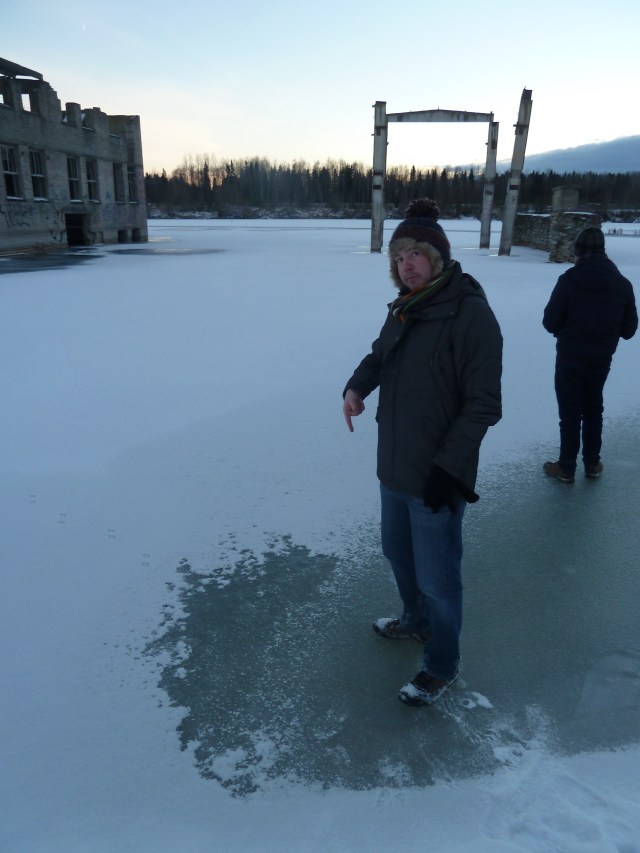
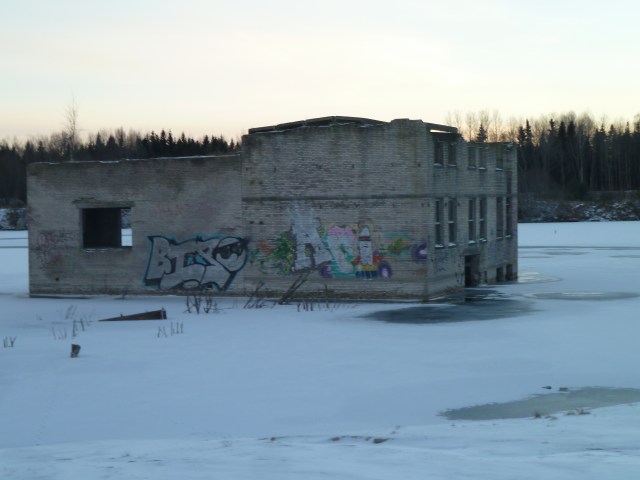
One of the most unusual and memorable parts of my time in Estonia was a visit to Rummu Prison, an abandoned Soviet-era prison and quarry complex that has become one of the country’s most fascinating attractions.
I visited as part of the Coastal Cliffs and Soviet Paldiski Tour operated by Tallinn Traveller Tours, which cost €49 per person and combines several interesting locations west of Tallinn into a single day trip.
Rummu has a remarkable history. During the Soviet era, prisoners were used as forced labour in the adjacent limestone quarry. When Estonia regained its independence in the early 1990s, mining operations ceased and the site was abandoned. Without the pumps that had previously kept the quarry dry, groundwater gradually flooded the area, submerging large sections of the prison complex beneath crystal-clear water.
The result is something truly extraordinary.
What many visitors don’t realise is just how much of the original complex now lies beneath the surface. A significant portion of the prison buildings disappeared underwater as the quarry flooded. During my visit in December, the lake was partially frozen, adding an extra layer of atmosphere to the scene but also concealing much of what lies below.
In the warmer months, however, the submerged sections of the prison attract divers from across Europe. The exceptionally clear water allows scuba divers to explore the underwater ruins, including buildings, machinery and other remnants of the site’s Soviet past that remain preserved beneath the surface.
Even during winter, though, there is plenty to see above ground.
One of the most striking features still accessible is a guard tower positioned along the prison perimeter. A narrow spiral staircase leads visitors to the top, offering an elevated view across the complex. From here, it is possible to appreciate both the scale of the former prison and the unusual landscape that surrounds it.
Standing in the tower, looking out across the flooded quarry and the remains of the prison, it is difficult not to reflect on the site’s history. Thick brick walls still stand defiantly against the elements, while rusting fences and coils of barbed wire serve as reminders of a time when escape was the last thing the authorities wanted to make possible.
The contrast between the prison’s bleak purpose and the beauty of its surroundings is what makes Rummu so captivating. What was once a place of confinement has become one of Estonia’s most unique tourist attractions, drawing photographers, history enthusiasts, divers and curious travellers alike.
It is certainly not a typical sightseeing stop, but for those interested in Soviet history or looking to experience something a little different from Tallinn’s medieval streets, Rummu Prison is well worth the journey.


Where to avoid
The good news is that there isn’t really anywhere in Tallinn that I would tell visitors to completely avoid. Estonia is a very safe country by European standards, and Tallinn is generally considered one of Europe’s safer capital cities. The city is compact, easy to walk around and has good public transport, so I never felt particularly concerned while exploring on my own.
That said, being somewhere safe doesn’t mean you can completely switch off. The main thing to be aware of in Tallinn is pickpocketing, particularly around busy tourist areas. The UK government’s current travel advice specifically highlights bars and nightclubs in Tallinn’s Old Town as places where pickpockets can be a problem.
I would therefore take the usual precautions around Town Hall Square, Viru Street and other busy parts of the Old Town, particularly when the Christmas Market is operating and the streets are crowded. Keep your phone and wallet somewhere secure, don’t leave bags unattended and be particularly careful when moving through busy queues or packed areas. There is no reason to be paranoid – just sensible.
Night-time is another occasion when a little extra awareness is worthwhile. The Old Town has plenty of bars and nightlife, and the FCDO advises that the risk of assault is highest late at night around popular nightlife locations. If you’re drinking, keep an eye on your drink and your friends, and don’t accept drinks from strangers. It is also worth remembering that drinks served in Estonia can be stronger than those in the UK.
I’d also be careful when getting a taxi. Use a pre-booked or official taxi with the appropriate signage, or a reputable taxi app, and check that the vehicle details match what you have been given. Avoid getting into an unmarked vehicle simply because someone approaches you offering a cheap ride.
One thing I would particularly bear in mind if visiting Tallinn in winter is the darkness. December days are very short, and roads and pavements can become slippery in cold or snowy weather. Estonia also has a legal requirement for pedestrians to use a reflector during the darker months to make themselves more visible to drivers.
Overall, though, I wouldn’t let safety concerns put you off Tallinn. I spent my time exploring the Old Town, visiting its sights, wandering around the Christmas Market and heading further into the city without ever feeling uncomfortable.
Take the same sensible precautions you would in any European capital and you should have little to worry about. In fact, Tallinn’s reputation for being safe is one of the things that makes it such an easy city to explore.
Great places to eat
One of the best meals I had during my time in Tallinn came at Vegan Restoran V, a cosy restaurant tucked away on Rataskaevu Street in the heart of the Old Town. Located at Rataskaevu 12, just a minute or two from Town Hall Square, it would be easy to walk past without realising that it is one of the city’s most highly regarded dining spots.
Despite the name, you certainly do not need to be vegan to enjoy eating here. In fact, that is probably part of the restaurant’s appeal. Established as Estonia’s first fully vegan restaurant, Vegan Restoran V has built a reputation for serving imaginative, flavour-packed dishes that appeal to everyone, regardless of dietary preference.
The menu takes inspiration from cuisines around the world rather than focusing on traditional Estonian cooking. During my visit, dishes on offer included beetroot ravioli with cashew cream and basil pesto, vegetable and lentil lasagne, Korean-style chickenless fillet with rice noodles and shiitake-coconut sauce, vegan burgers, sweet potato dishes and a variety of sharing platters. There is also a tempting selection of desserts including tiramisu, pavlova and Biscoff cake.
The restaurant itself is relatively small, which only adds to its charm. Exposed stone walls, warm lighting and intimate seating create a relaxed atmosphere that feels perfectly suited to Tallinn’s medieval surroundings. It is the sort of place where you can comfortably linger over dinner while escaping the cold winter temperatures outside.
In terms of cost, a three-course meal for two people with drinks will typically come to around €60-80 (approximately £52-£69), depending on what you order. While it is not the cheapest place to eat in Tallinn, the quality of the food more than justifies the price and still represents good value by UK standards.
The restaurant is extremely popular and often busy, particularly during the festive season when visitors flock to the Christmas Market nearby. Booking ahead is therefore a sensible idea if you have your heart set on eating here.
Tallinn has no shortage of excellent places to eat, but Vegan Restoran V was one of the stand-out dining experiences of my trip. Whether you are vegan, vegetarian or simply someone who enjoys good food, it is well worth making time for during a visit to Estonia’s capital.

Useful links
Tripadvisor review of Hotel Schlössle
Remember you can follow World Complete on Twitter, Instagram, Pintrest, Tumblr and Facebook send your comments and pictures from your travels using #WorldComplete and #Travel.

