
Riga…discovering the Baltic’s cultural capital

Riga

Riga, the grand old lady of the Baltics, has long appealed with its mix of baroque grandeur, Art Nouveau elegance, and the everyday rhythm of a modern European capital.

It’s a city that has seen centuries of change – from its days as a medieval trading hub in the Hanseatic League, through periods of independence and occupation, to its place today as Latvia’s vibrant heart. That history is impossible to ignore.

Gothic church spires still dominate the skyline, pastel-coloured façades line the Old Town, while leafy boulevards showcase some of the best examples of Art Nouveau architecture in Europe.

Alongside these reminders of the past, Riga has the confidence of a city looking forward, with thriving food, arts and cultural scenes giving it a modern edge.


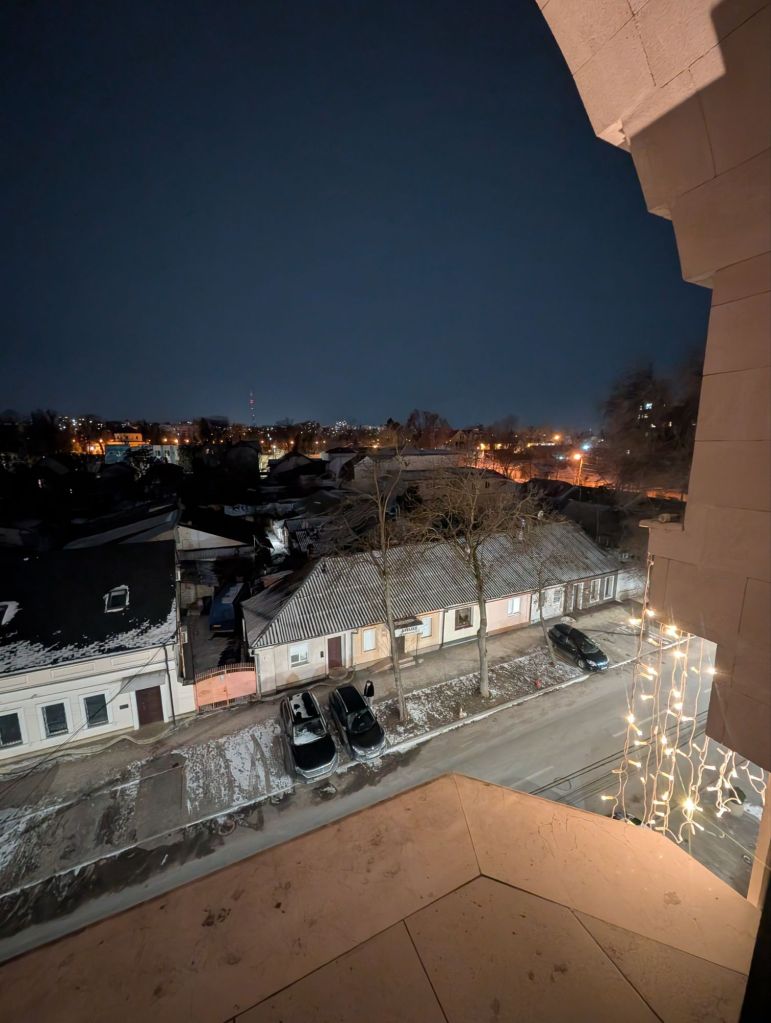
A view across a wintery Riga skyline

And so, what should first-time visitors to Riga know before venturing into the Latvian capital?

The first thing to consider when planning a trip to Riga is the weather, as it plays a big part in shaping what your days will look like. The city has a classic northern European climate, with cold winters, mild springs, warm but not overly hot summers, and a fair share of rain spread across the year.

Average highs sit around 22–24°C (72–75°F) in July and August, while in January and February they can dip to just above freezing, with lows closer to –5°C (23°F).

I visited Riga in December, when the city takes on a distinctly wintry feel. We did this on purpose so we could explore the Christmas markets in Riga as well as it being part of our plans to visit all the Baltic states of Estonia, Lithuania and Latvia.

Daytime temperatures hovered around 1 °C (34 °F) and dropped just below freezing at night, to about –1 °C (30 °F). Snow and sleet weren’t constant, but there was enough to coat rooftops and slick the cobbles, giving the Old Town a crisp, muted atmosphere. Short daylight hours meant planning was important, as much of the exploring needed to be done before darkness fell in the late afternoon.

For anyone travelling at that time of year, packing sensibly is essential: a warm coat, gloves, a scarf, and shoes with good grip will make a big difference. The cold does add its own charm, though. There’s something about moving between frosty squares, steaming cups of coffee in cosy cafés, and the glow of the Christmas market that makes Riga in December feel both inviting and memorable.


Riga on Google Maps

The next thing to get comfortable with before heading to Riga is the currency. Latvia uses the Euro (€) – a change made a decade ago when it replaced the lats in January 2014. As for the exchange rate, at the time of writing, £1 GBP buys you about €1.16.

When it comes to paying, credit and debit cards (Visa and Mastercard in particular) are widely accepted across Riga – restaurants, museums, hotels, and most shops will take them. In more local or rural spots, or at market stalls, cash may still be king, so it’s sensible to carry a few euros on you. A smart tip – avoid the temptation to pay in pounds if given the choice at a card terminal (a practice called dynamic currency conversion). Always opt to pay in euros – your bank will give you a much better rate.

Also, tipping in Latvia is polite but not rigid. In restaurants, cafés, and bars, around 10% in cash is the norm if you’ve enjoyed things. Rounding-up the bill by a euro or two is fine too, especially when paying in cash – and the staff will appreciate it more than a card tip. For taxi drivers, rounding-up is perfectly acceptable. For porters or hotel housekeeping, leave a Euro or two- it’s thoughtful, even though it’s not expected.

One of the easier parts of travelling to Riga is the lack of any real time adjustment. Latvia sits just two hours ahead of the UK (GMT+2, or GMT+3 during daylight saving time), so there’s no jet lag to contend with. It means you can land, drop your bags, and head straight out to explore without worrying about your body clock lagging behind – a welcome bonus, especially on a shorter trip.

The next thing to consider is how to keep your devices charged. In Latvia, power plugs and sockets (outlets) of type F are used. The standard voltage is 230 V at a frequency of 50 Hz and you will need a power plug travel adapter if your appliances use a different plug type.

Although Latvia may feel a little unfamiliar at first, language is rarely a barrier for visitors. The national language is Latvian, a Baltic language that shares some features with Lithuanian but is distinct from the Slavic and Germanic languages spoken in neighbouring countries.

Russian is also widely spoken, particularly among older generations, reflecting Latvia’s history, while English is increasingly common, especially in Riga where tourism and younger Latvians mean you’ll usually get by without difficulty.

Still, learning a few local phrases is always appreciated. “Hello” in Latvian is Sveiki, while “goodbye” is Uz redzēšanos. To be polite, “please” is Lūdzu, and “thank you” is Paldies – a simple word that will earn you plenty of smiles.

One final thing to think about is how you’ll stay connected during your time in Latvia. While roaming within the EU is straightforward for most European travellers, visitors from the UK may find charges creeping back in, and picking up a local SIM card isn’t always the most convenient option on a short trip. That’s why I recommend considering an eSIM before you go – it makes staying online simple and reliable throughout your stay.

Services like Airalo make the process easy. You download the app, purchase a data plan for Latvia (or the wider Baltic region), and activate the eSIM on your phone before you travel. The moment you arrive, your phone connects to a local network without any fuss, saving you from scrambling for wi-fi or juggling SIM cards. It’s a hassle-free way to keep your maps running, check the forecast, or share snapshots of Riga’s spires and markets while you’re on the move.

With these essentials in mind, I was ready to set out on my journey – one that would guide me through unfamiliar streets, introduce me to new ways of experiencing a city in winter, and immerse me in the rich history and everyday charm of Riga.


Getting there

Riga had been on my travel radar for years – a Baltic gem with cobbled streets, pastel façades and a skyline punctuated by elegant spires. It’s a city that blends history and creativity in equal measure, with art nouveau architecture, cosy cafés and a thriving cultural scene that make it one of Eastern Europe’s most underrated city breaks.

But before wandering through the Old Town, I had to get there – and thankfully, reaching Latvia’s capital from the UK is far more straightforward than you might think.

Riga International Airport (RIX) is the main gateway to Latvia and the largest air hub in the Baltic states, welcoming around 5.6 million passengers a year. It sits about 10km southwest of Riga’s city centre, roughly a 20-minute drive or taxi ride away, making it incredibly convenient for travellers eager to hit the ground running.

The airport is modern and efficient, with a calm atmosphere that reflects Riga’s laid-back charm, and it’s well connected to several cities across the UK. At the time of writing, you can fly to Riga from London Gatwick, London Stansted, London Luton, Manchester, Liverpool, Leeds Bradford, Edinburgh, and Bristol, with airlines such as Ryanair, Wizz Air, airBaltic and Jet2 offering direct services.

For my trip, I chose to fly from London Stansted with Ryanair, which offered both a convenient schedule and an unbeatable fare. My return ticket came to £111 per person – a great deal for a European city break.

The direct flight from Stansted to Riga takes around two hours and 35 minutes, whisking you from the bustle of Essex to the edge of the Daugava River in no time. As expected with Ryanair, the service was no-frills but punctual, and check-in was quick and uncomplicated.

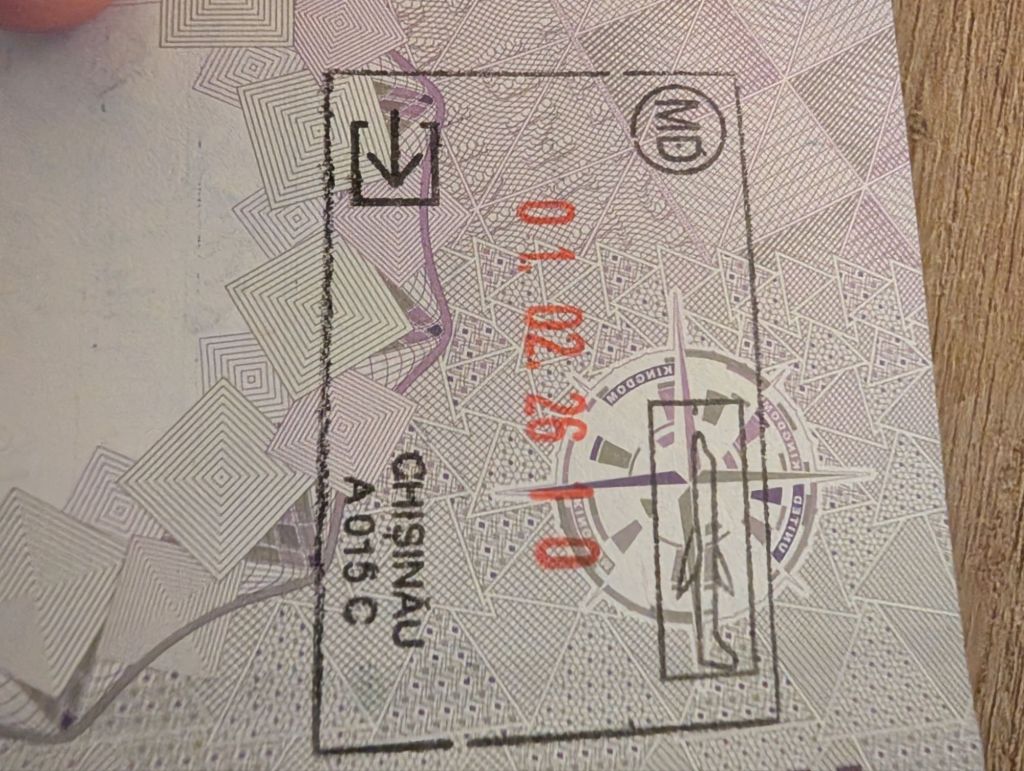
I boarded early in the morning, watched the London suburbs fade beneath a blanket of cloud, and just over two hours later found myself landing in Latvia, greeted by crisp Baltic air and a surprisingly efficient passport queue.

From the airport, it’s easy to reach the city – local buses and taxis run frequently, and you can even take a Bolt ride straight to your accommodation for a reasonable fare. Stepping out into Riga, with its mix of medieval charm and modern energy, I couldn’t help but feel that the journey had been refreshingly smooth. For a short-haul hop that delivers so much culture, character and warmth, a flight to Riga is hard to beat – and at just over a hundred pounds return, it’s an easy choice for a European escape.


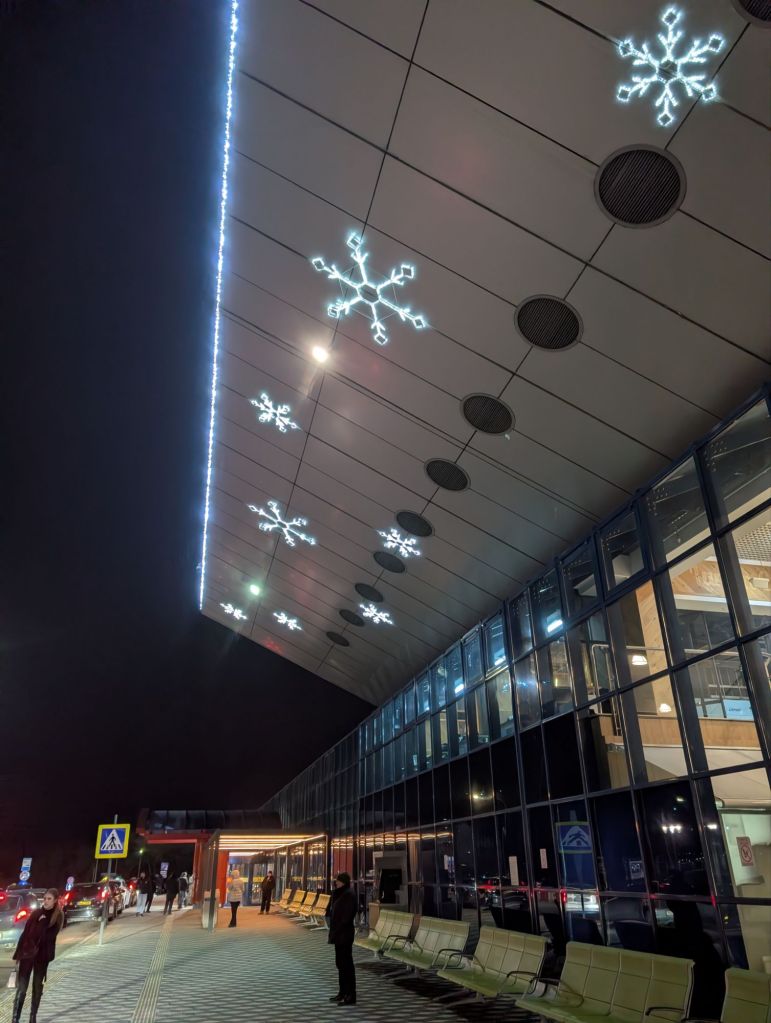
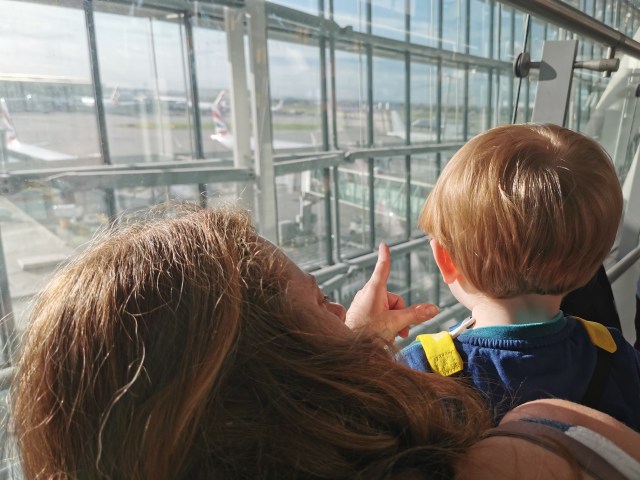
Inside the departure area of Riga International Airport

Where to stay

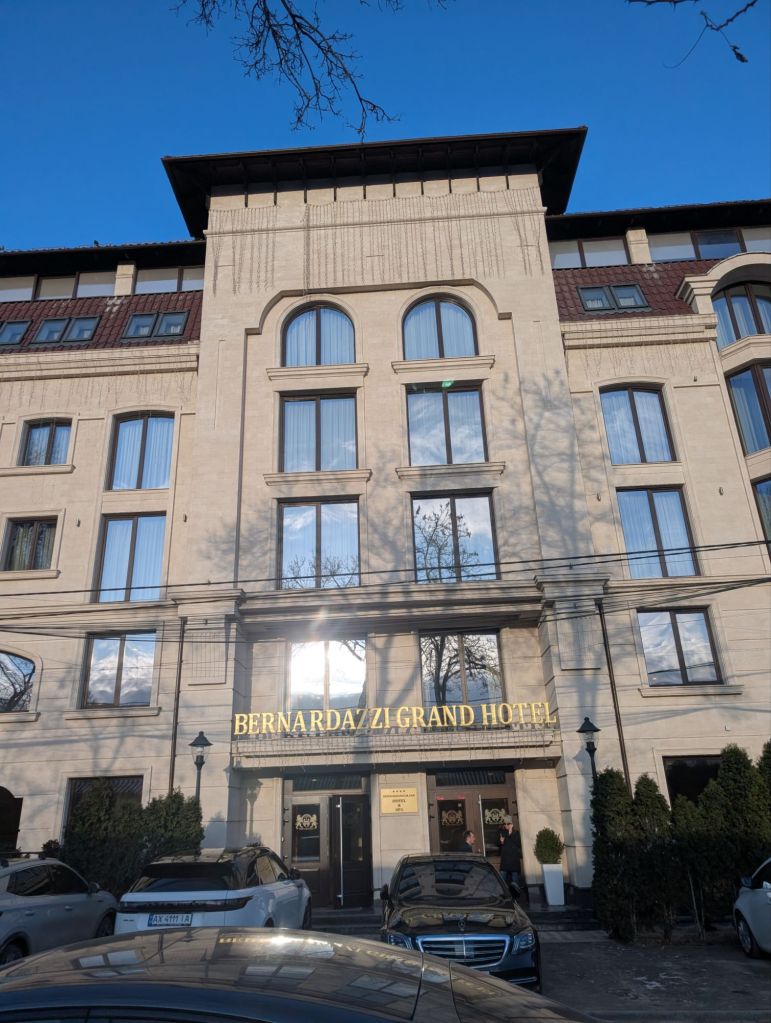
Riga is packed with charming hotels, but for our stay in the Latvian capital we checked into the Grand Palace Hotel Riga, a five-star property in the heart of the Old Town at Pils iela 12, Centra rajons, Rīga, LV-1050, Latvia. Just a short stroll from the river and the city’s main attractions, it’s an ideal base for exploring this compact and picturesque capital.

Technically, we paid €107 (about £93) for a night here, but in truth, our stay was a little sweeter than that — we were fortunate to have two nights complimentary, following a complaint from a previous year when a sister hotel in Tallinn failed to honour a booking. So, three nights in total, with only one paid night – a small redemption for a previous travel hiccup!

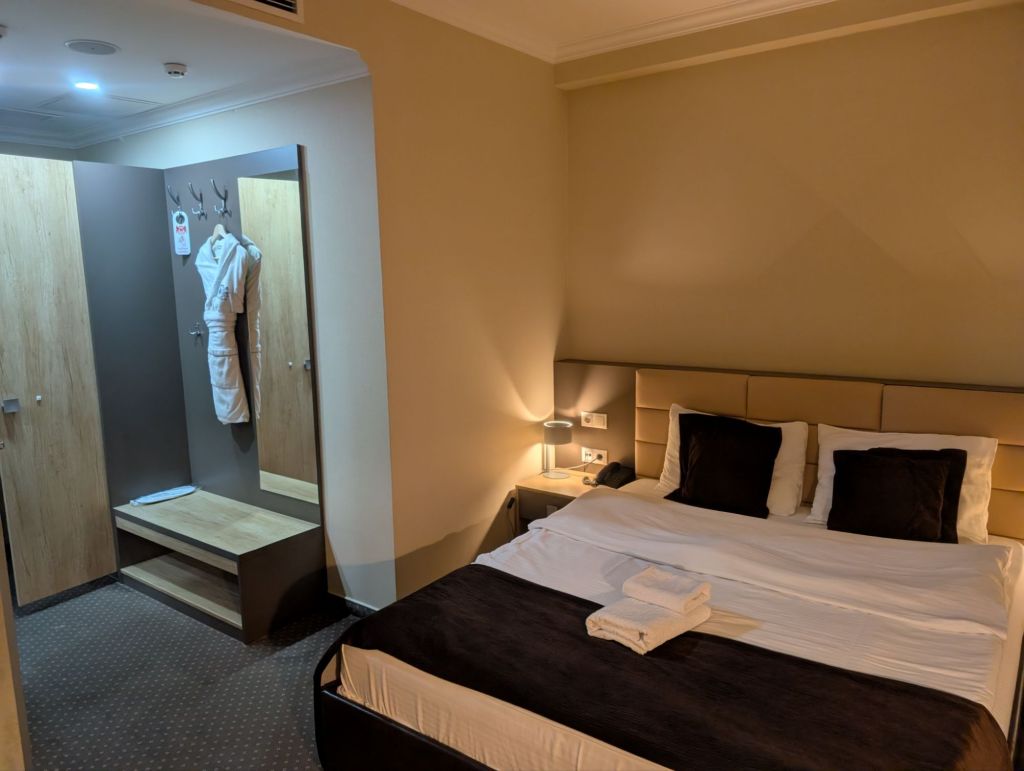
From the moment we arrived, service was polished and professional, the kind you’d expect from a member of the Schlössle Hotel Group. Our Deluxe King Room was spacious, elegantly decorated and exceptionally comfortable, offering everything from fast Wi-Fi to a well-stocked minibar. The bathroom was equally impressive, with plush towels and high-end toiletries.

Breakfast was served in the hotel’s restaurant, an Art Deco-inspired dining room that felt more like a private club than a hotel restaurant. The food didn’t disappoint: a generous spread of hot and cold options, from eggs to fresh pastries and fruit, all beautifully presented and replenished regularly.

The hotel’s location couldn’t be better — close to the Daugava River, Riga Castle and Dome Square, with cobbled streets and cosy cafés right on the doorstep. After a day exploring the city’s mix of Art Nouveau architecture and festive Christmas markets, returning to the warmth and calm of the Grand Palace felt like a treat.

Overall, the Grand Palace Hotel Riga offers a refined and comfortable stay in a superb location, with friendly service and a touch of old-world charm. It’s not cheap, but for those looking for luxury in Latvia’s capital, it’s well worth the splurge — or in our case, even better when two nights are free!


The rooms are spacious and comfortable
A branded coffee at the Grand Palace Hotel Riga

Getting around

During our trip to Riga, we landed at Riga International Airport, which sits just under 10km from the city centre. Getting into town is straightforward, and you have a few options depending on how you like to travel.

The most convenient choice is a taxi, which takes around 20 to 30 minutes to reach the centre and costs roughly €15 to 20 (about £13 to 17). If you prefer public transport, the airport bus (No. 22) runs regularly and drops passengers near the Old Town in about half an hour, with tickets costing just a few euros.

Once you’re in Riga itself, the city is best explored on foot.

The Old Town is compact and pedestrian-friendly, with cobbled streets, colourful façades, and a wealth of sights packed into a small area. Walking allows you to appreciate the details you’d miss from a taxi window.

Riga’s public transport system is reliable and inexpensive, with buses, trams, and trolleybuses connecting the Old Town to other districts. Tickets can be bought at kiosks, on trams, or via mobile apps, and most journeys cost just a few euros.

While you rarely need them for central sightseeing, they’re useful for visiting areas like the Art Nouveau district, the Central Market, or Riga’s parks along the Daugava. For those wanting a bit more flexibility, bikes and e-scooters are widely available to rent, offering a fun way to cover longer distances while still feeling the city’s pulse.


Riga is a pedestrian friendly city and easy to walk around

Top sites

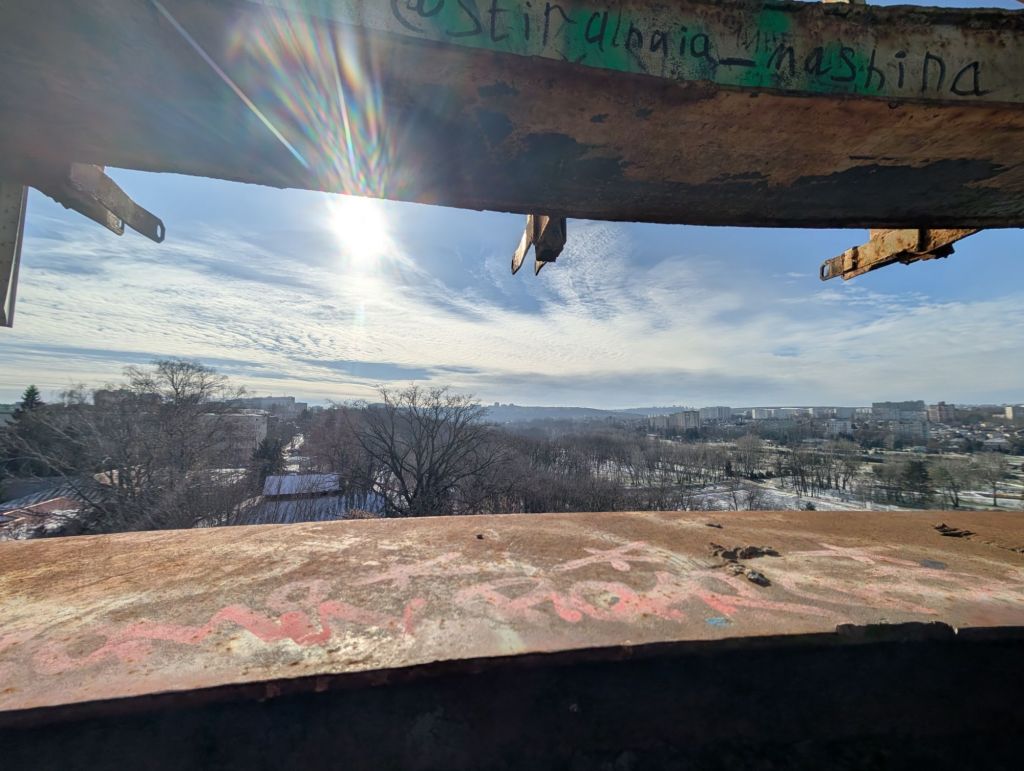
A great way to start a trip to Riga is with a visit to the Latvian Academy of Sciences Observation deck. Located at Akadēmijas laukums 1, just across the river from the Central Market and within easy walking distance of the Old Town, this striking Soviet-era landmark is one of the city’s most recognisable buildings.

Often nicknamed “Stalin’s birthday cake” because of its grand, tiered design, it offers not only a glimpse into Riga’s history but also some of the best panoramic views in the city.

Tickets cost €8 (around £7) per adult, and children under 12 can visit for free. After purchasing our tickets at reception, we took the lift to the 15th floor before climbing a short set of stairs to reach the open-air terrace on the 17th floor, roughly 65m high. The climb was quick and easy, and the moment we stepped outside, we were greeted with sweeping 360-degree views of Riga in all its glory.

From the top, we could see the red rooftops and slender church spires of the Old Town, the Central Market’s distinctive pavilions, and the Daugava River glistening as it curved through the city. The modern silhouette of the National Library stood proudly on the opposite bank, and on a clear day, the view stretches far beyond the city centre. It’s the kind of place where you naturally slow down, take a deep breath, and appreciate Riga’s unique blend of old-world charm and modern development.

The open-air terrace can get a little breezy, so a jacket is recommended. There’s no time limit on your visit, so we stayed for a while, taking in the view from every angle before heading back down.


The Latvian Academy of Sciences which houses the observation deck
A view across the river and the city from the view point
Latvian Academy of Sciences Observation deck is one of the best points in the city to get a view from

As readers of this blog will know, I’m a big fan of escape rooms — so when we found ourselves in Riga, it was only natural that we booked a session at Escape Room Riga, located at Lāčplēša iela 43/45. We opted for the Old Captain’s Cabin experience, which promised a nautical twist on the classic escape room format, full of mystery, codes and hidden clues.

We booked in advance for two players to make sure we could secure our preferred time slot. The price was €25 per person (around £21.50), which felt very reasonable for an hour-long adventure that was both challenging and great fun.

The venue was easy to find, just a short walk from the city centre, and we received a warm welcome from the team on arrival. After a quick briefing, we were led to our room — a detailed ship’s cabin, complete with weathered wood, nautical instruments and a few atmospheric creaks that really set the scene.

The game itself was cleverly designed, with each puzzle naturally leading to the next. It required strong teamwork and communication to stay on course, and we loved the mix of logic-based challenges and hands-on tasks.

What really stood out was how smoothly the experience ran. The staff were friendly and gave clear instructions before the game started, and they were available via intercom if we got really stuck. The puzzles struck a good balance between challenging and achievable, keeping the game exciting right up to the final moments. When we finally escaped (just in time!), we couldn’t help but feel a little triumphant.


Visiting Riga is a delight for any traveller, and one of the best ways to get to know the city is by taking the Old Riga Free Walking Tour run by Riga Free Tours. The tour begins at the entrance to St Peter’s Church, right in the heart of the Old Town and runs several times a day, usually around 10am, 12pm, and 3pm, and lasts about one hour and forty-five minutes.

While the tour is free to join, it operates on a tip-based system, so at the end you can decide what the experience was worth. A typical tip might be €10 to (around £11.35 per person), depending on the size of the group and how much you enjoyed the guide’s storytelling.

The walk covers many of Riga’s key historic landmarks. You’ll start at St Peter’s Church and explore Town Hall Square, the House of the Blackheads, Dome Square with its impressive cathedral, the Powder Tower, and the Swedish Gate. Along the way, the guide will point out hidden corners of the Old Town that are easy to miss on a self-guided walk, offering fascinating insights into the city’s medieval past, its architecture, and how the area functions today for both locals and visitors.

It’s important to arrive a few minutes early, wear comfortable shoes, and dress for the weather, as the tour stays outdoors and the cobbled streets can be uneven. The tour is relaxed and interactive, giving you the chance to ask questions and really get a feel for the city.

By the end of the walk, you’ll not only have seen many of Riga’s most famous sights, but also gained a sense of the stories, history, and atmosphere that make the Old Town such a special place to explore.


The walking tour will take you around a lot of the Old Town
You’ll also see how the modern era is connecting the Old Town of the city to the new

One of the most memorable days of our trip to Latvia was the tour we took with Eat Riga, a small local company that offers a brilliant range of alternative tours around the city and beyond.

They’re known for their street art walks, Soviet history excursions and food experiences that give visitors a real taste of everyday life in Riga. When we booked, Eat Riga also ran a special combo tour to Skrunda and Kuldīga – an itinerary that’s no longer available today.

We arranged the trip directly with the team over email, who confirmed a price of €80 per person (around £68) including hotel pick-up and drop-off, a private guide, and all transport for the day. Our guide collected us from the Grand Palace Hotel in Riga at 9am for the journey west through the Latvian countryside.

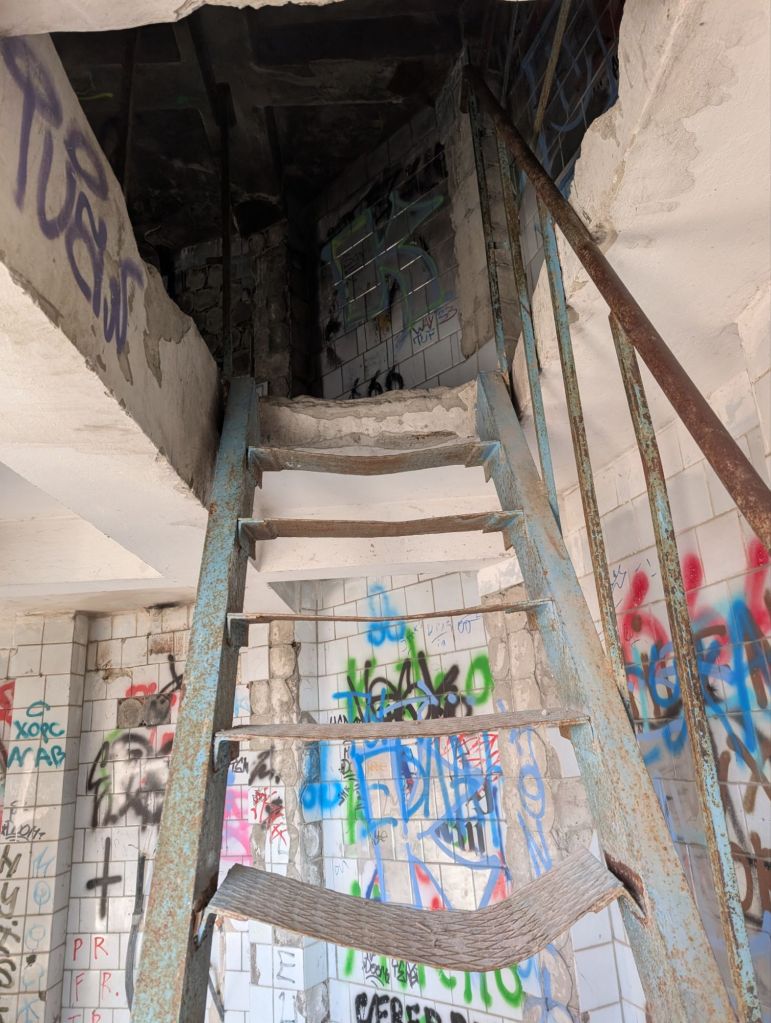
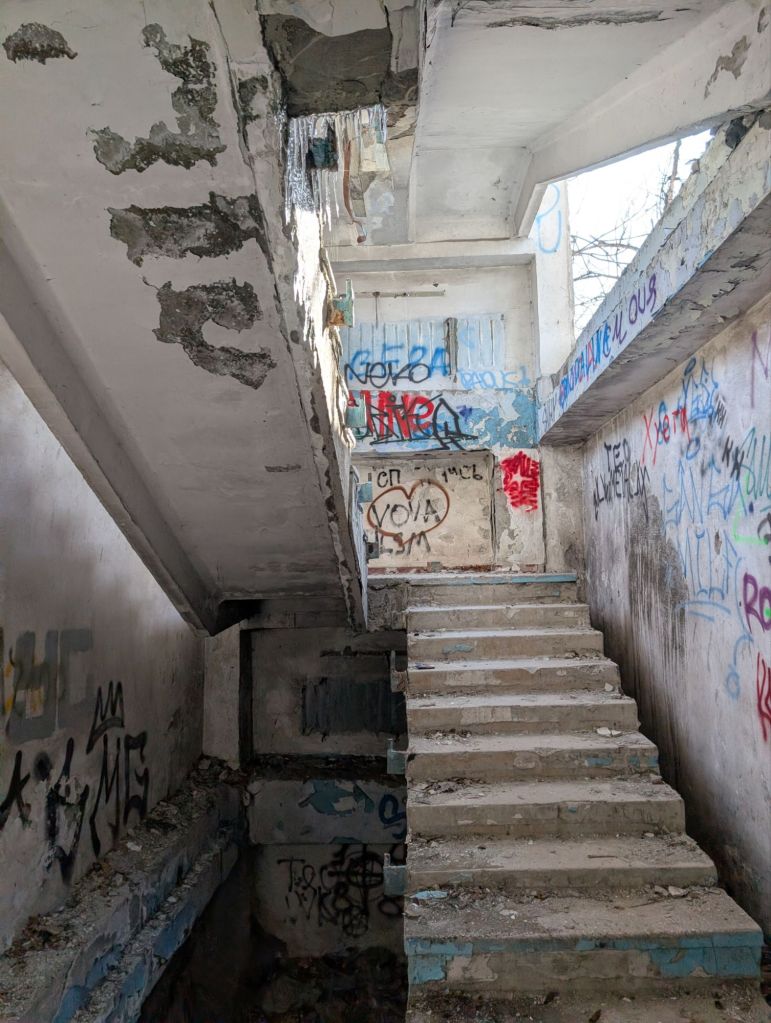
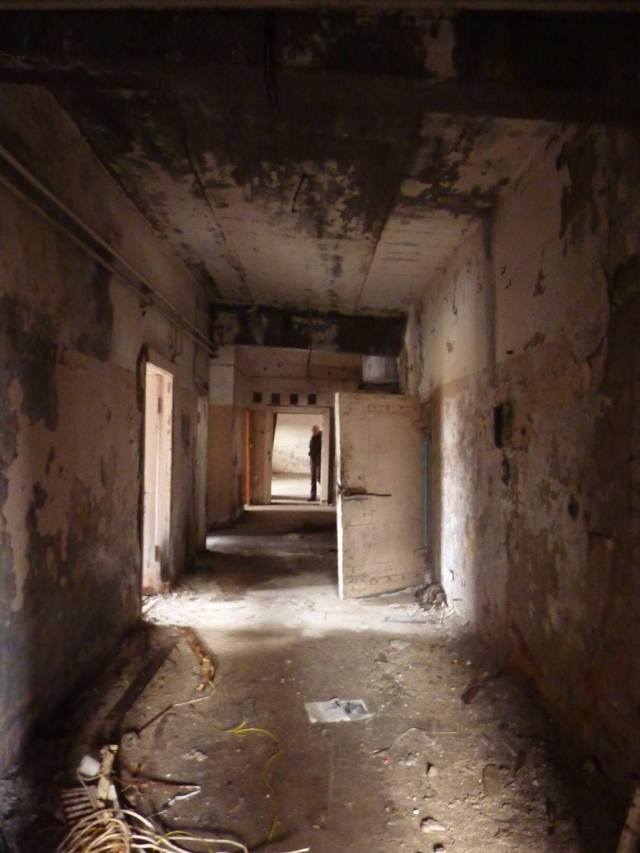
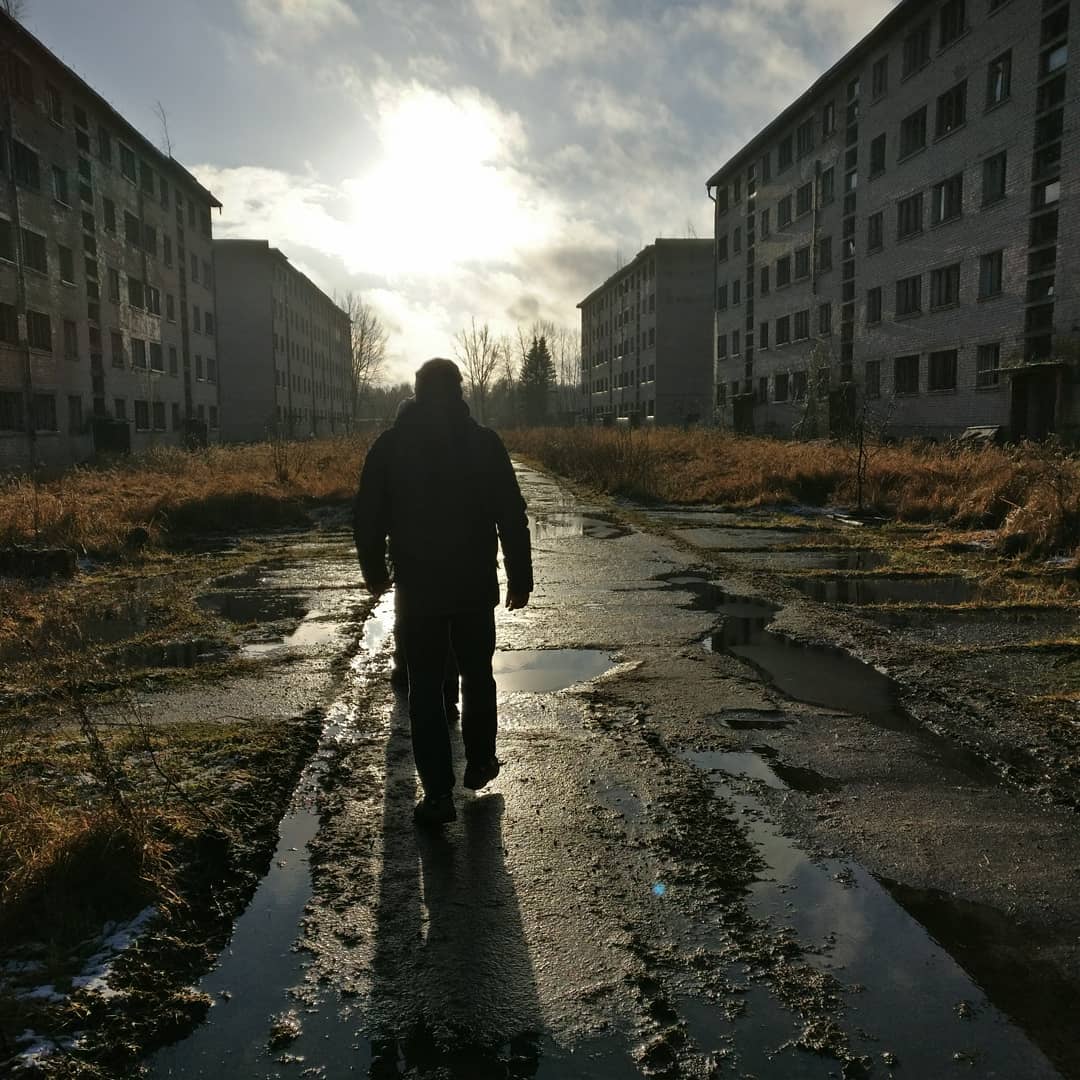
The first stop was Skrunda, once home to a secret Soviet radar station and later an abandoned military town after the fall of the USSR. For years it stood frozen in time, its apartment blocks and control towers slowly crumbling amid birch trees and silence.

At the time of our visit it was still possible to explore the empty streets and buildings, offering a haunting glimpse into Latvia’s Soviet past. Since then, however, the entire area has been closed to the public and repurposed by the Latvian military, making access impossible.

What made Skrunda so unforgettable was the eerie sense of having an entire city to ourselves. Walking through empty streets lined with crumbling apartment blocks felt like stepping into a post-apocalyptic film set — silent, still, and strangely captivating. We could wander freely in and out of buildings, climbing staircases and peering and exploring rooms that once housed families, offices, and communal spaces.

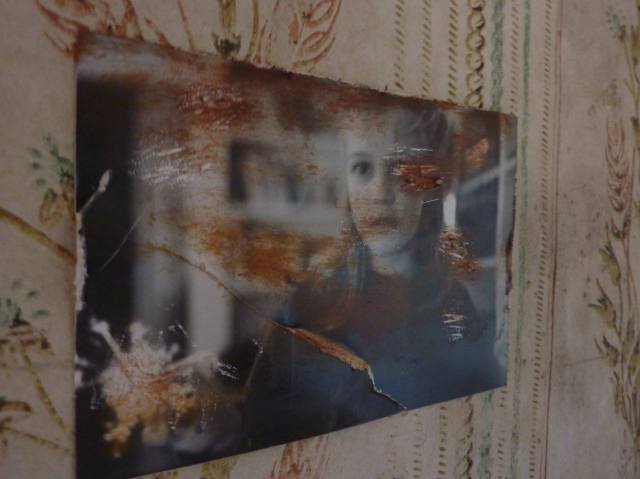
Faded wallpaper, discarded furniture, old photos and children’s drawings on the walls gave haunting glimpses into the lives once lived there. It was both unsettling and fascinating, an experience unlike anywhere else — a moment suspended in time before the town was reclaimed by nature and, later, the military.


The deserted streets of the once thriving Skrunda
You could explore inside any building you wanted to at the time
The haunting images of some of the former inhabitants still lined the apartment’s walls

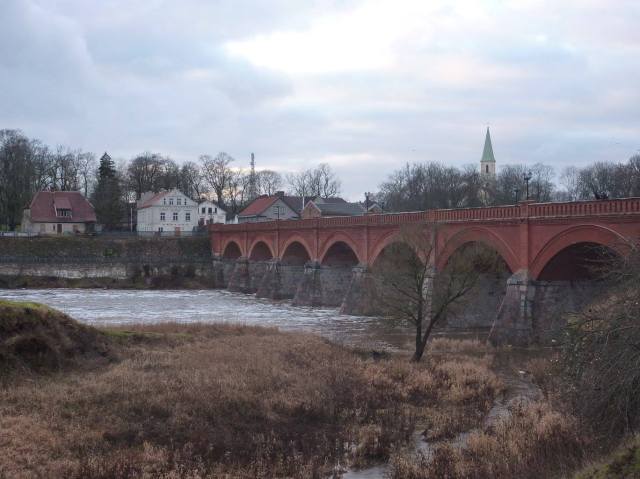
After leaving Skrunda, the tour continued to Kuldīga, one of Latvia’s prettiest small towns. It’s famous for its red-roofed old houses, cobbled streets and Europe’s widest waterfall, the Ventas Rumba, which stretches dramatically across the river in the centre of town. There’s also a charming old brick bridge and plenty of cosy cafés to stop in before the drive back to Riga.

Although Eat Riga no longer runs the Skrunda and Kuldīga combo, they still offer a fantastic selection of history-focused and off-beat tours. Whether it’s exploring forgotten corners of the capital or discovering Latvia’s rural heritage, their guides bring genuine enthusiasm and knowledge to every experience.


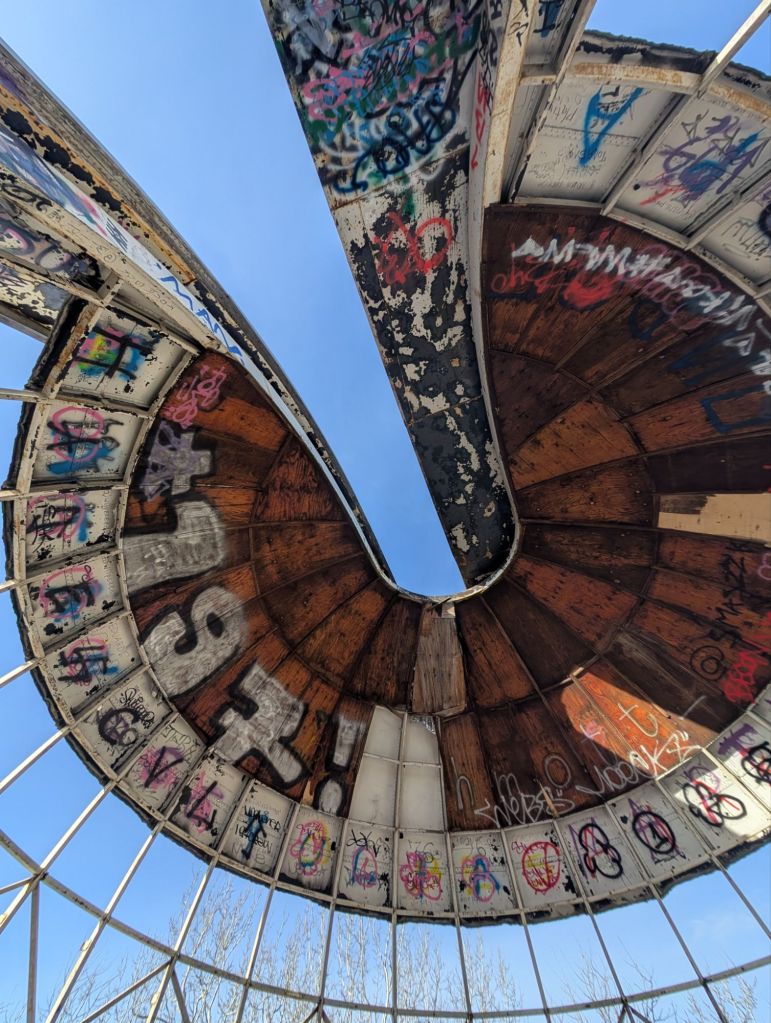
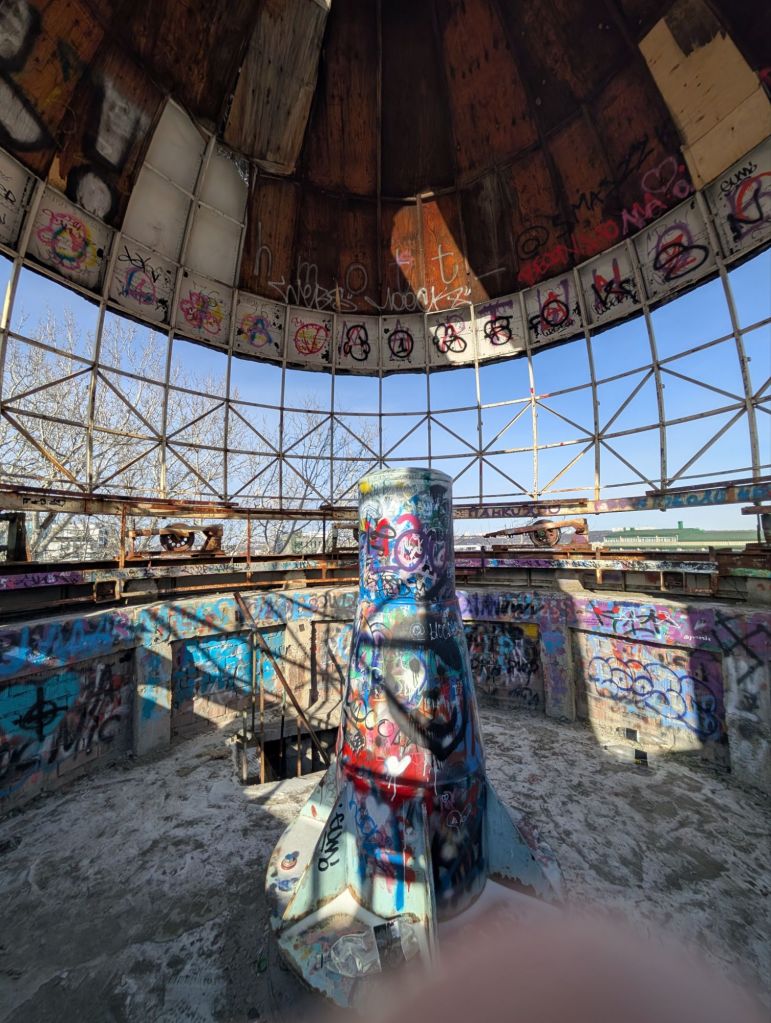
Taking a climb inside an abandoned tower in Skrunda
A look at how family life in Skrunda used to be
The tranquil scenery at Kuldīga

Where to avoid

Riga is a wonderfully walkable, welcoming city that feels safe and relaxed for visitors. Latvia’s capital has a relatively low rate of violent crime compared with many other European cities, and most travellers find exploring its cobbled streets and riverside neighbourhoods a worry-free experience.

That said, like anywhere popular with tourists, there are a few things to be aware of — mainly petty theft and small-scale scams around busy areas and transport hubs. Keeping an eye on your belongings, avoiding unlicensed taxis, and being cautious of overly friendly strangers offering unsolicited help are simple precautions that go a long way.

If you’re short on time during your trip, one spot that you can comfortably skip is Riga Central Market. The market is a vast complex of old Zeppelin hangars filled with food stalls, souvenir sellers, and everyday goods. It’s a huge part of local life and fascinating in theory, but, in my opinion, doesn’t quite live up to its promise.

While it’s interesting to see the scale of the place, much of what’s on offer is quite ordinary — fruit, vegetables, meat, fish and clothing stalls that you’ll find in most European cities. It lacks the atmosphere or curated feel that makes markets in other capitals real highlights.

There’s nothing wrong with Riga Central Market at all — it’s clean, functional, and an authentic slice of city life. But if your time in Riga is limited to just a day or two, you’ll get far more out of wandering through the Old Town or crossing the river to explore the Art Nouveau district. The market is best left for those with a slower itinerary who want to see Riga beyond the postcard sights.


Great places to eat

Riga has plenty of interesting restaurants to discover to cater to all budgets and tastes but when I went I made sure to carve out time to visit Singh’s, a lively and polished Indian restaurant located at Pulkveža Brieža iela 2, Centra rajons.

The restaurant sits right in the heart of the city, making it an easy stop after a day of exploring. I booked a table for two in advance and requested a spot on their second floor to ensure we could dine at our preferred time. The upstairs setting turned out to be a perfect choice – slightly quieter than the ground floor, with a relaxed atmosphere ideal for conversation.

Singh’s prides itself on serving authentic Indian cuisine made with high-quality ingredients. The menu offers a wide selection of starters, mains, sides, breads and desserts, all well presented and full of flavour.

The service was warm and attentive throughout our meal, with dishes arriving promptly and each course nicely paced. The food itself did not disappoint – rich curries, tender meats and fragrant spices that felt genuinely authentic, yet not overpowering.

In terms of price, Singh’s offers good value for the quality and portion sizes. Starters range from around €6–10 (approximately £5–8), while mains are typically between €12–15 (around £10–13).

For something more substantial, the “Singh’s Mixed Grill Deluxe for Two” is €23 (about £20–21), and cocktails such as the “Singh’s Chilli Martini” are around €8.50 (roughly £7–8). The overall cost for a meal for two, including drinks, felt very reasonable given the standard of food and service.

Singh’s is both central and popular, so booking ahead is definitely recommended. Whether you’re after a laid-back dinner after sightseeing or a more polished evening out, this spot offers a memorable taste of India right in the middle of Riga.


Useful links

Airalo

Ryanair

Grand Palace Hotel Riga

Latvian Academy of Sciences Observation deck

Escape Room

Riga Free Tours

Eat Riga

Skrunda

Kuldīga

Riga Central Market

Singh’s

Remember you can follow World Complete on TwitterInstagramPintrestTumblr and Facebook send your comments and pictures from your travels using #WorldComplete and #Travel.
Faroe Islands… saying yes to the Land of Maybe

Faroe Islands

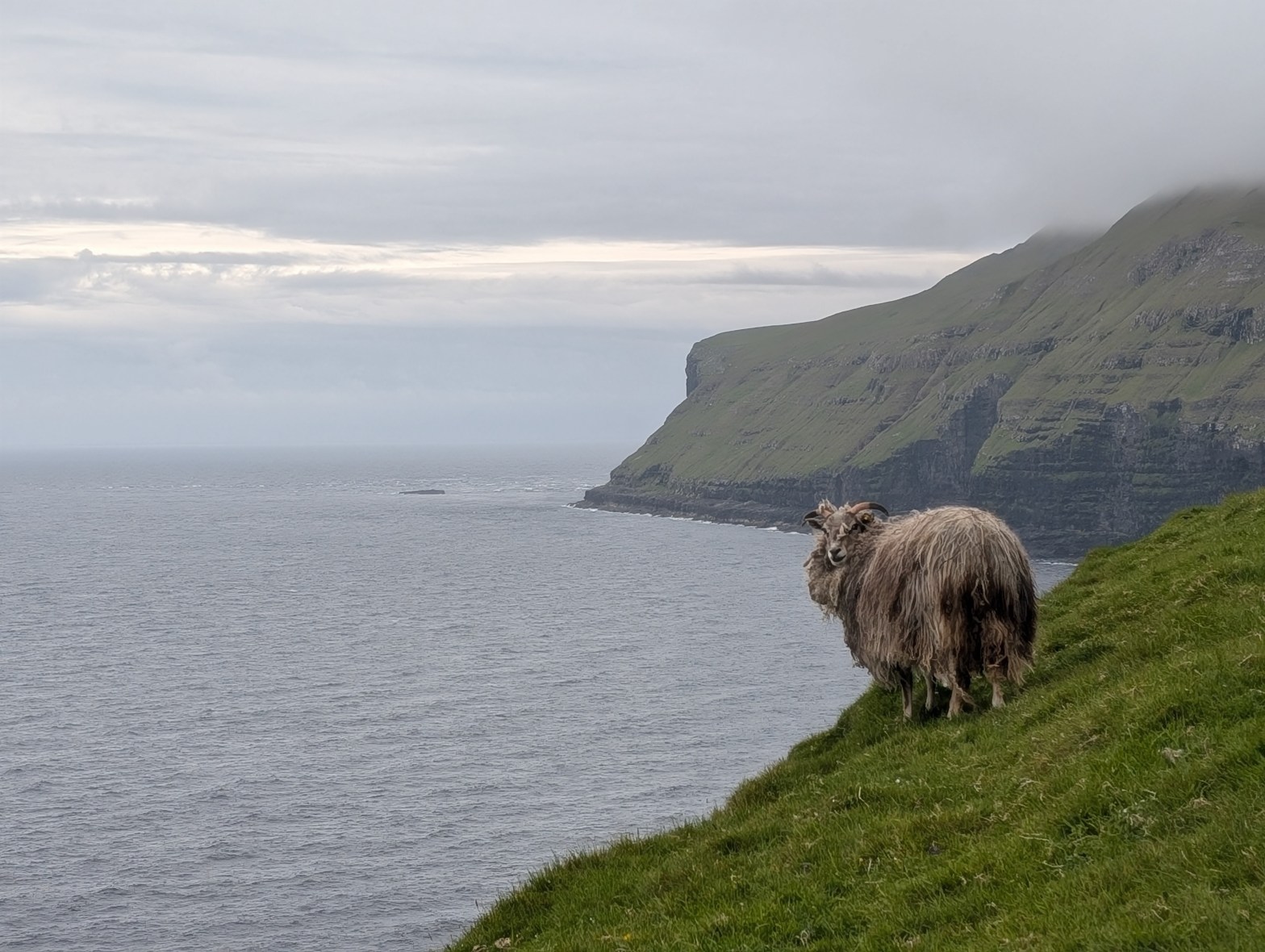
The Faroe Islands, a remote North Atlantic archipelago, have long fascinated me with their rugged landscapes, dramatic cliffs, and the ever-changing weather that sweeps across the 18 islands.

Nestled between Scotland, Iceland, and Norway, this self-governing territory of Denmark has a rich history shaped by Viking settlers, fishermen, and the elements themselves.

Its capital, Tórshavn, is one of the smallest in the world, yet it has played a crucial role in the islands’ story for centuries. Named after Thor, the Norse god of thunder, Tórshavn has been a trading hub since the Viking Age, and today, it’s a charming blend of old-world traditions and modern Nordic life.

This trip was particularly special for me, as it marked my first adventure as a solo traveller – something I’d always wanted to try.

Exploring the Faroe Islands alone felt like the perfect challenge, a mix of freedom and self-discovery set against some of the most breathtaking natural scenery.


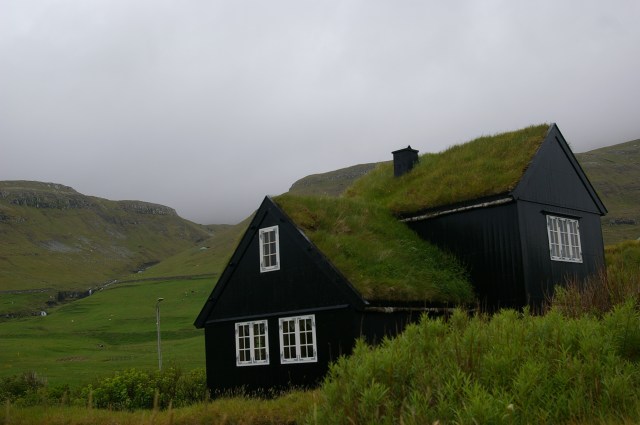
A traditional Faroese building set against the stunning background found across all of the islands

So what should first-time visitors to the Faroe Islands consider before departing to this rugged,  wild and unpredictable destination.

The first and most important thing to prepare for, some may argue, is the weather. Even in June, the Faroe Islands don’t offer the kind of summer warmth you might expect elsewhere in Europe.

Average highs reach around 11°C (52°F), while lows can drop to a chilly 7°C (45°F). Rain is frequent, and the sky changes mood by the minute – one moment drenched in mist, the next bathed in golden sunlight. Waterproof gear and warm layers are essential for any visitor.


The Faroe Islands on Google Maps

This ever-changing climate has earned the Faroe Islands the nickname “The Land of Maybe”, a phrase that perfectly captures the unpredictability of life here. The weather can shift dramatically within minutes – what starts as a clear, sunny morning can quickly become a misty, windswept afternoon, only for the skies to clear again just as suddenly.

Locals have learned to embrace this uncertainty, often giving plans a flexible “maybe” rather than a definite yes or no, knowing that nature ultimately decides what’s possible. For visitors, this means packing for all conditions, expecting the unexpected, and learning to appreciate the beauty of the moment – whether it’s watching the fog roll over a mountain ridge or catching a fleeting glimpse of the sun glistening on the sea.

Another practical consideration is currency. The official currency is the Danish Krone (DKK), with an exchange rate of approximately 9 DKK to £1 GBP at the time of writing. Credit and debit cards are widely accepted, but it’s always handy to have a small amount of cash, especially when visiting remote villages or taking the ferry to smaller islands.

Also, tipping in the Faroe Islands isn’t a common practice, as service charges are typically included in restaurant bills, and wages for hospitality staff are generally fair. Locals don’t expect tips, but rounding up the bill or leaving small change as a token of appreciation for exceptional service is always welcomed.

In cafes and bars, tipping is rare, though a small gratuity won’t be refused. Hotel staff and taxi drivers also don’t anticipate tips, but rounding up the fare or leaving a few extra krone for helpful service is a kind gesture.

For UK travellers, adjusting to life in the Faroes is refreshingly easy. There’s no time difference between the UK and the Faroe Islands, so there’s no jet lag to contend with.

However, if you’re bringing electronic devices, you’ll need to pack a power plug adapter.

On the Faroe Islands, power plugs and sockets (outlets) of type F and type K are used. The standard voltage is 230 V at a frequency of 50 Hz. Yes, you need a power plug travel adapter for sockets type F and K on the Faroe Islands.

While the dramatic landscapes might make the islands feel remote, communication is rarely an issue. The national language is Faroese, a North Germanic language that shares grammatical similarities with Icelandic and Old Norse but has a pronunciation closer to Norwegian.

Danish is also an official language, and thanks to the islands’ connection to the UK and tourism growth, English is widely understood.

All that being said, learning a few local phrases is always appreciated. “Hello” in Faroese is Hallo, and “goodbye” is Farvæl. In Danish, you’d say Hej for hello and Farvel for goodbye. If you want to be polite, “please” in Faroese is Vinarliga, and “thank you” is Takk. In Danish, you’d say Vær så venlig for please and Tak for thank you.

One final to consider is how to keep remain in communication with the rest of the world during your stay. Staying connected can be tricky, as roaming charges can be expensive, and local SIM cards aren’t always convenient for short-term visitors. That’s why I highly recommend buying an eSIM before you go, ensuring seamless communication and internet access throughout your trip.

Services like Airalo make it incredibly easy – you just download their app, purchase a data plan for the Faroe Islands, and activate the eSIM on your phone before departure. Once you land, your phone will automatically connect to a local network, saving you the hassle of hunting for wi-fi or dealing with SIM swaps. This way, you can navigate remote roads, check the weather, and share your stunning photos without a hitch!

With these essentials in mind, I was ready to embark on my journey – one that would push me beyond my comfort zone, introduce me to new ways of travelling, and immerse me in the breath-taking beauty of the Faroe Islands.


Getting there

The Faroe Islands had long been on my travel wish list – that cluster of remote, weather-swept islands in the North Atlantic where dramatic cliffs plunge into the sea, tiny turf-roofed houses cling to hillsides, and sheep outnumber people.

It’s the kind of destination that promises solitude, raw nature, and a sense of stepping far off the beaten track. But before I could experience any of that, I had to figure out how to actually get there! Because, as it turns out, reaching the Faroe Islands from the UK isn’t quite as simple as hopping on a direct flight.

While cruise ships occasionally call in at the Faroes, particularly during the summer months, I knew I wanted to spend proper time exploring the islands at my own pace. For that, flying is definitely the best option. However, there are very few direct flights from the UK – and most are seasonal, with limited availability.

My journey began very early in the morning at London Stansted, boarding a Ryanair flight to Copenhagen. This leg took around 1 hour and 45 minutes and, in true Ryanair fashion, was very much a no-frills experience.

The budget airline is famous for its strict baggage policies, bare-bones service and speedy boarding process. That said, my flight was on time, the check-in was straightforward, and at that point I was just excited to be on my way. For a short hop like this, Ryanair does the trick – just don’t expect luxury.

After a brief stopover in Copenhagen – one of Europe’s most efficient and pleasant airports (albeit lacking in phyical seating) – I boarded my second flight, this time with Atlantic Airways, the national airline of the Faroe Islands.

This leg took approximately 1 hours and 55 minutes. From the moment I stepped onto the plane, it felt like the tone of the trip had shifted. Atlantic Airways had a much more relaxed, welcoming vibe, with friendly cabin crew and a calm, efficient boarding process.

And then there were the views. Green cliffs, tiny villages, and glimmering sea in every direction – it was honestly one of the most memorable landings I’ve ever experienced.

We touched down at Vágar International Airport, the Faroes’ one and only commercial airport. It’s small – you won’t find dozens of gates or a shopping mall here – but it’s perfectly equipped for the number of flights it handles each day.

Around 400,000 passengers pass through Vágar every year, and the airport has a laid-back, unhurried charm that matches the rhythm of island life. Situated just 1.9km (about 1.2 miles) east of the village of Sørvágur on the island of Vágar, and about 46km (29 miles) west of the capital, Tórshavn, it’s well positioned for easy onward travel across the islands.

My return journey took a different route, offering a new perspective on travel to and from this incredible archipelago. I flew from Vágar to Edinburgh with Atlantic Airways – a short and smooth flight of about 1 hour and 25 minutes.

It’s amazing how quickly you can go from windswept cliffs and winding fjords back to the urban bustle of a UK airport. After a long wait in Edinburgh Airport (definitely bring snacks and a book), I boarded a final Ryanair flight back to London Stansted. This last leg took just 1 hour and 15 minutes.

In total, my flights for the trip – four in all – came to £439.48. For a solo adventure to such a remote destination, I thought it was a fair price. With a bit of flexibility, you might be able to shave some money off by shopping around or tweaking your travel dates, but it’s worth budgeting a little more for the convenience of well-timed connections.


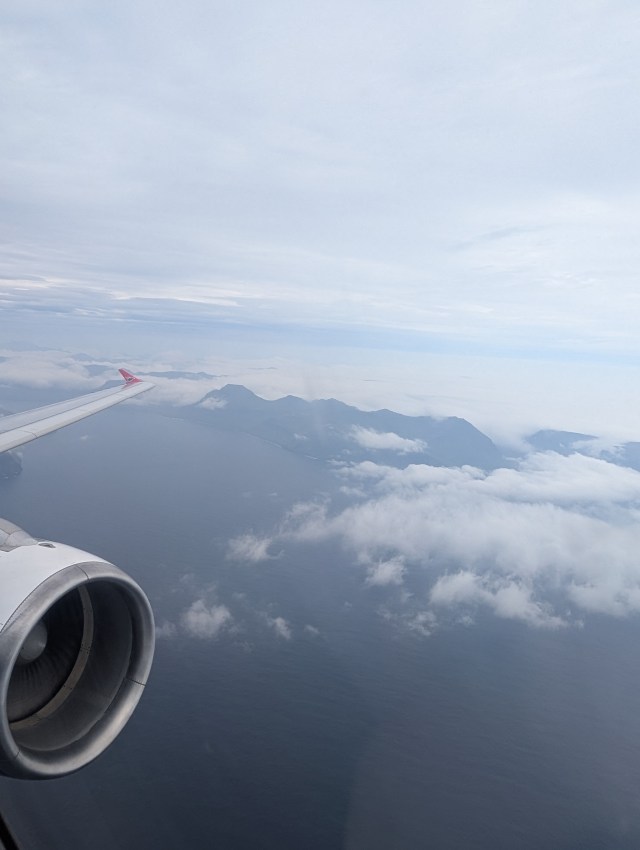
Flying into the Faroe Islands on Atlantic Airways
First glimpses of the rugged Faroe Islands landscape while approach the airport
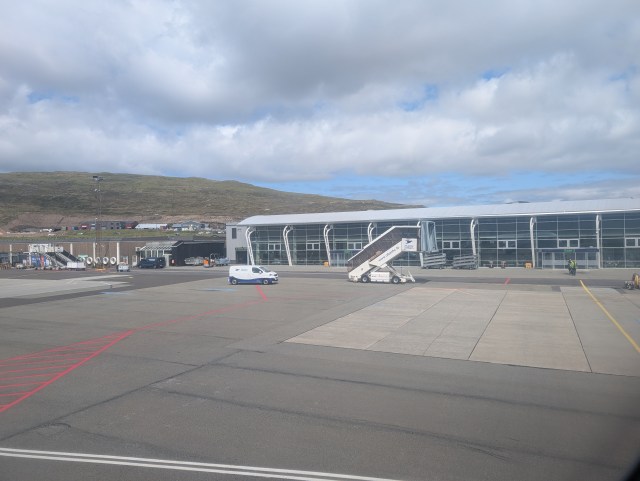
The small, yet efficient, Vágar International Airport on the Faroe Islands as seen from the plane window

Where to stay

When I was planning my trip to the Faroe Islands, the next question that followed how I was going to get there was where I was going to stay.

While the islands are scattered across dramatic fjords and cliffs, most visitors base themselves in Tórshavn, the capital and by far the largest “city” in the Faroes. I say “city” because, with a population of just over 20,000, it’s more of a charming coastal town than a buzzing metropolis – but it’s the beating heart of the islands nonetheless.

Tórshavn is located on the southeast coast of Streymoy, the largest of the Faroe Islands. It’s a natural hub for travellers, with a good range of shops and restaurants.

For most people visiting the islands – especially if, like me, it’s your first time – staying in or around Tórshavn makes perfect sense. From here, you can easily venture out to other islands in your car while still enjoying a cosy base to return to at the end of the day.

There are several central hotels in Tórshavn, including well-rated options like Hotel Hafnia, Hotel Brandan, and the Hilton Garden Inn. But I decided to go for something a little more personal and homely, booking this lovely AirBnB just outside the centre.

Located on Jóannesar Paturssonar Gøta, the apartment is set in a quiet residential area, around a 10-minute walk to the centre of Tórshavn. It’s a peaceful, well-kept neighbourhood – close enough to reach everything on foot, but far enough to feel like you’re living more like a local than a tourist.

One of the biggest perks was the easy parking available at the rear of the property, which made it super convenient for me to explore the rest of the islands by rental car without worrying about where to leave it overnight.

The apartment itself was clean, and well-equipped. It’s a one-bedroom space with a comfortable set of single beds, a functional bathroom with a good shower, a cosy living area, and a small but practical kitchen – perfect for preparing breakfast or a simple dinner after a long day of hiking or road-tripping, while the wi-fi was fast and reliable (useful for planning the next excursion).

I paid a total of £572.76 for four nights, which worked out to £143.19 per night. Given the location, amenities and overall comfort, I felt it was good value for money – especially compared to hotel prices during peak travel season in the Faroes.

One thing to be aware of if you’re travelling in June or the summer months is the near-constant daylight. The sun barely sets at this time of year, and even in the early hours of the morning, there’s often a soft glow outside – a version of the midnight sun.

I’ll admit, it threw me off a little at first. I found myself wide awake at 11pm thinking it was still early evening! It’s something you quickly get used to (the blackout blinds help), but it’s definitely worth knowing ahead of time if, like me, your body clock is a little sensitive to light.


A view of the comfortable bedroom area
The bathroom was small but functional
The spacious living and kitchen area

Getting around

Getting around the Faroe Islands is part of what makes travelling there such a unique experience. With rugged terrain, dramatic coastlines and small, scattered communities spread across 18 islands, having the freedom to explore at your own pace is a real advantage. Without a doubt, the best way to do that is by hiring a car.

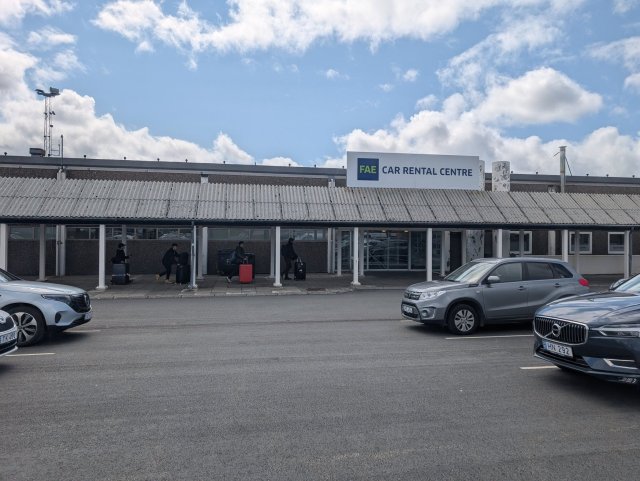
At Vágar International Airport, just a short walk outside the main terminal, you’ll find a small building that houses several car hire companies. It’s easy to navigate and well signposted, with friendly staff and a range of vehicles available depending on your needs.


The car hire building at the airport is easy to locate

For my trip, I booked through RentYourCar.fo, a local provider with good reviews and clear options. I initially reserved a mini manual car, but on arrival I was given an automatic – which turned out to be completely fine for the driving conditions.

As part of my booking, I opted for a package that included premium insurance, portable wi-fi internet (super handy for navigation and staying online on the go), and a Sub-Sea Tunnel Pass, which covered tolls for two of the four undersea tunnels – Vágatunnilin and Norðoyatunnilin.

I hired the car for three days, and the full package came to 5,107 Danish Krone, which worked out at around £586. Not the cheapest rental I’ve ever had, but well worth it for the peace of mind and freedom to explore.

A car will take you across the main connected islands with ease, thanks to a network of bridges, tunnels and causeways. However, some of the more remote islands (which I didn’t visit this time) can only be reached by boat or ferry, so if you’re planning to go further afield, it’s worth factoring that in.

In the Faroe Islands, you drive on the right-hand side of the road, which is important to remember if you’re coming from the UK. Fortunately, the roads are generally very quiet, even in Tórshavn, and the driving experience is a calm one overall.

Speed limits are fairly clearly marked and easy to follow. However, the rule of thumb is that it’s 50 km/h (31 mph) in built-up areas, and 80 km/h (50 mph) on main roads and in tunnels. In some spots, the limit drops to 60 km/h (37 mph), so it’s worth keeping an eye on the signs as you go.

Most roads are well maintained, even in more remote areas, but they can become windy and narrow, especially when climbing through mountain passes or hugging the coastline.

Passing oncoming vehicles can require a little caution and cooperation, particularly on single-lane roads with passing places.

The only real hazard to watch for is the sheep – and there are plenty of them. They roam freely and sometimes decide the middle of the road is the perfect place for a rest, so a bit of patience and a gentle brake foot go a long way.

Parking on the Faroe Islands is generally straightforward and stress-free, especially when compared to busier European destinations. In most towns and villages, including Tórshavn, you’ll find free public parking spaces available, though some areas in the centre may require a parking disc (usually provided with your hire car) to show your arrival time, as time restrictions can apply.

Outside of the capital, parking is even easier, with many viewpoints, hiking spots, and attractions offering ample space to leave your vehicle. During my trip, I never struggled to find a spot, and having free and convenient parking at my Airbnb made exploring by car all the more enjoyable.

One of the engineering marvels of the Faroe Islands is the series of Sub-Sea Tunnels that connect various islands beneath the ocean floor. These are vital links in the road network and can save you a huge amount of time and effort compared to relying on ferries.


May showing the four Sub-Sea Tunnels connecting parts of the Faroe Islands. credit for map from http://www.cryopolitics.com

There are four main Sub-Sea Tunnels in the Faroe Islands. The Vágatunnilin connects Vágar – where the airport is located – to Streymoy, the island that’s home to the capital, Tórshavn. A round trip through this tunnel costs 100 Danish Krone, which is about £11.50. The Norðoyatunnilin links the islands of Eysturoy and Borðoy and is priced similarly, also costing 100 DKK for a round trip.

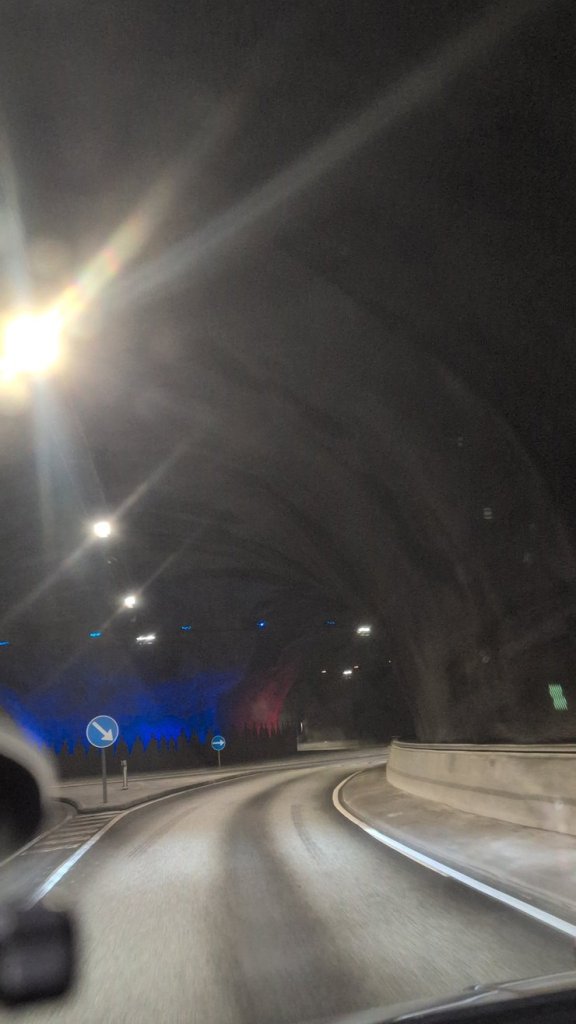
The Eysturoyartunnilin is a particularly impressive feat of engineering, connecting Streymoy and Eysturoy via a tunnel that features the world’s only undersea roundabout – a slightly surreal and futuristic experience when you first drive through it. The toll here depends on which part of the route you use: a journey from Streymoy to Eysturoy (including Tórshavn) costs 175 DKK one way or 350 DKK for a return, while the shorter Saltnes to Strendur route is 125 DKK for a round trip (about £14).


Approaching the world’s only Sub-Sea roundabout in Eysturoyartunnilin
Driving to – and part of the way around – the world’s only Sub-Sea roadabout

Lastly, the Sandoyartunnilin – the newest addition to the network – connects Streymoy to the island of Sandoy. A return journey through this tunnel will set you back 350 DKK, roughly £40.

These tolls can add up, so if you’re planning to use multiple tunnels, it’s worth seeing whether your car hire company offers a tunnel pass or a prepayment option as part of the rental – as mine did.

All in all, having a car made exploring the Faroe Islands not just easier, but one of the highlights of the trip.


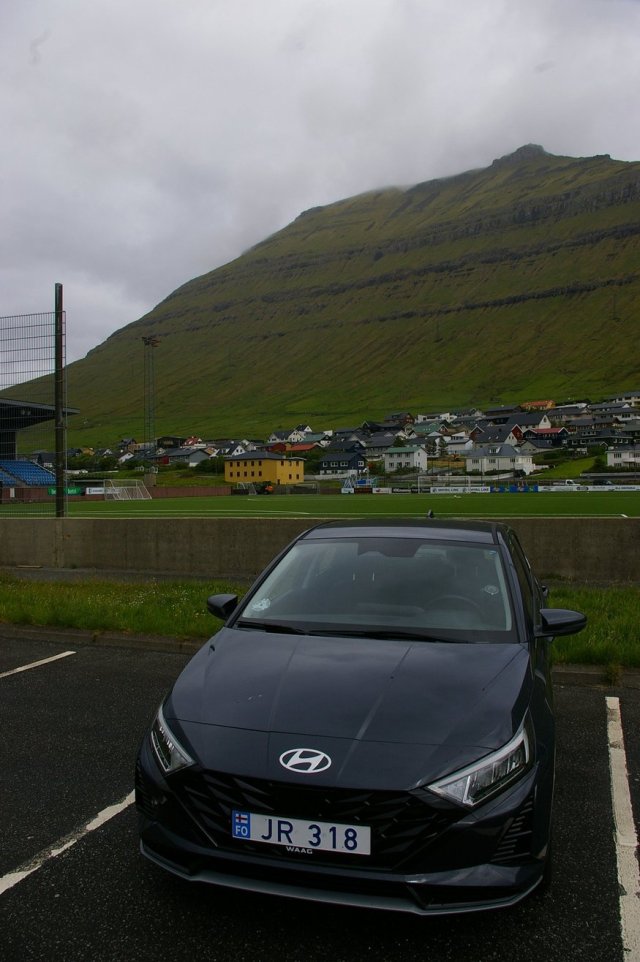
A standard small car like this is perfectible suitable for a drive around the Faroe Islands
The scenery that you see while driving makes the journey just as enjoyable as the destinations
Parking is never a problem and there are always plenty of spaces either in car parks or by the side of the road

Top sites

Tórshavn

This part of the blog takes a look at some of the great places I visited during my time in the Faroe Islands. To make things easier to follow, I’ve broken it up by the main islands I travelled around during my stay. But before we get into those, the capital city itself definitely deserves its own section.

Tórshavn is home to just over 20,000 people, making it not only the capital but also the largest and busiest place in the country. It sits on the southeast coast of Streymoy and acts as the administrative and cultural heart of the islands.

While it’s small by most standards, it’s where most visitors – including myself – choose to stay, thanks to its convenience, comfort and laid-back charm.

It’s a great place to return to each evening, and a perfect starting point for discovering everything else the Faroe Islands have to offer.


Looking up at the city of Tórshavn from beside the harbour

One of the first stops for most people – and indeed one of the most picturesque and historic corners of Tórshavn – is Tinganes, a narrow peninsula that juts out into the harbour and feels like stepping back in time.

This is one of the oldest parts of the city – and one of the oldest parliamentary meeting places in the world, with a history dating back over a thousand years.

Wandering around Tinganes is a real highlight. The area is full of turf-roofed wooden buildings, painted in deep reds and blacks, that line narrow cobbled lanes and lean into each other like something from a storybook.

These days, the buildings are home to parts of the Faroese government, but you’re free to stroll through the area at your own pace. It’s incredibly quiet, peaceful and atmospheric, with little to break the silence beyond the occasional seabird or flapping flag.

It’s not a big area—you can walk around Tinganes in fifteen minutes if you’re not stopping—but it’s well worth taking your time to soak it all in.


The traditional buildings making up the Tinganes
Proudly flying the Faroese flag from the end of the Tinganes

The next stop is the nearby fortress of Skansin which is perched on a small hill just a short walk from the harbour in Tórshavn, and it’s one of the most striking landmarks in the city.

Built in the 16th century to defend against pirate attacks, the fort has been rebuilt and expanded over the years, and even served as a British military base during the Second World War.

Today, Skansin is a peaceful spot that’s open to the public, free of charge. It offers brilliant views across the harbour and out to sea, as well as back over the city itself. The walk up is easy and only takes a few minutes from the town centre, making it a perfect quick stop when exploring the capital.

On the grounds you’ll find remnants of the old defensive walls, a few rusting cannons, and a striking white lighthouse that still operates today.

While there isn’t a museum or much in the way of signage, the site has a quiet charm and a sense of history that’s easy to appreciate.


The fortress is free to enter and easy to access at all times of day
The lighthouse is the focal point of the fortress

The next stop is Tjóðsavnið (Faroe Islands National Museum), which sits on Brekkutún 6 in the Hoyvík suburb of Tórshavn – just a short drive or pleasant walk from the city centre.

It’s a small but thoughtfully curated museum made up of three distinct parts: the main Permanent Exhibition, the Open-Air Museum at Hoyvíksgarður, and the historic whaling station at Við Áir (the latter is only open on summer weekends and located a short distance outside the city).

The Permanent Exhibition offers a fascinating overview of the islands’ natural and cultural history – from ancient geological formations and native wildlife to Viking artefacts and medieval wooden pews rescued from the Kirkjubøur church. It’s not overly large, but it’s well presented and brought to life with helpful displays and an audio guide that ties together the Faroese story with warmth and detail.

Just down the hill from the main museum building is Hoyvíksgarður, a reconstructed early 20th-century farmstead designed to show what rural Faroese life was like in generations past.

While I did visit both the Permanent Exhibition and the open-air site, I skipped the whaling station entirely and, truth be told, I wasn’t that fussed by the open-air museum. It was quaint enough, but perhaps best appreciated if you’ve not already seen much of the real Faroese countryside.

Entry to the museum costs 80 Danish Krone for adults (around £9.20), or 50 Danish Krone for students and seniors (about £5.75). The ticket is valid for a week and includes entry to all three parts of the museum, should you wish to visit them across different days.


The low-key entrance to Tjóðsavnið
The exhibitions inside are interesting and a good way to spend an hour or so

For those seeking a little touch of luxury should check themselves in for a Faroese massage experience.

Nestled beneath the striking turf-roofed Ress Spa at Hotel Føroyar, is one of the most luxurious wellness experiences you can enjoy in the Faroe Islands.

Set high in the hills just above Tórshavn, it offers sweeping views of the city below and the surrounding wild landscape – views that alone are worth the trip. It feels a world away from the wind and sea spray, a peaceful and beautifully designed retreat where everything slows down the moment you step inside.

I decided to treat myself to a one-hour full-body massage as a bit of a post-hike indulgence and, at 950 Danish Krone (around £111), it was definitely a splurge – but one I don’t regret.

The massage was expertly delivered, tailored to my preferences, and incredibly relaxing. The treatment rooms are serene and warmly lit, with calming music and just the right amount of Faroese minimalist charm. It was a full hour of pure bliss and the perfect way to recover from a few days of brisk sea air and exploring mountain roads.

Ress Spa offers a full menu of treatments, from facials and body scrubs to hot stone therapies and spa rituals, and also has thermal experiences such as saunas, plunge pools, and a relaxation area. I didn’t book any of these extras but, had I had the time, they did sound extremley inviting.

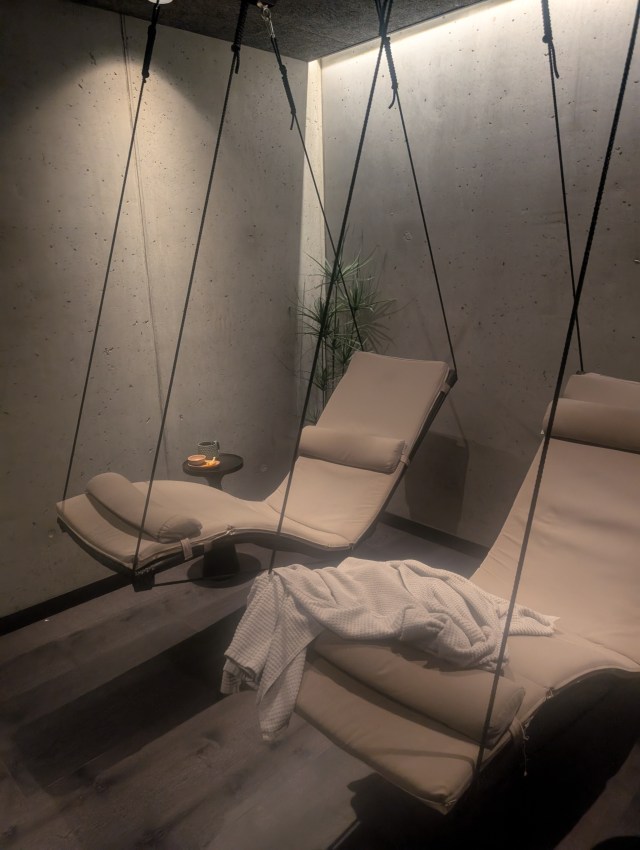
What I did enjoy, however, was the stylish spa lounge before and after my treatment. It’s a quiet, cocoon-like space with soft lighting, ceiling-suspended chairs, herbal teas, fruit-infused water, and a selection of healthy snacks – ideal for easing into or out of a treatment.

There’s a real sense of calm here, which makes it feel like time briefly stops. If you’re looking for a restorative moment during your trip, Ress Spa is a wonderful place to slow down and soak up a different side of the Faroe Islands.


Inside one of the extremley comfortable massage rooms
The lounge area has these hanging chairs which are comfortable if a little difficult to get in and out of

Streymoy

One of the unforgettable experiences on the Faroe Islands is a puffin watching boat trip, and for this I highly recommend booking with Puffin.fo. You can easily reserve your place online before you go, with tickets costing 398 Danish Krone (about £45).

The boats depart from Vestmanna harbour, a charming small port town on the west coast of Streymoy. From there, the tour lasts around two hours, cruising along the dramatic cliffs and rugged coastline that the Faroe Islands are famous for.

During the trip, you’ll get up close to nesting puffins — those iconic, colourful seabirds — as well as other birdlife that populate the cliffs.

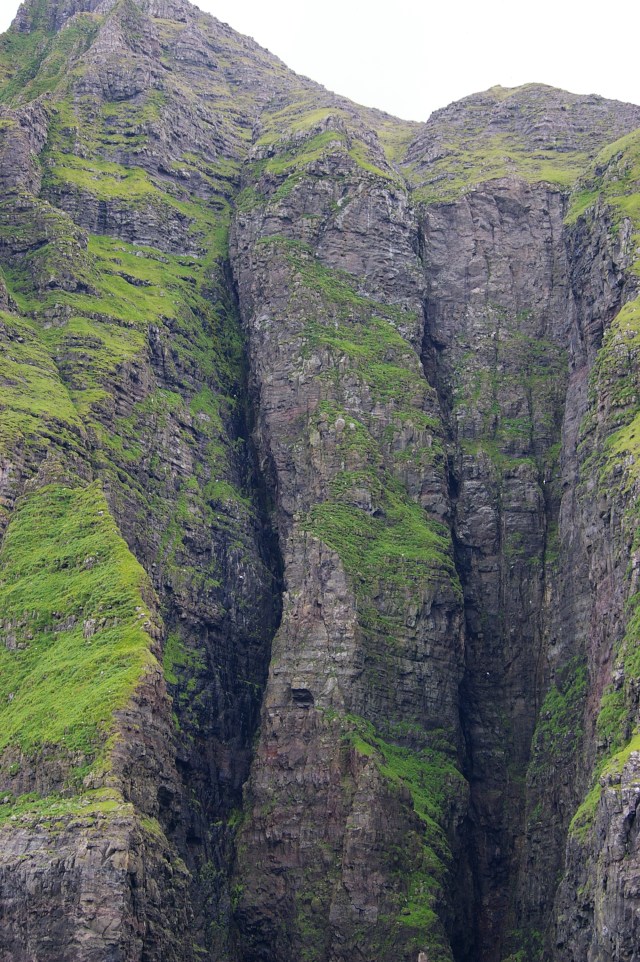
The boat also takes you past spectacular sea caves and towering rock formations, offering breathtaking views from the water. It’s a fantastic way to see the islands from a different perspective, combining wildlife spotting with some stunning natural scenery.

The guide and the ship’s captain are knowledgeable and passionate, sharing interesting facts about the puffins and the local environment as you sail.

Whether you’re a keen bird watcher or simply someone who appreciates raw natural beauty, the boat trip offers a unique and memorable experience.


The boat arriving to take the group on the bird watching trip
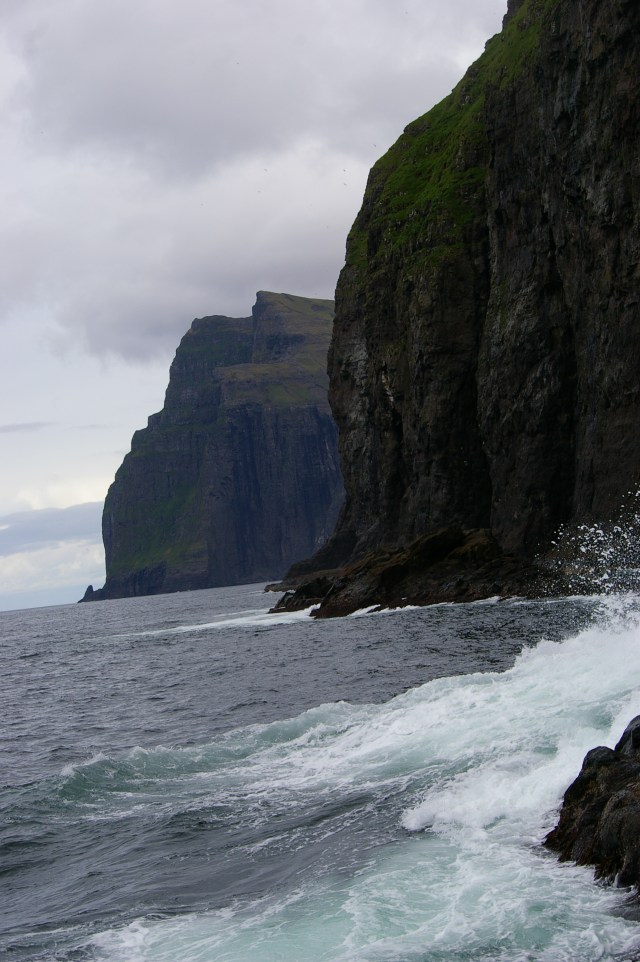
Looking up at the rugged Faroe Island coastline
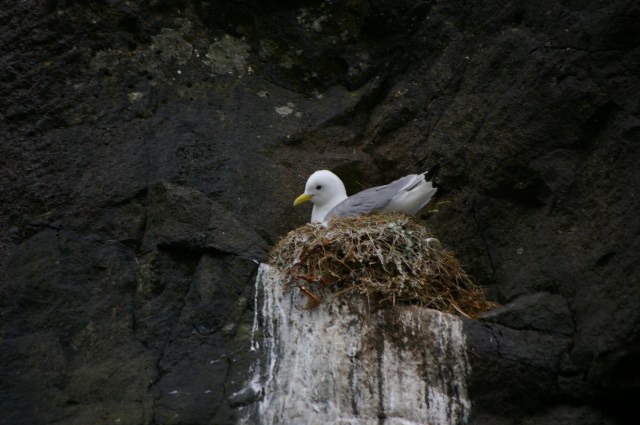
One of the many birds you get to see on the two-hour boat trip
The coastline is stunning to see up close from the boat

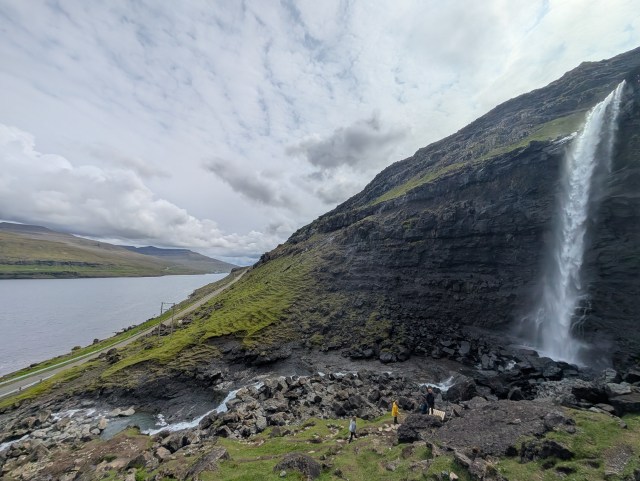
Fossá is the largest waterfall in the Faroe Islands – plunging approximately 140 metres (around 460 feet) down the cliffs – and is truly a sight to behold.

Located near the village of Haldarsvík on Streymoy, this impressive cascade tumbles dramatically down the cliffs into the fjord below.

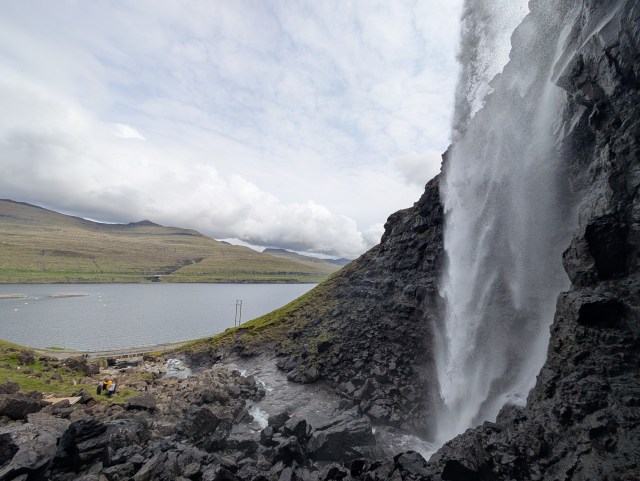
One of the best things about Fossá (apart from it being free to visit) is that you can actually climb up the rocks beside the waterfall to get really close to the rushing water. I took this opportunity myself and found it exhilarating — the roar of the water and the incredible power of nature right in front of you is an unforgettable experience.

From this vantage point, you also get stunning views back out across the nearby water and surrounding rugged landscape, making it a fantastic spot for photos or just soaking in the wild Faroese beauty. Just be cautious on the rocks as they can be slippery, especially after rain.


Standing in front of the impressive Fossa waterfall
Looking up at the sheer height of the waterfall
Fossa is the Faroe Islands largest waterfall
You can climb right up to near the waterfall, but be carefull as the rocks are slippery and loose

Not far from the village of Kvívík, you’ll find the Kvívík Viewpoint — a fantastic spot to take in some truly breathtaking panoramic views of the surrounding fjords and mountains.

It’s a relatively easy drive from Tórshavn, making it a convenient stop if you’re exploring the western part of Streymoy.

The viewpoint sits perched above the village itself, offering sweeping vistas across the lush green valleys, rugged coastline, and the small settlements scattered below.

There’s a simple gravel car park near the viewpoint (which is free to use), so it’s easy to pull up, take some photos, and enjoy the fresh sea air without a long trek. It’s an ideal spot to pause and appreciate the raw natural beauty that the Faroes are famous for.


The Kvívík Viewpoint gives great views of the village the the surrounding scenery

Heading north on Streymoy, Tjørnuvík is a charming and picturesque village. It’s the northernmost village on Streymoy’s coast and one of the Faroe Islands’ oldest settlements.

Getting there involves a scenic drive from Tórshavn, usually via the Eysturoyartunnilin tunnel to Streymoy and then along the coastal roads – a journey that reveals some of the islands’ stunning natural landscapes along the way.

The approach to Tjørnuvík involves a memorable stop at what feels like the world’s longest set of traffic lights. The narrow road down the mountainside is only wide enough for one car at a time with no passing points, so if you arrive at the wrong moment, you might face a lengthy wait. Thankfully, the wait time is clearly shown on a visible countdown timer on the traffic lights, helping to manage expectations as you wait your turn.

Tjørnuvík is famous for its dramatic setting, nestled between steep, towering mountains and a black sand beach facing the open Atlantic. The contrast between the rugged cliffs and the tranquil sea is striking, making it a favourite spot for photographers and nature lovers. The village itself is small, with a handful of traditional grass-roofed houses and a quiet, peaceful atmosphere that’s a welcome escape from busier towns.

One of the highlights here is the view of the iconic sea stacks, Risin and Kellingin, which legend says are trolls turned to stone by the sunlight. The village also has a quaint café where you can enjoy a coffee or light snack while soaking in the spectacular views.


Traditional houses in the village of Tjørnuvík
Looking back at the village of Tjørnuvík from the beach

Vágar

If you’re looking for a stunning first or last stop on your Faroe Islands itinerary, Trøllkonufingur – which translates to “Witch’s Finger” – is an ideal choice. It’s located on the island of Vágar, not far from the airport, and makes for a brilliant short excursion either just after you land or just before you leave.

The location is easy to reach by car, taking around 10 minutes from Vágar Airport. You’ll find a small layby near the village of Sandavágur, where a marked path leads you up towards the viewpoint.

The walk itself is fairly easy and takes about 15 to 20 minutes each way, depending on the weather and your pace. It’s not a strenuous climb, but the trail can be uneven and exposed in places, so sturdy footwear is a good idea. That said, I did it in trainers!

The reward at the top is a sweeping view across the ocean and a dramatic sight of Trøllkonufingur rising like a crooked finger out of the cliffs below. According to local legend, the formation is said to be the finger of a witch who tried to cast a spell on the islands, only to be turned to stone – just one of many myths that add to the Faroes’ atmospheric appeal.

I’d recommend visiting when the sky is clear (or at least dry), as the viewpoint really comes alive in good visibility. There’s no cost to visit, no facilities, and very few people – just a peaceful moment in nature, right at the edge of the North Atlantic.


Trøllkonufingur is known as the Witches Finger
The dramatic coastline where Trøllkonufingur is located

Sørvágsvatn– often referred to as the Lake Above the Ocean – is one of the Faroe Islands’ most iconic natural sights.

Located on the island of Vágar, just a short drive from the airport, it’s a popular spot for visitors hoping to see the famous optical illusion where the lake appears to hover hundreds of metres above the sea.

The walk to reach the main viewpoint, which also includes the impressive Bøsdalafossur waterfall cascading directly into the Atlantic Ocean, is a paid hike that starts near the village of Miðvágur. Entry costs 200 Danish Krone (around £23.50) and the roundtrip takes about two hours.

I decided to make this my final stop before flying home – a last adventure before heading to the nearby airport. In theory, this seemed like a great plan. In reality, however, it was somewhat derailed by a sudden change in the weather. It rained for the entirety of my visit and, regrettably, I hadn’t dressed for the occasion – a light rain jacket, jeans, and trainers with next to no grip turned out to be a poor choice.

For the first part of the trail, the conditions were manageable – the path was mostly flat, though my feet got increasingly wet from little streams that criss-cross the hillside.

But things took a turn as I neared the end. The incline became steeper, the rocks slick, and the lack of a clear trail made things genuinely perilous. You’re completely exposed to the elements out here, and the strong wind near the cliff edges made standing close to the edge a nerve-wracking experience.

Unfortunately, visibility was poor so the panoramic views of the lake and waterfall weren’t at their best – although still atmospheric in their own misty, windswept way.

The return leg wasn’t much easier – I lost track of the path and had to scramble over several large boulders before finding my way back. Still, despite finishing the hike completely soaked and slightly bruised, I was glad I’d made the effort. On a clear day, this would be a highlight of any Faroe Islands trip – just make sure you come prepared.


The hike along Sørvágsvatn is fairly long – around 3km each way
Reaching the end but struggling with the wind and rain
Sørvágsvatn is known for the Lake Above the Ocean

Sandoy

Heading south via the Sandoyartunnilin to Sandoy, you’ll find the peaceful village of Húsavík nestled on the island’s northern coast.

The Sandoyartunnilin is the newest of the Faroes’ sub-sea tunnels, connecting the larger island of Streymoy with Sandoy, and the drive through it feels like a journey into somewhere more remote and untouched. Once you emerge on the other side, things immediately feel quieter – slower – and Húsavík is a perfect example of that calm.

The village is small and still, with colourful houses scattered along a hillside overlooking the sea. It has a quiet beauty, surrounded by farmland and ocean views, and offers a lovely contrast to the busier streets of Tórshavn. There’s not much in the way of shops or cafés – in fact, it felt like I had the place to myself – but that’s part of its charm.

There’s a small church and some other classic Faroese buildings to admire, and while it won’t demand hours of your time, it’s a lovely stop if you’re exploring Sandoy or simply want to soak up some unspoilt scenery.


This church is the main focal point of the tiny village of Húsavík

Continuing your journey through Sandoy, heading southeast from Húsavík, you’ll eventually reach Dalur – a tiny village at the end of the road; quite literally.

The drive there is dramatic and steep at times, winding past rolling hills and cliffs before suddenly dropping into a lush green valley that feels entirely hidden from the rest of the island.

Dalur, which means “valley” in Faroese, is perfectly named. It’s surrounded by towering slopes on three sides, with the fourth opening out onto the North Atlantic. The village itself is made up of just a few houses, a simple church, and a small stream running through the grass. It’s one of the most remote-feeling places I visited during my stay – quiet, isolated, and utterly peaceful.

I wandered down to the shoreline out as far as I could along the harbour where black-sand meets jagged rocks. It feels like the end of the world in the best possible way – simple, beautiful, and memorably remote.


Dalur was the most southernly point I made to while driving around the Faroe Islands

Eysturoy

To reach the island of Eysturoy, you’ll need to travel through the Eysturoyartunnilin; the tunnel that connects Streymoy, the island with the capital, Tórshavn with the western edge of Eysturoy (making use of the aforementioned Sub-Sea roundabout.

The tunnel is just under 12km long and takes you deep beneath the fjord, emerging on the other side with access to a wide range of towns and villages, including the likes of Runavík, Fuglafjørður and, of course, the picturesque village of Eiði further north.

Surrounded by mountains and perched on a peninsula that juts out into the Atlantic, Eiði is small and quiet, with a population of just a few hundred people – but its setting is spectacular.

The drive in is worth the visit alone, with twisting roads that reveal panoramic views of the famous sea stacks Risin og Kellingin in the distance. Although you can’t walk directly to them from Eiði, you do get an excellent vantage point on a clear day – just pull over by the football pitch and admire the view from there.

During my visit, I took a gentle walk through the village, watched the waves crash against the rocks below, and simply enjoyed the peace.


The picturesque village of Eiði

Bordoy and Viðoy

From Eysturoy, reaching the Viðareiði – the northernmost settlement in the Faroe Islands – is a scenic and memorable drive that takes you through yet another of the country’s incredible sub-sea tunnels.

To get there, you’ll need to head north-east towards Leirvík, from where you’ll drive through the Norðoyatunnilin. This tunnel connects Eysturoy to the island of Borðoy and brings you out near the town of Klaksvík, the second-largest town in the Faroes.

From Klaksvík, the journey continues northwards, across winding mountain roads. As you cross a short causeway onto the island of Viðoy, you’ll follow the single road all the way to its end – where you’ll find the peaceful village of Viðareiði nestled between towering mountains and the North Atlantic.

Viðareiði itself is small and quiet, but striking in its isolation. It’s surrounded by dramatic cliffs, with the mountain of Villingadalsfjall rising steeply behind it. The church in the village – beautifully situated right by the water – is well worth a look, and on a clear day you can see over to the islands of Fugloy and Svínoy from the shoreline.

For more adventurous travellers, there’s an opportunity to hike to the summit of Villingardalsfjall, the mountain that towers above the village. This trek typically takes around three to four hours round trip, covers roughly 4.5 km (2.8 miles) and ascends some 840 m in elevation – something I sadly didn’t have time to do on this visit. However, be aware that access to the trail requires paying a 200 Danish Krone fee (about £22) in cash at a box by the trailhead.

For those like me though who want to get a glimpse of the top of the mountain, the nearby Viðareiði Viewpoint just before you reach the village offers a spectacular panorama across the neighbouring islands and open sea. The viewpoint provides a perfect place to stop and take in the sheer scale of the Faroese landscape.


Looking towards Viðareiði from the Viðareiði Viewpoint
There are a number of great views when you reach Viðareiði
Looking out over the water from Viðareiði

Faroe Islands football grounds roadtrip

This part of my Faroe Islands adventure was a little different. Rather than chasing waterfalls or puffins, I set out to see another of the islands’ major passions – football. Scattered across these dramatic landscapes are some of the most scenic football grounds in the world, each home to a team that played in the Faroe Islands Premier League in the 2024 season.

While I didn’t complete the route in one continuous journey – and the map I’m sharing shows it as one complete loop for reference – I did manage to visit every single Premier League ground (from the previous season) across my trip, including the Tórsvøllur national stadium in Tórshavn.

Each visit offered a unique glimpse into how deeply embedded the sport is within Faroese culture, even in the smallest and most remote of communities.

It’s worth noting that my list includes the stadiums for Skála ÍF and ÍF Fuglafjørður – both of whom were relegated at the end of the 2024 season. Unfortunately, I wasn’t able to make it to either of the two promoted teams for 2025 – Tvøroyrar Bóltfelag and FC Suðuroy – as both are based on the southern island of Suðuroy, which can only be reached by ferry. That will have to wait for another visit.

Nevertheless, what follows is a whistle-stop tour of Faroese football, told through winding roads, seaside stadiums, and some of the most visually striking sporting venues you’re ever likely to see. Whether you’re a groundhopper, football fan, or just curious about what the beautiful game looks like in one of Europe’s most remote outposts – this journey is for you.


A potential roadtrip if you were to do it all in one go of 10 football stadiums (most being home to teams in the Faroes Premier League) as shown on Google Maps

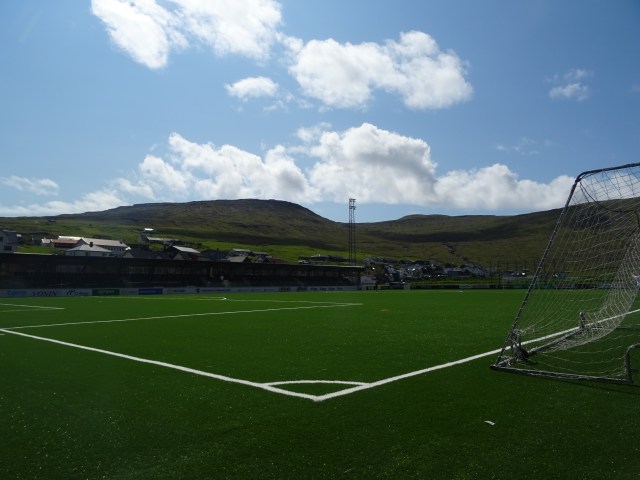
Tucked away on the island of Vágar in the village of Sørvágur – just a short drive from the airport – á Dungasandi – home of 07 Vestur – one of the westernmost clubs in the Faroe Islands Premier League.

Formed in 2007 from the merger of FS Vágar and SÍF Sandavágur, the club represents the western part of the island and plays its home matches at the compact but neatly maintained á Dungasandi stadium.

The setting is instantly dramatic, with the pitch nestled beside steep cliffs and sweeping views out towards the North Atlantic.

The stadium itself is small but neat, with a couple of stands and a clubhouse on one side, and open views on the other. There’s something quite special about watching football here – the wind whipping in off the sea, the odd seagull swooping past, and a crowd that’s as passionate as it is intimate.

Standing pitch-side offered a good sense of the atmosphere – a quiet intensity in an otherwise remote landscape.

It’s also one of the easiest grounds to visit if you’re flying into the Faroe Islands. From Vágar Airport, you can be parked outside in around 10 minutes – making it an ideal first or last stop on a football-themed tour.


Near the airport lies the home of 07 Vestur
The stadium is set to the backdrop of beautiful hills

Leaving the west coast behind after visiting á Dungasandi – the strikingly located home of 07 Vestur – the drive to Tórshavn takes you east across Vágar, through the Vágatunnilin and onto the island of Streymoy. The journey is under an hour, but like much of the Faroe Islands, it’s packed with scenic drama: dramatic sea views, green mountainsides and the occasional sheep slowing you down along the winding roads.

As you reach the capital, it’s just a short drive up into the centre of town to find Gundadalur, home to two of the Faroe Islands’ biggest clubs: B36 Tórshavn and HB (Havnar Bóltfelag). HB, founded in 1904, is the oldest and most decorated club in the Faroes, while B36, established in 1936, has also enjoyed domestic success, particularly in more recent decades.

Rather than two separate stadiums, Gundadalur is a shared football complex with two main pitches and a scattering of club buildings and training areas nestled between them.

B36 and HB both compete in the top flight and, while fierce rivals on the pitch, they coexist in this shared space in an arrangement that’s surprisingly harmonious.

On matchdays, each side of Gundadalur takes on its own character – but even on quieter days, there’s something charming about strolling through the complex, surrounded by local houses and backed by the green hills that rise behind the city.


The stadium is situated right next to the national team’s stadium in the heart of Tórshavn
Gundadalur is shared by both B36 Tórshavn and Havnar Bóltfelag

Leaving Gundadalur behind, it’s just a couple of minutes’ walk across the football complex to Tórsvøllur , the modern home of the Faroe Islands National Football Team.

Nestled at the edge of Tórshavn, near the national swimming pool and sports complex, this compact but impressive stadium feels like a proper international ground – just on a much more intimate scale.

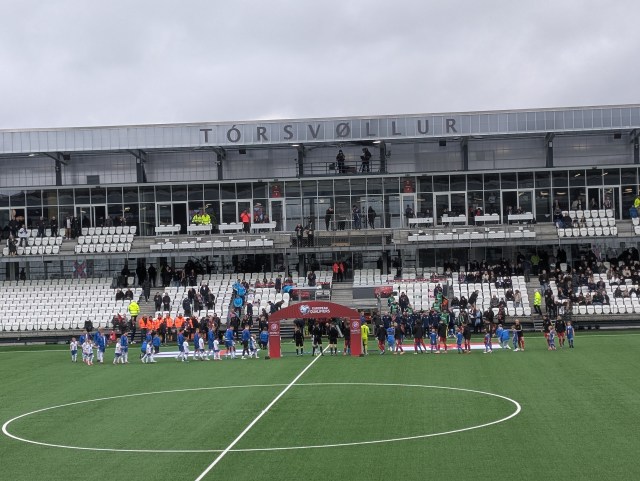
Unlike the other stops on my tour, this was the only ground where I actually saw a match. By sheer good fortune, my visit coincided with a 2026 FIFA World Cup qualification fixture, and I was lucky enough to join the local fans in watching the Faroe Islands beat Gibraltar 2–1 under the floodlights. The atmosphere was brilliant – passionate but friendly, and very much a community affair.

One of the more amusing quirks of the evening came from the home support behind the goal, who seemed to be working their way through a nostalgic playlist of late 1990s and early 2000s pop hits. With real enthusiasm, they belted out the likes of Backstreet’s Back by the Backstreet Boys – all while the game was in full flow. It gave the match a slightly surreal but thoroughly enjoyable edge.

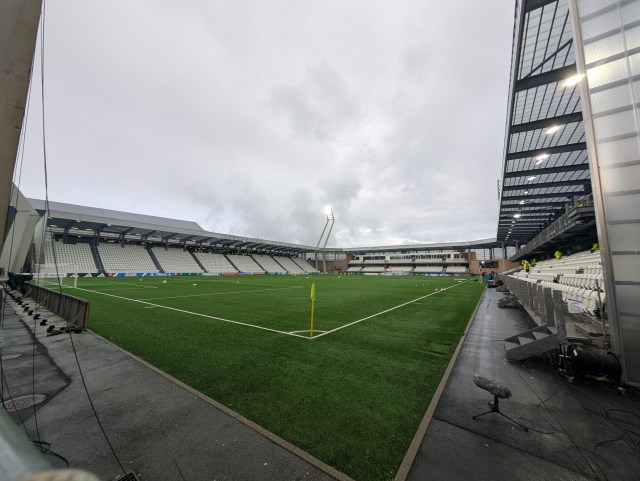
Tórsvøllur itself is smart and well-kept, with a synthetic pitch with three sides of stands housing the fans. You can walk around part of the perimeter for other views, and the setting – like most stadiums in the Faroes – features dramatic hills in the background. There’s a small shop and refreshments area too where I grabbed a hot dog and a couple of bottles of beer, and it’s also only a short walk back into the centre of Tórshavn.


Tórsvøllur, the National Team home stadium is the largest capacity stadium in the Faroe Islands
Inside the national stadium as the Faroe Islands take to the pitch for their FIFA World Cup Qualifying match against Gibraltar

Leaving the capital behind, you can head east across the Eysturoyartunnilin – the impressive undersea tunnel complete with a glowing roundabout beneath the Atlantic – and make your way to Toftir, home of B68 Toftir.

Founded in 1962, B68 has enjoyed spells in the Premier League and even claimed league titles in the 1980s, forging a strong local identity and loyal fanbase.

The journey to the stadium takes around 40 minutes from Tórshavn and offers sweeping views of fjords and mountains as you climb up and over the spine of the island.

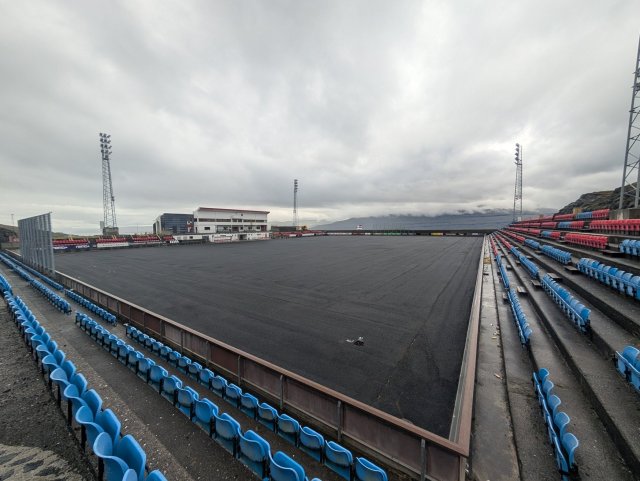
B68’s home ground, Svangaskarð, sits high above the village, and its elevated position means it offers some of the most dramatic views of any football pitch I’ve ever visited. The stadium has hosted the Faroe Islands national team in the past and was once the main ground for international matches before Tórsvøllur was built.

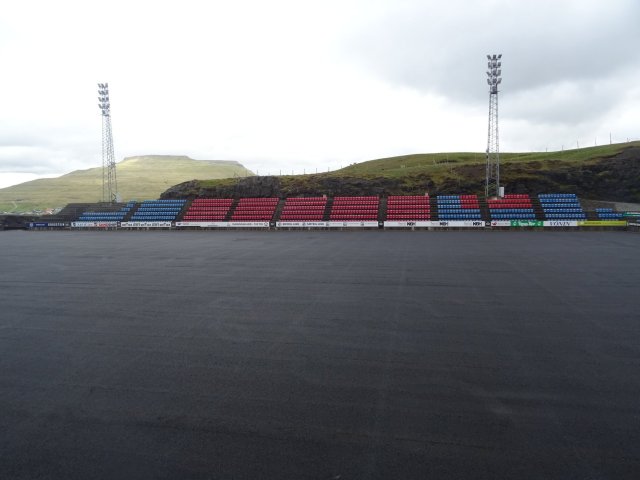
Unfortunately, during my visit the pitch was fully covered, so there was no grass in sight – just protective sheeting stretched across the surface. It was hard to tell whether it was due to maintenance, reseeding, or simply shielding it from the unpredictable weather, but it meant the ground felt a little less alive than it might have.

That said, the location itself is undeniably striking – perched on a plateau above the fjord, with the ocean visible in the distance and steep cliffs rising around it.

Even without a match on, it’s easy to imagine the kind of atmosphere a game here could generate on a windy afternoon (fun fact a unique rule allows a second player to hold the ball during set-pieces to counteract the strong winds prevalent in the islands; the only place in the world this rule is in place) with the local fans cheering from the stands.


The small Svangaskarð stadium has only a few seats
At the time of my visit the pitch was covered over to protect the grass

From Toftir, it’s a short and scenic drive to Runavík, where you’ll find Við Løkin, the home of NSÍ Runavík.

Founded in 1957, NSÍ has grown into a respected Faroe Islands Premier League side, regularly competing at the top level and nurturing local talent, all while maintaining close community ties.

The journey to the ground takes just 10 to 15 minutes along the coastline of Eysturoy, with views across the fjord and rolling green hills that make the Faroe Islands such a pleasure to explore by car.

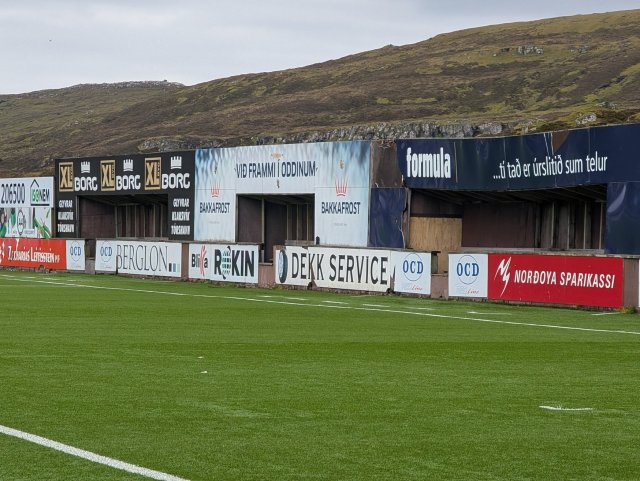
The ground itself is tucked in beside the water, with a picturesque setting that’s typical of Faroese football. While relatively modest in size, Við Løkin has a strong sense of character – a close-knit local ground where you can imagine the stands filling quickly on match days as the community turns out to support their team.

One of the charming quirks of Við Løkin is the rather makeshift appearance of the dugouts. Constructed with what looks like simple plywood and timber, they sit awkwardly beside the pitch like an afterthought – but add to the no-frills, grassroots charm of the place. It’s a reminder that while the football here is competitive, the infrastructure often reflects the island’s scale and simplicity.

You don’t need to spend long here to appreciate the peaceful surroundings and how the stadium blends into the rugged beauty of the landscape. The ground is easy to access, just off the main road through town, and parking is straightforward.


The view from behind the goal at the quaint Við Løkin stadium; home of NSÍ Runavík
The dug-outs appeared to be not the best constructed that you’d ever see

From Við Løkin, you can carry on towards Sarpugerði, the home ground of Víkingur Gøta. This ground stands out for its openness and accessibility — unlike some stadiums where the pitch feels distant, here you can easily stroll right onto the grass.

During my visit, I spotted a few footballs casually left near the side-lines and couldn’t resist taking a few pot shots at goal myself. It was a surprisingly fun and laid-back way to connect with the local football culture, something that’s a hallmark of Faroese football grounds.

Víkingur Gøta is a club with an interesting history despite being quite young. Formed in 2008 by the merger of two clubs, Gøtu Ítróttarfelag and Leirvík ÍF, it quickly established itself as a major force in Faroese football. Since then, Víkingur Gøta has regularly challenged for top honours in the Premier League, winning several league titles (including the 2024 league) and cup competitions.

The club is well supported locally and prides itself on developing talent and maintaining strong ties to its community. Visiting Sarpugerði offers a real sense of that club identity — a place where football feels very much grounded in local pride and passion.


A view from the side of the road of Víkingur Gøta’s home stadium, Sarpugerði
A view down the centre line at the ground’s main stand
With the stadium so open, you can easily get onto the pitch to have a closer look around
With a few footballs left on the pitch, I took the opportunity to score a couple of goals

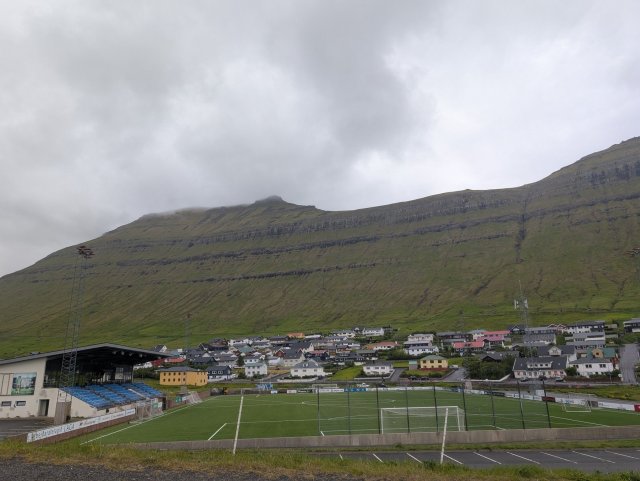
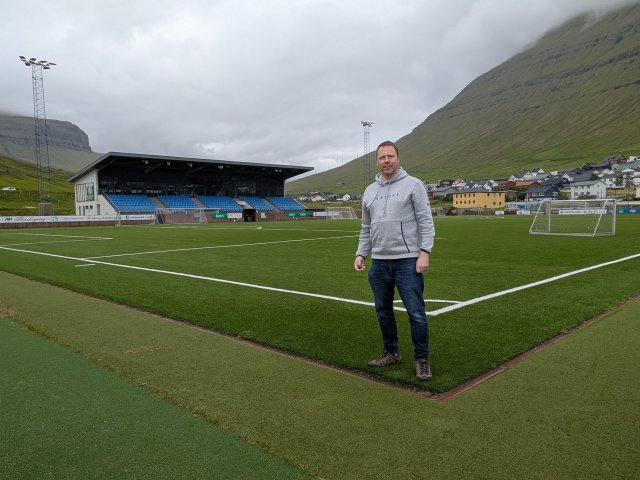
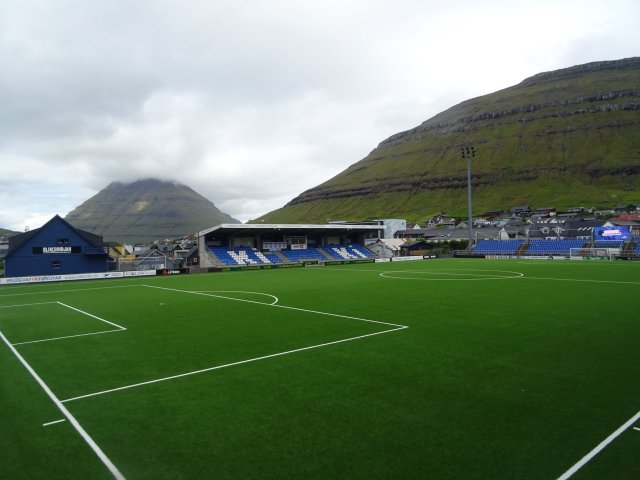
From Sarpugerði, your road trip takes you northeast to Við Djúpumýrar, the home of KÍ Klaksvík — the second-largest town in the Faroes and a true footballing hotbed.

This stadium is the northern-most football stadium I was visiting and it has a charming, traditional feel about it but with well-maintained facilities. During my visit, I was able to step straight onto the grass and even have a seat in the dugouts — which are practical and sturdy, giving you a real sense of what it’s like to be part of the action on match day.

KÍ Klaksvík is steeped in history and success, being one of the oldest and most decorated clubs in Faroese football.


Looking over the lovely Við Djúpumýrar arena, home of KÍ Klaksvík
The ground has a good seating area around most sides
The view of the game would be good, but the backdrop would make it special

From Við Djúpumýrar, your roadtrip takes you south to Í Fløtugerði, the home stadium of ÍF Fuglafjørður.

Nestled in the town of Fuglafjørður on Eysturoy island, this ground might be one of the smaller and less flashy venues compared to some of the others you’ve visited, but it carries a deep sense of local pride and history and from the top of the hill is one of the most pictureesque in the country.

Despite being one of the two clubs relegated from the Faroe Islands Premier League at the end of the 2024 season I still decided to stop by and see what it had to offer.

The stadium itself offers a very intimate experience. The ground is modest, and the facilities straightforward, but the closeness of the pitch to the spectators makes for a real connection between players and fans. You can almost feel the community’s passion radiating from every corner of the ground. It’s clear that football here is as much about bringing people together as it is about the sport itself.

Fuglafjørður is a relatively small town, and the club serves as a focal point for local identity and pride. Visiting Í Fløtugerði gives you a genuine insight into grassroots Faroese football — the kind of place where generations of families have cheered on their local heroes, rain or shine (mostly rain I would guess). This close-knit support is a stark but beautiful contrast to the more commercialised football experiences found elsewhere in the world.


It’s a shame that the stunning home of IF – Í Fløtugerði – no longer plays host to Faroe Island Premier League games following the side’s relegation in 2024

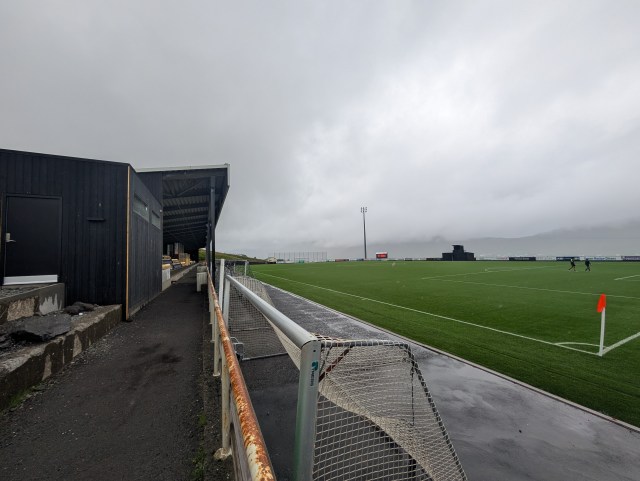
Leaving Í Fløtugerði behind, the road leads you to Í Hólmanum, the new home of EB/Streymur, located in the charming village of Eiði on the island of Eysturoy.

Í Hólmanum sits nestled against a dramatic natural backdrop, with sweeping views of the surrounding mountains and sea, giving it a uniquely scenic atmosphere. The pitch itself is well maintained and the stadium offers a comfortable space for spectators, with some covered seating and good amenities. It’s easy to see that EB/Streymur take pride in their home ground and the experience they offer to both fans and visiting teams.

The club itself is an interesting one, formed from the merger of two local teams in 1993 — Eiðis Bóltfelag and Streymur. This union has helped solidify their position in the Faroese football scene, and the new stadium is a symbol of their progress and unity. EB/Streymur have often been competitive in the Premier League, and their modern facilities match that level of ambition.

The stadium’s accessibility means you can easily wander around the pitch and it feels like a club deeply connected to its community but also looking ahead, balancing tradition with modernity.


í Hólmanum stadium in Eiði is the new home of EB/Streymur
The í Hólmanum stadium only has one main stand for supporters

From Í Hólmanum, your journey continues north along Eysturoy’s winding roads to Undir Mýruhjalla – the home of Skála ÍF. Located in the quiet village of Skála, this stadium marks the final stop on the tour of the 2024 Faroe Islands Premier League grounds – and the second home of a team that was relegated at the end of the season, alongside ÍF.

Undir Mýruhjalla is a modest but endearing ground. With a small main stand and a well-kept pitch. There are few frills here – no big screens, no elaborate facilities – but it’s this simplicity that makes it feel so authentic. You’re not just watching football here – you’re standing right in the heart of a small, passionate community.

The stadium sits in a beautiful location, framed by green hills and with views stretching out across Skálafjørður. It’s the kind of place that feels peaceful, yet still retains a quiet intensity.

Stopping here feels like closing a loop – from the national stadium in Tórshavn to this intimate local ground on Eysturoy. It’s a perfect reminder of how deeply embedded football is across even the smallest and most remote corners of the Faroe Islands.


The small Undir Mýruhjalla is home to Skála ÍF

Where to avoid

One of the great things about the Faroe Islands is how safe and welcoming they are. As a solo traveller, I never once felt uneasy or out of place, even when wandering remote villages or empty roads late into the bright evenings.

That said, while almost every corner of the islands has a rugged charm, there are a few places that, although pleasant enough, probably don’t warrant going out of your way to visit—especially if your time is limited.

One such place is The Nordic House in Tórshavn. This striking modern building, with its sloping grass roof and Scandi architecture, is a cultural centre that hosts exhibitions, performances and other events celebrating Nordic culture.

On paper, it sounds like a must-see — but unless there’s something actually happening there, which there wasn’t during my visit, there’s very little to do. With a lack of exhibitions the atmosphere was more like a quiet library than a buzzing hub of culture.

The on-site café, while pleasant and clean, didn’t do much to liven things up either.

The breakfast offering was modest — think boiled eggs and a coffee — hardly worth the walk unless you’re staying nearby and desperate for something simple to start the day.

It might be worth checking the events calendar in advance, but if there’s nothing on, I’d suggest prioritising your time elsewhere.


The outside of The Nordic House blends the old-fashioned building design found in the Faroe Islands with a modern stylish and airy twist
Inside The Nordic House shows it’s a fairly empty space when there are no exhibitions or shows on

The next one is Svartafoss Waterfall, also known as the “Black Waterfall,” which sits just a couple of kilometres north of central Tórshavn in the Hoydalsá valley.

It sounds appealing — a peaceful waterfall not far from the capital — but in reality, it didn’t quite live up to expectations during my visit.

The area itself is calm and pleasant enough for a short walk, with a small path leading to the waterfall and a few sheepfolds dotted about, but it felt more like a casual city park than one of the Faroe Islands’ striking natural landmarks.

If you happen to be nearby or are keen for a gentle stroll, it’s a fine spot to pass through, but I wouldn’t go out of your way to visit.


Svartafoss Waterfall is attractive but only worth seeing if you’re nearby

The final one for my list I came across during my trip to Vestmanna where I then spent around 30 minutes inside the The Saga Museum at the Vestmanna Tourist Centre.

The Saga Museum offers a glimpse into Faroese history and features 17 lifelike wax figures set in intricately recreated scenes — from the arrival of the first Norse settlers and tales of Irish monks right up to more recent centuries — and includes an audio guide in English to help you understand the context.

It sounds interesting when you first arrive yet, in reality, you may find it feels a little staged and confined. The dioramas, while impressive in detail, present events like Viking conflicts and dramatic punishments in almost cinematic fashion, which can feel campy and over‑the‑top rather than evocative.

It was enjoyable enough, but not one I felt compelled to linger at. I’d suggest only doing this if you’ve already got it as part of a paired ticket with the boat tour from Vestmanna (the combined ticket does offer a small discount).

On it’s own entry costs 80 Danish Krone (around £9) , and while the gift shop and on‑site restaurant are handy if you’re already at the centre, I wouldn’t recommend making a special trip just to visit the museum. If you’re stopping for the boat tour – and have time to kill – then by all means pop in. Otherwise, there are far more memorable experiences awaiting you elsewhere on the islands.


A close up of one of the more graphic scenes on display in the museum
While the museum offers a glimpse of the Faroes history it’s little more than somewhere to kill time

Great places to eat

Tórshavn has a number of good places to eat covering most budgets. During my trip I ate in the city three times, once a quick burger, another time a mid-range café and finally a fine-dining establishment. Each was delightful in it’s own way and provides an enjoyable experience.

The first of these I’ll cover is the burger joint.

Tucked away above the harbour on Tinghúsvegur 8 in Tórshavn, Haps Burgarar & Steaks is a stylish yet cosy burger bar that’s become a local favourite. You’ll find it perched in the same building as the cinema — just head up to the top floor (no lift), and you’ll step into a warm, inviting space that feels more like a friendly neighbourhood hangout than a tourist spot.

To reach Haps, simply stroll from the centre of Tórshavn along the harbour front and head up a few flights of stairs — it’s part of the joy of discovering small-town gems like this.

On my visit, I treated myself to the Twin Burger, served with deliciously crisp sweet potato fries and a large beer. To cap it all off, I enjoyed a pistachio milkshake. My bill came to around 400 Danish Krone, which is about £45, a fair price for such a satisfying and hearty meal.

The burger was excellent — juicy patties with fresh buns and crisp salad. The fries weren’t just a side — they were a real highlight, perfectly golden and seasoned. The pistachio milkshake was smooth and nutty, a lovely twist to finish on. The staff were friendly and attentive, contributing to the relaxed, upbeat vibe of the place.

So, if you’re looking for a casual meal in Tórshavn, Haps is well worth seeking out.


The menu at Haps Burgarar & Steaks

Tucked away at Vaglið 4, just by the old parliament square in Tórshavn, Paname Café offers a wonderfully cosy, Paris‑inspired atmosphere nestled inside a historic turf‑roofed building.

To reach it, simply stroll through the charming pedestrian lanes of the old town—alongside quaint wooden houses and little shops — and you’ll find Paname in a lively spot that’s impossible to miss.

When I arrived, they were unfortunately already running a reduced menu, having sold most of their dishes earlier in the day. That didn’t matter too much, as I was still able to enjoy a large meat and cheese platter, beautifully curated with local and French-inspired flavours.

A local IPA accompanied the platter so well that I couldn’t resist ordering a second one — it was crisp, refreshing, and perfectly matched the creamy cheeses and cured meats.

Despite the limited menu, the meal was genuinely satisfying and very good value, though I can’t recall the exact cost. What I do remember is that the staff were friendly, helpful, and spoke great English, which made the experience all the more enjoyable.

To see me off, I ordered a small coffee to go, which was perfect for sipping on my walk back to the Airbnb.


Paname Café produced a lovely board of food to enjoy
And this local IPA is a must try

Tucked away in the old part of Tórshavn, within the charming little harbour enclave of Gongin, is the Barbara Fish House – a wonderfully atmospheric seafood restaurant that was one of the culinary highlights of my trip to the Faroe Islands.

Built into one of the traditional turf-roofed houses that give the capital so much of its character, Barbara offers a warm, cosy and intimate setting that feels a bit like stepping into a Faroese fisherman’s cottage – albeit one with exceptionally good food and wine.

The menu focuses heavily on the fresh catch from the surrounding North Atlantic waters, and there are plenty of options to choose from à la carte. But if you’re after a real treat, they offer a four- and seven-course tasting menu, both of which can be paired with wine.

I went all in with the seven-course option and wine pairing – and it was absolutely worth it. Each course was a beautifully presented snapshot of Faroese seafood, prepared with great care and flair.

From the delicate Spanish chili, toast dill pesto, garlic aioli starter to the rich and flavourful muscle and fish courses, everything tasted incredibly fresh and expertly seasoned. The wines, too, were paired with real thought – nothing too bold or overpowering, just excellent choices that brought out the best in each dish.

The staff were fantastic: friendly, professional and keen to explain each dish and wine as it arrived. Their English was flawless, and they struck that perfect balance between being attentive and giving you space to enjoy your meal. It’s a relaxed, unhurried experience – just the way a long dinner should be.

All in, the seven-course menu with wine pairing came to 1,500 Danish Krone (around £172), which I rounded up to 1,700 Krone with a tip (roughly £200). It’s certainly a splurge, but for a special evening of excellent food in a beautifully unique setting, Barbara Fish House absolutely delivers.


The entrance to Barbara Fish House in one of the traditional Faroese buildings in Tórshavn
The menu offers lots of lovely local options to try
The muscles were perhaps my favourite dish of the experience
The main dish was this perch which was paired beautifully with a lovely red wine

Useful links

Airalo

Ryanair

Atlantic Airways

AirBnB

RentYourCar.fo

Tórshavn

Tinganes

Skansin

Tjóðsavnið (Faroe Islands National Museum)

Ress Spa at Hotel Føroyar

Puffin.fo

Fossá

Kvívík Viewpoint

Tjørnuvík

Trøllkonufingur

Sørvágsvatn

Húsavík

Dalur

Eiði

Viðareiði

á Dungasandi (home of 07 Vestur)

Gundadalur (home of both B36 Tórshavn and Havnar Bóltfelag)

Tórsvøllur (home of the Faroe Islands National Football Team)

Svangaskarð (home of B68 Toftir)

Við Løkin (home of NSÍ Runavík)

Sarpugerði (home of Víkingur Gøta)

Við Djúpumýrar (home of KÍ Klaksvík)

Í Fløtugerði (home of ÍF)

Í Hólmanum (home of EB/Streymur)

Undir Mýruhjalla (home of Skála ÍF)

The Nordic House

Svartafoss Waterfall

The Saga Museum at the Vestmanna Tourist Centre

Haps Burgarar & Steaks

Paname Café

Barbara Fish House

Remember you can follow World Complete on TwitterInstagramPintrestTumblr and Facebook send your comments and pictures from your travels using #WorldComplete and #Travel.
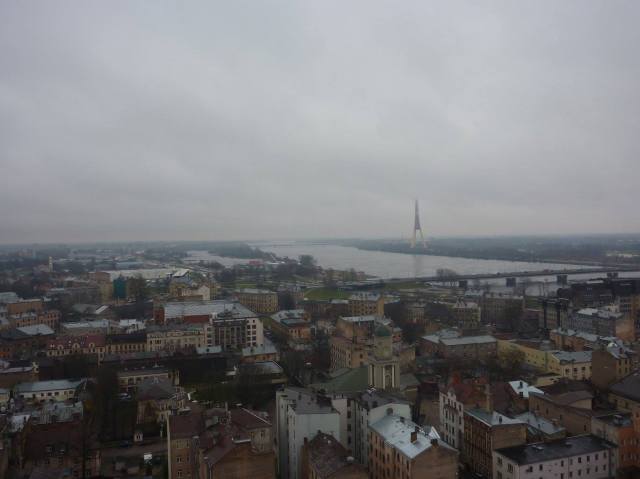
Monaco… the millionaire’s playground

Monaco

Monaco, the glittering jewel of the French Riviera, is a place where history, luxury, and breath-taking coastal views collide. Despite being one of the smallest countries in the world – spanning just over two square kilometres – its reputation far outweighs its size.

This tiny principality has been ruled by the Grimaldi family for more than 700 years, with its legacy woven into the fabric of Monte Carlo’s iconic casinos, the world-famous Monaco Grand Prix, and the shimmering superyachts that line Port Hercules.

It’s a playground for the rich and famous, yet beyond the glamour, there’s a fascinating history and culture waiting to be explored.

For our latest adventure, my wife Holly and I, along with our two-year-old son Jacob, decided to experience Monaco firsthand discovering whether this high-rolling destination could cater to family travel as well as it does to billionaires.


The Principality of Monaco is the second-smallest country by area in the world; only Vatican City is smaller

However, before setting foot in this sun-soaked city-state, there are a few things every first-time visitor should know.

The first thing is the weather. May is an ideal time to visit – the month we arrived in – with warm but comfortable temperatures averaging around 20°C during the day and dipping to a pleasant 14°C at night.

While the Riviera is known for its endless sunshine, a light rain shower isn’t out of the question, so it’s always worth packing a compact umbrella – especially if you’re planning a scenic stroll around the old town or along the Formula 1 circuit.

When it comes to money, Monaco runs on the Euro, and at the time of writing, the exchange rate sits at approximately €1.20 to the British Pound.

Also, it’s worth noting that tipping in Monaco isn’t as rigidly expected as in some other countries, but it’s still appreciated for good service. Most restaurants automatically include a service charge in the bill, typically around 15%, so additional tipping isn’t necessary, though rounding up or leaving a few extra euros for excellent service is common.

In cafes and bars, locals often leave small change, while hotel staff, such as porters and housekeeping, generally receive a few euros for their efforts. Taxi drivers don’t expect a tip but rounding up to the nearest euro is a polite gesture. Overall, tipping is a matter of discretion rather than obligation.

Another small but notable adjustment for UK travellers is the one-hour time difference – meaning you’ll lose an hour on the journey over but gain it back when you return home.


Monaco on Google Maps

Packing for Monaco – or neighbouring France – also means considering electrical compatibility. The principality uses three plug types: C, E, and F. Type C features two round pins, type E has two round pins plus a hole for the socket’s male earthing pin, and type F has two round pins with two earth clips on the side.

It’s worth bringing a universal adapter to ensure your devices stay charged for all the inevitable photo opportunities.

Language-wise, French is the official tongue, while Monégasque – a unique Ligurian dialect – is recognised as the national language but spoken by very few. Italian and English are also widely understood, making it easy for visitors to navigate menus, attractions, and the occasional conversation with a friendly local.

One final to consider is how to keep remain in communication with the rest of the world during your stay. Staying connected can be tricky, as roaming charges can be expensive, and local SIM cards aren’t always convenient for short-term visitors. That’s why I highly recommend buying an eSIM before you go, ensuring seamless communication and internet access throughout your trip.

Services like Airalo make it incredibly easy – you just download their app, purchase a data plan for the Faroe Islands, and activate the eSIM on your phone before departure. Once you land, your phone will automatically connect to a local network, saving you the hassle of hunting for wi-fi or dealing with SIM swaps. This way, you can navigate remote roads, check the weather, and share your stunning photos without a hitch!

With these essentials covered, we were ready to dive into all that Monaco had to offer us as a family and to look what it has on offer beneath the glitz and glamour.


Getting there

Getting to Monaco is easier than many people realise—though one important thing to note is that Monaco doesn’t have its own airport. The closest international airport is Nice Côte d’Azur, located just across the French border in the south of France, and it’s the go-to arrival point for almost everyone heading to the principality.

Nice is very well connected to the UK, with direct flights available from a number of major airports including London Heathrow, Gatwick, Luton, Stansted, Bristol, Manchester, Birmingham, Leeds Bradford, Edinburgh, Glasgow and Belfast.

A variety of airlines operate these routes, so depending on your preferences or loyalty programmes, you can choose between British Airways, easyJet, Jet2, Ryanair and Wizz Air. Flight times are short and manageable – around two hours from London, and usually no more than two and a half hours from further afield.

When we visited in May, Holly, Jacob and I flew out from London Gatwick with British Airways. We managed to get an incredible deal: just £55 return per person.

It felt like an absolute steal, especially considering the destination. We’d been collecting Avios points as a family and had also earned two companion vouchers through our American Express Credit Cards. By combining our points and vouchers, we were able to significantly reduce the cost of our flights, which made the trip feel all the more rewarding.

Nice Côte d’Azur Airport itself is France’s third busiest, after Charles de Gaulle and Orly in Paris. It handles more than 14 million passengers a year and offers a smooth and modern experience for travellers. The airport has two terminals: Terminal 1 (the terminal we used for our British Airways flights) and Terminal 2, which is a larger and newer terminal and serves most major airlines.

On arrival, we found everything well signposted and efficient – passport control was straightforward, and we were through to baggage claim in no time.

From Nice Airport, Monaco is about 30km away, roughly an hour’s journey depending on how you choose to travel. There are several easy options for getting there. You can take a taxi or private transfer directly from the airport, which offers the simplest and most comfortable route. If you’re happy to go by public transport, you can walk to Nice Saint-Augustin station (about 15 minutes from the airport) and take a regional train along the stunning coastal route straight to Monaco. Alternatively, there are buses that serve the route, with connections into Nice city where you can pick up a local service to the principality.

On arrival we opted for using public transport to get to our hotel which was more cost effective while we chose to use a taxi on our return (mainly due to our early start in the morning). This was fairly costly at €100 (about £83) and would be even more costly if you were travelling from Monaco itself.

No matter which route you choose, the journey from Nice to Monaco is incredibly scenic. The coastline curves dramatically between rocky cliffs and sparkling sea, with picturesque villages and elegant villas perched above the turquoise water.


Flying into Nice Côte d’Azur International Airport
You get a nice warm welcome upon leaving the airport
Train stations are fairly basic but the trains into Nice and Monaco are frequent

Where to stay

While Monaco boasts a variety of glamorous hotels—a lot of which are expensive—we decided to base ourselves just outside the principality, at Hôtel Vacances Bleues Delcloy in Saint-Jean-Cap-Ferrat, France.

We booked our four-night stay via Expedia for £651.15, which included breakfast, and strategically chose the location for its convenience to both Nice and Monaco, offering us the best of both worlds without the price tag.

The hotel itself is set in sprawling grounds and offers a decent range of facilities, including a good-sized – and very deep – outdoor pool, mini golf course, fitness area, and sweeping terraces that take full advantage of the stunning sea views. It also has a buffet restaurant, a few bar areas, and access to coastal walking paths that make exploring the peninsula a breeze.

That said, the accommodation is undeniably dated and living in the 1960s. While the location is prime, the rooms are in need of some serious love and attention. Our bathroom was poorly maintained, with tired fittings and door handles literally falling off, while our balcony felt unloved, with peeling paint and an area for plants that was left for the weeds long ago. The mini golf course, though hilariously wonky, offered more laughs than actual playability— its broken obstacles and crumbling concreate made for a very DIY-style round of golf.

Dinner was a particular oddity. Rather than being able to simply walk in and sit down, you have to collect a paper card from reception to be allowed entry to the buffet. And once you’re in, ordering drinks becomes a scavenger hunt— you’re unable to get certain beverages at your table and instead have to venture to different bars across the hotel to retrieve them. It’s a strange and slightly frustrating system, especially after a long day out.

Despite its quirks, the hotel does have some redeeming features. The staff were generally helpful, with receptionists happy to help and order us an early morning taxi.

Breakfast was both plentiful and appitsing with hot and cold options on offer each morning while the pool area was a major hit, especially with Jacob, who loved every second in the water.

Perhaps most importantly, the views over the Mediterranean are genuinely spectacular. Watching the sun glint off the sea each morning added a certain charm and made up for many of the hotel’s shortcomings.

In short, Hôtel Vacances Bleues Delcloy is not the height of Riviera luxury – but if you’re after a budget-friendly base with unbeatable views and access to the French Riviera’s hotspots, it just about does the job.


The hotel’s swimming pool is probably its best feature
Jacob settling into our room which was basic but functional
The hotel’s crazy golf course needs a lot of love and care
The views around the hotel are well worth seeing

Getting around

During our trip to the French Riviera, we stayed just outside of Nice in an area called Beaulieu-sur-Mer. So, while Monaco was one of the main focuses on our itinerary, we didn’t actually stay there overnight – instead, we opted for a day trip into the principality. And having now done it ourselves, I can safely say that the best way to travel to Monaco from the surrounding area is by train.

You can drive, of course, but we found that the hassle of parking and the often heavy traffic around Monaco just wasn’t worth it. Like many small, popular destinations, space is at a premium in Monaco, and that applies to the roads and car parks too.

Between the winding cliffside drive and the pricey parking fees, driving felt like an unnecessary complication. The train, on the other hand, was not only cheaper (around €26 – about £22 – for two adult return tickets with an infant travelling for free) but also far more relaxing – and it gave us some stunning views along the way.

We picked up the train early in the morning from Beaulieu-sur-Mer towards Monaco Monte Carlo station; a journey that takes around 15 minutes. It’s a short, scenic journey that hugs the coastline, offering glimpses of the Mediterranean at almost every turn.

Trains run regularly throughout the day, so there was no need to rush or plan too far in advance as even if you miss one, another will be along fairly quickly.

When we arrived at Monaco Monte Carlo station, we found ourselves right in the heart of the principality – albeit at the very top of it.

The station itself is built into the rock, a modern underground complex that’s surprisingly spacious and very clean. As you emerge, you’re already close to many of Monaco’s top attractions. It’s a short walk to the the yacht-filled Port Hercules or the historic old town perched on the hill.

One thing to note is that if you do leave the station at the top then look for the numerous lifts and elevators that are on the street to take up up and down the many levels of Monaco with ease. If, like us, you’re visiting with a small child, this is a godsend and makes walking around a lot easier.

Once you’re in Monaco, the best way to get around is definitely on foot. Despite its glamorous reputation, Monaco is actually very compact – just a couple of square kilometres in size – which means you can easily explore it without needing taxis or buses.

While it is small, some of it’s streets are a bit of a maze, so keep your phone handy and your map open as this is the easiest way to work out where you need to go.

There are a few steep hills, but – as mentioned earlier – the principality is well equipped with public elevators and escalators that help you move between different levels of the city without breaking a sweat. It’s surprisingly pedestrian-friendly, and walking lets you stumble upon breath-taking viewpoints that you’d likely miss in a car.


The main entrance to Monaco-Monte-Carlo train station
Monaco is built up the side of the cliffs and can be very steep to walk. However, there are a number of lifts in the city to get you between levels. You just need to find them

Top sites

So where should you visit during a trip to Monaco?

The first place we went to was the Oceanographic Museum of Monaco.

Perched dramatically on the edge of a cliff overlooking the sparkling Mediterranean, the museum is as impressive on the outside as it is fascinating on the inside. It almost looks like it’s been carved out of the rock itself, standing tall above the sea.

We booked our tickets online in advance, which cost €22.50 each for two adults (around £20.07), and the best bit was that children under four go free – so Jacob could enjoy the whole experience without us needing to buy him a ticket.

From the moment we stepped inside, we could tell this was going to be more than just a typical museum visit. The aquariums are the real showstoppers – vast tanks teeming with colourful fish, curious sea creatures and a few sharks. Jacob was completely mesmerised by the jellyfish and couldn’t get enough of each tank he walked to.

But there’s much more to the Oceanographic Museum than the aquariums. The building itself is steeped in history – it was founded by Prince Albert I in 1910, and you really feel the grandeur as you explore its marble halls and sweeping staircases.

One of the most memorable parts of our visit was walking beneath the enormous whale skeleton suspended above the grand exhibition space. There’s also a fascinating cabinet of curiosities filled with ocean-themed artefacts, from vintage diving suits to preserved sea creatures and centuries-old marine maps – it’s quirky yet beautifully presented.

We were really impressed by how family-friendly everything was. For older kids and grown-ups, there is an escape room and even a virtual reality diving experience. Jacob was a bit too young for those, but he absolutely loved the rooftop terrace where we also stopped for a bite to eat. It’s not just a spot for a breather and some food though as there are also stunning views of Monaco to enjoy and a small play area and a tortoise enclosure to visit.

One of the things that really stood out to us was how well the museum balances fun with a strong environmental message. There are lots of exhibits that talk about the importance of ocean conservation and protecting marine biodiversity, but it never feels heavy or preachy – just thought-provoking in the best way. You come away feeling like you’ve not only had a great day out, but learned something too.


The building hosting the Oceanographic Museum of Monaco is very impressive
There are a number of sharks within the aquarium
And some sea turtles as well
From the roof of the Oceanographic Museum of Monaco you can get good views across the whole city

The next place to visit in Monaco is the Palais Princier de Monaco – the Prince’s Palace – which sits right at the top of the old town, Monaco-Ville, on what’s known as “the Rock” or Le Rocher.

It’s hard to miss, with its elegant façade and commanding position overlooking the harbour and the glittering Mediterranean beyond. We didn’t go inside on this occasion, but it’s good to know that the palace is open to the public from April to mid-October, every day between 10AM and 5:30PM, and if you’re visiting in July or August, you get a bit more time as it stays open until 6:30PM.

Even just seeing it from the outside is worth the walk up. The setting is beautiful, with wide open squares, elegant lampposts, and sweeping views in every direction. The palace itself has a real sense of history about it – it’s been the official residence of the Grimaldi family for centuries, and you can just imagine the grandeur that lies behind those big wooden doors.

It’s still a working royal home too, which adds to the atmosphere. We arrived just after the Changing of the Guard, which takes place every day at 11:55AM, but it’s definitely something worth catching if you time it right.

The area around the palace is lovely to wander through, with narrow old streets, souvenir shops, cafés and a peaceful, relaxed vibe that feels quite different from the buzz of Monte Carlo below.

Even without going inside, it was a really enjoyable stop and made us feel like we were seeing a different side of Monaco – more traditional, more historic, and with some of the best views of the whole trip.


The impressive Palais Princier de Monaco
Nearby the Palais Princier de Monaco you can get good views across the harbour

If you’re exploring Monaco, one place you really shouldn’t miss is the Cathédrale de Monaco, also known as Saint Nicholas Cathedral. It’s tucked away in the heart of Monaco-Ville, just a few minutes’ walk from the Prince’s Palace, and makes for a peaceful and moving visit.

The cathedral is open to the public and completely free to enter, which makes it an easy addition to your itinerary, whether you’re sightseeing with kids or enjoying a quieter moment in the old town.

The cathedral is perhaps most famous as the final resting place of Princess Grace of Monaco – the Hollywood star Grace Kelly – and her husband, Prince Rainier III.

Their tombstones lie side-by-side inside the cathedral, simply marked and always surrounded by fresh flowers. It’s a beautifully kept space and very respectful, but there’s something incredibly touching about standing there and reflecting on their story.

Architecturally, the cathedral is striking, built from white stone from nearby La Turbie, with a mix of Romanesque and Byzantine styles that give it a distinctive, elegant feel.

Inside, it’s calm and cool, with high vaulted ceilings, lovely stained glass windows, and an impressive altar.

Even if you only stop by for a short while, the cathedral offers a different side to Monaco – one that’s steeped in history, full of quiet beauty, and free from the glitz of the casinos and yachts.


The entrance to the Cathédrale de Monaco
Inside, the Cathédrale de Monaco is beautifully presented
The final resting place of Grace Kelly within the Cathédrale de Monaco

A fun and slightly unexpected place to pop into while exploring Monaco is the Monaco Town Hall, or Mairie de Monaco, especially if you’re after a quirky little souvenir from your trip.

Tucked away just off the main square in Monaco-Ville, the building itself is elegant but understated – and you might easily walk past it without realising there’s something special inside for visitors.

If you head inside during opening hours and ask at the front desk, you can get a special passport stamp featuring the official coat of arms of Monaco. It’s completely free, and such a unique memento to take home – especially if you’re someone – like me – who enjoys collecting travel stamps or is travelling with children who’ll find it exciting to have a “Monaco stamp” in their passport.

Sadly for us, our visit coincided with a public holiday and the town hall was closed, which was a real shame as we’d been looking forward to picking up our stamp! But under normal circumstances, it’s open from Monday to Friday between 8:30am and 4pm, so it’s worth planning your visit around that if you’re keen to add something a little different to your Monaco experience.

It’s a small and simple thing to do, but getting your passport stamped at the town hall adds a lovely personal touch to your time in the principality.


The entrance to Monaco Town Hall which was sadly shut during our visit but, when open, you can get your passport stamped here

A walk around Port Hercules is a must when visiting Monaco. This is the city-state’s main harbour – the one you always see in postcards and Grand Prix footage – and it’s every bit as glamorous as you’d imagine.

Framed by the steep cliffs of Monaco on one side and the open sea on the other, the port is a hive of activity and a great place to soak up the atmosphere, whether you’re stopping for a drink, spotting superyachts, or simply taking in the views.

It’s a working harbour, but also a showpiece – the kind of place where multi-million-pound yachts are lined up like parked cars and the reflections of luxury boats shimmer on the water. Even if you’re not usually into boats, there’s something captivating about the scale and style of it all. We spent a good while strolling along the promenade, pointing out the names and flags of different vessels and wondering who might be on board.

There are cafés, restaurants, and plenty of benches along the waterfront, so it’s also a perfect spot to pause for an ice cream or a coffee and watch the world go by. Jacob loved seeing the big boats up close and waving at the smaller ones coming and going.

Port Hercules is particularly lively in the lead-up to the Monaco Grand Prix in May (which took place a week before we visited), when parts of it are transformed into sections of the racetrack – you can still see the markings and barriers even when the race isn’t on, which adds a fun twist to your walk. And if you visit in the evening, the whole place takes on a golden glow as the sun sets behind the hills and the lights of the city start to sparkle.

It’s free to wander around, and because it sits right between Monte Carlo and Monaco-Ville, it’s easy to work into your day without going out of your way.


You can get up close to some of the super yachts docked in Port Hercules
The size of the yachts in Port Hercules is impressive

For fans of F1, one place you absolutely shouldn’t miss in Monaco is the Fairmont Hairpin.

It’s the most iconic corner on the entire Formula 1 calendar – the famous near-180-degree bend that’s instantly recognisable to motorsport lovers around the world. Located right outside the Fairmont Monte Carlo hotel in the heart of Monte Carlo, this tight, winding corner is the slowest on the circuit, and seeing it in person really makes you appreciate just how narrow and technical the Monaco Grand Prix truly is.

Even when it’s not race weekend, the hairpin is still in use as a public road, so you can stand just steps away from where the F1 cars twist and turn during the race, and watch everyday traffic navigate the same line – albeit much, much slower. There’s something thrilling about being able to walk right up to a piece of sporting history like that, especially if you’ve grown up watching Monaco on TV.

If you’re visiting during the Grand Prix in May, this spot becomes one of the hottest places to watch the action, with the hotel’s balconies offering a prime view of the drivers battling through the bend. But even at quieter times, the Fairmont Hairpin has a buzz to it – it’s a photo stop, a conversation starter, and a bucket-list tick for any Formula 1 fan visiting the principality.


Looking down at the Fairmont Hairpin
F1 fans won’t want to miss seeing this iconic Monaco GP corner up close and personal

Where to avoid

Given Monaco’s tiny size and polished reputation, you might assume there’s nothing to be wary of. And to be fair, we didn’t encounter any issues while actually in Monaco — it felt clean, orderly, and very safe. However, if you’re travelling into the principality by train (as most visitors do), it’s worth staying on your guard, especially around Gare de Nice-Ville, which is the main station people pass through en-route to Monaco.

On our very first train journey, as we made our way from the airport to our hotel ust we witnessed a woman loitering on the platform and tailing passengers as they stepped onto the train. She moved quickly and quietly, slipping her hands into jacket pockets and open bags with worrying ease.

Fortunately, we clocked what she was doing — and after I shouted to alert those around us, she immediately leapt off the train and sprinted away like a coward. It was shocking to see such blatant theft in action, and a stark reminder that crowded train stations can be hotspots for opportunistic crime.

So while Monaco itself felt very safe, we’d strongly recommend keeping your belongings close when using public transport in the area — especially in and around Nice. Zip up your bags, avoid keeping valuables in outer pockets, and stay aware of your surroundings. A few small precautions can go a long way.


Be extra careful when in and around the stations in Nice and Monaco as pickpockets do tail people boarding trains

As for places within Monaco to avoid, the truth is there aren’t really any – it’s a small, walkable place where you can see most of the sights in a day. That said, if time is tight and you’re deciding what to prioritise, the Casino de Monte-Carlo may not be worth going out of your way for.

Despite the glamour attached to its name, the building itself isn’t particularly striking from the outside. Aside from a few luxury cars parked out front (which you’ll see all over Monaco anyway), there’s not much to take in.

While you can pay to go inside and explore, we opted not to, and didn’t feel like we missed out. Unless you’re planning to gamble or are especially keen to see the interior, the experience doesn’t quite justify the cost or the hype. There are plenty of other spots in Monaco where you can enjoy the same elegance – for free.


The outside of the Casino de Monte-Carlo is not that impressive
A few of the cars parked outside the Casino de Monte-Carlo

Great places to eat

The tiny principality is packed with a fair few nice looking restaurants. But during our visit, we made the decision not to eat in Monaco itself (aside from a quick sandwich and drink on the rooftop café of the Oceanographic Museum – perfect for the view, if not the budget!).

From what we saw, most of Monaco’s dining options tend to lean towards the pricey end of the spectrum. So unless you’re keen to splash out, our advice is to enjoy the sights by day, then head out of the city for dinner. That’s exactly what we did – and it turned out to be one of the culinary highlights of our trip.

Just a short drive away, tucked in the hills above Nice, we booked a table at the fabulous La Maison De La Sauce – a hidden gem in Beaulieu-sur-Mer.

We reserved in advance and were seated in their lovely outdoor terrace, basking in the evening sun.

We opted for the three-course tasting menu, priced at a very reasonable €49 per person (around £41). Starters included deliciously rich foie gras and traditional escargots. For mains, we tried both the melt-in-the-mouth beef and the beautifully prepared fish ceviche dish. Dessert was a perfectly crisp and subtly tangy apple tart that rounded off the meal beautifully.

The whole experience, including drinks, came to just €133 (around £112) – incredible value given the quality of the food and the setting.

What really stood out, though, was the service. The owners, who also run the restaurant day-to-day, were clearly passionate about their craft. Their warm welcome, thoughtful recommendations, and attention to detail made the evening feel truly special.

La Maison de la Sauce offers charm, flavour, and genuine hospitality – proof that sometimes the best meals are found just a little off the beaten track.


One of the starters we enjoyed were the snails
The fish dish for the main was delicious
The apple tart dessert finished the meal of superbly

Useful links

Airalo

British Airways

Hôtel Vacances Bleues Delcloy

Expedia

Oceanographic Museum of Monaco

Palais Princier de Monaco

Cathédrale de Monaco

Monaco Town Hall

Port Hercules

Fairmont Hairpin

Casino de Monte-Carlo

La Maison De La Sauce

Remember you can follow World Complete on TwitterInstagramPintrestTumblr and Facebook send your comments and pictures from your travels using #WorldComplete and #Travel.
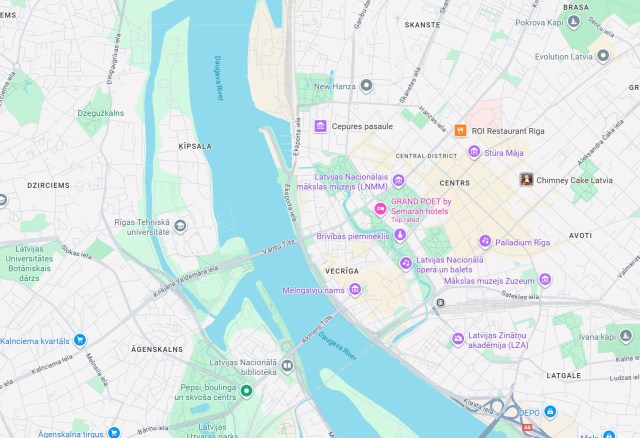
Rimini… the Miami of Europe

Rimini

Rimini is a vibrant city nestled along the Adriatic coast in northern Italy that effortlessly blends the allure of sun-soaked beaches with a rich tapestry of history.

Known for its lively atmosphere and expansive sandy shores, the Miami of Europe has long been a favourite summer destination for Italians and visitors from across Europe.

But beyond its reputation as a beach paradise, the city is steeped in history, with roots that trace back to ancient Rome.

Founded by the Romans in 268 BC, Rimini was originally known as Ariminum, a strategic settlement that served as a crucial hub connecting northern and southern Italy. Its importance in the ancient world is still evident today in its well-preserved monuments.

The Arch of Augustus, which dates back to 27 BC, stands as one of the oldest surviving Roman arches and serves as a majestic gateway to the city. The Tiberius Bridge, completed in 21 AD, is another remarkable example of Roman engineering that has withstood the test of time, still in use over two millennia later (more on both of these later on).

These landmarks are not just remnants of the past but are woven into the daily life of Rimini, offering a tangible connection to the city’s illustrious history.

Throughout the Middle Ages and the Renaissance, Rimini continued to thrive as a cultural and economic centre.

It was ruled by the powerful Malatesta family, who left their mark on the city with the construction of the Tempio Malatestiano, a striking cathedral that stands as a masterpiece of Renaissance architecture. The city’s rich cultural heritage has made it a magnet for artists, writers, and thinkers throughout the centuries, further cementing its place in Italian history.

This rich historical backdrop set the stage for our first Italian adventure as a family for myself, my wife Holly, and our one-year-old son, Jacob.

We were drawn to Rimini not just for its history, but also for its reputation as a quintessential Italian beach destination; something we knew a one-year-old would love.

The city’s 15km of sandy coastline, lined with vibrant beach clubs and restaurants, offer a quintessential summer experience that has been a tradition for generations of Italian families.


The long stretching sandy beaches of Rimini are synonymous with this region of Italy

So what should first-time visitors to Italy, and Rimini in particular, consider before embarking on an Italian adventure?

The first thing is the temperature.

August, when we visited, is one of the hottest months in Rimini, with average highs reaching around 30°C (86°F) and lows rarely dipping below 20°C (68°F). The heat can be intense, making it the perfect time to relax by the sea, but it’s important to pack light, breathable clothing and plenty of sun protection to fully enjoy the outdoor activities Rimini has to offer.

The next thing is the currency. In Italy, the currency is the Euro, and at the time of writing, you can get approximately €1.18 for every £1. This rate can vary, so it’s advisable to keep an eye on the exchange rate as you plan your trip.

The next thing to consider is the time difference. Italy is one hour ahead of the UK, meaning you’ll lose an hour when you arrive but gain it back when you return. This small time difference is easy to adjust to, but it’s good to keep in mind, especially when planning flights and accommodations.


Rimini on Google Maps

The fourth consideration is the power points to keep all your electricals working and well charged.

When it comes to electricity, Italy uses three associated plug types: types C, F, and L. Plug type C has two round pins, plug type F also has two round pins with two earth clips on the side, and plug type L features three round pins. Italy operates on a 230V supply voltage and 50Hz frequency, so make sure your devices are compatible or pack the appropriate adapters. This is particularly important if you plan to bring along chargers or other electronic devices.

The final consideration is the language.

The official language in Rimini, as in all of Italy, is – as you’d expect – Italian. While many people in tourist areas speak good English, it’s always appreciated when visitors make an effort to use the local language.

A few key phrases to remember are ciao (used for both hello and goodbye), per favore (please), and grazie (thank you). Even a basic grasp of these words can enhance your experience, making interactions with locals more enjoyable and authentic.


Getting there

Most trips to Rimini begin by flying into Bologna International Airport; which – approximately takes around two hours from London.

Situated approximately 125km northwest of Rimini, Bologna International Airport serves as a major hub for both domestic and international flights, making it an ideal starting point for your journey.

Bologna International Airport, officially known as Guglielmo Marconi Airport, originally opened back in 1931. Over the decades, it has evolved into its role to serve as a key gateway to the Emilia-Romagna region and beyond.

Today, it handles around 8.5 million passengers annually, a testament to its importance in the Italian aviation network. The airport itself is modern and well-equipped, offering a wide range of facilities and services to ensure a comfortable experience for travellers. Whether you’re in need of a quick bite to eat, last-minute travel essentials, or currency exchange services, Bologna International has you covered.

For travellers coming from the UK, there are numerous flight options that cater to different preferences and budgets. EasyJet offers direct flights from London Gatwick, while Ryanair provides connections from London Luton, London Stansted, Manchester, and Edinburgh. Additionally, British Airways operates flights from London Heathrow.

For our own trip to Rimini, we opted to fly with British Airways from London Heathrow. Our choice was influenced by the fact that both Holly and I had accumulated a variety of rewards through our American Express  credit cards, which included valuable Companion Vouchers.

These vouchers allowed us to book one free seat each on the journey, a significant saving that made British Airways the most attractive option for us. Additionally, we had amassed a substantial amount of Avios Points, which we were able to use to cover the remaining cost of the flights. This meant that, with Jacob still being under two years old, the three of us were able to secure round-trip flights to Italy for an incredible total of just £2.50!

However, for those who may not have such vouchers or points to redeem, the typical cost for a direct return flight from London to Bologna with British Airways is around £195 per adult, which is still a reasonable price.

The flight itself was a pleasant experience. From the moment we boarded, the cabin crew made us feel welcome and took good care of Jacob, while the atmosphere on the plane was calm and relaxing.

Each passenger received complimentary water and a biscuit, a small but appreciated gesture that added to the comfort of the flight. For those who wanted something more substantial, there were additional food and drink options available for purchase.

The flight was smooth from start to finish, with no significant turbulence or delays. As we began our descent into Bologna, we were treated to stunning views of the Italian landscape, with its rolling hills and picturesque towns coming into view.

Upon our arrival at Bologna International Airport, we were impressed by how efficiently the disembarkation process was handled. Within minutes, we were off the plane and making our way through the airport. Navigating security and passport control was a breeze, with minimal queues and friendly staff making the process as stress-free as possible. This efficiency was a welcome surprise, as it allowed us to quickly transition from the plane to the arrivals area, eager to begin the next leg of our journey to Rimini.

After collecting our luggage, we found ourselves in the bustling arrivals area, where a variety of transportation options awaited. For those looking to reach Rimini directly, there are several convenient choices. Taxis are readily available outside the terminal, offering a direct and hassle-free way to reach your destination.

Alternatively, for those who prefer a bit more flexibility (as was the case with us), there are numerous car rental agencies located within the airport, providing a range of vehicles to suit your needs.

Renting a car is a great option if you plan to explore the wider Emilia-Romagna region or want the freedom to travel at your own pace (more on this later on). In addition to transportation services, the airport also offers a selection of shops where you can pick up any essentials you might need for your journey. Whether it’s a quick snack, some toiletries, or a guidebook to help you navigate your way through Italy, you’ll find everything you need right there in the arrivals area.

With our bags in hand and everything in order, we were ready to set off on the final leg of our journey to Rimini.


Flying into Italy
Getting off the plane onto the tarmac for the first time gives you a chance to feel the heat
The view of the modestly-sized Bologna International Airport

Where to stay

Rimini, known for its vibrant seafront, offers a wide range of accommodations, from beach-front hotels to charming apartments available for rent.

While the central seafront area has its allure, I found that a stay in the nearby area of Viserba provided a more tranquil experience without sacrificing the beauty of the Adriatic coast.

Viserba is just a short distance from the heart of Rimini, yet it feels like a world away in terms of atmosphere. The beaches here are just as stunning as those in central Rimini, but with a more relaxed and laid-back vibe.

It’s the perfect place to unwind without the constant hustle of the beachfront promenade. Rather than staying directly on the beach, which can get quite busy, we opted for a place slightly inland.

It’s amazing how a mere ten-minute walk away from the coast can place you in a much more serene environment, where you can truly enjoy the quiet and still be close enough to the beach whenever you want.

This is exactly what we did during our recent trip. Holly, Jacob, and I booked a charming AirBnB in Viserba that cost us a total of £410.96 for four nights, which worked out to be £102.74 per night. Our accommodation was a well converted loft, nestled in a peaceful area – on a road called Via Romeo Canini – yet still conveniently accessible.

Our hosts were fantastic, providing us with detailed instructions before our arrival. They made sure we knew exactly how to find the place, retrieve the keys from the lockbox outside, and navigate the parking situation.

The on-site parking space, while a bit narrow, was a huge convenience. It was offroad and always available, which saved us the trouble of hunting for a spot on the busy streets.

After parking, we grabbed our belongings and made our way up the three flights of stairs to the loft. Entering the apartment, we were welcomed into a large, airy living and kitchen area. The space was well-lit and equipped with excellent air-conditioning, which was much appreciated during the warm summer days.

The other part of the apartment was accessed through a corridor off the living room, leading to two bedrooms and a bathroom. Here, we did encounter one small drawback: the steeply sloping roof.

This feature added charm to the loft but also required a bit of caution, especially in the bedrooms where the ceiling dipped low in certain spots (especially over the headrest areas of the beds).

The bathroom, too, had its quirks. The sloped roof meant that taking a shower required sitting down, which was a bit unusual at first. However, once we got used to it, it wasn’t an issue, especially since we were only staying for a few days.

Despite these minor inconveniences, the loft was a perfect base for exploring Rimini and the surrounding region. The peaceful setting of Viserba, combined with the comfort and charm of our AirBnB, made for a wonderful stay.

We had all the amenities we needed for a short stay and enjoyed the calm, residential atmosphere, while still being within easy reach of Rimini’s lively seafront whenever we wanted to dip back into the action.

I’d highly recommend considering a stay in Viserba, especially if you’re looking for a balance between accessibility and tranquillity. It’s a hidden gem that allows you to enjoy the best of both worlds.


The living and kitchen area in the AirBnB is spacious
The sloping roof of the attic apartment means you do have to be careful when you sit up in bed
The view down the hall towards the bedrooms (on the right) and the bathroom (far end) gives an idea of how low the slope of the roof gets

Getting around

The first thing to say is that when you are in Rimini itself – or getting around in Viserba – then walking is the easiest way.

For one thing, it avoids the need to keep hunting for things like parking spaces as these can be difficult to find it popular areas. In addition to this, both are easy to navigate on foot and it gives you the best chance of finding some hidden gems as you traverse around the streets between attractions.

That said, I’d still urge hiring a car from Bologna International airport.

Renting a car at Bologna International Airport and driving to Rimini, offers an unparalleled sense of freedom and flexibility, making it an excellent option if you want to explore the region at their own pace.

When Holly, Jacob, and I arrived at Bologna International Airport, we saw a range of car rental options. However, we had booked in advance online with Sicily by Car, conveniently located in the arrivals area of the airport.

The process was smooth, and we were quickly handed the keys to a modest small car (which helped make parking in tight spaces easier), which cost us £218 for the five days, including insurance. This price provided us with peace of mind as we embarked on our Italian adventure.

Although we didn’t opt for any additional extras, it was reassuring to know that options like a second named driver or a child car seat were available for an extra fee. We had brought our own car seat from the UK for Jacob, so we didn’t require that particular service, but it’s worth noting for other travellers.

The primary reason we chose to rent a car was to have complete control over our journey from Bologna to Rimini. This option allowed us to navigate the hour-and-a-half drive at our own pace.

The car also provided us with the flexibility to explore further afield, such as our trip to San Marino (something I had keen eyes on and more on later on in this blog). Having our own vehicle meant we weren’t tied to the schedules of public transportation or the expense of taxis, making it an ideal choice for a personalised travel experience.

For those considering a similar journey, there are a few important things to remember when renting a car in Italy. Firstly, you’ll need to bring a credit card with your full name on it, as well as a form of ID, such as your passport (which you’ll have with you anyway), and your driving license.

For some nationalities, an international driver’s license may also be required, though this wasn’t necessary for us as UK residents. Being prepared with all the necessary documentation ensures a smooth rental process and avoids any unnecessary stress at the start of your trip.

When it comes to driving in Italy, there are a few key points to keep in mind. Italians drive on the right-hand side of the road, which may take a bit of adjustment for those used to driving on the left.

Italian drivers are known for being quite assertive, but we found that driving in this region was a world away from the chaos often associated with cities like Rome or Naples. The roads around Rimini and its surrounding areas were generally calm and well-maintained, making for a much more relaxed driving experience.

Ultimately, the freedom that having a car provided made our trip uniquely ours. We were able to explore the areas that interested us the most and enjoy Italy on our terms.


Picking up your car at Bologna International Airport is quick and easy
We opted for a small car to help make parking that bit easier

If you’re planning a trip to Rimini and choose to stay in Viserba (as we did), taking the train into central Rimini is the most convenient option.

The distance between the two is too far to walk – especially in the hot summer sun – and driving can be a hassle with the limited parking available in the city centre.

Thankfully, the train offers a quick and stress-free alternative, allowing you to avoid the challenges of finding a parking spot and giving you more time to enjoy your day.

The train station we used in Viserba is called Rimini Viserba.

It’s located just off Via Eugenio Curiel and was only five minutes away from our AirBnB, making it easy to find and access. From there, you can purchase tickets directly from a machine at the station.

The tickets are very affordable, costing just €1.50 per adult each way (around £1.25), and you can pay either with cash or by card.

On-board the trains, good quality air-conditioning keeps you cool and the spaces are both clean and comfortable and always have plenty of seats available.

The journey from Rimini Viserba to central Rimini is a breeze, taking around five minutes on the train. With about 14 trains running on this route daily, you won’t have to wait long for the next one. The distance covered is only 4km (three miles), and since the trains are direct, there’s no need to worry about making any changes along the way.

A train journey from Rimini Viserba to Rimini takes only five to 10 minutes and is very cheap
Tickets cost just €1.50 per adult each way between Rimini Viserba and Rimini
Inside the trains are clean and comfortable

Top sites

There are a number of things that should be on a visitors to-do list when visiting Rimini; the first of which is to see the Arch of Augustus in the city centre.

The Arch of Augustus – known in Italian as Arco di Augusto – stands as one of Rimini’s most enduring and impressive ancient monuments.

This Roman arch, located at the southern end of Corso d’Augusto, the main street that traverses the historic centre of Rimini, is an iconic symbol of the city’s rich history.

Constructed in 27 BC, the Arch of Augustus is the oldest surviving Roman arch, built to honour the Emperor Augustus and to celebrate the completion of the Via Flaminia, a vital road that connected Rome to the Adriatic Sea.

This magnificent structure, made of Istrian stone, was not only a triumphal arch but also served a functional purpose as a city gate, marking the entrance to Rimini from the Roman capital. Its design, characterised by a single large archway, is notable for its simplicity and grandeur.

Unlike later Roman arches, which often featured multiple passageways, the Arch of Augustus is more restrained in its design, emphasising its symbolic significance rather than its physical presence.

The arch was originally adorned with a bronze statue of Augustus, which has long since been lost to time, and the carvings on the arch depict various deities, including Jupiter and Apollo, reflecting the emperor’s connection to divine powers.

Today, the Arch of Augustus remains a central feature of Rimini’s historic landscape, drawing visitors who come to marvel at its ancient grandeur. Holly, Jacob and I made sure that we visited the Arch of Augustus first during our day in the city centre. Remarkably well-preserved, the arch is free to visit. It stands in a pedestrian-friendly area, and cars are not allowed to pass under it, preserving its integrity.

It is a testament to the engineering prowess of the Romans and their ability to create structures that have endured for millennia.


The Arch of Augustus has stood in situ since 27 BC
Looking up at the Arch of Augustus
To help preserve it the Arch of Augustus, cars cannot travel under it

The next stop of a historic trip to Rimini is to the Ponte di Tiberio.

The Ponte di Tiberio is an ancient Roman bridge that spans the old Marecchia River (before its course had been diverted), this historic structure is a further testament to the engineering prowess of the Romans and has stood the test of time for nearly two millennia.

Constructed between 14 and 21 AD during the reigns of the emperors Augustus and Tiberius, the bridge was an essential part of the Via Aemilia, one of the most crucial Roman roads that connected Rimini to Piacenza.

The Ponte di Tiberio is made of Istrian stone, a durable material that has contributed to its remarkable preservation. The bridge stretches over 70m in length and consists of five arches, each meticulously designed to withstand the forces of nature and the demands of traffic over the centuries.

One of the most fascinating aspects of the Ponte di Tiberio is its continued functionality. While many ancient structures have been relegated to mere ruins, this bridge remains fully intact and accessible to the public.

However, in a move to preserve its historical integrity and protect it from modern wear and tear, vehicles are not permitted to cross the bridge. Instead, it is reserved exclusively for pedestrians, allowing visitors to walk across it and experience the same route that countless people have taken over the centuries.

Visiting the Ponte di Tiberio is completely free, making it an accessible attraction for anyone interested in history, architecture, or simply enjoying a leisurely stroll in a beautiful setting.


The Ponte di Tiberio was built between 14 AD and 21 AD
The views are enjoyable as you cross the river
The bridge is fairly low meaning only small boats can pass under it

Aside from the history available in the region, there are plenty of other activities nearby that all the family can enjoy.

One such attraction is the Diamond Wheel.

Situated prominently at the Rimini Marina, near the beach, this Ferris wheel offers a spectacular way to take in the beautiful scenery of the Adriatic coast.

Standing at a height of 55m, the Diamond Wheel provides panoramic views that are nothing short of breathtaking.

Constructed in 2012, the wheel quickly became an iconic feature of the Rimini skyline, drawing locals and tourists alike who are eager to experience the city from a new perspective. As the wheel ascends, riders are treated to sweeping vistas that stretch over the golden beaches, the shimmering waters of the Adriatic Sea, and the bustling town of Rimini itself.

On a clear day, it’s even possible to catch a glimpse of the distant hills of San Marino (more on that location later on).

For us, this visit to the Diamond Wheel was particularly special as it was our son Jacob’s first trip on a Ferris wheel. We had no idea how he’d take to it, given that the height and motion can sometimes be overwhelming for young children.

However, to our delight, the ride was so smooth that Jacob loved every moment of it. He was constantly trying to look over the edge at the world below, though there was no worry on our part since the cabins are enclosed, making it impossible to fall out.

Tickets for the Diamond Wheel are reasonably priced and can be purchased at the wheel itself by cash or card, making it an accessible attraction for all.

At the time of writing, an adult ticket costs €10 (about £8.50), while a ticket for children aged between two and ten is priced at €7 (about £6). For families, there are special package deals: a family ticket for two adults and one child up to the age of ten is available for €25 (about £21.30), and a ticket for two adults and two children up to the age of ten is priced at €30 (about £25.60).

These prices include six full rotations on the wheel, offering ample time to soak in the views and enjoy the experience from every angle.


The Diamond Wheel takes you to a height of 55m above the ground
As you go up, the views out across Rimini are stunning

Although I’m not much of a beach lover myself, our recent trip to Rimini provided plenty of opportunities to soak up the coastal atmosphere. We spent time on several beaches, both in Rimini and nearby Viserba, mainly so Jacob could enjoy the simple pleasure of splashing in the sea.

There’s something quite special about the Adriatic coastline, with its gentle waves and expansive sandy stretches, even if lounging in the sun isn’t exactly my idea of a perfect day.

One thing to note is that much of the beachfront is divided into sections that are privately owned by the bars and restaurants that line the promenade. These sections are fully equipped with sun loungers, umbrellas, and sometimes even additional amenities like showers and changing rooms.

It’s a convenient setup if you’re planning to spend a significant amount of time relaxing by the sea, but it does come at a cost. If you want to use the loungers and umbrellas, you’ll need to pay for the privilege, usually by renting them for the day.

However, if you’re like us and only planning a short visit to the beach, there’s no need to shell out for this. There are still bits of free beach available where you can set up camp without spending a dime.

We found a few spots where we could lay down a towel, kick off our shoes, and let Jacob have his fun in the shallow water. These free areas might not come with all the frills of the paid sections, but they’re perfect if your main goal is just to enjoy the sea for a little while.

Even though I wouldn’t describe myself as a beach enthusiast, there was something undeniably enjoyable about watching Jacob’s delight as he played in the waves. The beaches in Rimini and Viserba are well-maintained, with soft sand that’s ideal for kids to run around on. The gentle slope of the shoreline also means that the water remains shallow for quite a distance, providing a safe environment for children to splash and play.

So while my love for the beach may not have blossomed during our trip, I did come to appreciate the laid-back vibe that these coastal spots offer. Whether you’re a sun worshipper or just tagging along like me, there’s something to be said for the simple joys of spending time by the sea, especially when you have a little one who’s eager to dive into the waves.

Rimini’s beaches may have their quirks, but they offer a slice of Italian seaside life that’s worth experiencing, even if just for a brief visit.


Rimini is blessed with many sandy beaches that locals and holidaymakers all enjoy
Sunbathers enjoying the sun on one of Rimini’s many beaches
In the evening, it’s extremely pleasant to take a stroll down the sandy shoreline
Jacob loved his little adventures swimming in the sea

Visiting Italia in Miniatura in Rimini was a delightful and memorable experience for our family.

We decided to make the most of our trip by purchasing a combo ticket that included admission to both Italia in Miniatura and their sister attraction, Acquario di Cattolica (where we spent that morning).

The combined price for the four tickets needed across the two attractions was €76 (about £64.75). Individually, the ticket to Italia in Miniatura cost €19 per adult (about £16.20), which we found to be quite reasonable for the unique experience it offered. We were particularly pleased that Jacob, being under one metre tall, was allowed in for free!

We arrived at Italia in Miniatura around lunchtime and were relieved to find plenty of parking options available to us. We intentionally timed our visit for this part of the day because we wanted to coincide our trip with the park’s extended evening hours (which only happens on certain dates so worth checking in advance if you’re wanting to do the same), which featured a host of special activities. The midday arrival also gave us ample time to explore the park before the evening festivities began.

Italia in Miniatura is much more than just a collection of miniature models. The park offers a fascinating glimpse into Italy’s rich architectural heritage, with meticulously crafted miniatures of famous landmarks from across the country – and also Europe.

As we strolled through the park, we marvelled at the intricate details of these tiny masterpieces, from the grandeur of the Colosseum to the charm of the two towers in Bologna. The experience was like taking a whirlwind tour of Italy, all in one afternoon. Jacob loved pressing the buttons on the various attractions; making trains and cars move and giving him the feeling of really being a part of things.

However, there’s more to Italia in Miniatura than just the miniatures. The park also features a variety of rides that add to the fun and excitement. We enjoyed a leisurely gondola ride around a miniature version of Venice, which was a charming and tranquil way to take in the sights. Holly and I also took turns riding the log flume, which offered a thrilling splash of adventure. Unfortunately, Jacob was too small to join us on this ride, but he was thoroughly entertained by the Pinocchio train ride, which took us on a whistle-stop journey through the story of the beloved wooden puppet.

As evening approached, we decided to grab a bite to eat at one of the numerous dining options available in the park. The variety of food on offer meant there was something to suit everyone’s tastes and – given it was basically theme-park food – was actually pretty tasty.

The evening entertainment at Italia in Miniatura was, to say the least, rather odd. As dusk fell, we were treated to a series of performances that included strange dancers parading around the miniature models, light shows on the sides of the buildings, acrobats showcasing their agility, and stilt walkers towering above the crowd.

While the performances were certainly unique, the highlight for us, and particularly for Jacob, was a woman who captivated the audience with a bubble show. Her ability to create enormous bubbles and intricate bubble formations had all the children in the audience, including Jacob, utterly enthralled.

It’s fair to say that our visit to Italia in Miniatura was an enjoyable mix of culture, fun and unusual entertainment.


Italia in Miniatura is home to many intricate recreations of famous Italian landmarks
Each landmark is well made and extremely detailed
There are also a number of rides to enjoy include a ride on a “Venetian” gondola
During some evenings, the park stays open longer and puts on a variety of street entertainment and light shows

My final suggestion here is to visit the previously mentioned aquarium, Acquario di Cattolica.

We planned our visit for first thing in the morning, aiming to arrive right when the aquarium opened at 10am. We set off from our Airbnb in Viserba early and after a scenic 45-minute drive, we arrived in Cattolica. Parking was a breeze; we found an offsite car park just a short walk away from the aquarium for only €5 (about £4.25). The convenience of it all made for a stress-free start to our visit.

Acquario di Cattolica is an impressive place, divided into five different sections, each requiring a scan of your ticket to enter. This layout made it easy to explore without feeling overwhelmed by the sheer variety of marine life on display.

The first section we visited – the blue section – was the main part and the home of their aquatic life. The other four sections are much smaller and housed displays about giant insects, otters, snakes and even dinosaurs.

As we made our way through the aquarium, we were captivated by the range of animals we encountered. Sharks glided silently through the water, their sleek bodies cutting through the blue. Playful penguins darted in and out of the water, entertaining Jacob with their antics. Colourful schools of fish swam together in perfect harmony, creating a mesmerising spectacle that had us all entranced.

But the highlight of the visit for Jacob, without a doubt, was the touch-pool. Here, he had the chance to gently touch a real stingray, an experience that left him both amazed and giggling with joy. It was heart-warming to see Jacob’s excitement as he carefully placed his hand in the water and felt the smooth, almost velvety skin of the stingray as it glided by.


Acquario di Cattolica is home to many forms of sealife
As well as the real animals, there are also a number of models of extinct animals and dinosaurs for the younger visitors to enjoy
There is also a touch-pool where you get the chance to get up close-and-personal with some real life rays

San Marino

Tucked away in the heart of Italy, the Republic of San Marino is a small yet remarkable nation that often escapes the travel itineraries of many.

San Marino is often hailed as the world’s oldest republic, with its roots tracing back to the early 4th Century. According to legend, the republic was founded in 301 AD by Marinus, a stonemason fleeing persecution from the Roman Emperor Diocletian. Marinus sought refuge on Mount Titano, where he established a small Christian community that eventually grew into the independent state we know today. This tiny enclave – only 61km square in size – has managed to preserve its autonomy through centuries of political upheaval in Europe.

The resilience of San Marino is a testament to its unique governance system. Unlike many of its neighbours, San Marino has maintained its republican government, with two Captains Regent elected every six months to serve as the heads of state. This tradition of governance has contributed to the nation’s stability and has been key in preserving its independence over the centuries.

Knowing this, a visit to San Marino had always intrigued me and had been on my travel wish list for a while before finally, the opportunity presented itself.

With Holly, Jacob, and I staying in Rimini, and with San Marino only a 40-minute drive away, we took the opportunity to make a day trip out of it.

Not only was this a new country – and one of the world’s smallest nations –  for me to visit but also allowed me to check off my 50th country!

San Marino’s size is what initially drew me to it. As a tiny republic entirely surrounded by Italy, it exists as a unique entity, both geographically and culturally. Add to that its peculiar football ranking on the world stage, and it was hard not to be intrigued.

Setting off from Rimini, the drive was simple and straightforward. The route to San Marino is well sign-posted, and we had no issues navigating our way through the rolling hills that signalled our approach.

For those without a car, it’s possible to travel by train, though the journey can take around three hours. However, I’d highly recommend driving if possible, as the views along the way are worth every minute. The roads that wind up to San Marino are well-maintained and offer glimpses of the mountainous landscape that surrounds the ancient republic.

As we neared the city, we found plenty of parking options available for visitors like us. Parking lots are scattered at various levels of the city, with some located at the base and others positioned higher up, requiring a drive through winding roads to reach them.

We opted for Parcheggio P9, a parking garage located on Via G. Giacomini, nestled in the upper part of the city. For a cost of just €8 (around £6.90) for the entire day, it offered ample parking spaces to choose from.

From Parcheggio P9, it was a breeze to get to the heart of San Marino. A couple of short lift rides whisked us up to the main city, sparing us from what would have been a challenging uphill climb (especially with a one-year-old).

Once at the top, we were greeted with a charming medieval cityscape, its stone buildings and narrow streets steeped in history. Wandering through the city with Holly and Jacob, it’s impressive to think what this small republic had endured for centuries and that it’s managed to do so and outlast so many others.

So what is there to see in this micronation?


The view of San Marino
The nation’s flag flies proudly all around the city and – indeed – the whole country
San Marino on Google Maps

The first stops on any itinerary are to climb to the highest points of the city and see the three towers of San Marino.

Visiting the three towers of San Marino was a captivating experience for us. We bought our tickets for €11 each at the Guaita, the first of the towers, where we began our journey through San Marino’s medieval history.

The tickets that Holly and I purchased gave us access to both the Guaita and the Cesta, as well as entry to the Public Palace, the State Museum, the San Francesco Art Gallery, the National Gallery, and the Stamp and Coin Museum. Our one-year-old son Jacob got in for free given his age.

In my view, the best way to experience the towers is to arrive at the first tower, the Guaita, as early as possible – between 9am and 9:30am –  to coincide with its opening times. This allows you to explore before the crowds arrive and fully appreciate the serene atmosphere and breathtaking views.

The Guaita, the oldest and most famous of the three towers, dates back to the 11th Century. It once served as a fortress and briefly as a prison, with its medieval architecture. We explored its well-preserved structure and ascended through its various passageways to reach the very top.

The final climb involves a narrow ladder, a little tight but worth it for the incredible views – although something that Holly and I had to do independently each as it was far too steep to take Jacob up. From the top, you can see not only San Marino itself but also the second tower, the Cesta, in the distance, perched even higher on Mount Titano.

It’s fascinating to wander through the exhibits while imagining the tower’s original defensive purpose. Standing atop the Cesta offers a different perspective of the surrounding landscape, and it’s easy to see why this tower was such an important lookout point.

Once we finished exploring the Cesta, I walked down a short wooded path towards the third and final tower, the Montale. This walk took only about 10 minutes, and the peaceful trail provided a nice change of pace.

The Montale, built in the 14th century, is smaller than the other two towers and has a unique feature: its only entrance is a door located seven metres above ground level! This architectural detail, common in medieval prison structures, gives a sense of its original use.

Unlike the other towers, the Montale isn’t open to the public, so I could only admire it from the outside. Nevertheless, it was worth the short walk to complete the visit to the trio of towers that are so emblematic of San Marino.

After taking in the panorama from the Guaita, we made our way uphill to the Cesta, the second tower. A short walk brought us to this tower, which stands on the highest peak of Mount Titano, 750m above sea level. The Cesta was built in the 13th Century and now houses a museum displaying an impressive collection of ancient weapons.


Inside the first tower of San Marino; The Guaita
The stunning view across at the second tower of San Marino; The Cesta
On the climb up to the second tower of San Marino
The third tower of San Marino; The Montale

If you’ve arrived by public transport or parked your car at the foot of San Marino, you’ll find the San Marino cable car is an ideal way to quickly ascend to the heart of the town.

The cable car connects Borgo Maggiore, a quaint village at the base, to San Marino’s historical centre at the top of Monte Titano.

The ride takes only about two minutes, but in those short moments, you’ll be treated to stunning panoramic views of the surrounding countryside, stretching out as far as the Adriatic Sea on clear days.

You can choose to purchase one-way tickets, but for just €5 per adult, it’s well worth getting the round-trip ticket. Children under 1.2 meters in height even ride for free, making it a great option for families like ours.

While Holly, Jacob, and I were already at the top of San Marino, having explored the historic centre, we didn’t want to miss out on riding the famous cable car. We purchased our tickets at the top station and took the ride down to Borgo Maggiore.

The descent offered us views of the rolling hills and valleys below, dotted with vineyards and small towns – although Jacob was more thrilled by the cable car doors opening and closing.

After a brief pause at the bottom to soak in the views, and to grab a drink, we turned around and took the ride back up to the summit.


The cable car station at the top of San Marino
The tickets cost €5 each for a round-trip
The view down is quite spectacular as your ride the cable car

The Republic of San Marino, perched atop Mount Titano, is home to numerous historical treasures that echo the tiny country’s long-standing history. Chief among its most iconic locations are the Piazza della Libertà and the Palazzo Pubblico both of which reflect the heart of San Marino’s cultural and political heritage.

These sites are not only essential to the country’s identity but also a must-see for visitors, offering a glimpse into centuries of tradition and governance.

Piazza della Libertà is the central square of the capital city and is often considered the symbolic heart of San Marino. The name “Libertà” (Liberty) reflects the deep-rooted values of freedom and independence that the small republic has cherished since its founding in 301 AD.

The square is surrounded by stunning medieval architecture and provides breathtaking views over the rolling hills and landscapes below. In the centre of the piazza, visitors are greeted by the imposing Statue of Liberty, which stands proudly as a representation of the country’s independence. Carved from white Carrara marble, this statue was donated by Countess Otilia Heyroth Wagener in the 19th Century.

The serene atmosphere of the square is frequently punctuated by the bustle of tourists and locals, particularly during the changing of the guard, a spectacle that takes place outside the Palazzo Pubblico.

It’s worth thinking about heading here early – ideally before the castles even open which works well as the square is on route up to the castles. This is because, this area gets busy very quickly and if you want to grab some nice unobscured photos then getting there first thing is your best bet.

The Palazzo Pubblico, located on the Piazza della Libertà, is the official seat of the Government of San Marino. Built between 1884 and 1894, the building is an excellent example of neo-Gothic architecture, designed by architect Francesco Azzurri. Its façade is adorned with battlements and large arched windows, a visual reminder of the power and authority that have resided within its walls for centuries.

The interior of the Palazzo Pubblico is equally impressive, with grand halls where San Marino’s legislative bodies meet to govern. Visitors can see the Hall of the Grand and General Council, where San Marino’s parliament convenes, and admire the richly decorated rooms that are steeped in history. One of the highlights of visiting the Palazzo is the magnificent Council Chamber, with its frescoes and intricate details that reflect the country’s proud traditions.

Entry to the Palazzo Pubblico is included in the combined ticket for San Marino’s attractions, which also grants access to its aforementioned famed castles.

For those who have already visited the towers of Guaita and Cesta, touring the Palazzo adds another layer to understanding San Marino’s fascinating past. While the towers represent the country’s military might and defence, the Palazzo showcases its commitment to democratic governance and its enduring sense of liberty.

Both Piazza della Libertà and the Palazzo Pubblico are not just historical landmarks; they are living monuments to San Marino’s unwavering spirit of independence.


Arriving early in the morning at Piazza della Libertà can help you to avoid the crowds
You can get lovely views right out across San Marino from the Piazza della Libertà
Looking up at the clock tower of the Palazzo Pubblico
The ornate decoration inside the Palazzo Pubblico

Basilica di San Marino as it stands today was completed in 1838, but its history goes back much further.

It was constructed on the site of an older 4th Century church, which had fallen into disrepair over the centuries. The decision to rebuild the basilica in the 19th Century was driven by the desire to honour the deep-rooted Christian faith that permeates the history of the Republic of San Marino.

The new structure, designed by Bolognese architect Antonio Serra, was built in the Neoclassical style, reflecting a shift toward more simplified, majestic lines that dominate the basilica’s design. Its clean, harmonious architecture was meant to mirror the spiritual purity and devotion that the site represents.

The exterior of the basilica is marked by an impressive façade of Corinthian columns, giving it a stately appearance that contrasts with the rustic, medieval ambiance of the rest of the city. This entrance, with its elegant portico, leads into an equally captivating interior.

Inside, the basilica is relatively austere compared to more ornate Catholic churches, but it exudes a profound sense of reverence and tranquillity. The simple marble floors and vaulted ceilings emphasise the height and spaciousness of the nave, creating an atmosphere of serene contemplation.

Though modest in size, the Basilica di San Marino is a reminder of the enduring legacy of the small republic’s founder. The spiritual and architectural significance of this basilica extends beyond its walls, serving as a testament to the resilience and devotion of a nation that has stood the test of time.


View up at the impressive Basilica di San Marino
Like much of the design in San Marino, the architecture is fairly simple but still impressive

As one of the world’s smallest and oldest republics, San Marino draws visitors from all over the globe, many of whom make a point to stop by the Tourist information office of San Marino during their visit.

Located conveniently in the heart of the historic city of San Marino, the Tourist Information Centre is just a short walk from the central Piazza della Libertà. It’s an easy spot to locate as you stroll through the cobblestone alleys that wind their way through the UNESCO-listed old town.

The centre itself offers a range of services that enhance any visitor’s experience, providing detailed maps, helpful guides, and expert advice on the best places to visit within the republic – as well as being the entrance to the Stamp and Coin Museum which is also included in combined castle entry ticket.

However, one of the most unique experiences at the Tourist Information Centre is the chance to have a special San Marino souvenir added to your passport.

For just €5, visitors can obtain an official stamp, which serves as a charming keepsake from this remarkable country. While San Marino is surrounded by Italy and doesn’t have formal border controls, this stamp allows travellers to commemorate their visit in a tangible way.

It’s a great memento for those who love collecting passport stamps – like we do – adding a touch of exclusivity to your trip. Many consider this a treasured addition, marking their visit to one of the most unique and ancient republics in Europe.


The collector’s item – a San Marino passport stamp
Passports can get stamped at the centrally located Tourist Information Office for just €5

The San Marino Stadium is nestled in the heart of Serravalle, a small town that holds an important place in the world of football for being the home of one of the smallest national football teams.

As a football fan, the idea of visiting the home of the lowest-ranked FIFA nation was too good an opportunity to pass up. Our visit took place as we drove away from San Marino on our route back to Rimini and was pretty much Holly indulging me for 15 minutes while I jumped out of the car to grab some photos.

The stadium itself is a modest ground, with a capacity of around 6,600 seats (which is actually around 20% of the entire nations population; 33,660 as of 2022), a far cry from the colossal arenas that host Europe’s footballing elite.

Yet, standing outside, it had a unique charm that reflected the spirit of the team it represents. There wasn’t a game on when I visited, and the gates were firmly shut so I was unable to walk inside or explore the pitch up close, but the sight of the stands and the field was still possible.

I took a slow walk around the perimeter, peeking through the fences on a couple of sides. Through the gaps, I could see the tidy pitch, framed by the hills of San Marino in the distance. Despite its size, the stadium’s surroundings offered a picturesque backdrop that you would never see in some of the more industrial footballing cathedrals around Europe.

San Marino’s national team only official win came back in 2004, a famous 1-0 triumph over Liechtenstein, which still stands as their sole victory in international football.

Visiting the stadium, it’s impossible not to imagine the joy that must have filled the hearts of the 700 supporters inside the stadium on that historic day. While the odds of adding a second victory remain slim, there’s a hope in every San Marino fan that this little stadium might one day witness another miraculous result.


Football fans won’t want to miss the opportunity to pay a visit to the San Marino Stadium in Serravalle; home of the lowest (210) FIFA ranked national team in world football
The San Marino Stadium is a small but tidy ground
Looking through the fence at the main stand within the San Marino Stadium

Vatican City

In similar fashion to San Marino, another country fully surrounded by Italy is that of Vatican City.

Now, on our recent trip to Rimini, Holly, Jacob, and I decided to skip the visit to Vatican City as it was just a step too far for us to travel with a one year old, but visits to Rome and the Vatican can form a great part of a trip to Italy.

If you are based in Rimini as we were, it’s worth noting that reaching Vatican City is quite straightforward by train. With 23 trains running daily between Rimini (città) and Rome, it’s easy to plan a day (or two day) trip. The journey covers approximately 150 miles (241 km) and takes around four hours each way. Advance booking can get you tickets starting at £16.47, making it both convenient and affordable.


Vatican City on Google Maps

Vatican City, the smallest official country in the world, gained its independence on February 11, 1929. Covering just 44 hectares (110 acres), this city-state packs a punch in terms of history and culture. Given its fully surrounded by Italy, unsurprisingly it uses the Euro within its boundaries.

The grand entrance to Vatican City, St. Peter’s Square, is a must-see. This iconic piazza is free to explore and offers stunning views of St. Peter’s Basilica and the surrounding architecture. It’s a place of gathering and reflection, rich in history and religious significance.

From there, you can step inside one of the most famous churches in the world, St. Peter’s Basilica.

The first thing you’ll notice is that admission is free. However, be prepared for long queues, often exceeding an hour. To save time, you can purchase special skip-the-line tickets which can cost between €20 (£17 approximately) and €30 (£25 approximately).

For those eager to get a panoramic view of the city, an additional fee is required to visit the Basilica Dome. This costs €8 (£6.50 approximately) for the stairs and €10 (£8 approximately) for the elevator. Inside the basilica, you’ll find Michelangelo’s Pietà, the grand altar beneath Bernini’s baldachin, and stunning mosaics and artwork adorning the interior.


The view up at St. Peter’s Basilica as you enter Vatican City
View down across Vatican City from St. Peter’s Basilica
The ornate design of St. Peter’s Basilica is obvious everywhere you look when inside
The view down at the patterned flooring from the inside portion of the dome
Climbing to the top gives you a great view of Vatican City and beyond into the surrounding city of Rome

Adjacent to St. Peter’s Basilica, the Vatican Museums and Sistine Chapel are essential stops for art and history lovers.

Entry requires a ticket, and the lines can be daunting, especially during peak seasons.

A standard ticket costs €17 (£14.50 approximately) on-site or €21 (£18 approximately) if booked online to skip the queue. Children aged between six and 18 and students up to 25 with an International Student Card pay €8 (£6.50 approximately)  or €12 (£10 approximately) online.

Inside, you’ll encounter an unparalleled collection of art and history, including classical sculptures such as the Laocoön Group, Renaissance art by Raphael, including the famous School of Athens, and the intricately painted Gallery of Maps. The highlight for many visitors is the Sistine Chapel, where Michelangelo’s stunning ceiling frescoes and The Last Judgment on the altar wall can be admired.

If you have the opportunity, then this tiny – yet significant – place is packed with experiences worth every minute of travel.


Where to avoid

While there’s much to love about a trip to Rimini and the surrounding area, every destination has its downsides, and knowing what to avoid can help make your trip more enjoyable.

Crime levels in Rimini are generally low, and it’s a safe place overall. However, like in most tourist-heavy areas, you should be aware of petty crimes, particularly pickpocketing and bag-snatching. This is most common in the city centre, crowded areas, and around major tourist attractions.

Always keep an eye on your belongings, especially in places like the Piazza Cavour or the Arch of Augustus, where you might find yourself distracted. The beaches and popular shopping areas are also places where pickpockets may operate. Wearing a crossbody bag or using a secure backpack can help reduce the risk. A little caution can go a long way in ensuring your visit remains trouble-free.

Rimini is also known for its nightlife, and many tourists flock to the city’s beachfront areas to enjoy it. If you’re someone who loves a lively atmosphere, these areas will be perfect for you. However, if you prefer a quieter stay, it’s best to avoid the bustling beach zones of both Rimini itself and Viserba, where the constant buzz of restaurants and beach-side bars can be overwhelming, especially in the summer months.

I’ve personally experienced this with Holly and Jacob, during our stay in Viserba. While the area is beautiful, we quickly realised that the beachfront, particularly in the evening, becomes packed with people enjoying the local seafood restaurants, gelaterias, and bars. While this didn’t bother us too much, it is worth noting if this isn’t your scene.

If you’re hoping for a more tranquil experience, it might be worth considering accommodations further inland or in quieter nearby towns.

When in Rimini, you might be tempted to explore the city’s ancient heritage, including the Roman ruins. While the city offers some impressive historical sites like the Arch of Augustus and Ponte di Tiberio, one spot you can skip is the Roman Amphitheatre, located on Via Roma.

Although this site may sound intriguing at first, there’s not much to see. Visitors are unable to enter the amphitheatre itself, and viewing is restricted to the roadside.

From this vantage point, you’ll get only a partial glimpse of the ruins, which may feel underwhelming, especially if you’ve come out of your way to see it. While it’s free to view, it’s not exactly worth the detour unless you happen to be passing by.


You can’t see a great deal of the ancient Roman Amphitheatre as it’s blocked off

Great places to eat

During our recent trip to Visbera, Rimini, we stumbled upon a true hidden gem, though not intentionally. Holly, Jacob, and I were searching for a completely different place when we found ourselves at Ristorante Pizzeria A’Mare.

Situated on Viale Giuliano Dati, right along the coast, this unexpected discovery turned into one of the best dining experiences we had during our visit.

It was one of those happy accidents that turn out better than any plan you might have made. The restaurant’s spacious outdoor seating gave us an amazing view of the Adriatic Sea and the wide, sandy beach, making for a visually stunning dining atmosphere.

But it wasn’t just the view that made the place stand out. The food here was impressive, as well.

We were keen to try some seafood, and Ristorante Pizzeria A’Mare didn’t disappoint in that department. We indulged in tender octopus tentacles and fresh cuttlefish, both of which were cooked to perfection. The dishes had a certain rustic charm, reflecting the authentic flavours of the region.

Yet, despite the restaurant’s name, there was a surprising absence of pizza on the menu we were given. This caught us a bit off guard, considering the promise of pizza in its title. Curiously, we saw other diners enjoying pizzas at their tables, so they must have been listed somewhere — just not on the menu we happened to receive!

Still, this minor detail didn’t detract from the overall experience. The ambiance was laid-back and inviting, with the sound of the waves and the gentle buzz of conversations adding to the relaxing vibe.

For two adults and a small portion for our son, Jacob, including drinks, the total came to around €80 (about £68), which we found fairly reasonable given the quality of the food and the unbeatable location.

What started as a simple mistake turned into a night of great food and even better memories.


The seafood available at Ristorante Pizzeria A’Mare is well presented and tasty
There is also a good selection of pasta dishes to choose from
The main course of octopus was a particular highlight

Useful links

British Airways

AirBnB

Sicily by Car

Arch of Augustus

Ponte di Tiberio

Diamond Wheel

Beaches in Rimini

Italia in Miniatura

Acquario di Cattolica

Three towers of San Marino

San Marino cable car

Basilica di San Marino

Piazza della Libertà

Palazzo Pubblico

Tourist information office of San Marino

San Marino Stadium

St. Peter’s Square

St. Peter’s Basilica

St. Peter’s Basilica Dome

Vatican Museums

Sistine Chapel

Roman Amphitheatre

Ristorante Pizzeria A’Mare

Remember you can follow World Complete on TwitterInstagramPintrestTumblr and Facebook send your comments and pictures from your travels using #WorldComplete and #Travel.
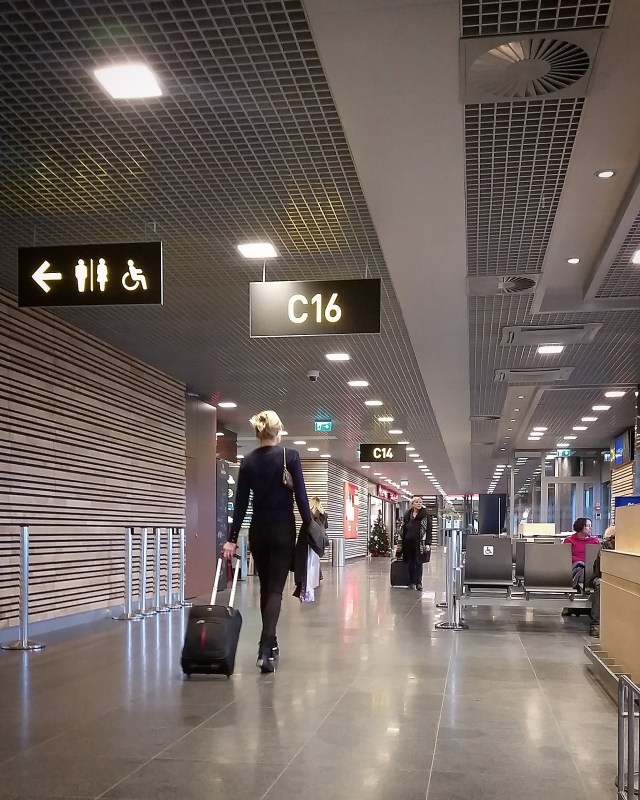
Egypt… the best of the River Nile

Egypt

Egypt, a land of ancient wonders and modern marvels, beckons travellers with its rich tapestry of history, culture, and natural beauty.

Among its many jewels, Luxor and Aswan stand out as iconic destinations, offering a glimpse into the grandeur of bygone eras.

These cities, situated along the life-giving River Nile, form the heart of many Nile cruises, tracing a route that has been traversed for millennia by pharaohs, merchants, explorers and – more recently – holidaymakers alike.

Luxor, often referred to as the world’s greatest open-air museum, is home to the magnificent Karnak and Luxor Temples, the haunting Valley of the Kings, and the awe-inspiring Tomb of Tutankhamun. This city, once the thriving capital of ancient Egypt, offers a deep dive into the country’s glorious past.

At the other end of a cruise itinerary, Aswan, with its tranquil Nile views and bustling markets, serves as a gateway to the stunning Philae Temple, the Aswan High Dam, and the UNESCO World Heritage site of Abu Simbel (many of which I will touch upon in this blog). Aswan’s serene beauty and rich cultural heritage make it a perfect end or beginning to a Nile cruise


Egypt is home to many ancient temples that form part of a Nile River Cruise trip

So what should first-time visitors know before embarking on an Egyptian, River Nile Cruise adventure?

The first thing to consider is the weather. For the trip I was on I travelled in December which offers a pleasant respite from the scorching summer heat.

During this time, the average high temperature is around 22°C (72°F), while the average low dips to about 9°C (48°F). This makes it an ideal period for exploring the country’s historical sites and enjoying a cruise along the River Nile.

The next thing to consider is the local currency.

The official currency of Egypt is the Egyptian Pound (EGP). At the time of writing, you can exchange approximately 60 Egyptian Pounds for £1. It’s advisable to carry some local currency for small purchases, though major credit cards are widely accepted in hotels, cruise vessels and larger establishments.

The third thing to consider is that Egypt operates on Eastern European Time, which is two hours ahead of the UK. When traveling to Egypt, you’ll lose two hours, but you’ll gain them back upon your return to the UK. This time difference is usually quite manageable, allowing you to adjust quickly and make the most of your trip.


Luxor to Aswan on a map of Egypt from Google Maps

The next thing to consider is the power points.

When it comes to electricity, Egypt uses two types of plugs: C and F. Plug type C has two round pins, while plug type F also has two round pins but with two earth clips on the side. Egypt operates on a 220V supply voltage and 50Hz frequency. Ensuring you have the appropriate adapters will help you keep your devices charged and ready for use throughout your journey.

The final thing to consider is the language which, in Egypt is, Arabic.

While English is widely spoken in tourist areas, learning a few basic Arabic phrases can enhance your experience and help you connect with the locals. Knowing some key words like “Hello”  مرحبا (Marhaban), “Goodbye” is وداعا (Wada’an), “Please” is من فضلك (Min fadlak), and “Thank you” is شكرا (Shukran) can be a great help to smooth transactions.

Embarking on a River Nile cruise and exploring the ancient cities of Luxor and Aswan offers a journey through history like no other. With a bit of preparation your Egyptian adventure is sure to be an unforgettable experience.


Getting there

Flying from the UK to Luxor offers a mix of anticipation and comfort as travellers embark on a journey to one of Egypt’s most historic cities. While there are seasonal direct flights, most routes from the UK to Luxor include a stopover in Cairo.

Starting November 2024, easyJet will introduce flights from London Gatwick to Luxor while TUI provides flights from both London Gatwick and Manchester, ensuring flexibility for travellers.

EgyptAir also offers a reliable option with flights departing from London Heathrow. These journeys typically take around seven to eight hours, including the layover, offering a reasonable travel time. The average cost for a flight in December – the time of year I went – currently hovers around £500 per adult, making it fairly affordable.

Upon landing, you find yourself at Luxor International Airport, the primary gateway to this ancient city. Located just four miles east of Luxor, the airport is ideally situated for quick and easy access to the city’s renowned historical sites.

In 2005, the airport underwent a significant upgrade to accommodate up to 8 million passengers annually. However, current passenger traffic is around 2.5 million per year, ensuring a less crowded and more comfortable experience for visitors.

The airport is well-equipped to handle the needs of modern travellers. With 48 check-in desks, the process of getting ready for departure is efficient and straightforward. The eight gates available facilitate smooth and organised boarding for flights.


Flying into Luxor

Where to stay

Cruising down the River Nile between Luxor and Aswan is an unparalleled experience, blending the serenity of river travel with the excitement of discovering ancient Egyptian wonders.

There are a number of River Nile cruise boats but the one I used was that of the Ra II.

Onboard the Ra II, this journey transforms into a luxurious floating retreat, seamlessly merging the mystique of ancient history with modern comfort and convenience.

The Ra II which features 83 air-conditioned cabins, meticulously designed to cater to your every need.

Each cabin comes with private facilities, ensuring privacy and comfort. Entertainment is readily available with in-room TVs, and the double-glazed windows provide a quiet sanctuary, allowing you to enjoy the river’s tranquil views undisturbed.

For most guests, the private balcony offers an intimate space to bask in the picturesque scenery, although this feature is not available in single cabins.

Dining on the Ra II is a culinary adventure. The large, attractive dining room hosts international buffet-style meals, offering a wide array of dishes that cater to diverse tastes and dietary preferences. Each meal is a feast, presenting an opportunity to indulge in global flavours and fresh, local ingredients. More on this later on.


The Ra II docked
The Ra II isn’t a large vessel, but it’s plenty big enough for a River Nile cruise

For those seeking a more relaxed dining experience, the onboard coffee shop is the perfect spot to enjoy a casual bite or a warm cup of coffee.

There is also a sizeable bar is a convivial space where guests gather to enjoy a range of beverages, from fine wines to creative cocktails, accompanied by the soothing backdrop of the River Nile.

The ship’s swimming pool and two Jacuzzis provide a refreshing escape from the heat, allowing you to unwind and cool off and the sundeck (also equipped with its own bar) is an idyllic spot for sunbathing or enjoying a sunset drink, offering panoramic views of the river and its surrounding landscapes.

For those interested in shopping, the boutique and gift shop onboard offer a variety of unique souvenirs and gifts, making it easy to bring a piece of your journey home with you.


The top deck of the RA II has plenty of space to lay in the sun or take a dip in the small pool
Each room as a balcony view over the river

Getting around

As you’d expect, the journey between these iconic destinations is entirely aboard your river cruise boat.

One of the most delightful aspects of a Nile cruise is the seamless travel experience it offers.

Much of the journey takes place overnight, meaning you can drift off to sleep as the Ra II glides gently along the river.

Each morning, you wake up in a new and exciting location, refreshed and ready to explore. This eliminates the fatigue often associated with daytime travel, allowing you to fully enjoy each destination with renewed energy.


Views from the RA II as it makes its way down the River Nile
For the most part, the River Nile is fairly empty but you will see and pass other vessels from time to time

Disembarking at each port, you are met with modern, air-conditioned coaches that transport you to the heart of Egypt’s historical and cultural treasures.

These comfortable coaches ensure a pleasant journey as you venture to ancient temples, grand tombs, and monumental statues.


When you’re not on the boat, you’ll be taken to differnt sites on a bus like this
Being on the River Nile gives you great sunset views

Top sites

The first thing to say is that many of these sites will not cost you anything extra as they will be included as part of you River Nile Cruise. However, the likes Abu Simbel are optional extras meaning that you have to pay to go on this trip which can be organised with the reception area on board the Ra II.

Now, while the list below doesn’t involved everything you’ll see on a River Nile Cruise, I’ve tried to cover some of the trip highlights.

The first of these is Karnak Temple.

Nestled on the eastern bank of the Nile River in Luxor, Karnak Temple stands as a testament to the grandeur and mystery of ancient Egyptian civilisation.

As one of the largest religious complexes ever constructed, Karnak is not just a single temple but a sprawling collection of sanctuaries, pylons, chapels, and other buildings.

Karnak Temple, known in ancient times as Ipet-isut (“The Most Selected of Places”), was built and expanded over a period of 2,000 years, from the Middle Kingdom to the Ptolemaic period.

It served as the main place of worship for the Theban Triad: the god Amun, his consort Mut, and their son Khonsu. Each pharaoh who ruled during this period contributed to the temple’s construction, resulting in a complex that showcases a diverse array of architectural styles and artistic achievements.

The Great Hypostyle Hall, covering an area of 5,000 square metres, is perhaps the most iconic feature of Karnak. It boasts 134 massive columns arranged in 16 rows, with the central columns soaring to a height of 21m. Another notable feature is the Sacred Lake, a large, rectangular body of water used by priests for ritual purification.

Karnak is home to several impressive obelisks, including those erected by Pharaohs Hatshepsut and Thutmose III. These towering stone pillars are covered in hieroglyphs that tell stories of their reigns and religious devotion.

The entrance to Karnak Temple is lined with a magnificent avenue of sphinxes, which once connected Karnak to Luxor Temple. These sphinxes, with ram heads symbolising the god Amun, create a grand approach to the temple.

The best time to visit Karnak Temple is early in the morning or late in the afternoon when the temperatures are cooler (although this is usually dictated by the itinerary of the boat), and the crowds are thinner. The temple opens at 6am and closes at 5:30pm in the winter and 6pm in the summer.

Make sure to wear comfortable walking shoes, as the site is vast and involves a lot of walking. Bring a hat, sunscreen, and plenty of water to stay hydrated.


Looking towards the entrance to Karnak Temple
The alley into Karnak Temple is lined with Karnak sphinxes with a ram heads
The once mighty columns that still stand inside Karnak Temple

The next highlight is a trip to the Valley of the Kings.

Situated on the west bank of the River Nile, opposite modern-day Luxor, this necropolis served as the final resting place for many of Egypt’s most powerful pharaohs and nobles.

Upon arriving at the Valley of the Kings, you get struck by the stark beauty of the landscape. The valley, surrounded by arid mountains and bathed in the relentless Egyptian sun, seems an unlikely place for such treasures. Yet, hidden beneath the surface are the elaborately decorated tombs that have survived for thousands of years.

Your ticket to the Valley of the Kings grants you access to three of these eight incredible tombs, each telling its own story through intricate carvings and vibrant wall paintings. You can pick any three you wish so listen to any guides there who may direct you to some of the best ones.

That said, each tomb is unique, with its own architectural features and decorative themes, making every visit a new adventure.

As you descend into these ancient tombs, you are transported to a different era. The air cools, and the walls come alive with scenes depicting the pharaohs’ journeys to the afterlife, their encounters with gods and goddesses, and the trials they must overcome to reach eternal peace.

The colours, remarkably well-preserved, speak of a civilization that placed immense value on the afterlife and the preparation for it. The experience is both humbling and awe-inspiring, as you walk the same paths once trodden by the ancients.

One of the highlights of any visit to the Valley of the Kings is undoubtedly the tomb of infamous boy-king Tutankhamun. Discovered by Howard Carter in 1922, Tutankhamun’s tomb is renowned for its opulent treasures and the near-perfect condition in which it was found.

However, it’s important to note that entry to Tutankhamun’s tomb is not included in the standard ticket. For an additional charge of 500 Egyptian Pounds (around £8) per person, you can explore this legendary tomb and see the famous golden burial mask (so long as it’s not being housed in the Cairo Museum or elsewhere in the world at the time of your visit), among other artifacts.

This extra cost is a small price to pay for the privilege of witnessing one of the most significant archaeological discoveries of all time.

In the Valley of the Kings, history is not just read about or seen from a distance; it is felt. The weight of the ages presses down upon you, the whispers of the past seem to echo through the corridors, and the splendour of an ancient world comes vividly to life.


A view down the entrance road into the Valley of the Kings
The map shows the vastness of the Valley of the Kings and just how many known burial sites there are, including the famous Tutankhamun
The Valley of the Kings is the final resting place of many famous Egyptian Pharaohs

The next stop is the Mortuary temple of Hatshepsut which can be found at the base of the cliffs at Deir el-Bahari.

As you approach the temple, the grandeur of its design becomes apparent, with its terraces rising in harmony with the rugged limestone cliffs that serve as a dramatic backdrop. This magnificent structure, built during the reign of Pharaoh Hatshepsut in the 15th century BCE, stands as a testament to her ambitious vision and the artistic achievements of her time.

Upon entering the temple, you’re immediately hit by the sense of scale and the meticulous attention to detail. The temple is divided into three levels, each connected by a series of ramps that guide visitors upward through a progression of stunning colonnades and courtyards.

The lower terrace, once adorned with lush gardens and exotic plants, provides a serene introduction to the temple’s wonders. As you ascend, the beauty of the architecture unfolds, with the middle terrace revealing a colonnade decorated with intricate reliefs depicting scenes from Hatshepsut’s life and reign, including her divine birth and her famous trading expedition to the Land of Punt.

The pinnacle of the visit is the upper terrace, which houses the main sanctuary. Here, the grandeur of the temple’s design reaches its zenith. The sanctuary, dedicated to the god Amun-Ra, features a series of chapels and altars that once served as the focal point of religious ceremonies.

The walls of the sanctuary are adorned with some of the finest examples of ancient Egyptian art, showcasing the skill and creativity of the artisans who brought Hatshepsut’s vision to life. These intricate carvings and paintings not only celebrate the gods but also immortalise Hatshepsut’s legacy as one of Egypt’s most successful and revered pharaohs.

Wandering through the temple, it’s impossible not to be awed by the ingenuity and artistry that went into its construction as well as the extraordinary capabilities of ancient Egyptian builders.

The temple stands as a powerful reminder of Hatshepsut’s unique role in ancient Egyptian history, as a female pharaoh who defied conventions and left an indelible mark on her civilisation.


The famous Mortuary temple of Hatshepsut
One of the many well preserved statues at the Mortuary temple of Hatshepsut
Many impressive statues are still intact within the Mortuary temple of Hatshepsut site

The next stop is the Colossi of Memnon.

These two massive stone statues have stood the test of time, greeting the dawn with silent majesty for over three thousand years. Located on the west bank of the River Nile near Luxor, the statues once flanked the entrance to a grand mortuary temple built by Pharaoh Amenhotep III, though much of the temple has long since been reclaimed by the sands of time. Yet, the Colossi remain, steadfast sentinels of history.

As you approach the site, the sheer scale of the statues becomes apparent. Each colossus stands about 18m high and is carved from single blocks of quartzite sandstone, transported from quarries near Cairo, over 675km away.

This monumental feat of engineering speaks volumes about the ingenuity and determination of the ancient Egyptians. Despite the wear and tear inflicted by centuries of weather and occasional earthquakes, the statues still retain a commanding presence, their expressions serene and enigmatic.

These statues have seen the rise and fall of dynasties, witnessed countless sunrises and sunsets, and have been admired by travellers from the ancient Greek historian Herodotus to modern-day tourists.

In fact, the Colossi were famous in antiquity for a mysterious phenomenon: the northern statue was said to “sing” at dawn. This sound, likely caused by the sun heating the stone and causing it to expand and crack, inspired numerous legends and added an aura of mystique to the site. Roman Emperor Septimius Severus attempted to repair the damage, but in doing so, silenced the statue forever.

The Colossi stand as a testament to the grandeur of ancient Egypt and offer a moment of contemplation and wonder for all who come to see them.


The imposing Colossi of Memnon
The sheer size of the Colossi of Memnon is impressive
The Colossi of Memnon sit exposed to the elements

Next up, is the Temple of Edfu.

Situated on the west bank of the Nile River in the city of Edfu, this majestic temple is dedicated to the falcon god Horus and offers a captivating glimpse into the grandeur of ancient Egyptian civilisation.

Approaching the Temple of Edfu, visitors are immediately struck by its imposing pylon, which stands at a height of 36m. The pylon, adorned with intricate carvings depicting scenes of pharaohs making offerings to the gods, sets the tone for that lies ahead.

Passing through the gateway, you’ll enters the vast courtyard, where the sheer scale and precision of the temple’s construction become apparent.

The temple, constructed during the Ptolemaic period between 237 and 57 BCE, reflects a blend of Greek and Egyptian architectural styles. As you wander through its halls, the detailed reliefs on the walls tell stories of mythological battles, religious rituals, and the daily life of the gods.

The columns of the Hypostyle Hall, each decorated with hieroglyphs and images of deities, create an atmosphere of reverence and wonder.

One of the most captivating features of the Temple of Edfu is the Sanctuary of Horus. Located at the heart of the temple, this sacred space houses a replica of the ancient statue of Horus, which was believed to be the earthly representation of the god. The dark, intimate chamber, is only illuminated by shafts of sunlight filtering through narrow openings.

Exploring further, you’ll discover the intricately carved reliefs on the temple walls, which are remarkably well-preserved. These carvings depict the epic battle between Horus and his uncle Seth, a story central to Egyptian mythology. Each scene is filled with symbolic meaning, offering insights into the religious beliefs and cultural values of the time. The vivid depictions of gods, pharaohs, and mythical creatures bring to life the rich tapestry of ancient Egyptian lore.

The temple also includes various chapels and storerooms, each with its own unique decorations and purposes. These smaller chambers were used for storing religious artifacts, performing specific rituals, and housing statues of other deities.

The temple stands as a monument to human creativity, religious devotion, and the quest for immortality.


The impressive Temple of Edu is remarkably intact
One of the stone bird statues guarding the entrance to the temple
The inside of the Temple of Edfu is just as impressive
On the walls on the outside of the Temple of Edfu you can still see the impressive designs cut into the stone

Next is a visit to the Temple of Kom Ombo.

Located on the eastern bank of the Nile River, the Temple of Kom Ombo stands as a sign of ancient Egyptian architectural brilliance and religious devotion.

Unlike any other temple in Egypt, Kom Ombo is uniquely dedicated to two gods: Sobek, the crocodile god of fertility and creator of the world, and Horus the Elder, the falcon-headed god representing the sky, war, and protection. This dual dedication is mirrored in the temple’s symmetrical design, with duplicate courts, halls, sanctuaries, and rooms for each deity.

The temple’s carvings and reliefs, which have withstood the ravages of time, depict scenes of pharaohs making offerings to the gods, religious rituals, and daily life in ancient Egypt.

One of the most striking features of the Temple of Kom Ombo is the Hall of Columns. Each column is adorned with hieroglyphics and images that tell stories of gods and kings, of battles fought and won, and of a civilisation that thrived on the banks of the Nile thousands of years ago.

The temple also houses a fascinating and somewhat eerie collection of mummified crocodiles. These sacred animals were revered as incarnations of Sobek, and their mummified remains were discovered in the nearby Crocodile Museum.

Stepping outside the temple, the view of the River Nile is breathtaking. The serene flow of the river contrasts with the bustling history encapsulated within the temple walls. It’s easy to imagine the temple in its heyday, with priests performing daily rituals and worshippers coming to pay their respects to the gods.

The strategic location of the temple, overlooking the Nile, also underscores its historical importance, serving as a centre of worship and a place of respite for travellers and traders navigating the river.


The ruins of the Temple of Kom Ombo
Despite the temple lying in ruins, there is still evidence of the opulence that it once had

A stunning visit is that to see the Temple of Philae.

Located on Agilkia Island in the Nile River, near Aswan, this temple complex stands as a testament to the architectural prowess and spiritual devotion of the ancient Egyptians.

Its serene location, surrounded by the gentle flow of the Nile, sets a picturesque backdrop that enhances the ethereal experience of visiting this sacred site.

As you approach the temple by boat, the first glimpse of its majestic pylons emerging from the horizon is awe-inspiring.

The intricate carvings on the temple walls, depicting scenes of gods, goddesses, and pharaohs, showcase the artistic mastery and religious fervour that characterised the Ptolemaic and Roman periods.

Dedicated primarily to the goddess Isis, the Temple of Philae was a vital pilgrimage site and a centre for worship. Isis, revered as the goddess of magic and motherhood, attracted devotees who left behind a rich tapestry of myths and legends etched into the temple’s stone.

The main temple, with its grand courtyards, sanctuaries, and towering columns, invites visitors to explore its hallowed halls. The Hypostyle Hall, with its forest of columns adorned with floral capitals tells a story, with hieroglyphs and reliefs that narrate religious rituals, royal decrees, and cosmic events.

One of the most remarkable features of the Temple of Philae is its salvation from the waters of the River Nile.

With the construction of the Aswan High Dam in the 1960s, the temple faced the threat of submersion. In an extraordinary feat of engineering and international co-operation, the entire complex was meticulously dismantled and relocated to higher ground on Agilkia Island. This monumental effort not only preserved a significant piece of Egypt’s cultural heritage but also stands as a testament to humanity’s dedication to preserving history.

The temple complex is not only a marvel of ancient architecture but also a symbol of continuity and change. While the worship of Isis may have ceased, the temple continues to draw visitors from around the world, each captivated by its beauty and history.


You have to get a boat out the the Temple of Philae
First sights of the Temple of Philae from the boat
Like many, the Temple of Philae is a mix of well preserved buildings and ruins

Visiting Abu Simbel is an experience that transcends the typical tourist excursion, immersing travellers in the grandeur of ancient Egyptian civilisation.

Located in the far south of Egypt, near the border with Sudan, the temples of Abu Simbel stand as proof to the architectural prowess and artistic brilliance of the New Kingdom period.

Built during the reign of Pharaoh Ramses II, these monuments were intended to impress and intimidate both the neighbouring Nubians and the gods themselves.

The journey to Abu Simbel is an adventure in itself. Given its remote location, reaching the temples requires a bit of planning and additional expense. From the Ra II, this visit is optional and comes at an extra cost which is around 5,000 Egyptian Pounds per person (approximately £80). While this may seem steep, the price includes the round trip through the stunning desert landscape and a guide who can provide invaluable insights into the history and significance of the site.

The early morning bus route takes you through the vast, arid expanses of the Sahara, where the golden sands stretch as far as the eye can see.

Upon arrival at Abu Simbel, the first sight of the colossal statues of Ramses II carved into the rock face is nothing short of breathtaking. These massive figures, standing guard at the entrance, convey a sense of power and permanence that is truly awe-inspiring. The precision and scale of the carvings, coupled with their state of preservation, make it clear why Abu Simbel is considered one of the pinnacles of ancient Egyptian art and architecture.

Inside the temples, the grandeur continues. The Great Temple is dedicated to Ramses II himself and the gods Amun, Ra-Horakhty, and Ptah. The walls tell stories of Ramses’ victories and divine favour, with sunlight illuminating the inner sanctum on specific days of the year in a precise astronomical alignment.

Next to the Great Temple is the smaller but equally impressive Temple of Hathor and Nefertari, dedicated to Ramses’ beloved wife, Queen Nefertari, and the goddess Hathor. This temple, too, features remarkable artistry and provides a poignant glimpse into the personal life of the pharaoh.

What makes Abu Simbel even more remarkable is the story of its relocation.

In the 1960s, the temples faced submersion due to the construction of the Aswan High Dam. In a monumental feat of modern engineering, UNESCO spearheaded a project to move the entire complex to higher ground.

The temples were meticulously cut into large blocks, transported, and reassembled in their current location. This effort preserved not only the physical structures but also their cultural and historical significance for future generations.

As the visit concludes and you board the bus back to the Ra II, there’s a profound sense of having witnessed something extraordinary. The temples of Abu Simbel are not just relics of the past; they are a powerful reminder of human ingenuity, artistic excellence, and the timeless allure of ancient Egypt.

While the journey may come at an extra cost, the experience is priceless, leaving visitors with memories and a sense of wonder that will last a lifetime.


The impressive sight of Abu Simbel is a real highlight of a River Nile cruise
From a distance, you can see how stark and baron the landscape is around Abu Simbel
When you get close to Abu Simbel you really get to appreciate the size of the structure
A face-on view of Abu Simbel

Where to avoid

Embarking on a River Nile cruise is one of the safest and most enjoyable ways to explore the wonders of Egypt.

With organised excursions and guided tours, you get to experience the country’s rich history and culture with peace of mind. However, like any travel destination, there are a few things to be mindful of to ensure your trip is as pleasant as possible.

The first is to be cautious in busy tourist areas.

While you’ll be escorted during most of your visits, busy tourist areas can be hotspots for pickpockets so always be mindful of where your possessions are. Keep your valuables secure and avoid carrying large amounts of cash.

The second point is that in Egypt, it’s common for locals to approach tourists asking for money or trying to sell various items. This can sometimes be overwhelming or annoying, but a firm and polite “no” coupled with walking away usually suffices. Engaging too much or showing hesitation can encourage more persistent attempts. Keeping interactions brief and respectful is key to navigating these encounters smoothly.

Another thing to be mindful of is a popular scam that involves locals offering to take your photo with your camera or phone, only to demand money in return for giving it back. To avoid this, it’s best to take photos within your group or use a selfie stick. If you do need someone to take a photo, choose a fellow tourist or someone you can trust.

Finally, hydration is crucial, especially in the Egyptian heat, but avoid buying bottled water from street vendors. These bottles might be refilled with tap water, which can be unsafe to drink. Always purchase water from reputable sources such as your cruise ship or well-known stores. Ensuring the seal on the bottle is intact before consuming is a good practice to follow.

Most itineraries on a River Nile cruise, such as those on the RA II, are filled with incredible sites and experiences. However, one aspect you might want to skip is the visit to an alabaster workshop.

These visits often turn into glorified sales pitches, where you learn a bit about the process of making alabaster goods before being subjected to relentless sales tactics.

Unless you’re specifically interested in purchasing alabaster items, it’s perfectly acceptable to opt out of this part of the tour. You can choose to wait outside for your group, avoiding the pressure to buy something you might not even want.

Beyond these few precautions, the rest of your River Nile cruise itinerary is likely to be an unforgettable experience.


You may get taken to an Alabaster workshop which is basically a glorified sales pitch
Once you arrive, you’ll hear about alabaster before the pushy sales reps try and part you with your money

Great places to eat

Unlike a lot of trips I’ve been on, the main place to eat for a River Nile cruise is, in fact, on board the boat.

Embarking on the Ra II River Nile Cruise is not just about exploring ancient sites and beautiful landscapes; it’s also an opportunity to enjoy a variety of delicious foods. The cruise offers a diverse selection of dishes, including options for vegetarians, from buffet breakfasts to dinners.

Each morning on the Ra II starts with a buffet breakfast that includes a good mix of international favourites.

You can enjoy freshly baked breads and pastries, such as pita, Baladi, and croissants or, for those who prefer lighter options, there are seasonal fruits like dates, figs, oranges, and pomegranates, along with freshly squeezed juices.

There are also various cheeses, yogurts, and milk, including local choices like feta and labneh. Hot breakfast items and savory pastries provide a hearty start, while cereals, granola, and a variety of jams and spreads cater to a continental taste.

As the day draws on and having usually eaten lunch out during a visit or had a snack at the pool-side bars, dinner on the Ra II is a more elaborate affair, with a buffet featuring a mix of Egyptian specialties and international dishes.

The setting is enhanced by the gentle sound of the river, creating a pleasant dining atmosphere. Options include a selection of mezze, such as hummus, baba ghanoush, tabbouleh, and stuffed vine leaves, along with fresh salads and a variety of dressings.

Main courses include dishes like kofta, kebabs, grilled fish, and roast chicken, with sides such as rice, couscous, and roasted vegetables.

The Ra II also offers a good selection of vegetarian options, like stuffed peppers, lentil stew, vegetable tagine, and moussaka.

For dessert – if you still have room – you can enjoy traditional Egyptian sweets like baklava, basbousa, and umm ali, as well as cakes, pastries, and fresh fruits.


Useful links

EgyptAir

The Ra II

Karnak Temple

Valley of the Kings

Mortuary temple of Hatshepsut

Colossi of Memnon

Temple of Edfu

Temple of Kom Ombo

Temple of Philae

Abu Simbel

Remember you can follow World Complete on TwitterInstagramPintrestTumblr and Facebook send your comments and pictures from your travels using #WorldComplete and #Travel.

Tirana… exploring Europe’s North Korea

Tirana

For decades, Albania was shrouded in mystery, its borders sealed off from the world. Today, it stands as a testament to resilience and transformation and is finally inviting travellers to uncover its hidden gems.

At the heart of the country is its vibrant capital city, Tirana; a city that is forcing it’s way into the modern world with skyscrapers bursting out all over its growing landscape from the scars left from its communist past.

However, it’s been far from an easy ride for Albania and its citizens to even get to this point.

The country has journeyed from its ancient Illyrian origins to a pivotal role in the Ottoman Empire, and through a tumultuous 20th century under a communist regime that earned it the rather endearing moniker “The North Korea of Europe.”

Tirana, the capital city of Albania, has a rich history that dates back to its founding in 1614 by Sulejman Pasha, an Ottoman general. Originally a small town, Tirana grew steadily over the centuries due to its strategic location at the crossroads of major trade routes.

Albania declared its independence from the Ottoman Empire in 1912, but it wasn’t until 1920 that Tirana was proclaimed the country’s capital. This marked the beginning of a new era for the city, which underwent significant development and modernisation efforts. Italian architects and planners played a crucial role in shaping Tirana’s urban landscape during the interwar period, leaving a lasting imprint on its architecture.

Yet, the most transformative period in Tirana’s history came after World War II, when the communist regime led by Enver Hoxha took power in Albania. Hoxha, a staunch Stalinist, ruled the country with an iron fist from 1944 until his death in 1985. His regime brought about profound changes to both the city and the nation.

Under Hoxha’s leadership, Albania was isolated from much of the world. The communist government implemented radical policies, including the nationalisation of industry and agriculture, the eradication of private property, and the suppression of religious practices. Tirana, as the political and administrative centre of the country, became the focal point of these changes.

Hoxha’s regime was marked by extreme measures of control and surveillance. The infamous Sigurimi, the secret police, kept a tight grip on the population, ensuring that any dissent was quickly and harshly dealt with. Bunkers were built across the country, including in Tirana, as part of Hoxha’s paranoid preparations for an anticipated invasion that never came. These bunkers remain a stark symbol of the era’s repressive atmosphere.

The regime’s isolationist policies also had a significant impact on Tirana’s cultural life. Western influences were strictly censored, and the arts were used as tools of propaganda. Despite this, the city fostered a unique cultural scene, with state-sponsored theatres, operas, and artistic institutions that promoted socialist realism.

The fall of communism in the early 1990s brought about a new chapter for Tirana. The transition to a market economy and democratic governance was tumultuous, but it also opened the city to the world. Since then, Tirana has undergone rapid transformation, characterised by vibrant urban development, a booming real estate market, and a lively cultural revival.

This next bit may sound strange but, this trip marked a special milestone for my family, as it was the first time my wife (Holly) and I took our son Jacob on a plane. The anticipation and anxiety that accompany flying with a one-year-old were intense, yet Jacob handled it with grace far beyond his years.

While we fretted over every possible scenario, he peacefully slept through take-off and found endless amusement in the airplane window blinds as well as watching a host of downloaded children’s TV shows on a tablet we fixed to the back of one of the chairs in front of us!

As destinations go to take a one-year-old for his first airplane flight, Albania was perhaps a slightly risky choice, but overall, the risks were mitigated by good planning (solely down to Holly’s management of Jacob) and our son’s blossoming enthusiasm for travel (and indeed everything put in front of him).


Examples of Albania’s communist past are still evident through Tirana

So what should a first time visitor know before embarking on an Albanian adventure?

The first thing to consider is the weather.

If, like us, you’re planning a trip during May, you can expect mild and pleasant weather. Daytime temperatures in Tirana typically range from 18°C to 24°C (64°F to 75°F), making it an ideal time to explore the city without the scorching heat of summer or the chill of winter. Evenings can be cooler, so packing a light jacket is advisable. During our visit, there were regular forecasts of rain and thunderstorms, and while we did have some, we found that most of the time the skies were clear, and the sun was out.

The second thing to consider is the currency.

In Albania the local currency is the Albanian Lek (ALL), with approximately 120 Lek to the British Pound (GBP) at the time of writing.

It’s important to note that cash remains the preferred method of payment in Albania, and credit cards are not widely accepted, especially outside major establishments.

You’ll also need to obtain Lek upon arrival in Albania, as it’s not available for exchange in the UK. Cash points and Bureau de Change services are available at the airport and in the city.

When withdrawing money from cash machines, keep in mind that some machines might charge a fee for international cards. It’s wise to withdraw larger amounts to minimise these fees. Additionally, having smaller bills is useful for daily transactions, as larger denominations can be difficult to break in smaller shops and cafes.

Carrying a few Euros as a backup is also a good idea, as they are sometimes accepted, though typically at a less favourable exchange rate than just paying in the local currency.

The next thing to consider is that Albania operates on Central European Time (CET), which is one hour ahead of the UK. This means you’ll lose an hour when you fly out but gain it back upon your return.

It’s a minor adjustment, but one worth noting when planning your travel itinerary.


Tirana on Google Maps

The next thing to consider is the power points.

For Albania, there are two associated plug types, types C and F. Plug type C is the plug which has two round pins, and plug type F is the plug which has two round pins with two earth clips on the side. Albania operates on a 230V supply voltage and 50Hz. If you’re traveling from the UK, you’ll need a plug adapter to use your devices. It’s also a good idea to bring a power strip if you have multiple devices to charge, as hotel rooms may have limited outlets.

Finally, you’ll also need to consider the language.

While exploring Tirana, we found that English is fairly common, especially among the younger population and in tourist areas. However, not everyone speaks English, so it’s helpful to know a few basic phrases in Albanian.

If like Holly and I, foreign languages don’t come naturally to you – especially those you rarely (if ever) come into contact with – then it’s still handy to have a few key words and phrases in your back pocket to help smooth over any difficulties.

Even with our limited grasp of the language, we managed to navigate the city with relative ease.

That said, knowing simple words like hello (përshëndetje), goodbye (mirupafshim), please (ju lutem) and thank you (faleminderit) in the local language can go a long way to help international relations. In addition, words and phrases like yes (po), no (jo), excuse me (më falni) and how much does it cost (sa kushton) can also help.

Overall, Tirana is a city of contrasts, where the remnants of its communist past coexist with modern architecture alongside and a dynamic, youthful energy that is craving international attention.

Its history is a testament to the resilience and adaptability of its people, who have navigated through centuries of change to build a vibrant and hopeful future that is just coming onto the tourist trail.


Getting there

When planning a trip from the UK to Tirana, you have several airport options to choose from, each with its own advantages. London Heathrow is the largest airport in the UK and offers numerous flight options and amenities.

London Luton and London Stansted are both excellent alternatives, especially for budget-conscious London-based travellers as they act as hubs for low-cost airlines.

Manchester is a great option for those based in the north of England, offering a variety of flights to Tirana, while Edinburgh is ideal for travellers from Scotland.

When it comes to airlines, you have a choice between British Airways, Ryanair, and Wizz Air for direct flights from the UK. Each airline offers different services, from full-service flights with British Airways to more budget-friendly options with Ryanair and Wizz Air.

Holly, Jacob, and I opted to fly from London Heathrow on British Airways with our flight departing at 8:15am in the morning. The total cost for our tickets was £597.57, with Jacob flying for free as he was under two years old at the time.

It’s important to note that the actual full price was much higher than what we paid in cash as we also utilised Avios points to cover an additional £500 of the fare. This fare included checked luggage for all of us, hand luggage, and a pushchair, making our journey more convenient.

Once onboard the aircraft – having navigated Jacob through the airport much to his excitement following an early morning wake-up – the flight from London to Tirana took between two-and-a-half to three hours. The plane was fairly comfortable and onboard, we had the option to purchase food and drinks to tide us over for the journey.

As this was Jacob’s first time on a plane, both Holly and I were anxious about how he would handle the experience. Jacob, undramatically, slept through the take-off, which was a huge relief to us. Once airborne he soon woke-up but was quietly content watching children’s TV shows on a tablet while sitting on our knees allowing us to enjoy a smooth and pleasant flight.


Jacob’s first sights of the plane he is about to go on for his first flight
Jacob enjoying his first flight
Views towards the Albanian shoreline

Touching down at Tirana International Airport in 2024, we joined the growing number of passengers traveling through this increasingly popular airport. In 2023, the airport saw 7.2 million passengers, marking its busiest year in history. Built between 1955 and 1957, the airport is modestly sized but offers a warm welcome to travellers.

Stepping off the plane, we were greeted by stunning views of the surrounding mountains. The terminal building was just a short walk away, and we quickly made our way through the efficient and modern passport control. The baggage carousels were easy to navigate, and our luggage arrived promptly.

After collecting our luggage we made use of one of the various cashpoints to get some Albanian money to use – although these do take a small fee from your card when withdrawing the foreign currency. It is possible to avoid the cash points and use the bureau du change here, but to do so you must bring the currency you wish to exchange in cash as they don’t accept card transactions.

With cash in our pockets and suitcases at our sides, we headed out to explore Albania.


Tirana from the air
Touching down on the Albanian tarmac
Jacob’s first sights of Albania

Where to stay

Tirana offers a wide range of accommodation options to suit various budgets and preferences. Many of the options available are very reasonably priced, making it an attractive destination for travellers looking for value without compromising on comfort without breaking the bank.

When planning our trip to Tirana, Holly and I decided to book an AirBnB near Skanderbeg Square. The location was perfect, right in the heart of the city, and we managed to secure it for a total of £219.73 for four nights, which comes to £54.93 per night. This seemed like a great deal for a city centre stay.

However, our arrival in Tirana was not as smooth as we had hoped. Just two hours before our scheduled check-in, while we were already in Albania at the airport, we received a message from our hosts informing us that our booking had been double-booked. It meant that we could no longer stay at our original booking (despite having booked it many months beforehand) and, instead, had to be moved to a different AirBnB apartment in the same general area.

The new accommodation was comfortable enough, but it came with a few unexpected challenges. The room intended for our young son, Jacob, lacked curtains or blackout blinds, which had been advertised.

After some back and forth with the hosts, they did come out on the first evening to install blinds and replace the broken cot they had initially provided. It wasn’t the ideal start, but at least these issues were eventually resolved.


City centre views from the AirBnB’s window
The main bedroom was comfortable enough and had curtains
Yet the second bedroom only had very thin netting and no curtains nor blinds – plus a broken cot

Another significant issue we encountered was with the onsite parking.

The parking facility was actually located about a kilometre away from the apartment, in an underground car park. To access it, we had to drive our car into a very narrow lift operated by security guards who spoke very little English.

The process of parking and retrieving our car was slow and cumbersome, with cars often backed-up along the narrow roadway waiting for one of the two lifts. The situation worsened when, on one occasion, the lift broke down with all of us inside our car.

After much waiting around – at one point in the pitch-black – we were told to carefully climb out of the lift between floors, carrying Jacob to safety while avoiding the open multistorey gap below.

I had to leave my car keys with the security guards as they manually winched the lift down to retrieve the car. After this nerve-wracking experience, I decided not to use this parking facility again despite it being free of charge as part of the room booking.

Despite these setbacks, the apartment itself had some positive aspects. The living room featured a large television, which was great for entertaining Jacob before bedtime. Additionally, the apartment was conveniently located near various restaurants and cafes, making it easy to find places to eat and drink.

While our stay in Tirana had its share of challenges, it also had its moments of comfort and convenience. Given the number of other accommodation options available in the city, I would recommend shopping around and reading reviews carefully before making a booking. Tirana has much to offer, and with a bit of research, you can find the perfect place to stay that meets all your needs.


Inside the car, inside a broken lift waiting to be let out wasn’t the way I expected to spend some of my time in Tirana
The living area in the apartment was spacious and comfortable
And Jacob enjoyed playing with his toys in front of the television

Getting around

The first and most obvious way to get around inside the city is on foot.

Many of the city’s main attractions are conveniently close to each other, making it ideal for a leisurely stroll. From Skanderbeg Square to the Pyramid of Tirana  you can explore a lot by walking as we did during our stay in the city.

However, if you’re looking to venture beyond Tirana and see more of Albania, hiring a car is advisable.

One of the main reasons for this is that – at the time of writing – there are no train networks running in Albania; and any railway lines that you may see that remain are long since abandoned.

Fortunately, car hire rentals are plentiful and affordable, with many vendors located at and around the airport. For our trip, we chose to book through easyCar, a middleman service, which connected us with Carwiz.

However, when Holly, Jacob, and I went to pick up our car, we had to walk past almost every other car hire place, leave the airport premises, and walk a few minutes down the road to collect our hire. While not the most convenient, it’s worth noting that there are closer options available at the airport itself.

Carwiz themselves were fine. There is not much in terms of customer service and they are pretty eager to get you on your way fairly quickly from their forecourt. With limited English, interactions were not easy and extremely short and to the point.

Our booking cost £92.74 for a four-day hire, including taxes and insurance, which we paid online in advance. Additionally, we booked a toddler seat and Wi-Fi access, which had to be paid for on arrival, costing a total of €60, which I paid in cash. Be advised though, to check that the Wi-Fi box they give you works before you leave as the first one we were given didn’t.

A handy tip: the Wi-Fi access needed to be plugged into the car for power. We found that bringing a portable power pack and keeping it charged overnight allowed us to carry the small Wi-Fi box with us, providing internet access wherever we went at no additional cost. The was a great help when it came to navigating the streets on foot as we would otherwise have struggled to find where we wanted to go.

For British drivers, it’s essential to bring your driving licence, an International Driving Permit (1968) which can be purchased from the Post Office in the UK for around £5, your passport, a credit card with your full name on it, and the car hire voucher.

Forgetting any of these documents could mean you won’t be able to take the car. When picking up your car, photograph it from every angle and note any existing damage, as well as the fuel level and mileage. While we didn’t encounter any issues, it’s better to be safe than sorry.


Getting a car in Albania can allow you to explore beyond Tirana
Picking up our car in the Carwiz forecourt
Many parking lots in Tirana are underground

Let’s be honest here, driving in Albania is an adventure!

Albanians drive on the right-hand side of the road, which takes some getting used to for British drivers. Everyone in the vehicle must wear a seat belt, and mobile phones can only be used with a hands-free set.

Horns are used freely and liberally. Albanians seem to use them in equal measure for showing frustration at a slow getaway from traffic lights just as much as to a friendly hello to a friend walking past them.

Also, be prepared for cars to pull over at random points, including double parking other vehicles and even on roundabouts. This can take some getting use to, but is something that seems to be widely accepted.

Furthermore, lane discipline is more of a (rather ignored) guideline than a rule, with cars often pulling in and out of lanes right in front of you, while overtaking on blind-bends is commonplace.

Driving in Tirana itself can be challenging, with slow-moving and chaotic traffic. However, once you leave the city, the roads open up and driving becomes more comfortable. One thing to note is that when I was driving I noticed very few signs up to show what the speed limits on the roads were. For the most part I had to use common sense and basically either match what was happening around me or drive slightly slower than the faster vehicles to give me a fighting chance of staying on the right side of the law.

With that in mind, we noticed that police patrols are plentiful both inside and outside the city. Be aware that they are often seen sitting in their patrol cars at the side of the road pulling people over intermittently. Fortunately this didn’t happen to us, and drivers coming in the opposite direction to you, who had just passed a patrol are very good at letting you know there is one coming up by flashing their lights at you.

In terms of parking, I found it to be readily available outside of the city and in all of our trips was able to find street parking for free. Inside the city, we had access to the aforementioned underground car park as part of our AirBnB booking, but if you want an easier experience, I’d suggest parking at the car park at the centrally Skanderbeg Square Car Park which costs you around 800 Lek for 24 hours (about £6.50). That way you can get in and out of the car park and the city with greater ease and not be required to use a rather temperamental car lift.

While this may all sound quite off-putting, I found myself getting used to the Albanian way of driving pretty quickly and with a bit of confidence you can navigate yourself around the country fairly easily.

Overall, the road conditions are generally good, although you should watch out for occasional potholes. Driving into the mountains offers spectacular views and a memorable experience, although our journey was slightly marred by Jacob’s car sickness on the long, winding roads, leading to some unexpected – and rather unwelcome – clean-up duty!


Outside of Tirana, roadside parking is usually available and often free
It takes a little getting use to driving the ‘wrong way’ around a roundabout
Driving off into the Albanian mountains is easy to do and stunning to see

Top sites

As I’ve mentioned in other blogs, one of the best ways, I think, to dive into a new city is to take a free walking tour early in your trip.

Not only is this a fantastic way to explore the city, but it also allows you to uncover hidden gems that you might otherwise miss. Before heading to Albania, I did some research and found one that I would highly recommend; the Essential Tirana tour from Visit Albania, which can be easily booked using the Freetour.com app.

The Essential Tirana tour is a two to three-hour guided tour around the city. Given that Tirana is still relatively under the radar in terms of tourism, you’ll often find yourself in small, intimate groups. For instance, when Holly, Jacob, and I took the tour, it was just the three of us and our knowledgeable guide, making for a personalised and engaging experience.

Tours need to be booked in advance, with starting times at 11am and 3pm and meeting in the heart of the city at Skanderbeg Square; making it a convenient starting location for exploring the city’s main attractions.

During the tour you’ll take in a number of key sites, the first of which is Skanderbeg Square itself.

Named after Albania’s national hero, Gjergj Kastrioti Skanderbeg, the square is a vast open space surrounded by important buildings and cultural landmarks.

The highlight of the square is the impressive Statue of Skanderbeg, which stands proudly on one of its sides. The statue commemorates Skanderbeg, who led the Albanian resistance against the Ottoman Empire in the 15th century. The square is often bustling with locals and visitors, and it’s a great place to soak in the lively atmosphere of the city.

Also located in Skanderbeg Square – to the northwest – is the National History Museum which is the largest museum in Albania. It offers a comprehensive overview of the country’s history from ancient times to the present day.

The museum’s exhibits include archaeological findings, medieval artifacts, and displays on the communist era, providing deep insights into Albania’s past. The facade of the museum features a large mosaic called “The Albanians,” which depicts key figures from Albanian history and is a striking piece of art in itself. It also provides the perfect visual contrast between the Albania under communist rule with the ever-increasing number of skyscrapers flying-up around the square.

The final location that you’ll see in Skanderbeg Square before moving on is the Opera & Ballet Theatre, a key cultural institution in Tirana. Its grand architecture and cultural significance make it a must-see for art enthusiasts.


The view across the Skanderbeg Square
The statue of Skanderbeg standing proudly over Skanderbeg Square
The statue of Skanderbeg is one of the main symbols of the city of Tirana
The signs of Albania’s communist past are still very much present
Skanderbeg Square at night

As you move out from the square, you come across the Et’hem Bej Mosque. This 18th-century mosque is one of the oldest and most beautiful in Tirana. Despite the religious repression during the communist era, the mosque survived and today stands as a testament to the city’s rich Islamic heritage. Its intricate frescoes and serene atmosphere make it a fascinating stop on the tour. The mosque’s interior is adorned with beautifully detailed paintings of trees, waterfalls, and bridges, creating a peaceful and reflective space.

You are also able to enter this mosque which we did free of charge (although donations are always welcome). It’s worth noting that if you do enter, women will be asked to cover up if they are wearing shorts or have bare shoulders.

A short walk from the mosque, is the Resurrection of Christ Orthodox Cathedral and shows the other main side of the belief system Albania. This modern cathedral, completed in 2012, is one of the largest in the Balkans. Its striking design features a large dome and elegant bell towers, and the interior is equally impressive with vibrant frescoes and icons including a mosaic made of shells depicting Mother Teresa.

One of the more unusual landmarks in Tirana is the Pyramid of Tirana. Originally built as a museum dedicated to Enver Hoxha, the former communist leader of Albania, the pyramid now stands as a curious and somewhat controversial structure.

Although it had fallen into disrepair, it remained an intriguing piece of the city’s history. The Pyramid of Tirana has now been retrofitted with stairs on its outside (as well as lifts on the inside) which allow visitors to climb to its roof top for a panoramic view of the city. Best of all, this is total free of charge!


The inside of the Et’hem Bej Mosque is beautiful but to go in women must be dressed ‘modestly’
The showpiece item inside the Resurrection of Christ Orthodox Cathedral is the mosaic made of seashells of Mother Teresa
The striking image of the unusual Pyramid of Tirana
Climbing to the top of the Pyramid of Tirana is worth it for the great panoramic views

Moving on you get to Tirana Castle – also known as the Fortress of Justinian – which is an ancient Byzantine fortress in the heart of the city.

While much of it lies in ruins, sections of the walls still stand, offering a glimpse into Tirana’s medieval past. The area around the castle is now a lively spot with cafes, shops, and restaurants (more on this later on). The cobblestone streets and historical ambiance make it a charming place to explore, and you can imagine what life might have been like during the castle’s heyday.

For a peek into Albania’s recent history, a visit to Enver Hoxha’s former residence is a must. The house, located in the Blloku district, was once part of a restricted area reserved for the communist elite.

Today, Blloku is a trendy neighbourhood known for its vibrant nightlife and chic cafes, but the residence remains a poignant reminder of the city’s past. The contrast between the area’s past and present is striking, and exploring Blloku offers a unique perspective on how Tirana has transformed over the years. At the time of writing, the residence is closed so you have to make do with viewing it from the streets.

One of the final stops of the tour is the Air Albania Stadium, the country’s largest sports venue. The stadium, which hosts national and international football matches, is a modern architectural feat and a source of national pride for Albanians. The stadium’s design is sleek and contemporary as was the venue of the 2022 UEFA Europa Conference League final between Italian side Roma and Dutch outfit Feyenoord.

The tour guide will take you back to where you started and at this point you can make a personal judgement as to how much it was worth. As an estimate we gave our guide 2,000 Lek (around £17) although the amount each person gives is up to them and there is no pressure to give more than you feel comfortable doing.


The former residence of Albanian dictator Enver Hoxha
While the house isn’t open to the public, work is taking place inside and the grounds are being well-maintained
The ultra-modern Air Albania Stadium is the home of the Albanian national football team

Away from the walking tour another city site I’d suggest visiting is Bunk’Art 2 which offers visitors a fascinating journey through the country’s tumultuous past.

This museum is housed in a converted Cold War bunker providing an immersive experience into Albania’s communist era, revealing the depths of its secretive and often oppressive history.

Bunk’Art 2 is the second instalment of the Bunk’Art museum series, following the original Bunk’Art which is located on the outskirts of Tirana. This unique museum is dedicated to the history of Albania’s Ministry of Internal Affairs and the infamous Sigurimi, the secret police during the communist regime led by Enver Hoxha. The museum’s setting within a vast underground bunker built to protect the communist elite from potential nuclear attacks enhances the authenticity of the experience.

Conveniently located Bunk’Art 2 can be found just off Skanderbeg Square. Its entrance is through a typical surface level appearance bunker which hides the network of corridors it has below.

To go inside, you descend the stairwell to the ticket area where the entrance fee stands at approximately 500 Lek (around £4.20 per person – although Jacob being only one at the time entered for free).

Upon entering Bunk’Art 2, visitors are greeted with a labyrinth of rooms and corridors, each meticulously curated to depict various aspects of life under the communist regime.

The museum showcases a wide array of documents, photographs, and personal items that tell the story of the Sigurimi and their surveillance operations. These exhibits provide a chilling glimpse into the extent of state control and the everyday reality for Albanian citizens during the communist era.

Several rooms within the bunker have been reconstructed to resemble the original offices and interrogation rooms used by the secret police. These authentic recreations offer a sobering insight into the methods employed by the regime to maintain power and control.

Bunk’Art 2 utilises multimedia displays, including videos and audio recordings, to bring the history to life. These installations provide personal stories and testimonies from those who lived through the period, adding a human dimension to the historical narrative.

In addition to historical exhibits, the museum also features contemporary art installations that reflect on Albania’s past and present. These works offer a creative interpretation of the country’s journey from repression to freedom.

While perhaps Jacob was far too young to appreciate where he was, he did enjoy roaming the corridors while Holly and I chased after him to ensure he wasn’t getting anywhere he shouldn’t. After getting as much out of the museum as we could (with a one-year old in tow) we ascended the exit stairwell and made our way back to the city’s streets.


The street-level entrance to Bunk’Art 2
The sight you get as you first step inside Bunk’Art 2
Once underground, you are met with an intricate network of inter-connecting corridors

One of the best things I think you can do in Albania is in fact leave the city centre and check out some of the beautiful surround towns and villages that make up this blossoming country.

One such place that should be high on the list that is nestled in the heart of Albania, is the city of Berat which captures the essence of the country’s rich history and stunning natural landscapes.

Known as the “City of a Thousand Windows,” Berat offers a picturesque escape that combines cultural heritage with breathtaking scenery.

The drive to Berat is an adventure in itself, filled with scenic views of Albania’s beautiful mountains. For the most part the drive is simple (so long as you use a sat-nav) and if you’re coming from Tirana – as we were –  the capital city, the drive takes about two hours.

The two-hour journey winds through the lush, green landscapes of central Albania, offering panoramic views that are perfect for photo opportunities. The road is (mostly) well-maintained, making for a comfortable drive that allows you to soak in the natural beauty along the way, although watch out for the occasional hazardous pot-hole!

Sadly, while the drive was comfortable, the winding roads did have an effect on Jacob who was very car sick; causing us to have to make a rather quick emergency stop to sort him out.

However, once you arrive in Berat, you’ll find convenient parking opportunities along the main road. The best part? All parking is free of charge. This makes it easy for visitors to park their vehicles and start exploring the town without worrying about parking fees.

After parking, we took a leisurely walk down the main road past an array of local shops towards the newer part of town. This area is bustling with souvenir shops and restaurants, provides an excellent spot to enjoy lunch. The local eateries offer a variety of traditional Albanian dishes, as well as international cuisine, ensuring there’s something for everyone.

One of the highlights of the lower part of Berat is the Gorica Bridge, a historical stone bridge that spans the Osum River. This Ottoman-era bridge connects the two parts of Berat, Mangalem and Gorica, and is an architectural marvel. Walking across the bridge, you’ll be treated to stunning views of the river and the surrounding hills. The Gorica Bridge is not just a functional crossing but also a symbol of the town’s enduring history and unity.

Visible from all around lower section of Berat, stands the majestic Berat Castle at the top of the hill; undoubtably the key attraction of any visit to this city.

Its ancient walls, rich history, and stunning panoramic views make it a must-visit destination for anyone traveling to this enchanting Albanian city. However, as Holly, Jacob, and I found out the hard way, getting to the top can be quite a challenge – especially with a one-year-old in tow!

Our journey to Berat Castle began with a burst of enthusiasm that soon met the reality of the midday sun. We decided to walk up the hill, taking on the uneven paths that wound their way upwards. What seemed like a scenic and invigorating hike quickly turned into a test of our endurance and patience.

With the sun beating down relentlessly, and a one-year-old who needed constant attention and hydration, our pace slowed to a crawl – somewhat ironically matched visually when we past a lone tortoise in the middle of the path half way up!

Pushing on, each step up felt like a small victory against the sweltering heat and the rough terrain. We took frequent breaks, sipped water, but it was clear that this wasn’t the smartest move we had ever made.

After what felt like an eternity, we finally reached the top of the hill, sweaty and exhausted. It was then that we discovered something that made us all groan in unison: you can drive a car up to the castle and park right there! The sight of several cars comfortably nestled in the shade, was a bittersweet revelation. We could have saved ourselves the strenuous hike and simply driven up!

Determined not to repeat our mistake, we opted for a much easier way down. At the end of our visit, we jumped into a taxi, sparing ourselves the slow and treacherous climb back down the hill. The ride was quick and smooth, a stark contrast to our arduous ascent, and we couldn’t help but laugh at our earlier decision to walk.

Despite the challenges we faced getting there, the experience at Berat Castle was nothing short of magical. The ruins of the castle – which are free to enter – offered stunning views of Berat and the surrounding landscapes. From the top, you could see the Osum River winding through the city, the red-tiled roofs of the houses, and the lush green hills beyond.

Exploring the castle grounds, we stumbled upon a delightful selection of shops and cafes nestled within the ancient walls. These charming establishments offered everything from souvenirs to refreshing beverages and ice creams, providing a perfect respite after our tiring journey. We enjoyed a leisurely stroll, bought a couple of small mementos, and sipped on cold drinks while soaking in the historical ambiance; all the time with Jacob doing his level best to make all locals fawn over his little happy face.


Looking up at Berat Castle from the lower section of the city
Holly and Jacob on the Gorika Bridge
The climb up to Berat Castle was tough and got harder the further up we went
The views from the top of Berat Castle were worth the climb though

Another suggested day trip from Tirana is to the shores of the breathtaking Lake Ohrid, and to the small village of Lin.

This village is just a short drive from the North Macedonian border and provides a perfect blend of serene lake views and captivating cultural sites.

Driving to Lin Village from Tirana, takes approximately two-and-a-half to three hours, depending on traffic. The journey is scenic, winding through picturesque landscapes and charming small towns (which made Jacob car sick again). Upon arrival in Lin, we found parking conveniently available in the village itself, making it easy to start our day out right away.

Once parked, we decided to relax and enjoy a meal at one of the lakeside hotels. The dining spots here offer not only plentiful servings of food but also an opportunity to soak in the tranquil views of Lake Ohrid. The shimmering waters and surrounding mountains create a perfect backdrop for a leisurely lunch, setting the tone for the rest the visit.

After a satisfying meal, it was time to delve into the village. Lin is a quaint place, characterised by its charming stone houses and narrow cobbled streets. A must-see attraction is the Mosaic of the Ancient Basilica of Lin, located atop a hill overlooking the village.

After a short – but challenging – hike up the hill we found the gates to this historical site. Here, we were greeted by a local caretaker who let us in free of charge and provided an insightful explanation of the mosaics and their significance.

The mosaics, dating back to the 4th century, are remarkably well-preserved and depict intricate designs and patterns, offering a glimpse into the artistic heritage of the region.

After our visit to the basilica, we (eventually) continued on by walking further up the hill. This path led us to a bunker at the edge of the clifftop, offering spectacular panoramic views of Lake Ohrid and the surrounding landscape. The vantage point from the bunker is unparalleled, providing a sweeping vista that is well worth the extra effort.

Be mindful not to rely solely on Google Maps for directions to the bunker. The app tends to direct visitors back to the lower section of Lin, and led us initially to the foot of the cliff face that houses the bunker, which is inaccessible from there, meaning we had to reclimb the hill. Instead, if we’d continue walking up the hill beyond the basilica in the first place we’d have found the highest point of the village where the bunker is positioned.


The impressive – and remarkably well-preserved – Mosaic of the Ancient Basilica of Lin
Traditional Albanian houses are commonplace on the streets of Lin
It takes a bit of a climb, but the end result of reaching the bunker in Lin is worth it
The tranquil views across Lake Ohrid with North Macedonia in the distance

Where to avoid

While Tirana is a generally safe and welcoming city, as with any urban area, there are a few things to be mindful of during your visit.

Crime and violence are concerns in any major city, and Tirana is no exception. However, it’s important to note that incidents targeting foreigners are rare. To ensure your safety, is best to stay vigilant – especially late at night and, if possible, avoid walking alone especially in poorly lit or unfamiliar areas.

Also, there are reports of pickpockets operating in the city and this can occur in crowded places like tourist spots and even at the airport. Keep your belongings secure, avoid displaying valuables, and stay aware of your surroundings.

All that said, during our visit, Holly, Jacob and I never felt in danger and the people were friendly on the most part and helpful. Exercising common sense in most instances will be sufficient.

You do get instances of beggars coming up to you on the street (and even at busy intersections on the roads while you’re driving, but quickly move on when you don’t give them any money.

As Tirana isn’t overflowing with traditional tourist sites, it’s easy to say there isn’t much to avoid. However, one installation that you can skip over fairly quickly is The Cloud.

Located near the Lana River on Bulevardi Deshmoret e Kombit, The Cloud is an art installation placed in front of the National Gallery of Arts and since 2016, it has served as a modern art space for cultural events in Tirana.

The Cloud is a three-dimensional structure made of fine steel bars, forming 800mm and 400mm rectangles. This semi-transparent, irregular canopy protects visitors from the elements while allowing them to remain part of the landscape. Stepped terraces provide seating areas, making the Pavilion a flexible, multi-purpose social space.

Despite its creative design and intended cultural significance, The Cloud could be perceived as little more than scaffolding. While we did visit it during our stay in the city I’d suggest it doesn’t warrant a special trip and can be adequately appreciated simply by walking past it on the way to another destination.


Holly, Jacob and I inside The Cloud
Looking up at The Cloud
Looking up through The Cloud showcases what it’s made from

Great places to eat

For food lovers, Tirana’s culinary scene is as vibrant as the city is itself!

Bets of all, you can eat well in the city without worrying too much about the damage to your wallet. With just 1000 to 1500 Lek per person (about £8.50 to £12.60), you can feast on delectable dishes, often paired with a cold beer for a mere 200 Lek (about £1.50).

Tirana’s cuisine is a delightful blend of flavours inspired by its Mediterranean neighbours, Italy and Greece. The rich, creamy textures of Italian pasta, the fresh and zesty notes of Greek salads, all harmoniously coexisting with traditional Albanian fare which are often meat-intensive, showcasing the hearty and robust flavours that define the countries cuisine.

The first thing to say here is that no visit to Tirana is complete without indulging in Byrek, a quintessential Albanian treat.

This savoury pastry is a culinary masterpiece, featuring layers of flaky dough stuffed with various fillings such as cheese, spinach, pumpkin or minced meat. Each bite offers a delightful crunch followed by a burst of flavourful goodness, making Byrek a favourite among locals and tourists alike and a great way to start the day like a local.

For an unforgettable dining experience, head over to aforementioned Tirana Castle. This historic enclave is not only a cultural landmark but also a gastronomic hub, housing an array of restaurants that cater to every palate.

One gem nestled within its ancient walls that Holly, Jacob and I enjoyed one evening is Ceren Ismet Shehu. This charming eatery specialises in traditional Albanian and Eastern European cuisine, serving up dishes that are both hearty and plentiful. The service here is friendly and welcoming, ensuring you feel right at home as you savour each bite of your delicious meal.

So whether you’re sampling the rich, meaty stews or enjoying the crisp, layered perfection of Byrek, every meal is an adventure. The affordability of dining out means you can indulge in a variety of dishes without breaking the bank, making Tirana a haven for food and travel lovers.

Like the city – and indeed the country itself – the food scene in Tirana is just waiting to be explored by the increasing number of curious tourists entering this once closed-off corner of Europe.


The food is extremely tasty and plentiful
Despite how it looks, even Jacob enjoyed his visit to Ceren Ismet Shehu
Ceren Ismet Shehu offers a great selection of traditional foods to try

Useful links

British Airways

Avios

AirBnB

easyCar

Carwiz

Skanderbeg Square Car Park

Freetour.com – Essential Tirana free walking tour

Skanderbeg Square

Statue of Skanderbeg

Et’hem Bej Mosque

Resurrection of Christ Orthodox Cathedral

Pyramid of Tirana

Tirana Castle

Enver Hoxha’s former residence

Air Albania Stadium

Bunk’Art 2

Berat

Gorica Bridge

Berat Castle

Lin village

Mosaic of the Ancient Basilica of Lin

Lin bunker

The Cloud

Ceren Ismet Shehu

Remember you can follow World Complete on TwitterInstagramPintrestTumblr and Facebook send your comments and pictures from your travels using #WorldComplete and #Travel.
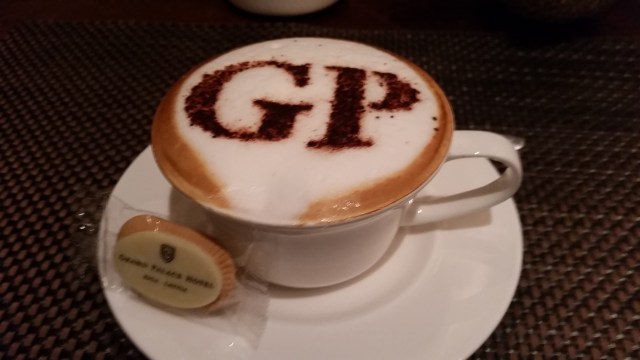
Bruges… enjoying the Venice of the north

Bruges

Bruges remains one of Europe’s best preserved cities and has both charm and intrigue oozing in abundance out of its cobblestone streets.

The fairy-tale city is a place that lives and breathes history. Visiting Bruges is like travelling back in time to the Middle Ages. It is both magical and authentic.

I had previously travelled to Bruges in the past, but not with my wife Holly. And this time we also would be joined by a third traveller in the shape of our one-year-old son, Jacob.

The trip to Belgium would be Jacob’s first time out of the UK. With his pristine passport in hand (the photo they use in it is perhaps the cutest thing I’ve ever seen) this would be our first adventure abroad as a family of three!

A little nervous at the prospect? Yes. Excited about it? Absolutely! It’s my sincere hope that Jacob develops as much of a love for travel as both his parents have.

To make matters easier for ourselves, we decided that this “tester” trip would be made as simple as possible. It led us to choose a destination that we could reach by train (so to avoid having to do an airport) and one that we’d be able to take at a fairly slow pace, despite it being in the height of summer (August).

Bruges quickly became that location.

The city of Bruges is situated in the enchanting region of Flanders in the north-west of Belgium.

With its unquestionable charm, picturesque canals, and well-preserved architectural treasures, Bruges stands as a testament to the rich history and cultural heritage of this remarkable country.

Bruges traces its origins back to the Roman era when it served as a coastal settlement and trading hub. However, it was during the Middle Ages that the city truly flourished, becoming one of the wealthiest and most important centres of commerce in Europe. Bruges emerged as a vital link in the Hanseatic League, a powerful trading network that connected the Baltic and North Sea regions.

The 14th and 15th centuries marked the golden age of Bruges. The city’s strategic location, along with its flourishing textile industry and bustling port, attracted merchants from all corners of the globe. It quickly became renowned for its wool, cloth, and luxury goods, making it a prosperous trading centre. The opulence and wealth of the city are reflected in its stunning architectural landmarks, which still grace the city-scape today.

While Bruges experienced periods of decline in the following centuries, the city’s historical significance was never forgotten. In the late 19th century, a concerted effort was made to restore and preserve its architectural heritage, ensuring that Bruges would remain a cherished destination for generations to come.

The city is a veritable open-air museum of architectural wonders. The city’s historic centre – a UNESCO World Heritage site – boasts an impressive collection of Gothic, Renaissance, and Romanesque buildings.

Bruges is often referred to as the “Venice of the North” due to its intricate network of canals. These waterways add to the city’s charm, offering visitors scenic boat rides and an opportunity to explore Bruges from a different perspective. Meandering through the cobblestone streets, lined with quaint houses, elegant mansions, and charming squares, really is like stepping into a fairy-tale.

The city remains a living testament to Belgium’s glorious past. Its cobbled streets, enchanting canals, and magnificent architecture create an ambiance that transports visitors back in time.


The Belfort is the main focal point set right in the heart of Bruges

Bruges is a dream destination for first-time travellers to Belgium.

So what should a first time visitor know before embarking on a Bruges adventure and immersing themselves in the city’s romantic atmosphere?

The first thing to consider is the weather.

August (the month Holly, Jacob and I visited in) is a popular and wonderful time to visit Bruges, as the city experiences mild and pleasant weather. The average temperature during this month ranges from 15°C to 22°C (59°F to 72°F). However, it is a good idea to pack layers, as the weather can be unpredictable at times. Don’t forget to bring an umbrella or raincoat, as rainfall is possible throughout the year.

The second thing to think about is the currency.

The official currency in Belgium is the Euro (EUR) and it’s recommended to carry some cash for small purchases and establishments that may not accept cards. At the time of writing £1 got you €1.15. Currency exchange services are available at banks, exchange offices, train stations and major airports while ATMs can be found throughout the city, allowing you to withdraw cash.

Another area to consider is the time difference from the UK. Bruges is located in the Central European Time Zone (CET) and during August, Bruges is one hour ahead of the UK. This hour you’ll lose when you travel to Belgium but gain back when you arrive back in the UK.


Bruges on Google Maps

The next thing to consider is the power points.

For Belgium there are two associated plug types, types C and E. Plug type C is the plug which has two round pins and plug type E is the plug which has two round pins and a hole for the socket’s male earthing pin. Belgium operates on a 230V supply voltage and 50Hz.

A final consideration is the language.

For a small country, Belgium likes to add a challenge when it comes to languages spoken. By this I mean that the official languages in Belgium are Dutch, French, and German.

Which language is the primary language will greatly depend on where in the country you are. For instance, in the capital city, Brussells, the main language is French (although signs in the Metro also appear in Dutch). However, in Bruges, the primary language spoken is Dutch.

Visitors who only speak English (like Holly and I – and hopefully Jacob in the future) need not fear too much though, as English is widely understood and spoken by locals, particularly in tourist areas, hotels, restaurants, and shops, meaning you won’t face a significant language barrier while exploring Bruges. That said, it’s always polite to learn a few basic phrases in the local language.

Knowing simple words like hello (hallo), goodbye (tot ziens), please (alsjeblieft) and thank you (bedankt) in the local language can go a long way to smoothing interactions with local people.


Getting there

As mentioned, we wanted to make sure this journey would be as straight-forward and as hassle free as possible.

So while it is possible to fly to Belgium (you cannot fly directly to Bruges from the UK so you have to fly to Brussels and then catch a local train), from the UK it makes far more sense to get the Eurostar.

Booking out tickets online we paid a total of £246 for two return adult tickets to Brussels from London St. Pancras International in August (due to Jacob’s age he sat on our laps and was free of charge). It’s worth noting that prices will vary depending on the time of year you are travelling and the time of day you wish to go.

For those unfamiliar with the train, the Eurostar is a high-speed train service that runs between the UK, France, Belgium and the Netherlands. The Eurostar provides a stress-free and time-efficient way to reach a destination.

If you’re travelling from London as we did, you’ll begin your Eurostar journey at London St Pancras International Station. Before Covid-19, there were also options from Ebbsfleet International and Ashford International, however, at the time of writing, these have yet to come back and it’s unclear if they ever will!

After a smooth check-in process, we boarded the Eurostar train, which whisked the three of us away on a two-and-a-half-hour journey to Brussels. Sitting back we watched as the English countryside transformed itself into the picturesque landscapes of Belgium.

Upon arrival in Brussels we disembarked from the Eurostar (which arrives on either platform one or two) onto the Belgium platform marking Jacob’s first steps abroad.


Walking down the platform at London Kings Cross St Pancras International to get on the Eurostar
Jacob loved looking out the window of the train as we travelled

Having soaked in this momentous occasion, we made our way to the connecting train to Bruges. To avoid having to locate a ticket office in the busy Brussel terminal, I’d pre-booked return tickets for us – via The Trainline – between Brussels and Bruges for just £68.30 in total.

Brussels Midi/Zuid station (to give it, its full name) offers frequent and convenient connections to Bruges, with journey times ranging from one to two hours. Most take around one and a quarter hours with a couple of stops along the way. In total there are 75 trains every day travelling the 55 miles between the two cities so options are plentiful.

To help, it’s worth remembering that Belgian domestic trains to Bruges and Ghent leave from platforms nine to 16, so worth heading in that direction when you arrive in Brussels.

The magic of the city hits you as soon as the train pulls into Bruges railway station. Exiting via the main entrance and exit, we made the relatively short walk towards the heart of the city to find our accommodation.


Domestic trains in Belgium often have two floors on them
Arriving at Bruges station (with the city name in Dutch on the sign)

Where to stay

The first thing to say is that Bruges has a wide variety of hotels and other types of accommodation readily available all-year-round that suits most budgets.

For this trip, however, Holly and I needed to ensure that where we stayed had facilities for Jacob.

So unlike most trips we take – where we look for a nice AirBnB to stay in – for this one with Jacob we wanted to ensure that there were people available to assist easily should we need anything during our stay.

It meant that for our trip to Bruges, we found a delightful B&B – BNB in Bruges – that exceeded our expectations in every way.

Nestled in the heart of the city on a road called Riddersstraat, this accommodation met all our needs for our short stay. It was competitively priced and had facilities to ensure Jacob would be able to sleep here as well.

Before our arrival at the B&B, I’d received a text message and email confirming how to let ourselves into the building and that our room key would be in the door waiting for our arrival.


The entrance to BnB in Bruges is quite understated and we walked past it without noticing it when we first arrived
We were on the top floor in the aptly named, Room with a View

Our room on the top floor – and aptly named Room with a View – was simple, yet, tastefully decorated; with a rustic yet elegant ambiance. It boasted all the essential amenities required for a comfortable stay. The large, plush bed promised restful nights after a day of exploring the city, and the addition of a baby cot for our little one was one of the main reasons we selected this accommodation.

The en-suite bathroom featured modern fixtures and complimentary toiletries, ensuring our convenience throughout our stay.

The B&B’s location couldn’t have been more perfect.

Situated in the heart of Bruges, it allowed us to immerse ourselves in the city’s rich history and culture effortlessly. The iconic attractions, such as the medieval Belfort and the historic Markt Square were all within a leisurely stroll from the B&B. Additionally, the picturesque canals of Bruges were just a stone’s throw away, offering idyllic scenery.

Considering the location, facilities, and personalised service, the cost of €450 (around £390) for a three-night stay for two adults and a baby felt like a reasonable investment. While breakfast wasn’t included, the nearby cafes and bakeries provided us with a chance to sample delicious local treats each morning.

Our stay at the BNB in Bruges left us with cherished memories of this enchanting city. The cozy room, prime location, and family-friendly amenities made it an excellent choice for our little families first trip abroad together.


The room was quaint yet spacious
The bed was extremely comfortable and we enjoyed a good night’s sleep in it

Getting around

Bruges is a compact city that can easily be explored on foot. Its well-preserved medieval centre makes walking the best way to experience the city’s charm.

Due to it’s relatively small size and its pedestrian-friendly layout, Bruges is extremely easy to navigate on foot. And while there are other options available, including cycling along the cities cobbled lanes (a firm favourite among the locals), boat trips along the city’s canals or taking a horse-drawn carriage, walking is the easiest and most cost-effective method to get around this small city.

Overall, walking around Bruges is a delightful experience, that offered us a unique opportunity to immerse ourselves in the city’s rich history and beautiful atmosphere.

To give you an idea of the distances you’ll need to walk, a gentle stroll from the train station – located in the south-west corner of the inner city to our accommodation – which was fairly centrally located – took us around 25 minutes (with luggage and a baby) to travel the fairly flat 1.8km route.

So, while public transportation is also available if you need to travel longer distances or prefer not to walk, we found it far more rewarding to stroll through the streets and soak in everything Bruges had to offer.

With Jacob in his pushchair – and Holly and I donning a pair of comfortable shoes – each day we would set-out on a leisurely stroll that allowed us to get lost in the magic of Bruges.


Most of the streets in Bruges are cobblestones so makes pushing a pushchair and wheeling luggage around was that bit of an extra challenge
Walking in Bruges gives you plenty of chance to enjoy the beautiful architecture

Top sites

There are many attractions that you should see in Bruges but at the front of any visitors list will be the Belfort of Bruges; the city’s primary focal point located on the edge of the famous Markt.

This imposing tower is a sight to behold and, while a lot of Bruges is low-lying, the Belfort stands proud and tall within the city providing superb panoramic views of the surrounding area.

I had plans to climb the Belfort but with a one-year old child in tow, these plans had to be thought through a little more. We decided that the best bet was for me to ‘wear’ Jacob on my chest and climb the tower carrying him in this manner.

To give us the “easiest” climb possible, we headed to the Belfort for opening (which at the time of our visit was 9am – but in the winter months is 10am). This way, there were as few people as possible climbing the tower at the same time as us.

The main issue is that, to reach the top of the Belfort, you’ll need to conquer a formidable 366 steps. To add a complication, the way up is also the way down, meaning that the higher you get the more narrow it is, making passing points hard to come by.

While this may seem like a challenging climb (and with a baby it even more tricky), the reward at the top is more than worth the effort.

As you ascend, you’ll pass by the massive bells that give the tower its name with each step bringing you closer to the spectacular views that await.

Once we’d made it to the summit, we were greeted by a sweeping, 360-degree vista of Bruges and its picturesque surroundings. From this vantage point, you can see the city’s charming canals, historic buildings, and quaint cobblestone streets. The views – I’m told – are particularly stunning during sunset when the warm hues of the setting sun cast a magical glow over the city.

During our stay, I also learnt that the Belfort used to act as a watchtower for the city. While the building looks like a church, it is in no way linked to religion. Instead people used to stand at the top and keep an eye on the city. This included people watching for fires. Should one break out, they would chime the bells and point flags in the direction of the blaze in order to signify where people needed to rush to, in order to put out the fire and cause minimal damage. Ingenious!

With that in mind, the Belfort isn’t just about the view. it’s also a window into Bruges’ rich history. Inside the tower, you’ll find a museum that showcases the story of the Belfort and the city itself. The various exhibitions are spread across the floors as you ascend giving you ample opportunity to explore artifacts and historical documents that bring the past to life.

Perhaps what the Belfort is most famous for (other than being the focus of the rather awesome ending of the film In Bruges), the Belfort is home to a carillon of 47 melodious bells, and they play an integral role in the city’s daily life. These bells chime regularly throughout the day, offering a delightful soundtrack to a visit.

To experience all that the Belfort has to offer, including the climb to the top and access to the museum, you’ll need to purchase a ticket. The current entrance fee for adults is €15 per person while children under the age of seven (as in Jacob’s case) are free of charge. Given the unforgettable experience and the chance to immerse ourselves in Bruges’ history and culture, this felt like an extremely reasonable price.


The Belfort of Bruges is an imposing sight in the city
The three of us at the foot of the Belfort of Bruges ahead of climbing to the top
At the top enjoying the views across Bruges

Going hand-in-hand with the Belfort, nestled in the heart of Bruges, sits the Markt Square.

This historic square, also known simply as “the Markt,” is not only a must-visit destination for travellers but also one that we found ourselves returning to time and time again during our stay in the city.

As mentioned, one of the standout features of Markt Square is the towering Belfort of Bruges. But there is much more to see and do in the square.

Strolling through the Markt, we found ourselves surrounded by a stunning collection of historic buildings showcasing various architectural styles. The Provincial Court, the Old Civil Registry, and the iconic colourful facades of the guildhalls transported us back in time.

While we didn’t do this, the square is also the place to get on a horse-drawn carriage ride. These charming (albeit quite costly) rides offer a unique perspective of the square, and the clip-clopping of horse hooves against the cobblestone streets adds to the enchanting atmosphere.

Markt Square regularly hosts an array of market stalls. On a weekly basis there are multiple stalls with a host of items from traditional Belgian chocolates and lace to handcrafted souvenirs and local foods.

Food lovers are covered as well. Numerous restaurants and cafes line the square, offering both Belgian classics and international cuisine.


The view from the ground of the Markt Square
Markt Square is the place to pick up the horse-drawn carriage rides in Bruges
The view down at Markt Square from the top of the Belfort of Bruges

If – like us – you a chocoholic looking for a delectable adventure then you need look no further than Choco-Story.

This delightful museum offers a tantalising journey into the world of chocolate, from its fascinating history to hands-on experiences, all topped off with a scrumptious chocolate tasting at the end.

Choco-Story, Bruges, is conveniently located in the heart of the city, at Wijnzakstraat 2, just a short walk from the iconic Markt. We made sure that we timed our visit for opening time (which is 10am) so we could enjoy easy access with Jacob.

As the museum is split over numerous floors, we left the pram on the lower floor in the locker area, and carried Jacob around the exhibits.

For a mere €13 per adult, we gained access to a world of chocolatey wonder. Children under six years old enter for free which meant we were not charged for Jacob, and there are discounts available for students, seniors, and groups. It’s a small price to pay for the rich experience that awaits you.

Once inside, you begin your journey by delving into the history of chocolate. Choco-Story’s engaging exhibits take you back in time to the ancient civilisations that first discovered cacao and guide you through its transformation into the beloved treat we know today.

Choco-Story also offers informative demonstrations where skilled chocolatiers showcase the art of chocolate-making, revealing the secrets behind crafting these sweet delights.

You can also marvel at an impressive collection of antique chocolate-making machinery. These fascinating artifacts showcase the evolution of chocolate production technology over the years.

For younger visitors there are plenty of interactive displays to enjoy.

Youngsters (or those who are just young at heart) can try their hands at grinding cacao beans, mold their own chocolate creations, and learn about the chocolate production process in an engaging and educational manner.

One issue we found is that numerous exhibits were not working during our visit so this may prove disappointing if that’s the case for younger guests.

The grand finale of any visit is, undoubtedly, the chocolate tasting. Let’s be honest, it’s the bit every guests really wants. After immersing ourselves in the world of cocoa, we indulged (perhaps over-indulged) our taste buds with a mouthwatering selection of Belgian chocolates.

Choco-Story in Bruges is a delightful experience that combines history, culture, and, most importantly, the joy of chocolate. Whether you’re a true chocolate aficionado or simply have a sweet tooth, this museum promises a memorable and delicious adventure.


The entrance to Choco-Story in Bruges
There is a chance to try some of the fabulous chocolate at the end of your visit
The interactive element of the museum will keep everyone entertained

The next stop we made was to the beautiful and bizarre world of the Salvador Dali Museum.

This museum perfectly showcases the eccentricity and imagination of one of the most renowned surrealist artists the world has ever known.

Nestled on the outskirts of the Markt square next to the Belfort, this museum is a haven for art enthusiasts, dreamers, and anyone seeking a surreal escape from the ordinary.

For just €10 per adult – with children under seven entering for free – the museum offers a fascinating journey through Dali’s artistic evolution and showcases a diverse range of his works, including paintings, sculptures drawings, and some of his choice quotes.

The museum houses a remarkable collection of Dali’s paintings, often including some of his most famous works such as “The Elephants,” “The Persistence of Memory,” and “Galatea of the Spheres.”

Furthermore, Dali’s creativity extended beyond the canvas, and the museum displays an array of his sculptures, each with its own surreal twist. Be prepared to encounter melting clocks and distorted forms that challenge conventional perceptions of art.

The museum also often hosts temporary exhibitions that showcase Dali’s contemporaries and artists influenced by his work, adding a fresh and dynamic element to a visit.

The Salvador Dali Museum in Bruges is a surreal oasis where the eccentric and imaginative world of Salvador Dali comes to life. Whether you’re a devoted art enthusiast or – like us – simply curious about the world of surrealism, this museum promises an unforgettable and mind-bending experience that’s well worth the visit.


The clocks are perhaps some of Dali’s best known works
It’s fair to say that this quote from Dali is pretty accurate
It’s an interesting exhibition with plenty of odd pieces of work

Wherever you go in Bruges, you are spoiled for choice when it comes to stunning views and breathtaking vistas. However, one that adorns many visitors’ photo albums is that of the exceptionally beautiful and tranquil Rozenhoedkaai.

Tucked away a mere 10 minute walk from the centre, the Rozenhoedkaai is a photogenic spot that showcases the city’s timeless allure. This iconic location is situated along the Dijver canal, where the historic buildings are gracefully reflected in the calm waters.

The name “Rozenhoedkaai” translates to “Quay of the Rosary” in English, reflecting the area’s historical connection to a nearby convent that once existed.

Holly, Jacob and I ensured that we visited this spot early one morning which is my top tip for unlocking one of the best experiences Bruges has to offer; the view without the crowds!

In the early hours, before the city fully awakens, Rozenhoedkaai is a serene paradise. The soft, golden light of the sunrise bathes the canal and the surrounding buildings in a warm, ethereal glow. The quietude of the morning allows you to truly soak in the beauty and capture it in photographs without the bustling crowds that tend to gather later in the day.

The lack of crowds also enhances the sense of tranquillity that Rozenhoedkaai exudes. It’s a moment of solace amidst the busyness of travel, a chance to reflect and appreciate the sheer magnificence of this picturesque city.

Rozenhoedkaai provides endless opportunities to capture the essence of Bruges on your camera or smartphone. Dancing reflections in the water, the ornate facades of the buildings, and the charming boats that occasionally drift by all make for stunning compositions.

Overall, the Rozenhoedkaai is an idyllic spot that encapsulates the city’s timelessness and charm. And best of all, it’s totally free!


If you get to Rozenhoedkaai early in the day you can get some beautiful photos without the crowds
Perhaps one of the most iconic images of Bruges

One street you have to hunt-out is Mariastraat.

Located as you head south from the main centre, Mariastraat is a charming cobblestone street that seems to have sprung from the pages of a fairy-tale.

Wandering this little gem, you’ll find yourself surrounded by a unique blend of medieval and Renaissance architecture, each building seemingly competing to outshine the other in beauty and character.

However, what makes Mariastraat truly remarkable is when you reach the bridge that stretches over the canal. This beautiful small part of the city is a wonderful place to grab some stunning family photos as Holly, Jacob and I did.

And, unlike the aforementioned Rozenhoedkaai, this part of the city can be quieter and there is more time and space to enjoy the surroundings and the views as the day draws on, while also being free of charge to do so!


The backdrop at Mariastraat makes for a lovely photo opportunity
Mariastraat is a beautiful spot to stop

As this was our first trip abroad with our son, we wanted to make sure there was time for him to get out of his pram and have a play.

We therefore had a looked for any parks we could find that would give Jacob a chance to have a play in the grass and came across Minnewater Lake and park.

Minnewater Lake and park is located in the southern part of Bruges, just a short walk from the city centre and near the train station that you’ll arrive at. It’s easy to find as it’s situated along the popular tourist route, making it a convenient stop for anyone exploring the city. The park is easily accessible on foot or by bike, offering a peaceful retreat for both locals and visitors.

As we approached Minnewater Lake, we were greeted by a scene that’s nothing short of breathtaking. The lake’s calm waters mirror the azure skies above, creating a mesmerising, ever-changing canvas. Surrounding the lake, lush greenery, weeping willows, and colourful flowers add to the picturesque setting.

The name “Minnewater” translates to “Lake of Love” in Dutch, and this romantic moniker is rooted in a charming local legend.

According to the story, a young girl named Minna fell deeply in love with a warrior. When the warrior went off to battle, Minna passed the time by weaving a beautiful tapestry, pouring her love and longing into each thread. Sadly, the warrior never returned, and Minna’s heartache grew.

Overwhelmed by sorrow, she sought solace by the lake one fateful evening. There, she spotted a swan gliding gracefully across the water.

As she approached, the swan transformed into the spirit of her beloved warrior, soothing her heartache and taking her to the afterlife. Today, swans still grace the lake, symbolising eternal love and the enduring spirit of Minna’s story.

Minnewater Lake and park provide a tranquil escape from the hustle and bustle of Bruges’ charming streets. Whether you’re looking to relax on a park bench, take a leisurely stroll, or enjoy a quiet picnic, this serene oasis offers a space for peaceful reflection.

With its captivating beauty, rich legend, and serene ambiance, it’s a must-visit destination for anyone exploring this Belgian treasure.


Minnewater Lake on a hot August day
Next to Minnewater Lake is a lovely park that Jacob loved playing in

As I’ve often mentioned before, we are big fans of a free walking tour.

I find that they are a great way to get to know a city, learn a bit about its history and see some of the main sights along the way.

It’s why we decided to do one in Bruges – making it Jacob’s first ever free walking tour.

One of the largest and well publicised tours in Bruges is that of Legends Free Tours (seen around with the red umbrellas). They set off twice a day at 10:30am (the time we selected) and 2pm.

The adventure begins in the Markt square opposite the Belfort. This is where we met with our knowledgeable and passionate guide (named Eric I believe) who would then take us on a whirlwind tour of the city during a two-and-a-half hour journey into Bruges’ history and its legends.

Once we’d assembled with our fellow travellers and our guide, we set off on the carefully crafted route through the city, stopping at key landmarks and hidden gems to hear the stories and legends that have shaped Bruges into the city it is today.

As we wandered through the medieval streets and alongside the tranquil canals, we heard tales ranging from powerful merchants and artisans to legends of ghostly apparitions and romantic sagas.

One of the most remarkable aspects of Legends Free Walking Tours is their commitment to making history accessible to everyone.

At the end of the tour, you’ll have the opportunity to show your appreciation by contributing what you feel the tour was worth. This unique “pay-what-you-want” system ensures that visitors of all budgets can partake in this immersive experience without feeling financially burdened.

This approach allows you to enjoy the tour at your own pace, savouring every moment of discovery without worrying about a fixed cost. It also encourages a sense of appreciation for the guides who pour their passion and knowledge into each tour.


You’ll see and hear alot about the buildings that make up the city of Bruges
With everyting easily within walking distance you cover a lot of the city on the two and a half hour free tour
the free walking tour provided by Legends ends here in De Burg

Where to avoid

If you find yourself strolling through the picturesque streets of Bruges,  you’ll undoubtedly encounter numerous recommendations for places to visit and experiences to enjoy.

One such location that caught our attention was the quirky Frietmuseum – linked to the much better Choco-Story previously mentioned.

Perhaps we should have known better than to visit a museum dedicated to celebrating the humble potato and its transformation into the beloved Belgian delicacy, fries. Yet in when went anyway!

Sounding like a unique experience, we parted with our €9.50 each (Jacob was at least free) and entered.

The Frietmuseum’s main drawback is its limited content. While it claims to offer a comprehensive exploration of the history and culture surrounding Belgian fries, the museum’s exhibits are relatively small and can be covered in about an hour. For the price of admission, visitors may expect a more substantial and immersive experience.

Given the limited content and relatively short visit duration, some visitors may feel that their money could be better spent elsewhere in the city, such as enjoying a hearty portion of Belgian fries at a local street vendor.

A great museum experience often involves engaging and interactive elements that make learning enjoyable. Unfortunately, the Frietmuseum falls short in this department. Visitors mostly encounter static displays, text panels, and a few dioramas, missing the opportunity to participate in hands-on activities or engage in immersive exhibits that could truly bring the history of Belgian fries to life.

While the Frietmuseum claims to delve into the cultural aspects of Belgian fries, it may leave visitors wanting more depth. The museum focuses primarily on the history and preparation of fries, overlooking the broader cultural context of this beloved dish, such as its significance in Belgian cuisine, the regional variations, and its place in everyday life.

So, while the Frietmuseum in Bruges may initially sound like a fun experience, its limited content, relatively high admission fee, lack of interactivity, and shallow cultural insights may make it a less worthwhile choice for many travellers.


The entrance to the Frietmuseum
The attractions inside the Frietmuseum are what you’d expect them to be
A standard family photo for us with some oversized chips

When planning a trip to the picturesque city of Bruges, one attraction that frequently finds its way onto a must-see list is the Basilica of the Holy Blood.

However, while this historic site may hold a certain allure, there are some compelling reasons why it might not be the best use of your time and money.

The Basilica is open daily from 9:30am to 12:30pm and from 2pm to 5:30pm and is free to enter. However, if you want to visit the relic itself in the treasury museum this costs €5 per person – aged 12 and over (about £4.28).

The draw of the basilica is that a small holy shroud, that apparently contains the blood of Jesus Christ on it, is here. The Relic of the Holy Blood, is said to have been brought to Bruges by the crusaders and is in the Chapel of the Holy Blood.

Despite having seen this once previously (I guess I don’t learn), Holly, Jacob and I went inside the Basilica during our visit and were prepared to pay the fee, but got lucky that they were bringing it out for a religious ceremony which allowed us to see it for free and queue up with other guests to get up close to it (albeit very briefly).

It’s this brevity that makes it slightly pointless, in my opinion.

One of the primary drawbacks of visiting the Basilica of the Holy Blood is its limited accessibility. The basilica is divided into two distinct chapels: the lower chapel and the upper chapel. To see the revered relic of the Holy Blood, you must pay for entrance to the upper chapel.

Once inside, you might be surprised by how little time you actually get to spend viewing the relic. The Holy Blood relic is displayed behind protective glass, and visitors are ushered through rather quickly. This leaves little time for reflection or appreciation of the historical and religious significance of the artifact.

Furthermore, due to its popularity, the Basilica of the Holy Blood tends to attract large crowds of tourists. This can make for a somewhat rushed and less-than-spiritual experience. The noise and jostling can detract from the solemnity one might expect when visiting a religious site.

While the Basilica of the Holy Blood may hold historical and religious significance, it may not be the best choice for all visitors to Bruges. The cost of admission, limited viewing time, and crowds can detract from the overall experience.

Exploring the many other treasures that Bruges has to offer might just leave you with a more fulfilling and enjoyable visit to this enchanting city.


This small building on the edge of De Burg plaza is where you enter the Basilica of the Holy Blood
The inside is fairly small and feels crowded when there are a lot of people there
A priest holding up the vial that is said to contain cloth stained with the actual blood of Jesus Christ

Great places to eat

There are plenty of mouth-watering local delicacies to try while in Bruges and the city offers a wide range of restaurants, from cosy pubs to fine dining establishments, catering to various tastes and budgets and during our trip, Holly, Jacob and I were able to try a few fantastic local establishments.

However, unlike other blog posts where I speak about specific establishments, in this one I’ll highlight some specific Belgian treats that should not be missed and readily available throughout the city.

The first of these is perhaps something Belgium is arguably most famous for and that’s chocolate!

Revered across the globe for their exceptional quality and craftsmanship, Belgian chocolates are a testament to the country’s commitment to culinary excellence.

Artisanal chocolatiers carefully source the finest cocoa beans and masterfully transform them into delectable pralines, truffles, and bars. Each bite is an explosion of flavour, a journey through the different levels of cocoa intensity and delicate fillings.

Whether you’re a milk chocolate enthusiast or a dark chocolate connoisseur, Belgium offers a sweet symphony that’s hard to resist.

During our stay, Holly and I indulged ourselves in numerous shops selling these local treats (taking a number home with us as well) as well as sampled some of the finest hot chocolates available including a particularly tasty one in the centrally located Olivier’s Chocolate Shop & Bar.

Also, keep your eyes open for the Guild of Bruges Chocolatiers sign on some of the chocolate shop fronts in Bruges. This symbol signifies that the chocolates are actually made in Bruges (ensuring you’re getting a local flavour when you buy) as a lot of other shops import the chocolates from elsewhere.


A selection of chocolates on display in one shop’s window in Bruges
An example of the superb hot chocolate you can get from Olivier’s Chocolate Shop & Bar
Keep your eyes open from the Guild of Bruges Chocolatiers sign on chocolate shop to know that the chocolates inside were made in Bruges

The second must try is the magnificent Belgian waffle.

These sweet (and sometime savoury) delights have become an iconic symbol of the country’s culinary prowess.

Crispy on the outside, yet delightfully light and fluffy on the inside, Belgian waffles come in two main varieties: the Brussels waffle and the Liège waffle. The Brussels waffle is rectangular with deep pockets, perfect for holding toppings like whipped cream, fresh berries, and, of course, chocolate drizzles.

The Liège waffle is smaller, rounder, and studded with caramelised sugar, providing a delightful crunch in every bite. Whichever type you choose, Belgian waffles will leave you craving more.


Belgium is famous for its waffles and no trip to Bruges is complete without trying them

The third food on your itinerary should be moules-frites; a dish of steamed mussels served with crispy fries.

This is a Belgian classic that marries the bounty of the sea with the satisfaction of comfort food. The mussels are cooked in a flavourful broth, often infused with white wine, garlic, and herbs.

Paired with perfectly golden and crispy fries, this dish embodies the art of simple, yet exquisite, Belgian cuisine. The contrast of textures and flavours makes moules-frites an unforgettable dish that celebrates both land and sea.


There are many oppourtunities to try moules-frites in Bruges

The final selection is, of course, Belgium’s fine beer. Beer is deep-rooted within the culture of Belgium having been deeply ingrained in its history and society. With a brewing tradition that dates back centuries, the country boasts an astonishing variety of beers that cater to every taste preference.

From rich and malty Trappist ales to refreshing wheat beers and sour lambics, Belgian beer is a plethora of flavours and styles. Whether you’re enjoying a beer in a cozy pub or exploring a brewery’s offerings, Belgian beer is a journey into the heart and soul of the country.


Belgium beer is served everywhere and in extremley large glasses

Useful links

Eurostar

The Trainline

BNB in Bruges

The Belfort of Bruges

Markt

Choco-Story

Salvador Dali Museum

Rozenhoedkaai

Mariastraat

Minnewater Lake

Legends Free Tours

Frietmuseum

Basilica of the Holy Blood

Olivier’s Chocolate Shop & Bar

Remember you can follow World Complete on TwitterInstagramPintrestTumblr and Facebook send your comments and pictures from your travels using #WorldComplete and #Travel.
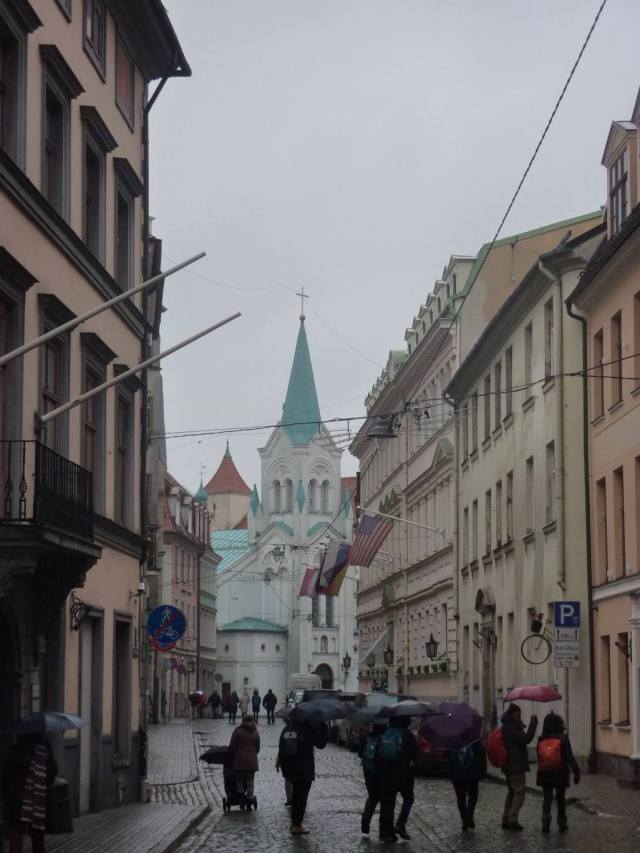
Seychelles… paradise awaits

Seychelles

The idyllic images that the mere mention of the Seychelles generates in your mind, make it one of those dream locations to visit.

With its golden sand beaches and crystal clear oceans, the African island nation has become the ideal getaway for those (usually couples) looking to enjoy a slice of paradise.

My wife, Holly, and I had the same idea and had our hearts and minds set on getting to the Seychelles for our honeymoon.

However, getting married in 2021, just as Covid-19 restrictions were beginning to ease in the UK, meant that if we were going to do our honeymoon properly, we’d need to postpone our dream trip until the world (or at least the majority of it) reopened again for tourism.

In the end, our postponement lasted a little longer than anticipated as we decided to, not only move house, but have a baby (Jacob) during 2022. It meant that the earliest we were able to realistically look to travel (sans Jacob who would stay with willing grandparents) was May 2023.

With a plan in place – and much saving of money later – we booked our trip which would be just shy of two years since our wedding day!

We couldn’t wait!

Nestled in the azure waters of the Indian Ocean, the Seychelles archipelago stands as a captivating paradise, brimming with natural beauty and rich cultural heritage.

Yet, behind the picture-perfect exterior, the history of the Seychelles is perhaps more graphic and tempestuous than one would probably expect.

The history of the Seychelles dates back thousands of years when the islands were first discovered by Arab sailors. These early explorers were likely drawn to the archipelago’s strategic location along ancient trade routes. Over time, different cultures, including the Maldivians, Indonesians, and Africans, left their mark on the islands, creating a unique blend of traditions and customs that still resonate today.

In the 16th century, European explorers arrived in the Seychelles, captivated by its lush landscapes and abundant resources. The first recorded sighting is attributed to Vasco da Gama in 1502, but it was the French who established the first settlement in 1756. The islands were named after Jean Moreau de Séchelles, the French minister of finance at the time.

Throughout the 18th century, the Seychelles became a focal point of colonial rivalries between European powers. The British and the French competed for control, leading to multiple changes in governance. Ultimately, the British gained control of the islands in 1814 following the Treaty of Paris, and Seychelles became a British colony.

During the colonial period, the Seychelles became a hub for the slave trade. Enslaved Africans were brought to the islands to work on plantations; cultivating crops such as cinnamon, vanilla, and coconuts.

It wasn’t until June 29, 1976, that the Seychelles achieved its independence from British rule, under the leadership of Sir James Mancham and France-Albert René.

The country transitioned into a democratic republic with René serving as the first President. Since gaining independence, the Seychelles has made significant strides in various sectors, including tourism, fisheries, and conservation, establishing itself as a thriving up-and-coming nation.

Today, the Seychelles is renowned for its remarkable biodiversity and commitment to environmental preservation. The nation’s ongoing efforts to balance development and conservation have resulted in the preservation of its pristine natural habitats.

From ancient settlers to colonial influences and independence, the Seychelles embodies a remarkable tapestry of cultures and traditions. This archipelago stands as a testament to the resilience and harmony between humans and nature.


The postcard-worthy beach scenes that epitomises the Seychelles

So what should a first time visitor to the Seychelles need to know before departing for Mahé Island (the nation’s main island)?

The first thing to consider is what the weather is going to be like.

The Seychelles experiences a tropical climate characterised by two main seasons: the dry season and the wet season. However, it’s important to note that due to its location near the equator, the Seychelles generally enjoys pleasant weather throughout the year, with temperatures ranging from warm to hot.

May to September is generally considered the dry season in the Seychelles, with less rainfall and lower humidity. The months of June, July, and August are usually the driest. During this time, you can expect plenty of sunshine, clear skies, and relatively cooler temperatures. The average temperature during this season ranges from 24°C (75°F) to 30°C (86°F), making it a popular time for visitors.

For our trip, Holly and I visited in May which proved a fantastic time to go to Mahé Island. On average temperatures ranged from 24°C (75°F) to 29°C (84°F) and the skies were generally clear. I think during the nine nights we were there, it only rained significantly once. However, with the dry weather comes the humidity and this can be really taxing at times!

It’s worth packing plenty of sun lotion to keep your skin protected and also plenty of insect repellent as the local wildlife does have a tendency to leave you with a few itchy bites.

The next thing to note is the currency.


You can only get Seychelles Rupees once you arrive in the Seychelles

The local currency in the Seychelles is the Seychellois Rupee (SCR). I’d recommended carrying a small mount of cash with you for everyday expenses, especially if you plan to explore local markets or smaller establishments.

ATMs are widely available across Mahé Island, allowing you to withdraw Seychellois Rupees using your debit or credit card (you cannot get the Rupee in the UK ahead of your trip). I’d advise withdrawing a couple of hundred pounds-worth of Seychelles Rupees when you arrive at the airport. You’ll find a couple of ATMs in the main arrivals hall after you’ve gone through immigration and baggage collection. There are also currency exchange stores at the airport as well.

However, if you don’t wish to carry cash on you, then all major credit cards are widely accepted through the Seychelles.


The Seychelles on Google Maps
Mahé Island on Google Maps

The next area to think about is power points.

Conveniently for British travelers, the plug type for the Seychelles is plug type G, which is the plug that has three rectangular pins in a triangular pattern that we use in the UK. The Seychelles operates on a 240V supply voltage and 50Hz.

Another thing to think about is the time difference. Mahé Island operates on Seychelles Time (SCT), which is three hours ahead during Greenwich Mean Time and four hours ahead during British Summer Time. On your way out you’ll lose three or four hours and gain them back upon your return.

The final thing to consider is the language of the Seychelles.

Throughout the various islands Seychellois Creole, English, and French are regularly spoken. For English speakers only – like Holly and I – English was widely spoken and understood by the majority of local people so we didn’t have any trouble communicating with locals.

Now all that’s left to do is pack your bags and dive in to exploring the paradise that is Mahé Island and the Seychelles.


Getting there

As a UK traveller, getting to this heavenly destination is an adventure in itself.

The first thing you must do before leaving the UK is to fill out the Seychelles Embarkation Form.

This form is a mandatory travel document required by the Seychelles government for all incoming travellers. Whether you’re arriving by air or sea, the form is an essential component of the entry process and must be completed before your departure to the Seychelles.

The primary purpose of the Embarkation Form is to collect essential information about travellers before they arrive in the Seychelles. This information is crucial for various reasons, including ensuring the safety and security of the country and its visitors. The form also aids the government in tracking visitor numbers, understanding travel patterns, and facilitating emergency responses if needed.

The information required typically includes standard personal information, such as your full name (as it appears on your passport), passport number and country of issue, nationality and country of residence, date of birth, gender, contact details, flight numbers, accommodation during your whole stay, purpose for visit and when you’ll be leaving. You’ll also need to submit an passport style electronic photo of yourself and a scan of your passport to compare with.

To ensure a smooth entry into the Seychelles, it’s essential to fill out the Embarkation Form accurately.

The Seychelles Embarkation Form can typically be completed online before your departure and is available about 10 days before you leave. The online platform allows for a quick and efficient submission process  Upon completion, you will receive a confirmation email with a unique reference number. It’s advisable to keep this reference number handy, as you might need it during your travels.

One thing to be careful on is the question about your starting location for your trip. The answer to this will depend on if you are doing a layover or if you are stopping somewhere else for a number of days beforehand.

If you are doing a layover, then your starting destination would be the UK. If, however, as we were, you are staying in Dubai (or somewhere else) for a number of days, then your starting location is the UAE (or wherever you’ve been).

With that safely done and submitted (at a small cost of £9.95 per person), it won’t take long for them to send confirmation to you via email that your entry has been accepted.

The next part of the adventure is that there are no direct flights from the UK to Seychelles. This means any UK traveller will have to make a stopover during your journey.

The most common stopover destination is Dubai in the UAE – where Holly and I stopped and can be read about in a separate blog –  where the Emirates’ hub is located.

You can either do this as a layover that typically lasts around two to three hours, allowing you to stretch your legs and explore the impressive Dubai International Airport or – as we did – extend your trip to spend time in the Arab country.

Depending on how you decide to do it, the total travel time from the UK to Seychelles, including the stopover, usually takes around 11 to 13 hours. Keep in mind that this duration can vary slightly based on the specific route and the length of your layover. If you break the journey up, then the flight time from Dubai to the Seychelles is between four-and-a-half and five hours.

Given the size of Seychelles International Airport, very few airlines travel there and trips can only be made from a variety of starting points. The main one is the UAE (both Dubai and Abu Dhabi), while other airlines also travel from Kenya, Ethiopia Qatar, Sri Lanka and Russia.

It made the decision very easy for Holly and myself as we made our booking from Dubai to the Seychelles on Emirates. The large plane we travelled on was well stocked with films and TV shows to enjoy and food and drink was readily available for us at regular intervals.

As already mentioned, for our trip, we headed to the East African island in early May. This is an ideal time to visit Seychelles, as the weather is mild and the islands are generally less crowded.

While flight prices can fluctuate, the average cost of a return ticket from the UK to Seychelles on Emirates in May can range from £600 to £900 per person, depending on factors like booking time, demand, and seating class.


The first views of Mahé Island as they came into sight
The view from the aircraft’s front camera of the approach to the airport runway

As we flew to the islands, our view out of the plane window was one of pure ocean. Very little land obscured our sight until we drew closer to our destination. Then, as we got lower, we saw numerous islands including Mahé Island itself. Lush green canopies line the mountain sides before the small airport runway became visible in front of our aircraft.

After touching down, we found that Seychelles International Airport offered a seamless and welcoming experience for us as travellers. The airport’s modern facilities, efficient immigration services, and friendly staff ensure a smooth entry into this island paradise.

After disembarking we made our way into the arrivals hall and went through the high tech surveillance system which checks your appearance against the records they have on file from the previously filled in Embarkation Form.

From there, it’s through passport control – where you get a nice new stamp in your passport – and on to the baggage collection. This was the one bit that concerned us and slowed us down a bit. As bags were added – and subsequently removed from the carousel – more and more people filtered out of the airport leaving only a handful of us waiting for our luggage. Finally – and with only a few people left – our luggage made a welcome appearance.

Much relieved, and with luggage in hand, we cleared customs, and found our way out of the airport to meet our driver who would take us to our hotel on the far side of the island.

However, if you’ve not booked transportation there are numerous options available including taxis, rental cars (more on these later on), and shuttle services.


Flying into Mahé Island gives you great early views of Victoria; the capital of the Seychelles
Touching down on the runway with the main terminal building of Seychelles International Airport in the background

Where to stay

When it comes to dreamy tropical getaways, the Seychelles ranks high on the list of idyllic destinations.

With its pristine white sand beaches, crystal-clear turquoise waters, and lush green landscapes, it’s no wonder travellers from around the world flock to this tropical paradise.

Nestled on the outskirts of Mahé Island is the exquisite Constance Ephelia.

Constance Ephelia is where indulgence meets serenity offering an unforgettable experience for travellers seeking tranquility, opulence, and a touch of paradise.

The resort is a sanctuary of luxury, situated on the northwest coast of Mahé. This sprawling hotel covers an impressive 120 hectares of lush tropical gardens, bordered by two stunning beaches – Port Launay (or the North Beach) and Lans Ilet (or the South Beach).

Getting to this tranquil resort is a beautiful 45-minute drive from Seychelles International Airport, that goes over the mountainous middle of the island around some of its most winding – and potentially treacherous roads.

At Constance Ephelia, you can expect to find competitive rates during this period, allowing you to experience the resort’s elegance. While prices may vary depending on factors such as room category and length of stay, you can typically find attractive deals and packages tailored to suit different budgets.

That’s not to say, however, that a stay here will be cheap and you’ll have to pay half the money upfront with the rest of the money paid on departure.


One of the luxurious pools at Constance Ephelia
The map of Constance Ephelia as shown on their website shows where everything is in the resort
Sitting back on a swing seat on the south beach of Constance Ephelia

To give you an idea, Holly and I booked nine nights at the resort and included a package that gave us breakfast and dinner each day (minus drinks for the evening meal). On top of this, we also added a variety of other activities to our package when we arrived (including scuba diving, zip-lining, an evening meal on the beach and a spa day session with two massages) as well as numerous food and drink items around the pools and items from the shop.

It meant that in total, Holly and I spent £5,497.05 for the stay and activities, which was a slightly painful way to end our time on the island (although we had budgeted for this before we arrived). If you’re worried about the costs, then you can keep up-to-date with your expenditure in your room via the television which itemises your bill as you go.

Despite the cost, the money is well spent.

Constance Ephelia offers a variety of luxurious accommodations, ensuring that every guest finds their perfect retreat.

Our choice of room was the junior suite. These beautifully appointed suites provide a comfortable and stylish space, featuring modern amenities and a private furnished terrace (or balcony) with breath-taking views of the Indian Ocean or lush gardens.

Our room was on the ground floor and only a few metres away from the beach where crabs (there are thousands of them burrowing in the sand throughout the resort) march to the sea and the sound of the waves lapping against the shore makes for a welcome morning wake-up.

The room was large and always well stocked with bottles of water (don’t drink the tap water here) as well as cleaned (sometimes twice a day) by the ever-attentive staff. The bedroom led into a stylish bathroom fit with a large bath tub and a separate walk-in waterfall shower; the perfect way to clean up after a day in the ocean or by the pool.

For those with larger budgets, there is also the option of other room types. These include the senior suites – offer separate living areas, larger terraces, and private pools – or beach villas – providing direct access to the soft sands and turquoise waters, while also boasting private pools, outdoor dining areas, and a personal butler service.


A typical view of the buildings and surroundings at Constance Ephelia
Even in the pool you have easy access to the ocean which is mere feet away from you giving you the best of both worlds
The view along the idyllic south beach

While the rooms are splendid, it’s the other facilities that Constance Ephelia offers that sets it apart. For starters, there are numerous dining options (more on those later) spread across the resort, that each showcase a unique culinary experience.

Then there is the superb and relaxing spa and wellness centre – called – USpa by Constance – where we were able to indulge in relaxation and rejuvenation. Situated in the middle of the resort amidst lush tropical gardens, the spa offers a range of wellness treatments, including massages, facials, and holistic therapies.

For those looking to while away the hours and get some much needed rest and relaxation, there are a number of swimming pools to splash in or sit around, each served by its own bar. Towels (claimed using your towel token given to you on arrival which is then given back when you return your towel) and deckchairs are available across the resort to use at your leisure.

For those seeking more active pastimes, there are a variety of water-sports to try ranging from scuba diving and snorkelling to kayaking, windsurfing and paddleboarding.

Constance Ephelia in the Seychelles is a slice of paradise that blends luxury, natural beauty, and unparalleled service. Whether you’re seeking a romantic retreat, a family vacation, or simply a rejuvenating escape, this resort caters to your every desire.

Constance Ephelia is the perfect choice for an unforgettable experience in the Seychelles.


The bedroom of our junior suite at Constance Ephelia was spacious and welcoming
The bathroom had his and her sinks, a large bath tub and a separate shower room through the opening at the back
Our balcony space just outside our suite

Getting around

When you head to a small island nation like that of the Seychelles, it’s worthwhile thinking about how you plan to get around during your stay. It was a thought that Holly and I had ahead of our trip and one that I’m glad we planned for.

The first thing to note is that, despite Mahé Island appearing to be small in size – which it is – it’s not accommodating for walking between activities or sites. Therefore, the best ways to get around are either using the taxi services available or to hire your own car.

Obviously, if you want to get to other islands, you’ll need to either use a boat charter or a plane, but for the purposes of this blog, I’ll be just looking at getting around Mahé Island itself.

Taxis are a popular mode of transportation on the main islands of Seychelles, especially Mahé, Praslin, and La Digue and are usually readily available at airports, major hotels, and tourist hot-spots.

When we arrived in the Seychelles, we used a taxi to take us to the resort (which was about 45 minutes away from the airport. For this trip it cost us in the region of £45 (around 800 Seychelles Rupees) which we’d withdrawn from a cash point at the airport after we arrived before heading out to grab a taxi. It’s important to remember that, the taxi drivers prefer to take cash for their fares which means it’s best to have some on you before hailing a cab.

To avoid any issues while travelling by taxi, there are a few things to watch out for to ensure a smooth and safe experience.

Firstly, make sure to only use licensed taxis. These taxis have proper registration and adhere to safety standards. They usually have a taxi sign on top of the vehicle and a license plate starting with the letter “T.”

Always negotiate the fare before leaving. Taxis in Seychelles may not always have meters, so it’s important to negotiate the fare before starting the journey. Ask the driver for an estimated cost to your destination before getting in the taxi. Having an idea of the expected fare will help you avoid overcharging.

An extension of that is to confirm the currency you plan to pay in. Make sure you’re on the same page as your taxi driver about the currency you’ll be paying in. While most will charge in Seychelles Rupees, some drivers may try to charge you in a different currency to their advantage.

Check the vehicle before setting off. Ensure the taxi is in good condition and has working seatbelts for all passengers and always buckle up for your safety. If you feel uncomfortable with the driver’s behaviour or driving, don’t hesitate to ask them to drive more cautiously or stop if necessary.

Also, as you would in any country, keep your valuables safe and avoid displaying expensive items or large amounts of cash while in the taxi.

Before heading off, confirm the destination with the driver and ensure they know exactly where you want to go. If possible, show the driver the address on a map or your phone to avoid any confusion.

Finally, consider the tip. Tipping is not obligatory in Seychelles, but it’s appreciated if you received good service. You can round up the fare as a tip if you wish. It’s not expected but is welcome.

During our trip we used a taxi twice (once to get to the resort when we arrived and once to get back to the airport to pick up a hire car for a couple of days.

And on that note, the next option I’ll cover is hiring a car.


The taxi and private car collection point at Seychelles International Airport
The joy of taking a taxi is that you can sit back and enjoy the scenary as it is presented to you during your drive around the Seychelles

The joy of renting a car in Seychelles is that it provides you with the freedom to explore the island at your own pace and discover hidden gems off the beaten path.

While we planned to spend the vast majority of our nine nights within the resort, we wanted to spend two or three days at the end exploring the island at our leisure by car. We also coincided this with hiring the car at the airport which meant when we returned for our early flight home we would drive ourselves there and not have to wait for a taxi.

The first thing to note is that to rent a car in Seychelles, you must be at least 21 years old and hold a valid driver’s license. An international driver’s permit is not required for short-term stays (although for £5.50 each from the Post Office, Holly and I got one each just in case) but may be necessary for longer visits.

Like the UK, the Seychelles follows left-hand driving, and seat belts are mandatory for all occupants.

The main roads on Mahé Island are generally well-maintained, but some smaller roads and those to the more remote parts of the island will be rougher. You’ll also need to exercise caution while driving and be prepared for narrow, winding roads in the central mountainous regions.

Be cautious that many roads have large drops to the sides and very little in terms of safety barriers. This means, the higher up the mountain roads you get, the more nerve-wracking the route can become. We found that if we drove sensibly, yet confidently, we were best placed to meet the challenges that the Seychelles up-and-coming road network threw at us.

A prime example was during one trip out when Holly was driving. We came to an extremely sharp hairpin corner on a very steep hillside that I wasn’t convinced our little car was going to make it up without rolling back. Somehow, Holly got us to the top of that hill (perhaps on sheer willpower) but it really was squeaky-bum time for a few moments when the car almost stalled and we could have just rolled off a cliff face had we gone backwards!

The speed limit of Seychelles is 40kmh in cities and areas with heavy pedestrian traffic while its 60kmh on open roads and highways. Locals drivers in Seychelles can be aggressive and they can overtake suddenly and may not respect traffic laws, so it is important to stay vigilant while driving.

There are numerous petrol stations are available on Mahé Island, but we found our car to be pretty economical with fuel consumption. Despite driving the full length and breadth of the island over a couple of days we didn’t refuel the car until just before we took it back to the airport meaning in total we only spent around £30 in petrol.

The best place to get fuel is just outside the airport at the petrol station there. When we pulled up to the pumps we simply told the attendant to fill the car up to the maximum and then paid for our fuel on credit card.

In terms of parking, we found that – even within Victoria – there were plenty of options to park for free and during our entire stay, we never paid for parking the car. Quite often, when you pull up to a beach alongside the road, there will be a small dirt car park or a lay-by that you can simply pull over into and leave the car while you explore the area you’ve arrived at.

With all that in mind, all that’s left to do is rent a car and start exploring.

There are a few car hire firms available within the Seychelles but the one we selected was Sixt Rent-a-Car. They had offices located both in and around the capital, Victoria as well as at the airport.

While both of these locations were about 40 minutes away from our resort, we thought that the airport would be easier to deal with as we knew where the rental desk was there.


A typical small car that you can expect to rent in the Seychelles
A standard view as you drive along one of the more “main” roads on Mahé Island

In total, we hired a small car – a Kia Picanto model – for three days and included all the extra protection we could buy considering we were unsure what the driving situation would be like. As part of our rental we included theft protection, a minimum excess, collision damage waiver and an additional driver so we could both share the responsibilities. This cost us 322.53 Euros (the currency they billed us in) equating to around £280.

If I’m honest, we probably went over the top with the protection. The car we were given was pretty banged up to start with and the only major instruction we were given was to “not park below any coconut trees” as a falling coconut can really “put a dent in the roof of the car”.

Finally behind the wheel after signing the documents that needed signing, we headed out from the airport onto the main roads of the Seychelles.


Parking is pretty easy throughout the Seychelles
Some of the roads make you feel like you’re driving through the middle of a jungle
An example of a typical Seychelles mountain road

Top sites

Holly and I planned to spend a lot of our time in the Seychelles at the Constance Ephelia resort so, for the purpose of this blog, I will split this section into activities that can be enjoyed at the resort before looking at how we explored the rest of the island by car.

Life at Constance Ephelia is a healthy a mix of relaxation and adventure.

For those looking to just unwind and spend their time in the Seychelles – by the pool or the ocean – can do so by one of the many pools at either end of the resort or on one of the two pristine, secluded, beaches that beckon you to relax and soak up the sun.

However, while we wanted to make the most of the pools we were also both keen to try some of the activities that the resort had on offer.

One that immediately jumped out at us was ziplining amidst tropical canopies.

The resort has eight ziplines perched high above the treetops, allowing you freedom to soar through the lush vegetation. Taking the zipline tour not only provided us with an adrenaline rush but also offered awe-inspiring panoramic views of Port Launay.

The ziplines measure between 80m and 120m in length, with lines around 20m to 24m high.

Traversing from platform to platform, the experienced guides ensured our safety and made the ziplining experience an unforgettable journey.

The ziplining centre is located to the north of the resort and the trail starts up by the exclusive private villas. However, to take part in the adventure – which lasts around an hour and a half –  the company asks that you pre-book one of the slots two days in advance. This can be done via the reception service at the hotel. Ziplining costs 845 Seychelles Rupees per adult (around £50) and this can be added to your hotel bill.

Holly and I had a great time doing this, although I’d warn anyone taking part to ensure that you get your buckles and straps comfortably on before heading out as I had one that was digging into my left-hand side and left me with a rather colourful bruise after flying through the trees.


Holly coming in on one of the eight ziplines you get to ride
A first-person view of a ride on the zipline

Another activity that is worth trying is the variety of water sports available.

From the north beach – and via the dive centre – Constance Ephelia offers a plethora of watersports to satisfy every aquatic craving.

If you bring your own snorkel equipment – as we did – you can dive into the azure waters and explore the vibrant marine life at your own leisure. However, for those that don’t, you can still hire equipment from the dive centre.

However, if you prefer staying above the surface, you can try your hand at windsurfing, kayaking or paddleboarding; allowing you to experience the tranquility of the ocean at your own pace while getting a great workout in the process.

Holly and I favoured the latter two options and hired two paddleboards and life vests from the dive centre. The good news here is that – so long as they are available – you can hire these any time the dive centre is open and as long as you are out for no longer than one hour, there is no additional cost for this activity.

I’d never done paddleboarding before and, if I’m honest, didn’t really take to it. My balance was awful and I just never felt comfortable on the board. Holly was much better at this than me, but I found an hour of this more than enough.

We also took out a double kayak for an hour and got a lot of enjoyment paddling our way around the bay.


Holly and I were better suited to the kayaks than the paddleboards

One activity that I had firmly on my Seychelles bucket-list was the chance to get up close-and-personal with the countries famous giant tortoises.

For those that want to see the tortoises in their natural environments, they can try and organise trips to the tortoise sanctuary on Curieuse Island; although this is fairly tricky to do as you can only get to the island from Praslin which, in itself, is an hour and a half away from Mahé Island by boat.

That’s why the opportunity to meet and feed the giant tortoises at Constance Ephelia is a chance too good to miss out on.

At the heart of the resort sits the giant tortoise enclosure. It means that at any point you can go to the area and view the numerous tortoises in their spacious home.

However, there is the added bonus that – twice a day and free of charge – guests at the resort can go into the enclosure and meet and feed these magnificent creatures.

It’s something that has become a cherished tradition for both guests and staff alike. The daily feeding sessions take place in the late morning and early afternoon, ensuring visitors have ample opportunities to interact with these ancient reptiles.

The morning feeding session usually starts around 10am. As the sun rises over the tranquil resort, guests gather near the designated feeding area for the chance to get up close and personal with these gentle giants.

The afternoon feeding session commences at approximately 2pm and offers a fantastic chance for those who missed the morning session to engage with the tortoises and participate in the enchanting experience.

The feeding process is carefully supervised by trained staff members to ensure both the well-being of the tortoises and the safety of the guests. The resort provides specially selected tortoise food that meets their dietary needs and ensures they receive a balanced diet.

After entering the enclosure, Holly and I got some food to give to the tortoises – made up of ferns and other vegetations. We then had the freedom to approach these giant animals and feed them and even stroke their heads and take a few photos for our own keepsakes.

The tortoises are used to this process and readily approach guests in their enclosure (mind your feet as they will stand on you if you are in the way and they are pretty heavy). Also, keep your fingers away from their chomping mouths as they feed to avoid a nip.

We were able to hold out the food in our hands and experience the joy of seeing them munch on their tasty treats.

One resident of the enclosure does get more attention than some of his other camp mates and that’s the resorts oldest resident; Dusty.

Dusty, is the largest tortoise here and is estimated to be over 150 years meaning he was alive when Queen Victoria was still on the thrown (the country’s capital city namesake) and when the Titanic sank on its fateful maiden voyage.

Dusty’s captivating presence leaves a lasting impression on all who encounter him. His large, weathered shell is a testament to the many decades he has spent roaming the Seychelles landscape. Visitors often find themselves in awe of this living relic, contemplating the remarkable history he has witnessed and the changes he has experienced over the years.

Positively, Constance Ephelia is committed to the preservation of these magnificent creatures and their natural habitat. Through carefully monitored feeding programme and environmental initiatives, the resort plays a crucial role in protecting the giant tortoises and supporting their population growth.


Feeding the giant tortoises is a real bucket list item
You can get up really close and personal with the giant tortoises
A giant tortoise enjoying its lunch

Nearby to the giant tortoises is another slice of luxury.

USpa at Constance Ephelia is a luxurious tranquil haven of relaxation and revitalisation that offers an array of rejuvenating treatments, top-notch facilities, and an unforgettable spa experience.

Holly and I were very excited to use the spa here, and pre-ordered a 90 minute signature massage each when we booked our room via the website for a cost of £257.96 in total (£128.98 each). While this is a lot of money, the service and quality of massage and body scrub you get more than makes you forget how light your wallet feels afterwards.

Having arrived at the spa on the day of our treatments, we were shown around the facilities and filled in a short questionnaire. Soon after arriving, we were welcomed by our individual masseuses and taken – separately – to our rooms to begin our treatments.

Here we showered and were given robes to go between the shower and massage table as well as disposable underwear that is worn while the massage takes place.

The time flew by – in a good way – and both of us left feeling refreshed and extremely relaxed.

After finishing our sessions we were each greeted with a fresh coconut where we were able to enjoy the refreshing taste of the coconut water inside.

While this treatment was the one we chose, there are a variety of others available (for a range of price brackets) including Swedish, Balinese, deep tissue, and hot stone massages, as well as luxurious facials -using premium skincare products tailored to your skin type – gentle exfoliation and nourishing body wraps.

Yet, you don’t have to have a treatment booked to use the facilities and entry to USpa is complementary with a room booking – while people not staying at the hotel can use it as well by buying a single day entry. It meant that Holly and I used the facilities on more than one occasion during our stay.

The spa is one of the most luxurious I’ve ever witnessed. Inside you forget you’re even in the resort itself and laying on the loungers you can look up and see the stunning mountain scenery all around you.

Away from the treatment villas, USpa also has separate sauna and steam rooms as well as a hydrotherapy pools where you can immerse yourself and soothe your muscles with the hydro-massage jets.

In the centre of the spa stands the yoga pavilion where guests can practice amidst the tranquility of nature as part of one of the regular yoga sessions while sun loungers are scattered throughout for guests to lay back and switch off from the outside world.


The luxurious setting of USpa at Constance Ephelia
There are a variety of hot and cold pools to try
What better way to relax than by drinking coconut water straight from the source

For those who are fans of breathtaking underwater landscapes and vibrant marine life, the Seychelles is a destination that should near the top of your scuba diving bucket list.

As a keen – albeit infrequent – pair of scuba divers, Holly and I were eager to make the Seychelles our latest dive location. We’d explored a few options for diving but the centre that stuck out to us was one located, rather conveniently, from the north beach of our very own Constance Ephelia resort.

The dive centre in question was UDive . In advance of arriving I had organised two dives for myself and one for Holly via WhatsApp and was told to be at the centre in the morning so we could do the necessary paperwork and get fitted with our equipment, and hear the dive briefing.

Included in our discussions was the price which came in at 1,500 Seychelles Rupees per person per dive (around £90) which, given that we were staying at the resort, was added to our room bill.

The centre provides top-notch diving equipment, well-maintained boats, and knowledgeable staff who are always eager to share their passion for the underwater world.

We were two of a group of six divers and found the centre to be extremely professional and efficient. On a map on the wall, we were shown exactly where we would be diving and given a clear explanation of what we could potentially under the water. Needless to say, we were not disappointed.

After taking our equipment to the boat on the shore, we raced across the water for around 15 minutes to the site. Once anchored, we put on our tanks, and did a back-roll entry. With everyone in the water, our scuba adventures began.

One of the most alluring aspects of diving with UDive is the opportunity to witness an incredible diversity of marine life. As we descended into the crystal-clear waters, we were be greeted by an explosion of colours and life that characterises this pristine corner of the Indian Ocean.

As schools of fish swam around us we were also able to spot large rays swimming by, lobsters on the ocean floor, a couple of sharks (possibly reef sharks) and – much to my delight – a couple of sea turtles, effortlessly swimming in the current.

UDive is a centre that caters for all divers; from beginners taking their first breaths underwater to experienced divers who are more fish than human. Beginners can explore shallow coral gardens teeming with fish and other marine creatures, while more experienced divers can venture deeper to encounter thrilling drop-offs and underwater pinnacles.

Diving with UDive gave us an unforgettable underwater adventure that left us with memories to cherish for our whole lives.


The map at UDive shows the different dive locations available
There are some impressive animals to see under the water including rays like this
Looking down at the tail of a resting shark on the ocean floor
You often find yourself swimming alongside a school of fish

So far, this blog has looked at activities to do in and around the resort, but there is a whole island to explore as well.

To do this, Holly and I hired a car for a couple of days at the end of our trip and divided the island into two halves in order to maximise our time at each stop we wanted to see. What followed were two breathtaking road trips around Mahé Island.

The first trip saw us explore the northern beauty of the island.

A road trip around the northern part of Mahé Island, is quite the adventure. From vibrant urban life to the idyllic beaches, this journey is a tapestry of stunning scenery and cherished memories.


Google Maps view of my suggested route for a road-trip around the north of Mahé Island

The route we selected from our resorted covered an array of natural wonders and charming sights as well as visiting to the nation’s capital city; Victoria which made up our itinerary’s first stop.

Having picked up the car at the airport, we were already most of the way to Victoria when we first hit the roads in the Seychelles. Fortunately, this part of the island – as you head towards the city centre – has some of the best maintained and fastest roads, making our introduction into driving here a relatively easy one.

Victoria is not like most capital cities. In fact, on the whole it has the appearance of a large town. With the usual backdrop of high-rise skyscrapers replaced by the much more aesthetically pleasing mountains, Victoria is a colour and chaotic mass of people and small businesses.

Having found a small car park on the edge of the city – which was free to park in – Holly and I walked to the centre where we found one of the city’s main attractions; the Victoria Clock Tower.

Located in the heart of Victoria, the clock town is a charming and iconic landmark that holds historical significance for the archipelago. Erected in 1903, the clock tower was a gift from the British colonial government to commemorate the diamond jubilee of Queen Victoria.

Standing tall at 30 feet, it is an elegant structure made of iron, modelled after London’s famous Big Ben. Its prominent position at the junction of Francis Rachel Street, Independence Avenue, and Albert Street makes it a focal point of the city, drawing locals and visitors alike to its captivating presence.

Our next stop in the city was just a few streets away on Quincy Street. Here we found the striking, Arul Mihu Navasakthi Vinayagar Temple.

The Hindu temple is a significant religious and cultural landmark in Victoria and stands as a testament to the vibrant Indian community’s presence in Seychelles. The temple’s name “Arul Mihu Navasakthi Vinayagar” translates to “The Blessed and Ever-Powerful Temple of Lord Ganesha,” and serves as a place of worship for devotees of Lord Ganesha.

The temple’s architecture is a captivating blend of traditional South Indian and contemporary styles, adorned with intricate carvings and colourful decorations that exude a sense of spiritual serenity. Devotees and visitors alike are greeted by a towering gopuram (ornate entrance tower) that features intricate sculptures of Hindu deities, signifying the temple’s sacredness.

Removing our shoes before entering, Holly and I went inside to have a look around. This was my first ever visit inside a Hindu temple and compared to its bold exterior, a lot of the interior was fairly plain and understated. There was no entrance fee to go in, and we were also allowed to take pictures during our visit. Taking a quiet and respectful look around, Holly and I saw everything we wanted to see and made our way back out into the Seychelles sun.

On our way back to the car, we took a detour down Market Street and through Sir Selwyn Selwyn-Clarke Market. This lively marketplace is filled with fruits, vegetables, fish and meats, with locals trying to sell their wares to anyone passing.

Once we were through, we headed back to the car and on to our next stop on the outskirts of Victoria; the Stade Linité stadium.

As is often the case when we visit a football or sporting stadium, this visit was more for me than it was Holly. Pulling the car up at the empty car park for the closed sports arena, we were able to grab a few glances inside the ground – which usually plays host to the Seychelles national football team. Even though we were not catching a live match, the stadium’s impressive architecture against the backdrop of the Seychelles’ verdant landscape made it worth a visit.

During our visit, there were significant renovations taking place, with the grass being completed dug-up and people working all around to lay a new surface. So, after taking a few snaps of the outside of the stadium, we went back to the car and drove on.

The third stop was also in Victoria and was at the National Botanical Gardens.

Located just a short distance from the stadium, these gardens are a sanctuary of rare and endemic plant species, providing a tranquil setting to stretch our legs and enjoy the local nature.

Arriving at the entrance, we parked our car in one of the few remaining car parking spaces of the small car park and made our way to the ticket office. Entrance to the gardens cost us 250 Seychelles Rupees each (around £15 per person).

Taking a leisurely stroll through we were able to see a variety of wildlife including a number of bats nesting in the tree tops as well as a few giant tortoises in a large enclosure at the back of the gardens.

The visit concluded our time in Victoria and taking the car we started the 8km drive north to our next stop.


The focal point of the capital city of Victoria is the Victoria Clock Tower
The amazing Arul Mihu Navasakthi Vinayagar Temple with the beautiful mountain backdrop is a sight to behold
The Stade Linite stadium near Victoria where the Seychelles national football team plays its home games
The national botanical gardens are a beautiful and calm place to take a walk around

Making our way out of the city we soon arrived at North East Point; the first beach stop of our trip outside of the resort.

North East Point is a secluded coastal area offering breathtaking views of the Indian Ocean. With nobody else around, the pristine beaches gave us the opportunity to dip our toes in the crystal-clear waters.

Moving on, we drove a further 5km around the north end of the island to Glacis beach. This secluded spot gave Holly and I the chance to set ourselves up on the small sandy beach and don our snorkeling gear for a dip in the ocean.

While the water wasn’t that calm – and the current was quite strong – we were able to snorkel near the beach and saw a vast array of sea life just below the surface in among the rocks and coral reef.

Continuing to follow the stunning coastal road round the top of the island, we were blessed with ocean views from one side of the car and lush vegetation to the other.

The next stop of the trip was Beau Vallon beach and would take around 12 minutes to drive the 6.5km distance.

This popular tourist hub is renowned for its beautiful sandy beaches, diverse water sports activities, and a variety of restaurants serving up tantalising Creole delicacies.

Parking our car on the roadside, we made our way onto the beach for a beautiful stroll. Crystal-clear ocean waters were being regularly fed by small inland streams flowing down the beach and into the open seas.

While we were here, we also took the opportunity to head into some of the local shops and purchase a few souvenirs to take home, including some rather fetching coconut shell bowls.

With the vast majority of the northern rim of the island covered, we started to plan our journey back to the resort. Using our map, we knew that we were going to have to head back towards Victoria to find a route that would take us up, and over, the mountainous region making up a large proportion of the centre of the island.

Our journey took us through the scenic route of Bel Air. Not to be mistaken for the Fresh Princes’ home, this village area offers captivating vistas of lush hillsides and dramatic landscapes from one of the highest points on the island.

Yet while the route is beautiful to observe it is one not for the faint hearted. Sheer drops and sharp winding roads make for a challenging drive, with traffic coming at you from the other direction (and often not inclined to give way).

Holly was behind the wheel for this part of the drive and managed to navigate us safely through the hillsides and back to our resort for a welcome and much needed drink beside the pool.


The beach at North East Point is extremley quiet
The postcard ready scene at Glacis beach
Mind your heads from falling coconuts
The beach at Beau Vallon just seems to go on forever

The second road-trip route we planned out would take us to the wonders of the southern part of Mahé Island.

Setting off again from Constance Ephilia we took the road south towards our first stop of Anse-Intendance beach making it one of our longer single drives. The route hugged the west coast of the island and took us just under and hour to safely navigate our way along the 28km route.


Google Maps view of my suggested route for a road-trip around the south of Mahé Island

The pristine shores of Anse-Intendance beach are renowned for their relatively untouched beauty. This secluded spot offers the ideal escape from the world’s hustle and bustle and the vast sandy shores are a welcome sight to the few travellers who make the journey here.

Parking our car in the small car park, we gathered our things and walked the short distance through the trees to the beach paradise ahead. Setting up in a shady spot, Holly and I took the time to enjoy the sights and dip our toes in the water.

One thing to note is that Anse-Intendance is known for its strong currents and potentially hazardous swimming conditions, so while we wadded in to our waists, we were reluctant to swim here as the current was extremely strong and you could feel it pulling at you. While some did venture out further for a swim, I’d advise to exercise caution and avoid venturing too far from the shore.


As your walk from your car, the beauty of Anse-Intendance opens up before you
The water can be rough at Anse-Intendance but you can still enjoy the waves near the shore safely
Despite its beauty, Anse-Intendance is fairly tricky to reach so only a few actually make the trip meaning you’ll have a lot of the beach to yourself

Having stopped here for around an hour we continued on to our most southerly spot; Police Bay beach.

Embraced by granite boulders and swaying palms, this tranquil cove takes a bit of adventuring to find and the off-road tracks making driving to it challenging. Parking our car on the side of one of these tracks we walked the final kilometre to the beach via the dense trees.

The picturesque setting once again hides the deceptively strong waves and currents that make swimming here risky. In what seems like a theme for the southern part of the island, signposts warn beach-goers of the dangers of going too far into the waves.

The third stop was to our last new beach of the trip and is a 25 minute drive to the east coast.

Here we found Anse Royale beach that beckoned us to its shores. With the waters generally being calmer compared to previous beaches, this spot was one that local people appeared to frequent more and its narrow sandy shore was being utalised by numerous local families.

Having had our fill of beaches, we made the six minute drive further north to something slight different.

Here we found the Domaine de Val des Pres craft village; a rather quaint haven of local craftwork.

Domaine de Val des Pres is an artisanal craft village that showcases traditional Creole culture through its artistic displays. It consists of a 19th century plantation house surrounded by numerous huts that are now open with all sorts of fantastic pottery, paintings, woodwork, and clothing on display.

Having taken a look around each shop – and making a couple of purchases to take home with us – we explored the open plantation house before setting off back across the mountain roads to relax at our wonderful resort.


You have to take a walk through this wooded area to reach Police Bay
Enjoying the sights at Police Bay
The narrow Anse Royale is mainly used by locals
The picturesque setting of Domaine De Val De Pres
Each of these huts is home to a unique store showing local artistic talents

Where to avoid

Situated within walking distance of Constance Ephillia is the Sauzier Waterfall, a supposedly enchanting natural wonder.

However, after our recent visit, it became apparent that this so-called gem may not be worth the hype or the “unofficial” entrance fee of 50 Seychelles Rupees per person (about £3 per person).

Sauzier Waterfall is often marketed as a picturesque cascade amidst the Seychelles’ captivating scenery, so Holly and I were keen to see it, especially given how close it was to our resort.

We’d seen the waterfall on Google and it looked straightforward to get to – which was true. From the pictures it looked like a magnificent site to see. However, the reality didn’t quite live up to the expectation.

The waterfall itself was rather modest in size, failing to evoke the awe-inspiring emotions we were anticipating. Surrounding flora seemed overgrown, blocking any chance of a panoramic view or an ideal photo opportunity. While the Seychelles boasts numerous breathtaking sights, the Sauzier Waterfall pales in comparison.

Coming off the Port Launey Road onto a side street – just before the Church of Sts. Peter and Paul – we walked up the slope towards where the waterfall was. However, when we reached the end of the road we were met by a closed gate which was manned by a family whose house was just next door.

They were charging people 50 Seychelles Rupees per person to access the waterfall. Annoyingly, we hadn’t brought any money with us as we didn’t expect a hidden cost here. Fortunately – on this occasion – the family took pity on us and gave us access for free.

Going through the gate, we hiked through the vegetation along an uneven trail towards our goal – past a couple of deserted buildings. While some may enjoy a challenging trek, it’s essential to consider that the trail lacks proper maintenance and can be slippery, especially during the rainy season. The hike’s difficulty may discourage families with young children or elderly individuals from visiting, further limiting its appeal.

For an attraction that charges an entrance fee (albeit it one we didn’t pay), visitors might expect basic amenities to enhance their experience. However, there are no rest areas, benches, or picnic spots, making it inconvenient for tourists to rest.

While there was water free flowing when we visited in May, given the name “waterfall,” one would presume a significant flow of water cascading down the rocks all year round. Unfortunately, this isn’t the case and in some months the stream is reported to be very weak and in some cases totally non-existent.

Finally, the waterfall is a gathering point for a lot of local teenagers who show off their diving skills. While this can be entertaining to watch, it does take over the small amount of space available pretty quickly making any stay a short one.

The waterfall is fine for a flying visit if you’re in the area and have time to kill, but I’d strongly urge against searching for it and travelling to it as travellers seeking memorable experiences should explore other enchanting spots that Seychelles has to offer, where they can fully immerse themselves in the island’s breathtaking beauty.


Sauzier Waterfall is attractive but not worth coming out of your way to see

My other suggestion of something to avoid in the Seychelles is not so much about the destination, more about the tour provider.

Before heading out to the Seychelles, Holly and I were desperate to spend a day island hopping and to see two of the closest and most popular destinations; Praslin and La Digue.

However, not all journeys to these paradise islands are created equal and the tour entitled “From Mahé: Praslin and La Digue Tour with Transfer and Lunch” advertised on Get Your Guide is one to avoid and left us questioning the value of our £373.10 trip for two.

First thing to do is look at the description on the website of this tour. In a nutshell it’s outlined as a great way to explore two Seychelles islands in one day with a “guided tour” departing from Mahé that would let us trek through the lush Vallee De Mai reserve on Praslin and enjoy a delicious Creole lunch on the tropical La Digue. Pretty much none of this statement is true.

Let’s start at the beginning. The day began with high hopes as we eagerly awaited the adventures that lay ahead. However, as we prepared to embark on our journey from our resort, we were met with the disheartening reality of an extremely late pick-up. With the beauty of hindsight, this delay set the tone for what was to come.

Upon reaching the picturesque Eden Island harbour near Victoria, we found ourselves confined to a state of limbo, as we waited for what seemed like an eternity for the promised boat transfer. Minutes became over an hour, and our precious time on the islands slipped away.

Finally, our vessel arrived, but any excitement quickly turned to dread as we boarded a small boat that seemed ill-prepared for the journey ahead. As we ventured into the open ocean, the vessel’s small size made every wave a painful reminder of its unsuitability for such a crossing. To top matters off, we also had to make a pit stop so the captain could refuel the vessel – more time wasted for our trip!

To add to our discomfort, the boat’s engines sputtered and faltered, turning what should have been an hour and a half crossing into a gruelling and nausea-inducing two-hour ordeal. Any semblance of excitement we had for Praslin and La Digue was overshadowed by the lingering distress of the boat journey.

Upon finally reaching the much-anticipated islands, our time on both Praslin and La Digue was tragically short-lived. Instead of exploring the unique and captivating sights that these islands had to offer, we were herded like cattle to our stops, with little opportunity to appreciate the beauty that surrounded us. A mere five-minute pause to see the famous coco de mer (the largest nut in the world) on Praslin (not quite the trek we were promised) and a brief visit to the beautiful Anse Lazio beach was the extent of our Praslin island exploration, leaving us feeling unfulfilled and longing for more meaningful experiences.

Our time on La Digue wasn’t any better, with the only stop there lasting less than an hour as we were ushered briefly to see the stunning Anse Source D’argent beach.

As if our disappointment wasn’t already profound, the low point of the tour came during the lunch stop. The restaurant selected by the tour organisers was nothing short of a disaster. Flies swarmed the establishment, landing brazenly on the food, creating an unhygienic and unpleasant atmosphere.

This lack of regard for basic cleanliness and customer satisfaction was deeply disheartening, leaving us questioning the overall quality of the trip and the care taken in organising such experiences. At one point Holly and I moved to an outside table to eat our food away from the swarms of flies only to be told by the restaurant owners we were not allowed to eat out there!

This was the final straw for me, and – in no uncertain terms – I explained how I was not eating inside their disgusting establishment. Had the price of the meal not already been included in the trip, I would have walked out without paying.

During this whole encounter, we were left with the dreaded reminder that we still had to cross the ocean back to Mahé Island in that small boat again. The crossing back was no better as the boat bounced and crashed off and through the waves. It’s not an exaggeration to say, that at some points we hit the water so hard that everyone on board was a little concerned that we would capsise!

The final insult was that the rear door on the boat didn’t seal properly either and the person who sat next to this door spent the full two hours being waterboarded by the inflow of water crashing through the gaps.

Once we arrived back on the island and back on dry land, everyone on the trip couldn’t get off the boat quickly enough. The final lapse in any form of management was that there was no vehicles available to drive people back to their hotels and we ended up having to get into the back of a battered old car of one of the operators to go back to our resort.

After enduring the subpar tour, we felt compelled to express our discontent to Get Your Guide. To their credit, they recognised the legitimacy of our concerns and provided a partial refund of £279.83 (around 75% of the fee we paid). While we appreciated their willingness to address our grievances, it did little to compensate for the hours lost and the memories we had hoped to create.

To sum up, Praslin and La Digue undoubtedly remain gems of the Seychelles and worthy of any traveller’s bucket list. Both are worth a visit and I’m sure there are providers out there that operate a lot better than this one did.

The warning I have from our trip is to avoid the tour listed above and look for something else.

Priced at £373.10 for two people, the experience left us with a bitter taste and a profound sense of disappointment, wasted time and money. I hope that others can avoid our disappointment and I encourage travellers looking to visit Praslin and La Digue to seek alternative ways of explore the wonders of these two beautiful islands.


The tiny boat they company used to cross the ocean was not fit for purpose and you felt every wave hit
A famous coco de mer nut growing on Praslin
Trying to make the most of our time on Praslin at Anse Lazio beach
Our final stop of the trip was at Anse Source d’Argent on La Digue

Great places to eat

Unlike many of my blogs, this section focuses on the main restaurants that are at Constance Ephelia.

One thing to note about all these restaurants – with the exception of Corossol – is that you must book a table in advance and this can be done from the hotel’s reception area a day or two before you want to go. If you don’t make a booking then spaces may all be taken meaning you’ll potentially miss out.

As a way to manage this, Holly and I made sure we had as many restaurants booked up as early as we could and kept doing this for the duration of our stay.

When we booked our room we selected the option to have all our breakfasts and dinner. Given the resort’s remote location, eating anywhere other than the hotel would prove tricky. Therefore my suggestions are very much what is available there.

Fortunately, all the restaurants are excellent and offer a wide range of cuisines that are likely to please all palates.

The first of these is Corossol which hosts the buffet style breakfasts each morning as well as a range of themed buffet-style dinners most nights.

The sheer size of the buffet and the range of food available is staggering. From curries and seafood to salads and pasta, there really is something for everyone.

This restaurant embraces the island’s rich culinary heritage and presents an enticing array of dishes. From freshly caught seafood to vibrant tropical fruits and spices, the menu celebrates the Seychellois culture with a touch of international flair. Whether you’re a seafood lover or a vegetarian enthusiast, Corossol caters to diverse palates, making it a true haven for foodies.

Upon arriving at Corossol, we were greeted by a warm and inviting ambiance. The restaurant’s design reflects traditional Creole architecture, with thatched roofs and open-air seating that lets the gentle sea breeze infuse every moment of your meal. The mesmerising views of the Indian Ocean and lush gardens provide a picturesque backdrop, elevating the dining experience to a whole new level of bliss.

It’s important to note that while the food was included in our package, drinks, such as alcoholic beverages and specialty cocktails, were not covered. However, the diverse and creative drink menu at Corossol offered an opportunity to sample delightful concoctions and local spirits, further enhancing our gastronomic experience.


The buffet-style breakfast at Corossol always leaves you full
In the evening, Corossol remains a relaxed dining establishment

The next restaurant that is among the gems is the Asian restaurant, Adam & Eve, a culinary haven that transports diners to the diverse and exotic flavors of Asia. Conveniently for us, this restaurant we mere feet away from our room, making it the first restaurant that we ate at during our stay.

Adam & Eve offers an exquisite blend of flavours, drawing inspiration from the rich culinary traditions of various Asian countries.

The restaurant’s menu celebrates the diversity of Asian cuisine, featuring delicacies from Japan, China, Thailand, Vietnam, and beyond. Each dish is meticulously crafted to showcase the region’s finest ingredients, artfully combined to create harmonious flavours that leave a lasting impression on every diner.

Dining at Adam & Eve is a sensory delight. A particular favourite here for us was to start our meal with an appetisers like the delectable Thai-style spring rolls with a tangy dipping sauce.

The restaurant also boasts a selection of traditional Thai dishes, including the ever-popular fragrant pad-thai that tantalises the palate with a symphony of flavours and textures. Adventurous eaters may opt for fiery curries that pack a punch of spice.

Adam & Eve offers more than just an exceptional dining experience. Surrounded by lush tropical greenery and the serene azure waters of the Seychelles, the restaurant’s ambiance is an idyllic blend of nature and sophistication.

A visit to Adam & Eve at Constance Ephelia is not just a meal; it is a memorable culinary voyage that celebrates the richness and diversity of Asian cuisine.


The entrance to Adam & Eve
A typical starter at Adam & Eve

The third stop is the Greek-style restaurant named Helios.

While this was probably our least favourite of the restaurants on offer, Helios is still a worthy place to enjoy an evening meal or two.

Welcoming us to the restaurant were a wide array of enticing starters awaits including the tangy goodness of Greek tzatziki, paired with warm pita bread.

The main courses at Helios showcase a rich diversity of Greek culinary traditions which allowed us to sink our teeth into a tender and succulent meat and fish dishes.

As the sun set over the horizon, we still (somehow) managed to find space for one of their heavenly desserts that keep you wanting more.

Beyond the delectable cuisine, the ambiance at Helios is equally captivating. The restaurant boasts an elegant and inviting setting, providing the ideal backdrop for a romantic dinner for two.

Overall, Helios offers an enchanting experience where the flavours of the Mediterranean come alive on your plate.


The view inside Helios
The food at Helios is light yet filling
The food at Helios is delicious and well thought out

The final restaurant to mention was easily our favourite and one we ended up eating at more than any other.

Located at the north end of the resort, Seselwa is a seafood-themed restaurant that beckons food enthusiasts to embark on a gastronomic journey like no other. With the azure waters of the Indian Ocean as its backdrop, Seselwa is renowned for its brilliant seafood dishes and exclusive beachside dining experience.

Seselwa prides itself on offering a delectable array of seafood dishes that pay homage to the bountiful treasures of the Indian Ocean. From the freshest catch of the day to flavourful crustaceans and succulent shellfish, the menu is a testament to the culinary wonders the ocean has to offer.

Among the many tantalising seafood offerings, the Octopus Curry stands out as a true gem. Holly and I had the pleasure of savouring this mouthwatering dish on more than one occasion, and we were left mesmerised by the perfect blend of flavours and tender texture of the octopus.

Cooked to perfection in a fragrant coconut-based curry, the dish showcased the culinary artistry of Seselwa’s talented chefs, who transform the humble octopus into a gourmet delight.


The food at Seselwa is well presented and full of flavour
The superb Octopus Curry at Seselwa is a must try

For an unparalleled dining experience, Seselwa offers the opportunity to enjoy an exclusive meal on the edge of the pristine Port Launay beach.

Holly and I were thrilled to partake in this unforgettable beach-side dining experience one evening that ended up being one of our lasting highlights from our stay. Looked after exclusively by one of the restaurants members of staff, we were presented with our pre-selected menus having been picked up from our room by one of the resorts shuttle buses.

Arriving at the table, we were greeted by beautiful candle-light that flickered and danced in the twilight as the sun set against the ocean backdrop.

While the beach-side dining experience at Seselwa is undoubtedly a luxurious treat, it is essential to note that it comes with an additional cost of approximately £280 for two people.

While this may be a splurge, the once-in-a-lifetime experience and the memories created are well worth it. For those celebrating special occasions or looking to create cherished moments with loved ones, the beach-side dining option is a perfect choice to make your time in Seychelles truly unforgettable.


The setting for the evening meal on the beach is stunning
Our specially selected menu for our evening meal on the beach

Useful links

Seychelles Embarkation Form

Emirates

Constance Ephelia

Sixt Rent-a-Car

USpa

UDive

Victoria

Victoria Clock Tower

Arul Mihu Navasakthi Vinayagar Temple

Stade Linité

National Botanical Gardens

North East Point

Glacis beach

Beau Vallon beach

Bel Air

Anse-Intendance

Police Bay

Anse Royale

Domaine de Val des Pres

Sauzier Waterfall

From Mahé: Praslin and La Digue Tour with Transfer and Lunch

Remember you can follow World Complete on TwitterInstagramPintrestTumblr and Facebook send your comments and pictures from your travels using #WorldComplete and #Travel.

Dubai… the city aiming beyond the stars

Dubai

Dubai is in equal measures absurd as it is entertaining.

With its mix of modern and unparalleled exciting activities to try it and its seemingly endless desire to have the biggest, widest, tallest or largest everything to gawp at; it’s place as a playground for the world’s tourism industry is growing by the day.

So, I’ll start this blog with an honest comment. With the above in mind, Dubai and the United Arab Emirates were never that high on my list of places to visit as I felt it would be like living in some sort of artificial environment.

You may, therefore, ask the reasonable question of me which is, why go if you’re not that attracted to it?

Again, if I continue to be honest, this visit was only really meant to be a tag-on to my wife (Holly) and I’s honeymoon plans in the Seychelles. Basically, we couldn’t get direct flights to and from the UK to the Seychelles so needed somewhere, “nearby” to stop.

Dubai quickly bacame that stop.

Initially, it was only going to be a layover. However, after doing a bit of research into what we could do in Dubai, we ended up booking five nights. And I’m so glad we did!

Going back to my original comment that Dubai is in equal measures absurd as it is entertaining, I still stand by this view. Everything presented to us has been created for a purpose, and that purpose is to draw people from all over the world to visit and spend time – and money – in the UAE.

So lets have a look at what made Dubai the city it is today.

The city itself rises like a mirage from the Arabian desert and its shiny complexion and towering buildings have captivated the world with its grandeur and modernity.

Yet, behind its towering skyscrapers and extravagant developments, that everyone is so familiar with today, also lies a fascinating history that traces back centuries.

Dubai’s roots can be traced back to the third millennium BCE when it was a small fishing and trading settlement. Archaeological discoveries suggest that the region had thriving communities engaged in pearl diving, fishing, and trading with neighbouring civilisations. Traders from Mesopotamia, Persia, and the Indian subcontinent frequented the shores, laying the foundation for Dubai’s future as a trading hub.

In the 18th century, Dubai’s strategic location along the ancient trade routes between Europe, Asia, and Africa propelled its growth. The Bani Yas tribe, led by the Maktoum family, established Dubai as a vital port for maritime trade. It became renowned for its pearl industry, attracting merchants from across the globe. Dubai’s natural harbour, known as the Dubai Creek, became a bustling centre of commerce, with merchants trading in textiles, spices, and precious metals.

In the early 19th century, Dubai came under the influence of the British Empire before the leadership of Sheikh Rashid bin Saeed Al Maktoum, who ascended to power in 1958, transformed Dubai’s destiny.

It was from here that, in the late 20th century, Dubai embraced a bold vision to become a global business and tourism destination. The establishment of Jebel Ali Port and the leadership of Sheikh Mohammed bin Rashid Al Maktoum – the current ruler of Dubai – transformed the city into a world-class metropolis. Dubai’s relentless pursuit of excellence resulted in awe-inspiring architectural marvels, including the Burj Khalifa, Palm Jumeirah, and the Dubai Mall.

Today, Dubai stands at the forefront of technological advancements and has become a global hub for entrepreneurship and innovation.


The world famous Burj Khalifa in Dubai

So, what does a first-time visitor to Dubai need to know before travelling to the United Arab Emirates?

Dubai and the United Arab Emirates have become increasingly popular tourist destinations in recent years, with its unique offering of the blend of modernity and luxury with traditional Arabian charm.

The first thing to consider is the weather. If like we did, you travel in May then you’ll be visiting Dubai in its transition from spring to summer. During this time the weather tends to become increasingly warm and dry.

Temperatures can range – on average – between 30°C and 40°C (86°F to 104°F) during the day, with cooler evenings around 20°C to 25°C (68°F to 77°F).

It’s advisable to pack lightweight and breathable clothing, such as cotton or linen, along with a hat, plenty of sun lotion, and sunglasses to protect yourself from the strong sun.

The next thing to consider is the local currency.

The official currency of the UAE is the Dirham (AED). The AED is widely accepted throughout Dubai and the UAE, and you can also use major credit cards in most establishments. ATMs are readily available, allowing you to withdraw cash conveniently. At the time of writing £1 sterling would get you around 4.50 AED.

It’s also worth noting that Dubai is not a cheap city. You can easily expect to spend a significant amount of money each day so I’d suggest plan in advance what you want to do, book tickets, and pay in advance (where possible) also so you can budget for your time in the UAE more accuratley.


Dubai as seen on Google Maps

Another thing to consider is the power points.

Conveniently for British travelers, the plug type for Dubai and all places within United Arab Emirates is plug type G, which is the plug that has three rectangular pins in a triangular pattern that we use in the UK. Dubai operates on a 230V supply voltage and 50Hz.

The next thing to think about is the time difference.

Dubai and the UAE operate on Gulf Standard Time (GST), which is three hours ahead of the UK. So while you’ll lose three hours during your journey to Dubai, you’ll gain them back upon your return to the UK.

Another thing to note is the language.

Arabic is the official language of the UAE, but English is widely spoken, especially in major tourist areas, hotels, restaurants, and shopping malls. This makes communication relatively easy for English-speaking visitors.

However, learning a few basic Arabic phrases and greetings can be a nice gesture and can help you connect with locals on a more personal level. Simple words like hello (mrhban), goodbye (mae alsalama), please (law samaht) and thank you (shkran lak) can go a long way.

The final thing to remember is that the UAE follows Islamic traditions, and it is important to respect local customs while visiting.

Visitors are asked to dress modestly when visiting religious sites or more conservative areas (particularly true if you go to Abu Dhabi – more on that later on). Furthermore, public displays of affection are frowned upon, and it’s advisable to avoid drinking alcohol in public places, except in licensed venues.

That being said, when spending time in Dubai, there seemed to be little notice paid of some of this and numerous people would wear revealing outfits while in public. Basically, just pay attention to the setting you’re in and act and dress accordingly.


Getting there

Given it’s rise in popularity, there are an ever increasing number of flights from the UK to Dubai these days.

Multiple airlines fly the routes from a variety of UK airports including London Gatwick, London Heathrow, London Stansted, Glasgow, Manchester, Birmingham and Newcastle upon Tyne. Flight operators include British Airways, Virgin Atlantic and Emirates.

So when we were planning our trip to this bustling metropolis, Holly and I had plenty of options to choose from. However, with flight times – as well as our desire to also travel onwards to the Seychelles – we plumped for the impressive Emirates who could take us for all legs of our journey.

First thing to note is that this is not a cheap option. When it comes to booking an Emirates flight from London to Dubai in May time (the month we travelled), several factors influence the cost, including the time of booking, availability, and class of travel.

On average, a return economy class ticket can range from £400 to £700 per adult (which increases further if you want to book a specific seat allocation in advance or take extra luggage.

This was the first time either of us had flown with Emirates and we’d heard nothing but positive things about it and, I’ll be honest, it did live up to its billing.

For the flight from London Gatwick to Dubai and the return journey back to London Heathrow we were well fed and had a good selection of drinks to choose from which we were able to enjoy while watching our choices from a huge selection of films and tv shows (I managed to cram the whole series of Dexter New Blood into the combined flights).

The seven hour flight time went very quickly, and before we knew it we were touching down in the UAE to start our adventure.

The first part of that adventure was navigating the huge Dubai International Airport. This behemoth of an airport is not only one of the world’s largest, it’s also one of the world’s busiest and most advanced.

It has three terminals conveniently named Terminal 1, Terminal 2, and Terminal 3 with the latter being the main hub for Emirates flights.

After we disembarked our flight we started the walk to immigration. Here – as a UK visitor – we only needed to present our passports as buying a visa in advance was not required. The immigration procedures were pretty efficient and we soon found ourselves with a shiny new stamp in our passports welcoming us to the United Arab Emirates.


The view from our seats inside the Emirates aircraft
This plane was huge. Here are the stairs down to the lower deck
Sitting in Dubai International Airport waiting to head back to the UK
Flying out of Dubai gives you a great final look at the city’s impressive skyline

Where to stay

Dubai, as you’d expect, has a plethora of hotel options and AirBnB-style apartments for visitors to utilise during a stay.

Numerous hotels in the city are world-renowned and come with the price-tag to match. While these were out of our budget, we did still want to say somewhere that offered us something special.

When we were looking at places to stay in Dubai, we decided that we wanted to be around the Dubai Marina area. From here, we felt we’d put ourselves in a good position to get easy access to the places we wanted to go to and visit.

So, with that in mind, we selected the Jumeirah Living Marina Gate.

It’s worth noting that the Jumeirah Living Marina Gate is more than just a hotel. There are two entrances to the building – which is located on Al Khayay Street right next to the Dubai Marina – with one on the left as you face the entrances for permanent resident and the other on the right for visitors.

Booking in advance we paid a fairly reasonable 4,732 AED in total (around £1,020) for our five-night stay in May; although prices are likely to vary depending on the style of room you select.

For our stay, Holly and I opted for an Executive Studio (which is their cheapest room); but even that is more than comfortable and extremely spacious.

Having arrived in the stylish reception area and checked in (after a rather long-winded attempt by the staff member behind the counter to up-sell us a bigger room), we made our way up to the 14th floor of the building.

Navigating the corridor, we found our room at the end of a hallway and let ourselves in.


The reception area of the Jumeirah Living Marina Gate
Inside the spacious room you get a fully fitted kitchen area
The living room is also spacious and boasts floor-to-ceiling windows
Inside the bathroom you get this great shower as well as a large bathtub (out of shot to the left)

Inside we were greeted by floor-to-ceiling windows, a separate living area, a fully equipped open-plan kitchen, a great sized bedroom, and a huge bathroom with separate waterfall shower and large bathtub.

To make matters better, because this trip was part of our much belated honeymoon, the staff had left us a lovely cake and fruit for us to enjoy. A really nice, generous touch.

The room also had access to a small balcony area which was just big enough for two people to sit out on. From our spot on the 14th floor, we could see out across part of the city and marvelled at the skyscrapers piercing the sky all around us.

Elsewhere in the hotel, we were also able to make use of the various facilities on offer which included a beautiful infinity pool on the rooftop of the seventh floor – where we enjoyed a number of refreshing swims while overlooking the bustling Dubai Marina below – as well as a sauna and steam room in each of the male and female changing rooms.


The bedroom was beautifully decorated for our arrival on our honeymoon
The morning view from the balcony as the sun rises
Holly enjoying a dip in the luxurious infinity pool

Getting around

The first thing to state is that Dubai is not a city that has been built with the pedestrian in mind! Making even the shortest walk here (as the crow flies) can be a tricky affair that takes you miles out of your way in order to get the shortest distance.

To give you an idea, Holly and I walked for over 45 minutes to get about 2km back to our hotel from the escape game we played. This was due to, despite the short distance, there was a great big multi-lane highway in the way and very few places to cross it safely!

The other reason to avoid walking is that during the day time, the heat is intense and cover can be limited. This doesn’t make for a pleasant experience – especially if you enjoy as pale a complexion as myself!

So what do you do?

Well my prime suggestion is download the Careem App. Similar to Uber, Careem is the primary taxi app used in the UAE (and possibly other Middle-Eastern countries as well).

Holly and I made regular use of the app to get around the city to and from our hotel. When we booked a ride to take us somewhere from the hotel we waited for literally two minutes before a car turned up. The service was remarkable! Further to that, pretty much every Careem was a really good car making the rides very comfortable. It was also my first ever trip in a Tesla which resulted in me struggling to open the door as they had abandoned the use of the simple handle system on that particular model in place of a button that I just couldn’t, for the life of me, find!

The app itself is very easy to use once you’ve downloaded it and set-up an account. You can add a credit card to the app or you can still pay in cash if you wish at the end of a journey.

One of the standout features of Careem is its pool of professional and experienced “captains” – or drivers to you and me. These individuals are well-versed with Dubai’s roads and traffic patterns, ensuring we always reached our destination promptly. Furthermore, they are courteous, ensuring a pleasant and comfortable ride throughout. Many also imparted their own wisdom on us about the buildings we were passing making the experience an educational one as well.

When it comes to pricing, Careem ensures transparency and competitive rates. Fare estimations are provided upfront, eliminating any surprises at the end of a journey. The app calculates fares based on distance, duration, and the selected vehicle category.


A view from the back seat of a Careem taxi. Being on the road is the best way to get around Dubai and the Careem app makes this very simple to do

The second best way to travel in Dubai is by using the city’s Metro line.

At the time of writing, the Dubai Metro is divided into two lines, the Red Line and the Green Line and covers popular destinations such as Dubai Marina, Downtown Dubai – including the Burj Khalifa and Dubai Mall – Dubai International Airport, and the Expo 2020 site.

With convenient transfers to other modes of transport, including buses and trams, the metro offers seamless connectivity and simplifies travel for both residents and tourists.

Trains are equipped with spacious, air-conditioned compartments, providing respite from the city’s scorching heat. Slightly strangely, for a person from the west, there are also dedicated areas for women and children onboard the train that “ensures a safe and comfortable journey for all”.

The Dubai Metro is renowned for its punctuality and efficiency. The trains operate with impressive precision, adhering to schedules and minimising delays. This reliability is invaluable for both residents rushing to work and tourists exploring the city, ensuring that they can plan their day with confidence and make the most of their time in Dubai.

Holly and I didn’t make as much use of the Metro as we first thought we would; only using it on the return journey for the one day we went to the far north of the city. If I’m honest, we probably should have used it more often as the Metro is extremely cheap – with tickets costing between 4 AED and 8.50 AED (around £1 to £2) per journey.

There is also the option to buy a one-day pass for the Metro – at a cost of 20 AED (about £4.30) for a Red Card or 40 AED (about £8.60) for a Gold Card. which may prove even more cost effective if you plan to make a few journeys during the day.

My view is to get the Dubai Metro Red Card. This option is primarily for those who need a temporary card and is ideal for visitors and tourists visiting the city and staying for more than three days.

All Dubai Metro tickets must be purchased in the form of a Nol card. No other payment form is possible for the Metro. A Nol card is like a credit card that holds either a balance or a specific season ticket for travelling on a lot of the public transport in Dubai including the Metro, buses and the tram. Once you have a Nol card you can top it up at stations, should you need to, using cash or credit cards.


A view down a rather empty carriage on one particular journey on the Dubai Metro
Holly enjoying her ride on the extremely modern Dubai Metro

Top sites

Dubai has so many things to do, ensuring you’re making the most of your time in the city is vital.

Therefore, the first stop on any itinerary for Dubai is the world-famous Burj Khalifa.

As soon as you enter Dubai you’ll notice skyscrapers everywhere. Most would be impressive enough on their own, but once the Burj Khalifa (or Burj for short) comes into view, they all pale in comparison.

Opened in 2009, the Burj has been (and still is at the time of writing) the tallest building in the world! Standing at a height 829.8m (2,722 ft, or just over half a mile) this steel and glass monster is a sight to behold.

Burj Khalifa was designed to be the centrepiece of a large-scale, mixed-use development that included 30,000 homes, nine hotels, three hectares (7.4 acres) of parkland, at least 19 residential skyscrapers, the Dubai Mall, and the 12-hectare (30-acre) artificial Burj Khalifa Lake. 

The construction – which started in 2004 – saw the Burj smash numerous world records aside from the obvious one of being the tallest building. Some of the others it broke were the world’s longest travel distance elevators (504m), building with most floors (163) and the world’s highest restaurant (located on the 122nd floor at a height of 442m).

Our first sight of this enormous tower came on our airport transfer and – even from a distance – seeing the top of the building’s spire piercing the night sky was a magnificent sight to behold.

Getting to the Burj can be done in a couple of easy ways. You can either get a taxi (our choice) or you can get the Metro to Burj Khalifa/ Dubai Mall Metro Station.

The tower itself is situated next to the Dubai Mall and its viewing platforms are accessed from inside the giant shopping centre (which is – funnily enough – the the largest mall in the world).

After a bit of searching inside the Dubai Mall for the correct entrance to go to, we found our way to the ticket purchasing queues. I’d strongly suggest booking online before you travel to ensure you get a time slot that works for you. The risk is, if you wait until you are there, then the slots you want are already taken.

I will warn you now though; tickets for the Burj can be extremely expensive! Prices also vary depending on the time of day you visit.

There are a two main options you can take for your ticket purchase at the Burj. The first is tickets called “At the Top” which is a slightly misleading title. These tickets are the cheapest option with prices starting at 169 AED (around £37) per person. However, this ticket doesn’t give you access to all the observation decks and only permits you to access floors 124 and 125.

The second option (the one we selected), is called “At the Top, Burj Khalifa SKY”. This ticket gives you the access to both floors 124 and 125 but also the higher up (and quieter) observation deck on floor 148. Tickets here start at 399 AED (around £88) but this is for the times of day that are less popular. For our two adult tickets we ended up paying 558 AED (around £130) per person so we could go up at 10am before the huge crowds.

It’s a lot of money, but I’ll be honest, the experience at the Burj was worth every penny.


Looking up at the Burj Khalifa you can’t fail but to be impressed
The lift shows you when you’ve reached floor 148
The view out across Dubai is incredible from this height
Holly braves getting close to the edge
Walking outside – 148 floors up

After arriving and showing our tickets, we were guided to a waiting area. Once inside we waited for around 10 minutes before our guide took us (and the rest of the guests) to the first lift.

This lift takes you from the ground floor up to floor 124 in just one minute! The force from the speed of this lift can be felt while you ride it and enjoy the visual effects on display.

When the doors open – if you’ve purchased a ticket for the 148th floor then you are guided to a further lift that whisks you up to that level in a matter of seconds.

As soon as the doors open you get your first glimpse of the jaw-dropping views on offer.

The joy we found from this ticket to this upper floor was that very few others seemed to have booked it. While there were a handful of people up with us, we managed to easily get two seats by the window to take in the views. Added to this, we were also treated to some delicious treats (dates and small cakes) as well as teas and coffees; all of which was complimentary as part of our ticket. The beauty was that this was not a rushed experience and each time we finished, someone came up and offered us more!

After eating and drinking our fill, we took in all the various sights the Burj had to offer. Looking down at the other skyscrapers that seemed so tall from street level, but so miniscule from our ivory tower.

The experience isn’t even restricted to staying inside, and – despite the scorching heat – we were able to go outside onto a platform (well protecting behind safety glass I’ll add) to soak in the feeling of standing half a mile in the air!

Once we’d made the most of our time here, we headed back to the lifts (via the small gift shop) and headed back down to the lowly 124th and 125th floors.

These floors were much busier and made us appreciate, all the more, having paid the bit extra to get the views we did from above. Still extremely impressive, we didn’t hang around too long here before heading down and out into the Dubai Mall.


Peering up to the top of the Burj Khalifa
Holly and myself getting a photo together from the balcony outside
The sheer height of the Burj Khalifa makes all the other skyscrapers look tiny
It’s so hard getting the whole building in when you are close to it on the ground

The next stop after coming down from the Burj kept us inside the massive Dubai Mall. Navigating the many walkways of shops we found ourselves in front of the huge glass window of the Dubai Aquarium and Underwater Zoo.

I would suggest purchasing your tickets in advance online beforehand as this cuts out that queue. We purchsed the All Access Pass tickets for 400 AED each (around £93) which wasn’t the cheapest ticket available but gave us everything we wanted to do.

For this price we got to skip the queue, access to the Aquarium Tunnel Underwater Zoo, a private behind-the-scenes tour, a visit to the Penguin Cove, a ride on the Underwater Observatory Submersible Simulator, a private glass bottom boat ride and access to feed some of the fish.


Holly and I posing in front of the huge aquarium tank that can be seen from inside the Dubai Mall
There are many species of shark to see
The loading area for the glass bottom boat rides around the top of the huge 11m deep aquarium
Holly enjoying her ride on the glass bottom boat

This front of the aquarium is visible from the main shopping centre and many people stop for photos in front of this giant tank’s window, which is home to numerous stingrays and large sharks!

Arriving at the entrance the first thing you get to do is get a closer view of the huge aquarium; but from inside its 48m long tunnel that takes you 11m under the surface! Looking up, sharks and rays swim overhead giving you an unparalleled view of this ginormous tank and its inhabitants.

The tank houses thousands of aquatic animals, comprising over 140 species. Over 300 sharks and rays live in this tank, including one of the largest collections of sand tiger sharks in the world.

After taking this short stroll you go up into the main body of the aquarium and underwater zoo.

While the main focus of the is the huge suspended aquarium (holding some 10 million litres of water) there are also plenty of other exhibits and animals to see inside including crocodiles and other reptiles and a variety of birds (some of which fly freely around the room with you).

Holly and I were pleasantly surprised by how engaging the aquarium and zoo were. We spent a number of hours looking at all it had to offer and really enjoyed feeding the fish from the top of the aquarium. However, for us, the glass bottom boat trip was a particular highlight and – as part of our ticket – we got a boat to ourselves so we were able to really get great views of all the marine life swimming below the surface.


Looking from the surface at the cage going into the aquarium
As part of our ticket we got to feed the fish
There are many species of animals to see here including these crocodiles
This parrot was determined to get a hold of anyone who passed by

Sometimes the best way to see the most famous sights in a city – or country – is to go to somewhere else nearby and look back at them. It could be argued that this is the case for the Burj Khalifa from the nearby Sky Views Observatory.

However, that would be an unfair representation of the Sky Views Observatory as it is home to one of the quirkiest attractions in the city itself.

The neighbouring skyscraper to the Burj – which is a short walk from the Burj Khalifa / Dubai Mall Metro station – is home to a short, yet extremely satisfying, glass slide that looks down at the city below from a height of 219.5m!

Having paid the very reasonable 25 AED (around £5.25) Holly and I took the lift to level 53 where we joined the short queue for the white-knuckle trip.

As we queued up we were treated to some spectacular views of the Burj Khalifa. Then, soon enough, it was our turn to ride.

Holly went first (which gave me a good opportunity to film her going down and screaming “weeee” as she did) before I sat atop of the glass and shuffled my way to the edge before taking the plunge down the slide (just having enough time to sample the views on offer).

The Glass Slide (which is a first for the Middle East) is a transparent tube that wraps around the tower’s exterior linking level 53 with level 52 below.

Specially manufactured in Germany, the Sky Slide is fabricated from 12m-long sheets of quadruple-laminated glass. Supported at the top and bottom only, the ride from floor-to-floor is completely uninterrupted, and provides amazing views of the city below.

The ticket we purchased was a one-time slide only ; an additional slide can be added for a further 25 AED. However, one go is probably enough.

The ticket does also include access to the glass walk experience (the Observatory) which is also a great place to grab some photos and look down at the city below.

While Holly and I only did the slide during our visit, there are other activities available for a variety of prices. This includes a meal at the tower’s restaurant or a go on the Sky Edge Walk (504 AED or £108) – a dare-devil exterior walk that encircles the 53 level providing those brave enough with a bird’s eye view of the city and Burj Khalifa far beneath their feet.

Needless to say – given my huge dislike of heights (or to be more specific, falling from them) this one wasn’t for me!


You get the best views of the Burj Khalifa from the the Glass Slide at the Sky Views Observatory
Holly enjoying the view on the Glass Slide
Holly’s turn on the Glass Slide
People (braver than myself) taking the Sky Edge Walk
Standing on the glass floor and looking down at the city below

Back outside the Dubai Mall now, and right infront of the Burj Khalifa (honestly a lot of stuff is centred around this point), sits the stunning Dubai Fountain.

The Dubai Fountain stands out as a true testament to human creativity and engineering excellence.

Far from being just a fountain; this free attraction is a symphony of water, light, and music that enchanted visitors from around the world flock to witness.

The Dubai Fountain is a visual spectacle that stretches over 900 feet in length. Designed by the same team behind the renowned Bellagio fountains in Las Vegas, this engineering marvel features a series of powerful jets that shoot water up to a height of 500 feet, creating a dazzling display of water in motion.

What sets the Dubai Fountain apart is its ability to synchronise its movements with a carefully curated selection of music. The fountain’s intricate system allows it to dance to the rhythm, creating a harmonious blend of water, light, and sound.

The fountain’s jets are illuminated by a vibrant spectrum of colorful lights, enhancing the visual spectacle and adding an extra layer of enchantment to the experience. Witnessing the fountain’s performance against the backdrop of the glittering city skyline is an unforgettable sight that will leave you in awe.

The best time to see the show is as the sun sets over Dubai. Shows start every day in the evening at 6pm and go up to 11pm. Each performance lasts about five minutes and start on the hour and at half past the hour.

To ensure you get a good view – as we did – make sure you arrive just as one show ends and claim a spot at the front of the lake or on the nearby bridge overlooking the water.


The Dubai Fountain show is well worth the wait
The show is very effective as the light fades
Crowds gather early, so grab a space and keep it

If you’re like us, and in a city (like Dubai) that offers a myriad of attractions then you want to cram in as many of them as you can during your stay.

Before heading out, we’d looked into a few options for a real fun day. Something that allowed us to be the big kids we are at heart. So what better place to go than to a water park!

There are a few options that presented themselves to us for this but chief among these marvels stood the magnificent Atlantis Aquaventure Waterpark; an aquatic paradise that promises an unforgettable adventure for both thrill-seekers and families alike.

Nestled within the iconic Atlantis, The Palm resort, this waterpark is a haven of excitement and relaxation where aquatic thrills and tranquility harmoniously coexist.

The main pull of this park are the rides and, by god, they are something special.

With over 100 different rides and slides, this park takes its place as the largest waterpark, by size, in the world.

From the nerve-wracking Leap of Faith, a near-vertical drop that propels riders through a transparent tunnel submerged in a shark-filled lagoon, to the heart-racing Poseidon’s Revenge, which plunges you down a trapdoor at incredible speed, the waterpark offers a plethora of adrenaline-pumping experiences.

Daredevils can also conquer the Aquaconda, the world’s largest water slide, or embark on the adventurous Tower of Neptune slides, twisting and turning through the mysterious Ziggurat structure.

Special mention also to my favourite ride; Shark Attack. This unique tube ride lets you experience a safari with a difference. Located in the park’s Tower of Neptune you slide down in a one- or two- person tube and emerge into an underwater lagoon filled with sharks and other sealife. The fibre glass tunnel you slowly float through allows you to enjoy 360-degree view of shark-filled lagoon.

It’s not all about the rides, however.

Beyond the adrenaline-inducing attractions, Atlantis Aquaventure Waterpark also caters to those seeking relaxation and tranquility. The pristine private beach, with its soft golden sands and mesmerising views, invites visitors to unwind under the warm Dubai sun (something that’s not for me with my pale skin, but plenty of other people seem to enjoy).

Visitors can also find solace in the refreshing wave pools, drifting along the lazy rivers, or renting a private cabana helping them indulge in a haven of calm amidst the bustling park.

Now the less fun bit. The price.

A day pass to the park costs 315 AED per adult (around £68). On top of that, you are likely to need to hire a locker at 50 AED (around £11) and a towel at 35 AED (around £8).

To make matter simple during our visit, we also paid in advance for a meal-deal combo at 70 AED per person (around £15). This meant that we didn’t need to keep going back to the locker to get credit cards or money. In total, our day’s visit for two adults cost us 930 AED (around £200). Not cheap, but we had an amazing day and enjoyed all aspects of the park.

One tip to give you. The floor in the park (outside of the water parts) gets extremley hot. Therefore take full advantage of the water socks they hand out to you for free near the entrance of the park as this makes walking around a lot more comfortable.


Holly in front of the famous Leap of Faith slide
The lazy river is good fun to float around on a rubber ring
Younger children have plenty to do at Atlantis Aquaventure Waterpark

The city may be best known for its sky-piercing buildings but another intreguing site that visitors should see is the Dubai Frame.

Entrance to the Dubai Frame costs just 50 AED (around £11) per person and gives you great shots up at the imaginative piece of architecture which is located inside the parametre of Zabeel Park at the far north end of Dubai.

The 150m high Dubai Frame is an engineering marvel that connects the city’s vibrant past with its visionary future. To one side of the frame you have the historic – much lowering-lying past while a quick glace to the other sees your eyes thrust skywards at the city of the future.

Shaped like a colossal picture frame, this landmark is made of glass, steel, and reinforced concrete, reflecting the city’s modernity and innovation.

Upon entering the Dubai Frame, Holly and I were transported back in time. The ground floor museum took us on a captivating journey through Dubai’s humble beginnings as a fishing village, its rapid transformation into a global metropolis, and its ambitious plans for the future. Engaging exhibits, multimedia presentations, and interactive displays paint a vivid picture of Dubai’s history, showcasing the city’s resilience and determination.

As we ascended the elevator to the upper level of the frame our anticipation built. Stepping out onto the Sky Deck, a breathtaking panorama of Dubai unfolded before our eyes.


The Dubai Frame is an impressive piece of architecture
Trying to get the perfect angle up close is extremely hard to do
You go up a lift inside the frame to reach the top

On one side, we had the hustle and bustle of modern Dubai, with towering skyscrapers, futuristic architecture, and glistening cityscapes stretching as far as the eye could see. On the other side, there was the traditional charm of Old Dubai, with its historic neighborhoods and narrow alleyways that harken back to a bygone era.

The upper level of the Dubai Frame also offers the chance to look down at the ground below via it’s Sky Walk. Encased in a glass-floor bridge, you feel like you’re walking on air as you stroll between the two vertical towers, peering down at the cityscape below. This heart-pounding adventure provides a unique perspective, allowing you to appreciate Dubai’s stunning skyline from an entirely new angle.

The one downside we found was that the sheer size of the Dubai Frame and the lack of space to really stand back in the park means you can’t get a photo of the city backdrop within the confines of the frame. To get a slightly better angle, for a photo we left the park after our visit and crossed the large Sheikh Rashid Road to stand in front of the large tourist gift shop (called Gifts Village). From there we were able to get a better view (although we still found that most of the shot is filled with empty sky).


Inside the frame, the viewing platform gets very busy
The glass floor shows you the 150m view down
You do get great views out across the city from the top of the Dubai Frame
We found the best place to get a shot of the Dubai Frame with a (small) section of the city in the background was outside the park and across the road

As any reader of this blog will know, I couldn’t visit a new city without playing an escape game. And our experience at Phobia Escape Games was extremely enjoyable.

Spread across two locations (both near to each other) Phobia Escape Games has a range of rooms that are challenging and fun to play which costs 320 AED (around £70) for two players.

Each Phobia Escape Room game is meticulously crafted to create a realistic and captivating environment. The detailed settings, captivating sound effects, and convincing scenarios work together to create an atmosphere that feels incredibly real.

Phobia Escape Room offers a wide range of themes, ensuring there’s something for everyone.

Our game (Battle of the Wizards) was located in their shop at the base of Jumeirah Bay X1. With Holly’s love of all things Harry Potter and this rooms less-than-subtle nod at the series, this was the obvious choice for us.

Meeting the games hosts inside the shop, we were promptly shown to our game room and told the premise of the story.

The room was fun and had some good touches. However, the hint system maybe could be improved as hints were automated and when we got very stuck at one point the same clue was just played until the game master came on the microphone to advise us where we were going wrong.

Despite that minor hiccup, 52 minutes after entering the game, we had completed it! Another tick on the success sheet!


Phobia Escape Games’ rooms are well designed
A happy couple having completed our latest escape game
Holly getting get wizzarding on
There were plenty of chances to get pictures, once we completed the game of course

The final suggestion for a most see is actually outside of Dubai. Some may not realise that Dubai isn’t the capital of the UAE, so a day trip south to the country’s official capital city is a must.

This nine-hour trip can be done on the Abu Dhabi Sightseeing Tour.

To book this trip we used Get Your Guide in advance of arriving in the country. This trip cost us a total £195.64 but it was worth it as it took us to a number of interesting sites in the capital city.

First thing to note here is that Abu Dhabi is a lot more conservative than Dubai. You will be asked to dress modestly (and at times when entering religious sites) women, in particular, will need to cover their heads with traditional clothing. During the whole day, women must wear long, loose clothing and ensure that their arms and legs are covered at all times while men must not reveal any skin above the knees and their shoulders must be covered.

Ahead of the trip, we had arranged to be picked-up and dropped off at our accommodation. This was done extremely smoothly and we received WhatsApp messages from the tour guide when they were on their way to pick us up (which was done bang on time at 8am) for our day in the capital some 140km away.

Like Dubai, Abu Dhabi offers something for every traveller. During the two hour drive from Dubai along the Persian Gulf, we heard information from our guide about one of the richest cities in the world.

Along the way, the surrounding land is extremely flat with evidence of vast swaths of development taking place which include various themes parks like Ferrari World and – the recently opened – Sea World.

Once inside the centre of Abu Dhabi our first stop was at the Etihad Towers.

The striking architectural landmark on the Abu Dhabi Corniche, offers dining, and entertaining options all in one location. Once we made our way to the top of one of the towers, the breath-taking panoramic views of the Emirates Palace, the Arabian Gulf and the city were clear to see. As we were fairly early here, we also had the luxury of pretty much being the only group up the tower, affording us plenty of space to see the views.


Approaching the Etihad Towers
Taking in the views of Abu Dhabi from the top of the Etihad Towers
Arriving at the striking Qasr Al Watan
Inside Qasr Al Watan, the grandeur and scale of the building are visually impressive

Our next stop was at the impressive Qasr Al Watan. This functioning presidential palace and a cultural place in Abu Dhabi, gave us a chance to learn more about the tradition that has defined the history of the UAE. The palace is also an architectural marvel and houses many beautiful artifacts and treasures.

Our third and final stop was at the Sheikh Zayed Grand Mosque, the largest mosque in the UAE.

However, before we had our final visit, we entered a shopping centre which was conveniently (and some may argue, slightly strangely) attached in part, to the mosque via a series of underground walkways.

Our guide made sure we found a restaurant to eat at and we enjoyed a meal of traditional Middle Eastern food. Following the meal, the women in the group were asked to put on the robes they had been given so they were dressed correctly for the mosque.

With Holly now suitably dressed, we were guided along the underground concourse from the shopping centre to the entrance of the mosque.

In front of us were huge white marble walls glistening in the bright sun and stunning minarets towering high into the sky. Then once inside, we saw the vast marbled halls, housing huge Swarovski crystal chandeliers as well as the largest hand-knotted carpet in the world.

After a full day of fun and sightseeing, and our legs feeling the effects of all the walking, we sat back and enjoyed our ride back to the hotel.


It’s hard to not be impressed by the beauty of Sheikh Zayed Grand Mosque
To enter, women have to wear traditional robes like the ones Holly has on here
Fans of symmetry will love the picture opportunities at Sheikh Zayed Grand Mosque
Walking into the Sheikh Zayed Grand Mosque

Where to avoid

First thing to point out is the Dubai, from our experience, was very safe. There were no places that we felt in danger and men and women walked comfortably on their own around the various parts of the city.

However, like any major city, crime does, of course, exist. It’s essential to keep your belongings on you as pick-pockets and opportunistic thieves will take advantage if you don’t. That’s a world-wide problem however, rather than one specific to Dubai.

So this section will look at a couple of attractions that can be missed if time is short.

One thing we were told check out during our trip to Dubai was the Gold Souk.

These traditional market places were described to us as a chance to get an authentic view of the real Dubai and the real United Arab Emirates. However, it’s hard to see that when you’re there.

Located at the north end of the city – in the Al Ras district just north of the Dubai Creek – the Gold Souk (and a variety of other souks selling all sorts of trinkets) is accessible via the Al Ras Metro station.

While the Gold Souks in Dubai boast an impressive range of gold and jewellery, one common concern is the authenticity of the products. It is essential to be cautious when purchasing from these markets, as counterfeit items can be found. Despite efforts by authorities to regulate the industry, some unscrupulous vendors may still sell fake or substandard gold.

Furthermore, while the Gold Souks present themselves as havens for gold enthusiasts and jewellery lovers, pricing discrepancies can often be a significant disappointment. While the markets may offer competitive rates compared to other regions, there is still a considerable variation in pricing within the souks themselves. Different vendors often quote vastly different prices for similar items, leading to confusion and uncertainty for buyers. Negotiation is a common practice, but it can be time-consuming and requires a strong haggling skill set.

Keeping these points in mind, we were went to the Souks with the intention of viewing them rather than buying from them. Arriving in the hot midday sun, we were expecting something like to see in the pictures from other countries. Lines of market sellers with the goods on the floor trying to entice you to part with your hard-earned money. Insread, it’s more like a walk down a standard shopping street.

The other downside is that the allure of the Gold Souks attracts a considerable number of visitors, resulting in overcrowded marketplaces. Navigating through the throngs of people can be a daunting task, especially during peak tourist seasons. Furthermore, some vendors employ aggressive sales tactics, constantly vying for customers’ attention and pressuring them into making purchases. This constant barrage can make the shopping experience overwhelming and detract from the enjoyment of exploring the market.

While we did go into one store and purchase (with a bit of amateur haggling) a small picture to take home, the general atmosphere and the set-up didn’t appeal.


The view down one street in the Gold Souk
A selection of gold chains that Mr T would be proud of
Holly taking a walk through the Gold Souk

Also situated at the north end of the city (and just south of the Dubai Creek) is the Dubai Old Town.

Again, this was sold to us as a living history. A way to look at how life used to be in Dubai. However, the reality is, again, quite different.

Dubai Old Town, also known as Al Fahidi Historic District, is little more than a façade. It was built to recreate the charm of traditional Arabian architecture. Unfortunately, the area feels more like a manufactured theme park than an organic historical neighbourhood.

The buildings lack the genuine patina of age, with many being recently constructed replicas. The narrow, meandering streets, while visually appealing, are meticulously planned and lack the spontaneity and organic growth found in genuinely historic areas.

In its quest to appeal to tourists, Dubai Old Town has become more of a commercial hub than a genuine cultural district. The traditional houses, or wind towers, which were once authentic residences, have been transformed into art galleries, cafes, and shops selling tourist trinkets. This commercialisation dilutes the cultural heritage and turns the area into a tourist-centric zone, where authenticity takes a backseat to profit.

One of the greatest disappointments of Dubai Old Town is the lack of genuine local life. From our time there, the streets were pretty much dead! The district – as mentioned – is mainly frequented by tourists, with few actual residents remaining in the area. The absence of locals means that the opportunity to experience the vibrant daily routines, traditions, and cultural nuances that define a place is greatly diminished. Instead, visitors are left with a sanitised version of Dubai’s heritage.

While Dubai Old Town attempts to capture the essence of the city’s past, it pales in comparison to other historical sites around the world. Dubai, as we know it today, is a modern city that has experienced exponential growth and development over the past few decades. As a result, the historical significance of Dubai Old Town is relatively limited, especially when compared to other destinations that boast ancient ruins, UNESCO World Heritage sites, or centuries-old architecture.

So, while Dubai Old Town may hold promise as a cultural destination, it ultimately falls short of delivering an authentic and enriching experience.


The streets in the Old Town were pretty dead and uneventful
A mother camel and her calf sit in a small enclosure in the Old Town

Great places to eat

Dubai is an uber-modern city with a multitude of options for places to eat and drink.

I’ll be honest, during our time in the city we – for once – didn’t splash out on many restaurants; choosing instead to eat small snacks and meals; often on the go!

However, on our final night we decided to head somewhere special and fortunately the place we found was right across the road from our accommodation at the top of the neighbouring Marriott Harbour Hotel & Suites; the Observatory Bar & Grill.

Situated in the heart of Dubai Marina, this elevated dining destination not only serves delectable cuisine but also offers an awe-inspiring panoramic view of the city’s iconic skyline.

The décor has a sophisticated – if a little dark – charm. The venue’s sleek and contemporary style sets the stage for an great dining experience.

One of the most remarkable features of The Observatory Bar & Grill is its location on the 52nd floor. The moment you lay eyes on the floor-to-ceiling windows, you’re greeted with a captivating view of the Dubai Marina and Palm Jumeirah.

As Holly and I indulged in a sumptuous meal, the ever-changing panorama of the city unfolded before our eyes as the sun set, casting hues of orange and pink across the skyline.

The culinary offerings at The Observatory Bar & Grill are also pretty good. The menu features a fusion of international flavours and innovative culinary techniques. From succulent steaks and grilled seafood to vegetarian delights and tantalising desserts, the menu caters to a variety of tastes and preferences.

Meat lovers can enjoy a premium cut of steak, while seafood enthusiast have a fine choice from the freshest catches of the day, beautifully prepared and presented. For those seeking vegetarian options, the menu offers an array of creative dishes.

Our three course meal for two – as well as drinks cost us around 725 AED (around £156) and while this was an expensive choice, it rounded off our time in the middle east in perfect fashion.


Holly and I enjoyed our meal at the Observatory Bar & Grill
The view out over the Dubai Marina area from our window table
The food was well cooked and nicely presented

Useful links

Emirates

Jumeirah Living Marina Gate

Careem

Dubai Metro

Burj Khalifa

Dubai Aquarium and Underwater Zoo

Sky Views Observatory

Dubai Fountain

Atlantis Aquaventure Waterpark

Dubai Frame

Phobia Escape Games

Abu Dhabi Sightseeing Tour

The Gold Souk

Dubai Old Town

Observatory Bar & Grill

Remember you can follow World Complete on TwitterInstagramPintrestTumblr and Facebook send your comments and pictures from your travels using #WorldComplete and #Travel.

Athens… how to spend time in this ancient city

Athens

The ancient city of Athens is a treasure trove for history-enthused travellers like myself.

With ancient sites spread throughout the boundaries of the city, a trip to he Greek capital is a must for those with one eye on the past.

The question is, even with its almost incomparable history, is Athens worth visiting for those who don’t want to just go on a magical journey back in time? 

The simple answer is yes! Not only is it the largest city in Greece, modern Athens is no longer just a starting point for travellers to visit the Greek islands. The city is a destination in its own right, where ancient ruins ooze Greek history and where great bars and restaurants appeal to today’s sophisticated adventure-seekers.

That being said – and like the Italian capital city of Rome – it’s nigh on impossible to walk the streets of this city without coming face-to-face with something highlighting its extraordinary past.

And with many of its key sites inland, it’s easy to forget that Athens is a coastal city in the Mediterranean and boasts a stunning shoreline with many glorious, nearby, beaches

The city of Athens has a population of around 640,000 as of 2021) and a land area of 38.96km2 (15.04 square miles). However, the Athens Metropolitan Area or Greater Athens as it’s sometimes known, extends beyond its administrative municipal city limits, with a population of 3.7 million (in 2021) over an area of 412km2 (159 square miles).

Located in the south of Greece – in a region known as Attica – Athens is one of the world’s oldest cities. The area has been continuously inhabited for at least 5,000 years with its recorded history spanning over 3,400 years.

With signs of its earliest human presence beginning somewhere between the 11th and 7th millennia BC, Athens is widely being referred to as the cradle of western civilization and the birthplace of democracy.

The heritage of the city’s ancient past is evident and represented by monuments; the most famous of all being the Parthenon which is considered to be a key landmark of early western civilisation. In addition to this, Athens is home to two UNESCO World Heritage Sites, the Acropolis of Athens – which houses the Parthenon (more on that area later in the blog) and the medieval Daphni Monastery.

For me, Athens was always very much on my to-do list but, like so many locations, kept being pushed back and back to the point where it just was never happening. It took a somewhat concerted effort on my part to bring the Greek capital back to the forefront of my attention; something which I’m extremely glad I did.

While the historic sites were the main draw for me, there were other aspects of the city’s culture I wanted to experience, including it’s cuisine and it’s city life.

So what should a first time visitor to Athens know before heading to the Greek capital?


The Acropolis of Athens of the undisputed focal point of this ancient city

The first thing I’ll point out is the weather.

Athens has a hot-summer Mediterranean climate and is reported to be the hottest city in mainland Europe! The dominant feature of Athens’ climate is alternation between prolonged hot and dry summers and mild, wetter winters with moderate rainfall.

When I visited Athens, it was early in the year (around February / March time) so average daily highs were around 14°C to 17°C with around a couple of inches of rainfall – on average – daily.

However, if you visit the city in the summer months, you can expect temperatures to soar to the nearer 35°C on average (a record high in the city was recorded at 44.8°C on one extreme June day), along with very little rainfall. If you do choose to visit then, take plenty of sun lotion, as well as suitable hot weather clothes.

If – like me – the thought of those temperatures is a little too intense for you, then the late winter months are a welcome alternative. With moderate temperatures – that feel a lot warmer when come from a colder climate like the UK – you can be pretty comfortable wearing jeans, t-shirts and a light jacket.

In addition however, do take some wet-weather clothes and umbrellas as downpours are a possibility. I remember walking from my accommodation towards towards the Acropolis and getting absolutely drenched when the heavens opened for a short 10 minute rain shower!

The next thing to think about is the currency. Like a lot of mainland Europe the Euro is used in Greece. At the time of writing, £1 sterling would get you around €1.15.

Financially, a trip to Athens won’t have a massive negative effect on your pockets. In a survey conducted by the Post Office towards the end of 2022, Athens was ranked the cheapest location for a city break on the continent, ahead of traditional budget-friendly eastern European cities like Krakow in Poland and Riga in Latvia.

It’s great news for those travelling on a tight budget and means you are able to squeeze in a lot of activities without having to break the bank.

The next thing to think about is the time zone differences. If you are travelling from England, then there is a two-hour time zone difference to take into consideration for Greece. This means you’ll lose two hours on your travel to the country but gain them back again when you return.


A view of Athens on Google Maps

Another thing to consider is the plug points in Greece to ensure that all your devices have power.

For Greece there are two associated plug types C and F. Plug type C is the plug which has two round pins and plug type F is the plug which has two round pins with two earth clips on the side. Greece operates on a 230V supply voltage and 50Hz.

A final thing to consider is the difference in the language.

Although the official language in Greece is, of course, Greek, English is widely spoken, meaning you shouldn’t experience any problems when visiting the city. English is very widely spoken in Greece, especially in the most touristy parts of the city.

That said, it’s always advisable to carry around a small list of useful expressions just in case you come across non-English speakers. Just knowing the likes of hello and goodbye (yásas), please (parakaló) and thank you (efjaristó) can be a massive help.

Aside from the spoken form of Greek, you’ll also encounter a different alphabet when observing it in its written form (should you be travelling from the UK or other location where the Greek language is not spoken).

The Greek alphabet has been used to write the Greek language since the late 9th or early 8th century BC and is made up of 24 letters. It is deemed the ancestor of is the ancestor of the Latin and Cyrillic scripts that many will be more familiar with.

It does mean however – that for a non-speaker – trying to decipher information in this language is very difficult as the letters and their sounds are not ones we are familiar with.

However, as previously mentioned, Athens is a progressive city and many places acknowledge most travellers will need to see and hear information in foreign languages to their own, so getting by is a fairly straight-forward affair.

With that in mind, the final thing I’d suggest you do before setting off is research (hopefully this blog can help with that to a degree) what you want to see and do in Athens to ensure you make the most of your time in the cradle of western civilisation.


Getting there

Flying to Athens is the most direct and logical way to get to the Greek capital.

There are other methods including by cruise liner, but for me, a three and a half hour flight from London made the most sense for a short city break.

As a major hub in Greece, Athens welcomes flights from many airlines from across the world to its main airport; Athens International.

From the UK there are a number of options for flights including the budget airlines like EasyJet (which depart from Bristol, London Gatwick and Manchester) and Ryanair (who travel from London Stansted) as well as the Greek airline, Aegean Airlines (who depart from London Heathrow, Manchester, Birmingham, Edinburgh and – seasonally – London Gatwick).

However, for my trip I used British Airways; travelling out of London Heathrow. There were a couple of reasons for this. The first being that the times of the flights suited me best (I was able to depart at 7:55am on a Friday morning and come back by 4:30pm the following Monday), and the second being the combined good value of the cost when I was spending my Avios airmiles points.

At the time of my trip, the flights cost me £105.70 (before Avios points savings) per person. However, this was pre-Covid-19 and prices have increased since then. At the time of writing, for a return ticket in February, you can expect to pay a minimum of £180 per person!

The flight itself was fine, if a little underwhelming. I’ll admit I was perhaps expecting a little more in terms of service when I booked the tickets as my previous experience with British Airways had been pretty good.

However, on this occasion, the flight offered little more than a standard budget airline one would and there really were no extra perks for flying with British Airways over that of EasyJet or Ryanair. You live and learn!

When you arrive in Athens and get your first feel of Greek air, you notice the airport is set across two terminals; the Main Terminal and the Satellite Terminal.

In the Main Terminal – which is housed in a three-story building – are all 144 check-in desks as well as Hall A (international flights to Non-European countries and Non-Schengen countries and Hall B (domestic and intra-Schengen flights).

The second terminal called The Satellite Terminal consists of two levels, one for arrivals and one for departures, and is used by around 10 airlines including Ryanair, Easyjet, Vueling, and Norwegian.

Opened in 2001, the Athens International was designed to be extended in a modular approach over the ensuing years in order to accommodate increases in air travel and includes a very useful metro link that takes you to the heart of Athens directly (more on that later).

These extensions are planned in a six-phase framework. The first phase allowed the airport to accommodate 26 million passengers per year (this is a pre-Covid-19 figure). When the airport originally opened, the first phase called for a capacity of only 16 million passengers per year.

The sixth and final expansion phase will allow the airport to accommodate an annual traffic of 50 million passengers, with the current layout leaving enough space for five more terminals to be added!

The airport is located around 33km (around 20.5 miles) southeast of Athens. It is easily accessible via the Athens ring road (Attiki Odos) or via the aforementioned metro. The drive from downtown Athens takes 30-45 minutes, depending on traffic.

Once travellers make their way through the maze of airport security and out of the arrivals gates, they are free to start exploring the Greece.


You can fly with British Airways from London Heathrow to Athens in around three and a half hours
Flying into Athens

Where to stay

As with all major cities, there are a plethora of hotels spread throughout Athens that can cover a variety of needs and budgets.

Once again, though (and this won’t be news to anyone who has read any of my other blogs on this site), I opted for the use of a trusty AirBnB.

Located in a quiet part of town, this cosy loft apartment is a mere 15 minute walk away from the Acropolis of Athens.

In the nearby streets there are a few local stores to buy some in-house essentials – breakfast items for example. The roads are also often lined with beautiful orange trees that were full to burst with their fruits as I walked past. You can just pick one off a tree and eat it (if it’s ripe enough) or simply enjoy the wonderful citrus fruit smell that joins you as you stroll down the road.

Upon arrival outside the apartment – located on a road called Taichman – I met with my host; a very friendly guy called Dpa. He welcomed me to Greece and took me inside to check out the place and to give a quick guided tour.

Throughout the stay Dpa remained in contact with me via the AirBnB app as was always responsive and helpful with tips and advice.

The apartment itself is fairly compacted. Located on the upper floor of a small building, there is a bedroom which comfortably houses two people, as well as a kitchen area that leads into a small bathroom.

The main feature of this place however, is its outside space.

From both the bedroom and the kitchen you can venture outside to a large balcony area that extends around two sides of the building and is equip with a selection of garden furniture.

Despite travelling in February, the weather in Greece still allows for this area to be enjoyed during a stay and, I imagine, this would be even better in the hot summer months.

Considering it is well located, the price of this apartment was extremely reasonable also. For three nights, I paid £126.45 in total (making it just £42.15 per night)! I have checked at the time of writing this blog and, while prices have increased slightly, the cost of a trip in February now is only £137 in total (making it just £45.66 per night).

For this bargain price, you get a great private location and the ability to spend the money you’ve saved on accommodation on activities to enjoy.


The outside space in this loft apartment really is a key feature and a major selling point
The kitchen is simple, yet effective
The bedroom is compact but there is plenty of space for storage and the bed is comfortable
The smell of freshly growing oranges will live long with me and always remind me of walking through Athens

Getting around

For me, the best way to explore a new city is to do it independently and on foot. This works well for the centre of Athens as many of the areas are pedestrianised with cobbled streets which makes walking a great options (although make sure you wear some comfy shoes with good cushioning)

It also helps if you are willing and able to walk as with the city being the heartbeat of ancient Greece, there are a number of areas that more modern options (like trams and metro lines) just cannot access.

To give a basic idea, most ancient sites can be reached from the Acropolis of Athens (as a focal starting point) within about 20 to 30 minutes of walking.


There are many places in the city that provide an elevation so you get great views across Athens while taking a stroll
The city’s streets are easy to navigate and allow you to see the sights Athens has on offer

However, it is inevitable that during a stay in the city you’ll end up using the Athens Metro a fair bit too.

The metro – which initially opened over 150 years ago in 1869 – is split into three lines with a fourth suburban railway also accessing some of the same stations.

What you’ll notice straight away is that there are not many of the 66 station on the network that cross over multiple lines (in fact there are only 10 that do and a number of these are on the route to the airport).

That said, the service is good and helps get you from A to B quickly and efficiently.

The metro runs daily from 5am to midnight. Lines 2 and 3 operate until 2am on Fridays and Saturdays. At peak hours, trains run every five to six minutes. 

The network of stations also gets you close to some of the main sites and stations that are likely to be of use are Akropoli to the Acropolis of Athens, the Acropolis Museum and other ancient sites and Evangelismos for Mount Lycabettus.

The first time I used it was to get from the airport to the city centre which a good, cheap method to get into Athens when you arrive.

Metro Line 3 connects the airport to the city centre (Syntagma Square). The journey time is approximately 40 minutes and trains depart the station every 30 minutes, seven days a week from 6:30am to 11:30pm. One way tickets cost €9 (around £8) for adults, and €4.50 (around £4) for children, teenagers, over 65. A return tickets cost €16 (around £14).

Fares are prepaid, either as short term tickets valid for 90 minutes, 24 hours, three days, five days, or as long term tickets. As of September 2020, there are two types of fare products, the ATH.ENA Ticket and ATH.ENA Card; both of which are validated using a contactless system (by scanning the ticket or card at the electronic validating machines).

As an indication of prices, a single ticket is valid for 90 minutes and costs €1.20 (around £1), a return ticket costs €2.30 (around £2), a daily ticket, which is valid for 24 hours, costs €4.10 (around £3.40) or a five-day ticket costs €8.20 (around £6.80).

It’s also worth noting that these tickets can be used on all means of public transportation in Athens. You can purchase several single tickets in advance, or even a pack of 10+1 tickets, which gives you a small discount.


Athens Metro map showing its current four main lines

Top sites

Athens is a rich treasure-trove of fantastic ancient sites to visit. It means that – for those who are undertaking a short trip to the Greek capital – it’s vital that you pick and choose wisely where to spend your time.

But no matter where your interests lie, the first stop on everyone’s agenda is always the Acropolis of Athens & Parthenon.

Located in the heart of the city, you can get to the Acropolis either by walking or by using the metro and getting off at the Acropoli station on the M2 red line. From here, a 10-minute walk will get you to the Acropolis.

The Acropolis of Athens is an ancient citadel located on a rocky outcrop above the city of Athens and contains the remains of several ancient buildings of great architectural and historical significance, the most famous being the Parthenon – former temple that was dedicated to the goddess Athena during the fifth century BC.

Possibly the most famous site within Athens, the Parthenon was built in thanksgiving for the Hellenic victory over Persian invaders during the Greco-Persian Wars. Like most Greek temples, the Parthenon also served as the city treasury.

Today, the ancient site is a shell of its former glory (and more often-than-not covered in scaffolding) but it still remains an awe inspiring sight that is visible from numerous locations in the city thanks to its elevated position.

While you cannot go within its boundaries, you can walk around the majority of the outside and peer through its rows of towering columns and large stony steps.

Entry to the Acropolis gives you access to more than just views of the Parthenon however.

Once inside the ancient citadel’s boundaries, a ticket also includes the likes of the Erechtheion, Temple of Athena Nike, Old Temple of Athena and Sanctuary of Zeus Polieus, as well as the North and South Slopes which includes the Theatre of Dionysus and views into the Odeon of Herodes Atticus.

Considering its popularity, tickets for this famous site are reasonably priced. For trips between 1 April and 31 October, a standard ticket costs €20 (about £17.60) while visits between 1 November and 31 March cost just €10 (around £8.80).

It’s worth remembering how popular this site is though when planning a trip. If you can, buy tickets online before you go in order to avoid the queue, or – as I did – arrive for its opening time (8am) in order to have the sight as empty as possible.


The Parthenon is the main focus at the Acropolis of Athens
It’s rare to see the Parthenon this empty and without any form of scaffolding
The surviving female figures on the Erechtheion are the main draw on this ancient site
Looking back at the Acropolis of Athens from across the city
The Theatre of Dionysus

The next place to make a stop after leaving the Acropolis is a short five-minute walk down to Promachou Street, situated on the south-eastern slope of the Acropolis hill.

Here you will find the enchanting and mesmerising Acroplois Museum.

This archaeological institution focuses on the findings from the Acropolis of Athens – initially founded in 2003 and opened fully in 2009 – and houses every artefact found on the rock, and the surrounding slopes, from the Greek Bronze Age to Roman and Byzantine Greece.

The biggest miss from this museum remains the fact that the famous Elgin Marbles – sculptures from the Acropolis bought in the early 19th Century by Thomas Bruce, 7th Earl of Elgin – are still held in England at the British Museum. The museum – and Greece as a whole – still hope that these will one day return to their rightful home, with the museum having a placeholder in situ should that day ever arrive. At the time of writing, however, this still looks to be some way off.

That aside, the museum is a magnificent treasure-trove of intrigue and wonder. Artefacts line its spacious open hallways and exhibition rooms and there is plenty of information and insight to keep all its guests entertained and educated.

As a working site, there remain continuous excavation efforts taking place below the ground-level with the site and process made visible through the ground-level glass floor. From June 2019, this has also opened to the public for visits.

Considering the draw this museum has, during my visit, there was plenty of room to enjoy the exhibitions without feeling like you must rush to get out of others’ way.

The prices for entry are also extremely reasonable with a small difference depending on the season you visit.

For trips between 1 November and 31 March prices are €10 per person (around £8.80), while trips between 1 April and 31 October are priced slightly higher at €15 (around £13.35). Either way, the price represents excellent value for money.

Opening times are always set at 9am so for those who want to be first in, should head down for this time while closing times differ between 5pm at the earliest (Monday to Thursday) through to 10pm at the latest (Friday). At weekends, the closing time is 8pm.


The Parthenon Marbles inside the Acropolis Museum
Making the approach to the Acropolis Museum
Inside the Acropolis Museum

A short walk west from the Acropolis lies Philopappos Hill; affording stunning views of the Acropolis and the greater Athens area.

The origins of Philopappos Hill date back to ancient times when it went by the name Muse Hill. The ancient Athenians assumed that the muses of the gods resided here.

Along with Nymph Hill and Pnyx, Philopappos Hill forms a chain of hills. The popular assemblies of the free citizens of Athens took place here, where they discussed political issues and made important decisions.

The hill – which is free to climb – is home to the two-story, Philopappos’ Monument at its highest point.

The monument is impressive but the main draw for me which made me take the walk up the hill – which stands at a height of 147m – was to get views of Athens from one of the city’s most beautiful vantage points.

As a fair warning, the climb up is steep and could be difficult for those with mobility issues. The climb should take around 10 to 15 minutes, but once at the top, the reward is a breath-taking panorama of the city.

From this vantage-point you can see the Acropolis in the foreground, right across Athens and down to the seaside town of Piraeus. The bonus here is that, unlike other elevated positions in the city, there are rarely tourist crowds here making your views undistributed and beautiful.


Taking in the view from Philopappos Hill

As mentioned, the ancient Greek world is the main draw in Athens and another site that is well worth a visit is that of Temple of Hephaestus.

The Temple of Hephaestus is a well-preserved Greek temple that remains standing largely intact to this day.

Located at the north-west side of the Agora of Athens – probably the best-known example of an ancient Greek meeting-place that’s located to the north-west of the Acropolis and bounded on the south by the hill of the Areopagus – on top of the Agoraios Kolonos Hill.

The temple was built from marble excavated from the nearby Mount Penteli – with exception of the bottom step of the platform – and was originally built between the years of 449 BCE and 415 BCE.

From the 7th Century until 1834, it served as the Greek Orthodox church of Saint George Akamates and due to this the building’s condition has been maintained.

As mentioned, this impressive site is part of the wider Agora of Athens and as such admission to the Temple of Hephaestus is included in the Agora ticket.

In the summer months (April to October) entrance fee: €10 (around £8.80) while in winter (November to March) this is reduced to just €5 (around £4.40) per person.

Ticket prices include admission to the museum of the Ancient Agora of Athens, although you can also purchase a €30 (around £26.65) combo ticket for this and six additional sites including the Acropolis, the Roman Agora, Hadrian’s Library, Temple of Olympian Zeus, Kerameikos, and Aristotle’s Lyceum.

This combo ticket is valid for five days and offered all year round. Tickets can be purchased on-site or in advance online which helps you avoid the queues when you arrive on site.

The Agora is an enjoyable stroll with plenty to look at and enjoy with the Temple of Hephaestus being the highlight of any visit here.


Looking up at the roof of the Temple of Hephaestus
A view back across at the beautiful Temple of Hephaestus

The next ancient site on the agenda has to be the Temple of Olympian Zeus.

This former colossal temple lies in the center of Athens – to the south-east of the Acropolis – and was originally built as part of a number of works designed for Athens by Roman Emperor Hadrian around the year 125 AD.

Situated in, what is now a large green-space in the busy built-up area of Athens, the temple was originally used as a place of worship for the leader of the Olympian Gods and ruler of Mount Olympus.

It is one of two major attractions in this area. The other is Hadrian’s Gate, which sits on the edge of the green space aside a busy multi-lane roadway.

The temple is impressive in its size. Massive columns rise high into the sky and there is the air of the grandeur that would have been present many years’ ago. While you cannot walk among the columns you can go around its perimeter and get an idea of its sheer size and scale.

Entrance to the Temple of Olympian Zeus is free of charge only for children up to five-years-old and EU citizens up to 25-years-old. Everyone else needs to purchase a ticket, which cost €6 (around £5.35).


The imposing columns of the Temple of Olympian Zeus
It’s impressive to see these ancient structures still standing the test of time

Slightly further east from the Temple of Olympian Zeus lies the impressive Panathenaic Stadium.

This multi-purpose stadium is the only stadium in the world built entirely of marble; having originally been built in a natural ravine between the two hills of Agra and Ardettos.

It’s history can be dated back all the way to 330 BC when the site housed a simple racecourse.

Originally built with no seating, the development of the stadium was continued over the centuries and – at it’s highest – the capacity of the arena reach 80,000!

In it’s current form, around 40,000 spectators could be squashed into the arena, but the stadium is used more now as a tourist attraction than as a sporting venue.

The stadium itself is a long, traditional-looking, structure with a large oval racecourse running through its center and marble seating accommodating three of the main sides of the arena.

As a visitor to the arena, you arrive in at one end at the bottom level and can walk around the whole track and pose for various photos on the race starting lines or on the winners’ podium.

It’s also worth climbing up to the top the seating area as this gives you a great view of the whole stadium.

Towards one end, there is the old Underground Athletes’ Tunnel which you can venture down, taking you to a small museum exhibition to the history of the Olympic Games.

Tickets can only be purchased at the stadium for €10 (around £8.80) with daily openings starting at 8am.


Looking down at the Panathenaic Stadium
You can pose as a winner down at the track level
You get a real feeling of the history of the city from inside the stadium
Looking along the running track inside the Panathenaic Stadium

There are a number of great places in Athens to get superb views, but one of the best is afforded from Mount Lycabettus.

Standing at an impressive 277m above sea-level, Mount Lycabettus is the highest point in the whole of Athens.

Situated to the north-east of the Acropolis, Mount Lycabettus is best accessed by traveling on the the M3 metro line to Evangelismos station. From here, a short, pleasant walk will get you to the base of mountain, where you’ll be met with a decision to make; climb up on foot or use the cable car!

For me, the decision was simple. I was always going to take the cable car. For just €10 (around £8.80) you can get a round-ticket or for €7 (around £6.25) you can buy a one-way pass. The cable car operates 365 days a year and starts each day at 9am.

The cable car system – which has run since 1965 – can get busy at peak times and travels between the top and bottom every 20 to 30 minutes, so you may have a short wait to get onto one.

Obviously, if you can, try and get a seat at the front of the cable car. Here you’ll have a large window to view from as you ascend or descend the mountain, giving you great shots of the city as you go.

Once moving, travel time on the cable car is about three minutes each way and when you arrive at the top disembarking is usually quick and efficient.

As mentioned earlier in this blog, there are other locations in the city that give good views of Athens, and some of them are a lot quieter than Mount Lycabettus so do be prepared to have a crowd of people with you at the top.

That being said, this is clearly one of the best spots in the city for a fantastic panoramic view, so it’s well worth the time and money.


The path up to the cable car station to go up Mount Lycabettus are very pretty
The views from the top of the mountain are stunning
Looking back at the Acropolis of Athens from Mount Lycabettus

For those who have seen all the ancient sights, there hopefully will be a bit of time to have some fun of a different kind. As an escape room enthusiast, I was keen to try one in Greece and found the superb Athens Clue.

Situated across two locations (with one being outside of central Athens) the best bet is to do a room in the location named Marousi (on a street call Leof. Kifisias) in the north of the city.

Here there are – at the time of writing – five rooms to choose from across a range of themes.

The difference in these rooms to others I’ve tried around the world is that you get 70 minutes to play compared to the usual hour.

When I played, they had a room called World War III, which sadly has been discontinued as it was really good fun (where you pretending to infiltrate North Korea and getting arrested by live-action guards). However, if there current rooms are of the same standard, then the game is sure to be fun to play and satisfactorily challenging also.

Pricing is fairly reasonable. For just €38 for two people (around £33.85) you can pre-book a game and enjoy a lighter-hearted aspect of Greek life.


Photo from completing the now discontinued World War III escape game

Where to avoid

Safety-wise, Athens an average crime rate compared to other European countries so the basic rules apply: keep hold of your valuables and be aware of areas that pickpockets may operate in.

Other than that, the city is pretty safe and the people are very friendly and helpful.

Safety-aside, if you are short on time it can be hard to work out which of the city’s many sites and landmarks to skip over.

One ancient site that doesn’t add much to a trip is that of The Prison of Socrates.

This place was named after Socrates because of the belief that the ancient philosopher was imprisoned here. However, all the details about the imprisonment and execution of Socrates were derived from dialogues of Kriton and Phaedo.

Located on the slopes of the Philopappos Hill, immediately to the south-west of the Acropolis, the mysterious set of caves lie.

As you descend the Philoppapos Hill near the Acropolis, you will see a gloomy niche with a rusty metal mesh, which is cut in the rock. This is the Socrates’ prison.

Fortunately, a visit to the ‘prison’ is free, as you will not be able to get inside because of the metal mesh at the entrance meaning any visitors will have to be content with just studying the place from outside.


The outside of The Prison of Socrates is easy to miss if you don’t know it’s there
While it is free to view The Prison of Socrates, you can’t go in. Any visit will be done in minutes and the best you can do is stick your camera through the bars to get a photo of the inside of the cave

Away from ancient sites, many visitors to Athens go to see the The Presidential Guard in their unique uniforms.

The Presidential Guard is a infantry unit that guard the Tomb of the Unknown Soldier and the Presidential Mansion.

These days the Guards are merely a ceremonial unit, but that doesn’t stop visitors spending time to make the journey to to see them and witness the Changing of the Guards.

However, this really isn’t that thrilling and once you’ve had a good look at the guards in their rather unique – and totally inefficient – uniforms (which include the use of Tsarouchi shoes befit with what looks like a pompom on the front – there is very little else to do here.

Don’t waste your time with this and spend your time in Athens searching for more fun and interesting things to see and do.


A member of the Presidential Guard in full uniform with traditional footwear
The Presidential Guards marching by are only worth seeing if they happen to be doing so when you are passing naturally. Don’t bother hunting them out

Great places to eat

Athens – and indeed Greece in general – is home to some of the world’s best cuisine. During my stay in the city I enjoyed a variety of great food and drink so I’m going to try and explain my best bets for a lunch time and evening meal.

But the first thing to mention is that no matter what meal you’re enjoying, make room to sip on a couple of bottles of Mythos beer.

Personally, I love trying local brews when I travel, so was keen to sample this one as well. And while beer may not be to everyone’s taste, this light beer is an enjoyable drink to savour while planning the next part of your Greek adventure.

Upon arrival in Athens – and after checking into my AirBnB – I made my way out and stopped at a small restaurant near the Acropolis for a light snack.

Here was my first opportunity to sample a bottle of Mythos and it didn’t disappoint (although I did manage to sit right next to a sign advertising the local Alcoholics Anonymous group meeting which did make me feel slightly self-conscious about my drink of choice)!


Enjoying a cold bottle of Mythos and feeling slightly judged for it with the “Alcoholics Anonymous” sign behind

Away from alcohol, there are plenty of options in Athens to grab a light, affordable lunch. One place I particularly enjoyed was iFeel.
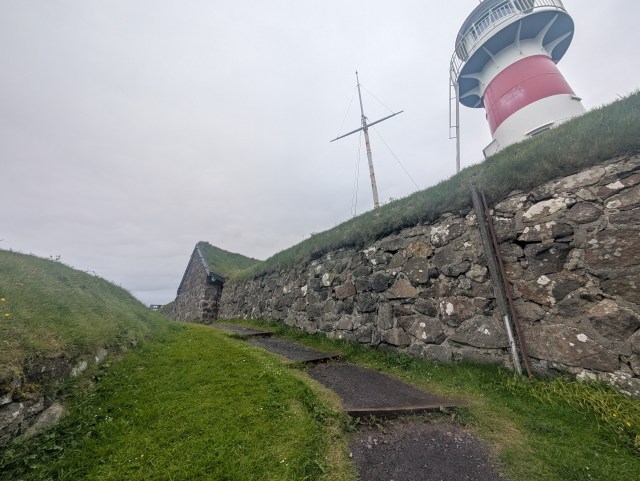
This trendy eatery is located a short distance north of the Acropolis of Athens on a small backstreet called Karaiskaki 33.

The entrance to the establishment is welcoming and you’ll find different menu options designed to suit your moods.

Tasty picks such as their signature Black Angus burger, fresh salads that are perfect for a late snack, or a wide brunch selection, are a few of the options available.

For around €10 (around £8.90) you can get a lunch option such as a club sandwich and for a few extra Euros you can add on a hot or cold drink also.

The relaxed nature of the iFeel means that while food is a quick affair, you don’t feel rushed and you can sit back and enjoy your breakfast or lunch without being hurried out the door.


iFeel has a very modern and relaxed atmosphere to enjoy which having a tasty lunch

My final pick is an expensive one, but as a location for a special evening meal, this is right up there with the best I’ve ever experienced.

The upmarket restaurant Aleria is located on Meg. Alexandrou 57; a 35 minute walk north-west from the Acropolis of Athens.

Getting to the restaurant is fairly easy. There are three main suggestions. The first being to walk it (although after a big meal this may not be advisable). The second suggestion is to order a taxi (the restaurant will do this for you, for your return journey home after your meal) or the third option (and the one I took) is to use the metro (the closest station is Metaxourgeio on Line 2 of the Athens Metro).

Once you’re inside the restaurant you’ll be welcomed in by the extremely attentive staff and the delightfully decorated interior.

This charming restaurant inspired by Greek gastronomical tradition and has two tasting menus to choose from (the Earth & Sea menu or the Garden & Nature menu); with options on both to have either five or six courses along with wine pairings.

I wanted to make this a special meal, so opted for the six course Earth & Sea menu alongside the wine pairings.

The food was exquisite. There were wonderful seafood dishes that included crab and fresh fish, while meat courses ranged from lamb to beef. Beautifully presented, the meal was then perfectly accompanied by the appropriate wines.

Now, usually, I’m not one for the wine pairings. Two main reasons being that they are, more often-than-not, hugely overpriced and surrounded by a great deal more pomp and ceremony than I’m comfortable with. Neither of these issues were the case here and, in fact, the sommelier was friendly and informative without their being any pomposity to his explanations of what I was getting.

The meal lasted for around three hours and there are a number of small breaks between courses that allow you to savour what you’ve just been eating.

As mentioned, this is not a restaurant experience you’ll be able to do very cheaply, but the expense is worthwhile given the food and the service you get.

For my six courses I paid €78 per person (around £69) with an additional €48 per person for the wine pairing (around £42.50); making the bill (before tip) €126 per person (around £111.50) in total.
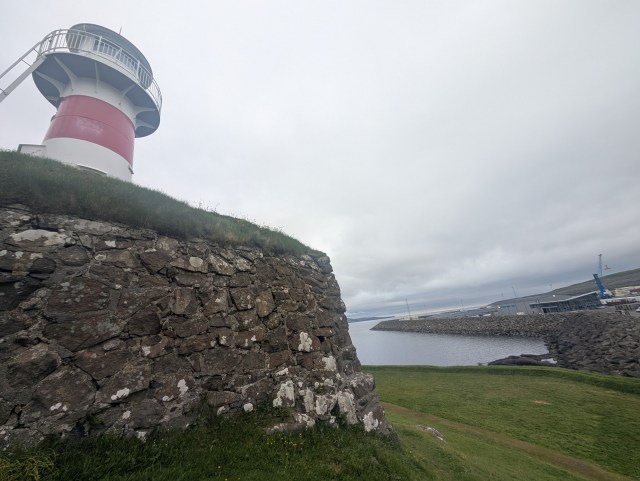
Don’t get me wrong, this is a lot of money for a single dinner. However, if you are looking for somewhere special to go for the evening that offers great local dishes and first-class service, then you won’t go far wrong by enjoying a night out, during your Athens adventure, at Aleria.
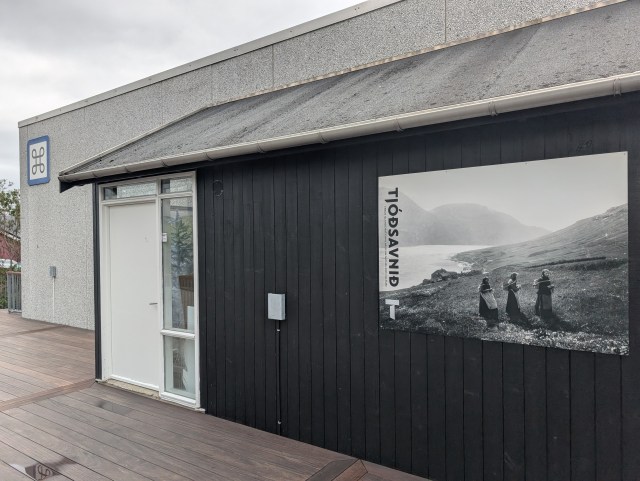

Each course at Aleria is incredidle and works perfectly with the affordable wine pairing

Useful links

British Airways

AirBnB

Athens Metro

Acropolis of Athens & Parthenon

Acropolis Museum

Philopappos Hill

Temple of Hephaestus

Temple of Olympian Zeus

Panathenaic Stadium

Mount Lycabettus

Athens Clue

The Prison of Socrates

The Presidential Guard

Mythos beer

iFeel

Aleria

Remember you can follow World Complete on TwitterInstagramPintrestTumblr and Facebook send your comments and pictures from your travels using #WorldComplete and #Travel.