


Monaco
Monaco, the glittering jewel of the French Riviera, is a place where history, luxury, and breath-taking coastal views collide. Despite being one of the smallest countries in the world – spanning just over two square kilometres – its reputation far outweighs its size.
This tiny principality has been ruled by the Grimaldi family for more than 700 years, with its legacy woven into the fabric of Monte Carlo’s iconic casinos, the world-famous Monaco Grand Prix, and the shimmering superyachts that line Port Hercules.
It’s a playground for the rich and famous, yet beyond the glamour, there’s a fascinating history and culture waiting to be explored.
For our latest adventure, my wife Holly and I, along with our two-year-old son Jacob, decided to experience Monaco firsthand discovering whether this high-rolling destination could cater to family travel as well as it does to billionaires.

However, before setting foot in this sun-soaked city-state, there are a few things every first-time visitor should know.
The first thing is the weather. May is an ideal time to visit – the month we arrived in – with warm but comfortable temperatures averaging around 20°C during the day and dipping to a pleasant 14°C at night.
While the Riviera is known for its endless sunshine, a light rain shower isn’t out of the question, so it’s always worth packing a compact umbrella – especially if you’re planning a scenic stroll around the old town or along the Formula 1 circuit.
When it comes to money, Monaco runs on the Euro, and at the time of writing, the exchange rate sits at approximately €1.20 to the British Pound.
Also, it’s worth noting that tipping in Monaco isn’t as rigidly expected as in some other countries, but it’s still appreciated for good service. Most restaurants automatically include a service charge in the bill, typically around 15%, so additional tipping isn’t necessary, though rounding up or leaving a few extra euros for excellent service is common.
In cafes and bars, locals often leave small change, while hotel staff, such as porters and housekeeping, generally receive a few euros for their efforts. Taxi drivers don’t expect a tip but rounding up to the nearest euro is a polite gesture. Overall, tipping is a matter of discretion rather than obligation.
Another small but notable adjustment for UK travellers is the one-hour time difference – meaning you’ll lose an hour on the journey over but gain it back when you return home.

Packing for Monaco – or neighbouring France – also means considering electrical compatibility. The principality uses three plug types: C, E, and F. Type C features two round pins, type E has two round pins plus a hole for the socket’s male earthing pin, and type F has two round pins with two earth clips on the side.
It’s worth bringing a universal adapter to ensure your devices stay charged for all the inevitable photo opportunities.
Language-wise, French is the official tongue, while Monégasque – a unique Ligurian dialect – is recognised as the national language but spoken by very few. Italian and English are also widely understood, making it easy for visitors to navigate menus, attractions, and the occasional conversation with a friendly local.
One final to consider is how to keep remain in communication with the rest of the world during your stay. Staying connected can be tricky, as roaming charges can be expensive, and local SIM cards aren’t always convenient for short-term visitors. That’s why I highly recommend buying an eSIM before you go, ensuring seamless communication and internet access throughout your trip.
Services like Airalo make it incredibly easy – you just download their app, purchase a data plan for the Faroe Islands, and activate the eSIM on your phone before departure. Once you land, your phone will automatically connect to a local network, saving you the hassle of hunting for wi-fi or dealing with SIM swaps. This way, you can navigate remote roads, check the weather, and share your stunning photos without a hitch!
With these essentials covered, we were ready to dive into all that Monaco had to offer us as a family and to look what it has on offer beneath the glitz and glamour.
Getting there
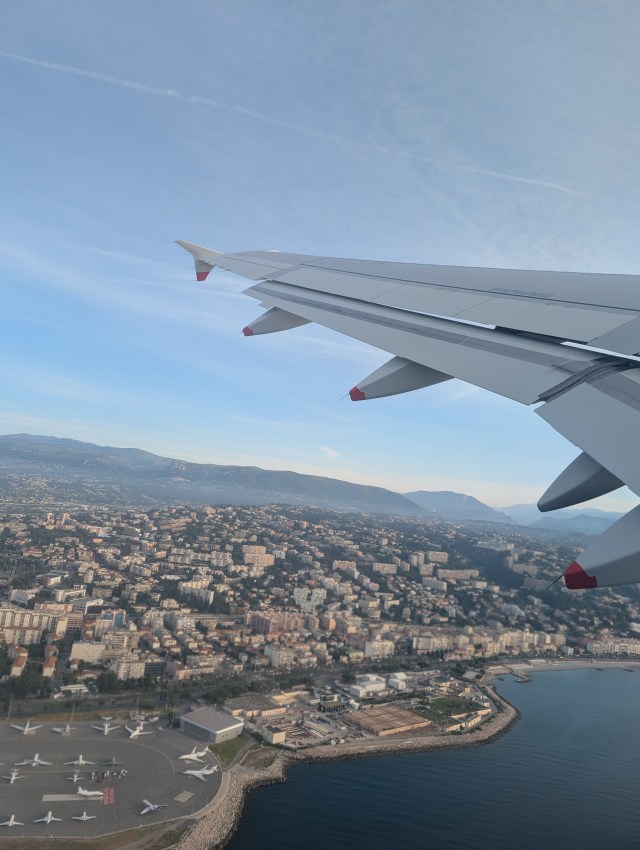
Getting to Monaco is easier than many people realise—though one important thing to note is that Monaco doesn’t have its own airport. The closest international airport is Nice Côte d’Azur, located just across the French border in the south of France, and it’s the go-to arrival point for almost everyone heading to the principality.
Nice is very well connected to the UK, with direct flights available from a number of major airports including London Heathrow, Gatwick, Luton, Stansted, Bristol, Manchester, Birmingham, Leeds Bradford, Edinburgh, Glasgow and Belfast.
A variety of airlines operate these routes, so depending on your preferences or loyalty programmes, you can choose between British Airways, easyJet, Jet2, Ryanair and Wizz Air. Flight times are short and manageable – around two hours from London, and usually no more than two and a half hours from further afield.
When we visited in May, Holly, Jacob and I flew out from London Gatwick with British Airways. We managed to get an incredible deal: just £55 return per person.
It felt like an absolute steal, especially considering the destination. We’d been collecting Avios points as a family and had also earned two companion vouchers through our American Express Credit Cards. By combining our points and vouchers, we were able to significantly reduce the cost of our flights, which made the trip feel all the more rewarding.
Nice Côte d’Azur Airport itself is France’s third busiest, after Charles de Gaulle and Orly in Paris. It handles more than 14 million passengers a year and offers a smooth and modern experience for travellers. The airport has two terminals: Terminal 1 (the terminal we used for our British Airways flights) and Terminal 2, which is a larger and newer terminal and serves most major airlines.
On arrival, we found everything well signposted and efficient – passport control was straightforward, and we were through to baggage claim in no time.
From Nice Airport, Monaco is about 30km away, roughly an hour’s journey depending on how you choose to travel. There are several easy options for getting there. You can take a taxi or private transfer directly from the airport, which offers the simplest and most comfortable route. If you’re happy to go by public transport, you can walk to Nice Saint-Augustin station (about 15 minutes from the airport) and take a regional train along the stunning coastal route straight to Monaco. Alternatively, there are buses that serve the route, with connections into Nice city where you can pick up a local service to the principality.
On arrival we opted for using public transport to get to our hotel which was more cost effective while we chose to use a taxi on our return (mainly due to our early start in the morning). This was fairly costly at €100 (about £83) and would be even more costly if you were travelling from Monaco itself.
No matter which route you choose, the journey from Nice to Monaco is incredibly scenic. The coastline curves dramatically between rocky cliffs and sparkling sea, with picturesque villages and elegant villas perched above the turquoise water.


Where to stay
While Monaco boasts a variety of glamorous hotels—a lot of which are expensive—we decided to base ourselves just outside the principality, at Hôtel Vacances Bleues Delcloy in Saint-Jean-Cap-Ferrat, France.
We booked our four-night stay via Expedia for £651.15, which included breakfast, and strategically chose the location for its convenience to both Nice and Monaco, offering us the best of both worlds without the price tag.
The hotel itself is set in sprawling grounds and offers a decent range of facilities, including a good-sized – and very deep – outdoor pool, mini golf course, fitness area, and sweeping terraces that take full advantage of the stunning sea views. It also has a buffet restaurant, a few bar areas, and access to coastal walking paths that make exploring the peninsula a breeze.
That said, the accommodation is undeniably dated and living in the 1960s. While the location is prime, the rooms are in need of some serious love and attention. Our bathroom was poorly maintained, with tired fittings and door handles literally falling off, while our balcony felt unloved, with peeling paint and an area for plants that was left for the weeds long ago. The mini golf course, though hilariously wonky, offered more laughs than actual playability— its broken obstacles and crumbling concreate made for a very DIY-style round of golf.
Dinner was a particular oddity. Rather than being able to simply walk in and sit down, you have to collect a paper card from reception to be allowed entry to the buffet. And once you’re in, ordering drinks becomes a scavenger hunt— you’re unable to get certain beverages at your table and instead have to venture to different bars across the hotel to retrieve them. It’s a strange and slightly frustrating system, especially after a long day out.
Despite its quirks, the hotel does have some redeeming features. The staff were generally helpful, with receptionists happy to help and order us an early morning taxi.
Breakfast was both plentiful and appitsing with hot and cold options on offer each morning while the pool area was a major hit, especially with Jacob, who loved every second in the water.
Perhaps most importantly, the views over the Mediterranean are genuinely spectacular. Watching the sun glint off the sea each morning added a certain charm and made up for many of the hotel’s shortcomings.
In short, Hôtel Vacances Bleues Delcloy is not the height of Riviera luxury – but if you’re after a budget-friendly base with unbeatable views and access to the French Riviera’s hotspots, it just about does the job.


Getting around
During our trip to the French Riviera, we stayed just outside of Nice in an area called Beaulieu-sur-Mer. So, while Monaco was one of the main focuses on our itinerary, we didn’t actually stay there overnight – instead, we opted for a day trip into the principality. And having now done it ourselves, I can safely say that the best way to travel to Monaco from the surrounding area is by train.
You can drive, of course, but we found that the hassle of parking and the often heavy traffic around Monaco just wasn’t worth it. Like many small, popular destinations, space is at a premium in Monaco, and that applies to the roads and car parks too.
Between the winding cliffside drive and the pricey parking fees, driving felt like an unnecessary complication. The train, on the other hand, was not only cheaper (around €26 – about £22 – for two adult return tickets with an infant travelling for free) but also far more relaxing – and it gave us some stunning views along the way.
We picked up the train early in the morning from Beaulieu-sur-Mer towards Monaco Monte Carlo station; a journey that takes around 15 minutes. It’s a short, scenic journey that hugs the coastline, offering glimpses of the Mediterranean at almost every turn.
Trains run regularly throughout the day, so there was no need to rush or plan too far in advance as even if you miss one, another will be along fairly quickly.
When we arrived at Monaco Monte Carlo station, we found ourselves right in the heart of the principality – albeit at the very top of it.
The station itself is built into the rock, a modern underground complex that’s surprisingly spacious and very clean. As you emerge, you’re already close to many of Monaco’s top attractions. It’s a short walk to the the yacht-filled Port Hercules or the historic old town perched on the hill.
One thing to note is that if you do leave the station at the top then look for the numerous lifts and elevators that are on the street to take up up and down the many levels of Monaco with ease. If, like us, you’re visiting with a small child, this is a godsend and makes walking around a lot easier.
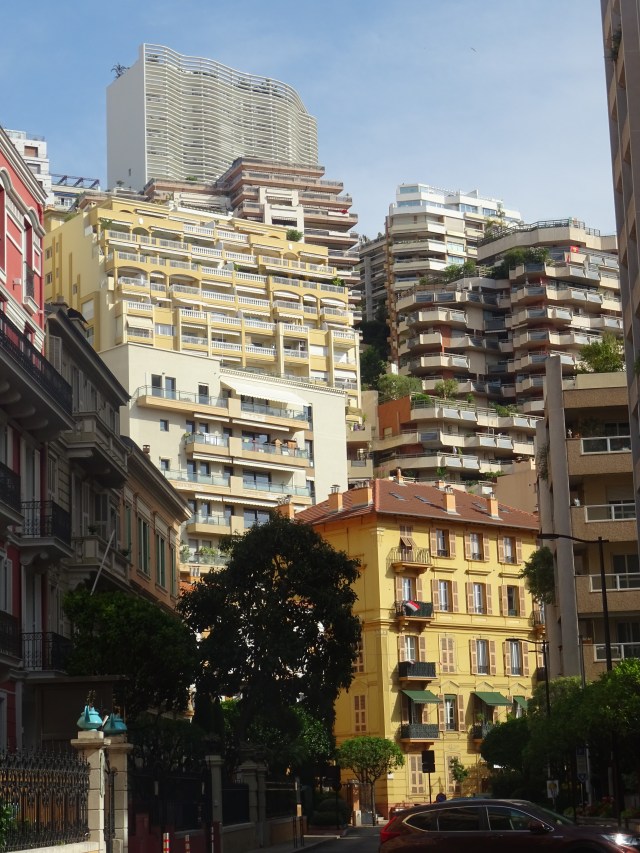
Once you’re in Monaco, the best way to get around is definitely on foot. Despite its glamorous reputation, Monaco is actually very compact – just a couple of square kilometres in size – which means you can easily explore it without needing taxis or buses.
While it is small, some of it’s streets are a bit of a maze, so keep your phone handy and your map open as this is the easiest way to work out where you need to go.
There are a few steep hills, but – as mentioned earlier – the principality is well equipped with public elevators and escalators that help you move between different levels of the city without breaking a sweat. It’s surprisingly pedestrian-friendly, and walking lets you stumble upon breath-taking viewpoints that you’d likely miss in a car.

Top sites
So where should you visit during a trip to Monaco?
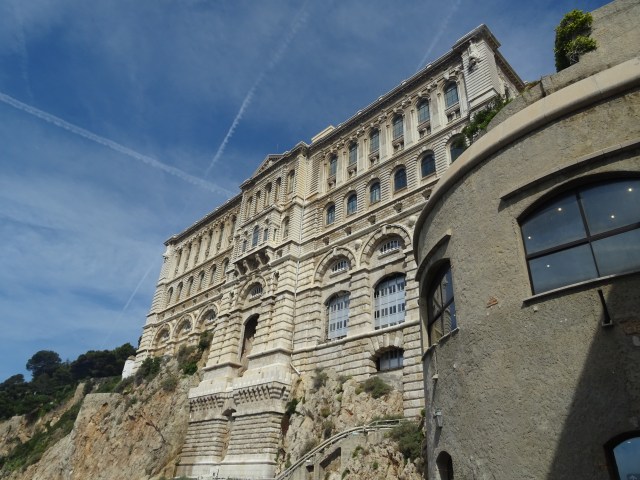
The first place we went to was the Oceanographic Museum of Monaco.
Perched dramatically on the edge of a cliff overlooking the sparkling Mediterranean, the museum is as impressive on the outside as it is fascinating on the inside. It almost looks like it’s been carved out of the rock itself, standing tall above the sea.
We booked our tickets online in advance, which cost €22.50 each for two adults (around £20.07), and the best bit was that children under four go free – so Jacob could enjoy the whole experience without us needing to buy him a ticket.
From the moment we stepped inside, we could tell this was going to be more than just a typical museum visit. The aquariums are the real showstoppers – vast tanks teeming with colourful fish, curious sea creatures and a few sharks. Jacob was completely mesmerised by the jellyfish and couldn’t get enough of each tank he walked to.
But there’s much more to the Oceanographic Museum than the aquariums. The building itself is steeped in history – it was founded by Prince Albert I in 1910, and you really feel the grandeur as you explore its marble halls and sweeping staircases.
One of the most memorable parts of our visit was walking beneath the enormous whale skeleton suspended above the grand exhibition space. There’s also a fascinating cabinet of curiosities filled with ocean-themed artefacts, from vintage diving suits to preserved sea creatures and centuries-old marine maps – it’s quirky yet beautifully presented.
We were really impressed by how family-friendly everything was. For older kids and grown-ups, there is an escape room and even a virtual reality diving experience. Jacob was a bit too young for those, but he absolutely loved the rooftop terrace where we also stopped for a bite to eat. It’s not just a spot for a breather and some food though as there are also stunning views of Monaco to enjoy and a small play area and a tortoise enclosure to visit.
One of the things that really stood out to us was how well the museum balances fun with a strong environmental message. There are lots of exhibits that talk about the importance of ocean conservation and protecting marine biodiversity, but it never feels heavy or preachy – just thought-provoking in the best way. You come away feeling like you’ve not only had a great day out, but learned something too.


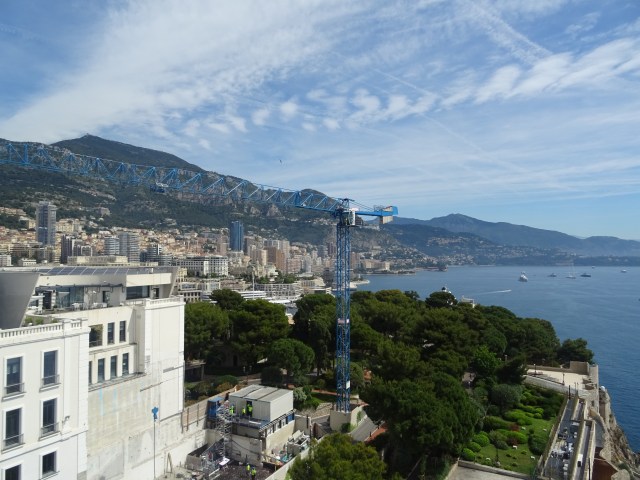
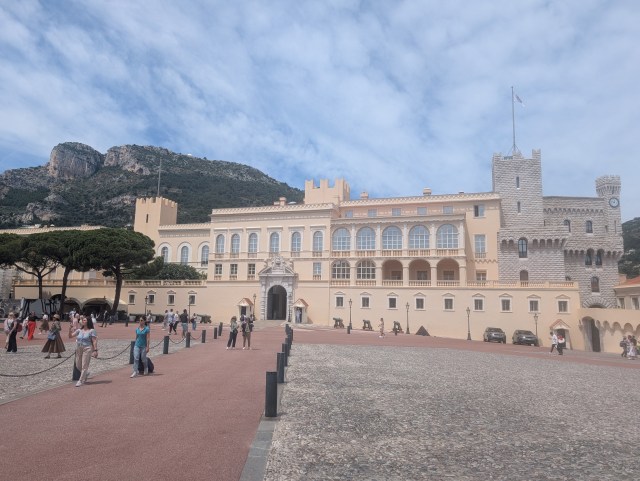
The next place to visit in Monaco is the Palais Princier de Monaco – the Prince’s Palace – which sits right at the top of the old town, Monaco-Ville, on what’s known as “the Rock” or Le Rocher.
It’s hard to miss, with its elegant façade and commanding position overlooking the harbour and the glittering Mediterranean beyond. We didn’t go inside on this occasion, but it’s good to know that the palace is open to the public from April to mid-October, every day between 10AM and 5:30PM, and if you’re visiting in July or August, you get a bit more time as it stays open until 6:30PM.
Even just seeing it from the outside is worth the walk up. The setting is beautiful, with wide open squares, elegant lampposts, and sweeping views in every direction. The palace itself has a real sense of history about it – it’s been the official residence of the Grimaldi family for centuries, and you can just imagine the grandeur that lies behind those big wooden doors.
It’s still a working royal home too, which adds to the atmosphere. We arrived just after the Changing of the Guard, which takes place every day at 11:55AM, but it’s definitely something worth catching if you time it right.
The area around the palace is lovely to wander through, with narrow old streets, souvenir shops, cafés and a peaceful, relaxed vibe that feels quite different from the buzz of Monte Carlo below.
Even without going inside, it was a really enjoyable stop and made us feel like we were seeing a different side of Monaco – more traditional, more historic, and with some of the best views of the whole trip.
If you’re exploring Monaco, one place you really shouldn’t miss is the Cathédrale de Monaco, also known as Saint Nicholas Cathedral. It’s tucked away in the heart of Monaco-Ville, just a few minutes’ walk from the Prince’s Palace, and makes for a peaceful and moving visit.
The cathedral is open to the public and completely free to enter, which makes it an easy addition to your itinerary, whether you’re sightseeing with kids or enjoying a quieter moment in the old town.
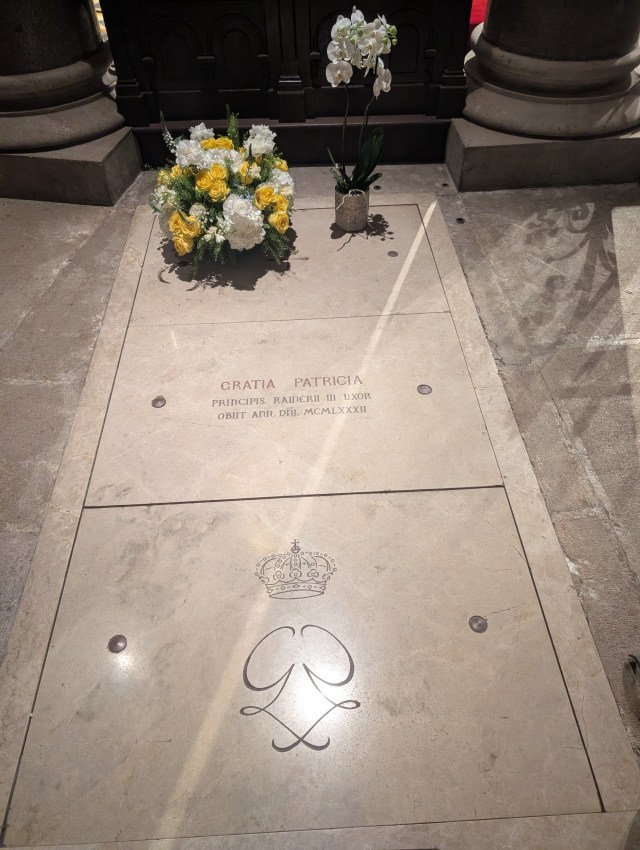
The cathedral is perhaps most famous as the final resting place of Princess Grace of Monaco – the Hollywood star Grace Kelly – and her husband, Prince Rainier III.
Their tombstones lie side-by-side inside the cathedral, simply marked and always surrounded by fresh flowers. It’s a beautifully kept space and very respectful, but there’s something incredibly touching about standing there and reflecting on their story.
Architecturally, the cathedral is striking, built from white stone from nearby La Turbie, with a mix of Romanesque and Byzantine styles that give it a distinctive, elegant feel.
Inside, it’s calm and cool, with high vaulted ceilings, lovely stained glass windows, and an impressive altar.
Even if you only stop by for a short while, the cathedral offers a different side to Monaco – one that’s steeped in history, full of quiet beauty, and free from the glitz of the casinos and yachts.


A fun and slightly unexpected place to pop into while exploring Monaco is the Monaco Town Hall, or Mairie de Monaco, especially if you’re after a quirky little souvenir from your trip.
Tucked away just off the main square in Monaco-Ville, the building itself is elegant but understated – and you might easily walk past it without realising there’s something special inside for visitors.
If you head inside during opening hours and ask at the front desk, you can get a special passport stamp featuring the official coat of arms of Monaco. It’s completely free, and such a unique memento to take home – especially if you’re someone – like me – who enjoys collecting travel stamps or is travelling with children who’ll find it exciting to have a “Monaco stamp” in their passport.
Sadly for us, our visit coincided with a public holiday and the town hall was closed, which was a real shame as we’d been looking forward to picking up our stamp! But under normal circumstances, it’s open from Monday to Friday between 8:30am and 4pm, so it’s worth planning your visit around that if you’re keen to add something a little different to your Monaco experience.
It’s a small and simple thing to do, but getting your passport stamped at the town hall adds a lovely personal touch to your time in the principality.

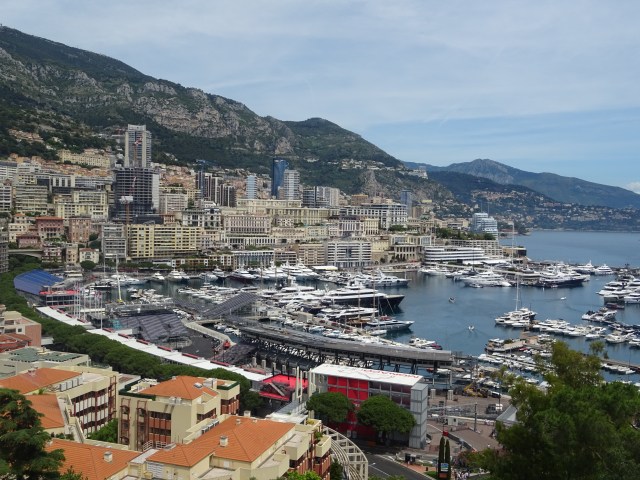
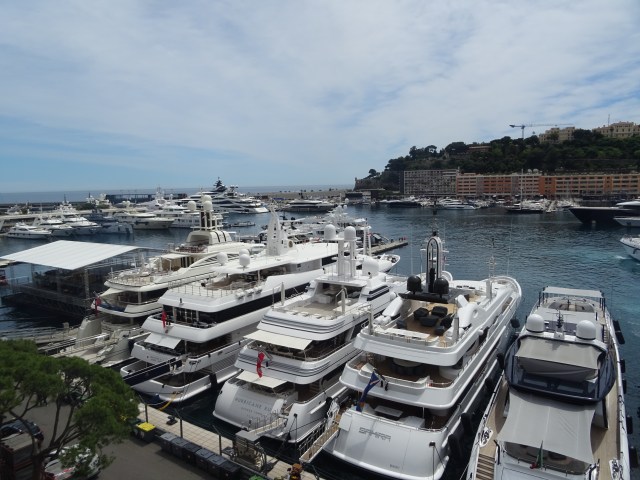
A walk around Port Hercules is a must when visiting Monaco. This is the city-state’s main harbour – the one you always see in postcards and Grand Prix footage – and it’s every bit as glamorous as you’d imagine.
Framed by the steep cliffs of Monaco on one side and the open sea on the other, the port is a hive of activity and a great place to soak up the atmosphere, whether you’re stopping for a drink, spotting superyachts, or simply taking in the views.
It’s a working harbour, but also a showpiece – the kind of place where multi-million-pound yachts are lined up like parked cars and the reflections of luxury boats shimmer on the water. Even if you’re not usually into boats, there’s something captivating about the scale and style of it all. We spent a good while strolling along the promenade, pointing out the names and flags of different vessels and wondering who might be on board.
There are cafés, restaurants, and plenty of benches along the waterfront, so it’s also a perfect spot to pause for an ice cream or a coffee and watch the world go by. Jacob loved seeing the big boats up close and waving at the smaller ones coming and going.
Port Hercules is particularly lively in the lead-up to the Monaco Grand Prix in May (which took place a week before we visited), when parts of it are transformed into sections of the racetrack – you can still see the markings and barriers even when the race isn’t on, which adds a fun twist to your walk. And if you visit in the evening, the whole place takes on a golden glow as the sun sets behind the hills and the lights of the city start to sparkle.
It’s free to wander around, and because it sits right between Monte Carlo and Monaco-Ville, it’s easy to work into your day without going out of your way.

For fans of F1, one place you absolutely shouldn’t miss in Monaco is the Fairmont Hairpin.
It’s the most iconic corner on the entire Formula 1 calendar – the famous near-180-degree bend that’s instantly recognisable to motorsport lovers around the world. Located right outside the Fairmont Monte Carlo hotel in the heart of Monte Carlo, this tight, winding corner is the slowest on the circuit, and seeing it in person really makes you appreciate just how narrow and technical the Monaco Grand Prix truly is.
Even when it’s not race weekend, the hairpin is still in use as a public road, so you can stand just steps away from where the F1 cars twist and turn during the race, and watch everyday traffic navigate the same line – albeit much, much slower. There’s something thrilling about being able to walk right up to a piece of sporting history like that, especially if you’ve grown up watching Monaco on TV.
If you’re visiting during the Grand Prix in May, this spot becomes one of the hottest places to watch the action, with the hotel’s balconies offering a prime view of the drivers battling through the bend. But even at quieter times, the Fairmont Hairpin has a buzz to it – it’s a photo stop, a conversation starter, and a bucket-list tick for any Formula 1 fan visiting the principality.


Where to avoid
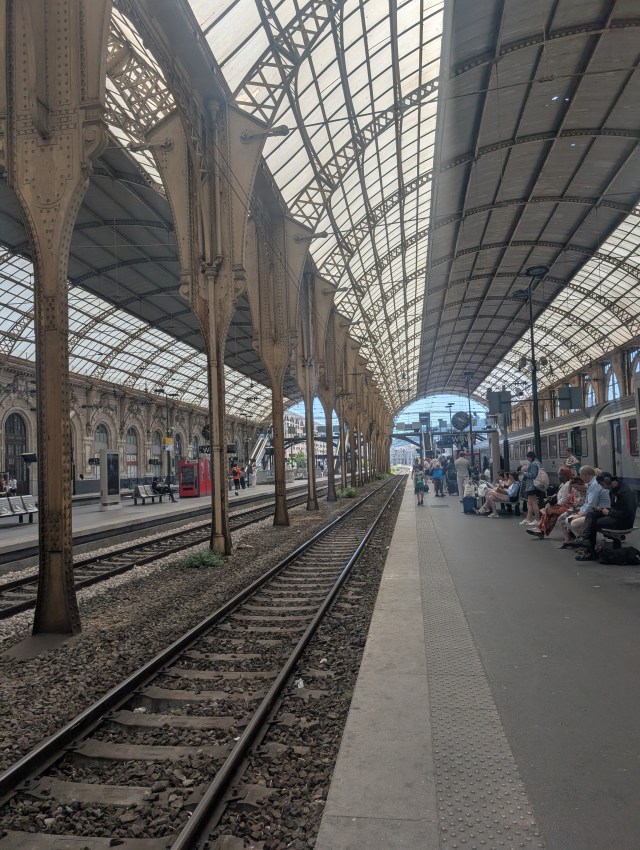
Given Monaco’s tiny size and polished reputation, you might assume there’s nothing to be wary of. And to be fair, we didn’t encounter any issues while actually in Monaco — it felt clean, orderly, and very safe. However, if you’re travelling into the principality by train (as most visitors do), it’s worth staying on your guard, especially around Gare de Nice-Ville, which is the main station people pass through en-route to Monaco.
On our very first train journey, as we made our way from the airport to our hotel ust we witnessed a woman loitering on the platform and tailing passengers as they stepped onto the train. She moved quickly and quietly, slipping her hands into jacket pockets and open bags with worrying ease.
Fortunately, we clocked what she was doing — and after I shouted to alert those around us, she immediately leapt off the train and sprinted away like a coward. It was shocking to see such blatant theft in action, and a stark reminder that crowded train stations can be hotspots for opportunistic crime.
So while Monaco itself felt very safe, we’d strongly recommend keeping your belongings close when using public transport in the area — especially in and around Nice. Zip up your bags, avoid keeping valuables in outer pockets, and stay aware of your surroundings. A few small precautions can go a long way.
As for places within Monaco to avoid, the truth is there aren’t really any – it’s a small, walkable place where you can see most of the sights in a day. That said, if time is tight and you’re deciding what to prioritise, the Casino de Monte-Carlo may not be worth going out of your way for.
Despite the glamour attached to its name, the building itself isn’t particularly striking from the outside. Aside from a few luxury cars parked out front (which you’ll see all over Monaco anyway), there’s not much to take in.
While you can pay to go inside and explore, we opted not to, and didn’t feel like we missed out. Unless you’re planning to gamble or are especially keen to see the interior, the experience doesn’t quite justify the cost or the hype. There are plenty of other spots in Monaco where you can enjoy the same elegance – for free.


Great places to eat
The tiny principality is packed with a fair few nice looking restaurants. But during our visit, we made the decision not to eat in Monaco itself (aside from a quick sandwich and drink on the rooftop café of the Oceanographic Museum – perfect for the view, if not the budget!).
From what we saw, most of Monaco’s dining options tend to lean towards the pricey end of the spectrum. So unless you’re keen to splash out, our advice is to enjoy the sights by day, then head out of the city for dinner. That’s exactly what we did – and it turned out to be one of the culinary highlights of our trip.
Just a short drive away, tucked in the hills above Nice, we booked a table at the fabulous La Maison De La Sauce – a hidden gem in Beaulieu-sur-Mer.
We reserved in advance and were seated in their lovely outdoor terrace, basking in the evening sun.
We opted for the three-course tasting menu, priced at a very reasonable €49 per person (around £41). Starters included deliciously rich foie gras and traditional escargots. For mains, we tried both the melt-in-the-mouth beef and the beautifully prepared fish ceviche dish. Dessert was a perfectly crisp and subtly tangy apple tart that rounded off the meal beautifully.
The whole experience, including drinks, came to just €133 (around £112) – incredible value given the quality of the food and the setting.
What really stood out, though, was the service. The owners, who also run the restaurant day-to-day, were clearly passionate about their craft. Their warm welcome, thoughtful recommendations, and attention to detail made the evening feel truly special.
La Maison de la Sauce offers charm, flavour, and genuine hospitality – proof that sometimes the best meals are found just a little off the beaten track.


Useful links
Oceanographic Museum of Monaco
Remember you can follow World Complete on Twitter, Instagram, Pintrest, Tumblr and Facebook send your comments and pictures from your travels using #WorldComplete and #Travel.
 World Complete
A great and thorough review of Monaco. I managed to find a lasagne for EUR12 which was delicious on my visit so there are definitely some cheaper options for eating, but I agree the city is super expensive. It’s got such an interesting history though, and there’s lots to see for somewhere so small 🙂
LikeLiked by 1 person
Thanks for reading and hope you enjoyed the blog. 😁 It’s really not a place to try and find a bargain in haha.
LikeLiked by 1 person
I need to go back and visit thoroughly 🏎️🇲🇨
LikeLiked by 1 person
Hope you enjoyed the blog
LikeLiked by 1 person
I did! 🙂
LikeLiked by 1 person