


Rimini
Rimini is a vibrant city nestled along the Adriatic coast in northern Italy that effortlessly blends the allure of sun-soaked beaches with a rich tapestry of history.
Known for its lively atmosphere and expansive sandy shores, the Miami of Europe has long been a favourite summer destination for Italians and visitors from across Europe.
But beyond its reputation as a beach paradise, the city is steeped in history, with roots that trace back to ancient Rome.
Founded by the Romans in 268 BC, Rimini was originally known as Ariminum, a strategic settlement that served as a crucial hub connecting northern and southern Italy. Its importance in the ancient world is still evident today in its well-preserved monuments.
The Arch of Augustus, which dates back to 27 BC, stands as one of the oldest surviving Roman arches and serves as a majestic gateway to the city. The Tiberius Bridge, completed in 21 AD, is another remarkable example of Roman engineering that has withstood the test of time, still in use over two millennia later (more on both of these later on).
These landmarks are not just remnants of the past but are woven into the daily life of Rimini, offering a tangible connection to the city’s illustrious history.
Throughout the Middle Ages and the Renaissance, Rimini continued to thrive as a cultural and economic centre.
It was ruled by the powerful Malatesta family, who left their mark on the city with the construction of the Tempio Malatestiano, a striking cathedral that stands as a masterpiece of Renaissance architecture. The city’s rich cultural heritage has made it a magnet for artists, writers, and thinkers throughout the centuries, further cementing its place in Italian history.
This rich historical backdrop set the stage for our first Italian adventure as a family for myself, my wife Holly, and our one-year-old son, Jacob.
We were drawn to Rimini not just for its history, but also for its reputation as a quintessential Italian beach destination; something we knew a one-year-old would love.
The city’s 15km of sandy coastline, lined with vibrant beach clubs and restaurants, offer a quintessential summer experience that has been a tradition for generations of Italian families.
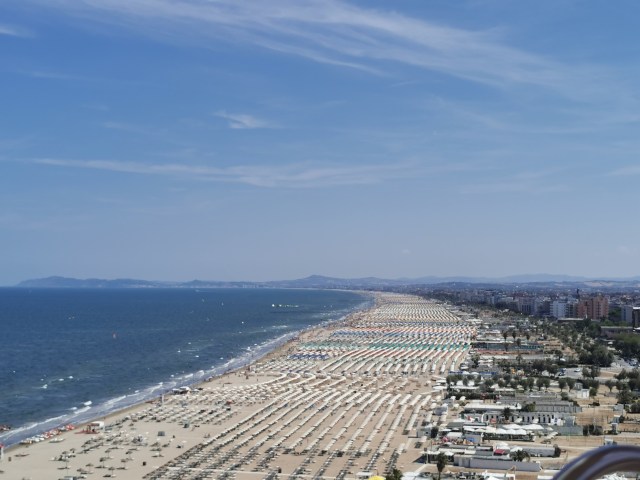
So what should first-time visitors to Italy, and Rimini in particular, consider before embarking on an Italian adventure?
The first thing is the temperature.
August, when we visited, is one of the hottest months in Rimini, with average highs reaching around 30°C (86°F) and lows rarely dipping below 20°C (68°F). The heat can be intense, making it the perfect time to relax by the sea, but it’s important to pack light, breathable clothing and plenty of sun protection to fully enjoy the outdoor activities Rimini has to offer.
The next thing is the currency. In Italy, the currency is the Euro, and at the time of writing, you can get approximately €1.18 for every £1. This rate can vary, so it’s advisable to keep an eye on the exchange rate as you plan your trip.
The next thing to consider is the time difference. Italy is one hour ahead of the UK, meaning you’ll lose an hour when you arrive but gain it back when you return. This small time difference is easy to adjust to, but it’s good to keep in mind, especially when planning flights and accommodations.

The fourth consideration is the power points to keep all your electricals working and well charged.
When it comes to electricity, Italy uses three associated plug types: types C, F, and L. Plug type C has two round pins, plug type F also has two round pins with two earth clips on the side, and plug type L features three round pins. Italy operates on a 230V supply voltage and 50Hz frequency, so make sure your devices are compatible or pack the appropriate adapters. This is particularly important if you plan to bring along chargers or other electronic devices.
The final consideration is the language.
The official language in Rimini, as in all of Italy, is – as you’d expect – Italian. While many people in tourist areas speak good English, it’s always appreciated when visitors make an effort to use the local language.
A few key phrases to remember are ciao (used for both hello and goodbye), per favore (please), and grazie (thank you). Even a basic grasp of these words can enhance your experience, making interactions with locals more enjoyable and authentic.
Getting there
Most trips to Rimini begin by flying into Bologna International Airport; which – approximately takes around two hours from London.
Situated approximately 125km northwest of Rimini, Bologna International Airport serves as a major hub for both domestic and international flights, making it an ideal starting point for your journey.
Bologna International Airport, officially known as Guglielmo Marconi Airport, originally opened back in 1931. Over the decades, it has evolved into its role to serve as a key gateway to the Emilia-Romagna region and beyond.
Today, it handles around 8.5 million passengers annually, a testament to its importance in the Italian aviation network. The airport itself is modern and well-equipped, offering a wide range of facilities and services to ensure a comfortable experience for travellers. Whether you’re in need of a quick bite to eat, last-minute travel essentials, or currency exchange services, Bologna International has you covered.
For travellers coming from the UK, there are numerous flight options that cater to different preferences and budgets. EasyJet offers direct flights from London Gatwick, while Ryanair provides connections from London Luton, London Stansted, Manchester, and Edinburgh. Additionally, British Airways operates flights from London Heathrow.
For our own trip to Rimini, we opted to fly with British Airways from London Heathrow. Our choice was influenced by the fact that both Holly and I had accumulated a variety of rewards through our American Express credit cards, which included valuable Companion Vouchers.
These vouchers allowed us to book one free seat each on the journey, a significant saving that made British Airways the most attractive option for us. Additionally, we had amassed a substantial amount of Avios Points, which we were able to use to cover the remaining cost of the flights. This meant that, with Jacob still being under two years old, the three of us were able to secure round-trip flights to Italy for an incredible total of just £2.50!
However, for those who may not have such vouchers or points to redeem, the typical cost for a direct return flight from London to Bologna with British Airways is around £195 per adult, which is still a reasonable price.
The flight itself was a pleasant experience. From the moment we boarded, the cabin crew made us feel welcome and took good care of Jacob, while the atmosphere on the plane was calm and relaxing.
Each passenger received complimentary water and a biscuit, a small but appreciated gesture that added to the comfort of the flight. For those who wanted something more substantial, there were additional food and drink options available for purchase.
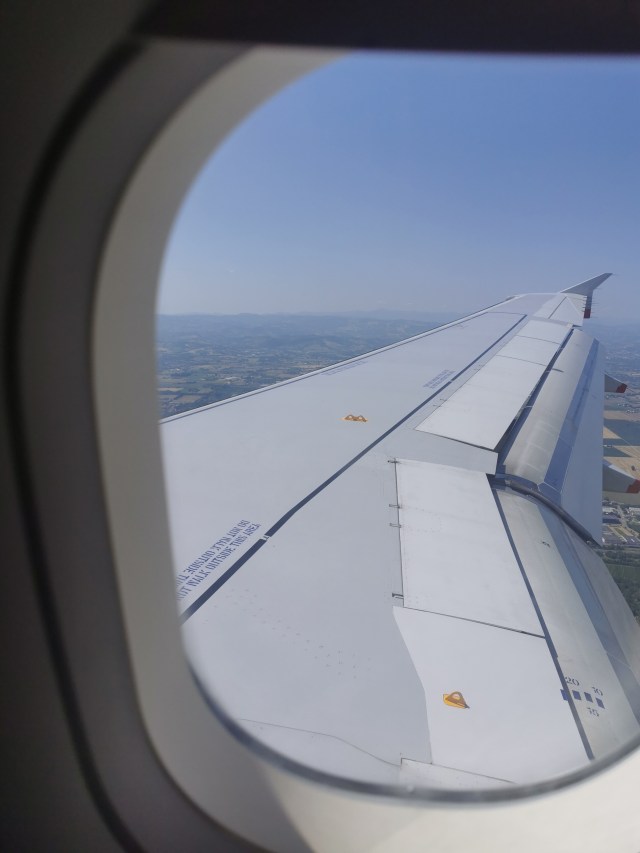
The flight was smooth from start to finish, with no significant turbulence or delays. As we began our descent into Bologna, we were treated to stunning views of the Italian landscape, with its rolling hills and picturesque towns coming into view.
Upon our arrival at Bologna International Airport, we were impressed by how efficiently the disembarkation process was handled. Within minutes, we were off the plane and making our way through the airport. Navigating security and passport control was a breeze, with minimal queues and friendly staff making the process as stress-free as possible. This efficiency was a welcome surprise, as it allowed us to quickly transition from the plane to the arrivals area, eager to begin the next leg of our journey to Rimini.
After collecting our luggage, we found ourselves in the bustling arrivals area, where a variety of transportation options awaited. For those looking to reach Rimini directly, there are several convenient choices. Taxis are readily available outside the terminal, offering a direct and hassle-free way to reach your destination.
Alternatively, for those who prefer a bit more flexibility (as was the case with us), there are numerous car rental agencies located within the airport, providing a range of vehicles to suit your needs.
Renting a car is a great option if you plan to explore the wider Emilia-Romagna region or want the freedom to travel at your own pace (more on this later on). In addition to transportation services, the airport also offers a selection of shops where you can pick up any essentials you might need for your journey. Whether it’s a quick snack, some toiletries, or a guidebook to help you navigate your way through Italy, you’ll find everything you need right there in the arrivals area.
With our bags in hand and everything in order, we were ready to set off on the final leg of our journey to Rimini.


Where to stay
Rimini, known for its vibrant seafront, offers a wide range of accommodations, from beach-front hotels to charming apartments available for rent.
While the central seafront area has its allure, I found that a stay in the nearby area of Viserba provided a more tranquil experience without sacrificing the beauty of the Adriatic coast.
Viserba is just a short distance from the heart of Rimini, yet it feels like a world away in terms of atmosphere. The beaches here are just as stunning as those in central Rimini, but with a more relaxed and laid-back vibe.
It’s the perfect place to unwind without the constant hustle of the beachfront promenade. Rather than staying directly on the beach, which can get quite busy, we opted for a place slightly inland.
It’s amazing how a mere ten-minute walk away from the coast can place you in a much more serene environment, where you can truly enjoy the quiet and still be close enough to the beach whenever you want.
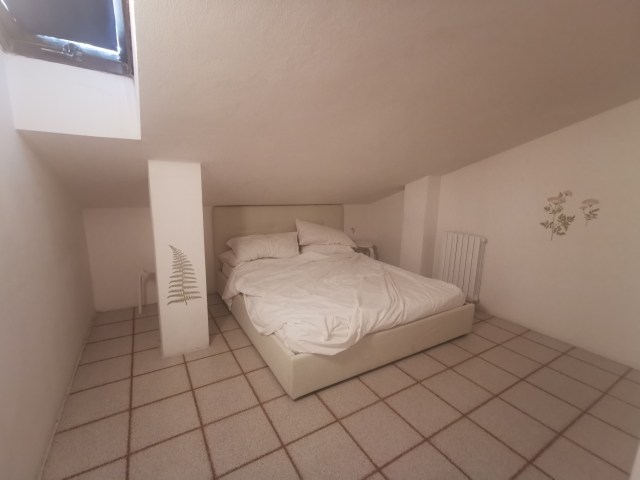
This is exactly what we did during our recent trip. Holly, Jacob, and I booked a charming AirBnB in Viserba that cost us a total of £410.96 for four nights, which worked out to be £102.74 per night. Our accommodation was a well converted loft, nestled in a peaceful area – on a road called Via Romeo Canini – yet still conveniently accessible.
Our hosts were fantastic, providing us with detailed instructions before our arrival. They made sure we knew exactly how to find the place, retrieve the keys from the lockbox outside, and navigate the parking situation.
The on-site parking space, while a bit narrow, was a huge convenience. It was offroad and always available, which saved us the trouble of hunting for a spot on the busy streets.
After parking, we grabbed our belongings and made our way up the three flights of stairs to the loft. Entering the apartment, we were welcomed into a large, airy living and kitchen area. The space was well-lit and equipped with excellent air-conditioning, which was much appreciated during the warm summer days.
The other part of the apartment was accessed through a corridor off the living room, leading to two bedrooms and a bathroom. Here, we did encounter one small drawback: the steeply sloping roof.
This feature added charm to the loft but also required a bit of caution, especially in the bedrooms where the ceiling dipped low in certain spots (especially over the headrest areas of the beds).
The bathroom, too, had its quirks. The sloped roof meant that taking a shower required sitting down, which was a bit unusual at first. However, once we got used to it, it wasn’t an issue, especially since we were only staying for a few days.
Despite these minor inconveniences, the loft was a perfect base for exploring Rimini and the surrounding region. The peaceful setting of Viserba, combined with the comfort and charm of our AirBnB, made for a wonderful stay.
We had all the amenities we needed for a short stay and enjoyed the calm, residential atmosphere, while still being within easy reach of Rimini’s lively seafront whenever we wanted to dip back into the action.
I’d highly recommend considering a stay in Viserba, especially if you’re looking for a balance between accessibility and tranquillity. It’s a hidden gem that allows you to enjoy the best of both worlds.


Getting around
The first thing to say is that when you are in Rimini itself – or getting around in Viserba – then walking is the easiest way.
For one thing, it avoids the need to keep hunting for things like parking spaces as these can be difficult to find it popular areas. In addition to this, both are easy to navigate on foot and it gives you the best chance of finding some hidden gems as you traverse around the streets between attractions.
That said, I’d still urge hiring a car from Bologna International airport.
Renting a car at Bologna International Airport and driving to Rimini, offers an unparalleled sense of freedom and flexibility, making it an excellent option if you want to explore the region at their own pace.
When Holly, Jacob, and I arrived at Bologna International Airport, we saw a range of car rental options. However, we had booked in advance online with Sicily by Car, conveniently located in the arrivals area of the airport.
The process was smooth, and we were quickly handed the keys to a modest small car (which helped make parking in tight spaces easier), which cost us £218 for the five days, including insurance. This price provided us with peace of mind as we embarked on our Italian adventure.
Although we didn’t opt for any additional extras, it was reassuring to know that options like a second named driver or a child car seat were available for an extra fee. We had brought our own car seat from the UK for Jacob, so we didn’t require that particular service, but it’s worth noting for other travellers.
The primary reason we chose to rent a car was to have complete control over our journey from Bologna to Rimini. This option allowed us to navigate the hour-and-a-half drive at our own pace.
The car also provided us with the flexibility to explore further afield, such as our trip to San Marino (something I had keen eyes on and more on later on in this blog). Having our own vehicle meant we weren’t tied to the schedules of public transportation or the expense of taxis, making it an ideal choice for a personalised travel experience.
For those considering a similar journey, there are a few important things to remember when renting a car in Italy. Firstly, you’ll need to bring a credit card with your full name on it, as well as a form of ID, such as your passport (which you’ll have with you anyway), and your driving license.
For some nationalities, an international driver’s license may also be required, though this wasn’t necessary for us as UK residents. Being prepared with all the necessary documentation ensures a smooth rental process and avoids any unnecessary stress at the start of your trip.
When it comes to driving in Italy, there are a few key points to keep in mind. Italians drive on the right-hand side of the road, which may take a bit of adjustment for those used to driving on the left.
Italian drivers are known for being quite assertive, but we found that driving in this region was a world away from the chaos often associated with cities like Rome or Naples. The roads around Rimini and its surrounding areas were generally calm and well-maintained, making for a much more relaxed driving experience.
Ultimately, the freedom that having a car provided made our trip uniquely ours. We were able to explore the areas that interested us the most and enjoy Italy on our terms.


If you’re planning a trip to Rimini and choose to stay in Viserba (as we did), taking the train into central Rimini is the most convenient option.
The distance between the two is too far to walk – especially in the hot summer sun – and driving can be a hassle with the limited parking available in the city centre.
Thankfully, the train offers a quick and stress-free alternative, allowing you to avoid the challenges of finding a parking spot and giving you more time to enjoy your day.
The train station we used in Viserba is called Rimini Viserba.
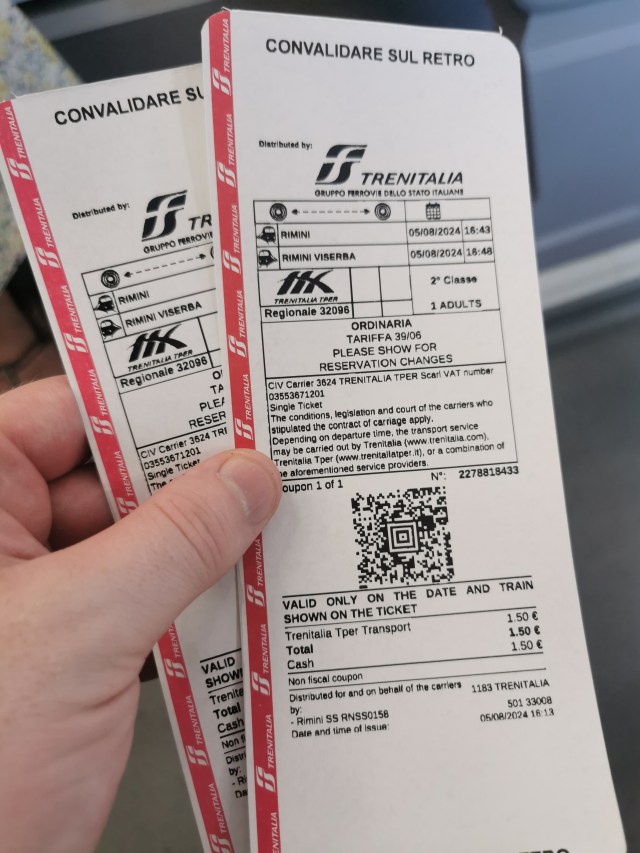
It’s located just off Via Eugenio Curiel and was only five minutes away from our AirBnB, making it easy to find and access. From there, you can purchase tickets directly from a machine at the station.
The tickets are very affordable, costing just €1.50 per adult each way (around £1.25), and you can pay either with cash or by card.
On-board the trains, good quality air-conditioning keeps you cool and the spaces are both clean and comfortable and always have plenty of seats available.
The journey from Rimini Viserba to central Rimini is a breeze, taking around five minutes on the train. With about 14 trains running on this route daily, you won’t have to wait long for the next one. The distance covered is only 4km (three miles), and since the trains are direct, there’s no need to worry about making any changes along the way.


Top sites
There are a number of things that should be on a visitors to-do list when visiting Rimini; the first of which is to see the Arch of Augustus in the city centre.
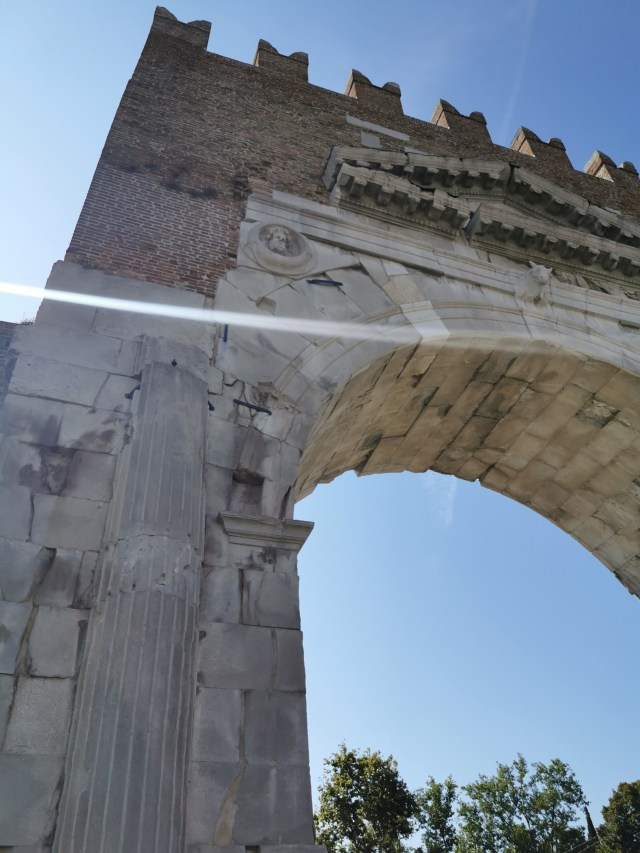
The Arch of Augustus – known in Italian as Arco di Augusto – stands as one of Rimini’s most enduring and impressive ancient monuments.
This Roman arch, located at the southern end of Corso d’Augusto, the main street that traverses the historic centre of Rimini, is an iconic symbol of the city’s rich history.
Constructed in 27 BC, the Arch of Augustus is the oldest surviving Roman arch, built to honour the Emperor Augustus and to celebrate the completion of the Via Flaminia, a vital road that connected Rome to the Adriatic Sea.
This magnificent structure, made of Istrian stone, was not only a triumphal arch but also served a functional purpose as a city gate, marking the entrance to Rimini from the Roman capital. Its design, characterised by a single large archway, is notable for its simplicity and grandeur.
Unlike later Roman arches, which often featured multiple passageways, the Arch of Augustus is more restrained in its design, emphasising its symbolic significance rather than its physical presence.
The arch was originally adorned with a bronze statue of Augustus, which has long since been lost to time, and the carvings on the arch depict various deities, including Jupiter and Apollo, reflecting the emperor’s connection to divine powers.
Today, the Arch of Augustus remains a central feature of Rimini’s historic landscape, drawing visitors who come to marvel at its ancient grandeur. Holly, Jacob and I made sure that we visited the Arch of Augustus first during our day in the city centre. Remarkably well-preserved, the arch is free to visit. It stands in a pedestrian-friendly area, and cars are not allowed to pass under it, preserving its integrity.
It is a testament to the engineering prowess of the Romans and their ability to create structures that have endured for millennia.


The next stop of a historic trip to Rimini is to the Ponte di Tiberio.
The Ponte di Tiberio is an ancient Roman bridge that spans the old Marecchia River (before its course had been diverted), this historic structure is a further testament to the engineering prowess of the Romans and has stood the test of time for nearly two millennia.
Constructed between 14 and 21 AD during the reigns of the emperors Augustus and Tiberius, the bridge was an essential part of the Via Aemilia, one of the most crucial Roman roads that connected Rimini to Piacenza.
The Ponte di Tiberio is made of Istrian stone, a durable material that has contributed to its remarkable preservation. The bridge stretches over 70m in length and consists of five arches, each meticulously designed to withstand the forces of nature and the demands of traffic over the centuries.
One of the most fascinating aspects of the Ponte di Tiberio is its continued functionality. While many ancient structures have been relegated to mere ruins, this bridge remains fully intact and accessible to the public.
However, in a move to preserve its historical integrity and protect it from modern wear and tear, vehicles are not permitted to cross the bridge. Instead, it is reserved exclusively for pedestrians, allowing visitors to walk across it and experience the same route that countless people have taken over the centuries.
Visiting the Ponte di Tiberio is completely free, making it an accessible attraction for anyone interested in history, architecture, or simply enjoying a leisurely stroll in a beautiful setting.


Aside from the history available in the region, there are plenty of other activities nearby that all the family can enjoy.
One such attraction is the Diamond Wheel.
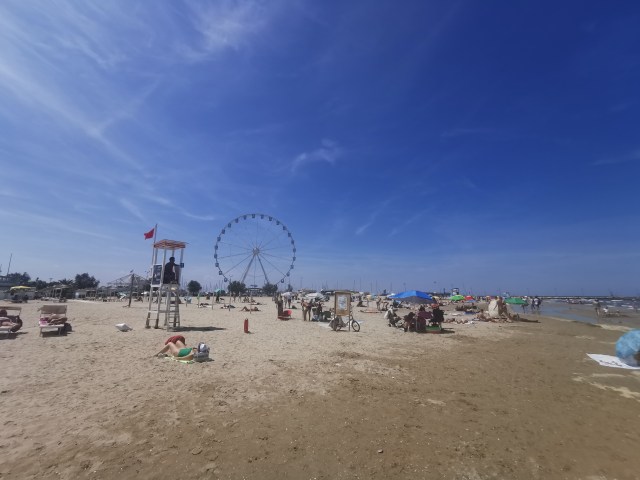
Situated prominently at the Rimini Marina, near the beach, this Ferris wheel offers a spectacular way to take in the beautiful scenery of the Adriatic coast.
Standing at a height of 55m, the Diamond Wheel provides panoramic views that are nothing short of breathtaking.
Constructed in 2012, the wheel quickly became an iconic feature of the Rimini skyline, drawing locals and tourists alike who are eager to experience the city from a new perspective. As the wheel ascends, riders are treated to sweeping vistas that stretch over the golden beaches, the shimmering waters of the Adriatic Sea, and the bustling town of Rimini itself.
On a clear day, it’s even possible to catch a glimpse of the distant hills of San Marino (more on that location later on).
For us, this visit to the Diamond Wheel was particularly special as it was our son Jacob’s first trip on a Ferris wheel. We had no idea how he’d take to it, given that the height and motion can sometimes be overwhelming for young children.
However, to our delight, the ride was so smooth that Jacob loved every moment of it. He was constantly trying to look over the edge at the world below, though there was no worry on our part since the cabins are enclosed, making it impossible to fall out.
Tickets for the Diamond Wheel are reasonably priced and can be purchased at the wheel itself by cash or card, making it an accessible attraction for all.
At the time of writing, an adult ticket costs €10 (about £8.50), while a ticket for children aged between two and ten is priced at €7 (about £6). For families, there are special package deals: a family ticket for two adults and one child up to the age of ten is available for €25 (about £21.30), and a ticket for two adults and two children up to the age of ten is priced at €30 (about £25.60).
These prices include six full rotations on the wheel, offering ample time to soak in the views and enjoy the experience from every angle.


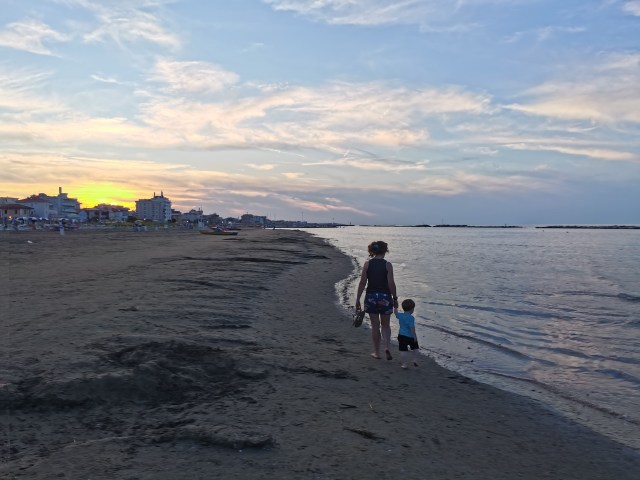
Although I’m not much of a beach lover myself, our recent trip to Rimini provided plenty of opportunities to soak up the coastal atmosphere. We spent time on several beaches, both in Rimini and nearby Viserba, mainly so Jacob could enjoy the simple pleasure of splashing in the sea.
There’s something quite special about the Adriatic coastline, with its gentle waves and expansive sandy stretches, even if lounging in the sun isn’t exactly my idea of a perfect day.
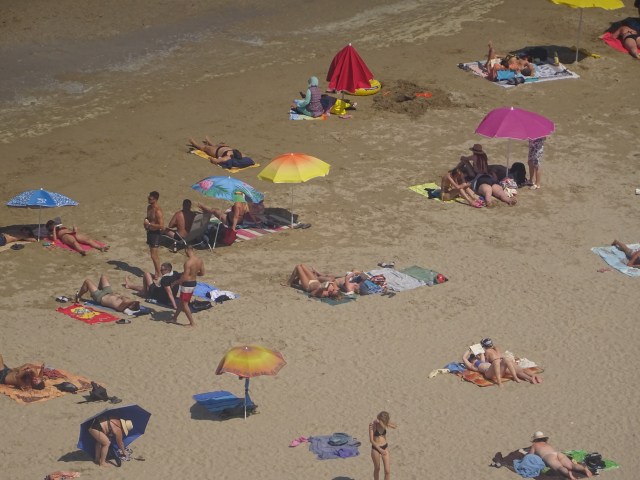
One thing to note is that much of the beachfront is divided into sections that are privately owned by the bars and restaurants that line the promenade. These sections are fully equipped with sun loungers, umbrellas, and sometimes even additional amenities like showers and changing rooms.
It’s a convenient setup if you’re planning to spend a significant amount of time relaxing by the sea, but it does come at a cost. If you want to use the loungers and umbrellas, you’ll need to pay for the privilege, usually by renting them for the day.
However, if you’re like us and only planning a short visit to the beach, there’s no need to shell out for this. There are still bits of free beach available where you can set up camp without spending a dime.
We found a few spots where we could lay down a towel, kick off our shoes, and let Jacob have his fun in the shallow water. These free areas might not come with all the frills of the paid sections, but they’re perfect if your main goal is just to enjoy the sea for a little while.
Even though I wouldn’t describe myself as a beach enthusiast, there was something undeniably enjoyable about watching Jacob’s delight as he played in the waves. The beaches in Rimini and Viserba are well-maintained, with soft sand that’s ideal for kids to run around on. The gentle slope of the shoreline also means that the water remains shallow for quite a distance, providing a safe environment for children to splash and play.
So while my love for the beach may not have blossomed during our trip, I did come to appreciate the laid-back vibe that these coastal spots offer. Whether you’re a sun worshipper or just tagging along like me, there’s something to be said for the simple joys of spending time by the sea, especially when you have a little one who’s eager to dive into the waves.
Rimini’s beaches may have their quirks, but they offer a slice of Italian seaside life that’s worth experiencing, even if just for a brief visit.

Visiting Italia in Miniatura in Rimini was a delightful and memorable experience for our family.
We decided to make the most of our trip by purchasing a combo ticket that included admission to both Italia in Miniatura and their sister attraction, Acquario di Cattolica (where we spent that morning).
The combined price for the four tickets needed across the two attractions was €76 (about £64.75). Individually, the ticket to Italia in Miniatura cost €19 per adult (about £16.20), which we found to be quite reasonable for the unique experience it offered. We were particularly pleased that Jacob, being under one metre tall, was allowed in for free!
We arrived at Italia in Miniatura around lunchtime and were relieved to find plenty of parking options available to us. We intentionally timed our visit for this part of the day because we wanted to coincide our trip with the park’s extended evening hours (which only happens on certain dates so worth checking in advance if you’re wanting to do the same), which featured a host of special activities. The midday arrival also gave us ample time to explore the park before the evening festivities began.
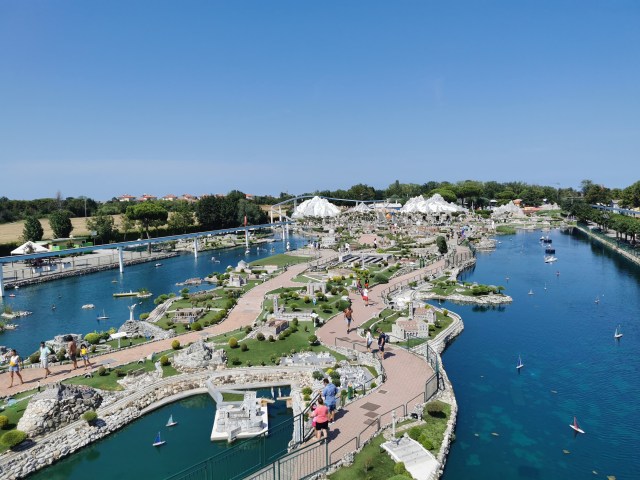
Italia in Miniatura is much more than just a collection of miniature models. The park offers a fascinating glimpse into Italy’s rich architectural heritage, with meticulously crafted miniatures of famous landmarks from across the country – and also Europe.
As we strolled through the park, we marvelled at the intricate details of these tiny masterpieces, from the grandeur of the Colosseum to the charm of the two towers in Bologna. The experience was like taking a whirlwind tour of Italy, all in one afternoon. Jacob loved pressing the buttons on the various attractions; making trains and cars move and giving him the feeling of really being a part of things.
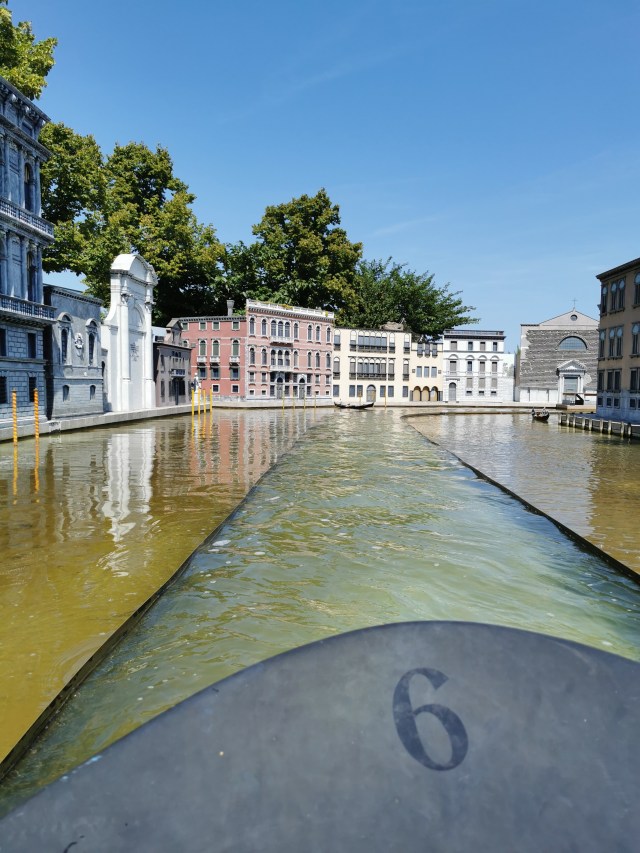
However, there’s more to Italia in Miniatura than just the miniatures. The park also features a variety of rides that add to the fun and excitement. We enjoyed a leisurely gondola ride around a miniature version of Venice, which was a charming and tranquil way to take in the sights. Holly and I also took turns riding the log flume, which offered a thrilling splash of adventure. Unfortunately, Jacob was too small to join us on this ride, but he was thoroughly entertained by the Pinocchio train ride, which took us on a whistle-stop journey through the story of the beloved wooden puppet.
As evening approached, we decided to grab a bite to eat at one of the numerous dining options available in the park. The variety of food on offer meant there was something to suit everyone’s tastes and – given it was basically theme-park food – was actually pretty tasty.
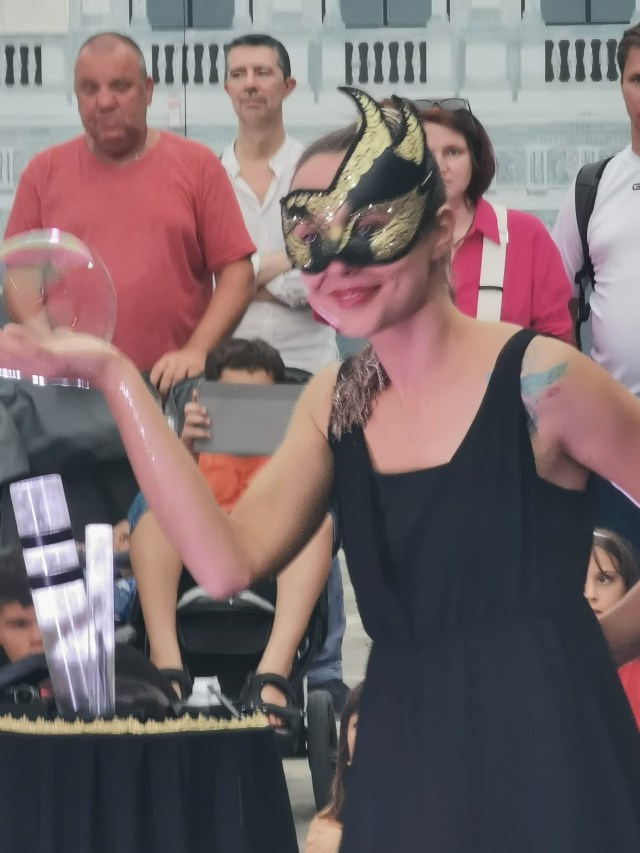
The evening entertainment at Italia in Miniatura was, to say the least, rather odd. As dusk fell, we were treated to a series of performances that included strange dancers parading around the miniature models, light shows on the sides of the buildings, acrobats showcasing their agility, and stilt walkers towering above the crowd.
While the performances were certainly unique, the highlight for us, and particularly for Jacob, was a woman who captivated the audience with a bubble show. Her ability to create enormous bubbles and intricate bubble formations had all the children in the audience, including Jacob, utterly enthralled.
It’s fair to say that our visit to Italia in Miniatura was an enjoyable mix of culture, fun and unusual entertainment.

My final suggestion here is to visit the previously mentioned aquarium, Acquario di Cattolica.
We planned our visit for first thing in the morning, aiming to arrive right when the aquarium opened at 10am. We set off from our Airbnb in Viserba early and after a scenic 45-minute drive, we arrived in Cattolica. Parking was a breeze; we found an offsite car park just a short walk away from the aquarium for only €5 (about £4.25). The convenience of it all made for a stress-free start to our visit.
Acquario di Cattolica is an impressive place, divided into five different sections, each requiring a scan of your ticket to enter. This layout made it easy to explore without feeling overwhelmed by the sheer variety of marine life on display.
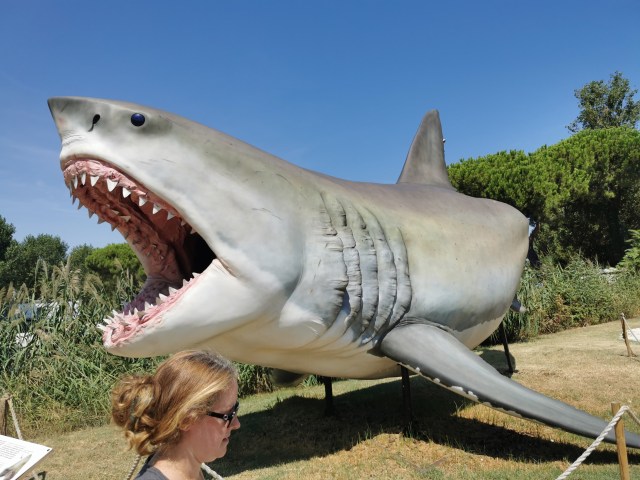
The first section we visited – the blue section – was the main part and the home of their aquatic life. The other four sections are much smaller and housed displays about giant insects, otters, snakes and even dinosaurs.
As we made our way through the aquarium, we were captivated by the range of animals we encountered. Sharks glided silently through the water, their sleek bodies cutting through the blue. Playful penguins darted in and out of the water, entertaining Jacob with their antics. Colourful schools of fish swam together in perfect harmony, creating a mesmerising spectacle that had us all entranced.
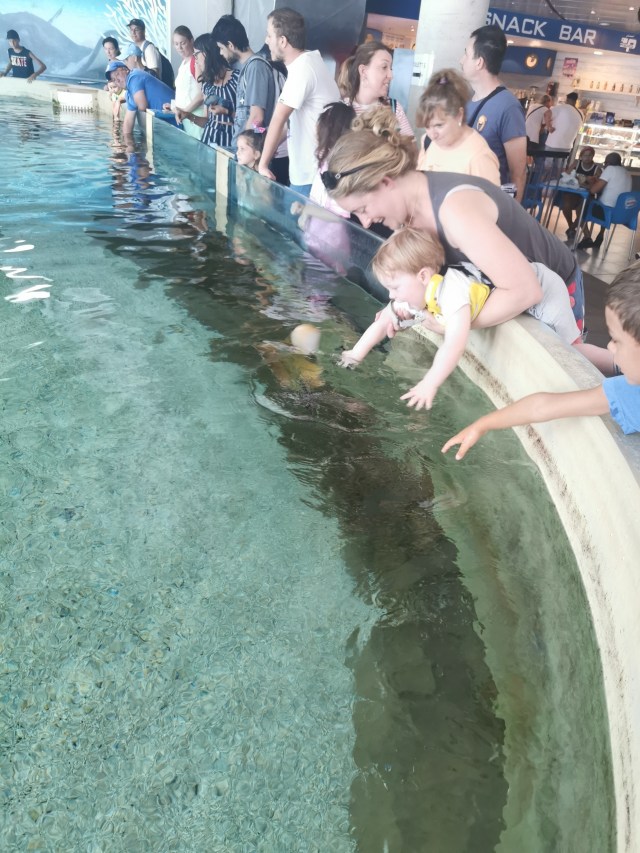
But the highlight of the visit for Jacob, without a doubt, was the touch-pool. Here, he had the chance to gently touch a real stingray, an experience that left him both amazed and giggling with joy. It was heart-warming to see Jacob’s excitement as he carefully placed his hand in the water and felt the smooth, almost velvety skin of the stingray as it glided by.

San Marino
Tucked away in the heart of Italy, the Republic of San Marino is a small yet remarkable nation that often escapes the travel itineraries of many.
San Marino is often hailed as the world’s oldest republic, with its roots tracing back to the early 4th Century. According to legend, the republic was founded in 301 AD by Marinus, a stonemason fleeing persecution from the Roman Emperor Diocletian. Marinus sought refuge on Mount Titano, where he established a small Christian community that eventually grew into the independent state we know today. This tiny enclave – only 61km square in size – has managed to preserve its autonomy through centuries of political upheaval in Europe.
The resilience of San Marino is a testament to its unique governance system. Unlike many of its neighbours, San Marino has maintained its republican government, with two Captains Regent elected every six months to serve as the heads of state. This tradition of governance has contributed to the nation’s stability and has been key in preserving its independence over the centuries.
Knowing this, a visit to San Marino had always intrigued me and had been on my travel wish list for a while before finally, the opportunity presented itself.
With Holly, Jacob, and I staying in Rimini, and with San Marino only a 40-minute drive away, we took the opportunity to make a day trip out of it.
Not only was this a new country – and one of the world’s smallest nations – for me to visit but also allowed me to check off my 50th country!
San Marino’s size is what initially drew me to it. As a tiny republic entirely surrounded by Italy, it exists as a unique entity, both geographically and culturally. Add to that its peculiar football ranking on the world stage, and it was hard not to be intrigued.
Setting off from Rimini, the drive was simple and straightforward. The route to San Marino is well sign-posted, and we had no issues navigating our way through the rolling hills that signalled our approach.
For those without a car, it’s possible to travel by train, though the journey can take around three hours. However, I’d highly recommend driving if possible, as the views along the way are worth every minute. The roads that wind up to San Marino are well-maintained and offer glimpses of the mountainous landscape that surrounds the ancient republic.
As we neared the city, we found plenty of parking options available for visitors like us. Parking lots are scattered at various levels of the city, with some located at the base and others positioned higher up, requiring a drive through winding roads to reach them.
We opted for Parcheggio P9, a parking garage located on Via G. Giacomini, nestled in the upper part of the city. For a cost of just €8 (around £6.90) for the entire day, it offered ample parking spaces to choose from.
From Parcheggio P9, it was a breeze to get to the heart of San Marino. A couple of short lift rides whisked us up to the main city, sparing us from what would have been a challenging uphill climb (especially with a one-year-old).
Once at the top, we were greeted with a charming medieval cityscape, its stone buildings and narrow streets steeped in history. Wandering through the city with Holly and Jacob, it’s impressive to think what this small republic had endured for centuries and that it’s managed to do so and outlast so many others.
So what is there to see in this micronation?


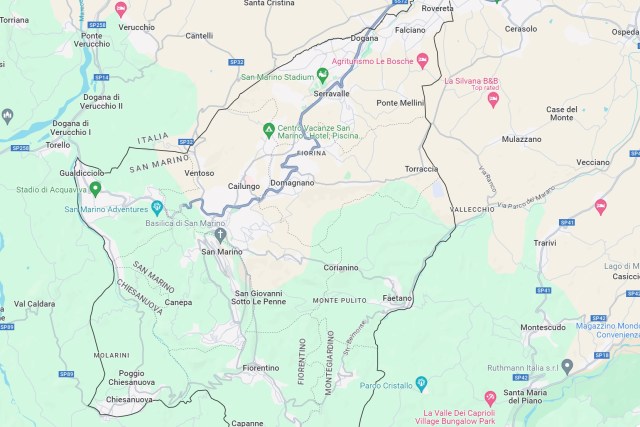
The first stops on any itinerary are to climb to the highest points of the city and see the three towers of San Marino.
Visiting the three towers of San Marino was a captivating experience for us. We bought our tickets for €11 each at the Guaita, the first of the towers, where we began our journey through San Marino’s medieval history.
The tickets that Holly and I purchased gave us access to both the Guaita and the Cesta, as well as entry to the Public Palace, the State Museum, the San Francesco Art Gallery, the National Gallery, and the Stamp and Coin Museum. Our one-year-old son Jacob got in for free given his age.
In my view, the best way to experience the towers is to arrive at the first tower, the Guaita, as early as possible – between 9am and 9:30am – to coincide with its opening times. This allows you to explore before the crowds arrive and fully appreciate the serene atmosphere and breathtaking views.
The Guaita, the oldest and most famous of the three towers, dates back to the 11th Century. It once served as a fortress and briefly as a prison, with its medieval architecture. We explored its well-preserved structure and ascended through its various passageways to reach the very top.
The final climb involves a narrow ladder, a little tight but worth it for the incredible views – although something that Holly and I had to do independently each as it was far too steep to take Jacob up. From the top, you can see not only San Marino itself but also the second tower, the Cesta, in the distance, perched even higher on Mount Titano.
It’s fascinating to wander through the exhibits while imagining the tower’s original defensive purpose. Standing atop the Cesta offers a different perspective of the surrounding landscape, and it’s easy to see why this tower was such an important lookout point.
Once we finished exploring the Cesta, I walked down a short wooded path towards the third and final tower, the Montale. This walk took only about 10 minutes, and the peaceful trail provided a nice change of pace.
The Montale, built in the 14th century, is smaller than the other two towers and has a unique feature: its only entrance is a door located seven metres above ground level! This architectural detail, common in medieval prison structures, gives a sense of its original use.
Unlike the other towers, the Montale isn’t open to the public, so I could only admire it from the outside. Nevertheless, it was worth the short walk to complete the visit to the trio of towers that are so emblematic of San Marino.
After taking in the panorama from the Guaita, we made our way uphill to the Cesta, the second tower. A short walk brought us to this tower, which stands on the highest peak of Mount Titano, 750m above sea level. The Cesta was built in the 13th Century and now houses a museum displaying an impressive collection of ancient weapons.


If you’ve arrived by public transport or parked your car at the foot of San Marino, you’ll find the San Marino cable car is an ideal way to quickly ascend to the heart of the town.
The cable car connects Borgo Maggiore, a quaint village at the base, to San Marino’s historical centre at the top of Monte Titano.
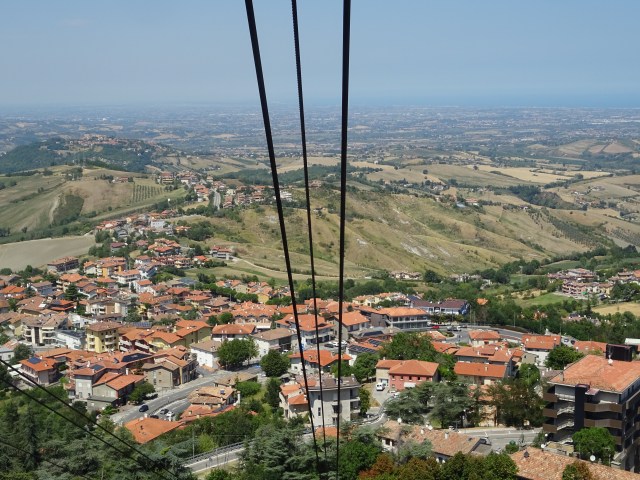
The ride takes only about two minutes, but in those short moments, you’ll be treated to stunning panoramic views of the surrounding countryside, stretching out as far as the Adriatic Sea on clear days.
You can choose to purchase one-way tickets, but for just €5 per adult, it’s well worth getting the round-trip ticket. Children under 1.2 meters in height even ride for free, making it a great option for families like ours.
While Holly, Jacob, and I were already at the top of San Marino, having explored the historic centre, we didn’t want to miss out on riding the famous cable car. We purchased our tickets at the top station and took the ride down to Borgo Maggiore.
The descent offered us views of the rolling hills and valleys below, dotted with vineyards and small towns – although Jacob was more thrilled by the cable car doors opening and closing.
After a brief pause at the bottom to soak in the views, and to grab a drink, we turned around and took the ride back up to the summit.


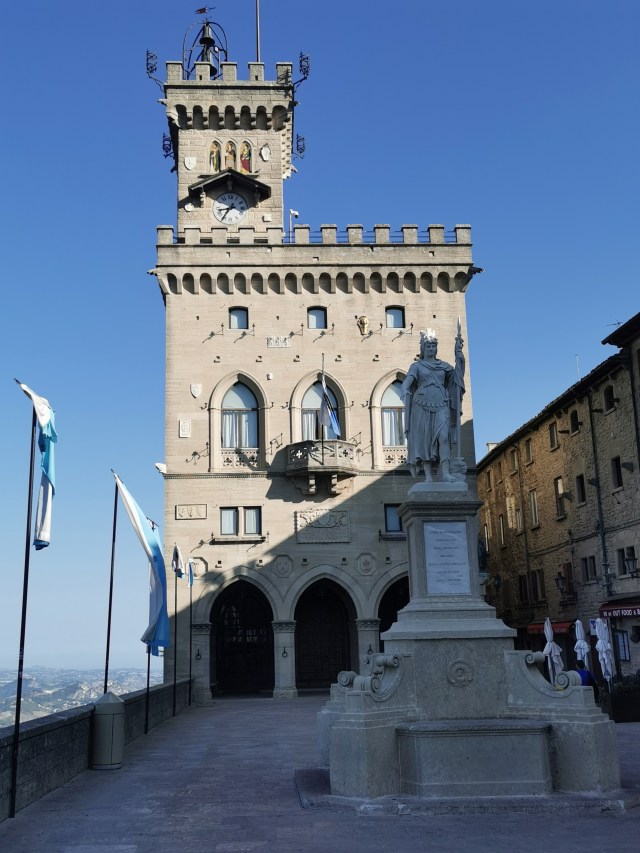
The Republic of San Marino, perched atop Mount Titano, is home to numerous historical treasures that echo the tiny country’s long-standing history. Chief among its most iconic locations are the Piazza della Libertà and the Palazzo Pubblico both of which reflect the heart of San Marino’s cultural and political heritage.
These sites are not only essential to the country’s identity but also a must-see for visitors, offering a glimpse into centuries of tradition and governance.
Piazza della Libertà is the central square of the capital city and is often considered the symbolic heart of San Marino. The name “Libertà” (Liberty) reflects the deep-rooted values of freedom and independence that the small republic has cherished since its founding in 301 AD.
The square is surrounded by stunning medieval architecture and provides breathtaking views over the rolling hills and landscapes below. In the centre of the piazza, visitors are greeted by the imposing Statue of Liberty, which stands proudly as a representation of the country’s independence. Carved from white Carrara marble, this statue was donated by Countess Otilia Heyroth Wagener in the 19th Century.
The serene atmosphere of the square is frequently punctuated by the bustle of tourists and locals, particularly during the changing of the guard, a spectacle that takes place outside the Palazzo Pubblico.
It’s worth thinking about heading here early – ideally before the castles even open which works well as the square is on route up to the castles. This is because, this area gets busy very quickly and if you want to grab some nice unobscured photos then getting there first thing is your best bet.
The Palazzo Pubblico, located on the Piazza della Libertà, is the official seat of the Government of San Marino. Built between 1884 and 1894, the building is an excellent example of neo-Gothic architecture, designed by architect Francesco Azzurri. Its façade is adorned with battlements and large arched windows, a visual reminder of the power and authority that have resided within its walls for centuries.
The interior of the Palazzo Pubblico is equally impressive, with grand halls where San Marino’s legislative bodies meet to govern. Visitors can see the Hall of the Grand and General Council, where San Marino’s parliament convenes, and admire the richly decorated rooms that are steeped in history. One of the highlights of visiting the Palazzo is the magnificent Council Chamber, with its frescoes and intricate details that reflect the country’s proud traditions.
Entry to the Palazzo Pubblico is included in the combined ticket for San Marino’s attractions, which also grants access to its aforementioned famed castles.
For those who have already visited the towers of Guaita and Cesta, touring the Palazzo adds another layer to understanding San Marino’s fascinating past. While the towers represent the country’s military might and defence, the Palazzo showcases its commitment to democratic governance and its enduring sense of liberty.
Both Piazza della Libertà and the Palazzo Pubblico are not just historical landmarks; they are living monuments to San Marino’s unwavering spirit of independence.


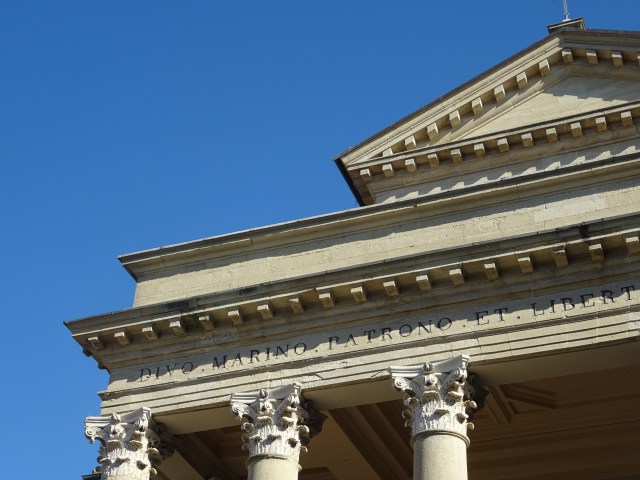
Basilica di San Marino as it stands today was completed in 1838, but its history goes back much further.
It was constructed on the site of an older 4th Century church, which had fallen into disrepair over the centuries. The decision to rebuild the basilica in the 19th Century was driven by the desire to honour the deep-rooted Christian faith that permeates the history of the Republic of San Marino.
The new structure, designed by Bolognese architect Antonio Serra, was built in the Neoclassical style, reflecting a shift toward more simplified, majestic lines that dominate the basilica’s design. Its clean, harmonious architecture was meant to mirror the spiritual purity and devotion that the site represents.
The exterior of the basilica is marked by an impressive façade of Corinthian columns, giving it a stately appearance that contrasts with the rustic, medieval ambiance of the rest of the city. This entrance, with its elegant portico, leads into an equally captivating interior.
Inside, the basilica is relatively austere compared to more ornate Catholic churches, but it exudes a profound sense of reverence and tranquillity. The simple marble floors and vaulted ceilings emphasise the height and spaciousness of the nave, creating an atmosphere of serene contemplation.
Though modest in size, the Basilica di San Marino is a reminder of the enduring legacy of the small republic’s founder. The spiritual and architectural significance of this basilica extends beyond its walls, serving as a testament to the resilience and devotion of a nation that has stood the test of time.

As one of the world’s smallest and oldest republics, San Marino draws visitors from all over the globe, many of whom make a point to stop by the Tourist information office of San Marino during their visit.
Located conveniently in the heart of the historic city of San Marino, the Tourist Information Centre is just a short walk from the central Piazza della Libertà. It’s an easy spot to locate as you stroll through the cobblestone alleys that wind their way through the UNESCO-listed old town.
The centre itself offers a range of services that enhance any visitor’s experience, providing detailed maps, helpful guides, and expert advice on the best places to visit within the republic – as well as being the entrance to the Stamp and Coin Museum which is also included in combined castle entry ticket.
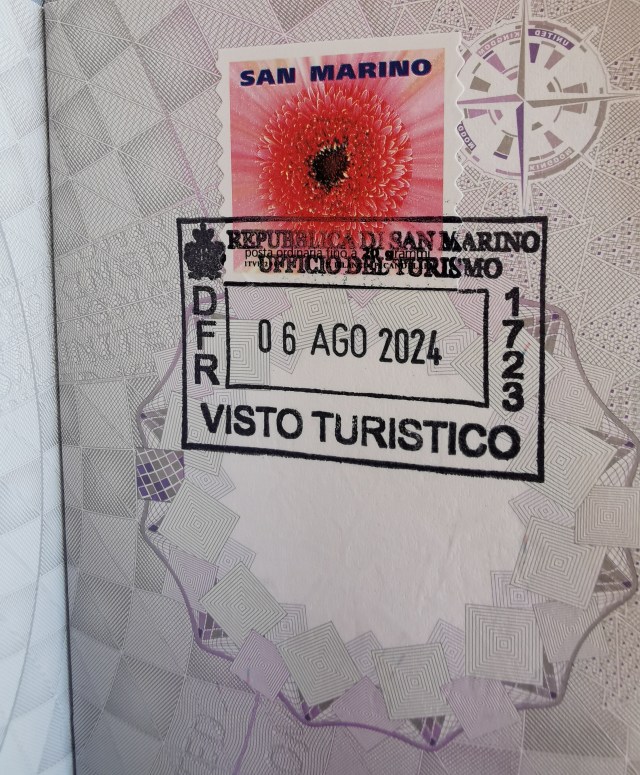
However, one of the most unique experiences at the Tourist Information Centre is the chance to have a special San Marino souvenir added to your passport.
For just €5, visitors can obtain an official stamp, which serves as a charming keepsake from this remarkable country. While San Marino is surrounded by Italy and doesn’t have formal border controls, this stamp allows travellers to commemorate their visit in a tangible way.
It’s a great memento for those who love collecting passport stamps – like we do – adding a touch of exclusivity to your trip. Many consider this a treasured addition, marking their visit to one of the most unique and ancient republics in Europe.

The San Marino Stadium is nestled in the heart of Serravalle, a small town that holds an important place in the world of football for being the home of one of the smallest national football teams.
As a football fan, the idea of visiting the home of the lowest-ranked FIFA nation was too good an opportunity to pass up. Our visit took place as we drove away from San Marino on our route back to Rimini and was pretty much Holly indulging me for 15 minutes while I jumped out of the car to grab some photos.
The stadium itself is a modest ground, with a capacity of around 6,600 seats (which is actually around 20% of the entire nations population; 33,660 as of 2022), a far cry from the colossal arenas that host Europe’s footballing elite.
Yet, standing outside, it had a unique charm that reflected the spirit of the team it represents. There wasn’t a game on when I visited, and the gates were firmly shut so I was unable to walk inside or explore the pitch up close, but the sight of the stands and the field was still possible.
I took a slow walk around the perimeter, peeking through the fences on a couple of sides. Through the gaps, I could see the tidy pitch, framed by the hills of San Marino in the distance. Despite its size, the stadium’s surroundings offered a picturesque backdrop that you would never see in some of the more industrial footballing cathedrals around Europe.
San Marino’s national team only official win came back in 2004, a famous 1-0 triumph over Liechtenstein, which still stands as their sole victory in international football.
Visiting the stadium, it’s impossible not to imagine the joy that must have filled the hearts of the 700 supporters inside the stadium on that historic day. While the odds of adding a second victory remain slim, there’s a hope in every San Marino fan that this little stadium might one day witness another miraculous result.


Vatican City
In similar fashion to San Marino, another country fully surrounded by Italy is that of Vatican City.
Now, on our recent trip to Rimini, Holly, Jacob, and I decided to skip the visit to Vatican City as it was just a step too far for us to travel with a one year old, but visits to Rome and the Vatican can form a great part of a trip to Italy.
If you are based in Rimini as we were, it’s worth noting that reaching Vatican City is quite straightforward by train. With 23 trains running daily between Rimini (città) and Rome, it’s easy to plan a day (or two day) trip. The journey covers approximately 150 miles (241 km) and takes around four hours each way. Advance booking can get you tickets starting at £16.47, making it both convenient and affordable.

Vatican City, the smallest official country in the world, gained its independence on February 11, 1929. Covering just 44 hectares (110 acres), this city-state packs a punch in terms of history and culture. Given its fully surrounded by Italy, unsurprisingly it uses the Euro within its boundaries.
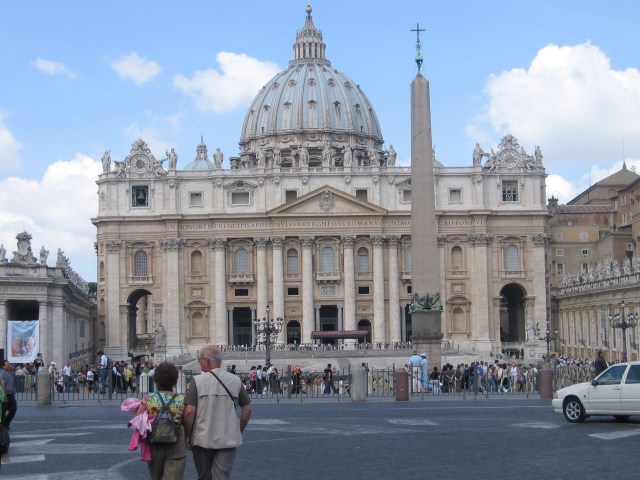
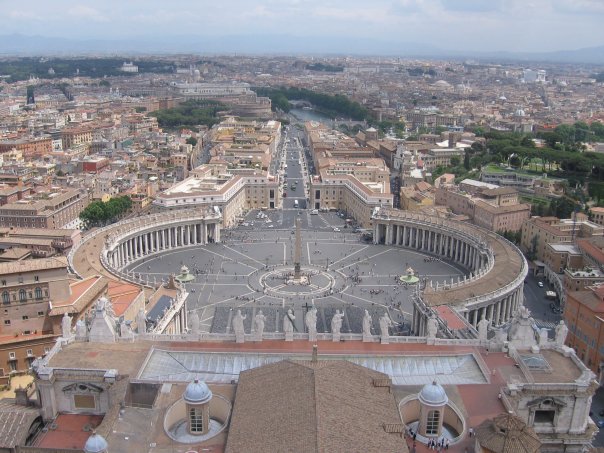
The grand entrance to Vatican City, St. Peter’s Square, is a must-see. This iconic piazza is free to explore and offers stunning views of St. Peter’s Basilica and the surrounding architecture. It’s a place of gathering and reflection, rich in history and religious significance.
From there, you can step inside one of the most famous churches in the world, St. Peter’s Basilica.
The first thing you’ll notice is that admission is free. However, be prepared for long queues, often exceeding an hour. To save time, you can purchase special skip-the-line tickets which can cost between €20 (£17 approximately) and €30 (£25 approximately).
For those eager to get a panoramic view of the city, an additional fee is required to visit the Basilica Dome. This costs €8 (£6.50 approximately) for the stairs and €10 (£8 approximately) for the elevator. Inside the basilica, you’ll find Michelangelo’s Pietà, the grand altar beneath Bernini’s baldachin, and stunning mosaics and artwork adorning the interior.
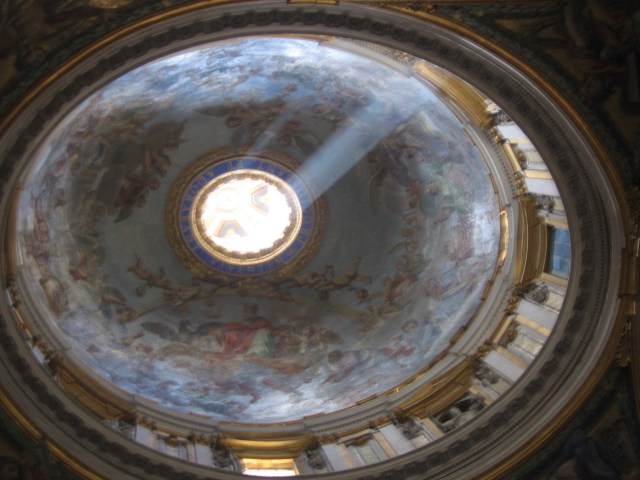

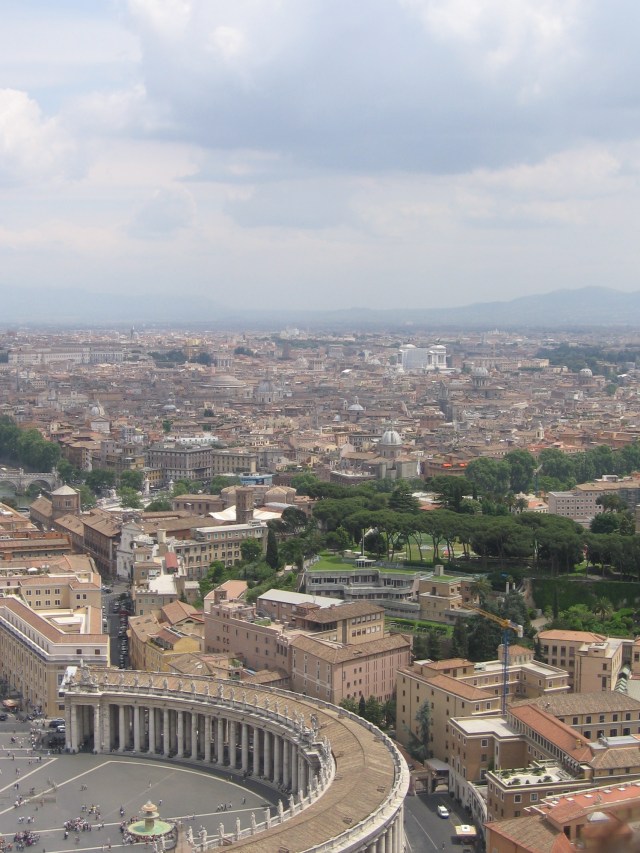
Adjacent to St. Peter’s Basilica, the Vatican Museums and Sistine Chapel are essential stops for art and history lovers.
Entry requires a ticket, and the lines can be daunting, especially during peak seasons.
A standard ticket costs €17 (£14.50 approximately) on-site or €21 (£18 approximately) if booked online to skip the queue. Children aged between six and 18 and students up to 25 with an International Student Card pay €8 (£6.50 approximately) or €12 (£10 approximately) online.
Inside, you’ll encounter an unparalleled collection of art and history, including classical sculptures such as the Laocoön Group, Renaissance art by Raphael, including the famous School of Athens, and the intricately painted Gallery of Maps. The highlight for many visitors is the Sistine Chapel, where Michelangelo’s stunning ceiling frescoes and The Last Judgment on the altar wall can be admired.
If you have the opportunity, then this tiny – yet significant – place is packed with experiences worth every minute of travel.
Where to avoid
While there’s much to love about a trip to Rimini and the surrounding area, every destination has its downsides, and knowing what to avoid can help make your trip more enjoyable.
Crime levels in Rimini are generally low, and it’s a safe place overall. However, like in most tourist-heavy areas, you should be aware of petty crimes, particularly pickpocketing and bag-snatching. This is most common in the city centre, crowded areas, and around major tourist attractions.
Always keep an eye on your belongings, especially in places like the Piazza Cavour or the Arch of Augustus, where you might find yourself distracted. The beaches and popular shopping areas are also places where pickpockets may operate. Wearing a crossbody bag or using a secure backpack can help reduce the risk. A little caution can go a long way in ensuring your visit remains trouble-free.
Rimini is also known for its nightlife, and many tourists flock to the city’s beachfront areas to enjoy it. If you’re someone who loves a lively atmosphere, these areas will be perfect for you. However, if you prefer a quieter stay, it’s best to avoid the bustling beach zones of both Rimini itself and Viserba, where the constant buzz of restaurants and beach-side bars can be overwhelming, especially in the summer months.
I’ve personally experienced this with Holly and Jacob, during our stay in Viserba. While the area is beautiful, we quickly realised that the beachfront, particularly in the evening, becomes packed with people enjoying the local seafood restaurants, gelaterias, and bars. While this didn’t bother us too much, it is worth noting if this isn’t your scene.
If you’re hoping for a more tranquil experience, it might be worth considering accommodations further inland or in quieter nearby towns.
When in Rimini, you might be tempted to explore the city’s ancient heritage, including the Roman ruins. While the city offers some impressive historical sites like the Arch of Augustus and Ponte di Tiberio, one spot you can skip is the Roman Amphitheatre, located on Via Roma.
Although this site may sound intriguing at first, there’s not much to see. Visitors are unable to enter the amphitheatre itself, and viewing is restricted to the roadside.
From this vantage point, you’ll get only a partial glimpse of the ruins, which may feel underwhelming, especially if you’ve come out of your way to see it. While it’s free to view, it’s not exactly worth the detour unless you happen to be passing by.

Great places to eat
During our recent trip to Visbera, Rimini, we stumbled upon a true hidden gem, though not intentionally. Holly, Jacob, and I were searching for a completely different place when we found ourselves at Ristorante Pizzeria A’Mare.
Situated on Viale Giuliano Dati, right along the coast, this unexpected discovery turned into one of the best dining experiences we had during our visit.
It was one of those happy accidents that turn out better than any plan you might have made. The restaurant’s spacious outdoor seating gave us an amazing view of the Adriatic Sea and the wide, sandy beach, making for a visually stunning dining atmosphere.
But it wasn’t just the view that made the place stand out. The food here was impressive, as well.
We were keen to try some seafood, and Ristorante Pizzeria A’Mare didn’t disappoint in that department. We indulged in tender octopus tentacles and fresh cuttlefish, both of which were cooked to perfection. The dishes had a certain rustic charm, reflecting the authentic flavours of the region.
Yet, despite the restaurant’s name, there was a surprising absence of pizza on the menu we were given. This caught us a bit off guard, considering the promise of pizza in its title. Curiously, we saw other diners enjoying pizzas at their tables, so they must have been listed somewhere — just not on the menu we happened to receive!
Still, this minor detail didn’t detract from the overall experience. The ambiance was laid-back and inviting, with the sound of the waves and the gentle buzz of conversations adding to the relaxing vibe.
For two adults and a small portion for our son, Jacob, including drinks, the total came to around €80 (about £68), which we found fairly reasonable given the quality of the food and the unbeatable location.
What started as a simple mistake turned into a night of great food and even better memories.


Useful links
Tourist information office of San Marino
Remember you can follow World Complete on Twitter, Instagram, Pintrest, Tumblr and Facebook send your comments and pictures from your travels using #WorldComplete and #Travel.
 World Complete
It would be fascinating to wander around here and learn about the history at the same time. It would be so fascinating to find out more. Thanks for sharing this, I had not heard much about Rimini before!
LikeLiked by 1 person
Thanks so much for your kind comments. Yes a really good place to go if you get the chance. Thanks for stopping by 🙂
LikeLike
Such a beautiful place and unheard too.
LikeLiked by 1 person
Thank you for stopping by my blog and for reading and commenting as well 🙂
LikeLiked by 1 person
My pleasure Steve. I can travel through your eyes 😀.
LikeLiked by 1 person