
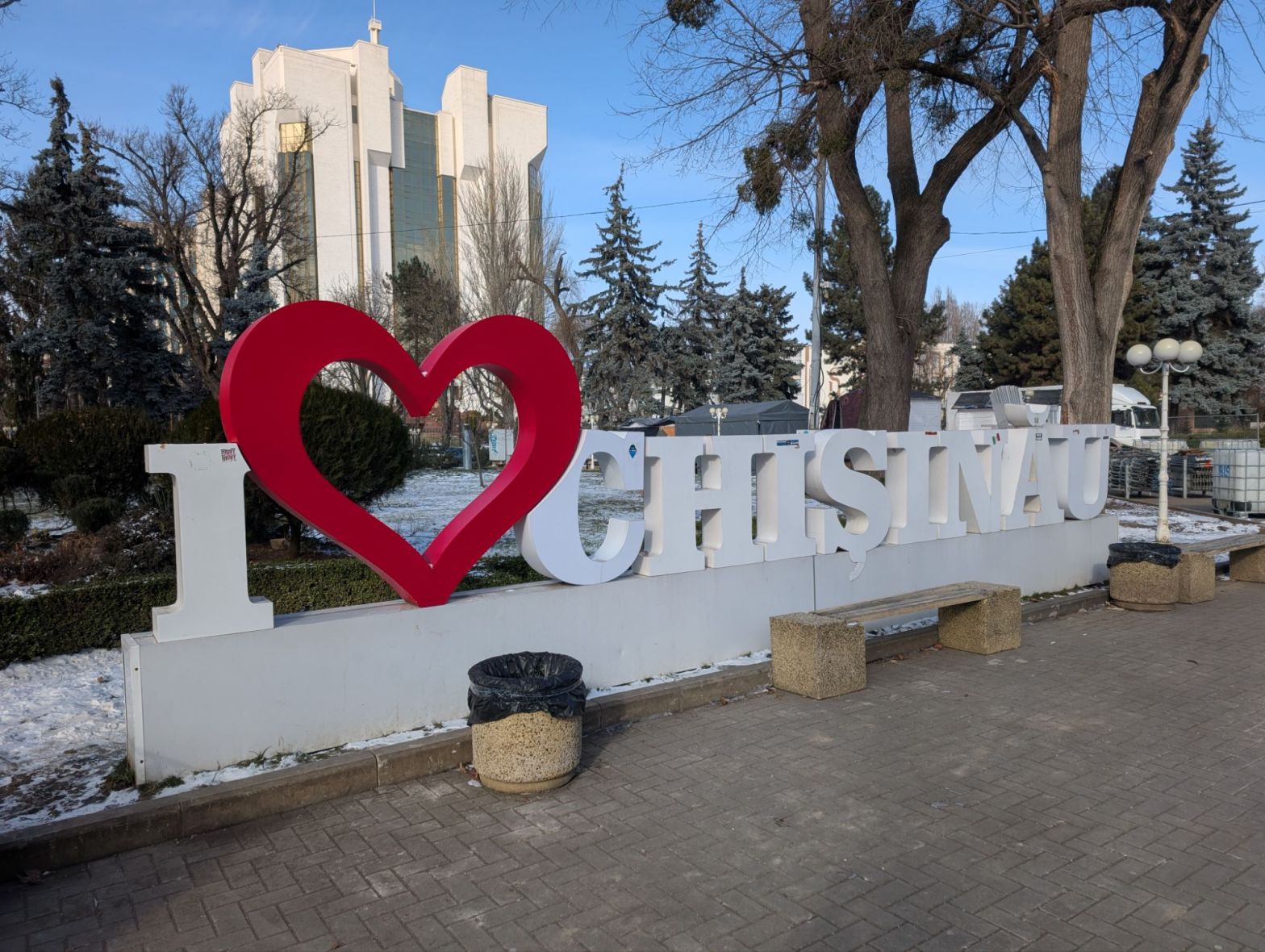


Chișinău
Moldova has long intrigued me – a small, landlocked country tucked between Romania and Ukraine, often overlooked by travellers and absent from most European bucket lists.
Despite being home to a rich winemaking tradition, beautiful monasteries, and a fascinating Soviet past, Moldova remains one of the least visited countries in Europe – ahead of only San Marino and Liechtenstein. Among larger nations, it proudly (or perhaps quietly) holds the title of Europe’s least-visited destination.
Its capital, Chișinău, may not boast the grandeur of Western Europe’s cities, but it has a quiet, authentic charm that rewards those willing to dig beneath the surface. Broad boulevards lined with Soviet-era architecture sit alongside leafy parks and lively cafés. It’s a city of contrasts – where old meets new, and where resilience and warmth define everyday life.
This trip marked my second adventure as a solo traveller, one I knew would push me even further out of my comfort zone. If my first solo journey was about finding my rhythm, this one was about testing my independence in a place less trodden – a destination that challenges expectations and invites you to see Europe through a different lens.
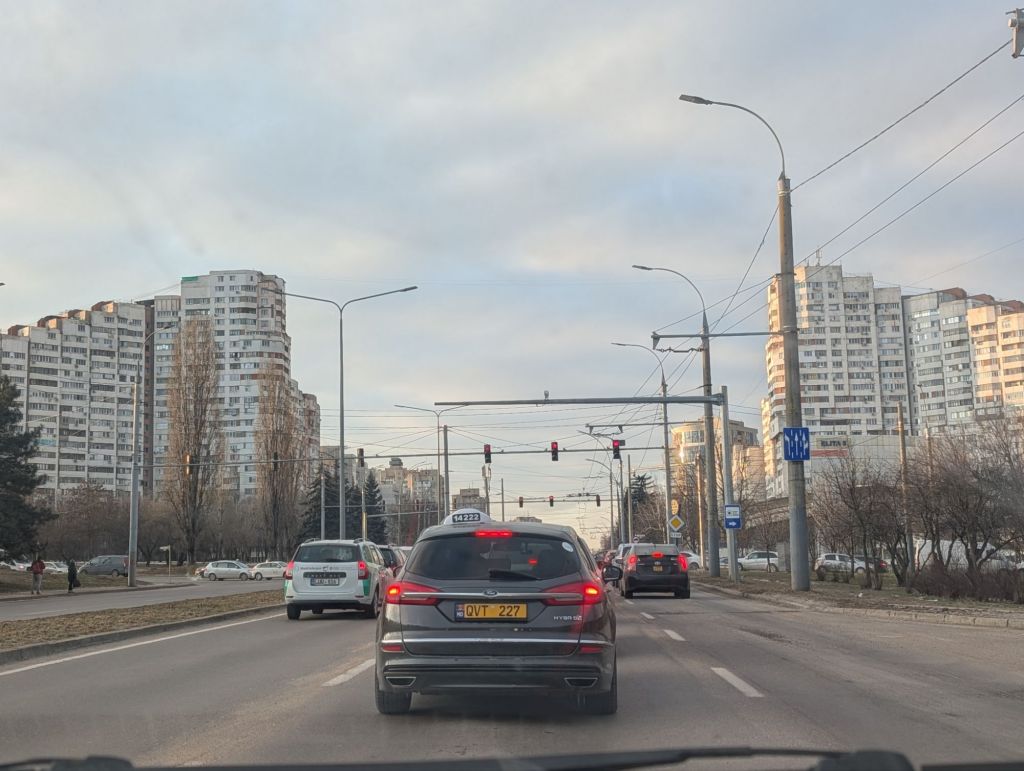
So what should first-time visitors to Chișinău consider before setting off to this lesser-known, quietly captivating corner of Europe?”
The first thing to understand about Moldova is its unassuming nature. There are no flashy tourist districts or overcrowded landmarks. Instead, the country’s beauty lies in its understated authenticity – morning walks through Cathedral Park, quiet moments at the Nativity Cathedral, or sampling local wines in the cellars that stretch for miles beneath the earth.
The next most important thing to prepare for, some may argue, is the weather. In February – the month in which I travelled there – Moldova doesn’t offer the kind of crisp winter charm you might expect in the Alps or Scandinavia.
Average highs hover around 3°C (37°F), while lows can fall to a frosty -4°C (25°F), especially at night. That said, while I was there, they were having an even more unusually cold period with temperatures dropping as low as -14°C (7°F)! Snow, also, isn’t uncommon, and icy winds often sweep through Chișinău’s wide boulevards, adding a noticeable chill to the air. There was a
The skies tend to stay overcast, and daylight hours are short, so warm layers, a sturdy coat, and waterproof boots are essential companions for exploring the city’s parks, markets, and historical streets.
The next thing to consider is the currency. Moldova’s currency is the Moldovan Leu (MDL), and while prices are generally very affordable compared to Western Europe, cash is still king in many places. At the time of writing, £1 is worth around 22.50 Moldovan Leu (MDL).
It’s worth noting that you can’t usually pick up Moldovan Leu from exchange bureaus in the UK, as it’s considered an exotic currency and not widely stocked. However, you can easily order it online in advance through a number of reputable currency firms.
I recommend ManorFX, which offers a wide range of international currencies, including the Moldovan Leu. The process is simple: you select the currency and amount you need, pay securely online, and have it delivered to your door for a small delivery fee. This is a convenient way to ensure you arrive in Moldova with local cash ready to go.
However, if you don’t get any currency ahead of your trip then ATMs are available and it’s useful to carry small notes for local markets, taxis, or small cafés. Credit cards are accepted in most hotels and restaurants, but it’s always worth having some cash to hand.
Tipping in Moldova isn’t mandatory but is appreciated – rounding up the bill or leaving around 5-10% for good service is customary in restaurants. Taxi fares are inexpensive, though it’s best to agree on a price or use a local app like Yandex Go to avoid confusion.
For UK travellers, adjusting to life in Moldova is pleasantly straightforward. The country is just two hours ahead of the UK, so there’s little to no jet lag to worry about. Flights from London to Chișinău take around three and a half hours.
However, if you’re bringing electronic devices, you’ll need to pack a power plug adapter.
Moldova uses plug types C and F. Type C has two round pins, while type F has two round pins and two grounding clips on the side. You will need a travel adapter for these plug types if your home country uses a different standard, such as the UK’s type G plugs. The standard voltage in Moldova is 230V at a frequency of 50Hz, which is the same as in the UK – so no voltage converter is required, just the correct plug adapter.
While Moldova might feel a little off the beaten path, communication is rarely a major issue for visitors.
The official language is Romanian, which shares strong similarities with Italian, French, and Spanish, so English speakers may spot a few familiar words here and there. Russian is also widely spoken, particularly among older generations and in certain parts of the country, a reflection of Moldova’s Soviet past.
In Chișinău, many younger people speak basic English, especially those working in cafés, hotels, and restaurants, so getting by is relatively easy – though outside the capital, a translation app or phrasebook can be helpful.
All that being said, locals always appreciate the effort when travellers learn a few words of Romanian. “Hello” is Bună ziua, and “goodbye” is La revedere. If you want to be polite, “please” is Vă rog, and “thank you” is Mulțumesc. A simple “cheers” when sharing a drink is Noroc, which you’ll likely hear often – especially in a country famous for its wine.
One final thing to consider is how to stay connected during your time in Moldova. While free Wi-Fi is common in hotels and cafés across Chișinău, coverage can be patchy once you venture beyond the city. Roaming charges can also be expensive, and buying a local SIM card isn’t always the most convenient option for short stays.
That’s why I highly recommend purchasing an eSIM before you travel, ensuring smooth and reliable internet access throughout your trip.
Services like Airalo make it incredibly easy – simply download their app, purchase a data plan for Moldova, and activate the eSIM on your phone before you depart. Once you arrive, your device will automatically connect to a local network, saving you the hassle of hunting for Wi-Fi or swapping SIM cards. It’s the perfect way to stay in touch, check maps, and share photos of Chișinău’s colourful markets and grand Soviet architecture without interruption.
With these essentials in mind, I was ready to embark on my journey – one that would take me further out of my comfort zone, challenge the way I travel, and immerse me in the quiet charm and unexpected beauty of Moldova’s capital, Chișinău.
Getting there
Moldova had been on my radar for a while — a country often overlooked by travellers — yet full of charm, history, and some of Europe’s best wine. Add to that, a visit to this wonderfully quaint nation gave me the opportunity to add another sticker to my European Langford Water Bottle!
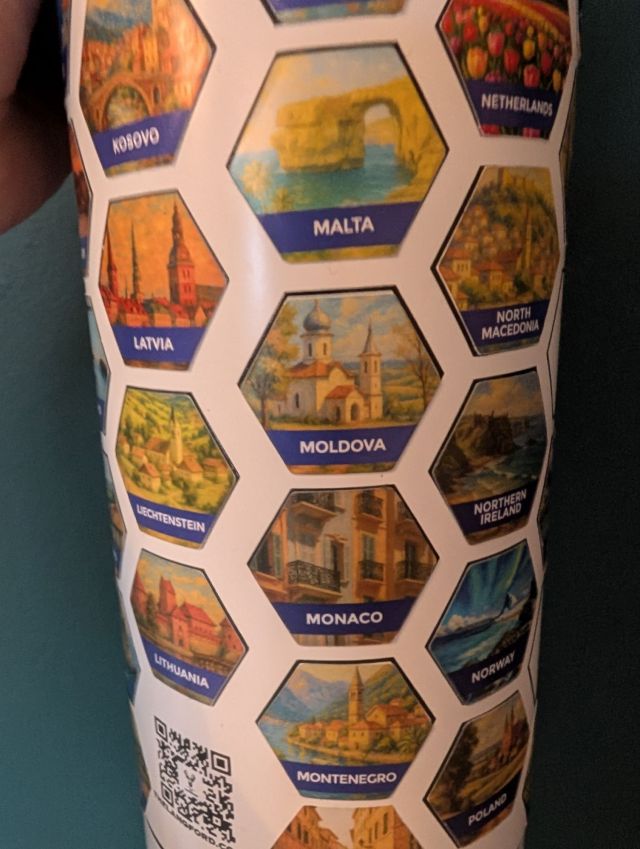
Getting there from the UK, however, takes a bit of planning. Chișinău Eugen Doga International Airport is Moldova’s main gateway, with connections to a range of European cities including London, Paris, Rome, and Vienna.
For travellers flying from the UK, there are several options: Wizz Air, FlyOne and HiSky operate routes to Chișinău from London Luton and London Stansted respectively, and there are seasonal connections from other European hubs if you prefer to break up the journey.
For this trip, I chose to fly direct from London Luton Airport with Wizz Air. The low-cost carrier offers several flights a week to Chișinău, and the total return fare (including seat selection) came to £172.31 – a pretty good deal considering it’s around a three-hour journey each way.
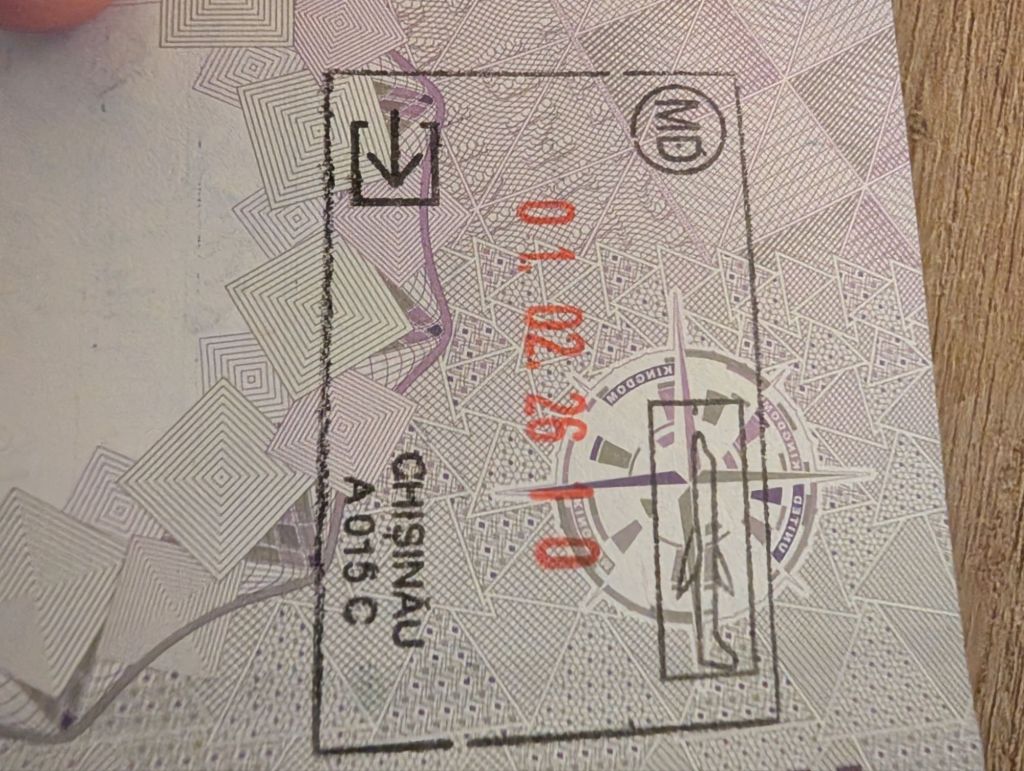
My flight departed Luton in the late afternoon, landing in Chișinău just before 9pm local time.
As with most Wizz Air flights, the experience was simple but efficient. Luton’s compact layout makes getting through security relatively quick, and the airline’s familiar pink-and-purple branding was easy to spot at the gate. The cabin was clean, the crew friendly, and despite the no-frills setup, the flight was on time and comfortable enough for the short hop across Europe.
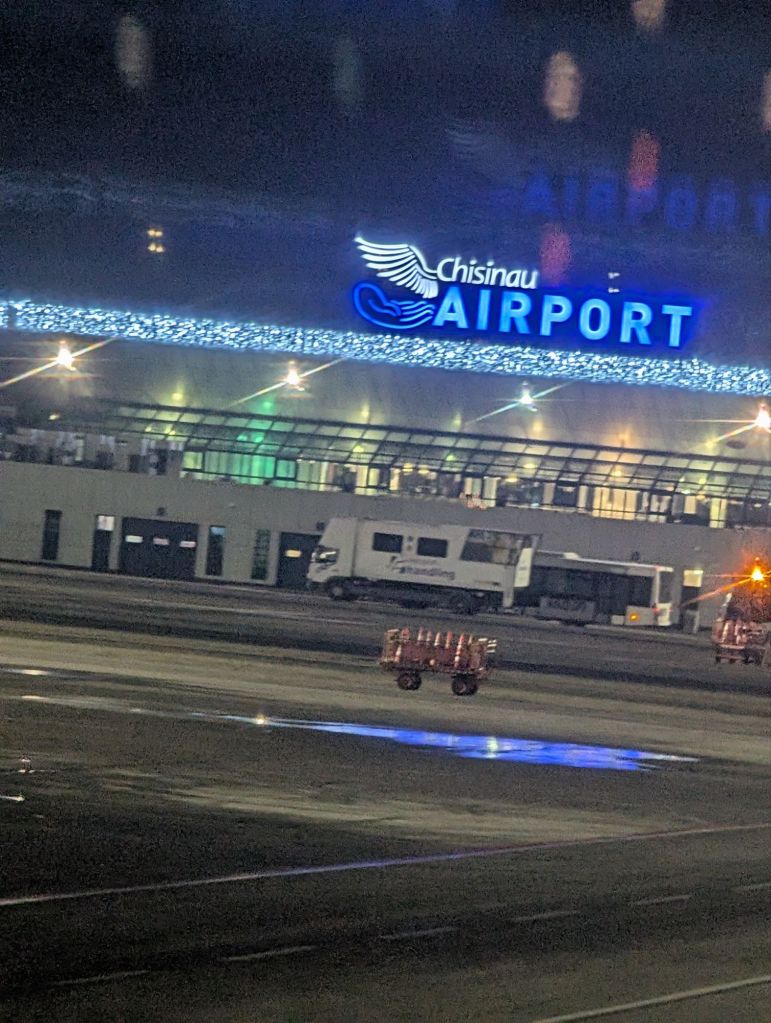
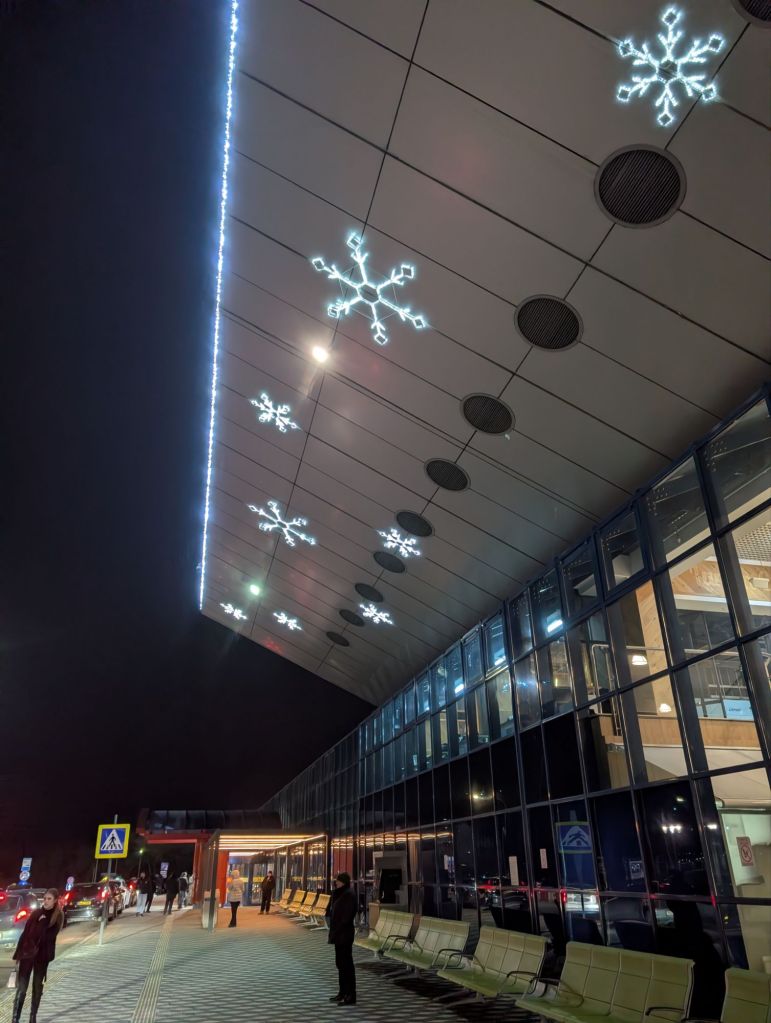
Chișinău Eugen Doga International Airport itself is small but modern, a clean and efficient gateway that feels welcoming rather than overwhelming. Around three million passengers pass through its terminals each year, mostly travelling to and from destinations across Europe and the Middle East. Despite its modest size, it’s well equipped with everything you need after a flight – from currency exchange counters and SIM card kiosks to a small café serving strong Moldovan coffee and pastries.
Located roughly 13km southeast of the city centre. The drive into town takes around 20-25 minutes, depending on traffic with taxis readily available outside the terminal.
Before travelling, I’d arranged an airport transfer through Airport Taxi Transfer, which turned out to be an excellent decision. I booked a Sedan car for my round trip between the airport and the city centre, costing £46.70 in total, and it completely removed the stress of having to negotiate fares or hunt for a taxi on arrival.
My driver was waiting in the arrivals hall holding a sign with my name, and within minutes we were gliding out of the airport car park and onto the quiet nighttime roads towards the city. The return journey was just as smooth – punctual, comfortable, and a far calmer experience than trying to flag down a cab before a flight. It’s the kind of small travel detail that makes a surprisingly big difference, setting the tone for a relaxed start and end to the trip.
There’s something intoxicating about that first moment in a new country – when the unfamiliar becomes thrilling. The Cyrillic signs glowed under the streetlights and the road stretched into darkness towards the city.

Where to stay
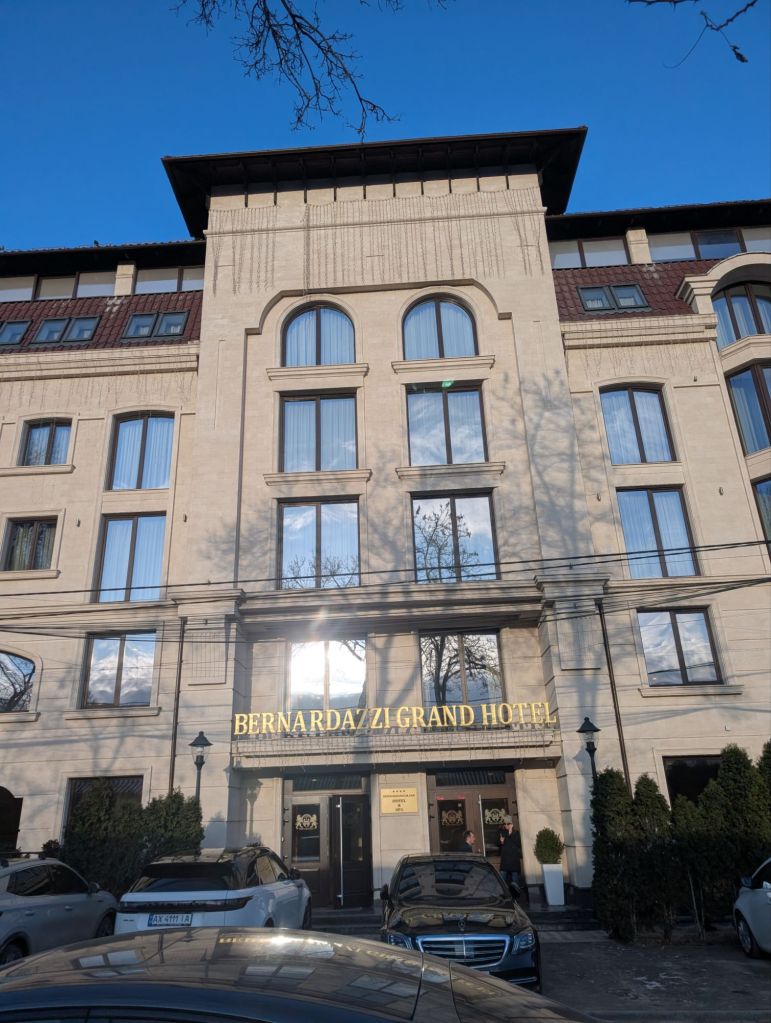
For my recent trip to Moldova’s capital, Chișinău, I opted to stay right in the heart of the city at the Bernardazzi Grand Hotel & SPA (Strada Alexandru Bernardazzi 38).
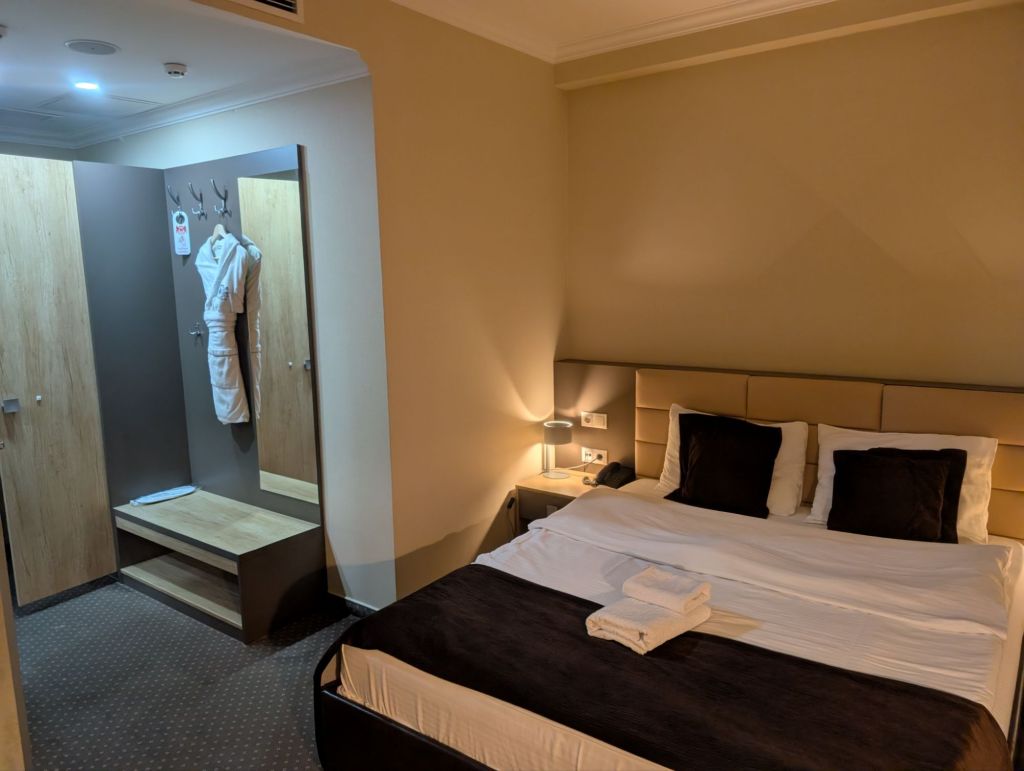
I booked my four-night stay via Expedia for £316.56 (around £69.37 per night) in a Standard Single Room featuring a Queen-sized bed. The hotel’s central location made it an ideal base for exploring Chișinău on foot — many of the city’s main sights, cafés and restaurants are within easy reach.
The room itself was both modern and elegant, decorated in muted tones with plush furnishings that gave it a calm, boutique feel. The bed was comfortable, with crisp linen and soft lighting that made it easy to unwind after a day of sightseeing. The en-suite bathroom was sleek and contemporary, equipped with a walk-in shower, fluffy towels, and a generous range of toiletries.
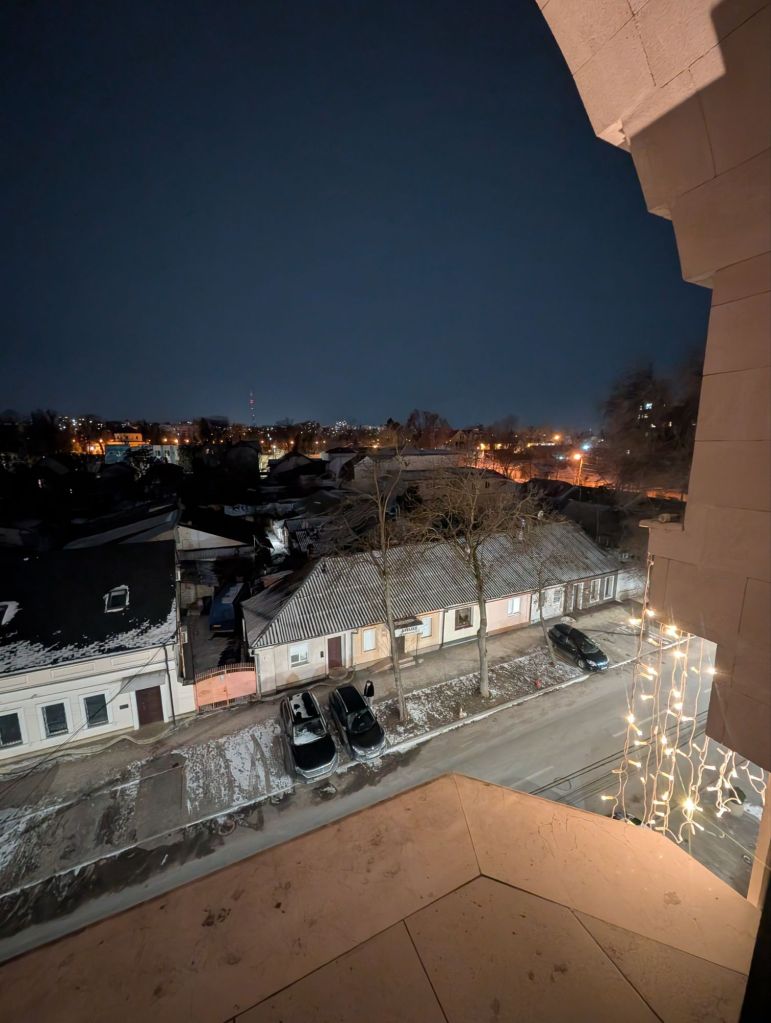
There was also a smart TV and complimentary bottled water provided daily. Despite being located centrally, the room was both warm and blissfully quiet, thanks to good soundproofing and thick curtains, which kept the hustle and bustle of the city at bay.
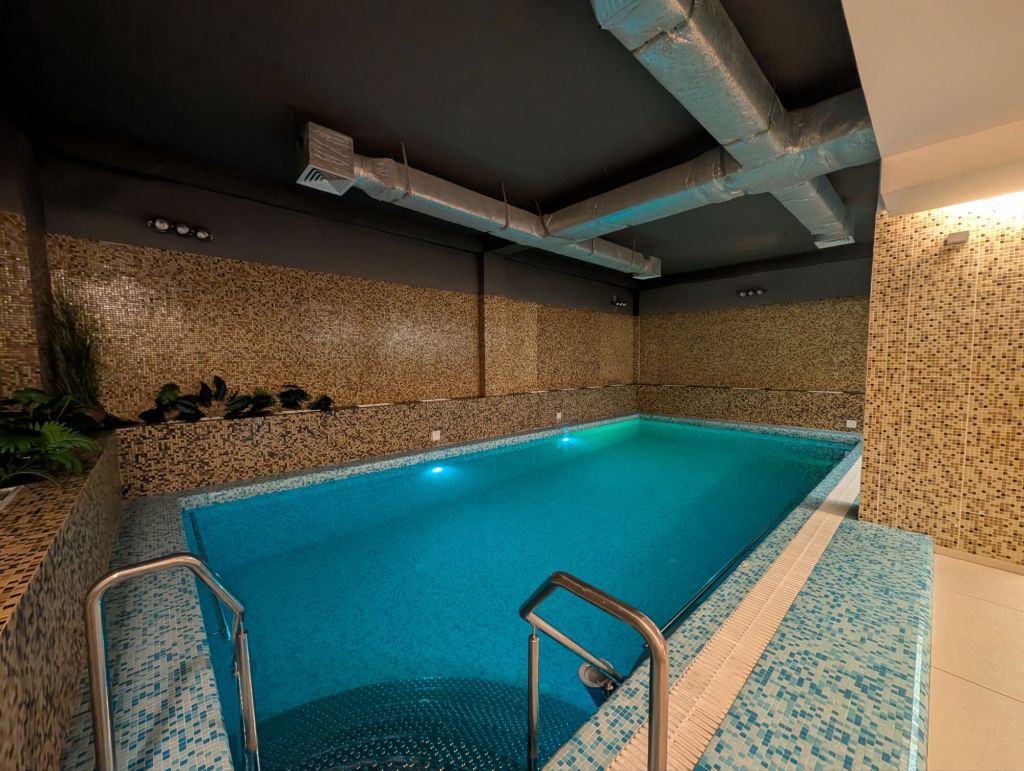
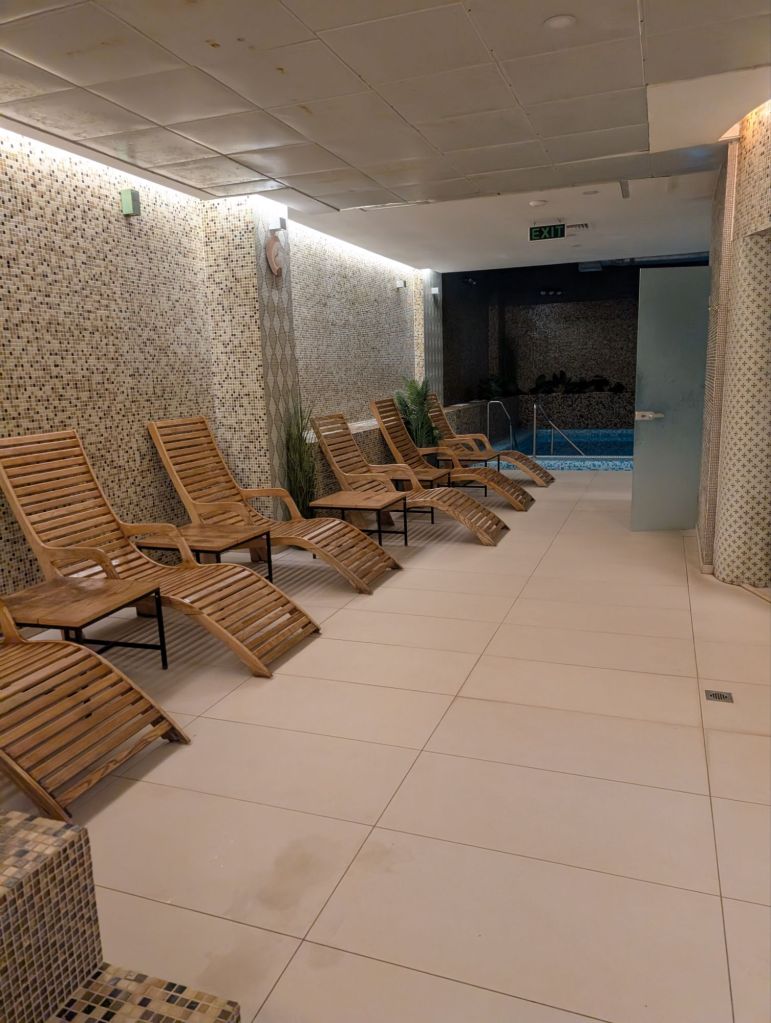
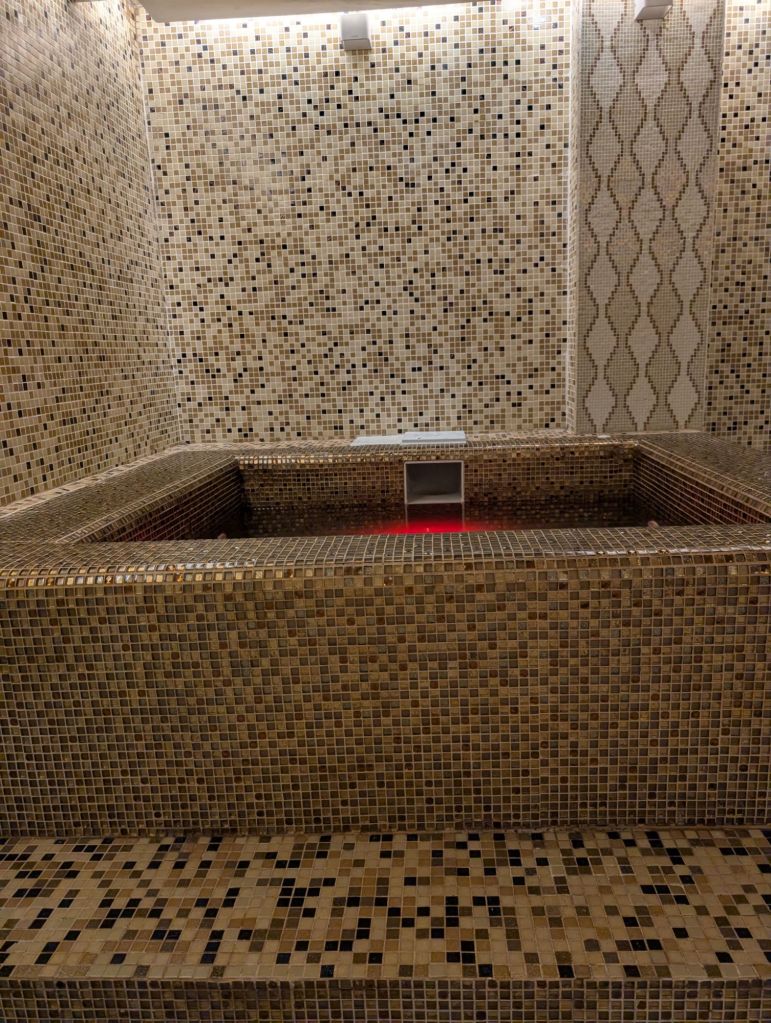
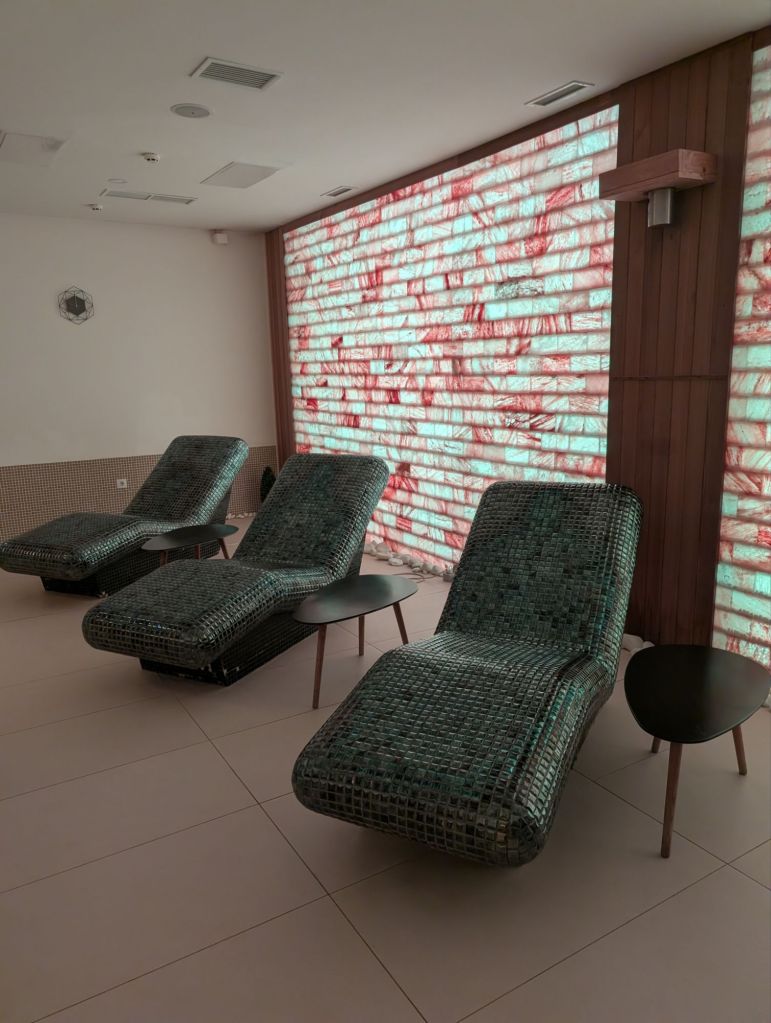
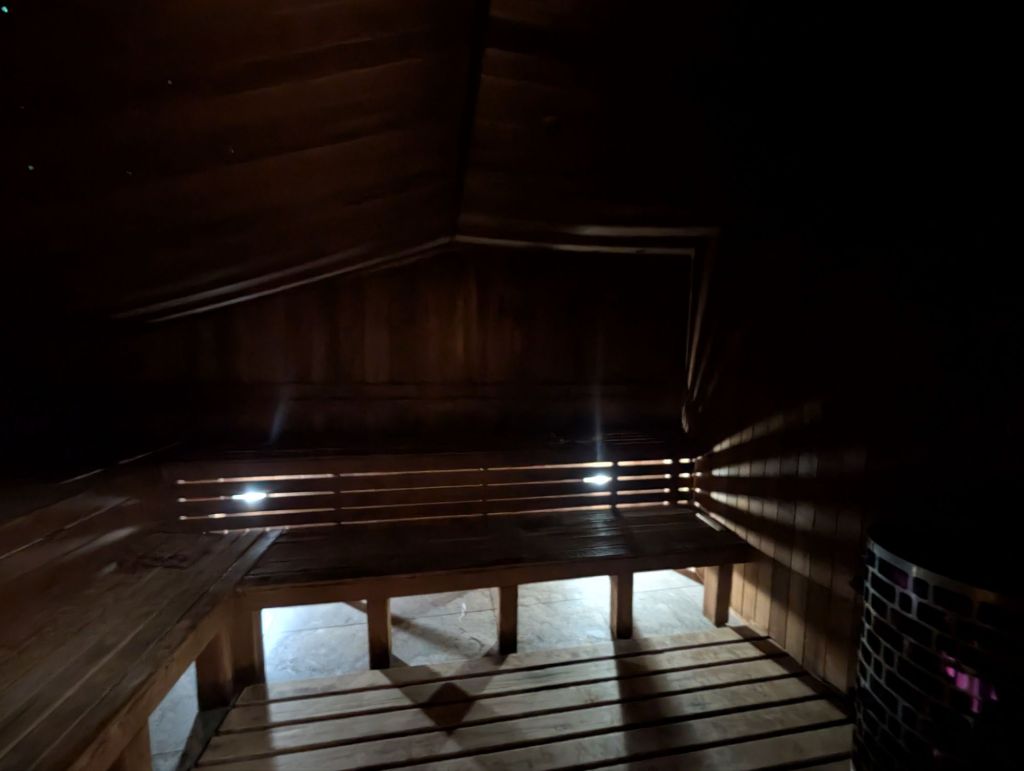
One of the main reasons I chose this hotel was for its on-site spa facilities, which looked particularly inviting. Access to the spa must be pre-booked, so I arranged my session before leaving the UK. Each entry allows for three hours of use and costs 1,400 MDL (around £64) for one to two people. The spa itself is impressively designed — a tranquil, low-lit space complete with a heated pool, jacuzzi, Finnish sauna, steam room, and salt room.
Everything felt spotless and serene, and the staff were attentive without being intrusive. During my visit, I also booked a “general” 60-minute massage for 800 MDL (around £36), which turned out to be one of the highlights of my stay. The treatment was both relaxing and thorough, with just the right amount of pressure, leaving me feeling completely rejuvenated.
Overall, the Bernardazzi Grand Hotel & SPA strikes a great balance between luxury and value, especially considering its central location and range of facilities.
While it’s not the cheapest option in Chișinău, the comfort of the rooms and the quality of the spa experience make it a solid choice for travellers looking to combine city exploration with a touch of pampering.
Getting around
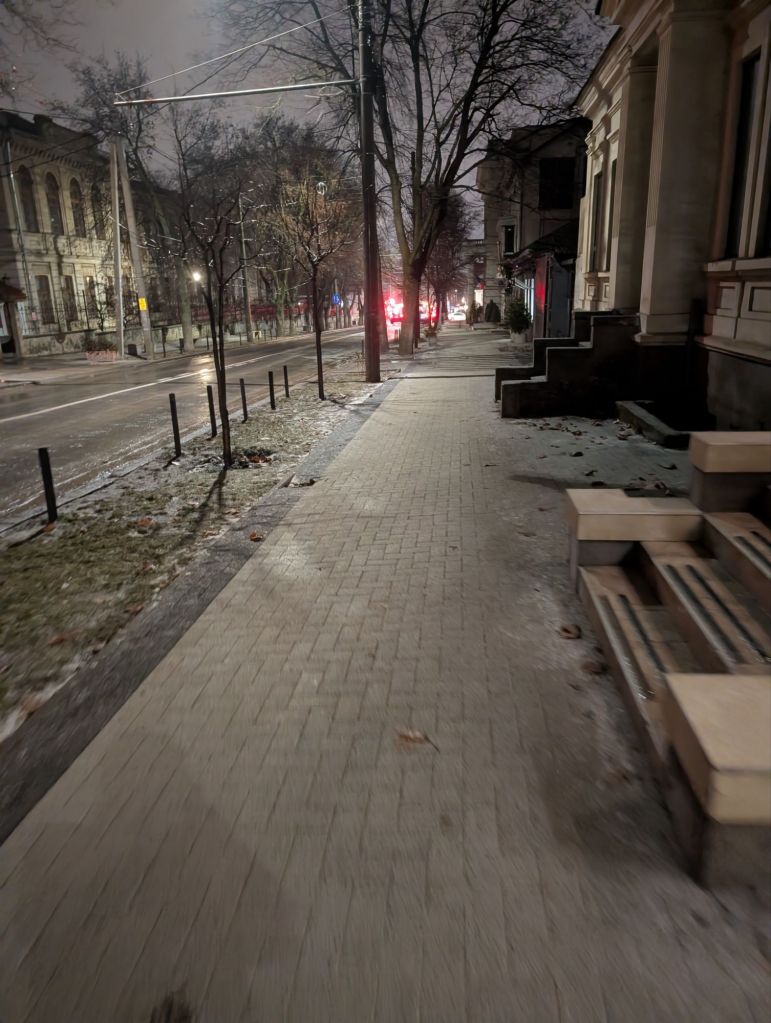
One of the easiest and most rewarding ways to get to know Chișinău is on foot. The city’s centre is compact, flat, and surprisingly green, making it perfect for wandering at your own pace. Wide boulevards shaded by tall trees connect the main attractions, from the elegant Cathedral Park and the striking Triumphal Arch to the bustling Central Market and the National Museum of History.
Walking allows you to appreciate the city’s contrasts – pastel-painted 19th-century buildings sitting alongside stark Soviet-era blocks, ornate Orthodox churches nestled between modern coffee shops, and leafy courtyards that suddenly open into lively public squares.
There’s something wonderfully unhurried about exploring Chișinău on foot. Most of the city’s key sights are within a two or three-kilometre radius, so unless you’re venturing to the outskirts, walking really is the best way to see and feel Chișinău’s character.
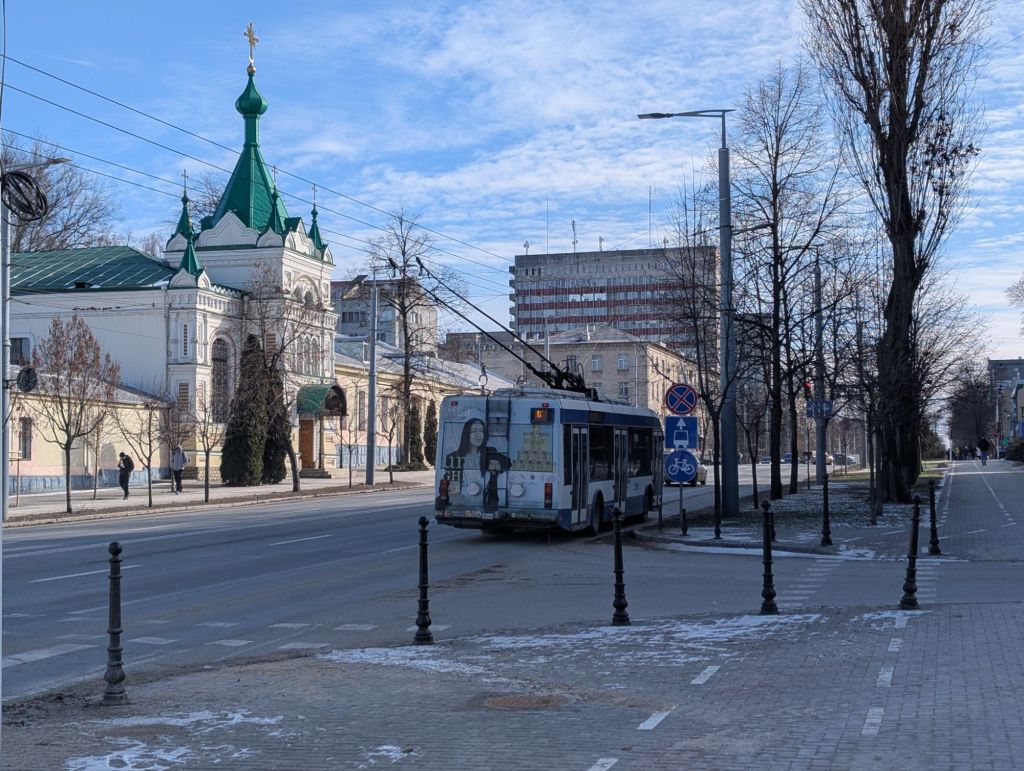
For longer distances or when your feet need a break, Chișinău’s trolleybus network is the city’s most iconic and practical form of public transport. Operated by RTEC (Regia Transport Electric Chișinău), the system has been running since the 1940s and remains a vital part of urban life.
Today, there are more than 20 trolleybus routes crisscrossing the city, linking residential areas, universities, parks, and key landmarks such as the main train station and Stefan cel Mare Boulevard. The distinctive blue-and-white trolleybuses are hard to miss, gliding along electric lines that hum softly overhead.
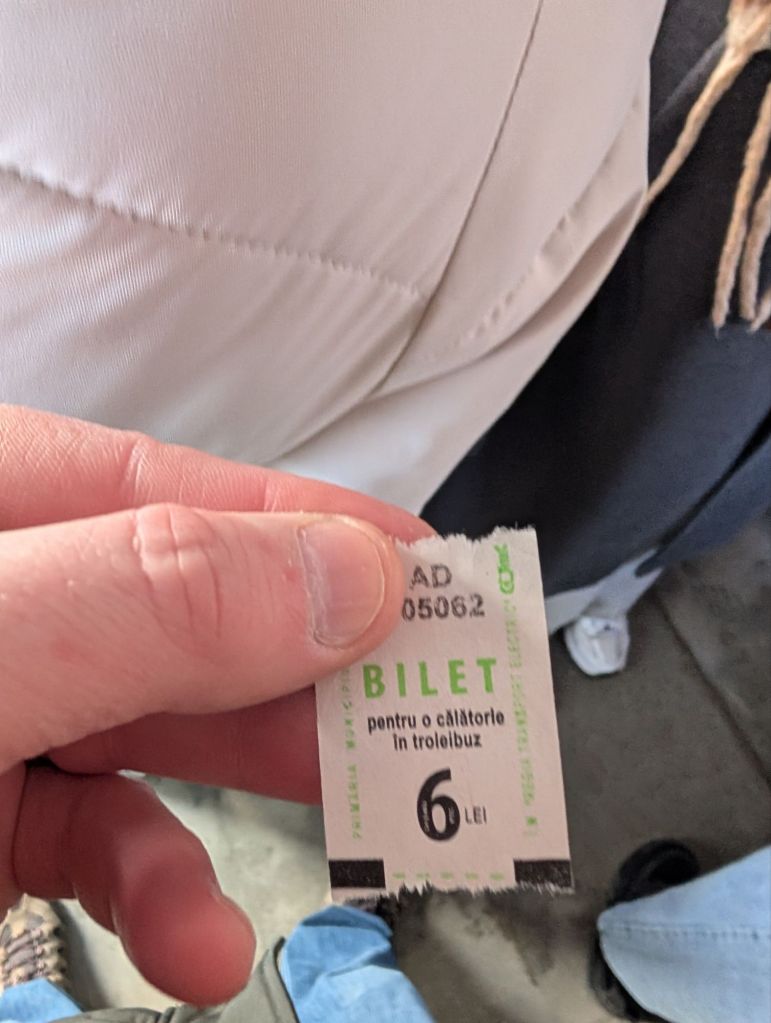
A single ride costs just 6 MDL (about £0.26) – a refreshingly low fare that makes getting around incredibly affordable. To pay, simply board the trolleybus and hand your cash to the onboard conductor, who will issue you a small paper ticket as proof of payment. There’s something charmingly old-school about the whole experience; no contactless cards or smartphone apps here – just the satisfying simplicity of a traditional system that still works.
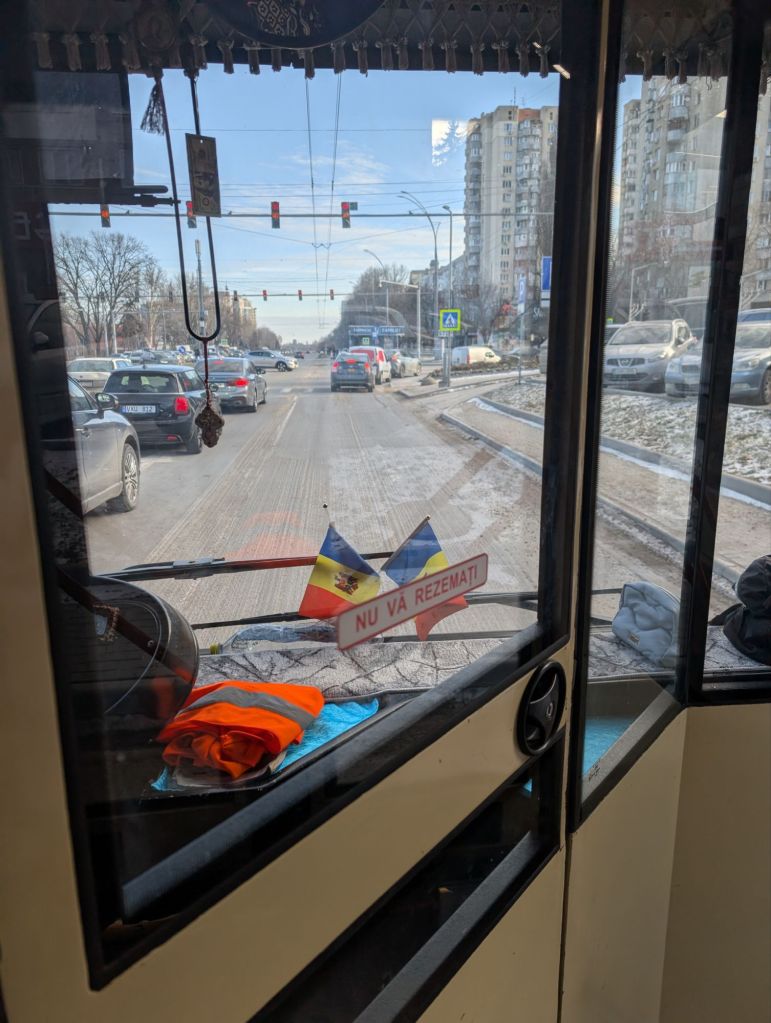
The trolleybuses run frequently throughout the day, usually from early morning until around midnight, and are generally punctual. They’re a great way to see the city from a different perspective, as routes wind through local neighbourhoods that you might not otherwise visit. It’s a relaxed, people-watching kind of journey – commuters, students, and pensioners all sharing the same space, the hum of conversation and the gentle rattle of the bus providing the soundtrack.
While Chișinău might not have the flashy transport systems of larger European capitals, its combination of walkable streets and an affordable, characterful trolleybus network makes getting around both easy and memorable – a fitting reflection of the city’s understated charm.
Top sites
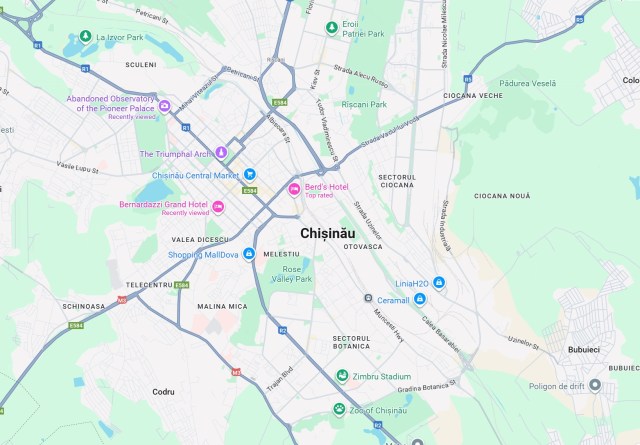
Chișinău, may not be blessed with an abundance of tourist hot spots, but it offers plenty of rewarding places to explore for those willing to look a little closer. While it might not dazzle with grand landmarks, Chișinău’s charm lies in its quieter corners and authentic atmosphere. From tranquil green spaces to cultural landmarks and local gems, there are several great places to visit that reveal the city’s unique character and easy-going spirit.
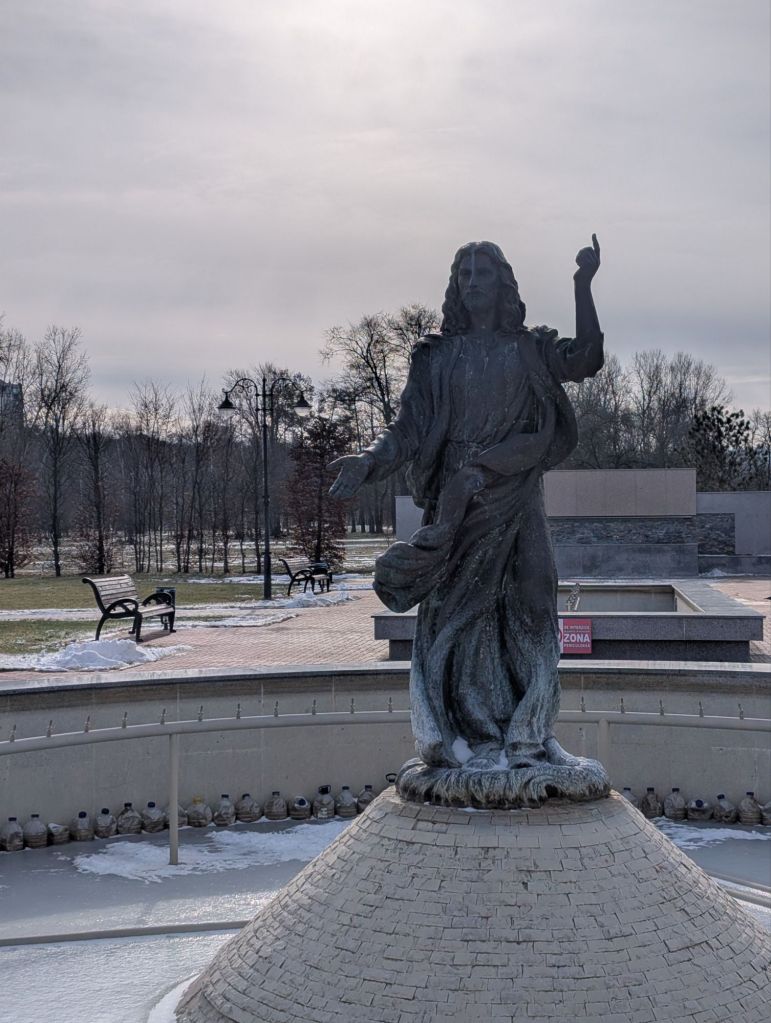
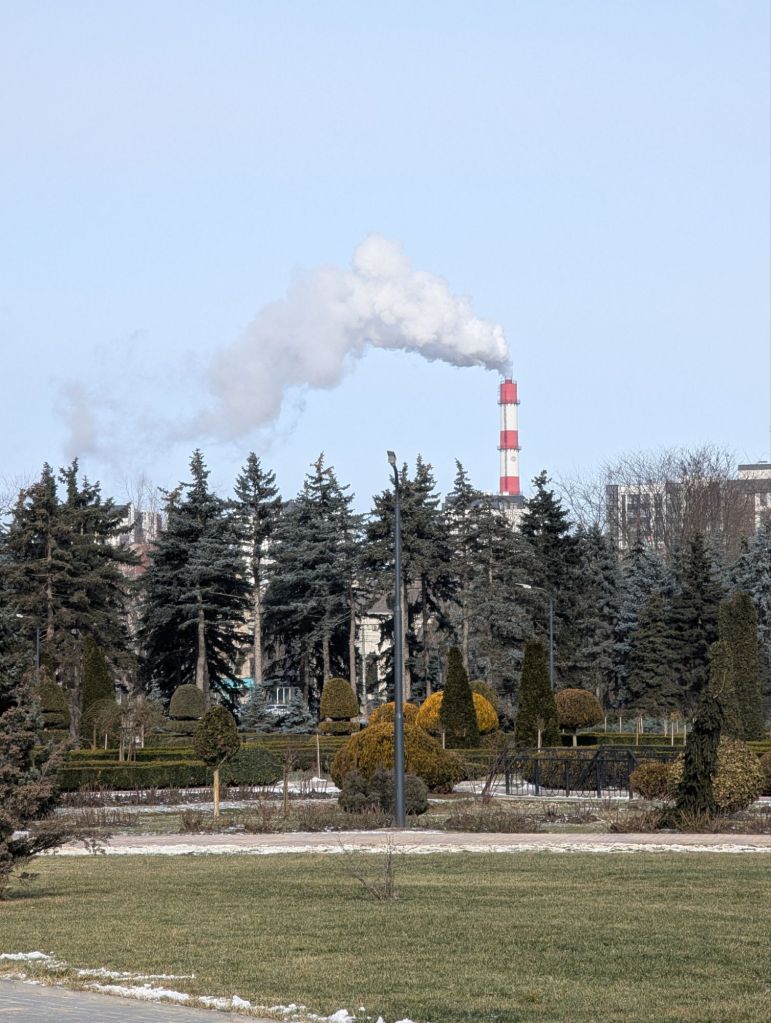
The first such place is Dendrariu Park.
This park is often considered one of the highlights of any trip to Chișinău — a place where nature and tranquillity come together just a short distance from the city’s busy centre.
Located in the Buiucani district, to the northwest of the capital, this beautifully landscaped park stretches across roughly 83 hectares and serves as Chișinău’s largest and most diverse botanical garden. It’s a local favourite for quiet walks, morning jogs and weekend picnics, offering a peaceful contrast to the city’s lively cafés and Soviet-era boulevards.
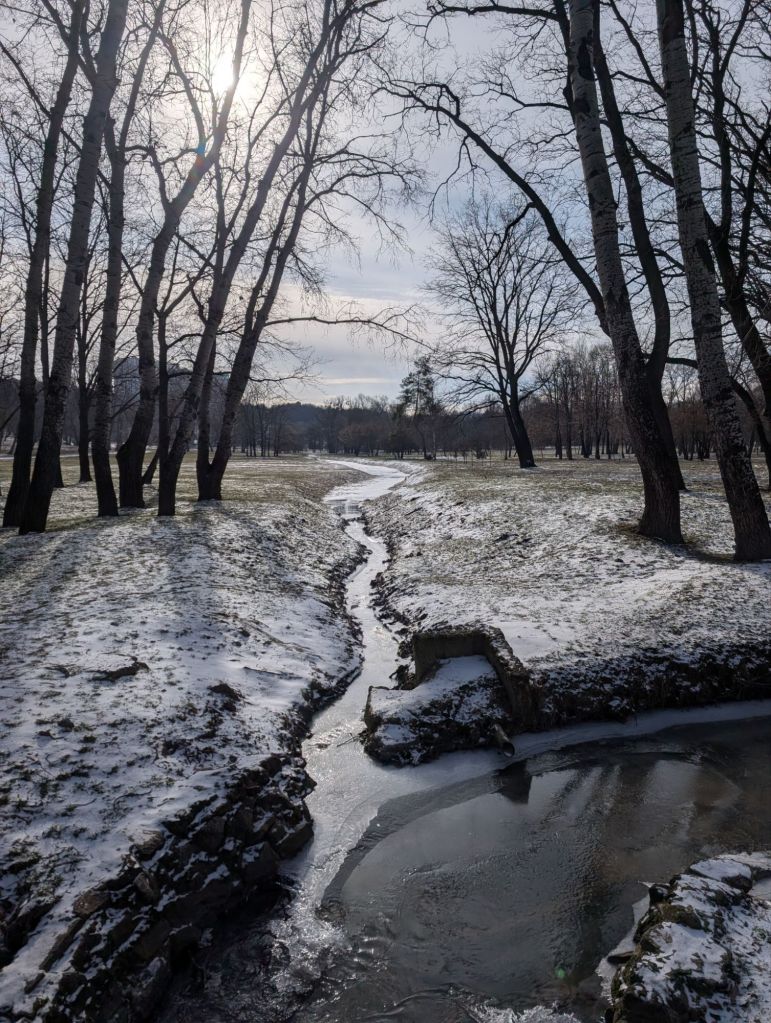
When I visited Dendrariu Park in February, it had a different kind of beauty — a quiet, wintry stillness that made the park feel almost like a secret garden. The trees stood bare against the pale sky, the ponds were edged with a thin layer of ice, and the paths were calm and uncrowded. Even without the lush greenery of spring or the colour of summer blooms, there was a peaceful charm to it all, a reminder that nature has its own rhythm in every season.
What makes Dendrariu Park so special, even in winter, is the sheer variety of plant life it holds. The collection includes more than 1,800 species of trees and shrubs from across the world, arranged to create a living museum of global flora.
Among the park’s more remarkable residents is a Ginkgo biloba tree — a species that dates back over 200 million years and stands as a symbol of endurance and renewal, fitting for a place that feels alive even in its quietest months.
The park’s thoughtful layout makes it perfect for slow exploration. Wide walking paths wind their way between open meadows and clusters of trees, while benches are thoughtfully placed for those who wish to sit and take in the scenery. Unlike some of the city’s more formal green spaces, Dendrariu feels organic and lived-in, with just enough wildness to make it feel authentic.
For visitors, entry to Dendrariu Park is very affordable at just 10 MDL for adults, (approximately £0.42). There are few cafés or food stalls within the grounds, so it’s a good idea to bring water or a snack if you’re planning to stay a while.
To make the most of your visit, it’s worth arriving in the morning or late afternoon, when the park is quieter and the light is especially beautiful for photography.
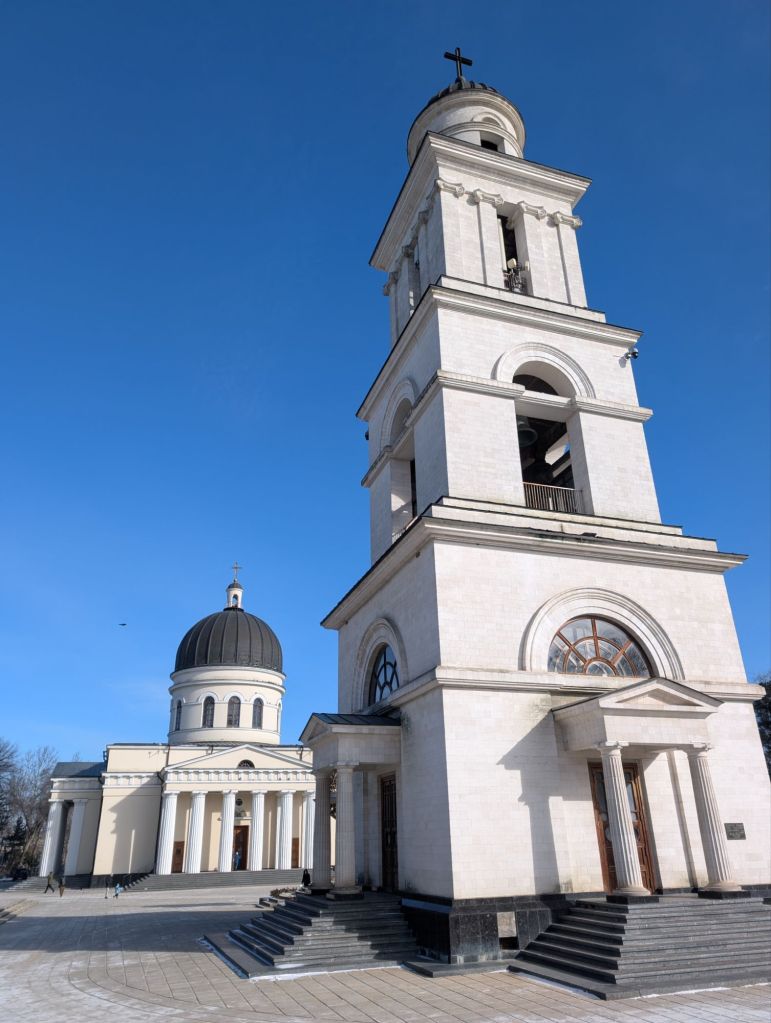
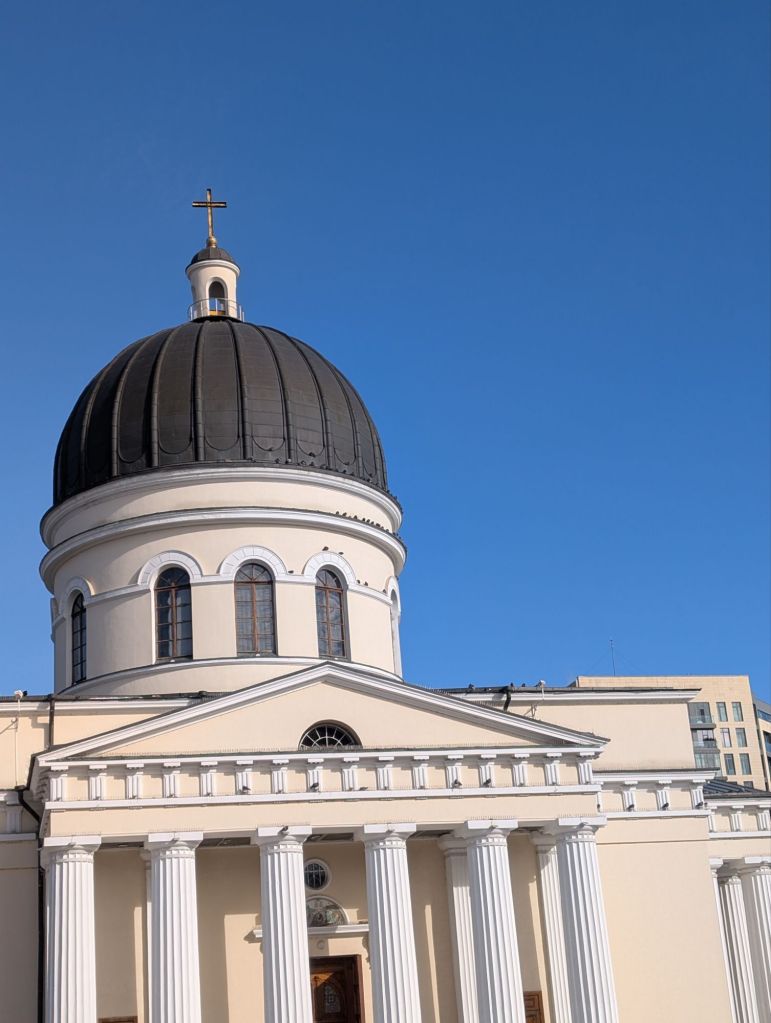
The next stop worth a visit is to Catedrala Nasterea Domnului and The Triumphal Arch.
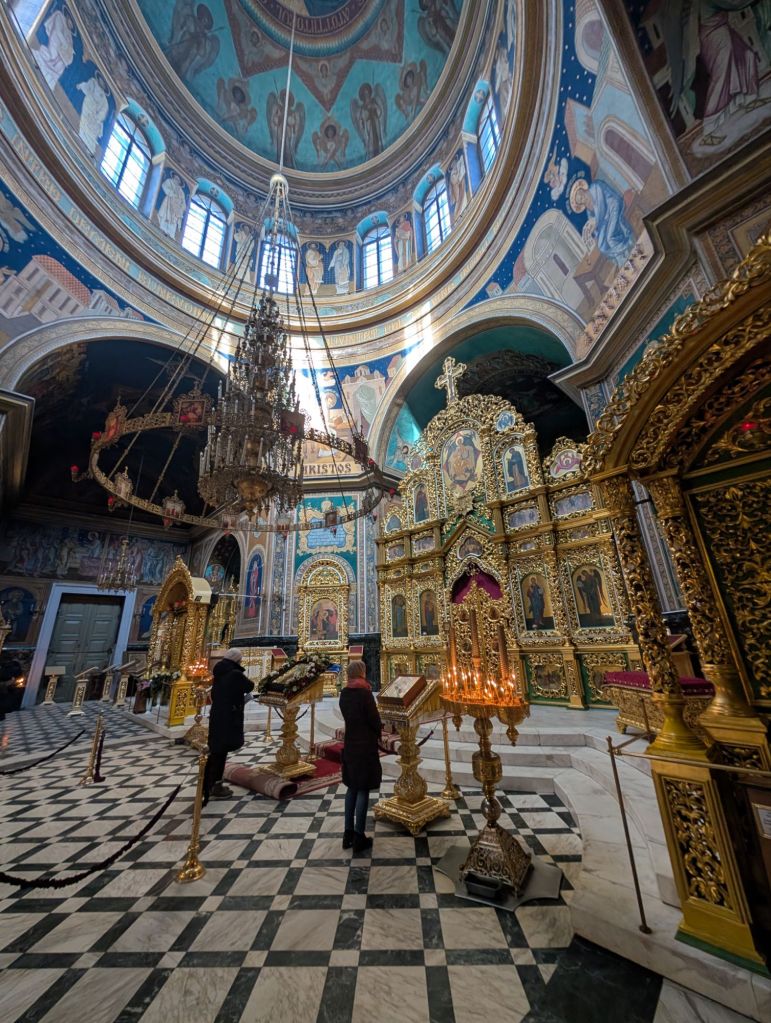
When I visited the Nativity Cathedral (as it is translated) in February, the square in front of the cathedral was almost empty apart from a few people heading to work or stopping to light a candle. The air was crisp, the bare trees lining the square lending a sense of quiet, and the cathedral’s white façade stood out beautifully against the pale winter sky.
Built in the early 1800s, it is one of Chișinău’s best-known landmarks, with its simple neoclassical design, tall Doric columns, and domed roof. Inside, the atmosphere is peaceful, with soft light filtering through the windows, the scent of incense lingering in the air, and the walls lined with traditional Orthodox icons. Even in the depth of winter, there is a feeling of warmth and welcome for those who step inside.
The cathedral has witnessed much of the city’s history. It was damaged during the Second World War, repurposed as an exhibition hall during Soviet times, and later restored in the 1990s to reflect its original grandeur. Visiting in February gives the building an extra sense of stillness and contemplation.
Without the usual summer crowds, it’s possible to take in the full scale of the architecture and the quiet dignity of the surrounding square. Standing there, it’s easy to imagine the cathedral at different moments in history, watching the city around it change and evolve while it remains a constant presence.
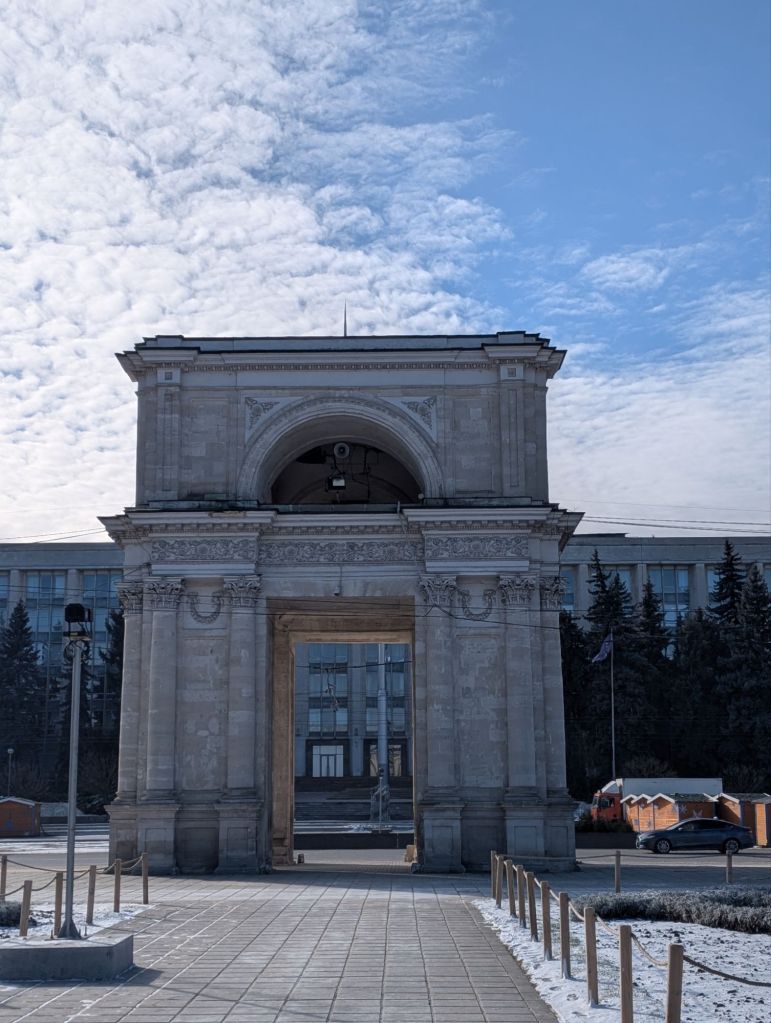
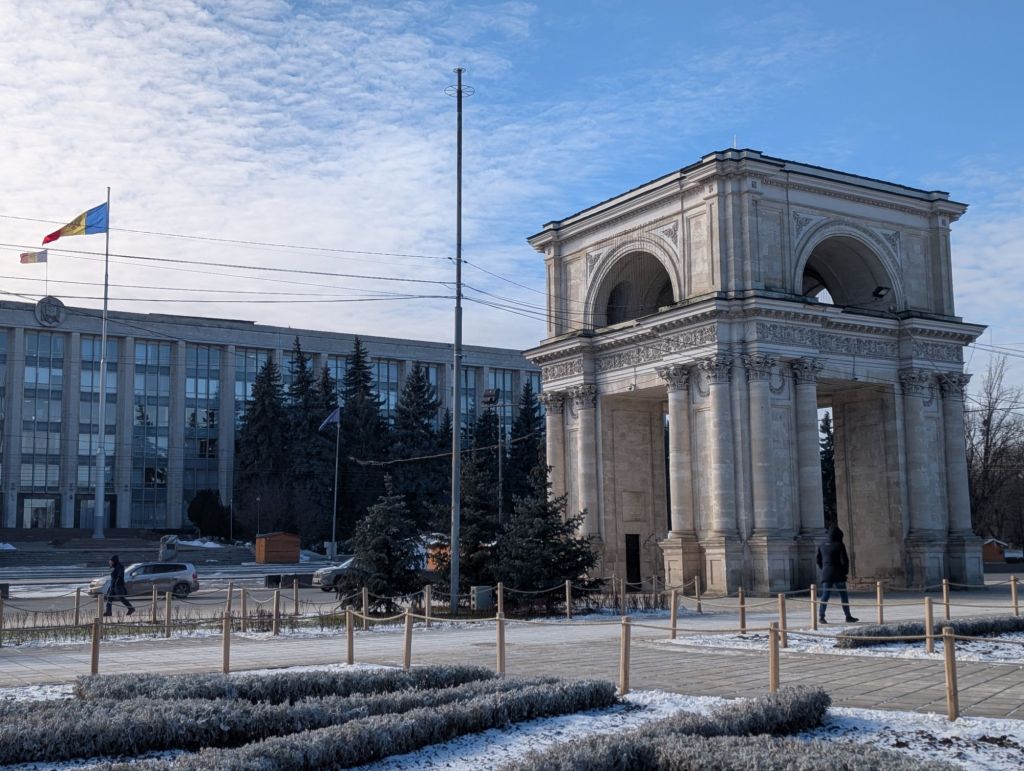
Just across the square from the cathedral stands the Triumphal Arch, another of Chișinău’s central landmarks. Built in 1840 to commemorate the Russian Empire’s victory in the Russo-Turkish War, the arch is a simple but elegant structure of white stone, topped with a clock that has long kept time over the city’s central square.
In February, with the frost still on the ground and the streets quieter than usual, the arch looks especially striking. The crisp winter light highlights its clean lines, and without crowds, it’s easy to appreciate how it frames the view of the cathedral beyond, linking the two landmarks visually and historically.
Walking beneath the arch, the dome of the cathedral is perfectly framed through its central opening, a view that feels carefully composed even in the quiet of winter. The square itself, usually bustling in warmer months, feels open and peaceful, giving space to pause and take in the details of both buildings.
Visiting the Nativity Cathedral and the Triumphal Arch is very straightforward, and entry costs are minimal. The cathedral itself does not charge an admission fee, so you can step inside to admire the architecture and icons without any expense.
The Triumphal Arch is also free to approach and walk around, allowing you to take in its full scale and photograph the view of the cathedral through its central opening without paying anything. This makes both sites particularly appealing for visitors in February, when the streets are quieter and you can explore at your own pace without worrying about entrance charges.
Together, the cathedral and arch capture something essential about Chișinău: a city that doesn’t overwhelm visitors with flashiness or spectacle, but draws you in with its calm atmosphere, architectural charm, and a sense of history quietly present in every corner. Even on a cold February afternoon, it’s easy to feel the heart of the city beating through these central landmarks.
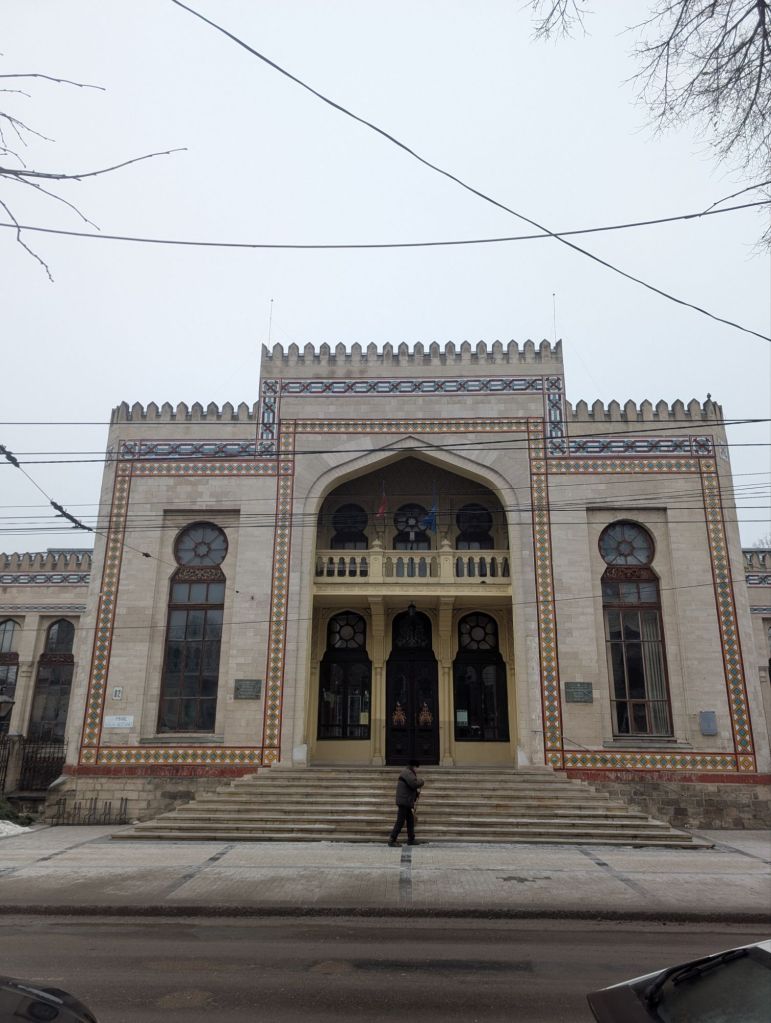
When I visited the National Museum of Ethnography and Natural History in February, it turned out to be one of the most fascinating stops in Chișinău — and a welcome escape from the cold.
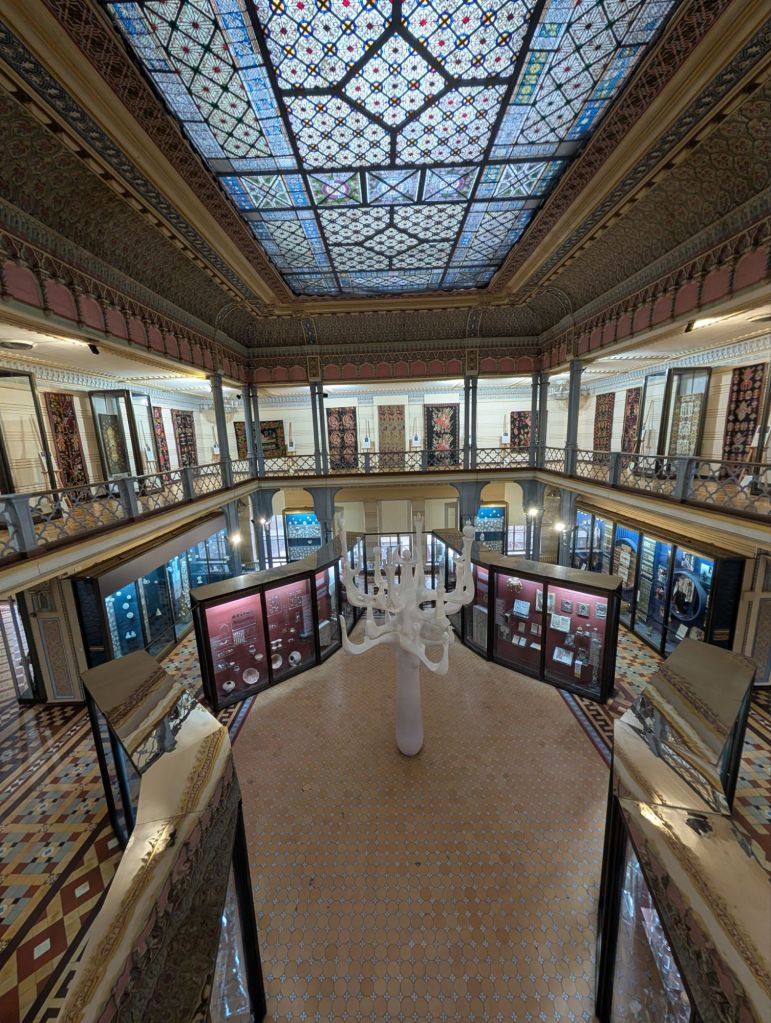
The museum sits in the city centre, near the Valea Morilor area, housed in a striking Moorish-style building that stands out immediately among Chișinău’s mix of Soviet and modern architecture. Its ornate façade, with patterned brickwork and arched windows, is reason enough to stop for a photograph, but it’s what’s inside that really makes this place worth visiting.
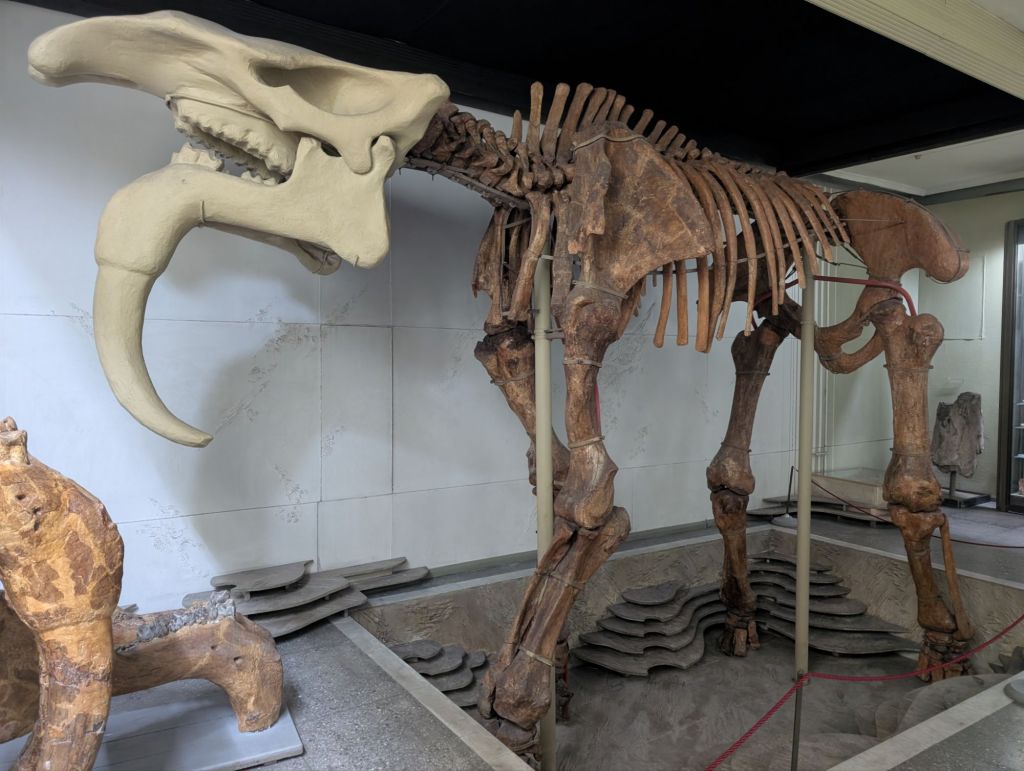
Founded in 1889, the museum is the oldest in Moldova and covers everything from the country’s natural landscapes to its folk traditions and archaeological finds. It’s the kind of museum that feels like several experiences in one — part natural history, part cultural archive, part time capsule.
On the ground floor, there are impressive displays of local wildlife and geology, including an enormous skeleton of a prehistoric mammoth discovered in Moldova, which dominates one of the main halls. Upstairs, the focus shifts to ethnography, with carefully curated exhibits that explore the daily lives, crafts and costumes of Moldovan communities through the centuries. The displays range from traditional clothing and handmade tools to reconstructions of rural interiors, offering a vivid picture of life in Moldova’s villages long before the modern era.
Visiting in February meant the museum was pleasantly quiet. I wandered through the galleries at my own pace, often with entire rooms to myself. The stillness of winter outside seemed to match the calm inside — a space where time slows down and the stories of Moldova’s land and people come to life. The museum’s staff were friendly and welcoming, happy to answer questions despite the language barrier, and the exhibits, many with English translations, were easy to follow.
Entry is very affordable: just 50 MDL for adults, (around £2.20), and even less for students and children. Considering how much there is to see, it’s excellent value for money and a great way to spend an hour indoors on a cold day. The building also has a small courtyard and garden area, which I imagine would be lovely to explore in warmer months.
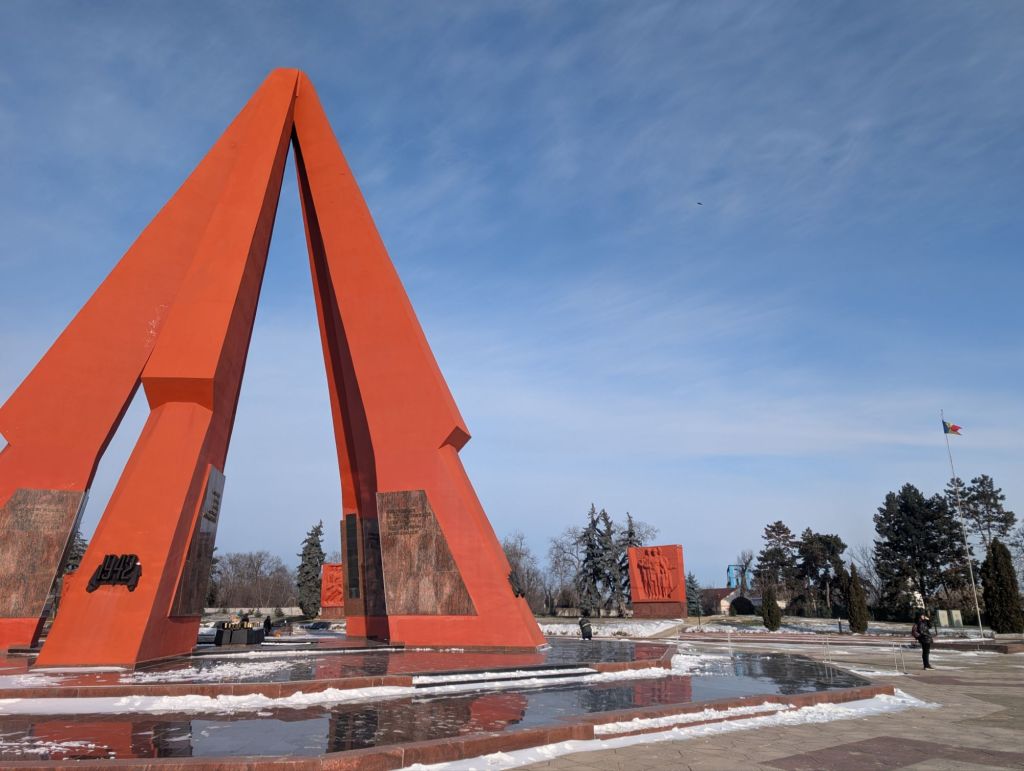
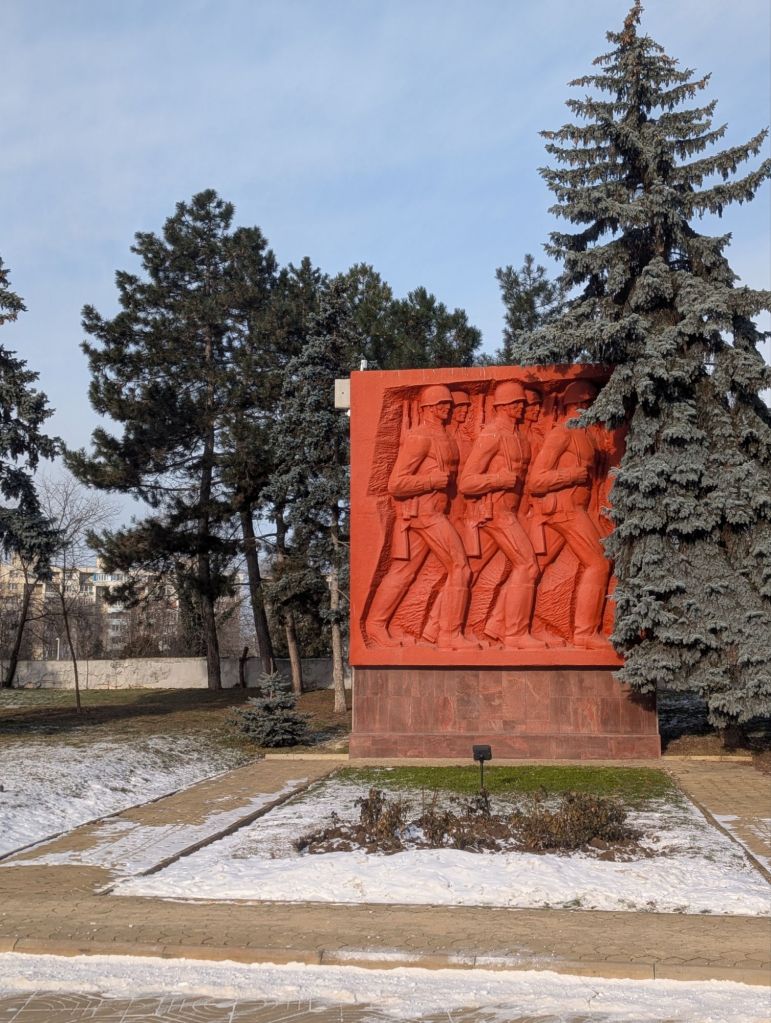
The Victory Memorial and Eternal Flame is one of Chișinău’s most striking landmarks and an important site of remembrance for the city.
Located along Strada Pantelimon Halippa, slightly south of the centre, the complex stands as a tribute to the soldiers who lost their lives during the Second World War. The memorial was inaugurated in 1975 to mark the 30th anniversary of victory, and its bold design still carries a powerful sense of symbolism and respect.
At the heart of the complex rises a 25-metre-high pyramid formed by five stylised rifles that meet above a five-pointed star. Beneath the star, an eternal flame burns continuously, honouring those who fought and died. The five rifles are said to represent the five years of the war, from 1941 to 1945, and the structure’s symmetry gives it a calm but commanding presence.
Surrounding the main monument are marble slabs and sculpted reliefs that depict scenes from the conflict, while engraved names along the walkways serve as a lasting reminder of the human cost of war.
The atmosphere here is peaceful and reflective. Even though the site sits near one of the city’s main roads, there’s a quiet stillness that sets in as soon as you walk among the monuments. The broad paths, clean lines and open space invite visitors to pause and take in the memorial’s scale. The flame itself is surprisingly moving — small but steady, flickering at the centre of the vast stone plaza.
There’s no entry fee to visit the the site, and it’s open to the public year-round. It’s an easy walk or short taxi ride from the city centre, making it a convenient stop for anyone exploring Chișinău.

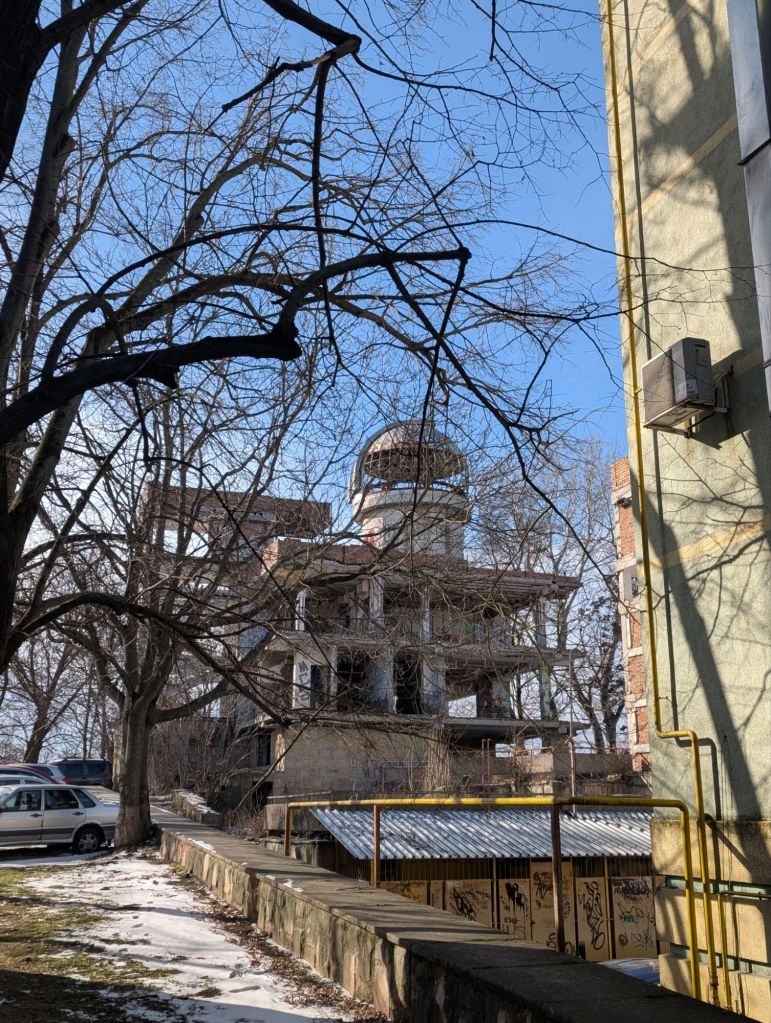
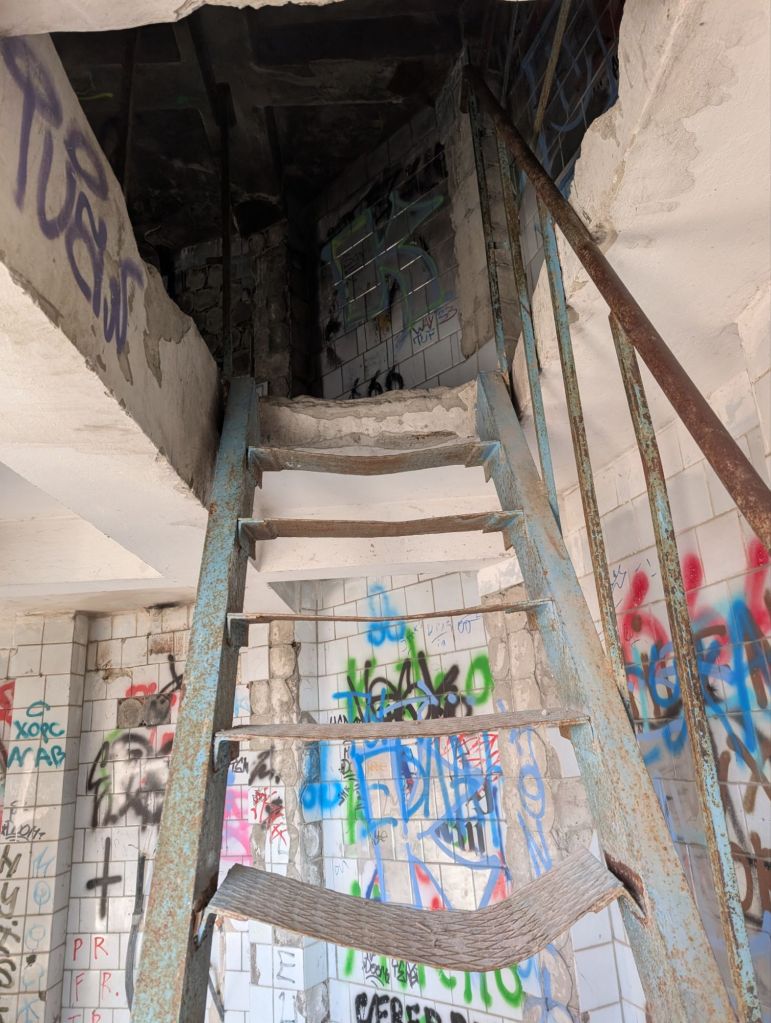
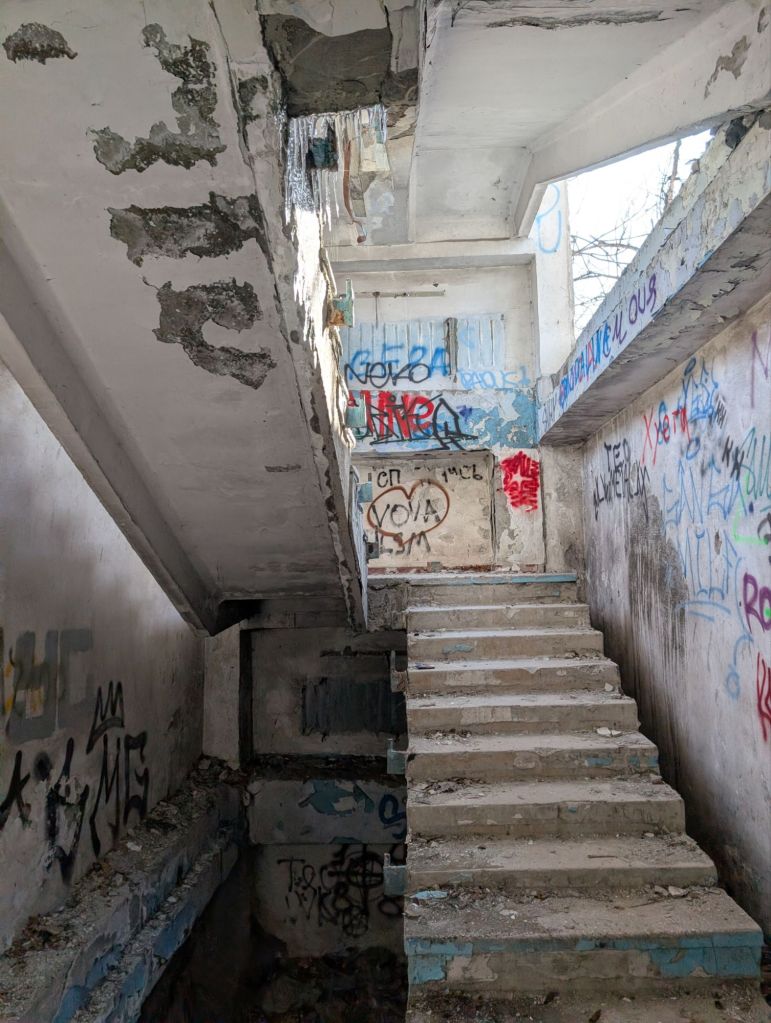
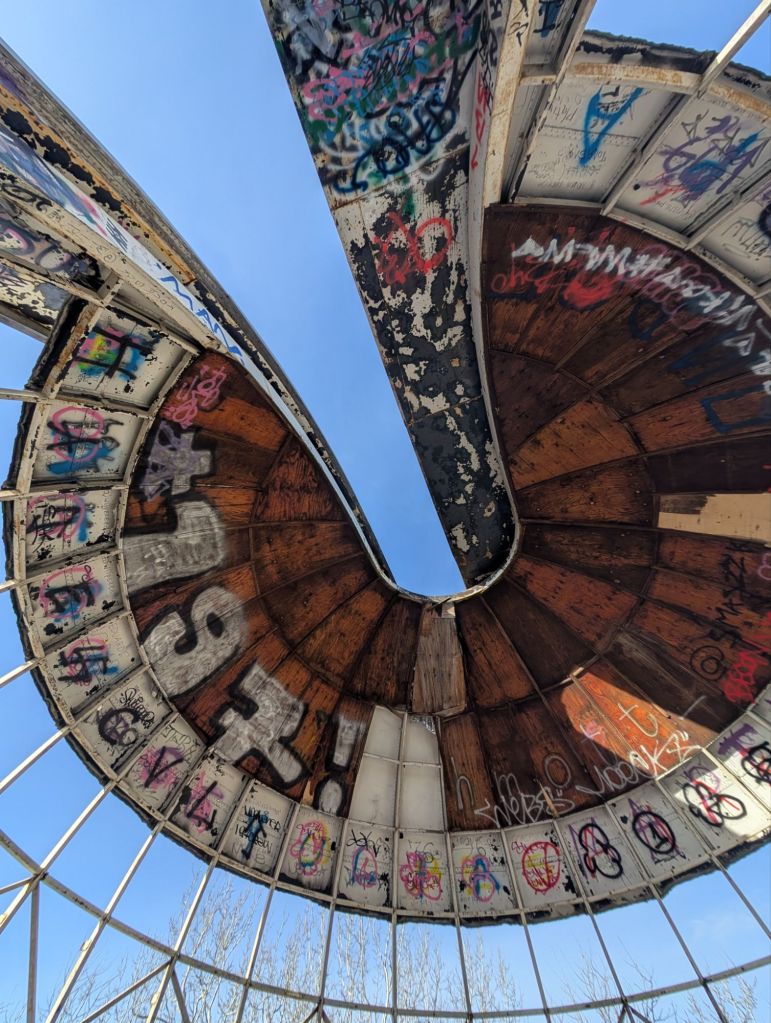
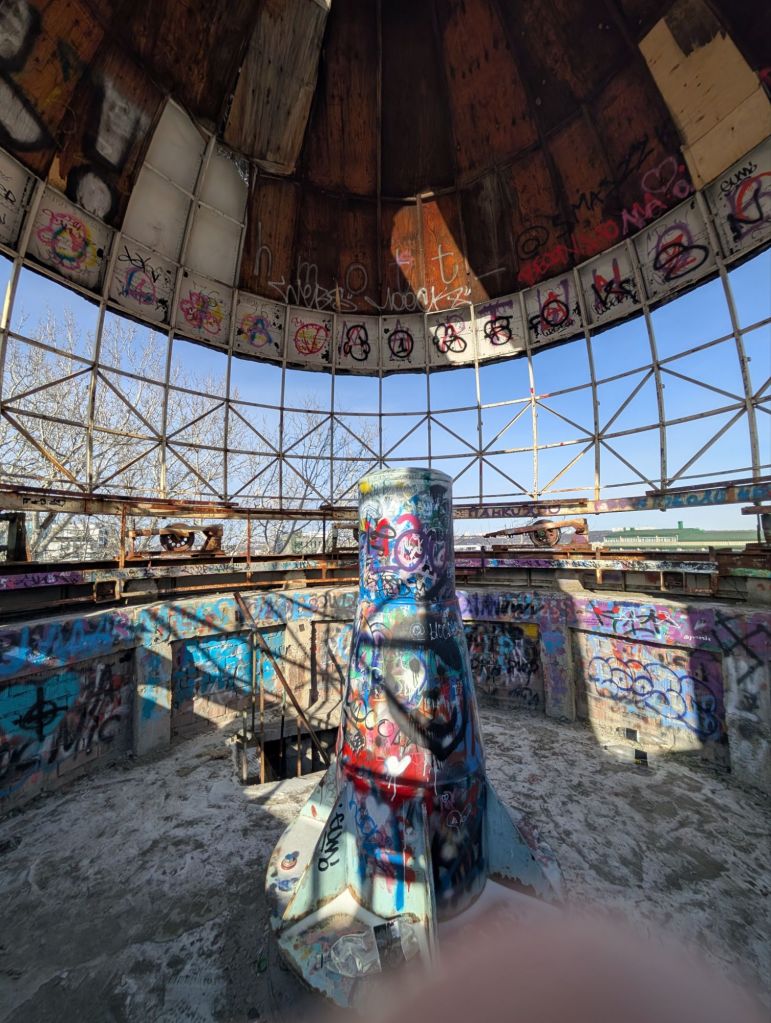
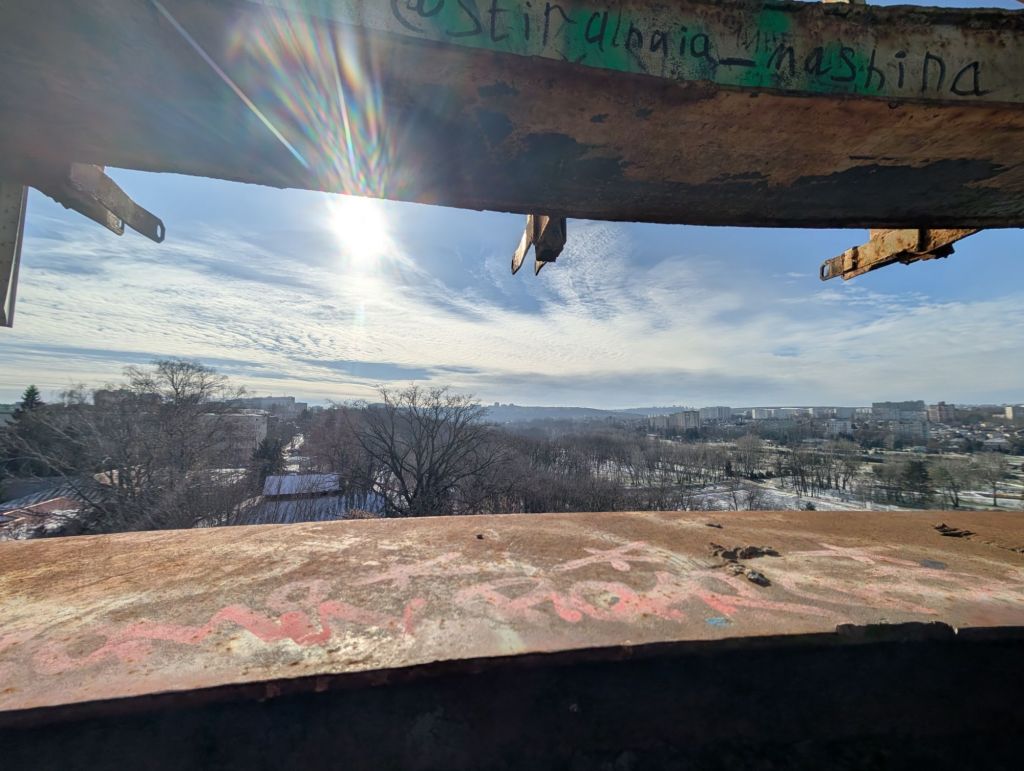
Tucked away in the Buiucani sector of Chișinău on Bulevardul Ștefan cel Mare și Sfânt, the Abandoned Observatory of the Pioneer Palace looms as a strange and evocative relic of the Soviet era. Once part of the city’s “Palace of Pioneers” — a centre for after-school programmes and youth astronomy classes — the building later fell into disuse and decay, leaving behind a dome with broken metal panels, graffiti, and open views down to the city.
Stepping up to the dome’s circular base, you’ll notice the rusted track of the mechanism that once rotated the roof, and at the centre stands the pedestal where a telescope once pointed to the stars.
From this vantage point, the panoramic views over Chișinău are unexpectedly compelling — much of the original machinery is gone, but the spirit of experimentation and curiosity that once animated the space lingers in the cracked concrete and peeling paint.
It’s also the kind of place that raises a few practical questions. The building is in a fragile state and tours aren’t formally organised, so if you choose to visit, prepare for uneven floors, exposed edges and a sense of unofficial access.
Whether you go for urban-exploration vibes, photography or just a quirky stop-off, the abandoned observatory offers a window into a side of Chișinău many visitors don’t see — the remnants of a vision for youth, science and community that has quietly faded into the background.
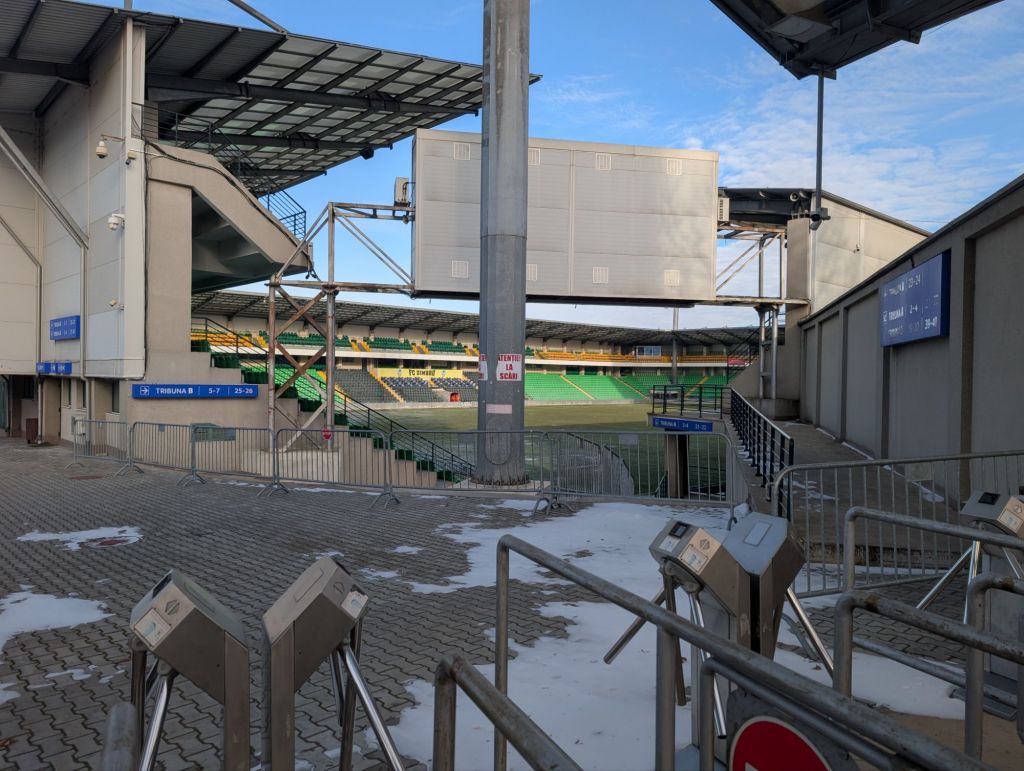
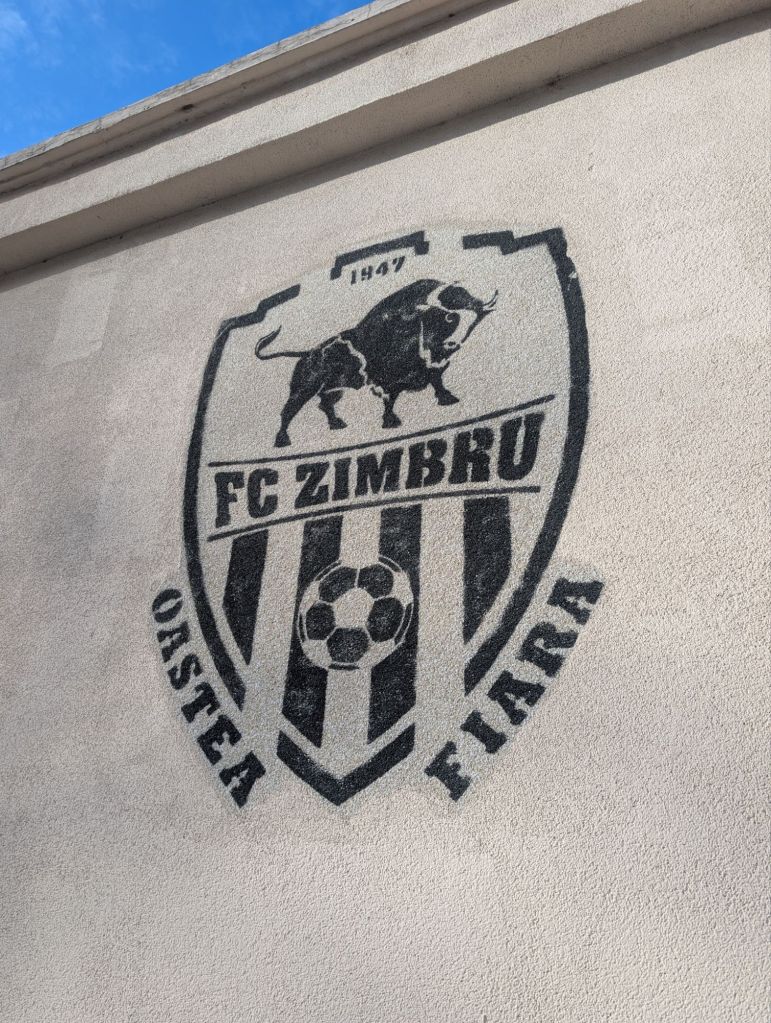
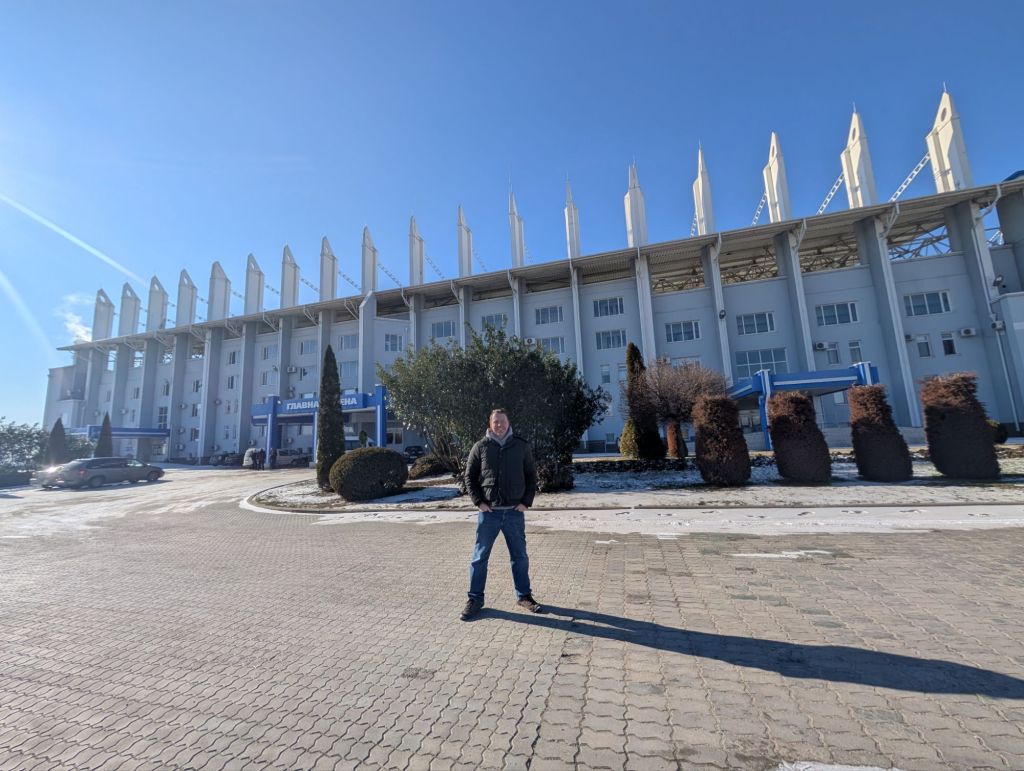
As readers of my blog will know, I’m a keen football fan and try to visit local stadiums wherever I travel, so the chance to see the national stadium of Moldova wasn’t something I was going to pass up on.
Zimbru Stadium, located on Bulevardul Dacia in Chișinău’s Botanica district, is a relatively modern addition to the city’s sporting landscape. It opened in 2006 after just over two years of construction and has a capacity of around 10,000 seats, making it one of the country’s largest and most important football venues.
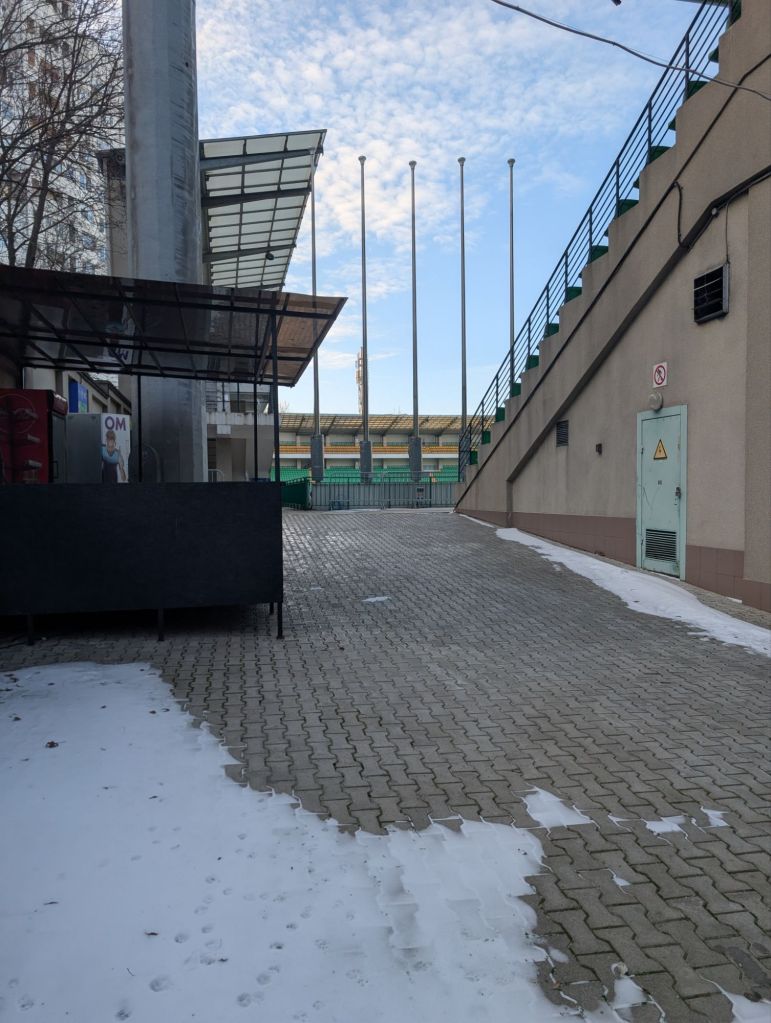
The stadium is home to FC Zimbru Chișinău, one of Moldova’s most well-known clubs, and regularly hosts matches for the national team. Even though I wasn’t there on a match day and could only see the outside, it was still worth the detour.
From the street, you get a clear sense of its scale — the curved roofline, the tall lighting towers, and the bright yellow and green colours of the club’s emblem give it real character. The surrounding neighbourhood is residential and low-key, so the stadium stands out as a bold, modern landmark among the apartment blocks.
Wandering around the perimeter, I found a few open gates that offered glimpses of the stands and pitch beyond. The place was quiet, with only a few locals passing by, but you could easily imagine the buzz of a full crowd on a match day. Even from the outside, Zimbru Stadium gives off a sense of pride — a reminder that football holds a special place in Moldovan culture – despite the struggles of their national team on the world stage.
It’s an easy spot to reach by taxi or bus from the city centre, and while there’s no entry unless a game or event is on, it’s still a fun stop for any football enthusiast. Standing there, peering through the gates at the national stadium, felt like a small travel ritual — another pin on the map for a football fan abroad.
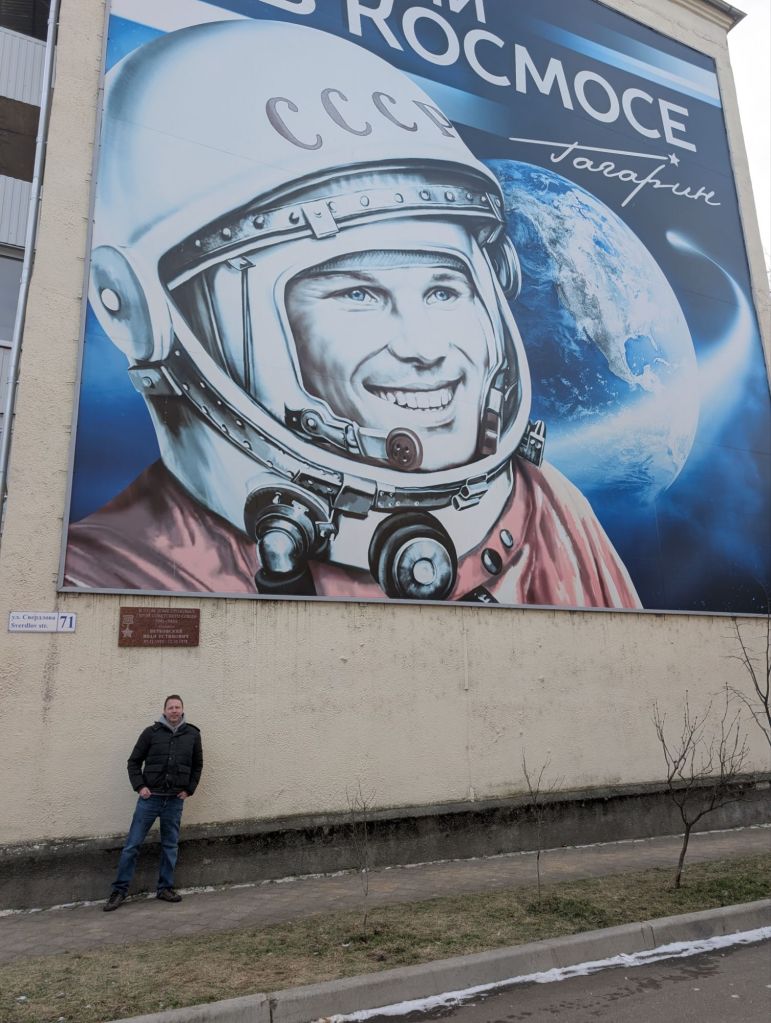
Part of the reason for my trip to Moldova was the chance to visit Transnistria — a breakaway region that has long intrigued travellers and geopolitics watchers alike.
It’s possible to visit on a day trip from Chișinău, and that’s exactly what I did. The journey takes around an hour and a half by car or bus, and while you don’t technically leave Moldova, it certainly feels like crossing into another country. You pass through checkpoints, show your passport and receive a temporary visitor permit, all overseen by uniformed border guards. It’s an oddly formal experience for a place that, on paper, doesn’t officially exist.
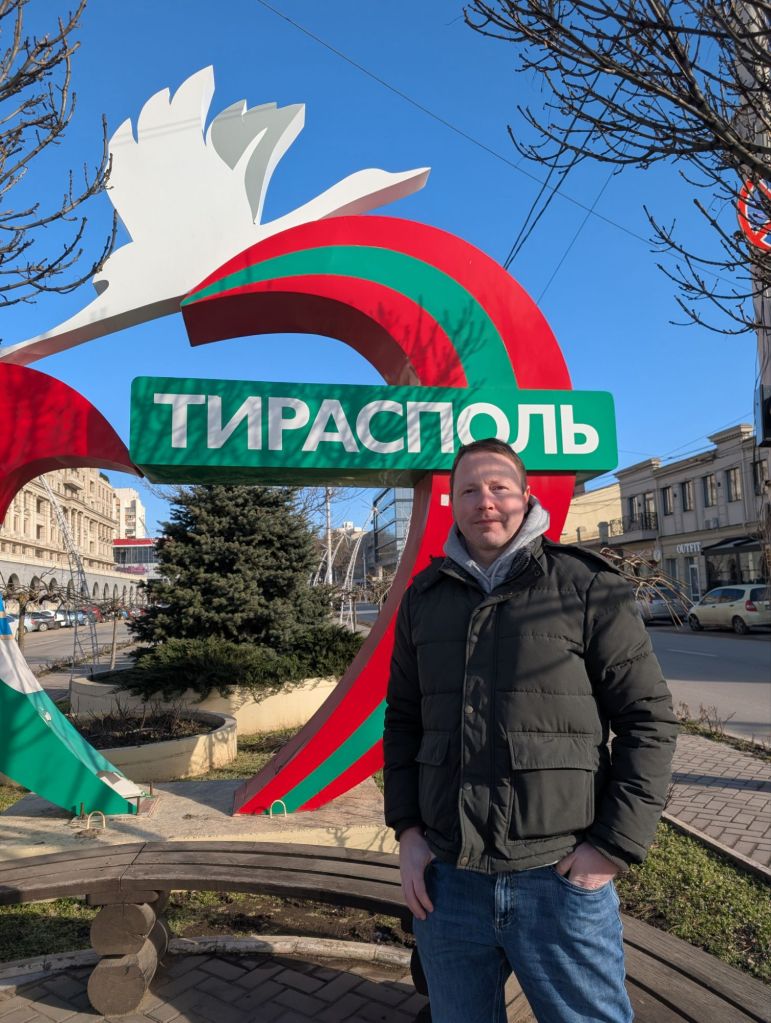
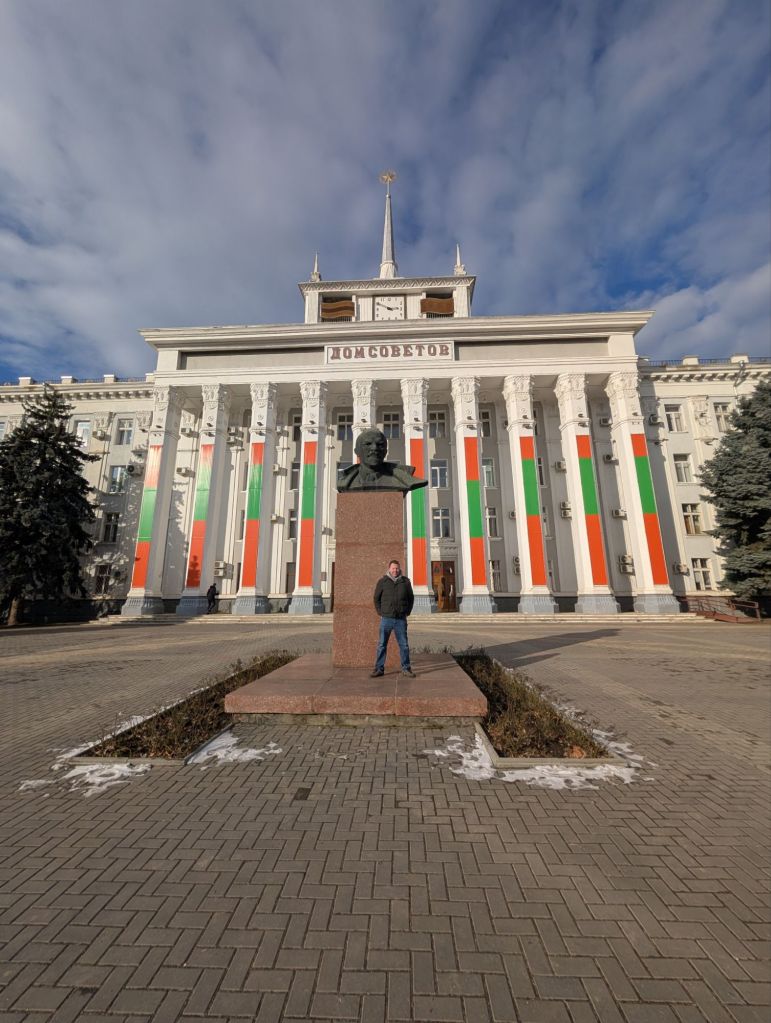
Arriving in Tiraspol, the capital of Transnistria, you immediately notice how different it feels from Chișinău. The streets are wide and neat, lined with Soviet-era apartment blocks, and there’s a distinct sense of order and pride. Statues of Lenin stand in front of government buildings, and the red-and-green Transnistrian flag — complete with hammer and sickle — flies prominently across the city. Russian is the dominant language, and the atmosphere is calm, almost frozen in another time.
Despite its unusual political status, Tiraspol is surprisingly peaceful and easy-going. The central Suvorov Monument, honouring the city’s 18th-century founder, dominates the main square, while nearby memorials to Soviet soldiers and the Afghan War lend the area a strong sense of history. There are a few cafés serving hearty local food, small markets selling inexpensive goods, and pleasant walks along the Dniester River. In some ways, it feels like a living museum of Soviet urban design — not staged or restored, just preserved by circumstance.
Visiting Transnistria is straightforward enough but does require a bit of patience and curiosity.
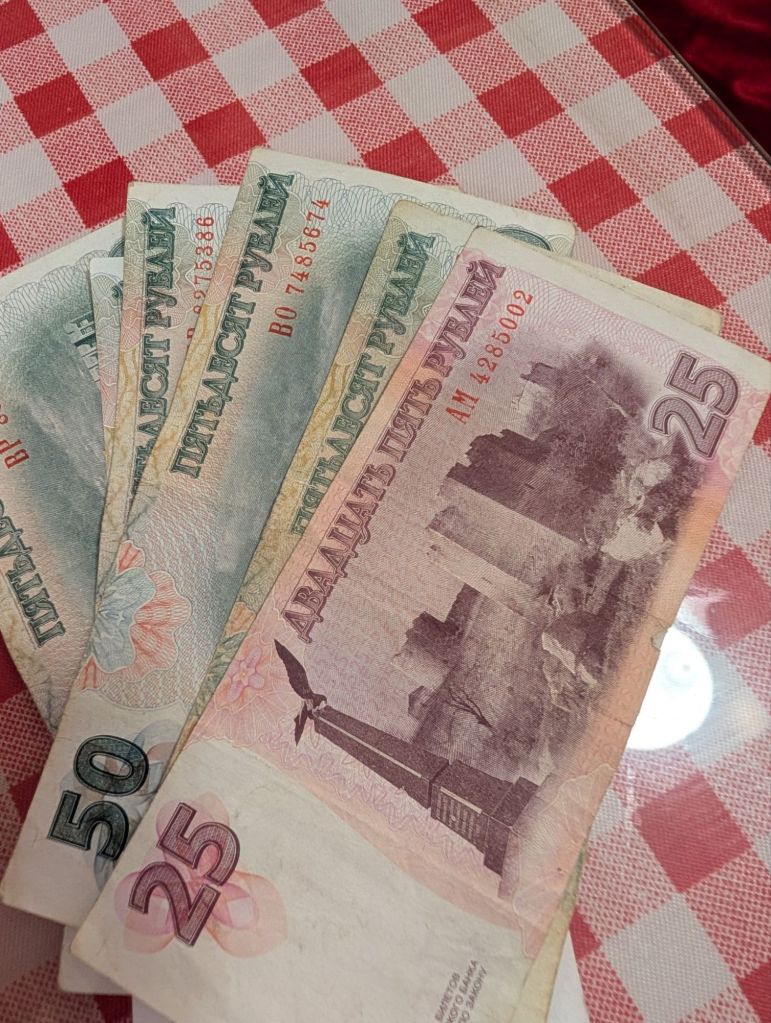
English isn’t widely spoken, and the local currency — the Transnistrian rouble — is only valid within the region, but for anyone interested in seeing a place with a truly unique political and cultural identity, it’s worth the trip. Spending the day there offered a fascinating glimpse into a world few tourists see, and it was one of the most memorable parts of my time in Moldova.
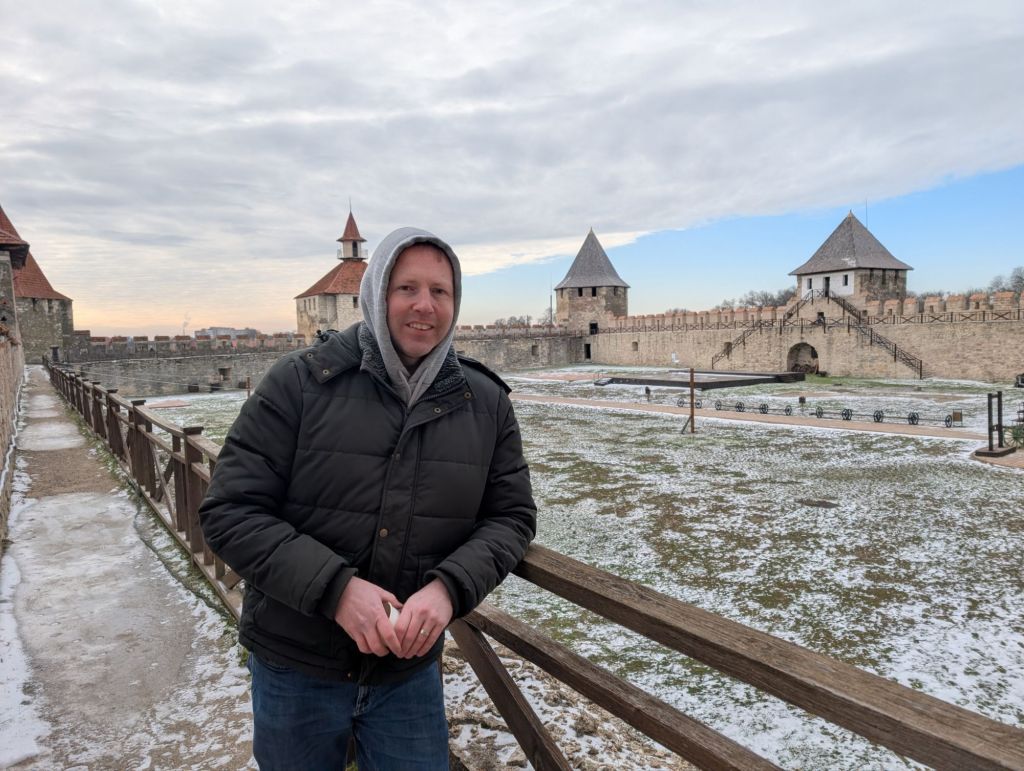

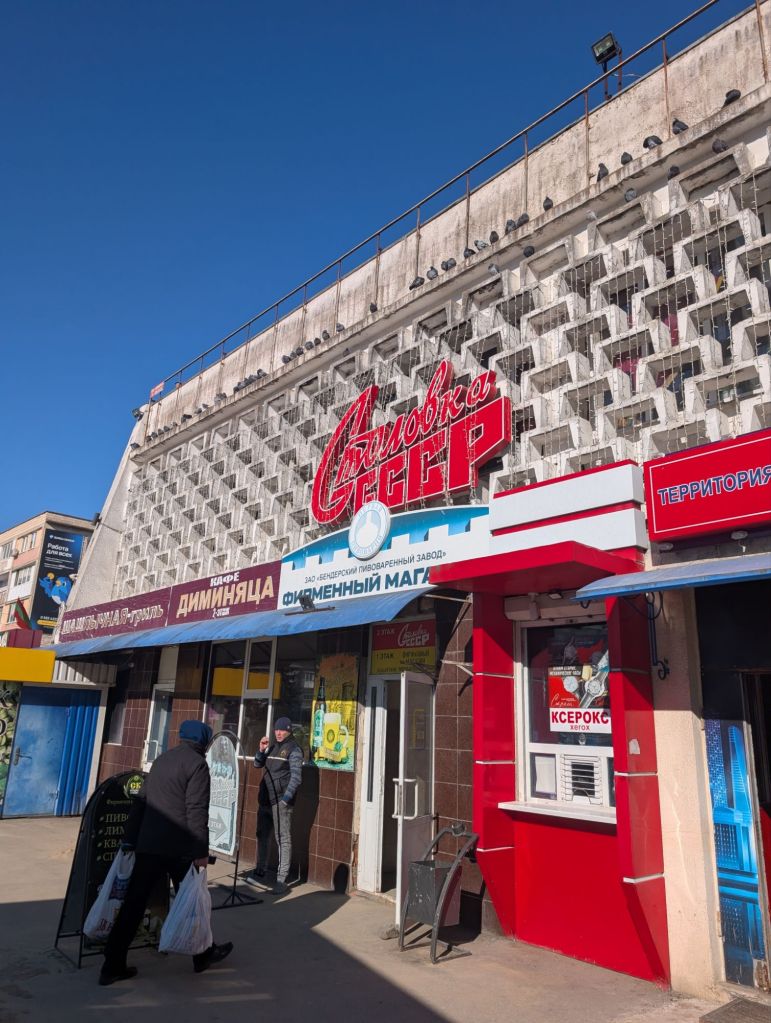
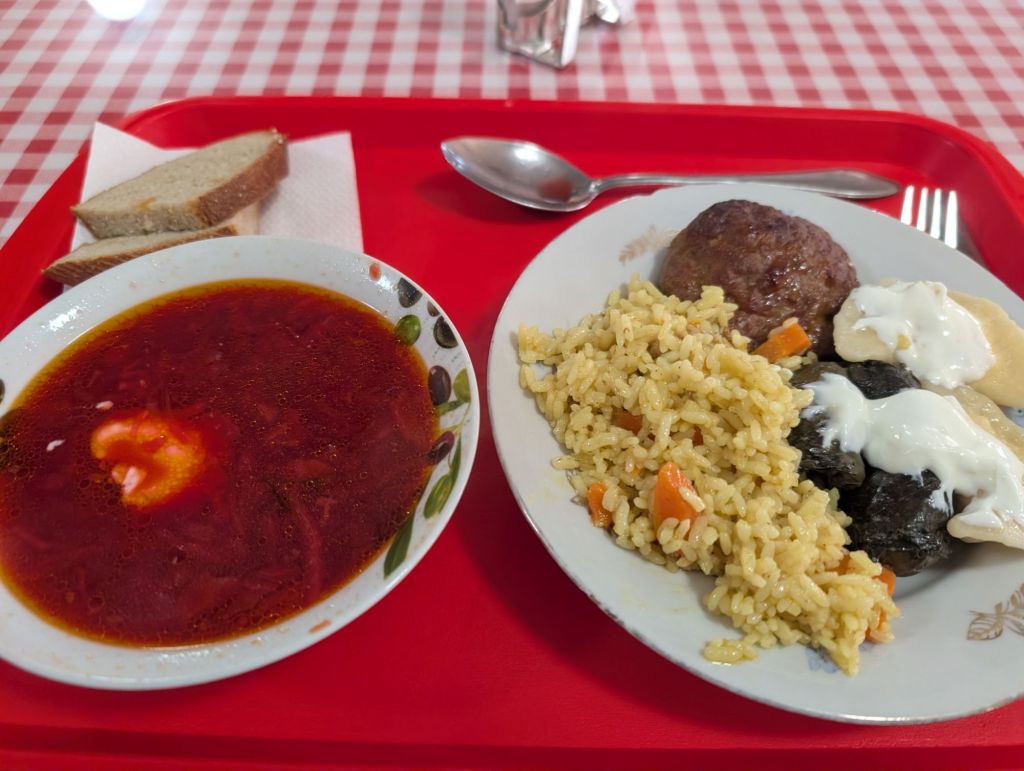
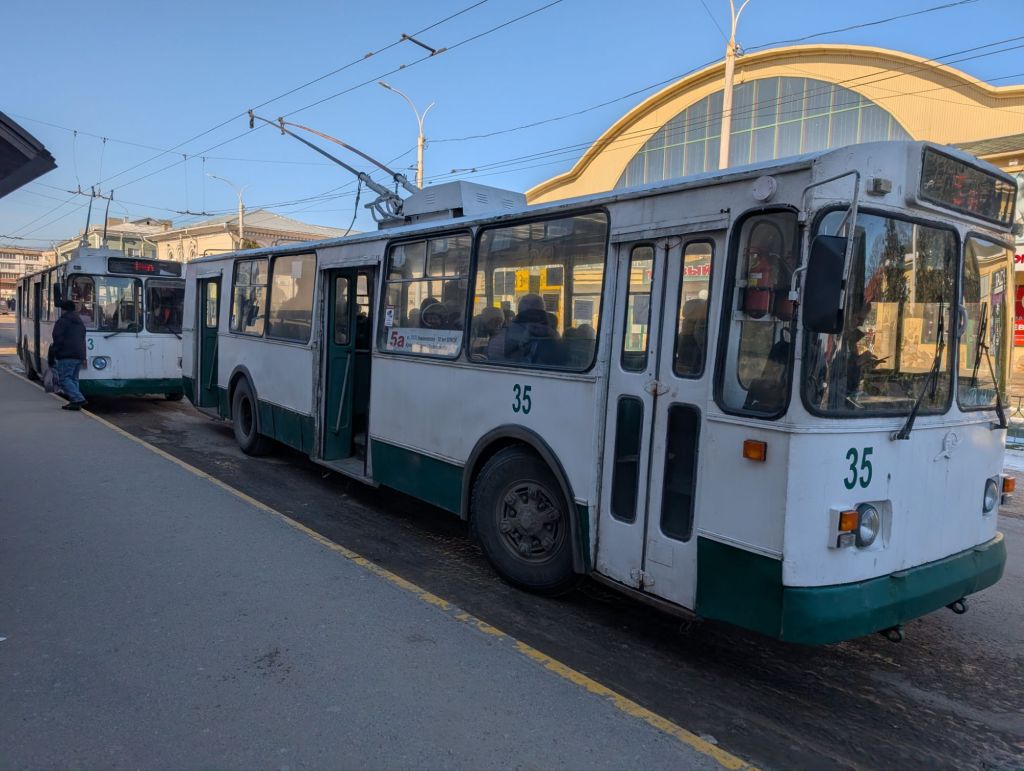
For my one day tour in Transnistria, I booked a guided tour from Chișinău, which cost £106.32 for one adult. It turned out to be just a tour for myself in the end which proved to be a great bit of luck.
The price covered hotel pick‑up, transport throughout the day, and a knowledgeable guide who accompanied us for the entire itinerary. Starting at my hotel in Chișinău, we drove east towards the breakaway region, passing through the border checkpoint where passports were checked and temporary visitor permits issued.
Once inside Transnistria, the tour included several key stops. We visited Tiraspol, the capital, where the streets, buildings and monuments are steeped in Soviet-era symbolism. Our guide provided context on the city’s history, politics, and culture, explaining why the region has maintained such a distinct identity over the decades.
We also stopped at Bender, home to an old fortress that offers insight into the area’s strategic importance and layered past. Throughout the day, the guide was on hand to answer questions, point out hidden details, and ensure the timing worked well so that the trip felt relaxed rather than rushed.
The transport itself was comfortable, with air‑conditioned vehicles and a small group that made it easy to interact and share impressions of what we were seeing. The pace of the day was ideal: enough time at each stop to explore, take photos, and appreciate the atmosphere, but not so long that it felt exhausting. Having a guided tour made the logistics much simpler, particularly given the unusual political situation in Transnistria, and allowed me to focus fully on experiencing the region rather than worrying about crossing the border, arranging local transport, or navigating unfamiliar streets.
By the end of the day, it felt like I had experienced a place frozen in a different time, yet very much alive. The combination of professional guidance, convenient transport, and carefully planned stops made it a memorable and smooth trip — one of the highlights of my visit to Moldova, and a fascinating insight into a part of Europe that few tourists ever get to see.

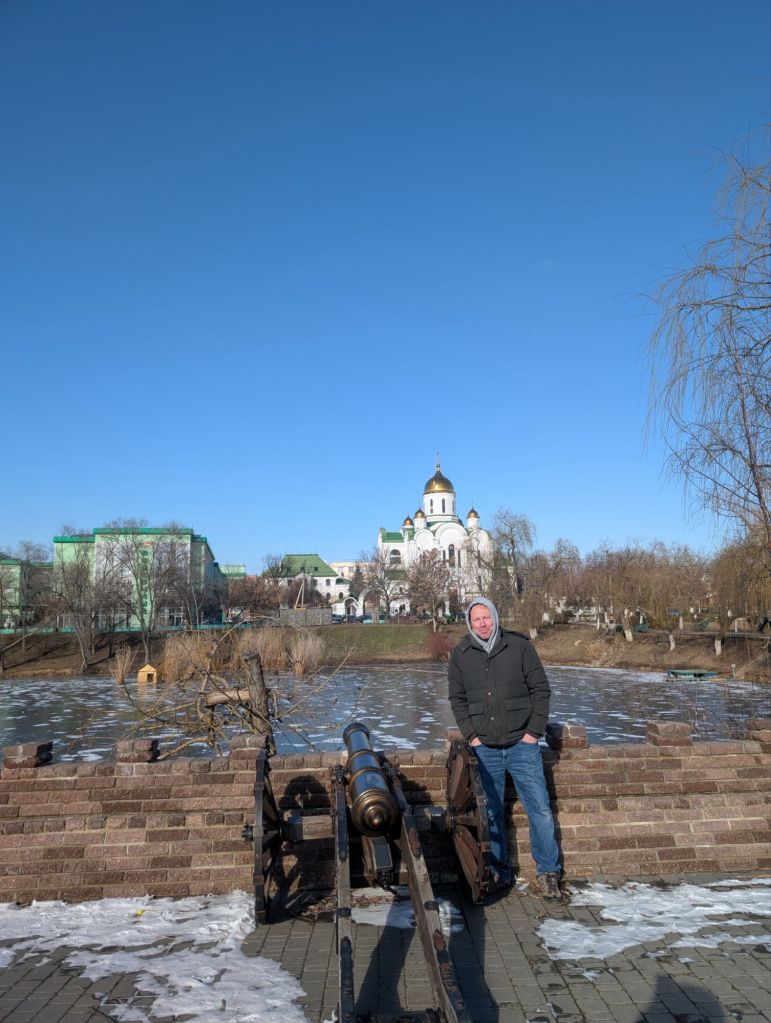
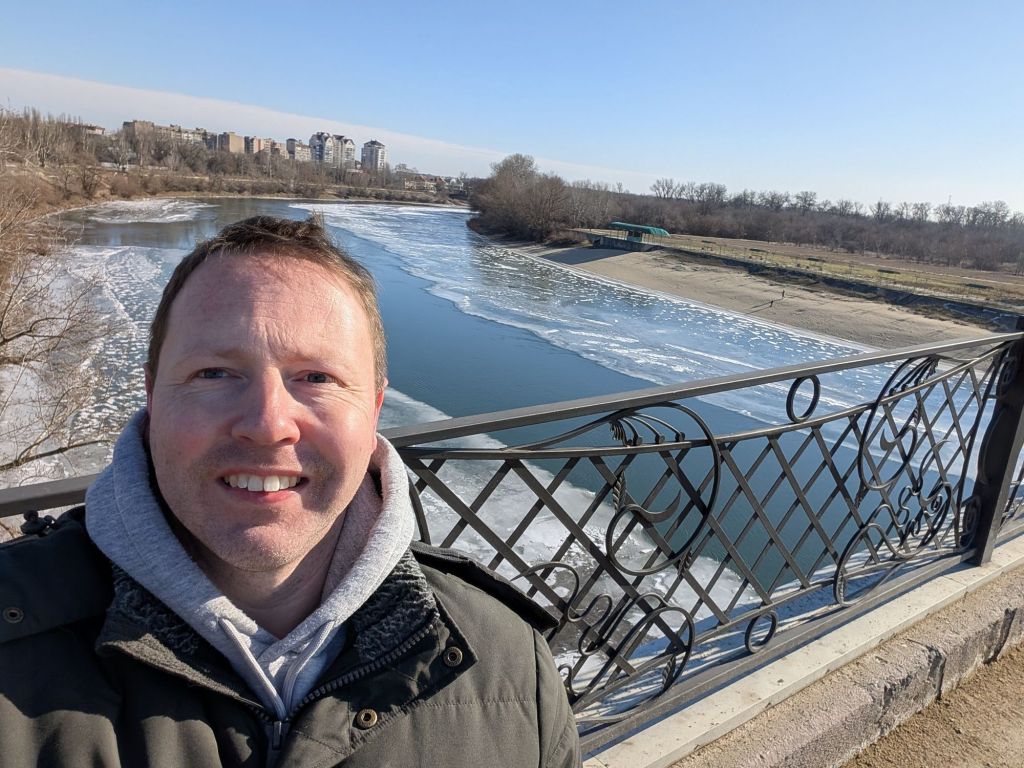
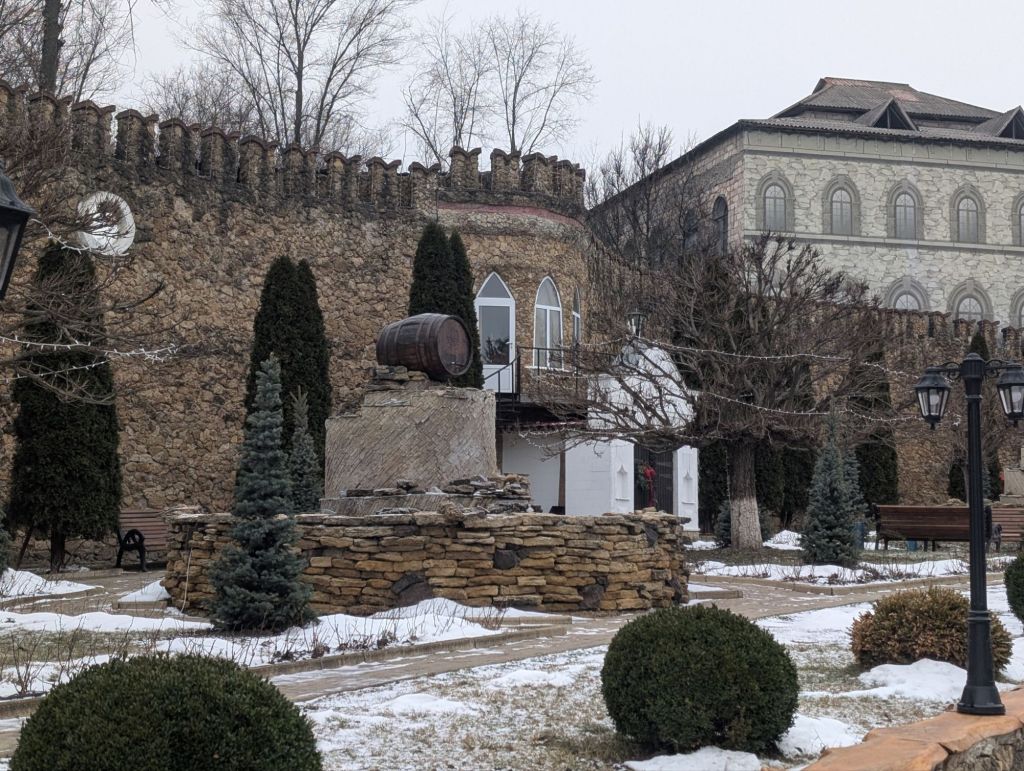
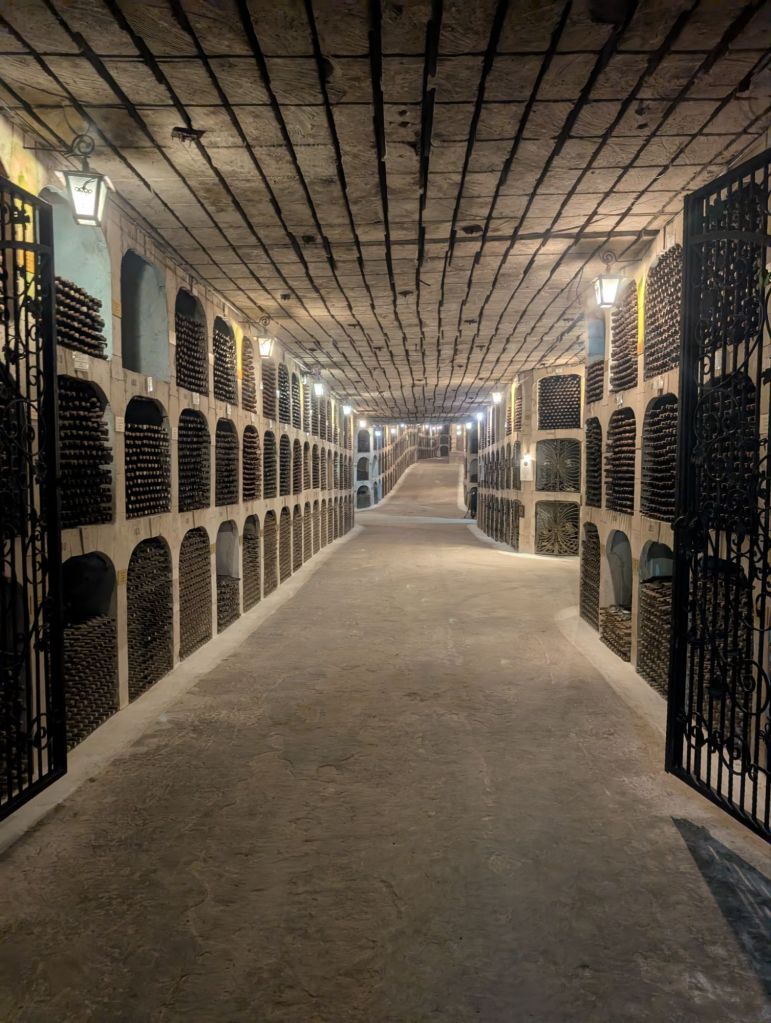
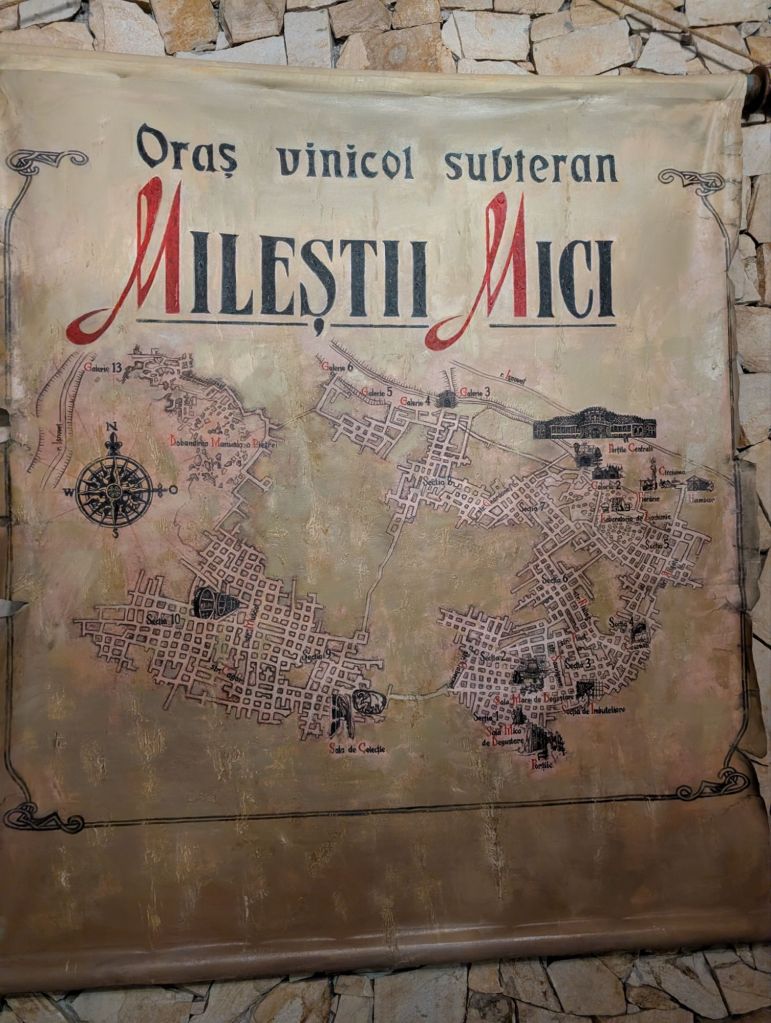
As part of my visit to Moldova, I booked two memorable day trips outside the city centre, and the second of these was a half-day biking a Guinness Book winery at the Mileștii Mici Winery which is famous for holding the world’s largest wine collection.
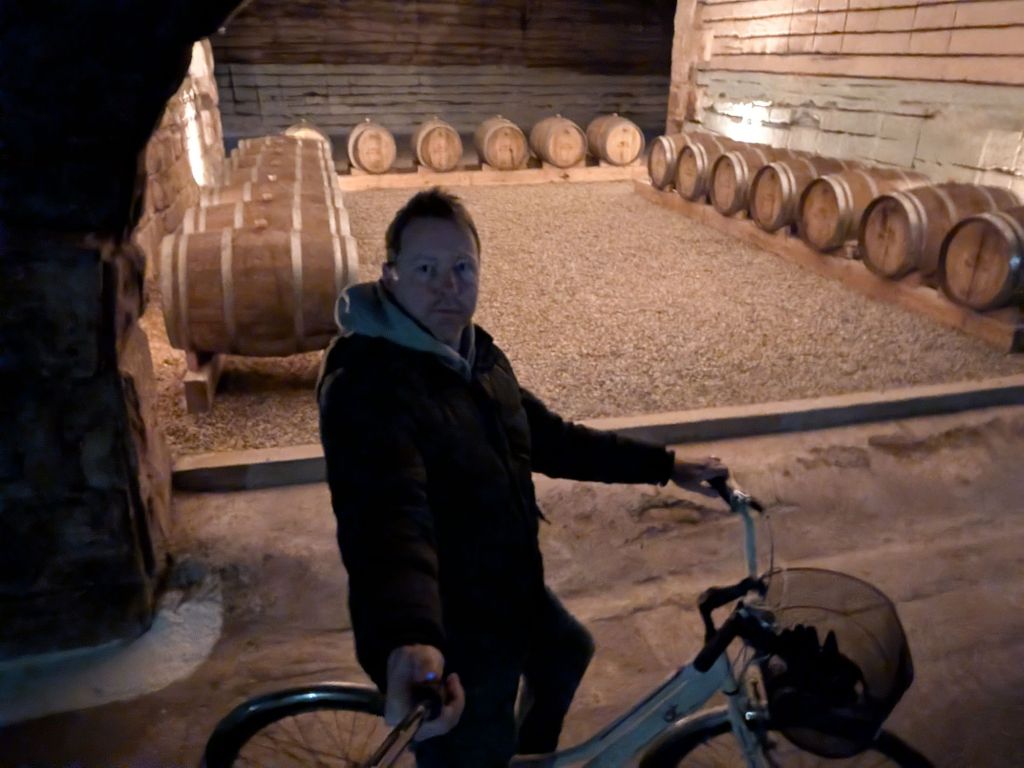
As a keen traveller who enjoys unique experiences, I couldn’t pass up the chance to explore this subterranean wine city. The tour cost £99.24 for one adult, covering transport, the biking experience, a guided tour, and a wine tasting.
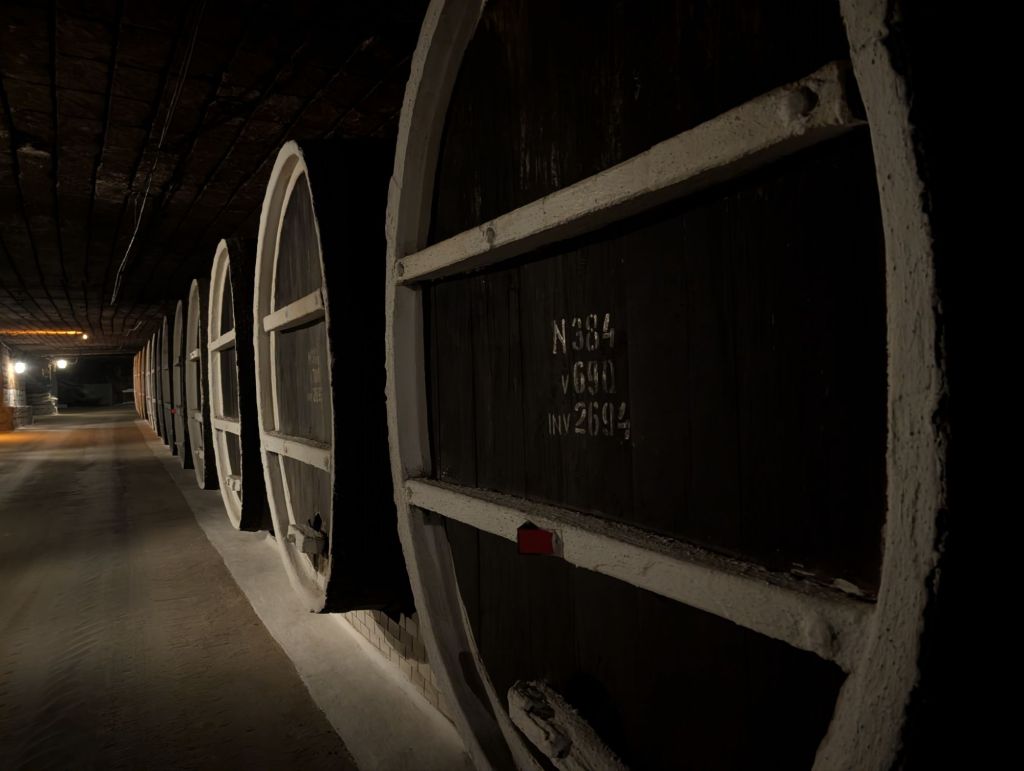
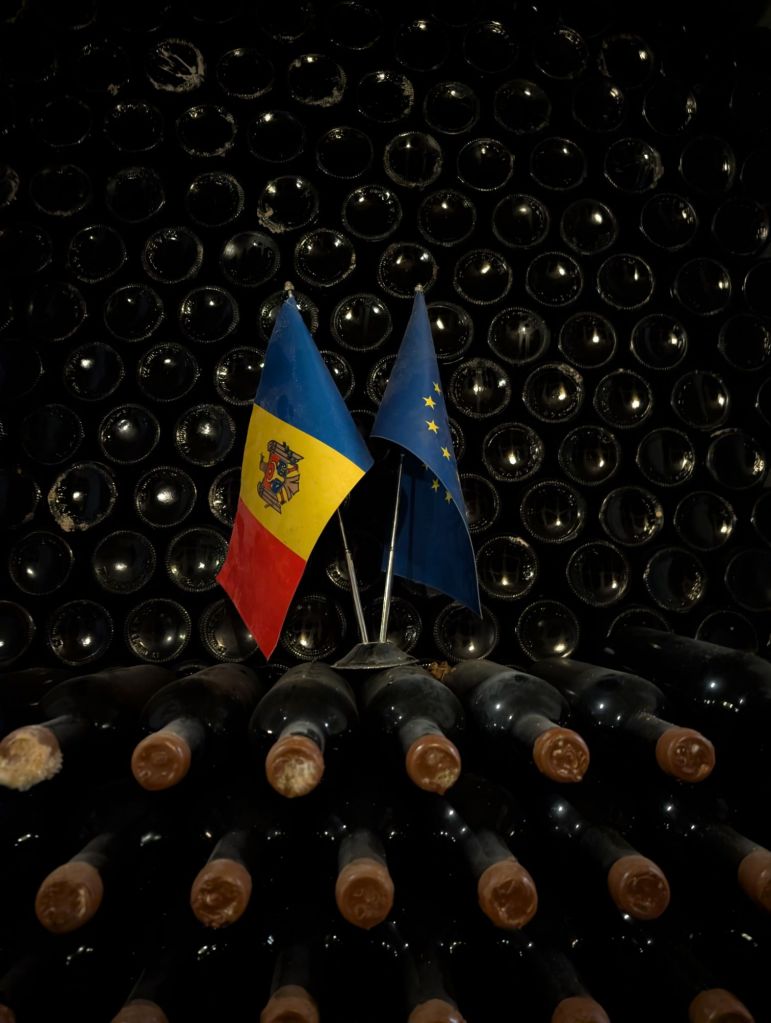
The trip began with a short ride from my hotel in Chișinău to the winery in Ialoveni District. Once there, we were equipped with bikes to pedal through the limestone tunnels deep underground. The corridors wind past thousands of barrels and racks of bottles, with arched ceilings stretching overhead.
The underground network is enormous — over 200km in total — though only a small section is used for visitor tours. Cycling through these cool, dimly lit passages was a unique and almost surreal experience, giving a sense of the scale and ambition of Moldova’s wine culture.
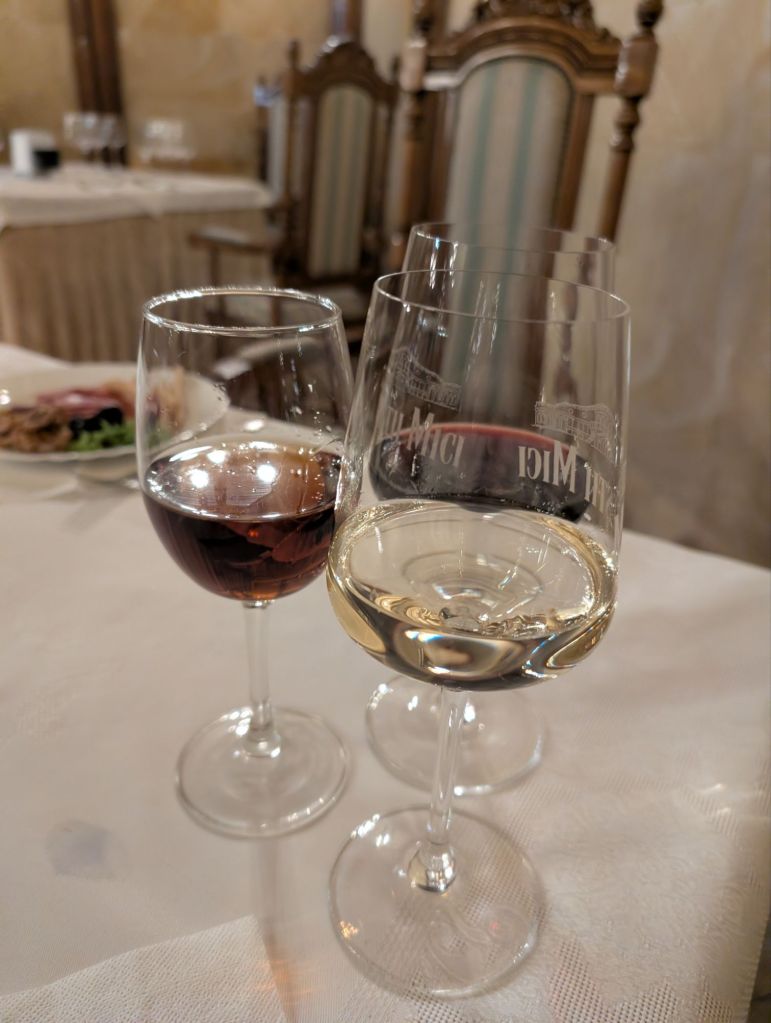
After the biking portion, the guided wine tasting was a highlight. We sampled several local wines, paired with traditional bites such as bruschetta and regional desserts. The small-group format made the experience feel personal and relaxed, allowing plenty of time to ask questions and enjoy the atmosphere.
The combination of transport, cycling, guided exploration, and wine tasting made this a highly memorable outing. While the price might be on the premium side for a half-day excursion, the experience of pedalling through the world’s largest wine cellars and tasting Moldova’s finest vintages made it entirely worthwhile.
For anyone looking to get beyond Chișinău’s city streets and enjoy an unusual adventure, this biking tour is an excellent choice and a perfect way to explore the country’s rich winemaking heritage.
Where to avoid
Chișinău is a reasonably safe city for tourists, and most visitors will find it welcoming and relaxed. Violent crime against foreigners is rare, and the city centre has a friendly, low-key atmosphere. However, travellers should still exercise a high degree of caution due to the volatile security environment linked to the ongoing conflict in neighbouring Ukraine, as well as a few local risks that are worth being aware of.
The most common problem tourists encounter in Chișinău is petty theft, particularly pickpocketing and phone and bag-snatching. These incidents are more likely to happen in crowded places such as the central market, on public transport, and at bus or train stations. It’s a good idea to keep your belongings zipped up, avoid displaying valuables, and stay alert when in busy areas.
At night, the city centre is generally safe and reasonably well-lit, but it’s best to avoid walking alone in poorly lit side streets or through quiet parks. If you’re heading home late, take a licensed taxi or use a ride-hailing app rather than walking. While most locals are friendly and helpful, a little extra caution goes a long way after dark.
Another thing to be mindful of is interaction with local police. There have been occasional reports of officers attempting to solicit bribes from tourists, particularly those unfamiliar with local procedures. To avoid any issues, carry a photocopy of your passport or other documents rather than the originals, and don’t hand over your actual passport unless absolutely necessary.
Because of Moldova’s proximity to Ukraine, the general security situation can change quickly, so it’s sensible to stay informed via official travel advisories before and during your trip. Travelling to the breakaway region of Transnistria, which lies beyond Moldovan government control, is strongly advised against by many foreign offices due to its unpredictable security environment.
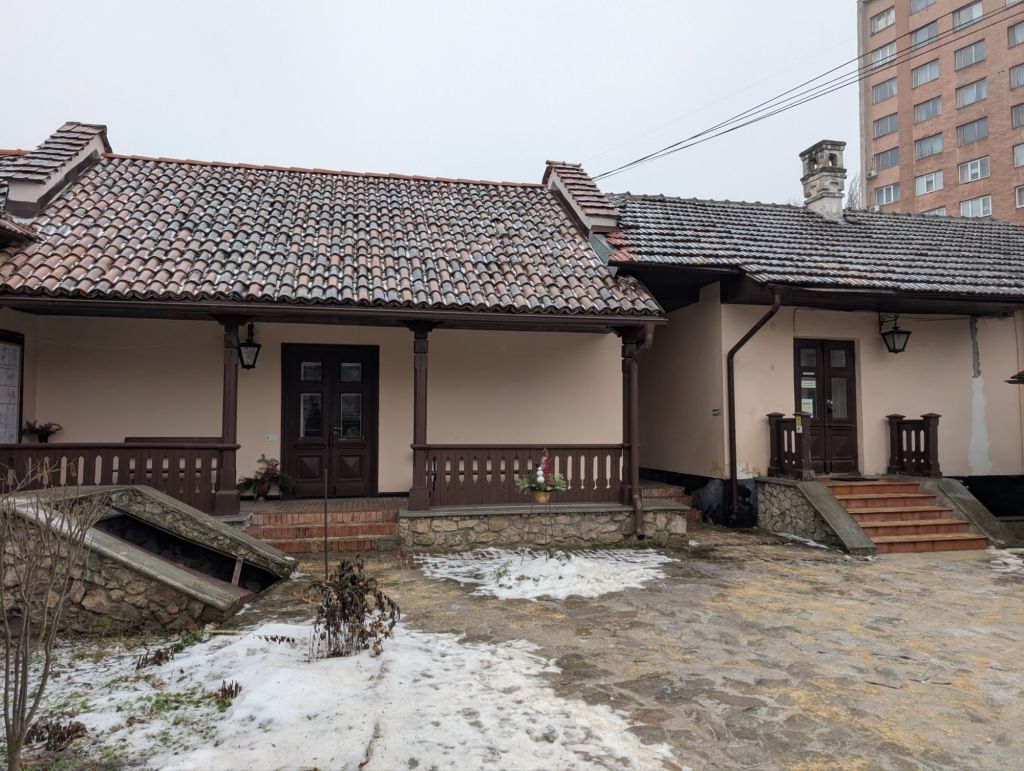
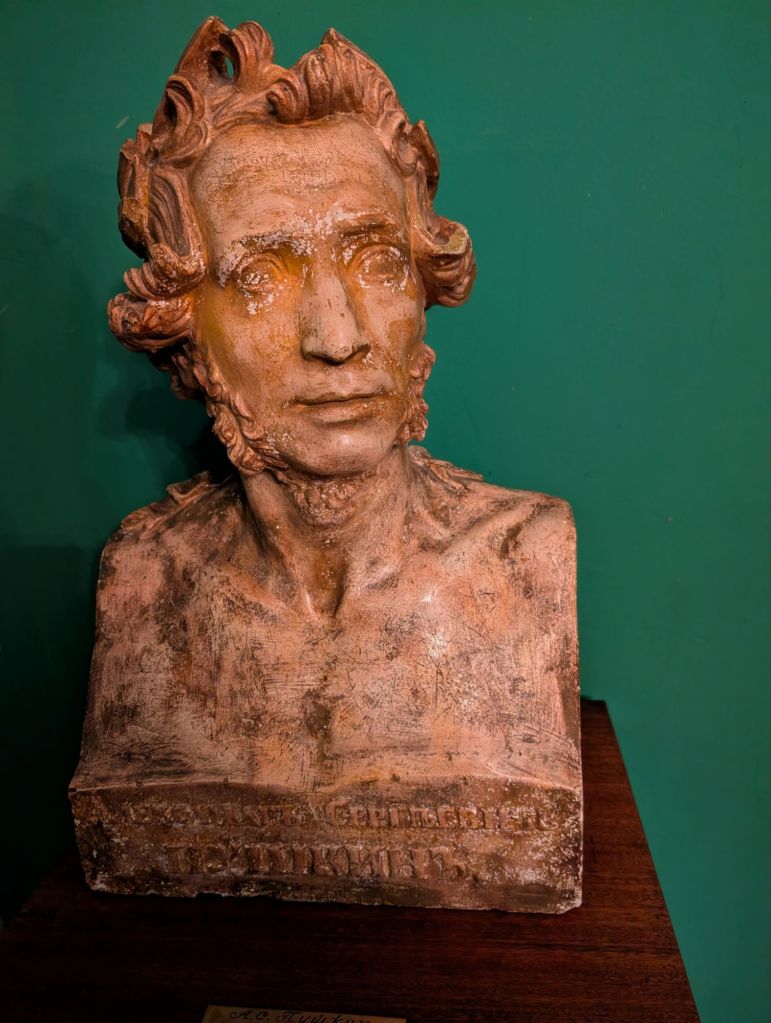
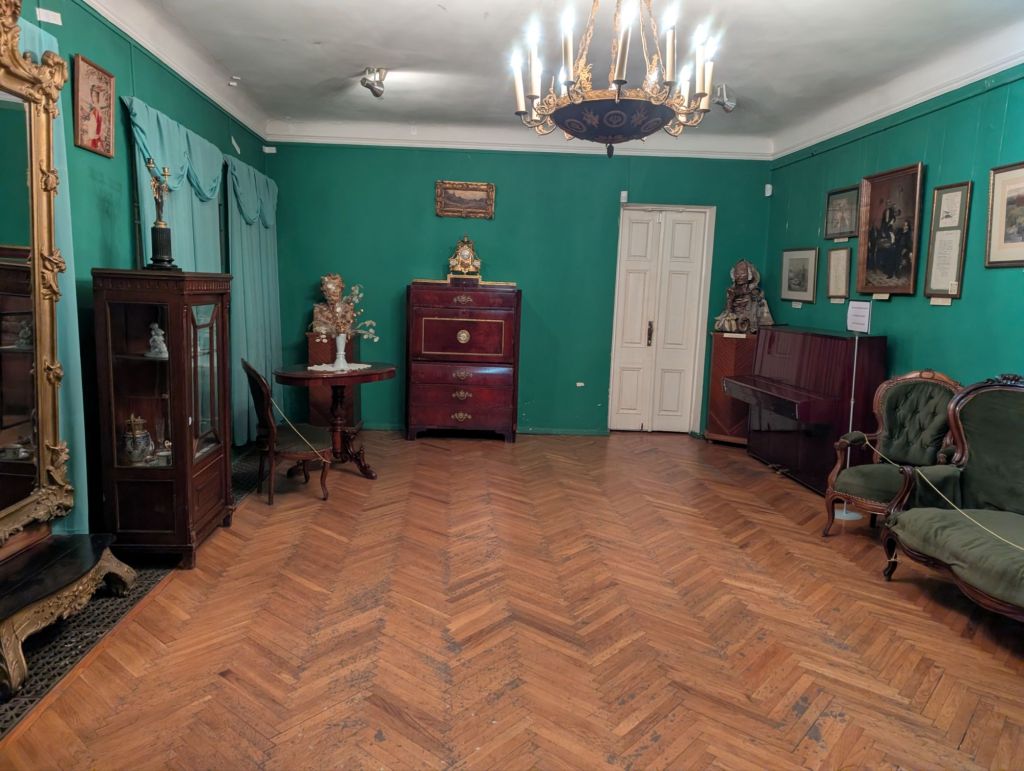
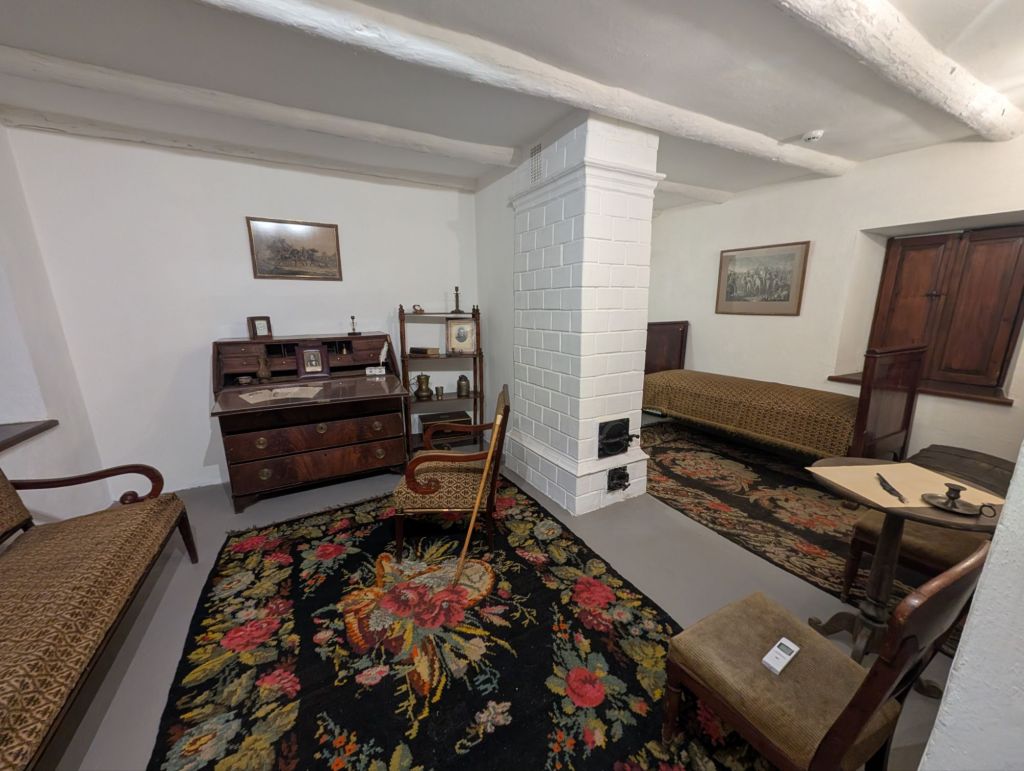
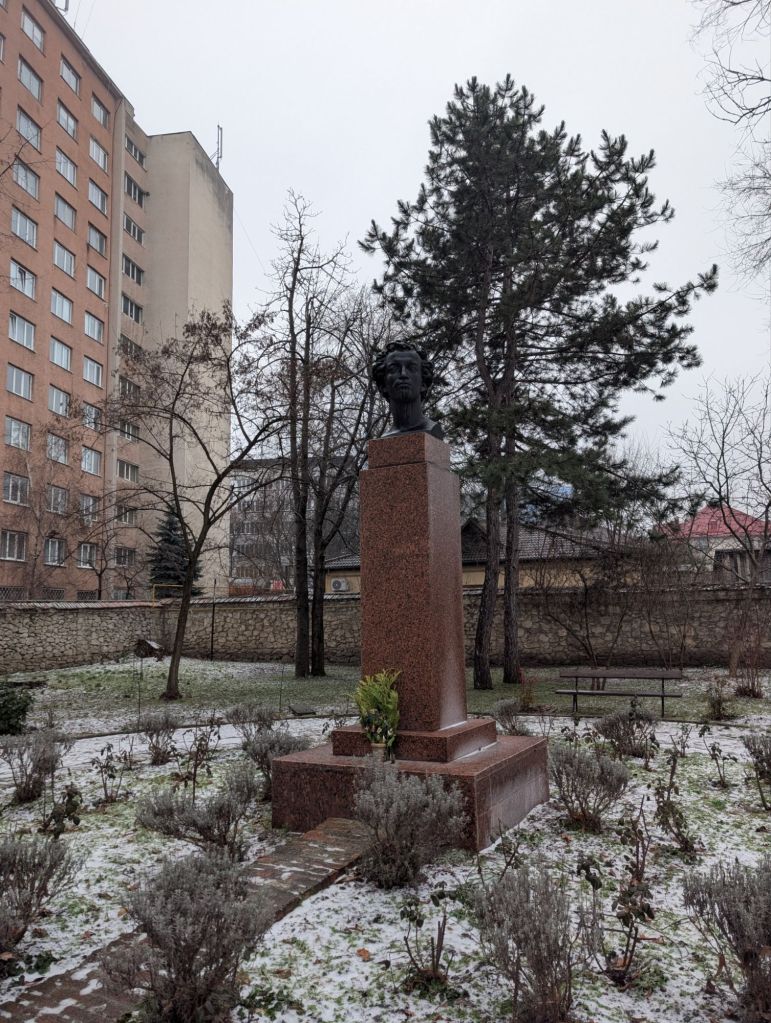
When it comes to attractions within Chișinău itself, there aren’t many places that warrant avoiding entirely, but if you’re short on time, one site you could comfortably skip is the Alexander Pushkin Museum, located at Strada Anton Pann 19.
The small museum occupies the house where the famous Russian poet lived during his exile in Bessarabia. Inside, you’ll find a handful of exhibits including old editions of his works, sculptures, and decorative pieces connected to his time in the city. Entry costs around 30 MDL (about £1.30), with a small extra charge if you want to take photos (although they didn’t make me pay any extra during my visit), and most visitors find that a visit takes no more than 15 to 30 minutes.
While it’s an interesting stop for those passionate about literature or Russian history, the museum is quite modest and the displays are mainly in Russian and Romanian. For the average traveller, it may feel underwhelming compared to the effort of getting there, and with so few major attractions in Chișinău, it’s worth spending your time exploring the city’s parks, cafés and markets instead.
In short, Chișinău is a city where common sense and a bit of vigilance will keep you perfectly safe. Avoid walking alone late at night, keep an eye on your belongings in busy places, and take care with local authorities. Beyond that, relax and enjoy Moldova’s understated capital — and if you’re pressed for time, you can give Pushkin’s old house a miss without regret.
Great places to eat
Chișinău has a surprisingly varied food scene, catering to every kind of traveller and budget.
The city’s culinary landscape reflects its blend of cultures — from traditional Moldovan dishes to European, Middle Eastern and American influences. During my visit, I discovered that Chișinău’s restaurants offer not just good food, but also an authentic window into the city’s lively and welcoming character.
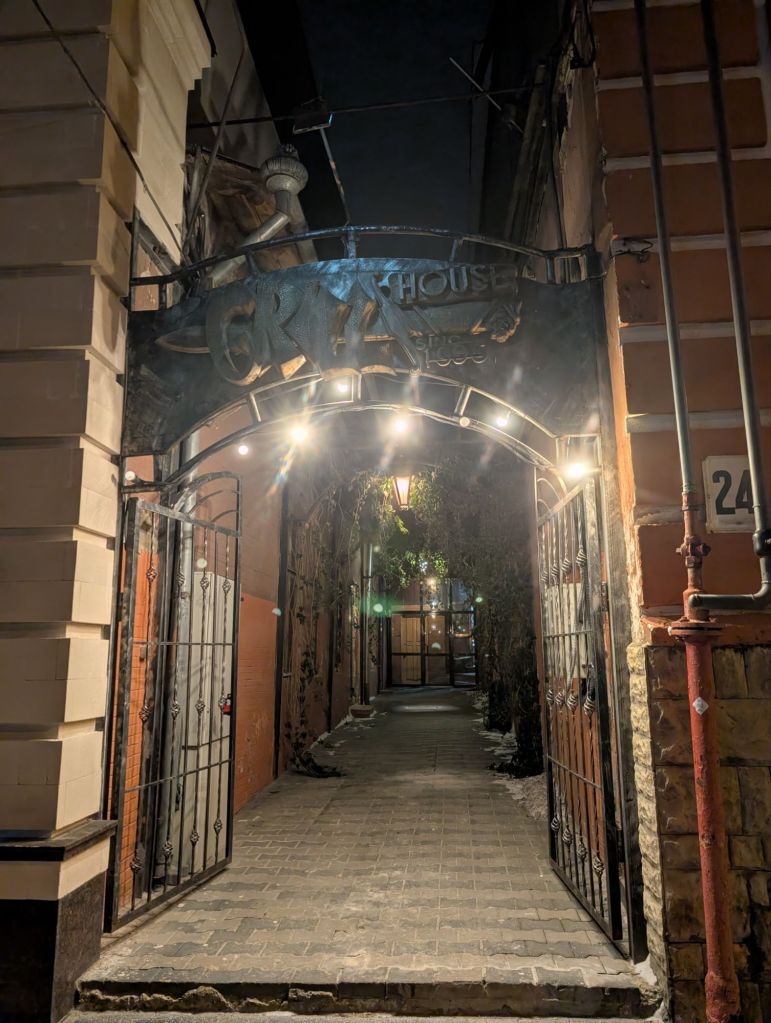
The first place I’ll highlight is Grill House, a modern and vibrant restaurant that’s become a firm favourite among locals and visitors alike. Conveniently located on Armeneasca St 24, just a short taxi ride from the city centre and an even shorter walk from my hotel.
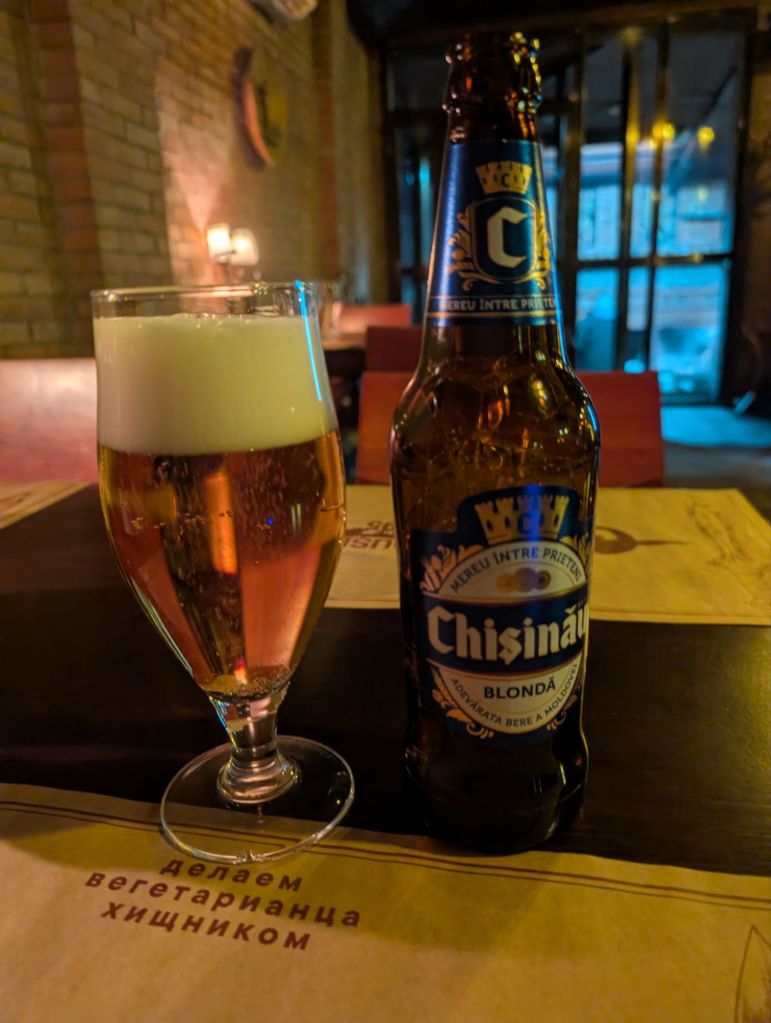
Grill House is easy to reach and makes a great stop for lunch or dinner after a day of exploring. The restaurant itself is stylish but relaxed, with exposed brick walls, soft lighting and an open kitchen that adds to the buzz of the dining experience.
As the name suggests, meat is the star of the show here. The menu focuses on grilled specialities — juicy steaks, ribs and kebabs — all cooked over an open flame. There’s also a good selection of burgers, pasta dishes, and salads for those seeking something lighter.
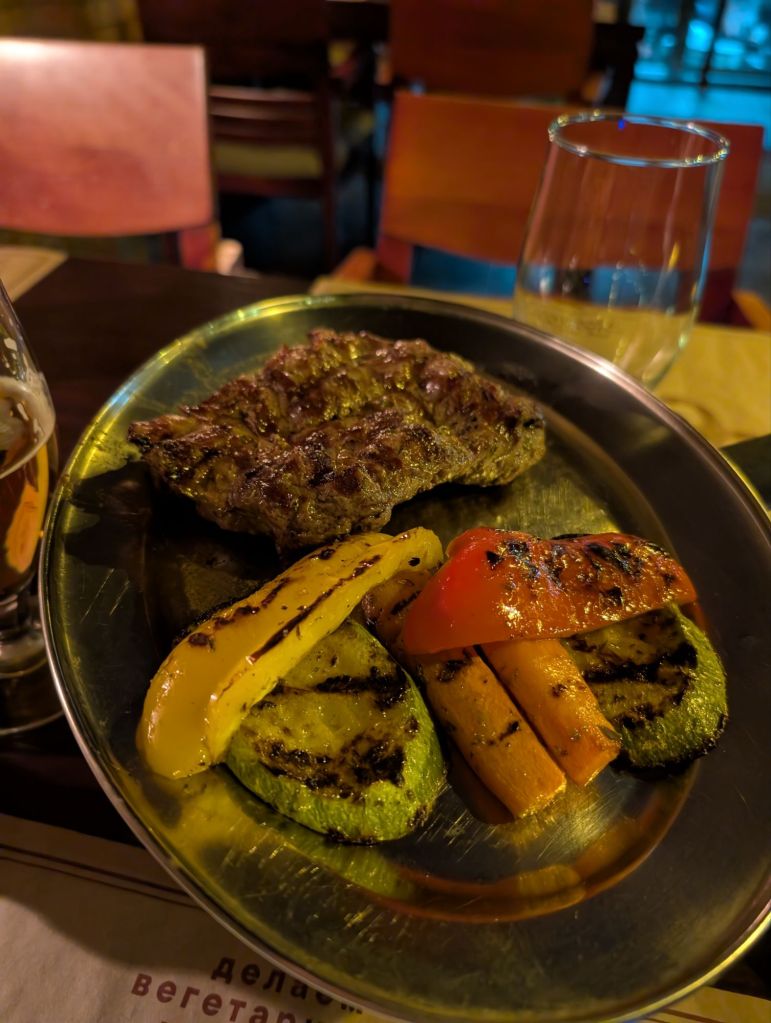
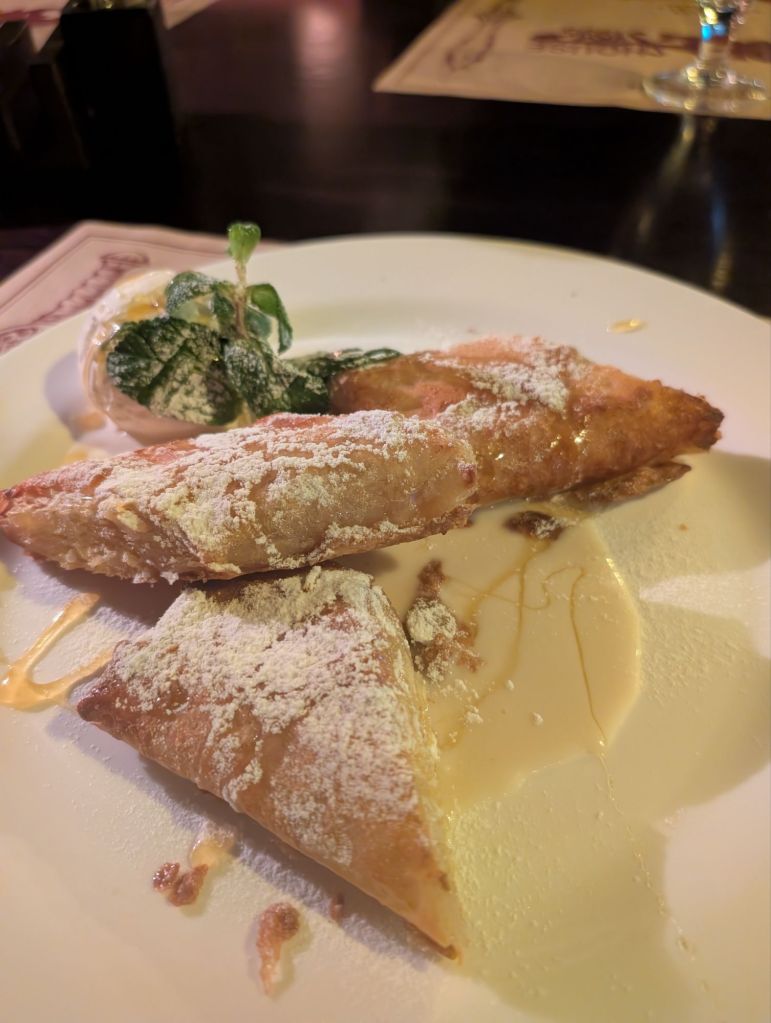
Great choices here are the tender beef steak with roasted vegetables, accompanied by a glass of local red wine from one of Moldova’s nearby vineyards. The flavours are excellent — smoky, rich, and perfectly balanced. For dessert, you can try their house-made cheesecake, which was creamy and not too sweet, a satisfying finish to the meal.
Prices are very reasonable by European standards. A main course typically costs between 250–450 MDL (around £11–£18), while a full three-course meal with wine will set you back around 600–800 MDL (around £25–£35) per person. The service is friendly and efficient making the whole experience smooth and enjoyable.
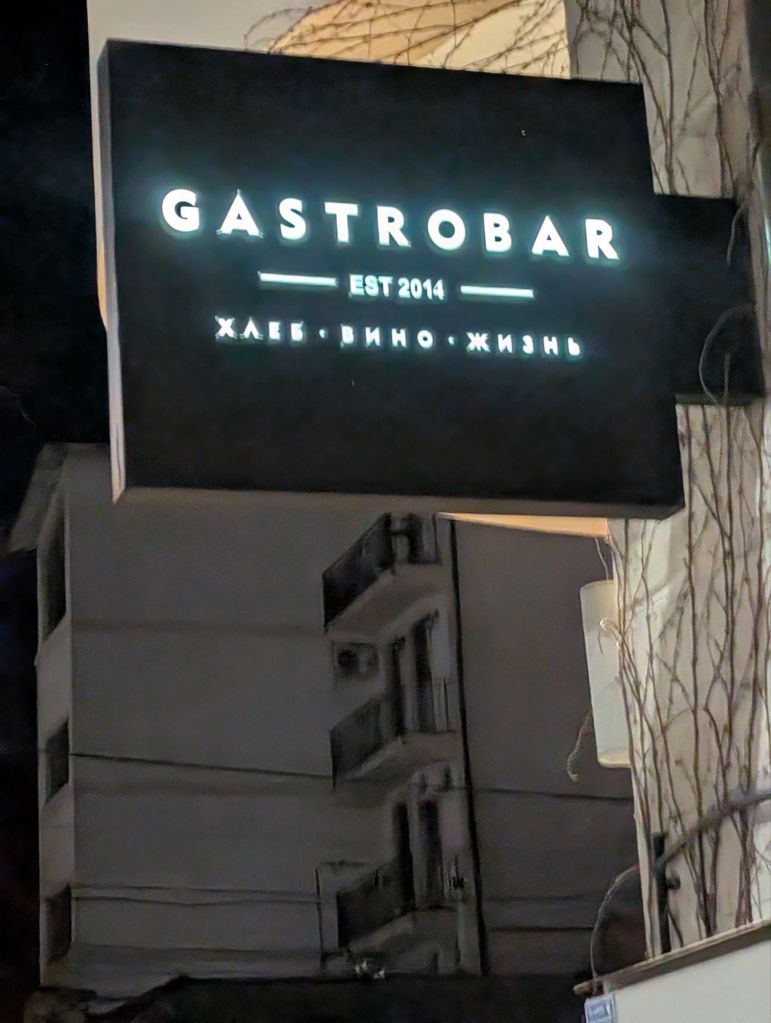
The next great place to try is Gastrobar.
Situated on Strada Alexandru Bernardazzi 66, Gastrobar is a stylish yet laid-back restaurant that’s earned a loyal following in Chișinău. The interior strikes a perfect balance between contemporary and cosy — think exposed brick, warm lighting and sleek wooden furniture — creating a relaxed atmosphere that feels just right for either a casual meal or a slightly more refined evening out.
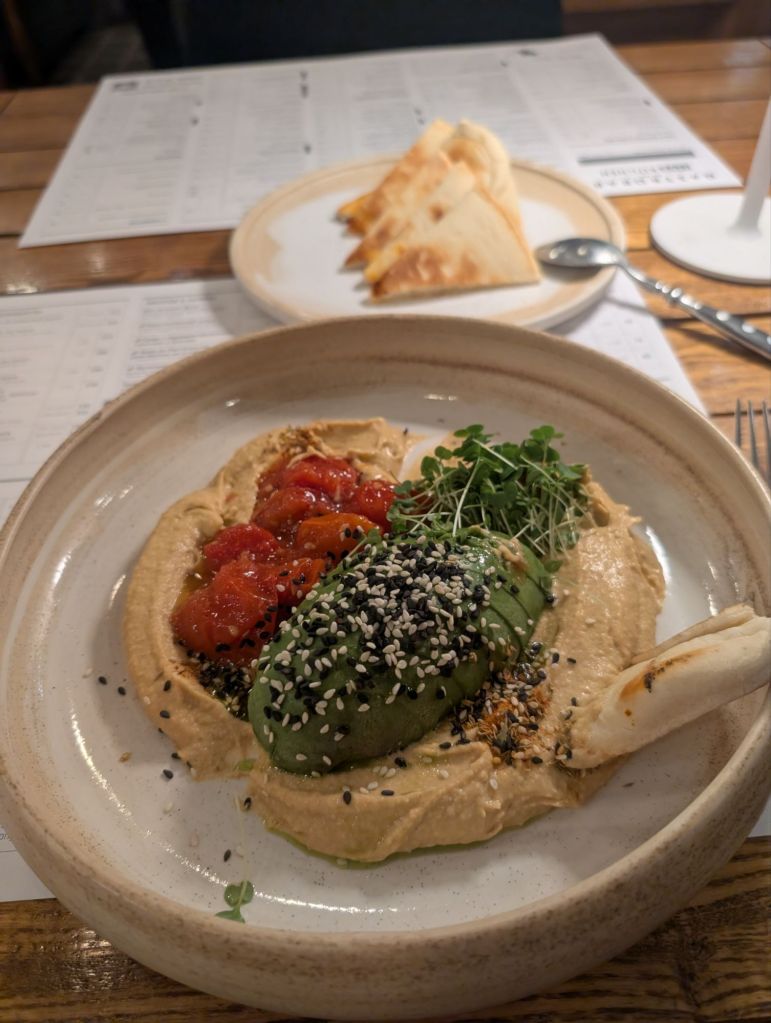
The menu blends Mediterranean and Middle Eastern influences, with a particular focus on dishes cooked over an open flame. Many items are prepared on a ceramic grill, which gives them that distinctive smoky flavour that defines the restaurant’s cooking style.
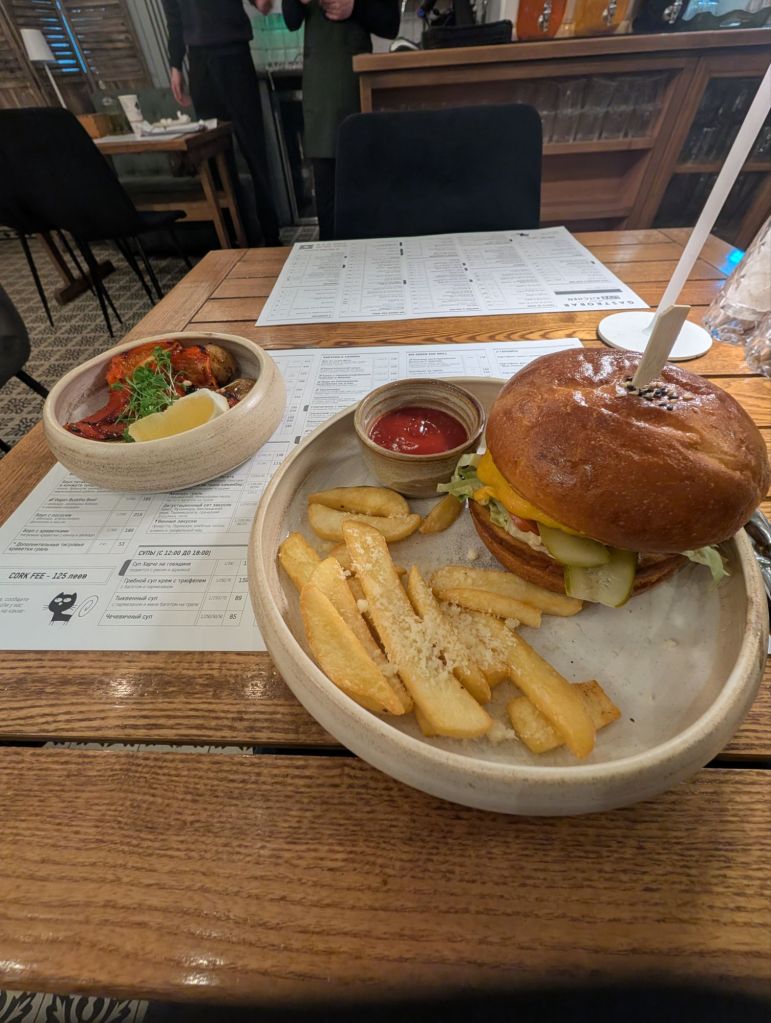
Expect to find grilled meats and fish, burgers, inventive vegetarian options, fresh salads, and vibrant small plates like baba ganoush and pumpkin chutney.
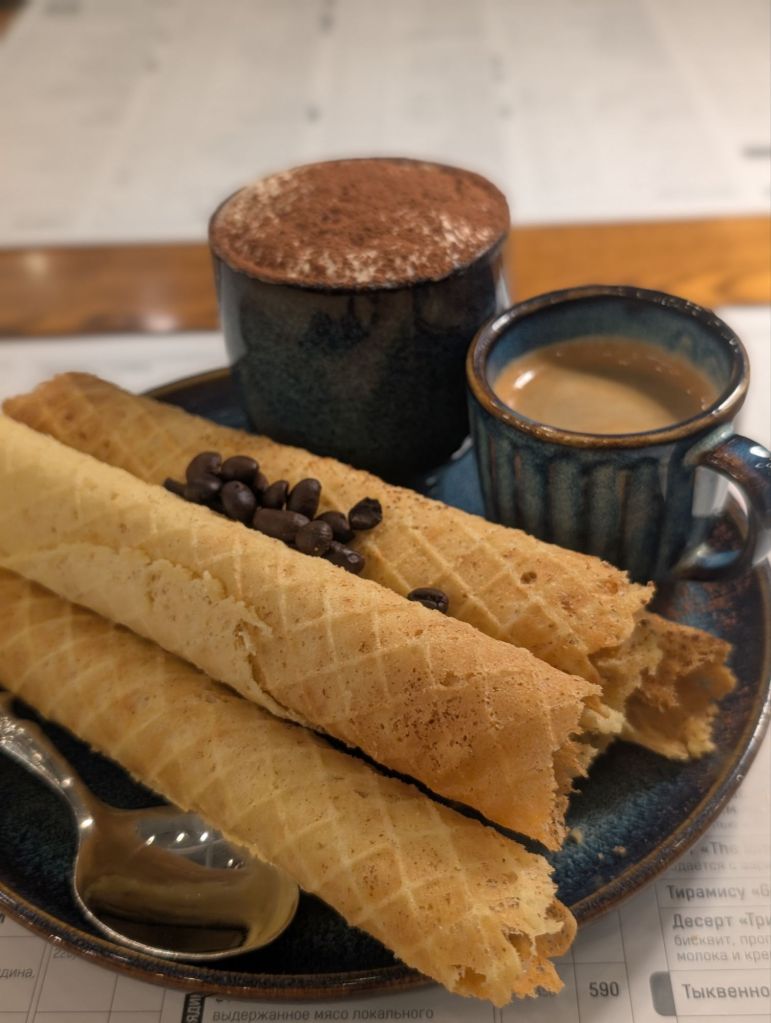
Prices are moderate, making Gastrobar a great value for the quality on offer. You can expect to pay around 200–400 MDL (about £9–£18) for a main course, with a full meal including a drink and perhaps a starter or dessert coming to about 300–500 MDL (around £13–£22) per person.
Gastrobar is an excellent choice for those looking for great food, good wine, and a relaxed, contemporary vibe in the heart of Chișinău.
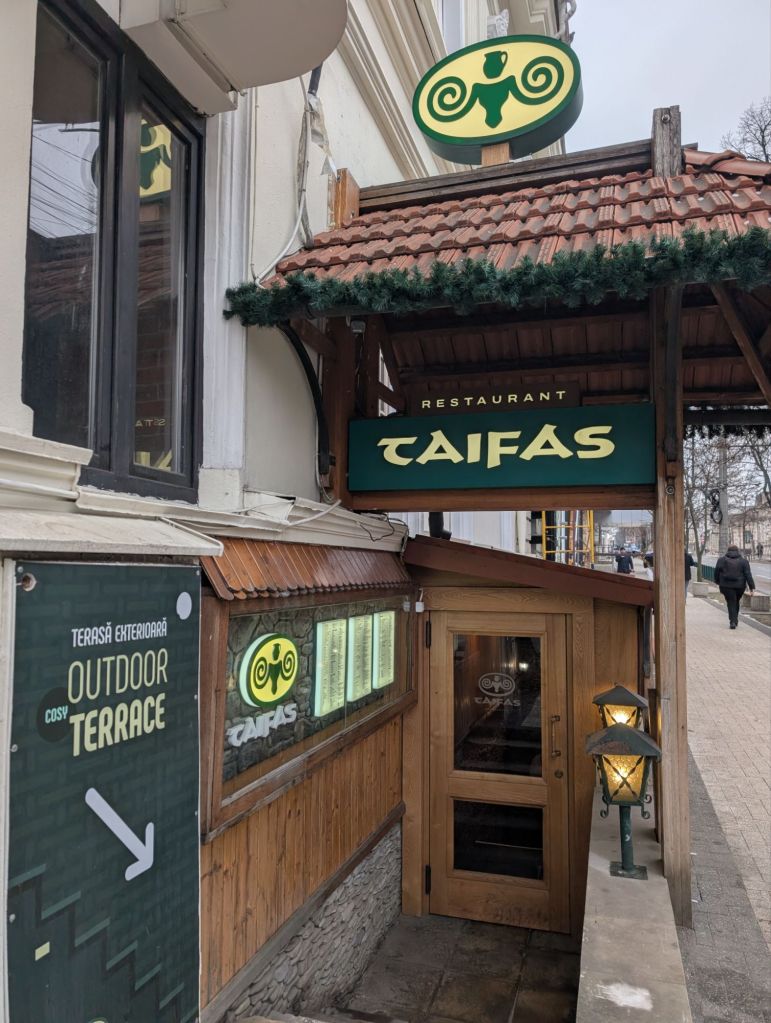
My final suggestion is to try Taifas.
Nestled on the corner of Pușkin, 20B and Strada Bucureşti 67 in Chișinău, Taifas invites you into an atmosphere rich with Moldovan tradition and hospitality. The restaurant occupies a charming old house that evokes the feel of a rural village home — rustic furniture, traditional embroidery, clay pottery and wood-panelled touches combine to create a warm, hearty setting that’s as much about character as cuisine.
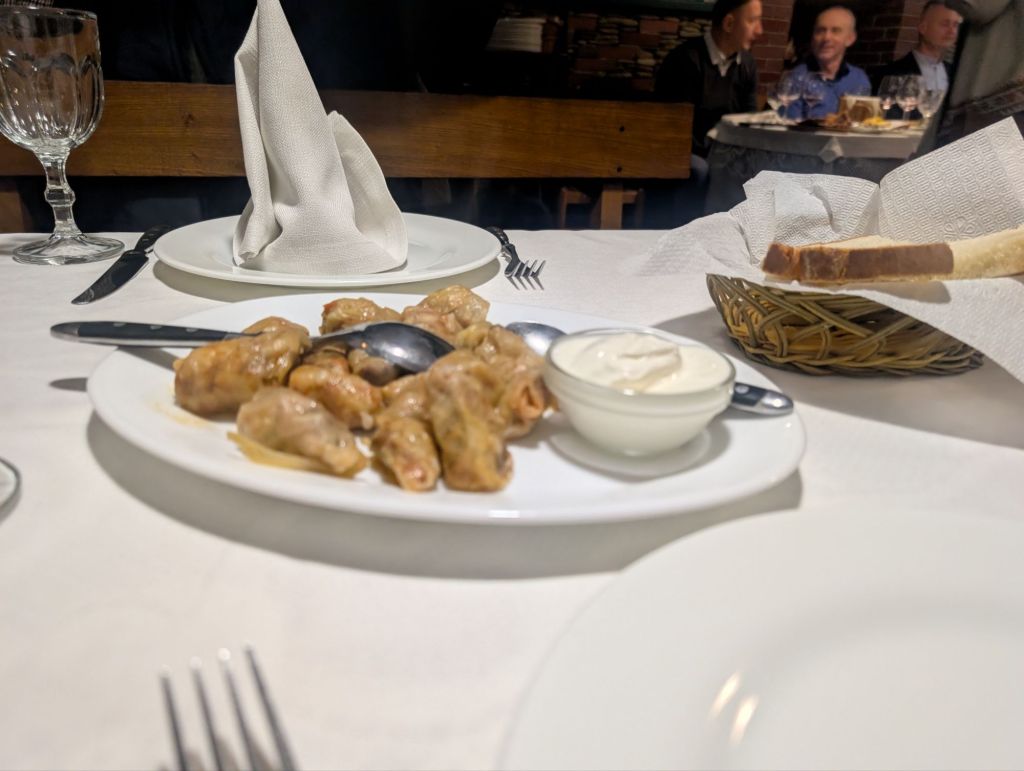
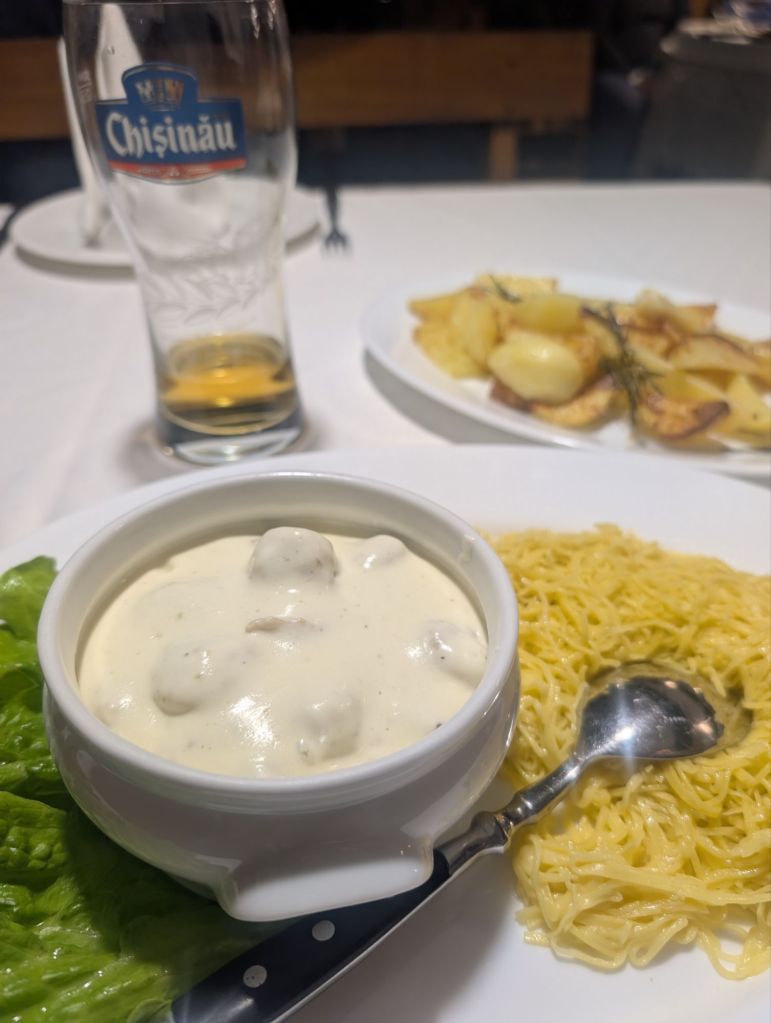
The focus here is authentic Moldovan fare served with a side of culture. Dishes to seek out include vine-leaf sarmale, polenta with sheep’s cheese, rich meat stews, and satisfying desserts just like grandma used to make. Many menus highlight the experience of sharing food and stories — and you’ll often find live folk music to enhance the mood.
In terms of cost, Taifas is slightly up-market compared to some casual cafés in the city but still very reasonable by Western standards. One overview suggests a price-range around 150–300 MDL per person (around £7–£14) for a comfortable meal.
Expect mains to start somewhere in the lower hundreds of MDL, with drinks or dessert adding on. The service was friendly and attentive, and English is generally understood — booking ahead is a good idea if you’re visiting during the evening when live music begins.
Useful links
National Museum of Ethnography and Natural History
Victory Memorial and Eternal Flame
Abandoned Observatory of the Pioneer Palace
Remember you can follow World Complete on Twitter, Instagram, Pintrest, Tumblr and Facebook send your comments and pictures from your travels using #WorldComplete and #Travel.
 World Complete
This is a very detailed guide, so many people will find it helpful. Also, I’m impressed by how much you managed to do during the cold season (including cycling!). And perhaps some great wine helped keep you warm 🙂
LikeLiked by 1 person
Hi Anna. Thanks for taking the time to read it. I always try and get loads done. But the cold did impact just how much time I was able to stay outside 😁
LikeLiked by 1 person
Really enjoyed your thoughtful take on Chișinău as a destination off Europe’s usual tourist radar! Your description of its understated charm makes it clear why travellers who dig deeper are rewarded with something special. Thanks for putting this underrated city on the map for more people to discover!
LikeLiked by 3 people
Thanks for the kind comments Han. Really appreciate you taking the time to read and comment ❤️
LikeLike