


Riga
Riga, the grand old lady of the Baltics, has long appealed with its mix of baroque grandeur, Art Nouveau elegance, and the everyday rhythm of a modern European capital.
It’s a city that has seen centuries of change – from its days as a medieval trading hub in the Hanseatic League, through periods of independence and occupation, to its place today as Latvia’s vibrant heart. That history is impossible to ignore.
Gothic church spires still dominate the skyline, pastel-coloured façades line the Old Town, while leafy boulevards showcase some of the best examples of Art Nouveau architecture in Europe.
Alongside these reminders of the past, Riga has the confidence of a city looking forward, with thriving food, arts and cultural scenes giving it a modern edge.
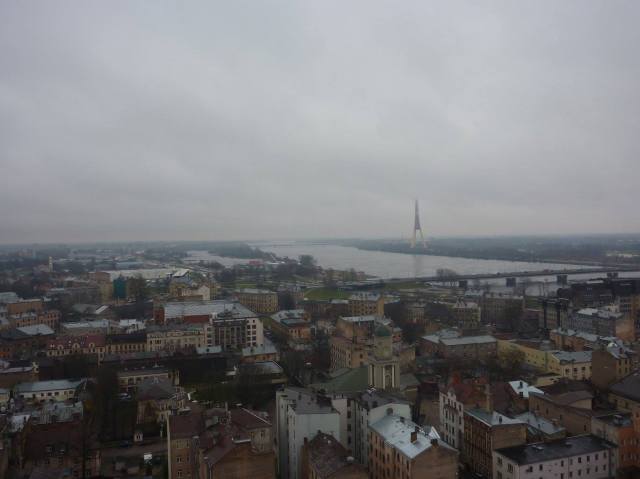
And so, what should first-time visitors to Riga know before venturing into the Latvian capital?
The first thing to consider when planning a trip to Riga is the weather, as it plays a big part in shaping what your days will look like. The city has a classic northern European climate, with cold winters, mild springs, warm but not overly hot summers, and a fair share of rain spread across the year.
Average highs sit around 22–24°C (72–75°F) in July and August, while in January and February they can dip to just above freezing, with lows closer to –5°C (23°F).
I visited Riga in December, when the city takes on a distinctly wintry feel. We did this on purpose so we could explore the Christmas markets in Riga as well as it being part of our plans to visit all the Baltic states of Estonia, Lithuania and Latvia.
Daytime temperatures hovered around 1 °C (34 °F) and dropped just below freezing at night, to about –1 °C (30 °F). Snow and sleet weren’t constant, but there was enough to coat rooftops and slick the cobbles, giving the Old Town a crisp, muted atmosphere. Short daylight hours meant planning was important, as much of the exploring needed to be done before darkness fell in the late afternoon.
For anyone travelling at that time of year, packing sensibly is essential: a warm coat, gloves, a scarf, and shoes with good grip will make a big difference. The cold does add its own charm, though. There’s something about moving between frosty squares, steaming cups of coffee in cosy cafés, and the glow of the Christmas market that makes Riga in December feel both inviting and memorable.
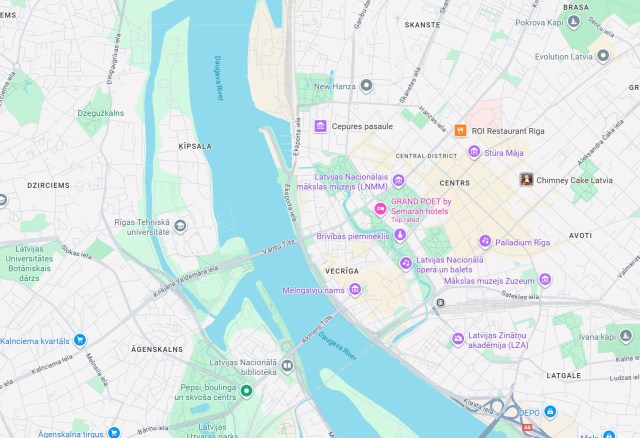
The next thing to get comfortable with before heading to Riga is the currency. Latvia uses the Euro (€) – a change made a decade ago when it replaced the lats in January 2014. As for the exchange rate, at the time of writing, £1 GBP buys you about €1.16.
When it comes to paying, credit and debit cards (Visa and Mastercard in particular) are widely accepted across Riga – restaurants, museums, hotels, and most shops will take them. In more local or rural spots, or at market stalls, cash may still be king, so it’s sensible to carry a few euros on you. A smart tip – avoid the temptation to pay in pounds if given the choice at a card terminal (a practice called dynamic currency conversion). Always opt to pay in euros – your bank will give you a much better rate.
Also, tipping in Latvia is polite but not rigid. In restaurants, cafés, and bars, around 10% in cash is the norm if you’ve enjoyed things. Rounding-up the bill by a euro or two is fine too, especially when paying in cash – and the staff will appreciate it more than a card tip. For taxi drivers, rounding-up is perfectly acceptable. For porters or hotel housekeeping, leave a Euro or two- it’s thoughtful, even though it’s not expected.
One of the easier parts of travelling to Riga is the lack of any real time adjustment. Latvia sits just two hours ahead of the UK (GMT+2, or GMT+3 during daylight saving time), so there’s no jet lag to contend with. It means you can land, drop your bags, and head straight out to explore without worrying about your body clock lagging behind – a welcome bonus, especially on a shorter trip.
The next thing to consider is how to keep your devices charged. In Latvia, power plugs and sockets (outlets) of type F are used. The standard voltage is 230 V at a frequency of 50 Hz and you will need a power plug travel adapter if your appliances use a different plug type.
Although Latvia may feel a little unfamiliar at first, language is rarely a barrier for visitors. The national language is Latvian, a Baltic language that shares some features with Lithuanian but is distinct from the Slavic and Germanic languages spoken in neighbouring countries.
Russian is also widely spoken, particularly among older generations, reflecting Latvia’s history, while English is increasingly common, especially in Riga where tourism and younger Latvians mean you’ll usually get by without difficulty.
Still, learning a few local phrases is always appreciated. “Hello” in Latvian is Sveiki, while “goodbye” is Uz redzēšanos. To be polite, “please” is Lūdzu, and “thank you” is Paldies – a simple word that will earn you plenty of smiles.
One final thing to think about is how you’ll stay connected during your time in Latvia. While roaming within the EU is straightforward for most European travellers, visitors from the UK may find charges creeping back in, and picking up a local SIM card isn’t always the most convenient option on a short trip. That’s why I recommend considering an eSIM before you go – it makes staying online simple and reliable throughout your stay.
Services like Airalo make the process easy. You download the app, purchase a data plan for Latvia (or the wider Baltic region), and activate the eSIM on your phone before you travel. The moment you arrive, your phone connects to a local network without any fuss, saving you from scrambling for wi-fi or juggling SIM cards. It’s a hassle-free way to keep your maps running, check the forecast, or share snapshots of Riga’s spires and markets while you’re on the move.
With these essentials in mind, I was ready to set out on my journey – one that would guide me through unfamiliar streets, introduce me to new ways of experiencing a city in winter, and immerse me in the rich history and everyday charm of Riga.
Getting there
Riga had been on my travel radar for years – a Baltic gem with cobbled streets, pastel façades and a skyline punctuated by elegant spires. It’s a city that blends history and creativity in equal measure, with art nouveau architecture, cosy cafés and a thriving cultural scene that make it one of Eastern Europe’s most underrated city breaks.
But before wandering through the Old Town, I had to get there – and thankfully, reaching Latvia’s capital from the UK is far more straightforward than you might think.
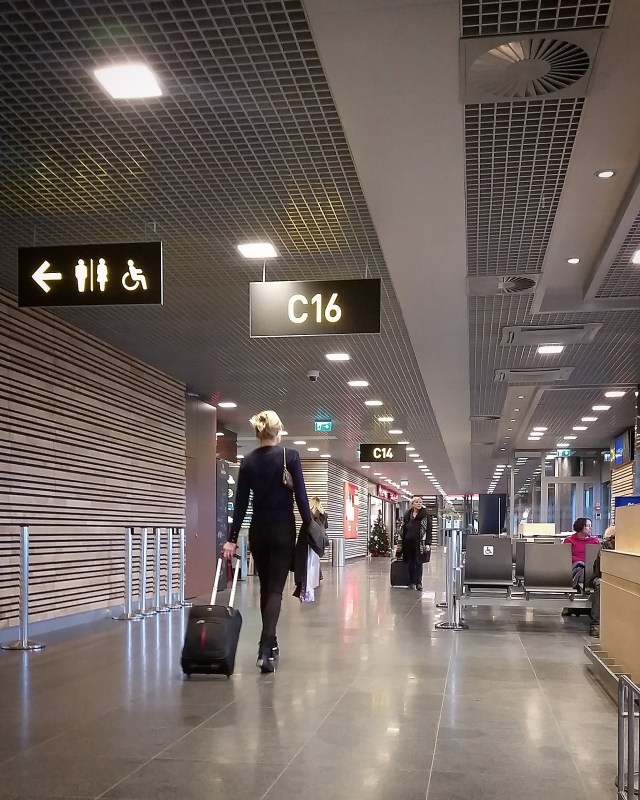
Riga International Airport (RIX) is the main gateway to Latvia and the largest air hub in the Baltic states, welcoming around 5.6 million passengers a year. It sits about 10km southwest of Riga’s city centre, roughly a 20-minute drive or taxi ride away, making it incredibly convenient for travellers eager to hit the ground running.
The airport is modern and efficient, with a calm atmosphere that reflects Riga’s laid-back charm, and it’s well connected to several cities across the UK. At the time of writing, you can fly to Riga from London Gatwick, London Stansted, London Luton, Manchester, Liverpool, Leeds Bradford, Edinburgh, and Bristol, with airlines such as Ryanair, Wizz Air, airBaltic and Jet2 offering direct services.
For my trip, I chose to fly from London Stansted with Ryanair, which offered both a convenient schedule and an unbeatable fare. My return ticket came to £111 per person – a great deal for a European city break.
The direct flight from Stansted to Riga takes around two hours and 35 minutes, whisking you from the bustle of Essex to the edge of the Daugava River in no time. As expected with Ryanair, the service was no-frills but punctual, and check-in was quick and uncomplicated.
I boarded early in the morning, watched the London suburbs fade beneath a blanket of cloud, and just over two hours later found myself landing in Latvia, greeted by crisp Baltic air and a surprisingly efficient passport queue.
From the airport, it’s easy to reach the city – local buses and taxis run frequently, and you can even take a Bolt ride straight to your accommodation for a reasonable fare. Stepping out into Riga, with its mix of medieval charm and modern energy, I couldn’t help but feel that the journey had been refreshingly smooth. For a short-haul hop that delivers so much culture, character and warmth, a flight to Riga is hard to beat – and at just over a hundred pounds return, it’s an easy choice for a European escape.
Where to stay
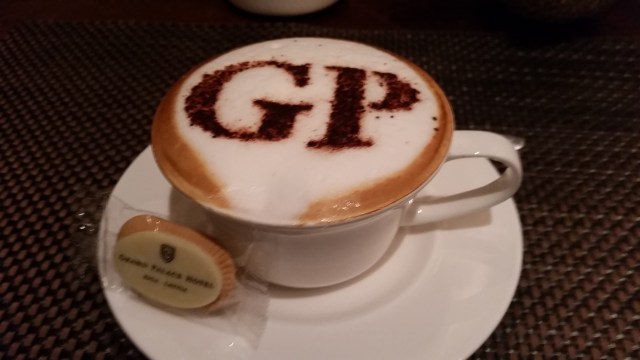
Riga is packed with charming hotels, but for our stay in the Latvian capital we checked into the Grand Palace Hotel Riga, a five-star property in the heart of the Old Town at Pils iela 12, Centra rajons, Rīga, LV-1050, Latvia. Just a short stroll from the river and the city’s main attractions, it’s an ideal base for exploring this compact and picturesque capital.
Technically, we paid €107 (about £93) for a night here, but in truth, our stay was a little sweeter than that — we were fortunate to have two nights complimentary, following a complaint from a previous year when a sister hotel in Tallinn failed to honour a booking. So, three nights in total, with only one paid night – a small redemption for a previous travel hiccup!
From the moment we arrived, service was polished and professional, the kind you’d expect from a member of the Schlössle Hotel Group. Our Deluxe King Room was spacious, elegantly decorated and exceptionally comfortable, offering everything from fast Wi-Fi to a well-stocked minibar. The bathroom was equally impressive, with plush towels and high-end toiletries.
Breakfast was served in the hotel’s restaurant, an Art Deco-inspired dining room that felt more like a private club than a hotel restaurant. The food didn’t disappoint: a generous spread of hot and cold options, from eggs to fresh pastries and fruit, all beautifully presented and replenished regularly.
The hotel’s location couldn’t be better — close to the Daugava River, Riga Castle and Dome Square, with cobbled streets and cosy cafés right on the doorstep. After a day exploring the city’s mix of Art Nouveau architecture and festive Christmas markets, returning to the warmth and calm of the Grand Palace felt like a treat.
Overall, the Grand Palace Hotel Riga offers a refined and comfortable stay in a superb location, with friendly service and a touch of old-world charm. It’s not cheap, but for those looking for luxury in Latvia’s capital, it’s well worth the splurge — or in our case, even better when two nights are free!

Getting around
During our trip to Riga, we landed at Riga International Airport, which sits just under 10km from the city centre. Getting into town is straightforward, and you have a few options depending on how you like to travel.
The most convenient choice is a taxi, which takes around 20 to 30 minutes to reach the centre and costs roughly €15 to 20 (about £13 to 17). If you prefer public transport, the airport bus (No. 22) runs regularly and drops passengers near the Old Town in about half an hour, with tickets costing just a few euros.
Once you’re in Riga itself, the city is best explored on foot.
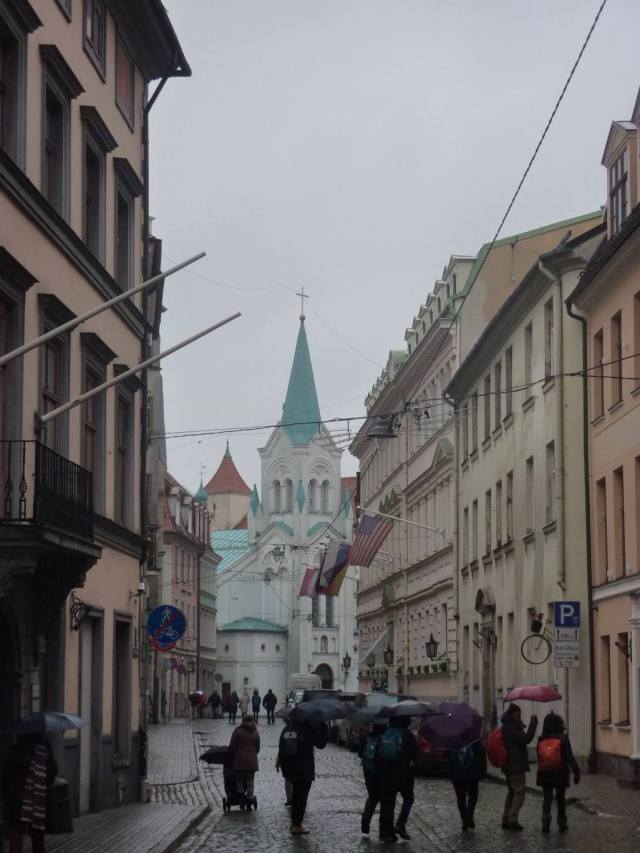
The Old Town is compact and pedestrian-friendly, with cobbled streets, colourful façades, and a wealth of sights packed into a small area. Walking allows you to appreciate the details you’d miss from a taxi window.
Riga’s public transport system is reliable and inexpensive, with buses, trams, and trolleybuses connecting the Old Town to other districts. Tickets can be bought at kiosks, on trams, or via mobile apps, and most journeys cost just a few euros.
While you rarely need them for central sightseeing, they’re useful for visiting areas like the Art Nouveau district, the Central Market, or Riga’s parks along the Daugava. For those wanting a bit more flexibility, bikes and e-scooters are widely available to rent, offering a fun way to cover longer distances while still feeling the city’s pulse.
Top sites
A great way to start a trip to Riga is with a visit to the Latvian Academy of Sciences Observation deck. Located at Akadēmijas laukums 1, just across the river from the Central Market and within easy walking distance of the Old Town, this striking Soviet-era landmark is one of the city’s most recognisable buildings.
Often nicknamed “Stalin’s birthday cake” because of its grand, tiered design, it offers not only a glimpse into Riga’s history but also some of the best panoramic views in the city.
Tickets cost €8 (around £7) per adult, and children under 12 can visit for free. After purchasing our tickets at reception, we took the lift to the 15th floor before climbing a short set of stairs to reach the open-air terrace on the 17th floor, roughly 65m high. The climb was quick and easy, and the moment we stepped outside, we were greeted with sweeping 360-degree views of Riga in all its glory.
From the top, we could see the red rooftops and slender church spires of the Old Town, the Central Market’s distinctive pavilions, and the Daugava River glistening as it curved through the city. The modern silhouette of the National Library stood proudly on the opposite bank, and on a clear day, the view stretches far beyond the city centre. It’s the kind of place where you naturally slow down, take a deep breath, and appreciate Riga’s unique blend of old-world charm and modern development.
The open-air terrace can get a little breezy, so a jacket is recommended. There’s no time limit on your visit, so we stayed for a while, taking in the view from every angle before heading back down.


As readers of this blog will know, I’m a big fan of escape rooms — so when we found ourselves in Riga, it was only natural that we booked a session at Escape Room Riga, located at Lāčplēša iela 43/45. We opted for the Old Captain’s Cabin experience, which promised a nautical twist on the classic escape room format, full of mystery, codes and hidden clues.
We booked in advance for two players to make sure we could secure our preferred time slot. The price was €25 per person (around £21.50), which felt very reasonable for an hour-long adventure that was both challenging and great fun.
The venue was easy to find, just a short walk from the city centre, and we received a warm welcome from the team on arrival. After a quick briefing, we were led to our room — a detailed ship’s cabin, complete with weathered wood, nautical instruments and a few atmospheric creaks that really set the scene.
The game itself was cleverly designed, with each puzzle naturally leading to the next. It required strong teamwork and communication to stay on course, and we loved the mix of logic-based challenges and hands-on tasks.
What really stood out was how smoothly the experience ran. The staff were friendly and gave clear instructions before the game started, and they were available via intercom if we got really stuck. The puzzles struck a good balance between challenging and achievable, keeping the game exciting right up to the final moments. When we finally escaped (just in time!), we couldn’t help but feel a little triumphant.
Visiting Riga is a delight for any traveller, and one of the best ways to get to know the city is by taking the Old Riga Free Walking Tour run by Riga Free Tours. The tour begins at the entrance to St Peter’s Church, right in the heart of the Old Town and runs several times a day, usually around 10am, 12pm, and 3pm, and lasts about one hour and forty-five minutes.
While the tour is free to join, it operates on a tip-based system, so at the end you can decide what the experience was worth. A typical tip might be €10 to (around £11.35 per person), depending on the size of the group and how much you enjoyed the guide’s storytelling.
The walk covers many of Riga’s key historic landmarks. You’ll start at St Peter’s Church and explore Town Hall Square, the House of the Blackheads, Dome Square with its impressive cathedral, the Powder Tower, and the Swedish Gate. Along the way, the guide will point out hidden corners of the Old Town that are easy to miss on a self-guided walk, offering fascinating insights into the city’s medieval past, its architecture, and how the area functions today for both locals and visitors.
It’s important to arrive a few minutes early, wear comfortable shoes, and dress for the weather, as the tour stays outdoors and the cobbled streets can be uneven. The tour is relaxed and interactive, giving you the chance to ask questions and really get a feel for the city.
By the end of the walk, you’ll not only have seen many of Riga’s most famous sights, but also gained a sense of the stories, history, and atmosphere that make the Old Town such a special place to explore.


One of the most memorable days of our trip to Latvia was the tour we took with Eat Riga, a small local company that offers a brilliant range of alternative tours around the city and beyond.
They’re known for their street art walks, Soviet history excursions and food experiences that give visitors a real taste of everyday life in Riga. When we booked, Eat Riga also ran a special combo tour to Skrunda and Kuldīga – an itinerary that’s no longer available today.
We arranged the trip directly with the team over email, who confirmed a price of €80 per person (around £68) including hotel pick-up and drop-off, a private guide, and all transport for the day. Our guide collected us from the Grand Palace Hotel in Riga at 9am for the journey west through the Latvian countryside.
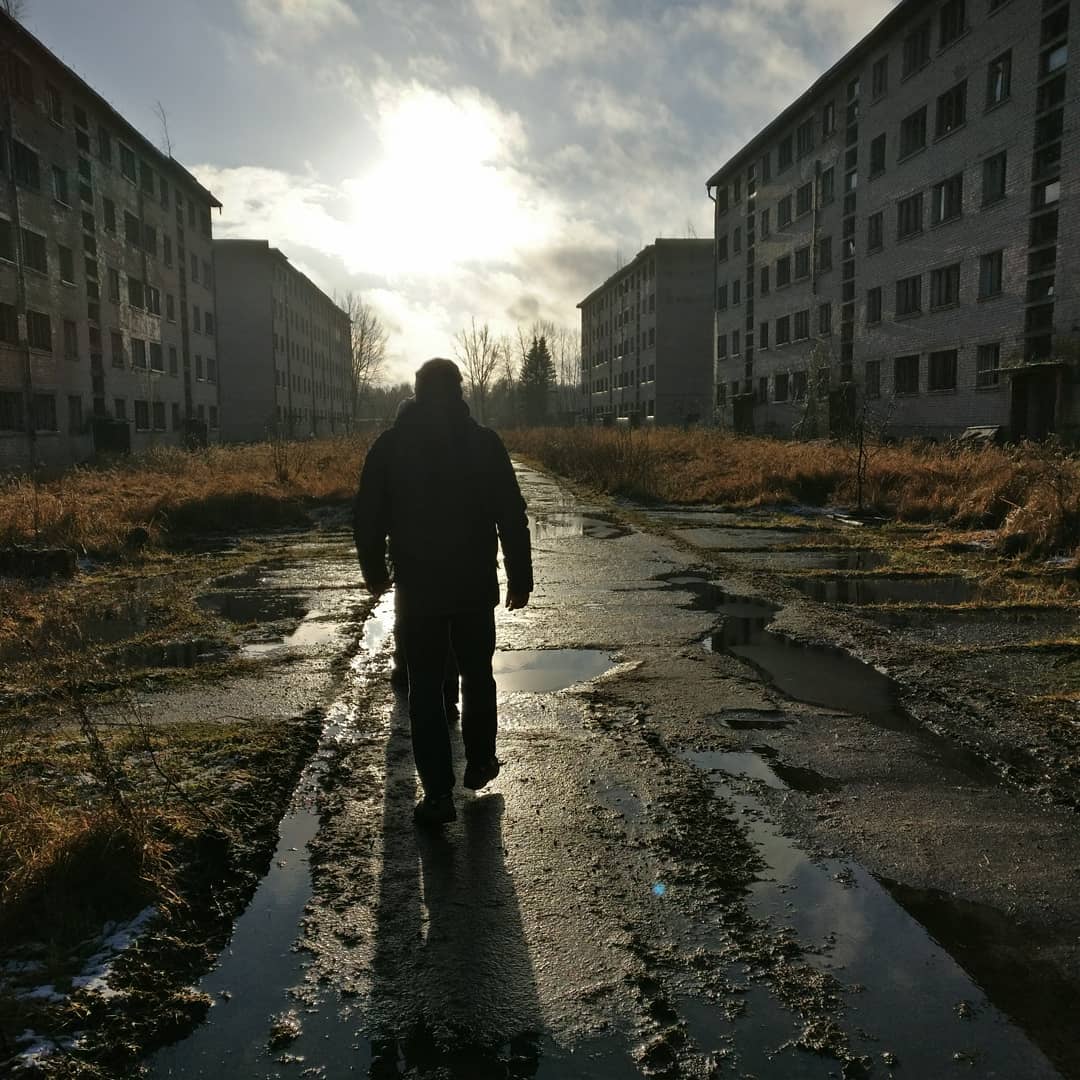
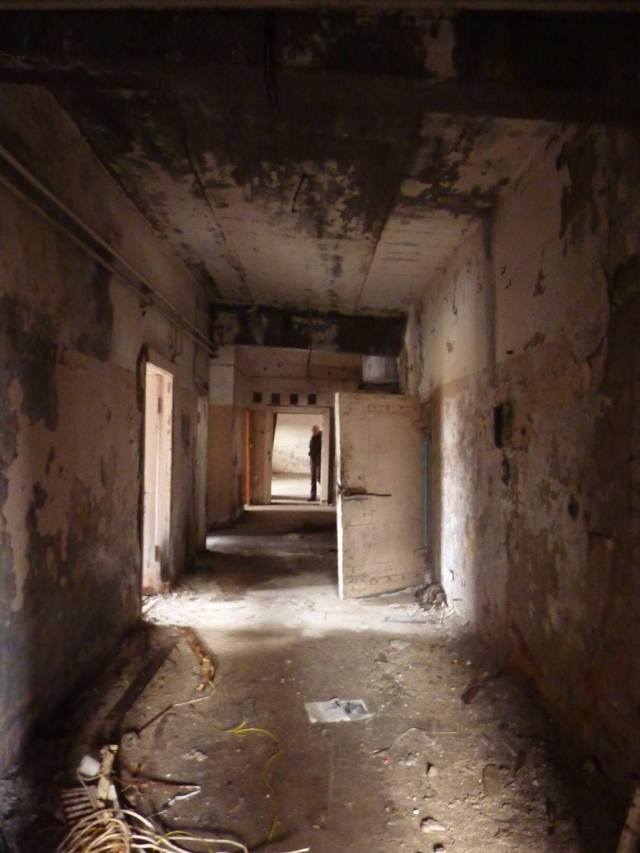
The first stop was Skrunda, once home to a secret Soviet radar station and later an abandoned military town after the fall of the USSR. For years it stood frozen in time, its apartment blocks and control towers slowly crumbling amid birch trees and silence.
At the time of our visit it was still possible to explore the empty streets and buildings, offering a haunting glimpse into Latvia’s Soviet past. Since then, however, the entire area has been closed to the public and repurposed by the Latvian military, making access impossible.
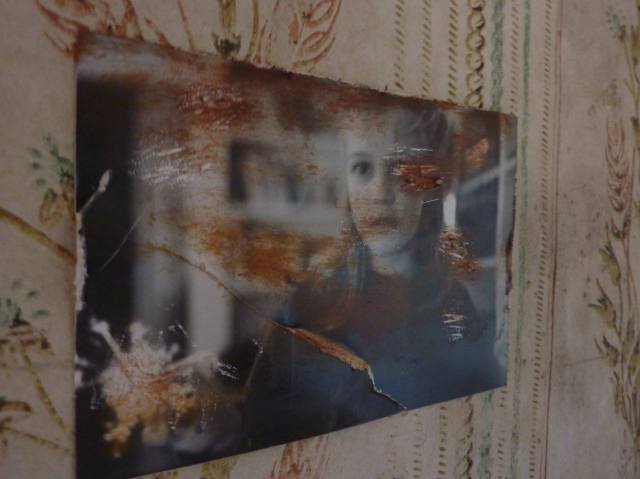
What made Skrunda so unforgettable was the eerie sense of having an entire city to ourselves. Walking through empty streets lined with crumbling apartment blocks felt like stepping into a post-apocalyptic film set — silent, still, and strangely captivating. We could wander freely in and out of buildings, climbing staircases and peering and exploring rooms that once housed families, offices, and communal spaces.
Faded wallpaper, discarded furniture, old photos and children’s drawings on the walls gave haunting glimpses into the lives once lived there. It was both unsettling and fascinating, an experience unlike anywhere else — a moment suspended in time before the town was reclaimed by nature and, later, the military.

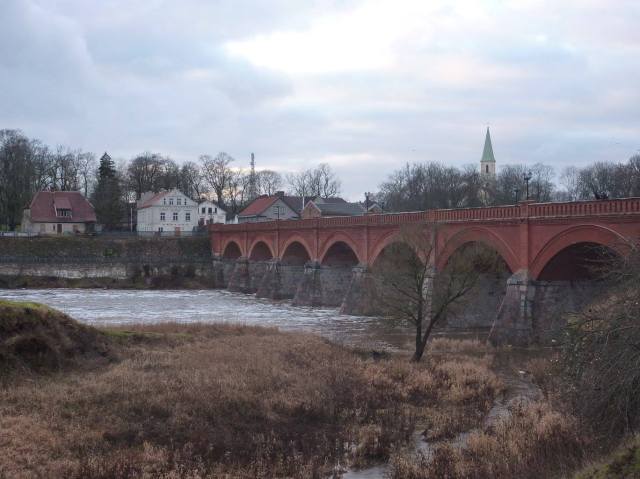
After leaving Skrunda, the tour continued to Kuldīga, one of Latvia’s prettiest small towns. It’s famous for its red-roofed old houses, cobbled streets and Europe’s widest waterfall, the Ventas Rumba, which stretches dramatically across the river in the centre of town. There’s also a charming old brick bridge and plenty of cosy cafés to stop in before the drive back to Riga.
Although Eat Riga no longer runs the Skrunda and Kuldīga combo, they still offer a fantastic selection of history-focused and off-beat tours. Whether it’s exploring forgotten corners of the capital or discovering Latvia’s rural heritage, their guides bring genuine enthusiasm and knowledge to every experience.


Where to avoid
Riga is a wonderfully walkable, welcoming city that feels safe and relaxed for visitors. Latvia’s capital has a relatively low rate of violent crime compared with many other European cities, and most travellers find exploring its cobbled streets and riverside neighbourhoods a worry-free experience.
That said, like anywhere popular with tourists, there are a few things to be aware of — mainly petty theft and small-scale scams around busy areas and transport hubs. Keeping an eye on your belongings, avoiding unlicensed taxis, and being cautious of overly friendly strangers offering unsolicited help are simple precautions that go a long way.
If you’re short on time during your trip, one spot that you can comfortably skip is Riga Central Market. The market is a vast complex of old Zeppelin hangars filled with food stalls, souvenir sellers, and everyday goods. It’s a huge part of local life and fascinating in theory, but, in my opinion, doesn’t quite live up to its promise.
While it’s interesting to see the scale of the place, much of what’s on offer is quite ordinary — fruit, vegetables, meat, fish and clothing stalls that you’ll find in most European cities. It lacks the atmosphere or curated feel that makes markets in other capitals real highlights.
There’s nothing wrong with Riga Central Market at all — it’s clean, functional, and an authentic slice of city life. But if your time in Riga is limited to just a day or two, you’ll get far more out of wandering through the Old Town or crossing the river to explore the Art Nouveau district. The market is best left for those with a slower itinerary who want to see Riga beyond the postcard sights.
Great places to eat
Riga has plenty of interesting restaurants to discover to cater to all budgets and tastes but when I went I made sure to carve out time to visit Singh’s, a lively and polished Indian restaurant located at Pulkveža Brieža iela 2, Centra rajons.
The restaurant sits right in the heart of the city, making it an easy stop after a day of exploring. I booked a table for two in advance and requested a spot on their second floor to ensure we could dine at our preferred time. The upstairs setting turned out to be a perfect choice – slightly quieter than the ground floor, with a relaxed atmosphere ideal for conversation.
Singh’s prides itself on serving authentic Indian cuisine made with high-quality ingredients. The menu offers a wide selection of starters, mains, sides, breads and desserts, all well presented and full of flavour.
The service was warm and attentive throughout our meal, with dishes arriving promptly and each course nicely paced. The food itself did not disappoint – rich curries, tender meats and fragrant spices that felt genuinely authentic, yet not overpowering.
In terms of price, Singh’s offers good value for the quality and portion sizes. Starters range from around €6–10 (approximately £5–8), while mains are typically between €12–15 (around £10–13).
For something more substantial, the “Singh’s Mixed Grill Deluxe for Two” is €23 (about £20–21), and cocktails such as the “Singh’s Chilli Martini” are around €8.50 (roughly £7–8). The overall cost for a meal for two, including drinks, felt very reasonable given the standard of food and service.
Singh’s is both central and popular, so booking ahead is definitely recommended. Whether you’re after a laid-back dinner after sightseeing or a more polished evening out, this spot offers a memorable taste of India right in the middle of Riga.
Useful links
Latvian Academy of Sciences Observation deck
Remember you can follow World Complete on Twitter, Instagram, Pintrest, Tumblr and Facebook send your comments and pictures from your travels using #WorldComplete and #Travel.
 World Complete
Your post was very informative and complete. I visited there about 10 years ago, it looks quite different in the winter.
LikeLiked by 1 person
Thank you for the kind comments and taking the time to read it. I’m glad you found it both enjoyable and informative.
LikeLike