


Egypt
Egypt, a land of ancient wonders and modern marvels, beckons travellers with its rich tapestry of history, culture, and natural beauty.
Among its many jewels, Luxor and Aswan stand out as iconic destinations, offering a glimpse into the grandeur of bygone eras.
These cities, situated along the life-giving River Nile, form the heart of many Nile cruises, tracing a route that has been traversed for millennia by pharaohs, merchants, explorers and – more recently – holidaymakers alike.
Luxor, often referred to as the world’s greatest open-air museum, is home to the magnificent Karnak and Luxor Temples, the haunting Valley of the Kings, and the awe-inspiring Tomb of Tutankhamun. This city, once the thriving capital of ancient Egypt, offers a deep dive into the country’s glorious past.
At the other end of a cruise itinerary, Aswan, with its tranquil Nile views and bustling markets, serves as a gateway to the stunning Philae Temple, the Aswan High Dam, and the UNESCO World Heritage site of Abu Simbel (many of which I will touch upon in this blog). Aswan’s serene beauty and rich cultural heritage make it a perfect end or beginning to a Nile cruise

So what should first-time visitors know before embarking on an Egyptian, River Nile Cruise adventure?
The first thing to consider is the weather. For the trip I was on I travelled in December which offers a pleasant respite from the scorching summer heat.
During this time, the average high temperature is around 22°C (72°F), while the average low dips to about 9°C (48°F). This makes it an ideal period for exploring the country’s historical sites and enjoying a cruise along the River Nile.
The next thing to consider is the local currency.
The official currency of Egypt is the Egyptian Pound (EGP). At the time of writing, you can exchange approximately 60 Egyptian Pounds for £1. It’s advisable to carry some local currency for small purchases, though major credit cards are widely accepted in hotels, cruise vessels and larger establishments.
The third thing to consider is that Egypt operates on Eastern European Time, which is two hours ahead of the UK. When traveling to Egypt, you’ll lose two hours, but you’ll gain them back upon your return to the UK. This time difference is usually quite manageable, allowing you to adjust quickly and make the most of your trip.

The next thing to consider is the power points.
When it comes to electricity, Egypt uses two types of plugs: C and F. Plug type C has two round pins, while plug type F also has two round pins but with two earth clips on the side. Egypt operates on a 220V supply voltage and 50Hz frequency. Ensuring you have the appropriate adapters will help you keep your devices charged and ready for use throughout your journey.
The final thing to consider is the language which, in Egypt is, Arabic.
While English is widely spoken in tourist areas, learning a few basic Arabic phrases can enhance your experience and help you connect with the locals. Knowing some key words like “Hello” مرحبا (Marhaban), “Goodbye” is وداعا (Wada’an), “Please” is من فضلك (Min fadlak), and “Thank you” is شكرا (Shukran) can be a great help to smooth transactions.
Embarking on a River Nile cruise and exploring the ancient cities of Luxor and Aswan offers a journey through history like no other. With a bit of preparation your Egyptian adventure is sure to be an unforgettable experience.
Getting there
Flying from the UK to Luxor offers a mix of anticipation and comfort as travellers embark on a journey to one of Egypt’s most historic cities. While there are seasonal direct flights, most routes from the UK to Luxor include a stopover in Cairo.
Starting November 2024, easyJet will introduce flights from London Gatwick to Luxor while TUI provides flights from both London Gatwick and Manchester, ensuring flexibility for travellers.
EgyptAir also offers a reliable option with flights departing from London Heathrow. These journeys typically take around seven to eight hours, including the layover, offering a reasonable travel time. The average cost for a flight in December – the time of year I went – currently hovers around £500 per adult, making it fairly affordable.
Upon landing, you find yourself at Luxor International Airport, the primary gateway to this ancient city. Located just four miles east of Luxor, the airport is ideally situated for quick and easy access to the city’s renowned historical sites.
In 2005, the airport underwent a significant upgrade to accommodate up to 8 million passengers annually. However, current passenger traffic is around 2.5 million per year, ensuring a less crowded and more comfortable experience for visitors.
The airport is well-equipped to handle the needs of modern travellers. With 48 check-in desks, the process of getting ready for departure is efficient and straightforward. The eight gates available facilitate smooth and organised boarding for flights.

Where to stay
Cruising down the River Nile between Luxor and Aswan is an unparalleled experience, blending the serenity of river travel with the excitement of discovering ancient Egyptian wonders.
There are a number of River Nile cruise boats but the one I used was that of the Ra II.
Onboard the Ra II, this journey transforms into a luxurious floating retreat, seamlessly merging the mystique of ancient history with modern comfort and convenience.
The Ra II which features 83 air-conditioned cabins, meticulously designed to cater to your every need.
Each cabin comes with private facilities, ensuring privacy and comfort. Entertainment is readily available with in-room TVs, and the double-glazed windows provide a quiet sanctuary, allowing you to enjoy the river’s tranquil views undisturbed.
For most guests, the private balcony offers an intimate space to bask in the picturesque scenery, although this feature is not available in single cabins.
Dining on the Ra II is a culinary adventure. The large, attractive dining room hosts international buffet-style meals, offering a wide array of dishes that cater to diverse tastes and dietary preferences. Each meal is a feast, presenting an opportunity to indulge in global flavours and fresh, local ingredients. More on this later on.


For those seeking a more relaxed dining experience, the onboard coffee shop is the perfect spot to enjoy a casual bite or a warm cup of coffee.
There is also a sizeable bar is a convivial space where guests gather to enjoy a range of beverages, from fine wines to creative cocktails, accompanied by the soothing backdrop of the River Nile.
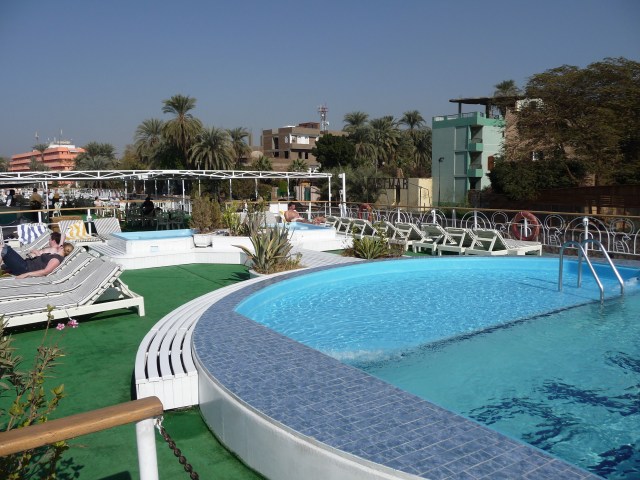
The ship’s swimming pool and two Jacuzzis provide a refreshing escape from the heat, allowing you to unwind and cool off and the sundeck (also equipped with its own bar) is an idyllic spot for sunbathing or enjoying a sunset drink, offering panoramic views of the river and its surrounding landscapes.
For those interested in shopping, the boutique and gift shop onboard offer a variety of unique souvenirs and gifts, making it easy to bring a piece of your journey home with you.

Getting around
As you’d expect, the journey between these iconic destinations is entirely aboard your river cruise boat.
One of the most delightful aspects of a Nile cruise is the seamless travel experience it offers.
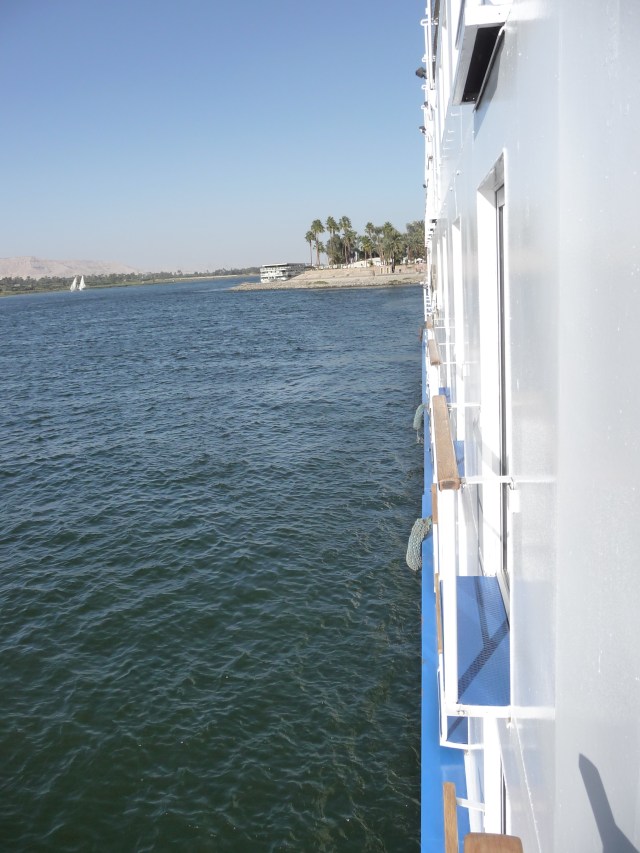
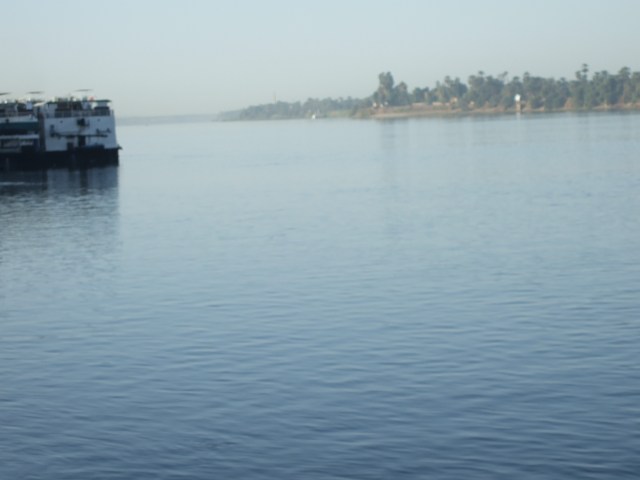
Much of the journey takes place overnight, meaning you can drift off to sleep as the Ra II glides gently along the river.
Each morning, you wake up in a new and exciting location, refreshed and ready to explore. This eliminates the fatigue often associated with daytime travel, allowing you to fully enjoy each destination with renewed energy.
Disembarking at each port, you are met with modern, air-conditioned coaches that transport you to the heart of Egypt’s historical and cultural treasures.
These comfortable coaches ensure a pleasant journey as you venture to ancient temples, grand tombs, and monumental statues.

Top sites
The first thing to say is that many of these sites will not cost you anything extra as they will be included as part of you River Nile Cruise. However, the likes Abu Simbel are optional extras meaning that you have to pay to go on this trip which can be organised with the reception area on board the Ra II.
Now, while the list below doesn’t involved everything you’ll see on a River Nile Cruise, I’ve tried to cover some of the trip highlights.
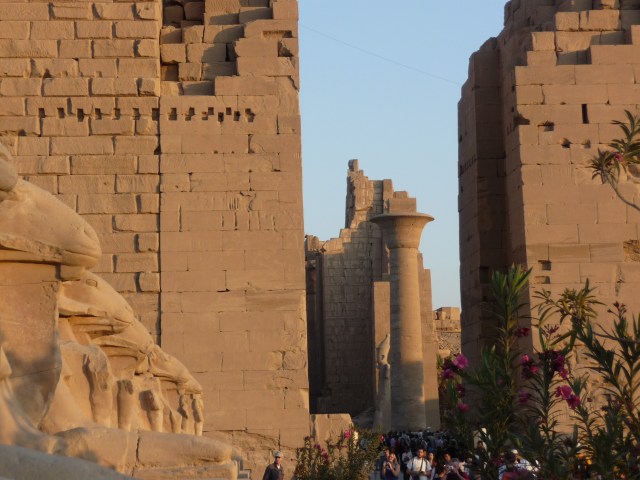
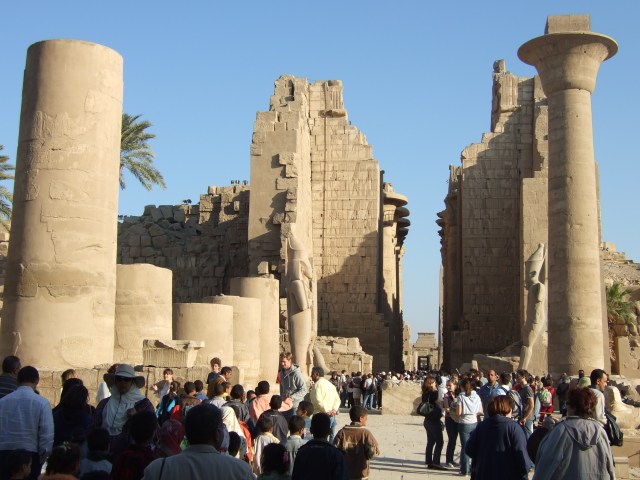
The first of these is Karnak Temple.
Nestled on the eastern bank of the Nile River in Luxor, Karnak Temple stands as a testament to the grandeur and mystery of ancient Egyptian civilisation.
As one of the largest religious complexes ever constructed, Karnak is not just a single temple but a sprawling collection of sanctuaries, pylons, chapels, and other buildings.
Karnak Temple, known in ancient times as Ipet-isut (“The Most Selected of Places”), was built and expanded over a period of 2,000 years, from the Middle Kingdom to the Ptolemaic period.
It served as the main place of worship for the Theban Triad: the god Amun, his consort Mut, and their son Khonsu. Each pharaoh who ruled during this period contributed to the temple’s construction, resulting in a complex that showcases a diverse array of architectural styles and artistic achievements.
The Great Hypostyle Hall, covering an area of 5,000 square metres, is perhaps the most iconic feature of Karnak. It boasts 134 massive columns arranged in 16 rows, with the central columns soaring to a height of 21m. Another notable feature is the Sacred Lake, a large, rectangular body of water used by priests for ritual purification.
Karnak is home to several impressive obelisks, including those erected by Pharaohs Hatshepsut and Thutmose III. These towering stone pillars are covered in hieroglyphs that tell stories of their reigns and religious devotion.
The entrance to Karnak Temple is lined with a magnificent avenue of sphinxes, which once connected Karnak to Luxor Temple. These sphinxes, with ram heads symbolising the god Amun, create a grand approach to the temple.
The best time to visit Karnak Temple is early in the morning or late in the afternoon when the temperatures are cooler (although this is usually dictated by the itinerary of the boat), and the crowds are thinner. The temple opens at 6am and closes at 5:30pm in the winter and 6pm in the summer.
Make sure to wear comfortable walking shoes, as the site is vast and involves a lot of walking. Bring a hat, sunscreen, and plenty of water to stay hydrated.

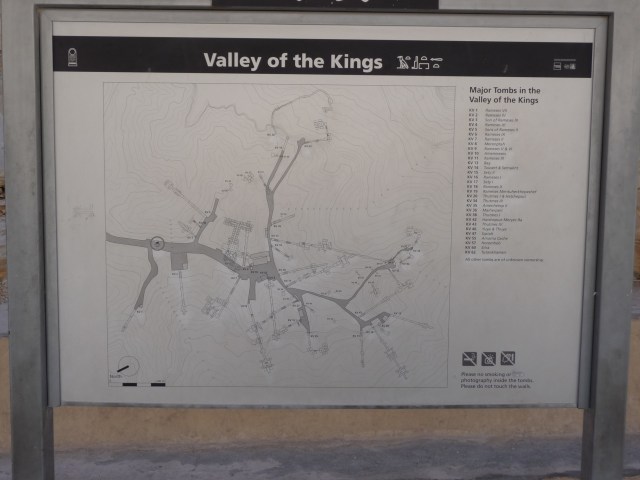
The next highlight is a trip to the Valley of the Kings.
Situated on the west bank of the River Nile, opposite modern-day Luxor, this necropolis served as the final resting place for many of Egypt’s most powerful pharaohs and nobles.
Upon arriving at the Valley of the Kings, you get struck by the stark beauty of the landscape. The valley, surrounded by arid mountains and bathed in the relentless Egyptian sun, seems an unlikely place for such treasures. Yet, hidden beneath the surface are the elaborately decorated tombs that have survived for thousands of years.
Your ticket to the Valley of the Kings grants you access to three of these eight incredible tombs, each telling its own story through intricate carvings and vibrant wall paintings. You can pick any three you wish so listen to any guides there who may direct you to some of the best ones.
That said, each tomb is unique, with its own architectural features and decorative themes, making every visit a new adventure.
As you descend into these ancient tombs, you are transported to a different era. The air cools, and the walls come alive with scenes depicting the pharaohs’ journeys to the afterlife, their encounters with gods and goddesses, and the trials they must overcome to reach eternal peace.
The colours, remarkably well-preserved, speak of a civilization that placed immense value on the afterlife and the preparation for it. The experience is both humbling and awe-inspiring, as you walk the same paths once trodden by the ancients.
One of the highlights of any visit to the Valley of the Kings is undoubtedly the tomb of infamous boy-king Tutankhamun. Discovered by Howard Carter in 1922, Tutankhamun’s tomb is renowned for its opulent treasures and the near-perfect condition in which it was found.
However, it’s important to note that entry to Tutankhamun’s tomb is not included in the standard ticket. For an additional charge of 500 Egyptian Pounds (around £8) per person, you can explore this legendary tomb and see the famous golden burial mask (so long as it’s not being housed in the Cairo Museum or elsewhere in the world at the time of your visit), among other artifacts.
This extra cost is a small price to pay for the privilege of witnessing one of the most significant archaeological discoveries of all time.
In the Valley of the Kings, history is not just read about or seen from a distance; it is felt. The weight of the ages presses down upon you, the whispers of the past seem to echo through the corridors, and the splendour of an ancient world comes vividly to life.


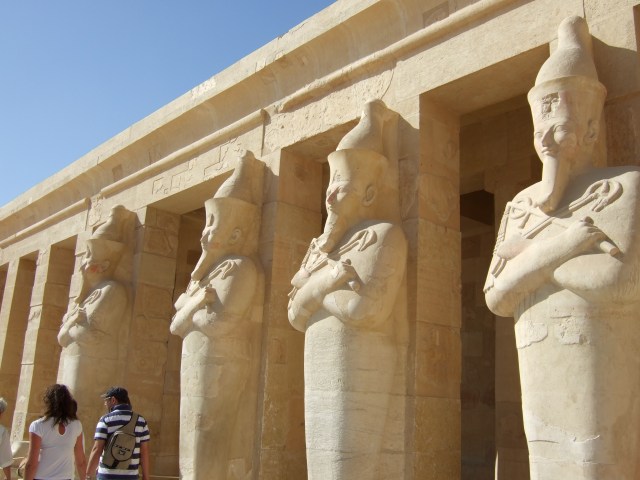
The next stop is the Mortuary temple of Hatshepsut which can be found at the base of the cliffs at Deir el-Bahari.
As you approach the temple, the grandeur of its design becomes apparent, with its terraces rising in harmony with the rugged limestone cliffs that serve as a dramatic backdrop. This magnificent structure, built during the reign of Pharaoh Hatshepsut in the 15th century BCE, stands as a testament to her ambitious vision and the artistic achievements of her time.
Upon entering the temple, you’re immediately hit by the sense of scale and the meticulous attention to detail. The temple is divided into three levels, each connected by a series of ramps that guide visitors upward through a progression of stunning colonnades and courtyards.
The lower terrace, once adorned with lush gardens and exotic plants, provides a serene introduction to the temple’s wonders. As you ascend, the beauty of the architecture unfolds, with the middle terrace revealing a colonnade decorated with intricate reliefs depicting scenes from Hatshepsut’s life and reign, including her divine birth and her famous trading expedition to the Land of Punt.
The pinnacle of the visit is the upper terrace, which houses the main sanctuary. Here, the grandeur of the temple’s design reaches its zenith. The sanctuary, dedicated to the god Amun-Ra, features a series of chapels and altars that once served as the focal point of religious ceremonies.
The walls of the sanctuary are adorned with some of the finest examples of ancient Egyptian art, showcasing the skill and creativity of the artisans who brought Hatshepsut’s vision to life. These intricate carvings and paintings not only celebrate the gods but also immortalise Hatshepsut’s legacy as one of Egypt’s most successful and revered pharaohs.
Wandering through the temple, it’s impossible not to be awed by the ingenuity and artistry that went into its construction as well as the extraordinary capabilities of ancient Egyptian builders.
The temple stands as a powerful reminder of Hatshepsut’s unique role in ancient Egyptian history, as a female pharaoh who defied conventions and left an indelible mark on her civilisation.


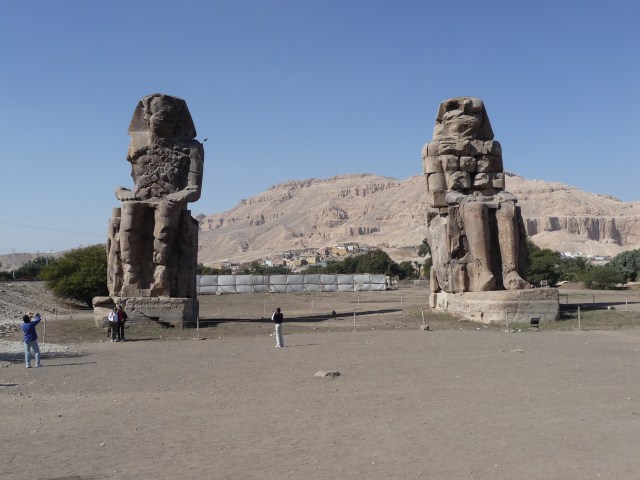
The next stop is the Colossi of Memnon.
These two massive stone statues have stood the test of time, greeting the dawn with silent majesty for over three thousand years. Located on the west bank of the River Nile near Luxor, the statues once flanked the entrance to a grand mortuary temple built by Pharaoh Amenhotep III, though much of the temple has long since been reclaimed by the sands of time. Yet, the Colossi remain, steadfast sentinels of history.
As you approach the site, the sheer scale of the statues becomes apparent. Each colossus stands about 18m high and is carved from single blocks of quartzite sandstone, transported from quarries near Cairo, over 675km away.
This monumental feat of engineering speaks volumes about the ingenuity and determination of the ancient Egyptians. Despite the wear and tear inflicted by centuries of weather and occasional earthquakes, the statues still retain a commanding presence, their expressions serene and enigmatic.
These statues have seen the rise and fall of dynasties, witnessed countless sunrises and sunsets, and have been admired by travellers from the ancient Greek historian Herodotus to modern-day tourists.
In fact, the Colossi were famous in antiquity for a mysterious phenomenon: the northern statue was said to “sing” at dawn. This sound, likely caused by the sun heating the stone and causing it to expand and crack, inspired numerous legends and added an aura of mystique to the site. Roman Emperor Septimius Severus attempted to repair the damage, but in doing so, silenced the statue forever.
The Colossi stand as a testament to the grandeur of ancient Egypt and offer a moment of contemplation and wonder for all who come to see them.


Next up, is the Temple of Edfu.
Situated on the west bank of the Nile River in the city of Edfu, this majestic temple is dedicated to the falcon god Horus and offers a captivating glimpse into the grandeur of ancient Egyptian civilisation.
Approaching the Temple of Edfu, visitors are immediately struck by its imposing pylon, which stands at a height of 36m. The pylon, adorned with intricate carvings depicting scenes of pharaohs making offerings to the gods, sets the tone for that lies ahead.
Passing through the gateway, you’ll enters the vast courtyard, where the sheer scale and precision of the temple’s construction become apparent.
The temple, constructed during the Ptolemaic period between 237 and 57 BCE, reflects a blend of Greek and Egyptian architectural styles. As you wander through its halls, the detailed reliefs on the walls tell stories of mythological battles, religious rituals, and the daily life of the gods.
The columns of the Hypostyle Hall, each decorated with hieroglyphs and images of deities, create an atmosphere of reverence and wonder.
One of the most captivating features of the Temple of Edfu is the Sanctuary of Horus. Located at the heart of the temple, this sacred space houses a replica of the ancient statue of Horus, which was believed to be the earthly representation of the god. The dark, intimate chamber, is only illuminated by shafts of sunlight filtering through narrow openings.
Exploring further, you’ll discover the intricately carved reliefs on the temple walls, which are remarkably well-preserved. These carvings depict the epic battle between Horus and his uncle Seth, a story central to Egyptian mythology. Each scene is filled with symbolic meaning, offering insights into the religious beliefs and cultural values of the time. The vivid depictions of gods, pharaohs, and mythical creatures bring to life the rich tapestry of ancient Egyptian lore.
The temple also includes various chapels and storerooms, each with its own unique decorations and purposes. These smaller chambers were used for storing religious artifacts, performing specific rituals, and housing statues of other deities.
The temple stands as a monument to human creativity, religious devotion, and the quest for immortality.


Next is a visit to the Temple of Kom Ombo.
Located on the eastern bank of the Nile River, the Temple of Kom Ombo stands as a sign of ancient Egyptian architectural brilliance and religious devotion.
Unlike any other temple in Egypt, Kom Ombo is uniquely dedicated to two gods: Sobek, the crocodile god of fertility and creator of the world, and Horus the Elder, the falcon-headed god representing the sky, war, and protection. This dual dedication is mirrored in the temple’s symmetrical design, with duplicate courts, halls, sanctuaries, and rooms for each deity.
The temple’s carvings and reliefs, which have withstood the ravages of time, depict scenes of pharaohs making offerings to the gods, religious rituals, and daily life in ancient Egypt.
One of the most striking features of the Temple of Kom Ombo is the Hall of Columns. Each column is adorned with hieroglyphics and images that tell stories of gods and kings, of battles fought and won, and of a civilisation that thrived on the banks of the Nile thousands of years ago.
The temple also houses a fascinating and somewhat eerie collection of mummified crocodiles. These sacred animals were revered as incarnations of Sobek, and their mummified remains were discovered in the nearby Crocodile Museum.
Stepping outside the temple, the view of the River Nile is breathtaking. The serene flow of the river contrasts with the bustling history encapsulated within the temple walls. It’s easy to imagine the temple in its heyday, with priests performing daily rituals and worshippers coming to pay their respects to the gods.
The strategic location of the temple, overlooking the Nile, also underscores its historical importance, serving as a centre of worship and a place of respite for travellers and traders navigating the river.
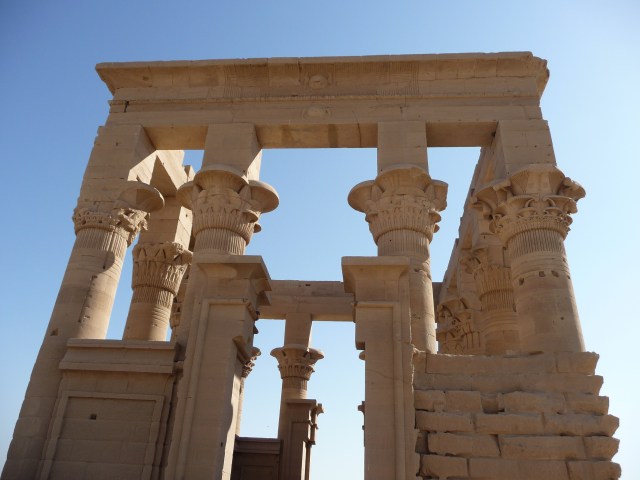
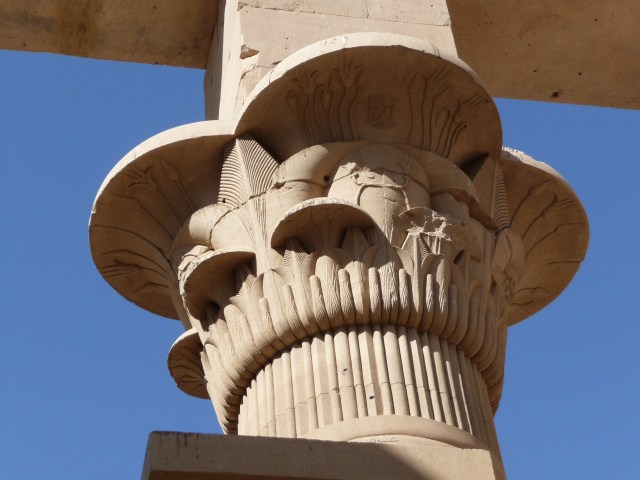
A stunning visit is that to see the Temple of Philae.
Located on Agilkia Island in the Nile River, near Aswan, this temple complex stands as a testament to the architectural prowess and spiritual devotion of the ancient Egyptians.
Its serene location, surrounded by the gentle flow of the Nile, sets a picturesque backdrop that enhances the ethereal experience of visiting this sacred site.
As you approach the temple by boat, the first glimpse of its majestic pylons emerging from the horizon is awe-inspiring.
The intricate carvings on the temple walls, depicting scenes of gods, goddesses, and pharaohs, showcase the artistic mastery and religious fervour that characterised the Ptolemaic and Roman periods.
Dedicated primarily to the goddess Isis, the Temple of Philae was a vital pilgrimage site and a centre for worship. Isis, revered as the goddess of magic and motherhood, attracted devotees who left behind a rich tapestry of myths and legends etched into the temple’s stone.
The main temple, with its grand courtyards, sanctuaries, and towering columns, invites visitors to explore its hallowed halls. The Hypostyle Hall, with its forest of columns adorned with floral capitals tells a story, with hieroglyphs and reliefs that narrate religious rituals, royal decrees, and cosmic events.
One of the most remarkable features of the Temple of Philae is its salvation from the waters of the River Nile.
With the construction of the Aswan High Dam in the 1960s, the temple faced the threat of submersion. In an extraordinary feat of engineering and international co-operation, the entire complex was meticulously dismantled and relocated to higher ground on Agilkia Island. This monumental effort not only preserved a significant piece of Egypt’s cultural heritage but also stands as a testament to humanity’s dedication to preserving history.
The temple complex is not only a marvel of ancient architecture but also a symbol of continuity and change. While the worship of Isis may have ceased, the temple continues to draw visitors from around the world, each captivated by its beauty and history.


Visiting Abu Simbel is an experience that transcends the typical tourist excursion, immersing travellers in the grandeur of ancient Egyptian civilisation.
Located in the far south of Egypt, near the border with Sudan, the temples of Abu Simbel stand as proof to the architectural prowess and artistic brilliance of the New Kingdom period.
Built during the reign of Pharaoh Ramses II, these monuments were intended to impress and intimidate both the neighbouring Nubians and the gods themselves.
The journey to Abu Simbel is an adventure in itself. Given its remote location, reaching the temples requires a bit of planning and additional expense. From the Ra II, this visit is optional and comes at an extra cost which is around 5,000 Egyptian Pounds per person (approximately £80). While this may seem steep, the price includes the round trip through the stunning desert landscape and a guide who can provide invaluable insights into the history and significance of the site.
The early morning bus route takes you through the vast, arid expanses of the Sahara, where the golden sands stretch as far as the eye can see.
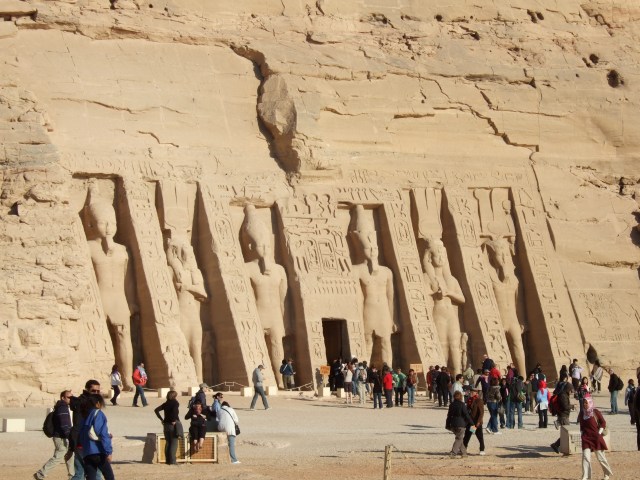
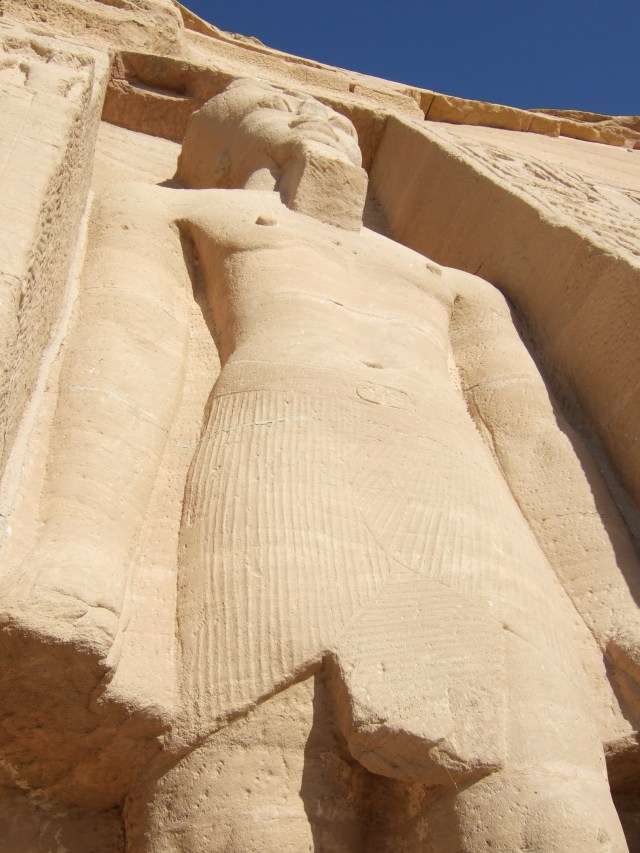
Upon arrival at Abu Simbel, the first sight of the colossal statues of Ramses II carved into the rock face is nothing short of breathtaking. These massive figures, standing guard at the entrance, convey a sense of power and permanence that is truly awe-inspiring. The precision and scale of the carvings, coupled with their state of preservation, make it clear why Abu Simbel is considered one of the pinnacles of ancient Egyptian art and architecture.
Inside the temples, the grandeur continues. The Great Temple is dedicated to Ramses II himself and the gods Amun, Ra-Horakhty, and Ptah. The walls tell stories of Ramses’ victories and divine favour, with sunlight illuminating the inner sanctum on specific days of the year in a precise astronomical alignment.
Next to the Great Temple is the smaller but equally impressive Temple of Hathor and Nefertari, dedicated to Ramses’ beloved wife, Queen Nefertari, and the goddess Hathor. This temple, too, features remarkable artistry and provides a poignant glimpse into the personal life of the pharaoh.
What makes Abu Simbel even more remarkable is the story of its relocation.
In the 1960s, the temples faced submersion due to the construction of the Aswan High Dam. In a monumental feat of modern engineering, UNESCO spearheaded a project to move the entire complex to higher ground.
The temples were meticulously cut into large blocks, transported, and reassembled in their current location. This effort preserved not only the physical structures but also their cultural and historical significance for future generations.
As the visit concludes and you board the bus back to the Ra II, there’s a profound sense of having witnessed something extraordinary. The temples of Abu Simbel are not just relics of the past; they are a powerful reminder of human ingenuity, artistic excellence, and the timeless allure of ancient Egypt.
While the journey may come at an extra cost, the experience is priceless, leaving visitors with memories and a sense of wonder that will last a lifetime.


Where to avoid
Embarking on a River Nile cruise is one of the safest and most enjoyable ways to explore the wonders of Egypt.
With organised excursions and guided tours, you get to experience the country’s rich history and culture with peace of mind. However, like any travel destination, there are a few things to be mindful of to ensure your trip is as pleasant as possible.
The first is to be cautious in busy tourist areas.
While you’ll be escorted during most of your visits, busy tourist areas can be hotspots for pickpockets so always be mindful of where your possessions are. Keep your valuables secure and avoid carrying large amounts of cash.
The second point is that in Egypt, it’s common for locals to approach tourists asking for money or trying to sell various items. This can sometimes be overwhelming or annoying, but a firm and polite “no” coupled with walking away usually suffices. Engaging too much or showing hesitation can encourage more persistent attempts. Keeping interactions brief and respectful is key to navigating these encounters smoothly.
Another thing to be mindful of is a popular scam that involves locals offering to take your photo with your camera or phone, only to demand money in return for giving it back. To avoid this, it’s best to take photos within your group or use a selfie stick. If you do need someone to take a photo, choose a fellow tourist or someone you can trust.
Finally, hydration is crucial, especially in the Egyptian heat, but avoid buying bottled water from street vendors. These bottles might be refilled with tap water, which can be unsafe to drink. Always purchase water from reputable sources such as your cruise ship or well-known stores. Ensuring the seal on the bottle is intact before consuming is a good practice to follow.
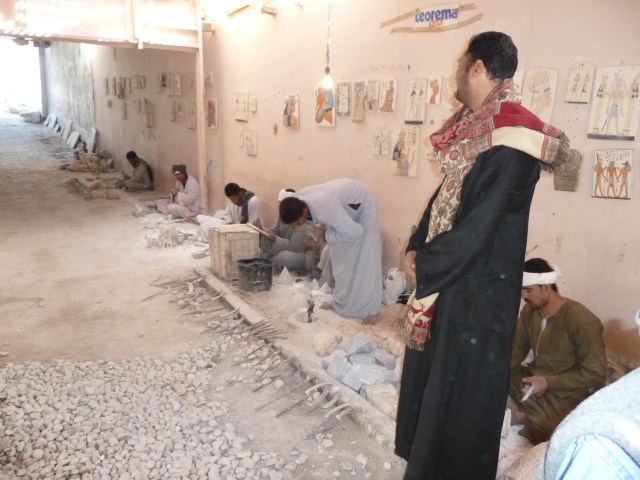
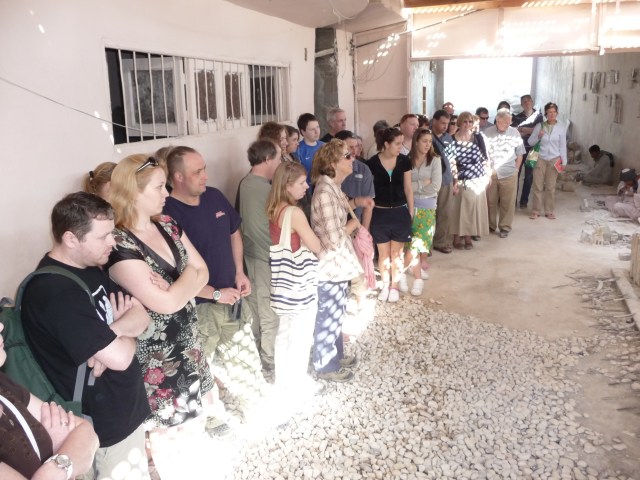
Most itineraries on a River Nile cruise, such as those on the RA II, are filled with incredible sites and experiences. However, one aspect you might want to skip is the visit to an alabaster workshop.
These visits often turn into glorified sales pitches, where you learn a bit about the process of making alabaster goods before being subjected to relentless sales tactics.
Unless you’re specifically interested in purchasing alabaster items, it’s perfectly acceptable to opt out of this part of the tour. You can choose to wait outside for your group, avoiding the pressure to buy something you might not even want.
Beyond these few precautions, the rest of your River Nile cruise itinerary is likely to be an unforgettable experience.
Great places to eat
Unlike a lot of trips I’ve been on, the main place to eat for a River Nile cruise is, in fact, on board the boat.
Embarking on the Ra II River Nile Cruise is not just about exploring ancient sites and beautiful landscapes; it’s also an opportunity to enjoy a variety of delicious foods. The cruise offers a diverse selection of dishes, including options for vegetarians, from buffet breakfasts to dinners.
Each morning on the Ra II starts with a buffet breakfast that includes a good mix of international favourites.
You can enjoy freshly baked breads and pastries, such as pita, Baladi, and croissants or, for those who prefer lighter options, there are seasonal fruits like dates, figs, oranges, and pomegranates, along with freshly squeezed juices.
There are also various cheeses, yogurts, and milk, including local choices like feta and labneh. Hot breakfast items and savory pastries provide a hearty start, while cereals, granola, and a variety of jams and spreads cater to a continental taste.
As the day draws on and having usually eaten lunch out during a visit or had a snack at the pool-side bars, dinner on the Ra II is a more elaborate affair, with a buffet featuring a mix of Egyptian specialties and international dishes.
The setting is enhanced by the gentle sound of the river, creating a pleasant dining atmosphere. Options include a selection of mezze, such as hummus, baba ghanoush, tabbouleh, and stuffed vine leaves, along with fresh salads and a variety of dressings.
Main courses include dishes like kofta, kebabs, grilled fish, and roast chicken, with sides such as rice, couscous, and roasted vegetables.
The Ra II also offers a good selection of vegetarian options, like stuffed peppers, lentil stew, vegetable tagine, and moussaka.
For dessert – if you still have room – you can enjoy traditional Egyptian sweets like baklava, basbousa, and umm ali, as well as cakes, pastries, and fresh fruits.
Useful links
Remember you can follow World Complete on Twitter, Instagram, Pintrest, Tumblr and Facebook send your comments and pictures from your travels using #WorldComplete and #Travel.
 World Complete
😍
LikeLiked by 1 person
❤️
LikeLiked by 1 person
Amazing post! This trip was so well executed, I mean, you’ve seen so many of the great wonders of ancient Egypt!
LikeLiked by 1 person